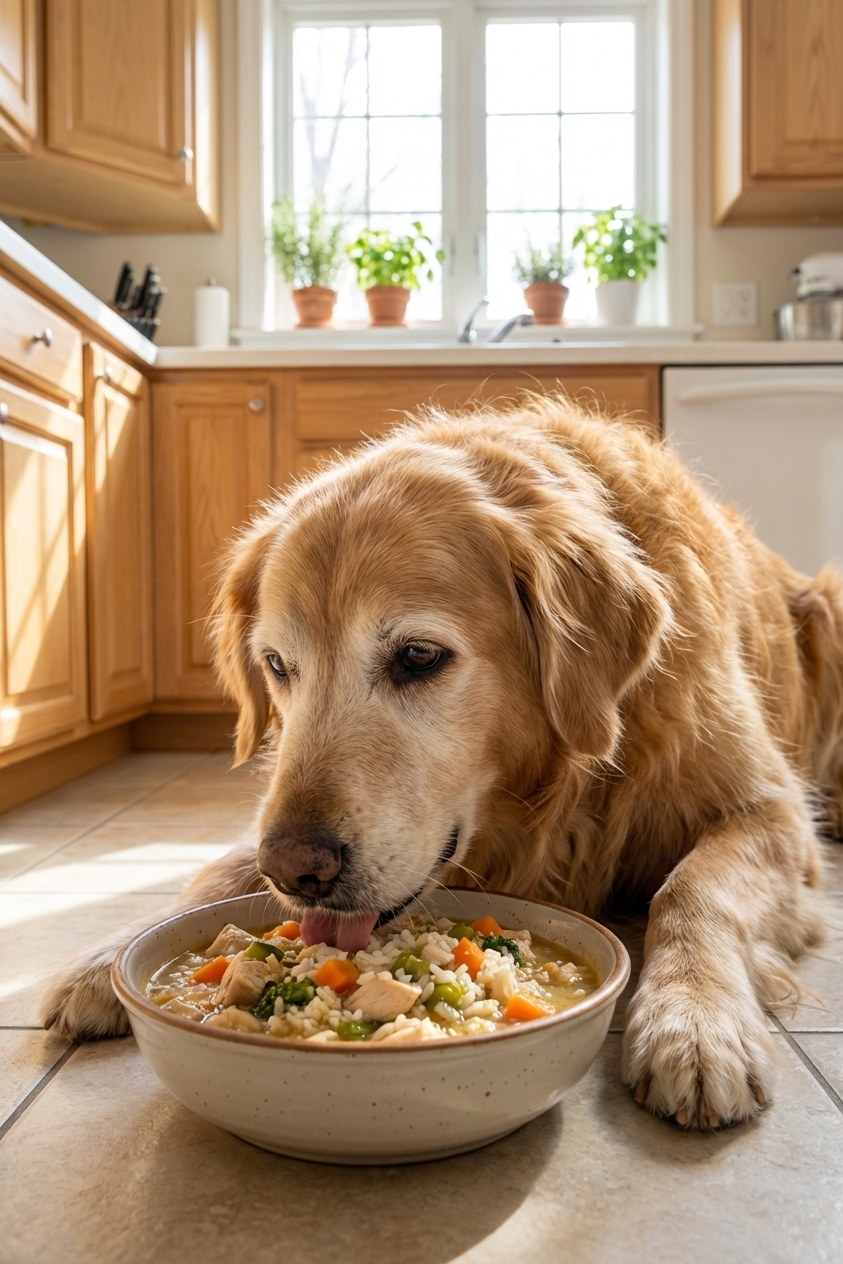
Support your dog through cancer care with practical nutrition guidance—high-quality protein, omega-3s, careful carbs, calcium balance, and 4 easy homemade ...
Article
•
Designer Mixes
Essential Symptoms of Dog Cancer and Care Tips

Shari Shidate
Designer Mixes contributor
As a veterinary assistant here in Frisco, Texas, I have seen how quickly a “small change” in a dog can turn into a serious diagnosis. The good news is that you do not need to be a medical expert to notice early warning signs. You just need to know what is normal for your dog, and what changes deserve a call to your veterinarian.
Dog cancer is not one single disease. It is a broad category of conditions where abnormal cells grow and can invade nearby tissues or spread to other parts of the body. Some cancers grow slowly and are very treatable. Others move fast. That is why paying attention to symptoms, and acting early, matters so much.
Quick note: This article is for general education and is not a substitute for veterinary care. If something feels urgent or “off,” call your veterinarian or an emergency clinic.
Common symptoms of cancer in dogs
Many cancer symptoms overlap with non-cancer problems like infections, arthritis, allergies, or digestive upset. Still, these signs are worth taking seriously, especially when they last more than a week or two, or if they worsen quickly.
1) New lumps or bumps
Not every lump is cancer, but every lump deserves attention. A benign fatty tumor (lipoma) can feel soft and movable, while some malignant masses may feel firmer or be attached to deeper tissue. You cannot confirm the difference by touch alone.
- What to watch for: rapid growth, firmness, irregular shape, redness, ulceration, bleeding, or pain when touched.
- Helpful at home: measure it (even with a ruler), and take a photo every few days in the same lighting so you can show your vet clear changes over time.
- Best next step: ask your vet about a fine needle aspirate (FNA). It is a quick, minimally invasive way to get cells and guide next steps.
2) Unexplained weight loss or loss of appetite
Weight loss can happen even when a dog still eats, because some cancers change metabolism. Other times, appetite drops due to nausea, mouth pain, or abdominal discomfort.
- What to watch for: collars or harnesses fitting looser, visible ribs or spine, skipping meals, eating slower, dropping food, or suddenly becoming picky.
3) Ongoing lethargy or exercise intolerance
We all slow down with age, but a sudden decrease in energy is different. Cancer can cause anemia, pain, fever, or internal organ stress.
- What to watch for: tiring on short walks, sleeping much more than usual, reluctance to climb stairs or jump, seeming “not themselves.”
4) Persistent vomiting or diarrhea
Digestive signs are common and usually not cancer, but chronic issues can sometimes be linked to intestinal tumors, lymphoma, or cancers affecting the liver or pancreas.
- What to watch for: recurring episodes, blood in stool, black tarry stool, vomiting that continues past 24 hours, or dehydration.
- Important: do not “wait it out” if your dog is a puppy, a senior, has chronic disease (like kidney disease or diabetes), seems painful, cannot keep water down, or shows any blood or dehydration. Those dogs should be seen sooner.
5) Bleeding or discharge from unusual places
Unexplained bleeding can be a sign of tumors in the mouth, nose, urinary tract, reproductive organs, or skin. Some cancers can also affect clotting (for example, certain vascular tumors).
- What to watch for: nosebleeds, bloody urine, bleeding gums, persistent vaginal discharge, or a wound that does not heal.
6) Bad breath, drooling, or trouble eating
Oral tumors can be sneaky. Many pet parents assume it is “just dental disease,” and while dental disease is common, mouth changes should be checked promptly.
- What to watch for: foul breath that appears suddenly, pawing at the mouth, dropping kibble, one-sided chewing, facial swelling, or visible oral growth.
7) Coughing, labored breathing, or decreased stamina
Primary lung tumors do occur, especially in older dogs. In many cases, lung findings are related to spread (metastasis) from another cancer. Either way, new respiratory symptoms should be evaluated.
- What to watch for: persistent cough, rapid breathing at rest, unexpected open-mouth breathing in cool, calm conditions, fainting, or blue-tinged gums.
8) Pain, limping, or swelling (especially in a leg)
Bone cancer (like osteosarcoma) can look like an injury at first. Dogs may limp, improve a bit, then worsen again.
- What to watch for: swelling over a bone, pain that increases, reluctance to bear weight, or limping that does not resolve as expected.
9) Swollen lymph nodes
Lymph nodes can enlarge with infection, but persistent swelling can also be seen with lymphoma and other cancers.
- Where to feel (gently): under the jaw, front of the shoulders and upper chest (prescapular area), in the armpit area, and behind the knees.
- What to watch for: firm “marble-like” swelling that does not go away.
10) Sores or skin lesions that do not heal
Some skin tumors, including mast cell tumors, can look like “just a scab” or a spot that comes and goes. Any lesion that persists or keeps returning should be checked.
- What to watch for: recurring scabs, oozing, ulceration, bleeding, or a spot that gets larger over time.
11) Urinary changes or straining
Urinary issues are often caused by infection, stones, or prostate problems, but tumors can also affect the urinary tract.
- What to watch for: straining to urinate, frequent small urinations, accidents in the house, blood in urine, or pain signs when trying to pee.
Trust your instincts. If you feel like something is “off,” you are not overreacting by calling your vet. You are advocating for your dog.
When to seek urgent veterinary care
Some symptoms should not wait for a routine appointment.
- Difficulty breathing, open-mouth breathing at rest in cool, calm conditions, or blue or pale gums
- Collapse, severe weakness, or inability to stand
- Uncontrolled bleeding or bleeding plus weakness
- Repeated vomiting with inability to keep water down
- Bloated abdomen, retching without producing vomit, or obvious distress
- Seizures, sudden confusion, wobbliness, or severe disorientation
If you are unsure, call your veterinarian or the nearest emergency clinic and describe what you are seeing. Timing can be critical.
How veterinarians check for cancer
Diagnosis is not guesswork. Your veterinarian will typically start with the least invasive options and build from there based on what your dog needs.
- Physical exam and history: your notes about appetite, weight, energy, and symptom timeline are extremely helpful.
- FNA or biopsy: collects cells or tissue from a lump, lymph node, or lesion.
- Bloodwork and urinalysis: looks for anemia, organ function changes, inflammation, and other clues.
- Imaging: X-rays, ultrasound, CT, or MRI can help find tumors and evaluate spread.
- Staging: if cancer is confirmed, staging helps guide treatment by assessing where the cancer is and how advanced it is.
One reassuring thing to know: an FNA can sometimes be inconclusive, and that is not unusual. It just means your vet may recommend a repeat sample, a different test, or a biopsy to get a clearer answer.
If your dog is referred to a veterinary oncologist, that is not a sign of “no hope.” It simply means you are getting specialized expertise and more options.
Dog cancer care tips
If cancer is suspected or confirmed, supportive care should be guided by your veterinarian. That said, cancer care is not only about chemotherapy or surgery. It is also about comfort, nutrition, daily monitoring, and quality of life. Here are supportive steps that help many dogs, whether they are in active treatment or receiving palliative care.
Build a simple symptom tracking routine
Keeping notes helps you and your vet spot patterns and adjust care sooner.
- Appetite and water intake
- Energy level and willingness to walk
- Bathroom habits (including stool consistency and urination changes)
- Breathing rate at rest (especially if lung disease is a concern)
- Any lumps: size, firmness, and whether they change
Prioritize pain control and comfort
Dogs hide pain well. If your dog is diagnosed with cancer, assume comfort needs may change over time.
- Use medications exactly as prescribed. Never give human pain medications unless your vet specifically directs it.
- Make rest easier: supportive bedding, rugs for traction, ramps for couches or cars, and raised food bowls if helpful.
- Reduce stress: predictable routines, gentle activity, and calm spaces can make a big difference.
Support nutrition in an evidence-based way
There is no single “anti-cancer diet” that cures cancer. But nutrition can support muscle mass, energy, immune function, and tolerance to treatment. The best plan depends on the cancer type and your dog’s overall health.
- Aim for consistency and adequacy first: a dog that eats enough is better off than a dog on a perfect plan they refuse.
- Ask about a veterinary nutrition consult: this is especially important if you want to feed homemade food during treatment.
- Consider targeted support: omega-3 fatty acids (EPA and DHA) are often discussed for cancer support. Your vet can recommend a safe dose and product quality.
Protect the immune system thoughtfully
Some dogs in treatment may be more vulnerable to infections.
- Keep up with dental and skin hygiene as advised by your vet.
- Prevent exposure to sick dogs and avoid crowded settings if your vet recommends it.
- Stay current on parasite prevention, since fleas and ticks add stress and inflammation.
Know the goals: cure, control, or comfort
In oncology, “success” can mean different things. Sometimes the goal is cure. Sometimes it is remission. Sometimes it is simply more good days with less pain. A clear goal helps you make confident choices.
Quality of life
One of the hardest parts of cancer is not knowing what is “enough.” A quality-of-life scale can help reduce uncertainty. Ask your veterinarian to walk through it with you. At home, these questions are a good starting point:
- Is my dog eating enough to maintain weight or at least interest in food?
- Are we managing pain well, including overnight?
- Can my dog rest comfortably and get up without major distress?
- Does my dog still seek affection, engage, or enjoy favorite things?
- Are bad days starting to outnumber good days?
If you are facing end-of-life decisions, you are not alone. Your veterinary team can help you plan ahead so the focus stays on comfort, dignity, and love.
Prevention and early detection
We cannot prevent every cancer. But we can reduce risk and improve early detection.
- Schedule regular wellness visits: early changes are often found during routine exams.
- Discuss spay and neuter timing: this can impact risk for certain cancers, but it is individualized and can be breed-dependent. For example, spaying before the first heat can reduce mammary tumor risk, while timing conversations in some breeds may also consider other health risks.
- Maintain a lean body condition: staying at a healthy weight is associated with better overall health and may lower risk for some diseases, including some cancers.
- Avoid tobacco smoke exposure: secondhand smoke is harmful for pets too.
- Check your dog monthly: feel for new lumps, look in the mouth, and note any skin changes.
What to tell your vet
If you are worried about cancer, these details help your veterinary team triage and plan the right tests.
- When you first noticed the symptom
- Whether it is stable, improving, or worsening
- Any changes in appetite, thirst, urination, stool, breathing, or weight
- Current medications and supplements
- Photos of lumps or wounds taken a few days apart (same angle and lighting)
And please hear this clearly: asking questions is not being difficult. It is being a great pet parent.