Learn a proven, kind puppy house-training plan with a simple schedule, crate and supervision tips, a repeatable potty routine, cleaning methods, and nighttim...
Article
•
Designer Mixes
Essential Potty Training Puppy Tips and Advice

Shari Shidate
Designer Mixes contributor
Potty training can feel like a full-time job, especially in the first couple of weeks. The good news is this: puppies learn fastest when we make the “right” behavior easy and the “wrong” behavior unlikely. As a veterinary assistant, I see the same patterns again and again. When families use a simple schedule, reward quickly, and supervise closely, most pups make steady progress with far fewer accidents.
Below are practical, vet- and trainer-recommended tips you can start today, plus troubleshooting for the most common hiccups.
How puppies learn potty training
Potty training is really two skills:
- Bladder and bowel control (physical maturity)
- Habit and preference (learning where to go)
Puppies are not being “stubborn” when they have accidents. Most accidents happen because they were not supervised, they were not taken out soon enough, or they were not rewarded clearly for going in the right spot.
Key idea: Rewarding the behavior you want is much more effective than punishing the behavior you do not want. Punishment can teach a puppy to hide when they need to go, which slows training.
Set up your home for success
Use a crate (the right way)
A properly sized crate supports potty training because many puppies avoid soiling where they sleep. The crate should be large enough for your puppy to stand up, turn around, and lie down comfortably, but not so large that one end becomes a bathroom.
Quick note: Very young puppies, puppies from poor sanitary conditions, pups with diarrhea, and anxious puppies may not have that “keep the bed clean” instinct yet. If that is your pup, it does not mean crate training failed. It means you need a tighter schedule and more frequent breaks for now.
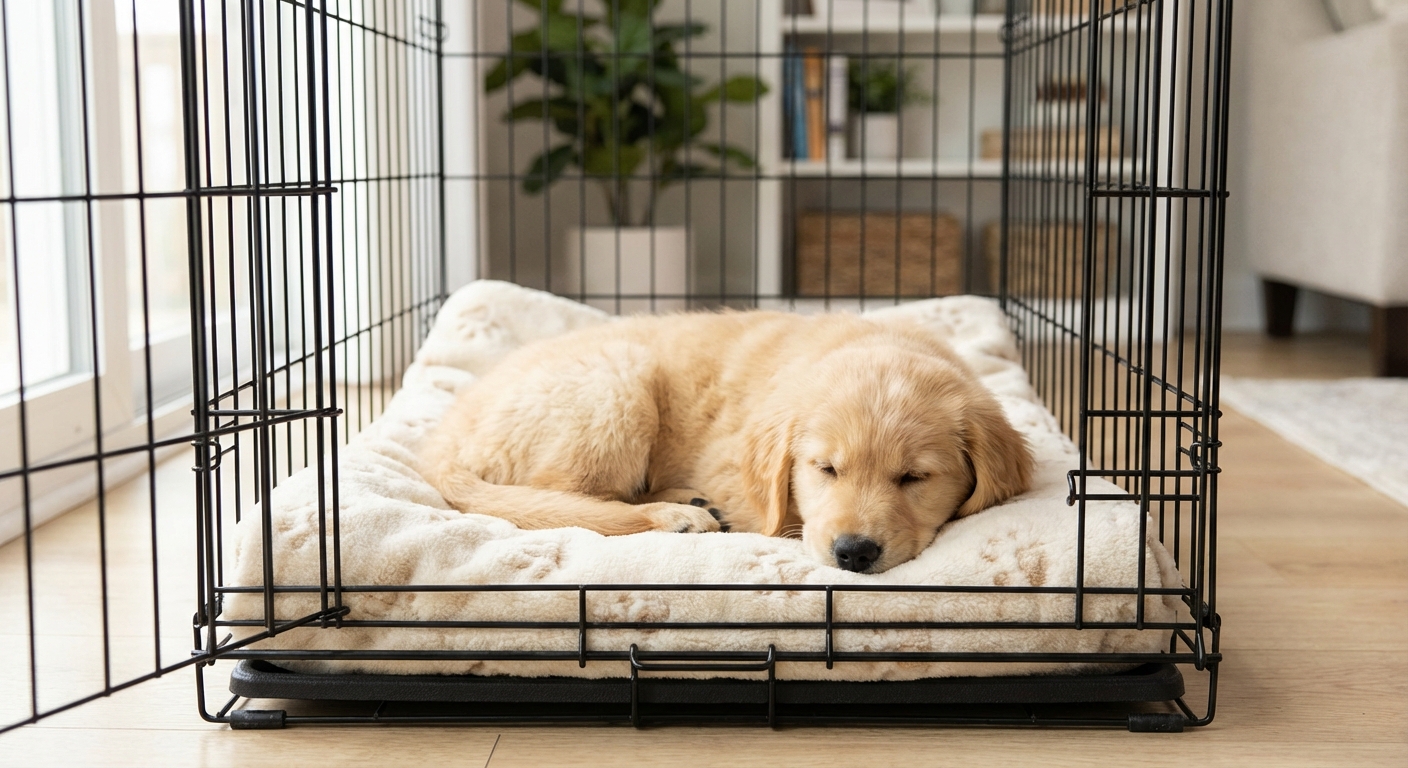
- Crate = nap and quiet time, not punishment.
- Take your puppy out right after crate time.
- If your puppy is frantic in the crate, adjust the plan (shorter sessions, more exercise, calming routine).
Create a puppy zone
If you can’t keep eyes on your puppy, use a safe area like an exercise pen or a gated kitchen. This reduces accidents and keeps your puppy from rehearsing unwanted habits.
- Keep water available unless your veterinarian advises otherwise.
- Remove rugs temporarily if your puppy targets them.
- Use easy-to-clean flooring where possible.
Build a simple potty schedule
Schedules beat guesswork. In the beginning, assume your puppy needs frequent trips outside. A helpful baseline is to take them out:
- First thing in the morning
- After every nap
- After eating (often within 5 to 30 minutes, sometimes longer)
- After drinking (especially heavy drinking after play)
- After play and excitement
- Before bedtime
- Every 1 to 2 hours during active daytime periods, depending on age and success
Rule of thumb (with plenty of exceptions): many puppies can hold it about 1 hour per month of age during the day (up to roughly 6 to 8 hours max for many adult dogs). Some can do less, especially small breeds, anxious pups, and puppies with stomach upset.
Very young puppies may also need one or more overnight potty breaks. This is normal, not a failure.
Mealtimes matter
Feeding on a consistent schedule helps bowel movements become predictable. Free-feeding (leaving food out all day) can make potty timing harder for many puppies.
Pick one potty spot
Dogs learn location-based habits quickly. Choose a specific outdoor area and use it every time, especially during the early training phase.
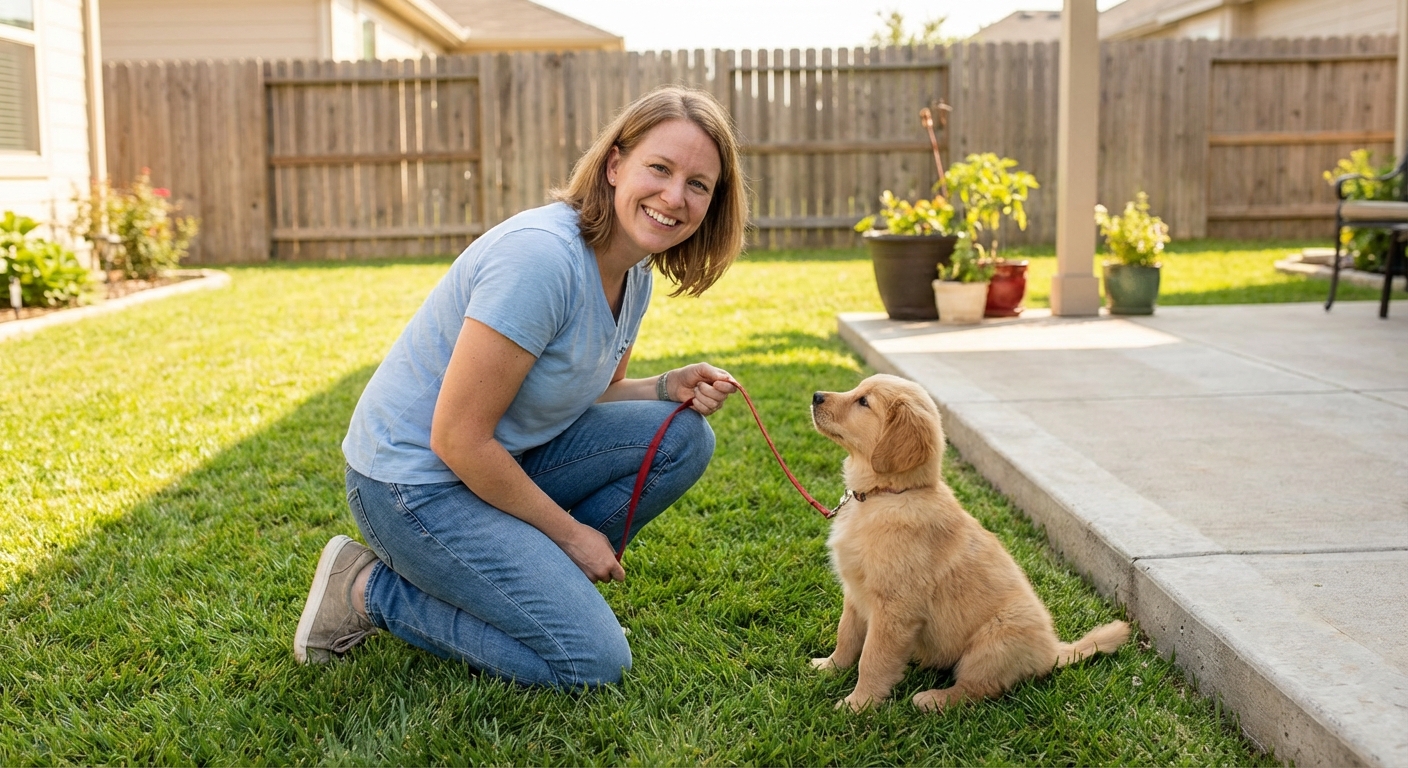
- Walk to the spot on leash.
- Stand still and give your puppy time to sniff and circle.
- Keep it boring until they go, then celebrate.
If you live in an apartment or have limited outdoor access, choose the most consistent option you have, like a patch of grass outside the building. Consistency is what builds the habit.
Shared areas and vaccine safety
If your puppy is not fully vaccinated yet, ask your veterinarian where it is safest to potty outdoors. In many areas, the biggest risk is shared dog traffic (common potty spots, dog parks, areas with lots of unknown dogs). When possible, choose a low-traffic area and avoid places where many dogs frequent until your vet says it is safe.
Use a cue and reward fast
Choose a simple cue like “Go potty”. Say it softly once or twice while your puppy is actively going, not before they start. Then reward right after they finish.
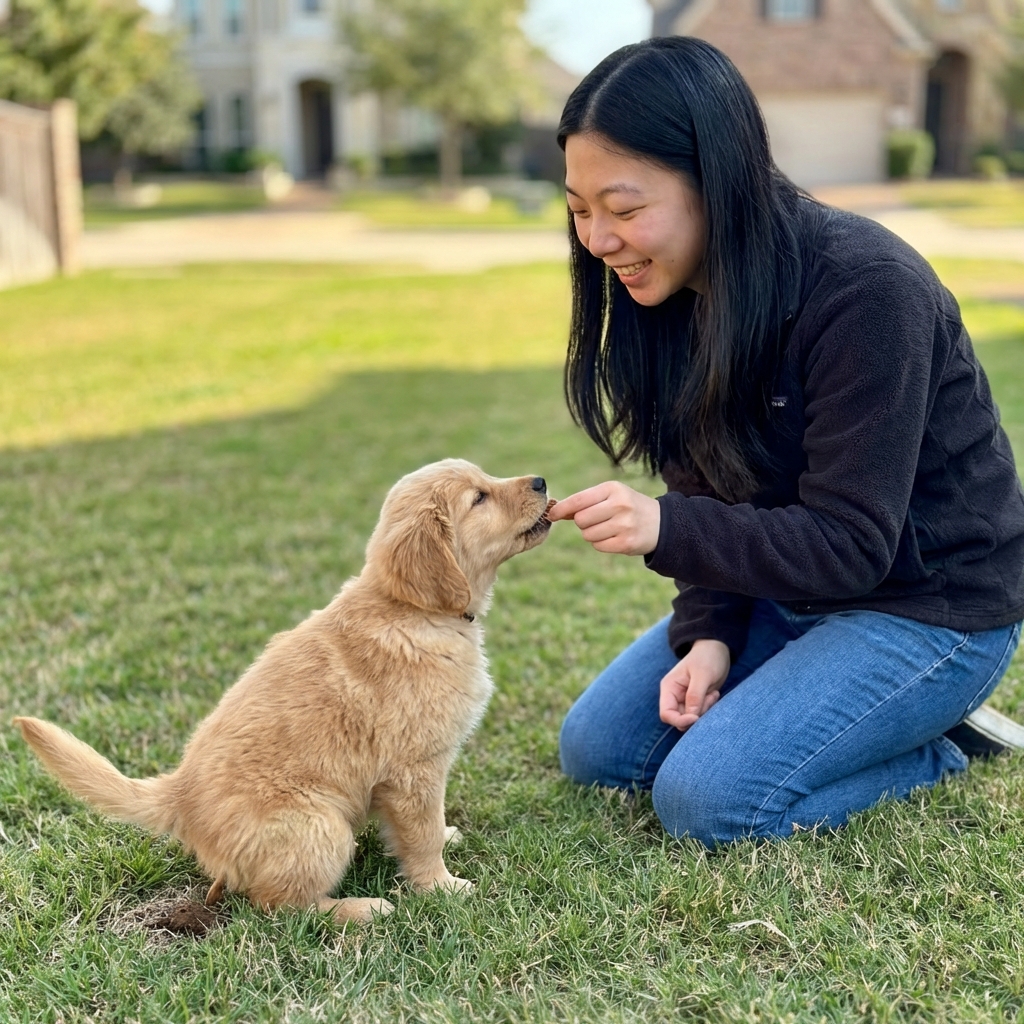
- Timing: Give the treat within a couple seconds after they finish.
- Reward: Use tiny high-value treats (think 3 to 5 pea-sized pieces), praise, and a short play moment.
- Consistency: Reward every correct potty for at least the first few weeks.
This immediate reinforcement is what tells your puppy, “That was the right choice.”
Supervision is the secret
Most potty training problems are supervision problems. If your puppy is loose in the house, consider the “eyes on puppy” rule.
- Use a leash indoors and keep your puppy near you.
- Watch for signs like sniffing, circling, suddenly wandering away, or squatting.
- If you see signs, calmly scoop them up or guide them outside right away.
Every accident is information. It usually means the potty trips are not frequent enough, or your puppy had too much freedom too soon.
What to do after accidents
If you catch them mid-accident
- Interrupt gently (a calm “oops” is enough).
- Take them outside to the potty spot right away.
- If they finish outside, reward.
If you find it later
- Do not scold. Your puppy cannot connect the correction to something that happened minutes ago.
- Clean thoroughly with an enzymatic cleaner made for pet urine and stool.
Cleaning tip: Avoid ammonia-based cleaners (they can smell like urine to dogs). Follow the enzymatic cleaner label directions, including any soak time, so it can actually break down odor markers.
Regular household cleaners often leave scent markers behind. To a puppy’s nose, that can read like: “Bathroom here.”
Pee pads: tool or detour?
Pee pads can be useful for some families (tiny breeds, high-rise living, extreme weather, medical issues). But they can also teach “going indoors is okay,” which may slow outdoor training.
If you use pads, pick one plan and be intentional:
- Pad plan: Pads are the long-term bathroom. Train to pads consistently in one location.
- Transition plan: Pads are temporary. Gradually move the pad closer to the door and then outside over time.
Mixing pads “sometimes” and outdoor potty “sometimes” can confuse many puppies.
Nighttime potty training
At night, your goal is calm, quick potty breaks with minimal excitement.
- Crate near your bed if possible so you can hear stirring.
- Set an alarm for a proactive potty trip if your puppy is having overnight accidents.
- Keep the lights low and your voice quiet.
- Back to the crate right after potty.
As your puppy matures and stays dry longer, you can gradually extend time between nighttime breaks.
Troubleshooting
“My puppy pees every 20 minutes.”
This can be normal with young puppies, but consider:
- Are you rewarding every success outside?
- Is your puppy drinking a lot after play?
- Is there stress, excitement urination, or a change in routine?
Health note: Frequent urination, straining, blood in urine, accidents after doing well, or excessive thirst can signal a medical issue like a urinary tract infection. Contact your veterinarian.
“My puppy goes outside, then pees inside 5 minutes later.”
- Stay outside a bit longer and offer a second chance potty.
- Reward right after they go.
- After a potty trip, supervise closely for 10 to 15 minutes.
“My puppy won’t go outside.”
- Give them 5 to 10 minutes in the potty spot (boring, quiet, on leash).
- If nothing happens, go back inside for 5 to 10 minutes of crate time or close leash supervision.
- Try again. Repeat until they go, then reward immediately.
This prevents the classic pattern of “outside for 2 minutes, then potty on the rug.”
“My puppy is scared to potty outside.”
New sounds, wind, traffic, and other dogs can be overwhelming.
- Choose a quieter spot if possible.
- Bring extra special treats and keep the trip upbeat.
- Do short, frequent outdoor trips to build confidence.
“My puppy only has accidents in one room.”
- Block access to that room for now.
- Clean with an enzymatic cleaner.
- Reintroduce the room slowly with close supervision and frequent potty breaks.
When to ask your vet
As a vet assistant, I always recommend checking in if something feels off. Contact your veterinarian if you notice:
- Sudden accidents after a week or more of progress
- Straining, pain, or vocalizing while urinating or defecating
- Blood in urine or stool
- Vomiting, diarrhea, or lethargy alongside potty issues
- Excessive thirst or very frequent urination
Medical issues can look like training problems, and it is always worth ruling them out.
7-day potty reset
If you feel behind, you can reset without shame. Here is a gentle reboot plan:
- Days 1 to 2: Leash supervision indoors, potty every 60 to 90 minutes, reward every success.
- Days 3 to 5: Keep the schedule, add one short walk daily to encourage bowel movements.
- Days 6 to 7: If accidents are decreasing, give small amounts of supervised freedom, then scale back if accidents return.
Consistency is what makes potty training click. Most puppies do best when the plan is simple enough to repeat every single day.
Bottom line: take your puppy out before they have to go, reward the right spot quickly, and prevent accidents with supervision and smart confinement. Progress comes from repetition.
References
- American Veterinary Society of Animal Behavior (AVSAB). Position statements and resources on reward-based training and humane behavior modification.
- American Kennel Club (AKC). Housetraining guidance and management basics for puppies.
- Merck Veterinary Manual. General information on canine urinary and gastrointestinal health (including when to contact a veterinarian).