A vet assistant’s guide to diffusing essential oils around dogs: lower-risk options, oils to avoid, safer diffuser tips, dosage and timing, and symptoms th...
Article
•
Designer Mixes
Essential Oils Toxic to Dogs

Shari Shidate
Designer Mixes contributor
If you love essential oils, you are not alone. I do too. But as a veterinary assistant here in Frisco, Texas, I have also seen how quickly a “natural” product can turn into an emergency for a dog. Essential oils are highly concentrated plant extracts, and pets can react differently than people do.
This article will help you understand which essential oils are most concerning for dogs, why they are risky, and how to keep your home smelling great without putting your pup in danger.
Quick note: This is general education, not a substitute for your veterinarian’s advice for your specific dog.
Why essential oils can be dangerous for dogs
Essential oils can affect dogs in a few different ways, and the route of exposure matters.
- Ingestion: Licking spilled oils, chewing bottles, or oil applied to fur can lead to stomach upset, neurologic signs, or worse.
- Skin exposure: Oils can irritate skin and, because dogs groom themselves, skin exposure often turns into ingestion.
- Inhalation: Strong vapors from diffusers can irritate airways, especially for dogs with respiratory conditions (for example, chronic bronchitis or tracheal collapse), brachycephalic breeds (like Bulldogs), puppies, and seniors.
Many oils contain compounds such as phenols and certain terpenes that can be harder for pets to process. Depending on dose and exposure, these compounds may irritate the GI tract, nervous system, or airways. Cats are generally even more sensitive, but dogs are absolutely at risk too.
Essential oils commonly considered toxic to dogs
There is no single “safe list” that fits every dog. Toxicity depends on the oil, concentration, dose, and exposure method. That said, the oils below are repeatedly flagged by veterinarians and pet poison resources as higher risk for dogs, especially when ingested or used in concentrated form.
High-risk oils to avoid
- Tea tree (Melaleuca) oil: One of the most common and serious exposures. Even small amounts can cause weakness, wobbliness, tremors, and low body temperature.
- Pennyroyal oil: Known for severe toxicity risk, including liver injury.
- Wintergreen oil: Contains methyl salicylate (an aspirin-like compound) and can be very dangerous if ingested.
- Birch oil: Also associated with methyl salicylate risk.
Oils that are often problematic
These are often associated with adverse reactions, especially in diffusers used heavily, in poorly ventilated spaces, or when applied directly to a dog:
- Cinnamon
- Thyme
- Oregano
- Peppermint
- Pine
- Eucalyptus
- Citronella
- Lemongrass
- Citrus oils (sweet orange, lemon, lime, grapefruit)
- Clove (can cause GI irritation and lethargy and has been associated with more serious signs in some exposures)
- Ylang ylang (can cause GI upset and lethargy in some pets)
Important nuance: Some oils in this “often problematic” group are marketed as pet-friendly. The issue is not marketing, it is dose and exposure. A diffuser running all day in a small room is a very different scenario than brief, well-ventilated use in a large area where the dog can leave. Even “pet-safe” products should be used exactly as labeled.
Concentration matters: A bottle of 100% essential oil is far more hazardous than a heavily diluted, species-appropriate product made for pets. Avoid DIY recipes on your dog unless your veterinarian specifically instructs you.

Signs of essential oil exposure in dogs
If your dog has been exposed to essential oils, symptoms can show up quickly or gradually depending on the oil and route of exposure. Watch for:
- Drooling, lip licking, pawing at the mouth
- Vomiting or diarrhea
- Coughing, sneezing, watery eyes
- Wheezing, labored breathing
- Lethargy or “acting off”
- Wobbliness, weakness, tremors
- Skin redness, itching, burns, or hair loss where product was applied
Go to an emergency vet now (or call ahead on the way) if you see:
- Breathing trouble
- Tremors or seizures
- Collapse or extreme weakness
- Repeated vomiting
- Severe lethargy
What to do if you think your dog was exposed
When it comes to toxins, time matters. Here is a calm, practical plan.
Step 1: Remove access
- Turn off diffusers and move your dog to fresh air.
- Pick up any spilled oil and remove soaked bedding or fabrics.
Step 2: If oil is on the coat or paws
- Prevent licking with an e-collar if you have one.
- Gently wash with a mild dish soap and lukewarm water, then rinse well.
Step 3: Call for help
Contact your veterinarian right away. You can also call a pet poison hotline for immediate guidance (fees may apply):
- ASPCA Animal Poison Control: 888-426-4435
- Pet Poison Helpline: 855-764-7661
Be ready to share the oil name, brand, concentration, how your dog was exposed (licked, skin, diffuser), your dog’s weight, and the time of exposure.
Do not induce vomiting unless a veterinarian or poison professional tells you to. With some substances, vomiting can make things worse.
Source note: The general guidance in this article aligns with publicly available recommendations from ASPCA Animal Poison Control and Pet Poison Helpline, plus common veterinary toxicology teaching. Always follow the instructions you receive from your veterinarian or poison control for your situation.
How to use scent safely in a dog home
You do not have to give up a good-smelling home. You just need dog-aware habits and realistic boundaries.
Safer diffuser habits
- Use short sessions. Avoid continuous diffusion, especially in small rooms.
- Ventilate the space. Open windows or use fans, and never diffuse in closed rooms.
- Give your dog an exit. Your dog should always be able to leave the room.
- Place diffusers wisely. Keep them away from crates, beds, and food or water bowls, and keep cords and bottles out of reach.
Do not apply essential oils to your dog
Unless a veterinarian specifically instructed you to use a particular product in a particular way, do not put essential oils on your dog’s fur, paws, skin, collar, or bedding. “Diluted” is not the same as “safe,” and your dog will lick it.
Other scent products
- Reed diffusers: Can spill easily and the liquid may be tempting to lick. Treat them like a toxin risk and keep them fully out of reach.
- Sprays: Droplets can land on a dog’s coat or bedding and then get licked. Use only in pet-free rooms and allow time to fully air out.
- Candles and wax melts: The main risk is heat, burns, and knocked-over wax. Use only where pets cannot access them and avoid heavy fragrance if your dog is sensitive.
Pet-friendly alternatives for a fresh home
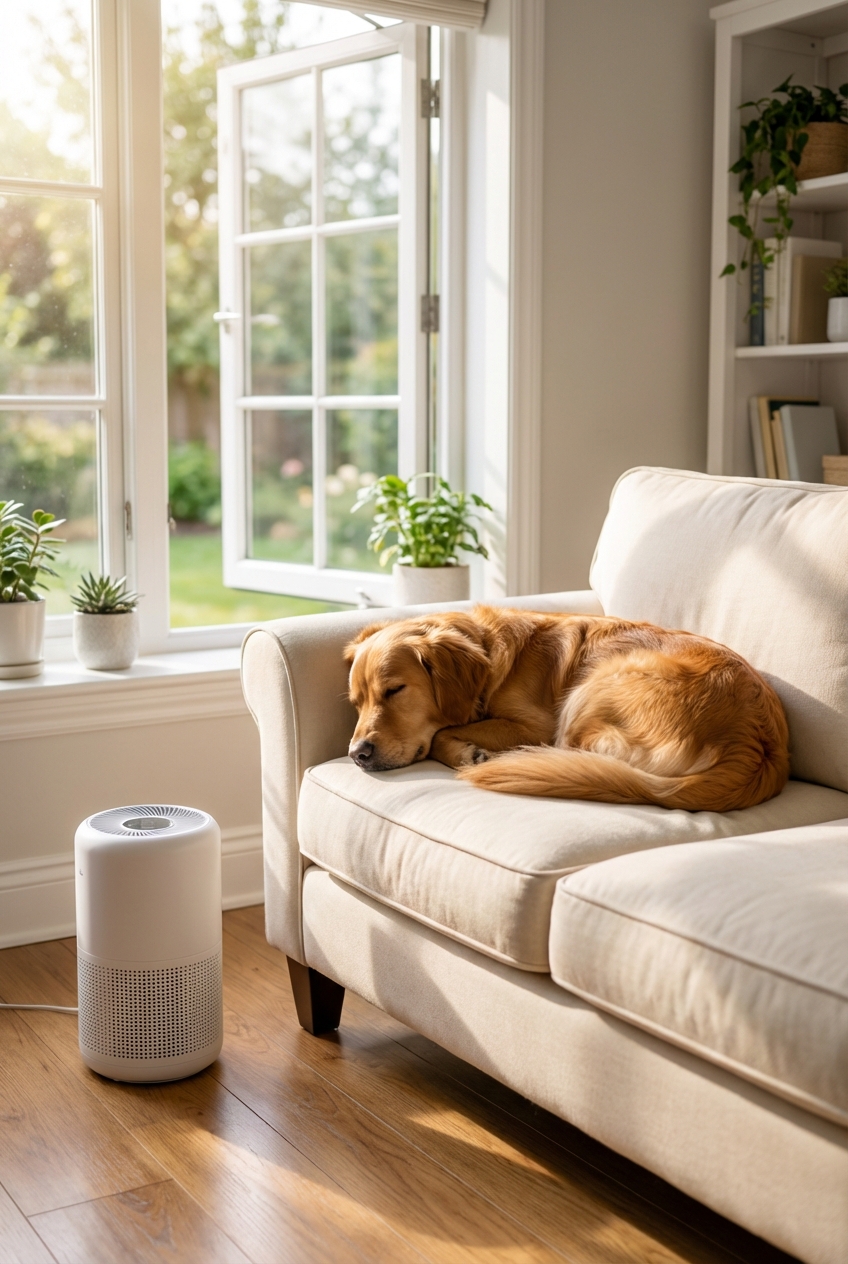
- HEPA air purifier for odor and dander control
- Baking soda in carpets before vacuuming (keep the dog out of the room until vacuumed)
- Washable throw blankets on pet beds and couches
- Unscented enzymatic cleaner for accidents
- Simmer pot (use caution): If you choose this option, keep pets away from the hot pot and steam, use good ventilation, and stop if your dog seems irritated. Avoid onions, garlic, and other pet-toxic ingredients.
Quick checklist
- Avoid high-risk oils like tea tree, wintergreen, pennyroyal, and birch.
- Treat ingestion of any essential oil as potentially dangerous and call your vet or poison control.
- No topical oils on dogs unless prescribed by a veterinarian.
- Diffusers are not automatically safe: use short sessions, ventilate, and allow the dog to leave.
- Call your vet or poison control early if exposure happens.
Your dog depends on you to make the safe choice, even when the product is “natural.” With a few adjustments, you can protect your pup and still enjoy a home that feels clean, calm, and welcoming.