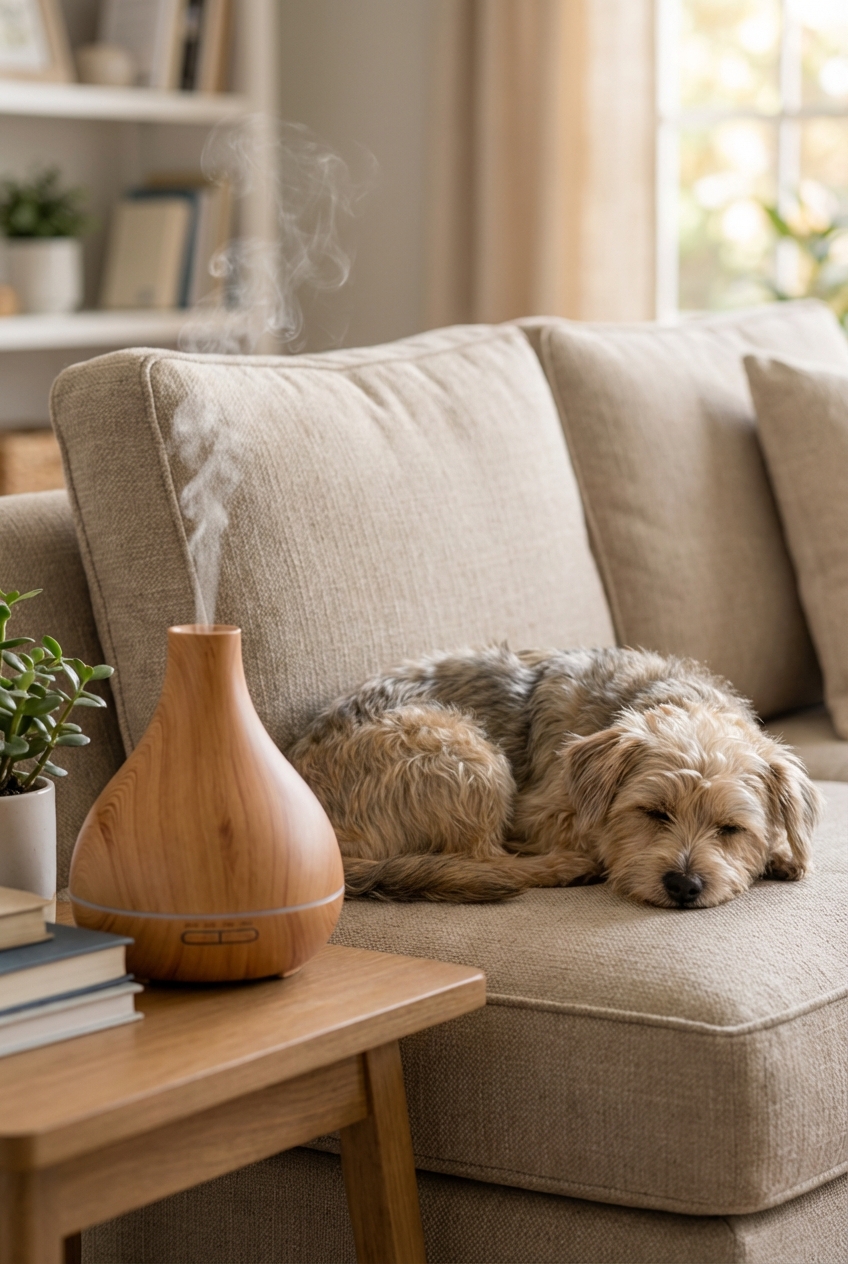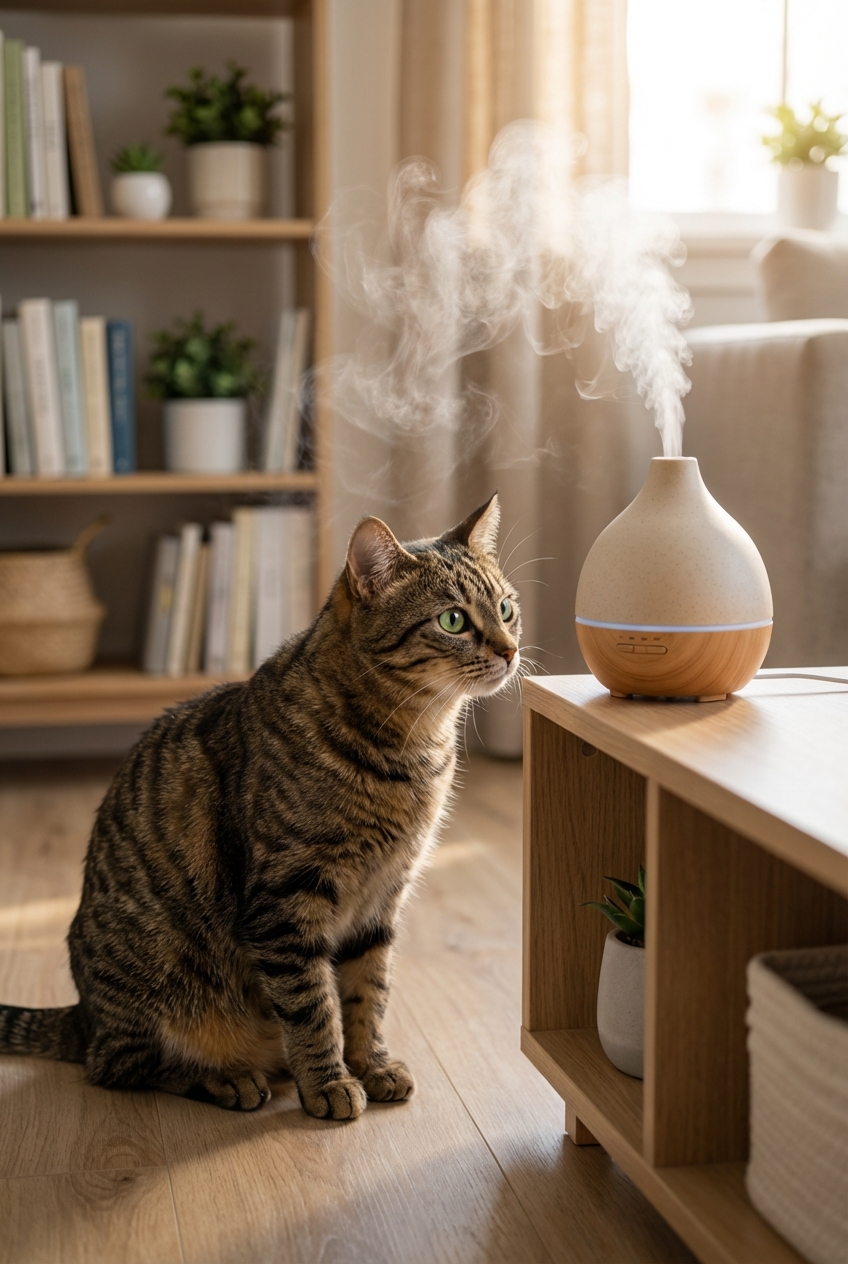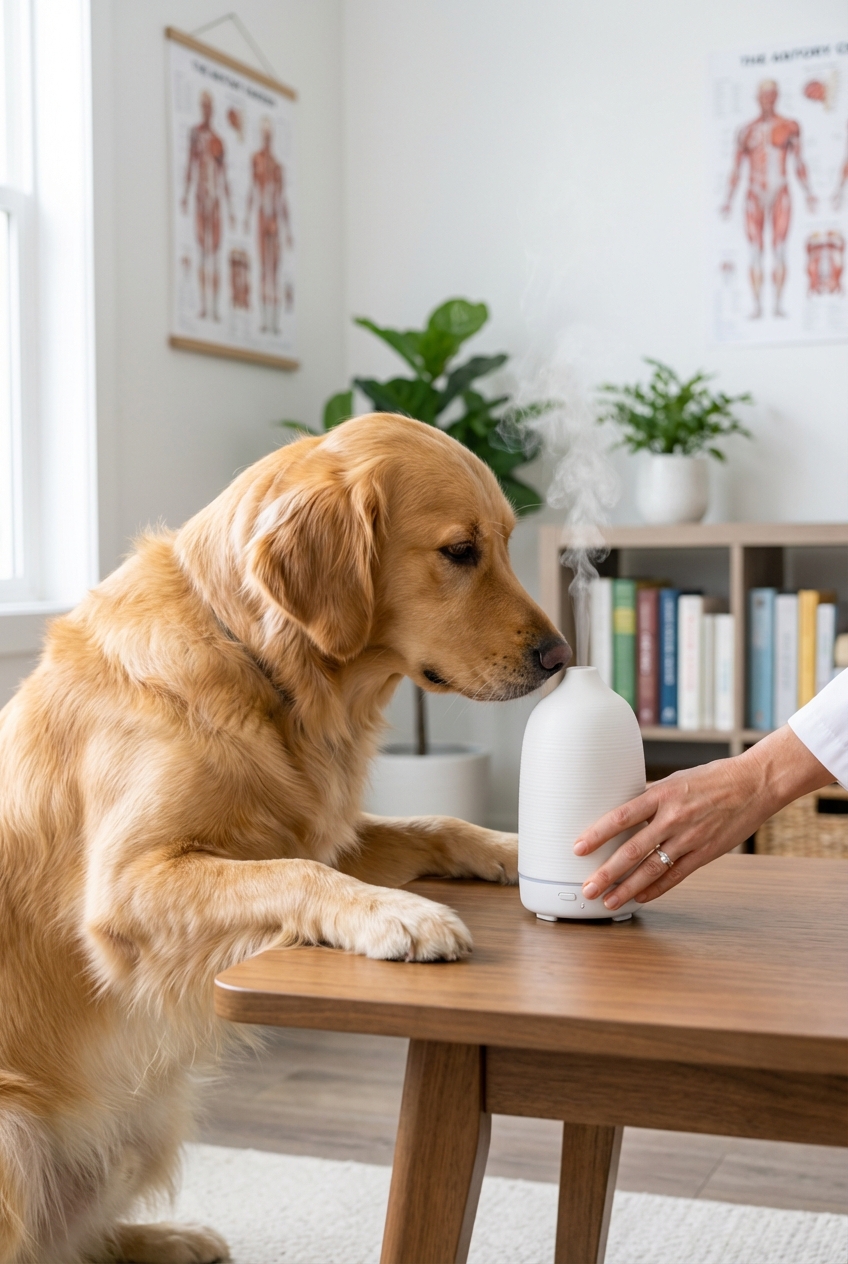
Discover which essential oils are most risky for dogs, symptoms to watch for, and what to do if exposure happens. Get practical diffuser safety tips and safe...
Article
•
Designer Mixes
Essential Oils Safe to Diffuse Around Dogs

Shari Shidate
Designer Mixes contributor
If you love a clean-smelling home and you share it with a dog, you are not alone in wondering: Which essential oils are safe to diffuse around dogs? As a veterinary assistant in Frisco, Texas, I see well-meaning pet parents run into trouble because “natural” can still be very potent for our pets.
Here is the bottom line: some essential oils are often reported as better tolerated when used very conservatively in a well-ventilated space, but others can irritate the airways, trigger vomiting, or cause serious toxicity. Also, diffusion is not “risk-free.” Spilled oil, heavy concentrations, and chronic exposure can still be a problem. The goal of this guide is to help you diffuse smarter, recognize red flags early, and keep your dog comfortable and safe.
Quick note: This article is educational and not a substitute for veterinary advice. If you also have cats or birds, be extra cautious. They are often more sensitive to airborne oils, and many oils that seem “fine” for dogs can be risky for other species.
Quick safety notes
Diffusing is usually lower risk than applying oils directly to your dog, but it still matters what you diffuse, how much, what type of diffuser you use, and your dog’s health.
- Do not apply essential oils to your dog without veterinary guidance. Dogs lick their coats, and ingestion is a common way toxic exposures happen.
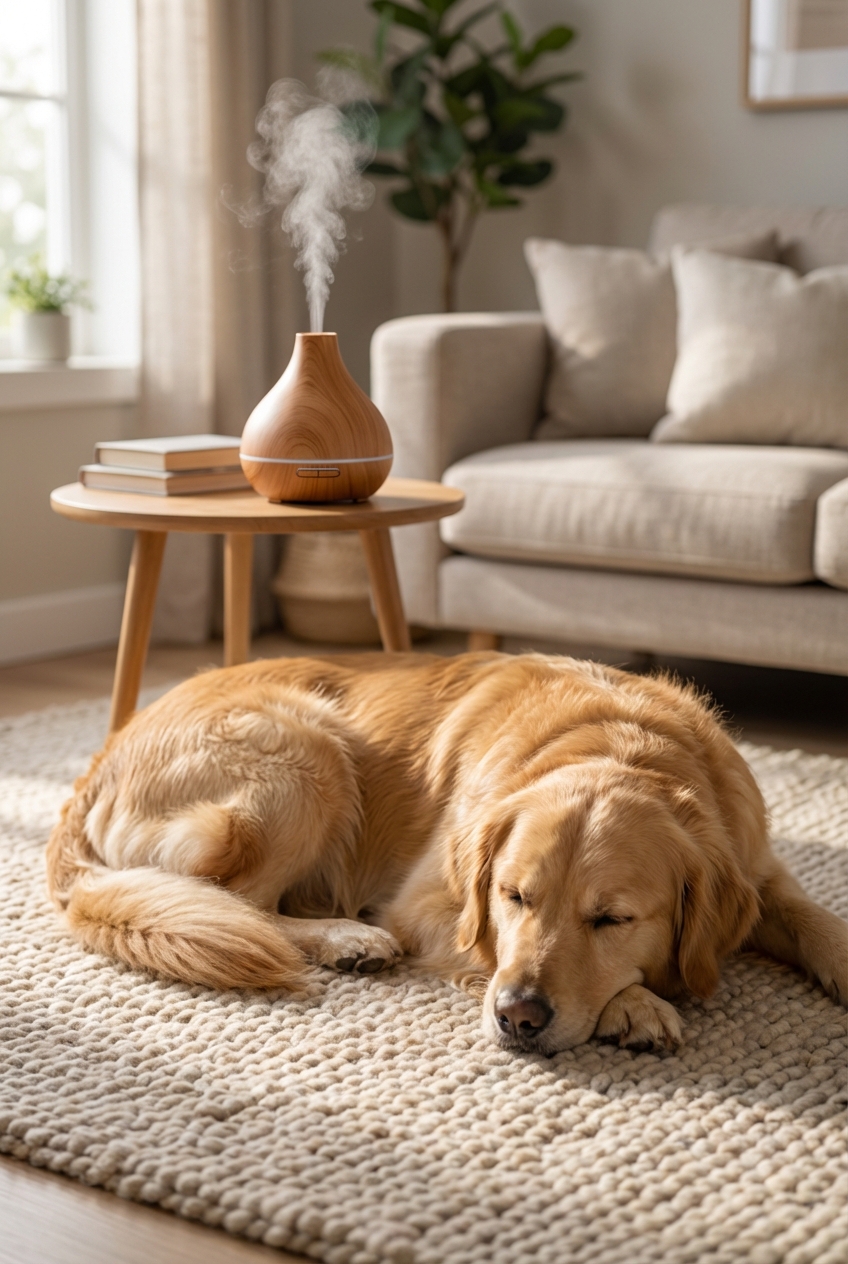
- Give your dog an exit route. Diffuse only in a larger, ventilated area and leave a door open so your dog can choose to leave.
- Less is more. Many pet issues I see come from over-diffusing in small rooms.
- Avoid continuous diffusion. Short sessions are safer than all-day scenting.
- Extra caution with puppies, seniors, and medically fragile dogs. Small dogs and dogs with respiratory disease can be affected sooner at lower exposures.
Talk to your vet first if your dog has a history of seizures, chronic cough or wheeze, collapsing trachea, brachycephalic airway syndrome (for example, Bulldogs and Pugs), heart disease, or liver disease. For seizure-prone dogs in particular, strong scents and certain oils can be triggers for some individuals, so I recommend avoiding diffusion unless your veterinarian explicitly okays it.
How dogs react
Dogs experience essential oils differently because their bodies process certain compounds in different ways. Dogs also have a powerful sense of smell, so what feels “light” to you can be overwhelming to them.
Why diffusion can still be a problem
- Respiratory irritation: Even “pleasant” oils can irritate the nose, throat, and lungs.
- Skin and eye irritation: With some diffuser types, tiny droplets can settle on fur, paws, and the eye surface.
- Ingestion from grooming: Anything that settles on the coat can be licked later.
- Spills are a big deal: A knocked-over bottle or diffuser can lead to concentrated exposure through skin contact or licking.
Diffuser detail: Many ultrasonic diffusers can aerosolize water plus oil into fine droplets. Other devices primarily volatilize oils into the air. Either way, your dog is still inhaling scent compounds, but droplet-based mist can increase the chance of residue on fur and surfaces.

Lower-risk oils
No essential oil is 100% “safe.” The oils below are often reported as better tolerated around healthy adult dogs when diffused properly and very lightly. Evidence quality varies, and individual sensitivity is real, so treat this as a conservative starting point, not a guarantee.
Often better tolerated for diffusion (use lightly):
- Lavender (Lavandula angustifolia)
- Roman chamomile (Chamaemelum nobile)
- Frankincense (Boswellia species)
- Cedarwood (Cedrus atlantica)
- Ginger (Zingiber officinale)
- Cardamom (Elettaria cardamomum)
Important: These are not an invitation to diffuse constantly. They are simply oils that some dogs tolerate better when used correctly. If your dog is tiny, has respiratory disease, or has a seizure history, check with your veterinarian before using any oil, even one on this list.
How to use them
- Start with 1 drop in a standard water diffuser in a large room. If you have a very open-plan space and your dog shows zero signs of irritation, you might stay at 1 to 2 drops. More is not better.
- Diffuse 10 minutes, then turn it off and reassess your dog. If you want a longer session, do it as separate short cycles, not continuous output.
- Frequency: Aim for occasional use, such as 1 to 3 times per week, not daily. If you feel like you “need” it every day, it is usually a sign to improve cleaning and airflow instead.
- Keep it out of reach. Curious dogs can knock diffusers over or lick spills.
- Stop immediately if you see signs of discomfort.
Diffuser types
How the oil gets into the air matters.
- Ultrasonic (water-based) diffusers: Often a more conservative option for pet homes because you can use fewer drops and shorter sessions. They may produce a visible mist that can settle as residue.
- Nebulizing or waterless diffusers: Usually higher exposure because they can release more concentrated oil into the air. In my experience, these are a common reason a home becomes “too much” for a dog quickly.
- Passive diffusers (reed, wick, etc.): Less dramatic output, but still a risk if placed where a dog can lick or knock it over.
Oils to avoid
Some oils are more likely to cause adverse reactions, especially in small spaces or with heavier diffusion. The oils below are commonly flagged by veterinarians and toxicology resources as higher risk for pets.
- Tea tree (Melaleuca alternifolia)
- Wintergreen (Gaultheria procumbens)
- Pennyroyal (Mentha pulegium)
- Clove (Syzygium aromaticum)
- Cinnamon (Cinnamomum verum or cassia)
- Oregano (Origanum vulgare)
- Thyme (Thymus vulgaris)
- Birch (Betula species)
- Ylang ylang (Cananga odorata)
- Eucalyptus (Eucalyptus species)
- Peppermint (Mentha piperita)
- Pine (Pinus species)
- Camphor (Cinnamomum camphora)
This list is not exhaustive. If you are unsure about an oil, assume it is not dog-friendly until proven otherwise by a trusted veterinary source.
What about citrus?
Citrus oils are tricky. Many dogs find citrus irritating, and citrus essential oils can be strong in limonene and related compounds that may cause GI upset or sensitivity in some dogs. Even if you have diffused citrus before without an obvious issue, sensitivity can change over time, especially if the room is small or the diffusion is frequent.
If you want a “fresh” home scent, consider non-oil options like better ventilation, HEPA filtration, washing dog bedding more often, and simmering dog-safe herbs in water on the stove while your dog rests in another area.
Reaction signs
Trust what your dog is telling you. A lot of pets show subtle signs before it becomes a bigger problem.
Common warning signs
- Sneezing, coughing, wheezing, or noisy breathing
- Watery eyes, squinting, red eyes
- Drooling or lip licking
- Vomiting or diarrhea
- Pawing at the face
- Restlessness, hiding, leaving the room
- Weakness, tremors, wobbliness
If your dog leaves the room when you diffuse, that is valuable information. Give them the choice to stay away, and consider switching to a non-scented option.
What to do
If you suspect your dog is reacting to essential oils, act quickly but calmly.
Immediate steps
- Turn off the diffuser and remove it from the room.
- Ventilate the space by opening windows and turning on fans.
- Move your dog to fresh air, ideally to a different room or outdoors.
- If oil spilled on fur or paws: prevent licking and call your vet. Do not “home remedy” with harsh cleaners. Your clinic may recommend a gentle bath with dish soap, but guidance matters.
Emergency red flags
- Trouble breathing or open-mouth breathing not related to heat or exercise
- Repeated vomiting or vomiting plus lethargy
- Tremors, seizures, severe wobbliness, or collapse
- Large exposure such as a chewed bottle, licking spilled oil, or a heavy spill on the coat
For urgent concerns, contact your veterinarian or a pet poison helpline. In the US, many clinics use these services for case-specific guidance:
- ASPCA Animal Poison Control Center: (888) 426-4435
- Pet Poison Helpline: (855) 764-7661
A simple routine
If you want a realistic routine that prioritizes your dog, here is a simple plan I recommend for many households.
Start slow
- Choose one lower-risk oil only, not a blend.
- Use 1 drop in a water-based diffuser.
- Diffuse 10 minutes in a large, well-ventilated room.
- Watch your dog for the next 1 to 2 hours for any changes.
- If all is well, repeat on another day, not the same day.
Keep it occasional
In most pet homes, occasional diffusion is plenty. If you feel like you need constant scent to cover odors, the best fix is usually cleaning and air flow, not stronger fragrance.

Quality and setup
- Use only high-quality, single-ingredient oils with clear botanical names.
- Avoid “fragrance oils” and mystery blends. Blends can hide higher-risk oils.
- Be cautious with products labeled “pet safe.” That is marketing, not a regulated safety standard.
- Use a diffuser with a timer or automatic shutoff so sessions stay short.
- Diffuse in a large room with air circulation.
- Never diffuse near crates, beds, or places your dog cannot easily leave.
- Keep oils and diffusers physically out of reach.
- Stop immediately if your dog shows any symptoms.
FAQ
Is a candle safer?
Not necessarily. Candles can create smoke and particulates that irritate airways, plus there is a burn risk. If you do use candles, choose unscented, keep them away from pets, and limit burn time.
Are nebulizers safer?
Usually no. Nebulizers can release a higher concentration of oil into the air. For pet homes, a standard water diffuser used briefly is typically the more conservative option if you choose to diffuse.
Can I diffuse in one room only?
That is often a smarter choice, as long as airflow does not carry a heavy scent through the entire home. Keep your dog comfortable, and do not diffuse near sleeping areas.
The takeaway
You can enjoy a nice-smelling home and still be a careful, evidence-based pet parent. Choose oils that are often better tolerated, diffuse lightly, ventilate well, and let your dog opt out. If you are ever unsure, skip the diffuser and focus on fresh air and clean fabrics. Your dog will breathe easier for it.