
Start homemade dog food safely with this vet-informed starter plan. Learn what “vet approved” means, choose a balancer, follow a 14-day transition, and u...
Article
•
Designer Mixes
Essential Oils Dogs Should Avoid

Shari Shidate
Designer Mixes contributor
As a veterinary assistant here in Frisco, Texas, I totally understand why essential oils are tempting. They smell amazing, they feel “natural,” and they are everywhere, from diffusers to cleaning sprays to flea “remedies.” But here is the truth I want every dog parent to know: essential oils can be unsafe for dogs depending on the oil, the dose, the delivery method, and your dog’s size and health, even when the oil is high quality and even when it is used with good intentions.
This handbook will help you make safer choices with vet-informed, evidence-based guidance, clear red flags to watch for, and practical steps you can use today.

Why oils can be risky
Dogs do not handle all compounds the same way humans do, and they are exposed differently. Essential oils are highly concentrated plant extracts, and exposure can happen in multiple ways:
- Inhalation: Diffusers, sprays, scented candles, and “aromatherapy” sessions.
- Skin contact: Oils applied directly, diluted blends, shampoos, or oils rubbed on bedding.
- Ingestion: Licking fur or paws after contact, chewing a bottle, or consuming oil-containing products.
Many essential oils contain compounds that can irritate the airway, upset the stomach, affect the nervous system, or strain the liver. For example, dogs can be sensitive to certain terpenes and phenolic compounds in concentrated oils, and their smaller body size means “a little” can add up quickly.
Dogs at higher risk
- Puppies and seniors
- Small dogs
- Dogs with asthma, chronic bronchitis, or other respiratory disease
- Dogs with liver disease, seizures, or other neurologic conditions
- Dogs on medications metabolized by the liver
Signs of exposure
Most families I talk to do not realize there is a problem until their dog starts acting “off.” If you notice changes soon after you diffuse, spray, mop, or apply anything scented, assume the product could be involved until proven otherwise.
Red flags
- Drooling, lip smacking, nausea
- Vomiting or diarrhea
- Coughing, sneezing, watery eyes
- Wheezing or increased breathing effort
- Wobbliness, weakness, tremors
- Disorientation or unusual sleepiness
- Pawing at the mouth or face rubbing (irritation)
- Redness, rash, or chemical burn on skin

Oils often linked to problems
Veterinary case reports and poison control call patterns show certain oils come up again and again in pet exposures. This does not mean every exposure causes severe toxicity, but these are commonly reported and are best avoided around dogs, especially in diffusers or direct-use products.
Oils to avoid
- Tea tree (melaleuca): Frequently associated with tremors, weakness, and neurologic signs, especially with topical use or concentrated products.
- Pennyroyal: Historically linked to serious liver toxicity in animals and humans.
- Wintergreen: Contains methyl salicylate (related to aspirin). Even small amounts can cause dangerous poisoning.
- Birch (sweet birch): Also high in methyl salicylate.
- Camphor: Linked to neurologic toxicity in many species.
- Clove: Can be irritating, and higher exposures may stress the liver.
- Cinnamon (especially bark): Strong skin and mucous membrane irritant; can trigger coughing and GI upset.
- Oregano: Very concentrated and can irritate the GI tract and airway.
- Thyme: Potent and irritating for many pets.
- Pine (including some “pine oil” cleaners): Can irritate the airway and GI tract; risk varies by product and concentration.
- Eucalyptus: Common diffuser oil that can cause drooling, vomiting, and neurologic signs in some exposures.
- Peppermint: Often reported in irritation and GI upset cases, especially in concentrated vapor or when applied to fur.
- Ylang ylang: Reported in some exposure cases with drooling, vomiting, and lethargy.
Important note: “Safe lists” on the internet often conflict because they ignore dose, delivery method, and the dog’s size and health status. The safest approach is to avoid using essential oils directly on dogs and to use extreme caution with diffusion.
Diffusers: a common issue
Diffusing is often marketed as gentle, but it can be a significant exposure route. Diffusers release tiny droplets and volatile compounds into the air. Dogs are closer to the ground, have sensitive respiratory tracts, and cannot choose to leave a closed room the way we do.
If you diffuse
- Ventilation matters: Use only in a well-ventilated area and keep doors open.
- Give your dog an exit: Your dog should be able to leave the room freely.
- Short sessions: Limit diffusion time and avoid continuous diffusion.
- No diffusion near crates or beds: Never diffuse where your dog is confined.
- Skip diffusion with respiratory disease: Coughing dogs should not be around diffusers.
- Secure the device: Spills are a big deal. Dogs can ingest oil or get it on their coat and lick it.
If your dog sneezes, coughs, leaves the room, rubs their face, drools, or seems nauseated during diffusion, turn it off immediately and air out the space.

Topical use is still risky
Many products claim to be pet-safe because they are “diluted.” Dilution can reduce risk, but it does not erase it. Dogs groom themselves. Anything on the fur often becomes something they ingest.
High-risk mistakes
- Applying oils to paws, ears, or along the back
- Using oils under collars or on bandanas
- Adding oils to shampoo without veterinary guidance
- Using essential oils as a “natural flea treatment”
- Trying DIY recipes with concentrated oils
If you are trying to support skin comfort or repel pests, ask your veterinarian about options that have real safety data for dogs. For fleas and ticks especially, “natural” is not always safer, and an ineffective product can delay treatment and create bigger problems.
If your dog ingests oil
If your dog ingests essential oil or chews a bottle, treat it as urgent. Do not wait for symptoms to appear.
Do this now
- Remove access to the oil and keep your dog calm.
- Check the label for the oil name(s), concentration, and any carrier oils or additives.
- Call your veterinarian for next-step advice.
- If you cannot reach your vet, call a pet poison hotline and follow their instructions.
Do not do this
- Do not induce vomiting unless a veterinarian or poison expert tells you to. Oils can be aspirated into the lungs.
- Do not give milk, bread, or “detox” remedies as a substitute for medical advice.
If oil got on your dog’s coat or skin, your vet may advise gentle bathing with a mild dish soap to remove residue. Follow professional guidance, avoid harsh scrubbing, and keep your dog warm while drying.
If oil gets in the eyes
Eye exposures can be very painful and can worsen quickly.
- Rinse right away with room-temperature saline or clean water for several minutes.
- Do not apply oils or home remedies to “soothe” the eye.
- Call your vet for urgent guidance, especially if there is squinting, redness, discharge, or pawing at the face.
Essential oils vs other scents
This part is confusing, so here is a simple rule:
- Essential oils are concentrated plant extracts and are the highest risk category.
- Carrier oils (like coconut, olive, or jojoba) are not essential oils. They can still cause stomach upset if a dog eats a lot, but they do not carry the same concentrated volatile compounds.
- Hydrosols are much more dilute aromatic waters. They are not automatically safe, but they are usually less concentrated than essential oils. Treat them cautiously and avoid putting them on your dog unless your veterinarian approves.
- Fragranced products may contain essential oils, synthetic fragrance, or both. “Natural fragrance” can still irritate sensitive dogs.
“Pet-safe” marketing
One of the most frustrating things I see is a product marketed for pets with little to no transparency. Here is how to protect your dog when shopping.
Green flags
- Full ingredient list (not “proprietary blend” only)
- Clear species guidance (dogs vs cats vs all pets)
- Usage directions with amounts and limitations
- Company provides a phone number and safety information
Red flags
- Claims to treat serious diseases (that is a regulatory red flag)
- No dilution information
- Encourages oral dosing of essential oils
- Encourages application to paws, nose, ears, or broken skin
Remember: natural does not mean non-toxic. Many natural compounds are powerful, and dogs are not tiny humans.
What if you have cats too?
Quick heads-up: cats are often more sensitive to essential oils than dogs. If you have a multi-pet home, be even more conservative with any scented product and talk with your veterinarian about safest options.
Safer ways to freshen your home
If you love a clean-smelling home, you have options that are typically lower risk than essential oils.
- Ventilation: Open windows when weather allows, run exhaust fans.
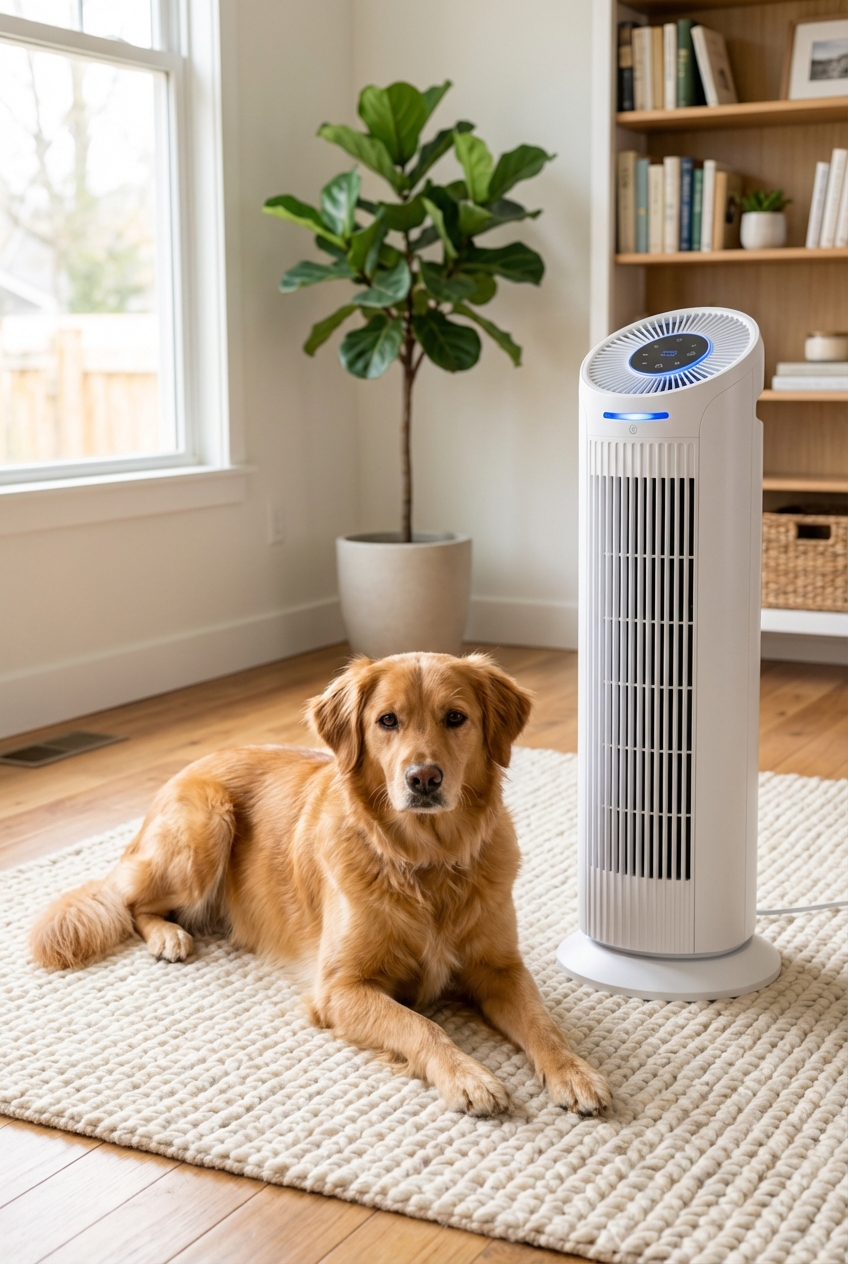
- HEPA air purifier: Helpful for dander, dust, and many odors.
- Enzyme cleaners: Great for pet messes without heavy fragrance.
- Washable textiles: Launder bedding, throw blankets, and slipcovers regularly.
- Baking soda: Useful on carpets before vacuuming (keep pets away until fully vacuumed).
Quick checklist
- Keep essential oils and diffusers out of reach at all times.
- Do not apply essential oils directly to your dog.
- Avoid diffusing in small, closed spaces or where your dog cannot leave.
- Be extra cautious with puppies, seniors, and dogs with respiratory or neurologic issues.
- If your dog shows drooling, vomiting, coughing, or wobbliness after exposure, stop the source and call your vet.
When in doubt, choose the simplest path: fresh air, gentle cleaners, and vet-approved products. Your dog’s nose and lungs will thank you.
Sources and notes
This article reflects commonly cited veterinary toxicology guidance and patterns reported through animal poison control resources and veterinary clinical experience. For urgent cases, always contact your veterinarian or a pet poison hotline because the risk depends on the specific oil, amount, and exposure route.
- ASPCA Animal Poison Control Center: https://www.aspca.org/pet-care/animal-poison-control
- Pet Poison Helpline: https://www.petpoisonhelpline.com
- Merck Veterinary Manual (general toxicology reference): https://www.merckvetmanual.com
Note: poison hotline consultations may involve a fee, and availability can vary by region.