Turn chicken and rice into a more balanced homemade dog meal with veggies, calcium carbonate, and omega-3s. Includes gram weights, portion guidance, swaps, a...
Article
•
Designer Mixes
Essential Foods for Dogs With Diarrhea

Shari Shidate
Designer Mixes contributor
Diarrhea is a very common reason pet parents call a vet clinic, and I completely get why. It is messy, stressful, and it can make you worry quickly. The good news is that many mild cases improve with a short, gentle reset of the diet, supporting hydration and electrolytes, and close observation.
As a veterinary assistant in Frisco, Texas, I always remind families of two things: diarrhea is a symptom, not a diagnosis, and your dog’s gut needs time and the right fuel to recover. This article is for general education and is not a substitute for your veterinarian’s diagnosis or medical advice.
First, when diarrhea is an emergency
Home diet support is for mild, short-lived diarrhea in an otherwise bright, alert dog. Please call your veterinarian promptly if you notice any of the following:
- Blood in the stool (red streaks or black, tarry stool)
- Vomiting that repeats or prevents your dog from keeping water down
- Lethargy, weakness, collapse, fever, or obvious abdominal pain
- Dehydration (sticky gums, sunken eyes, skin doesn’t spring back)
- Puppies, seniors, or dogs with chronic disease (kidney, diabetes, Addison’s, etc.)
- Diarrhea lasting more than 24 to 48 hours despite a bland diet (and call within 24 hours for small dogs and puppies)
- Possible toxin exposure, foreign body chewing, or a history of eating trash
- Severe watery diarrhea happening very frequently (for example, every hour) or your dog cannot settle
- Repeated straining with little to no stool produced
- Unvaccinated puppies or known exposure risk to parvovirus
- Possible ingestion of human medications (NSAIDs like ibuprofen/naproxen, antidepressants, etc.)
- A swollen belly, repeated retching, or signs that could fit bloat (this is always an emergency)
Important note: dogs can lose fluids and electrolytes surprisingly quickly. Smaller dogs and puppies can get into trouble much faster than large adult dogs.
What to feed: gentle gut foods
When the intestines are irritated, the goal is simple: easy-to-digest protein + soothing carbohydrate + hydration, then slowly return to normal food.
1) Boiled chicken breast
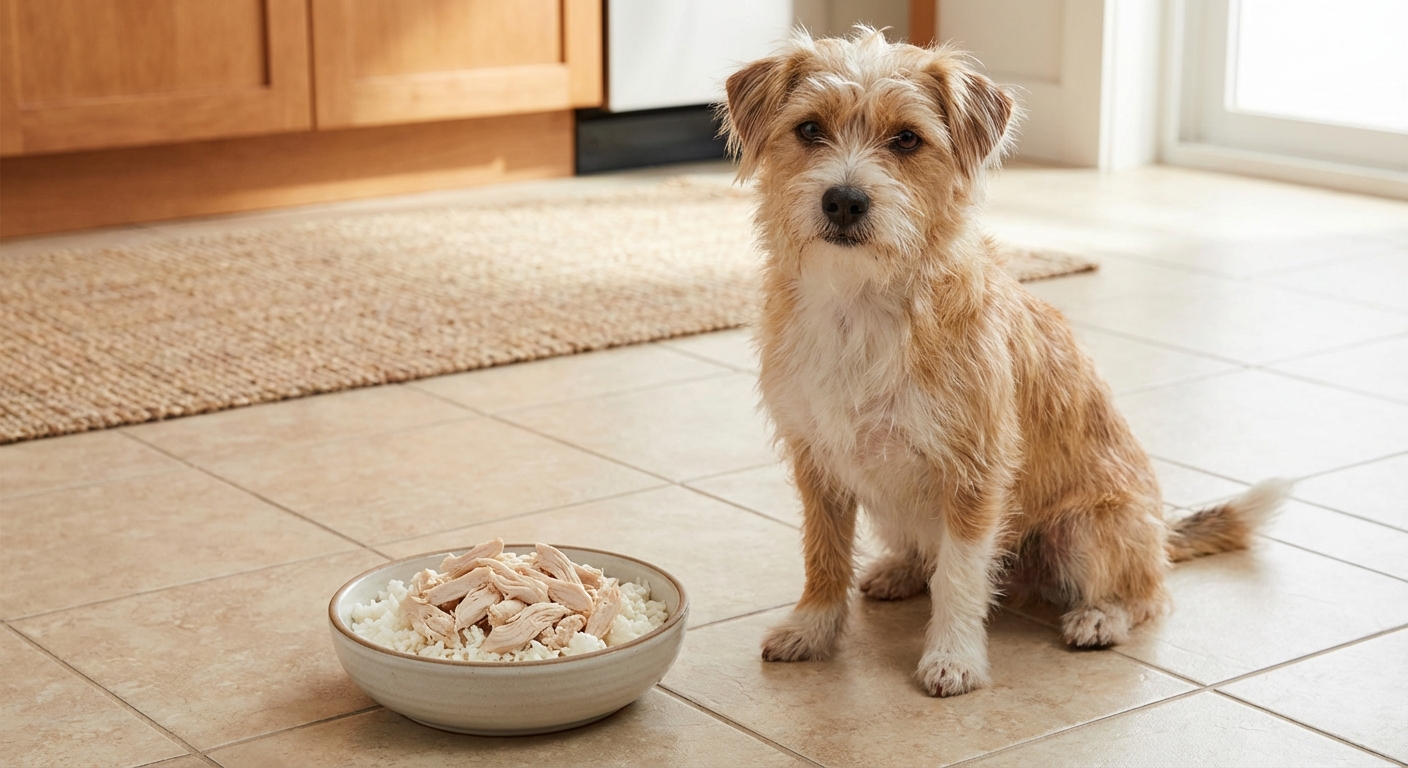
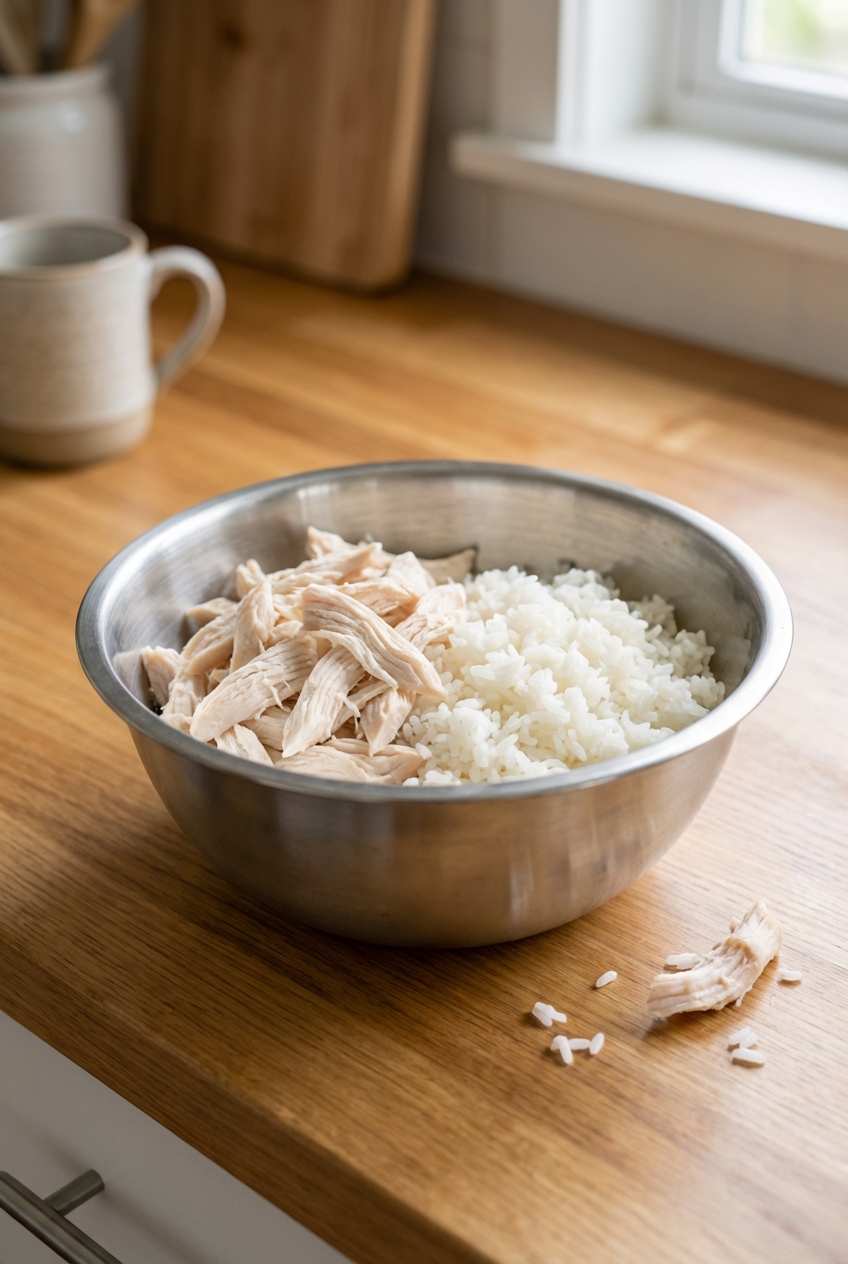
Lean chicken is a classic bland protein because it is low fat and typically well tolerated. Use boiled, boneless, skinless chicken breast, cooked plain, then shred.
- Tip: Avoid rotisserie chicken, seasoned meats, and anything cooked in butter or oil.
2) Lean ground turkey (drained well)
Turkey is another gentle option, especially for dogs that do not do well with chicken. Cook thoroughly and drain off fat.
3) Plain white rice
White rice is easy on the stomach and can help firm stool for some dogs by providing a simple carbohydrate source.
- Good to know: white rice is often preferred over brown rice during diarrhea because it is lower in fiber and usually easier to digest.
4) Pumpkin puree (plain, not pie filling)
Pumpkin is a “Goldilocks” fiber for some dogs. Its soluble fiber can help support stool consistency, but it is not a guaranteed fix for every cause of diarrhea.
- How much: many dogs do well with 1 to 4 teaspoons mixed into food, depending on size.
- Start low: too much pumpkin can cause gas or looser stool in some dogs. If it seems to worsen things, stop and check in with your vet.
- Tip: choose 100% pumpkin in a can, with no spices or sweeteners.
5) Plain psyllium husk (fiber support)
Psyllium is a soluble fiber that can help bind stool and support the gut lining. It is often used short-term, but dosing is very size-dependent.
- Important: only use plain psyllium without flavors or sweeteners. Mix with water and food.
- Dosing: ask your veterinarian for the right amount for your dog. Too much can cause constipation, bloating, or discomfort.
- Check first: if your dog might have a blockage, do not add fiber without veterinary guidance.
6) Plain, low-fat yogurt or kefir (only if your dog tolerates dairy)
Some dogs benefit from a small amount of plain yogurt or kefir because it can provide live cultures. Others get worse with dairy, so this one is “try carefully.”
- Tip: start with 1 teaspoon for small dogs, 1 tablespoon for medium to large dogs.
- Safety: use plain, unsweetened products only. Avoid anything with added sugars, flavors, or artificial sweeteners (especially xylitol, which is toxic to dogs).
7) A veterinary probiotic
Not a “food,” but it can be one of the most helpful add-ons. Veterinary probiotics are formulated and tested for dogs and may be easier to dose appropriately for canine GI upset.
Tip: ask your vet which probiotic they recommend for diarrhea and how long to use it.
Quick rule of thumb: for diarrhea, keep it simple and boring for a few days. Your dog’s gut is doing a repair job.
Foods to avoid
Some foods make diarrhea worse by increasing fat, irritation, or fermentation in the intestines.
- Fatty foods (bacon, sausage, greasy scraps)
- Milk, cheese, ice cream (many dogs are lactose intolerant)
- Rich treats and new chews
- Spicy or seasoned foods (garlic and onion seasonings are especially risky)
- High-fiber “detox” add-ins unless your vet suggests them
- Raw diets during active diarrhea, especially in households with kids or immune-compromised adults
Key fact: sudden diet changes are a top cause of diarrhea. Even switching brands too quickly can trigger a full gut rebellion.
Bland diet ratios and timing
A common starting point is:
- 1 part protein (boiled chicken or lean turkey)
- 2 parts carbohydrate (white rice) plus an optional small spoon of pumpkin
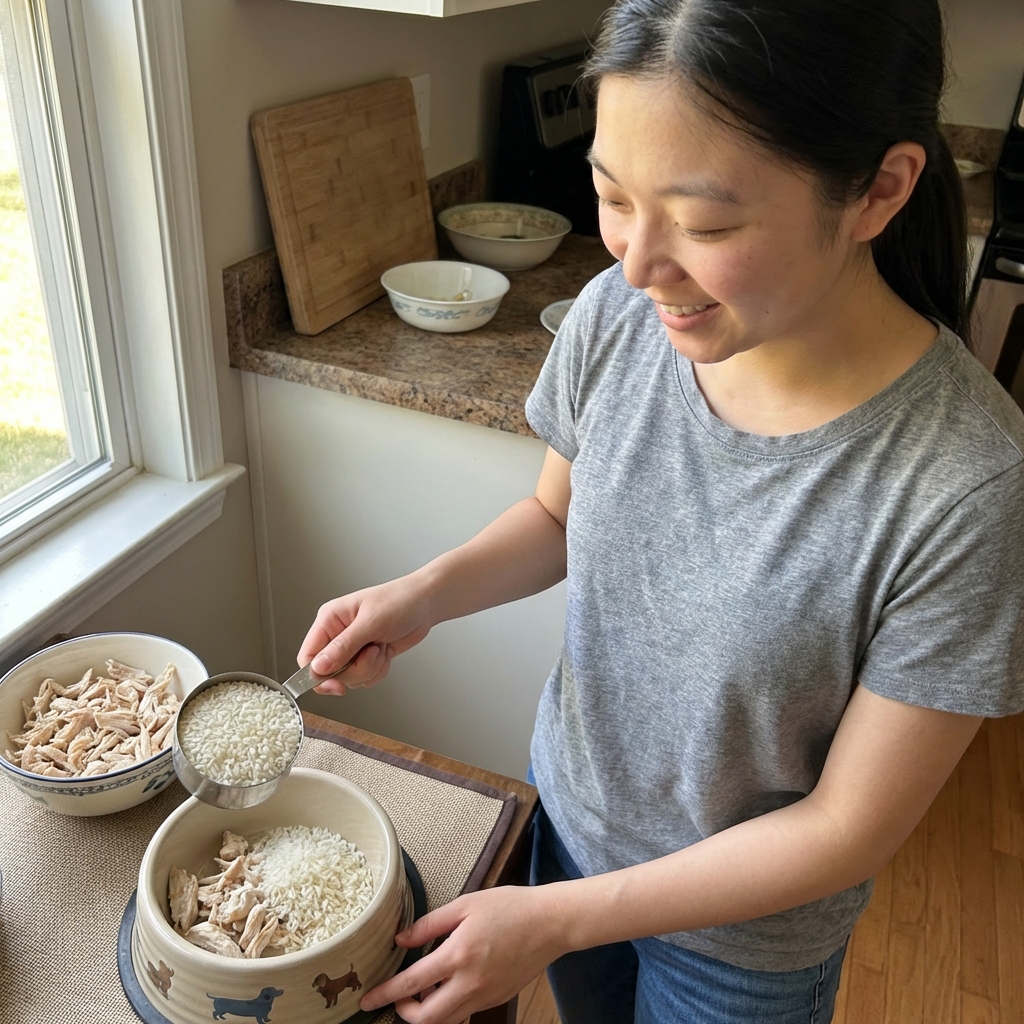
By volume: think cups or tablespoons (for example, 1/2 cup chicken to 1 cup rice). Home cooks usually measure this way, and it helps keep fat and protein from creeping too high.
Feed small meals throughout the day instead of one or two large meals. Many dogs do best with 3 to 6 small meals for the first day or two.
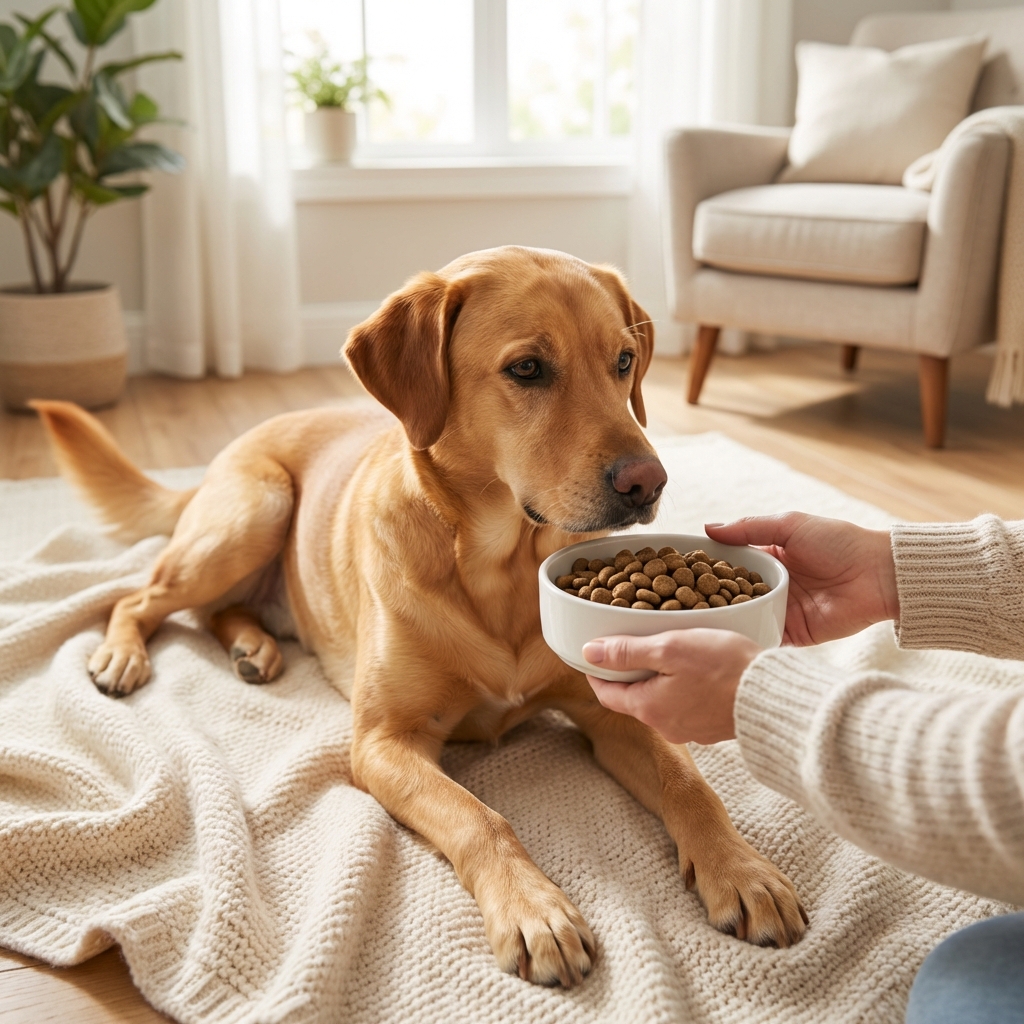
How long? Most mild cases improve within 24 to 48 hours on a bland diet. Once stools are improving, transition slowly back to the regular food over 2 to 4 days.
Transition tip
When stools are firming up, move from 75% bland diet to 50%, then 25%, then back to normal. Going too fast is one of the biggest reasons diarrhea returns.
How much to feed
If your dog is otherwise stable and your vet says home care is appropriate, a practical starting point is to feed about 75% of your dog’s usual daily amount (or usual daily calories) split into small meals for the first 24 hours. If stools improve and your dog is acting normal, you can slowly work back up to their normal portions as you transition back to their regular diet.
If you are unsure how much your dog normally eats (or your dog is on a weight plan), your vet team can help you estimate a safer portion.
Should you fast your dog?
For many dogs, we focus more on smaller, bland meals rather than skipping food entirely.
- Puppies should not be fasted without direct veterinary guidance.
- If your adult dog seems nauseated and refuses food, do not force it. Offer water and call your vet if appetite does not return quickly or if vomiting starts.
Hydration matters
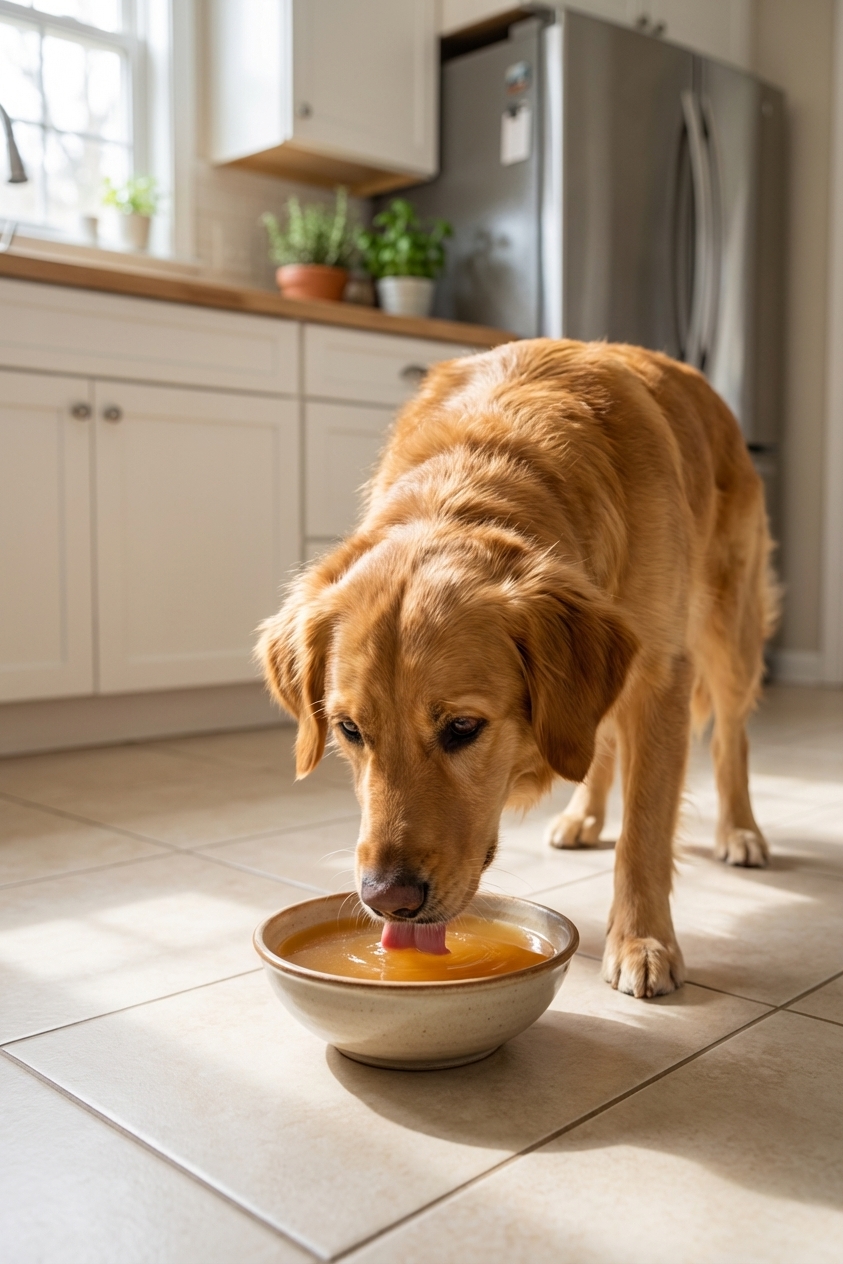
With diarrhea, your dog is losing water and electrolytes. Always provide fresh water.
- If your dog is drinking normally and acting well, water may be enough.
- If your vet approves, ask about a pet-safe electrolyte solution for short-term support.
- Avoid homemade electrolyte mixes and sports drinks unless your veterinarian specifically instructs you. They can contain too much sugar or sodium for dogs.
- If your dog will not drink, vomits after drinking, or seems weak, that is a vet visit.
Good to know: one of the earliest signs of dehydration in dogs is tacky, sticky gums, not always a dry nose.
What to monitor at home
If you are managing mild diarrhea at home, keep notes for 24 to 48 hours. This helps you and your vet spot when it is improving or when it is time to escalate care.
- Stool frequency (how often)
- Stool volume (small amounts vs large amounts)
- Blood or black stool
- Vomiting (and whether water stays down)
- Energy level and willingness to move
- Appetite
- Hydration (gums, skin tent, thirst)
- Urination (still peeing normally is a helpful sign)
- Abdominal pain (tense belly, whining, hunched posture)
Helpful poop facts
- Small intestines vs. large intestines: large-bowel diarrhea often means frequent urgency with small amounts, sometimes with mucus. Small-bowel diarrhea is often larger volume and may come with weight loss if chronic.
- Mucus can happen when the colon is irritated. It is common, but if it persists or includes blood, check in with your vet.
- Stress is real: travel, boarding, moving, and schedule changes can trigger diarrhea even when the food stays the same.
Extra options (vet-guided)
Depending on your dog and what your veterinarian recommends, these can be helpful:
- Boiled potatoes (plain) as an alternative to rice for dogs that do not tolerate rice
- Prescription GI diets designed for highly digestible nutrition and consistent stool quality
- Parasite testing if diarrhea is recurring, especially for dogs who visit parks, daycare, or shared yards
If diarrhea keeps coming back, it is worth asking your vet about common underlying causes like intestinal parasites, dietary intolerance, pancreatitis, inflammatory bowel disease, or infections.
OTC meds warning
Many people reach for human anti-diarrheal medications (like loperamide/Imodium). Please do not give these unless your veterinarian tells you to. They can be unsafe for some dogs, can hide worsening disease, and can be dangerous with certain toxin or infection scenarios.
If you need the vet
If you are coming in for diarrhea, ask your clinic if they would like a fresh stool sample (usually collected the same day). Common next steps may include a fecal test for parasites, a parvo test for at-risk puppies, and sometimes bloodwork to check hydration and organ function.
My favorite start-simple meal
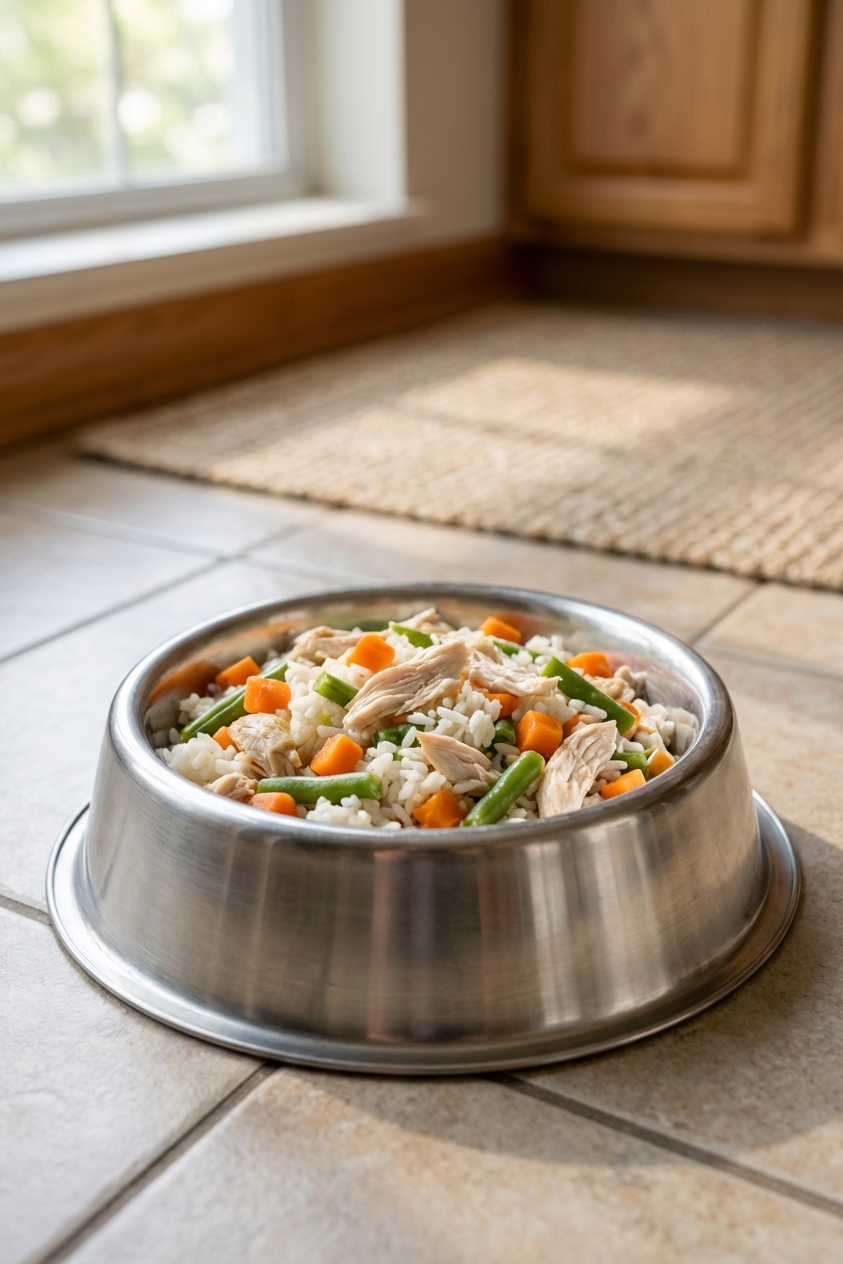
If your vet says your dog is stable enough for home care, here is a simple go-to meal you can make today:
- Boiled, shredded boneless, skinless chicken breast
- Plain white rice
- 1 to 2 teaspoons of plain pumpkin (optional)
Keep it boring for a couple of days, feed small portions, and watch the stool closely. When you see real improvement, transition slowly back to your dog’s normal food.
You know your dog best. If something feels off, trust that instinct and call your veterinarian.