
Eosinophilic Granuloma Complex in Cats

If your cat has a stubborn sore on the lip, an angry-looking patch on the belly, or a swollen chin that will not go away, it is easy to assume it is acne, a scratch, or a spider bite. One possible cause is Eosinophilic Granuloma Complex, often shortened to EGC. It is also commonly mistaken for other skin problems, which is why it can take time to recognize.
EGC is not one single lesion. It is a pattern of skin and mouth inflammation where a cat’s immune system recruits eosinophils (a type of white blood cell commonly involved in allergies and parasites). The result can be plaques, lip ulcers, or firm swollen areas that look like something else entirely.
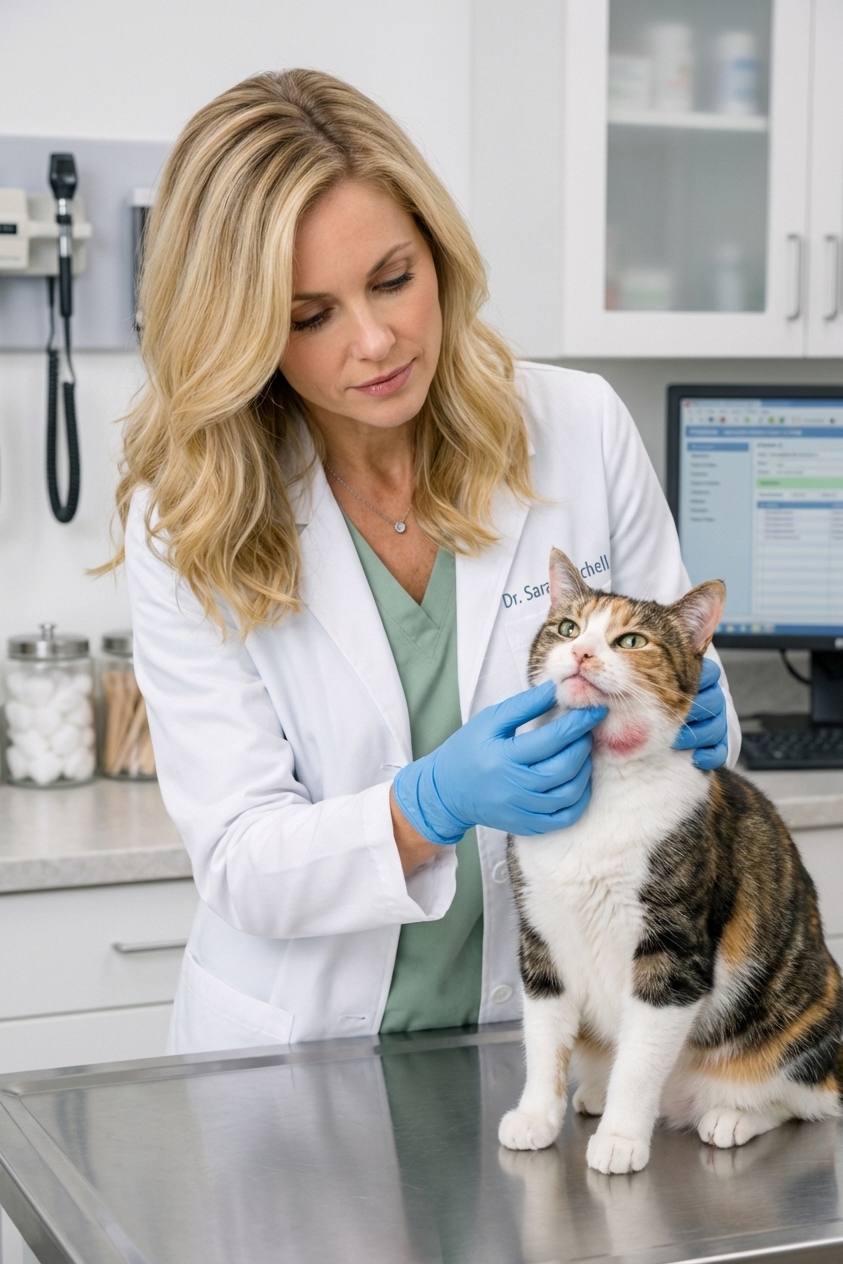
The 3 common EGC presentations
Veterinarians group EGC into three classic patterns. Your cat can have one type or more than one at the same time.
1) Eosinophilic plaques
Plaques are usually raised, red, moist-looking patches that can appear suddenly and spread quickly. They are often very itchy, and some cats overgroom or chew at the area.
- Common locations: belly, inner thighs, groin, armpits, neck
- What they can look like: hot spots, allergic dermatitis, “raw” skin from licking
- Clue it might be EGC: sharply defined, angry red plaques that keep recurring despite basic topical care
2) Rodent ulcers (indolent ulcers)
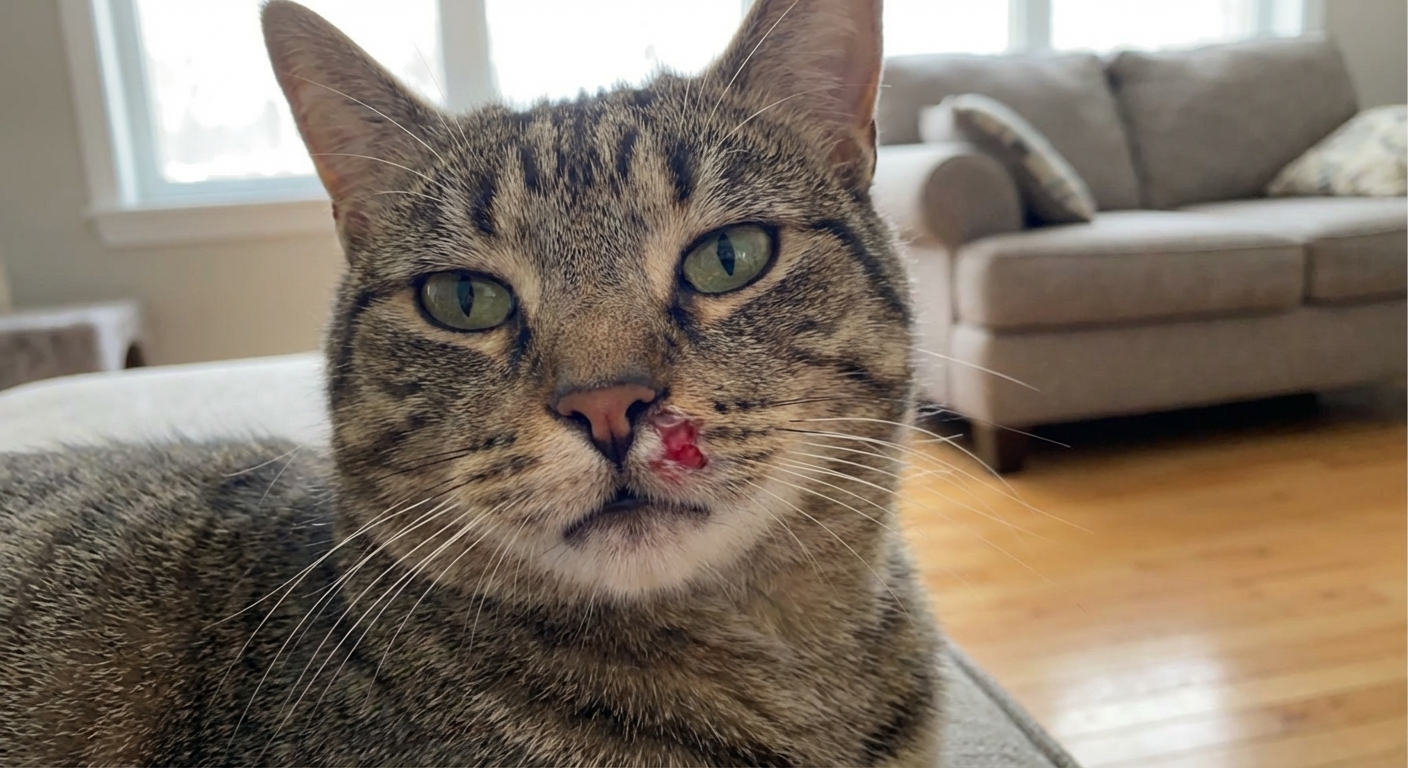
The term “rodent ulcer” is old and confusing. Cats do not get these from rodents. These are typically ulcers on the upper lip, sometimes right at the lip margin. They are often not obviously painful, even when they look dramatic.
- Common locations: upper lip, sometimes both sides
- What they can look like: a scrape, a burn, a cold sore, trauma from rough play
- Clue it might be EGC: a firm-edged ulcer that does not seem to bother your cat much but does not heal
Important: Ulcers on the lip can also be caused by infections, dental disease, and less commonly cancer. Any non-healing lip sore deserves a veterinary exam.
3) Eosinophilic granulomas
Granulomas are firm, raised, sometimes linear or nodular lesions. They can show up on the lips, inside the mouth, or on the back of the thighs. Some cats develop swelling of the lower lip or chin region, which can be confusing because chin problems are more commonly acne or folliculitis. EGC is still on the list, but it is not something you can diagnose at home.
- Common locations: lips, back of thighs, paw pads, sometimes the mouth
- What they can look like: a “fat lip,” a bite wound, a bug bite, a small abscess, sometimes acne-like chin swelling
- Clue it might be EGC: swelling or firm lesions that wax and wane, or return after antibiotics, especially if there is itching elsewhere
If lesions are in or near the mouth, you may also notice drooling, bad breath, pawing at the mouth, dropping food, reluctance to chew, or weight loss. These signs should be shared with your veterinarian.
Why it happens: triggers to discuss with your vet
In many cats, EGC is driven by a hypersensitivity reaction. In plain language, something is pushing the immune system’s “itch and inflammation” buttons. The goal is to find and control the trigger, not just chase the sores.
EGC is often a diagnosis of pattern. Your veterinarian may treat the inflammation and also work through likely underlying causes. Lesions can recur if the trigger is not controlled.
Common triggers
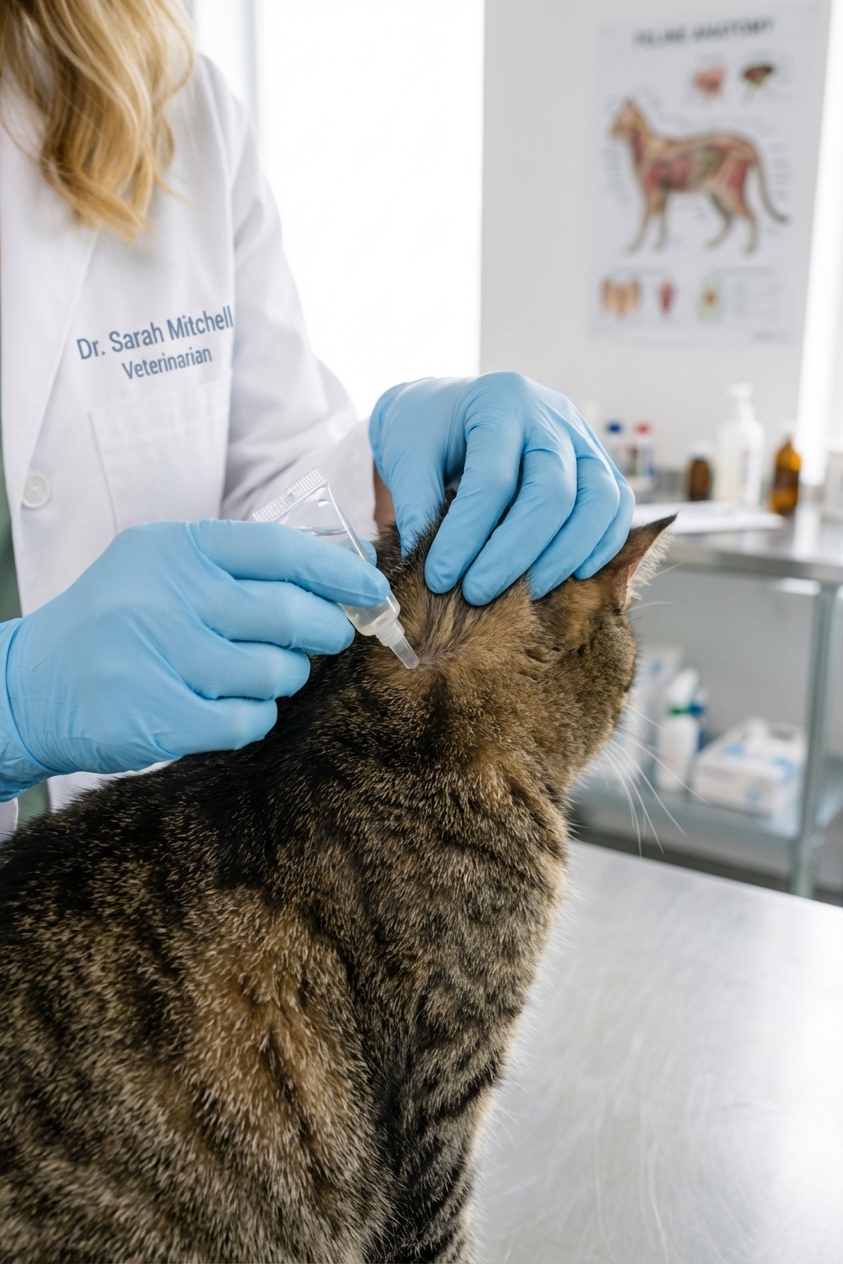
- Flea allergy dermatitis: Even one or two flea bites can trigger a major reaction in sensitive cats.
- Other parasites: Mites and other external parasites can mimic or contribute to EGC-like lesions.
- Food allergy: Sometimes the trigger is a protein source or ingredient your cat has become sensitized to over time.
- Environmental allergies: Pollens, molds, dust mites, and seasonal patterns can play a role.
- Contact irritation: Certain exposures (for example, rough surfaces, fragranced products, or irritating cleaners) can worsen skin inflammation in some cats. Plastic bowls are more often discussed in the context of chin acne, but reducing irritants can still be helpful for cats with recurrent chin and lip issues.
- Secondary infection: Bacteria, and less commonly yeast, can move in after the skin barrier is damaged, making everything look worse.
High-value questions to bring to your appointment
- Should we do a flea and parasite plan for every pet in the household?
- Does my cat need skin cytology to check for bacterial (and possibly yeast) infection?
- Would you recommend a diet trial? If yes, which type and for how long?
- If we do a diet trial, what counts as “breaking” it (treats, flavored medications, table food)?
- Could this lesion be something else, and do we need a biopsy if it does not respond as expected?
- What is the safest plan for itch control and inflammation reduction for my cat’s age and health history?
How EGC can be mistaken for acne or bite wounds
This is one reason EGC is so frustrating for cat caregivers. The lesions can look very familiar.
EGC vs cat acne
- Acne often looks like blackheads and gritty debris on the chin, sometimes with mild swelling.
- EGC can involve the chin or lower lip region too, but this is a less common explanation than acne. It may look like thicker swelling, a raised sore, or a firm lump, sometimes without the classic “black specks.”
If the chin is significantly swollen, painful, oozing, or your cat seems unwell, it may be infection or an abscess, and that is a same-day veterinary issue.
EGC vs bite wound or abscess
- Bite wounds often become painful quickly, may form a pocket of infection, and can rupture and drain.
- EGC can look puffy and inflamed but may not have the same heat, pain, and draining tracts you see with an abscess.
Because these can overlap, it is safest to have a veterinarian evaluate any new swelling on the face, lips, or chin.
What the vet may do
Once your veterinarian has examined your cat and ruled out urgent problems like abscesses, they will usually focus on two goals: calm the inflammation and identify the underlying trigger.
Treatment depends on severity, location, and whether a trigger is identified. Your veterinarian may recommend a combination of approaches.
Diagnostics you may hear about
- Physical exam and history: Seasonality, itching, flea exposure, diet history, other pets in the home.
- Skin cytology: A quick microscope check to look for bacteria, yeast, and inflammatory cells.
- Fungal testing or other rule-outs when lesions mimic ringworm or infection.
- Biopsy: Especially for non-healing lip lesions, unusual masses, or anything not responding to therapy.
Common treatment categories
- Parasite control: Consistent, vet-recommended flea prevention for all pets is often step one.
- Anti-inflammatory medications: Many cats improve with corticosteroids (often prednisolone). For cats that need alternatives or longer-term control, veterinarians may consider other immune-modulating medications (for example cyclosporine) or other options depending on the case. Some itch medications may be used off-label in cats, so the best choice varies.
- Antibiotics or antifungals: If secondary infection is present (yeast is less common in cats, but it can happen).
- Diet trial: A strict elimination diet may be recommended if food allergy is suspected. Many trials run about 6 to 8 weeks, and strict means no treats, no flavored medications, and no table food unless your veterinarian says it is compatible with the plan.
- Pain control: Particularly for oral lesions or swollen areas that make eating uncomfortable.
Please do not use over-the-counter steroid creams or human acne products on cats. Many contain ingredients that are unsafe if licked, and cats will lick.
Also avoid popping chin bumps, scrubbing sores aggressively, essential oils, and human pain medications. If you are unsure whether a product is safe, call your veterinarian first.
Comfort care at home
Home care does not replace veterinary treatment, but it can help your cat feel better and prevent setbacks while you and your vet work on the cause.
1) Prevent licking and self-trauma
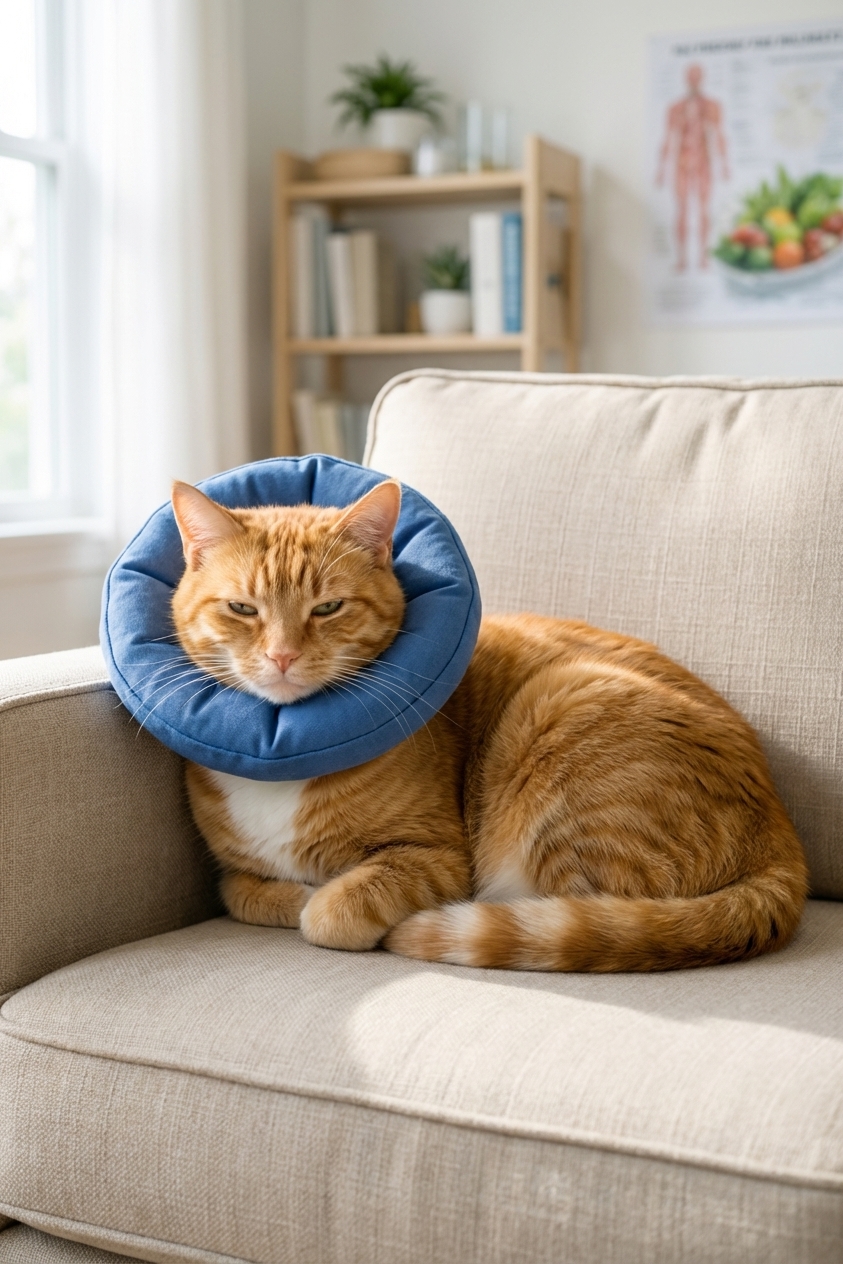
- Use an e-collar or soft recovery collar if your cat is chewing or overgrooming.
- Keep nails trimmed to reduce skin damage from scratching.
2) Gentle hygiene for the chin and lips
- If the chin is dirty or mildly crusty, wipe once daily with a soft cloth dampened with warm water, then pat dry.
- Switch to stainless steel or ceramic bowls and wash them daily. This helps with acne and reduces irritants that can complicate chin lesions.
3) Make eating comfortable
- If lip or mouth lesions are present, offer soft, smelly foods (warmed wet food) to encourage eating.
- Watch for drooling, bad breath, pawing at the mouth, dropping food, or reluctance to chew, and report these to your vet.
- If your cat is eating less, monitor weight and hydration. Cats can get into trouble quickly if they stop eating.
4) Parasite protection as directed
If your veterinarian recommends flea prevention, use it consistently. Skipping doses is one of the most common reasons itchy skin conditions keep coming back.
5) Reduce household irritants
- Avoid fragranced sprays, plug-ins, and harsh cleaners near your cat’s bedding and favorite areas.
- Wash bedding in a gentle, fragrance-free detergent.
When to seek urgent care
Most EGC cases are not a middle-of-the-night emergency, but some situations should be addressed quickly.
- Rapid facial swelling, especially around the lips or eyes
- Not eating for 24 hours, or your cat seems unable to eat due to mouth pain
- Difficulty breathing or open-mouth breathing
- Fever, lethargy, or a swollen area that is hot, very painful, or draining pus
- Any lip ulcer that is enlarging or not improving with veterinary care
The hopeful part
I know skin and mouth issues can feel endless, especially when a chin swelling looks like acne one week and like a bite wound the next. The encouraging news is that most cats do very well once you and your veterinarian identify the trigger and get inflammation under control.
If your cat has recurring plaques, a non-healing upper lip sore, or unexplained chin or lip swelling, schedule a veterinary visit and bring photos from day to day. Those little details often help your vet connect the dots faster.