Most cat sneezing is from mild irritation or upper respiratory infections. Use this checklist to spot causes, try safe home care, and know the red flags that...
Article
•
Designer Mixes
English Mastiff Care Guide

Shari Shidate
Designer Mixes contributor
If you have ever met an English Mastiff, you know the feeling. They are massive, calm, and deeply attached to their people. As a veterinary assistant here in Frisco, Texas, I have a special soft spot for these gentle giants because they tend to be sweet patients who just need extra space, a steady routine, and owners who understand big-dog basics.
This guide walks you through daily care, feeding, exercise, grooming, training, and the health issues English Mastiffs are most prone to. My goal is simple: help you support a long, comfortable life for a very large best friend.

At a glance
- Temperament: Calm, affectionate, protective, typically gentle with family
- Size: Giant breed; many adults are roughly 120 to 200+ pounds (varies by sex, genetics, and body condition)
- Energy level: Low to moderate, especially as adults
- Best for: People who can handle giant-dog logistics, training, and preventive vet care
- Common challenges: Drool, shedding, orthopedic stress, heat sensitivity, bloat risk
- Typical lifespan: Often around 6 to 10 years (many giant breeds age faster, so comfort-focused care matters early)
Temperament and emotional needs
English Mastiffs are famous for being steady and mellow. Most are not “busy” dogs, but they are deeply social. They usually want to be near you, leaning against your leg, napping within eyesight, or following you from room to room.
That closeness is part of their charm, but it also means they do best with:
- Calm, consistent handling: Harsh corrections can make them shut down or become anxious.
- Early socialization: Low-stress exposure to friendly people, stable dogs, sounds, and environments.
- Predictable routines: Feeding, potty breaks, and rest periods at similar times each day.
If you are bringing home a puppy, remember that a “small” behavior issue becomes a big one once your dog outweighs many adults. A Mastiff who politely sits for greetings is wonderful. A Mastiff who jumps can accidentally injure someone without meaning to.

Home setup
Think of English Mastiff care as comfort plus safety. Their size changes how you arrange a home.
Must-haves
- Supportive bedding: Thick orthopedic beds help reduce pressure on elbows and hips.
- Non-slip flooring: Rugs or runners on slick floors reduce falls and joint strain, especially for puppies and seniors.
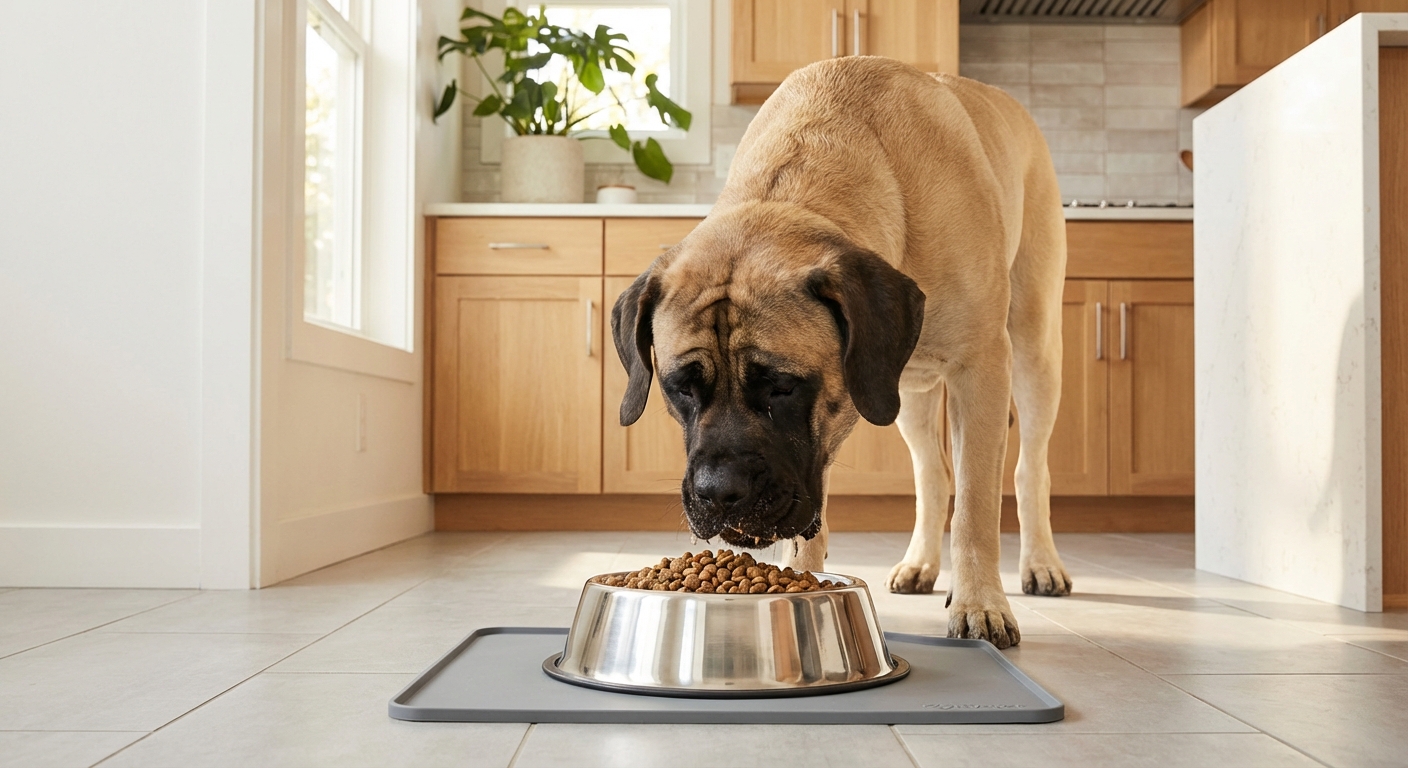
- Comfortable feeding setup: Some dogs do well with bowls on the floor, others prefer a slightly elevated setup for comfort. Because guidance has changed over the years and each dog is different, ask your veterinarian what makes sense for your Mastiff.
- Car safety: A crash-tested harness or a secured crate sized for giant breeds.
- Space to turn and rest: They do not need a mansion, but they do need room to move without bumping into furniture.
Heat awareness
In Texas, heat is a real concern. Mastiffs can overheat quickly because of their body mass and relatively low heat tolerance. Plan walks early morning or later evening, keep fresh water available, and never assume shade alone is enough on hot days.
Feeding and nutrition
Nutrition is one of the biggest health levers you can control, especially during puppyhood. English Mastiffs grow fast, and the goal is steady growth, not rapid growth. Overfeeding is a common problem, and unbalanced supplementation (especially excess calcium, vitamin D, or an off calcium:phosphorus ratio) can contribute to orthopedic issues in giant-breed puppies.
Puppies
- Choose a large or giant breed puppy diet that follows established nutritional standards (look for an AAFCO statement for growth, and ideally “including growth of large size dogs”).
- Avoid calcium supplements unless your veterinarian specifically recommends them. Properly formulated large-breed growth diets are designed to provide the right mineral balance already.
- Keep them lean: you should be able to feel ribs with a light layer of padding. Rapid weight gain stresses joints.
Adults
Most adult Mastiffs do well on two meals a day. For dogs that are very bloat-prone or gulp food, some veterinarians recommend smaller, more frequent meals.
- Prioritize protein quality and overall digestibility.
- Watch calories closely: extra weight is hard on hips, knees, elbows, and the heart.
- Fresh-food add-ins can help when done thoughtfully, like cooked lean meats, lightly cooked vegetables, or small amounts of plain yogurt, but the base diet should remain balanced.
Evidence-based note: If you want to feed homemade or partially homemade meals, please work with your veterinarian or a board-certified veterinary nutritionist. Giant breeds have little room for nutritional errors, and imbalance can show up in joints, bone development, and overall health.
Bloat (GDV)
Gastric dilatation-volvulus (GDV), often called bloat, is an emergency where the stomach distends and can twist. Deep-chested, giant breeds like the English Mastiff are at higher risk.
Warning signs
- Retching or trying to vomit with little or nothing coming up
- Distended or tight abdomen
- Drooling, restlessness, pacing
- Rapid breathing, weakness, collapse
If you suspect bloat, go to an emergency vet immediately. Do not wait to see if it passes.
Prevention to discuss
- Feeding multiple smaller meals instead of one large meal
- Using slow-feeder bowls if your dog gulps
- Limiting intense exercise right before and after meals
- Talking about preventive gastropexy, often performed at the time of spay or neuter in high-risk breeds. It greatly reduces the risk of the stomach twisting, but it does not prevent every episode of gastric dilation.
Exercise
English Mastiffs need daily movement, but they are not endurance athletes. Think easy conditioning and mental enrichment rather than hard runs.
Adults
- Daily walks: One to two easy walks a day is often plenty.
- Low-impact play: Short backyard sniff sessions, gentle tug, or slow fetch on soft ground.
- Ease in and ease out: Start with a slower first few minutes, and finish with a relaxed stroll, especially for older dogs or those with arthritis.
Puppies
For Mastiff puppies, avoid repetitive impact while bones and joints are still developing. A simple rule that helps many families is to keep activity frequent but short, with plenty of breaks, and stop before your puppy is exhausted.
- Limit long stair sessions and repeated jumping on and off furniture
- Avoid forced running alongside bikes
- Choose controlled, age-appropriate play on non-slip footing whenever possible
If your Mastiff is reluctant to move, do not assume laziness. Pain, heat stress, or orthopedic discomfort can look like “I just do not feel like it.”
Grooming
Mastiffs have short coats, but they still shed. Many also drool, especially after drinking or when excited. A simple routine goes a long way.
Coat
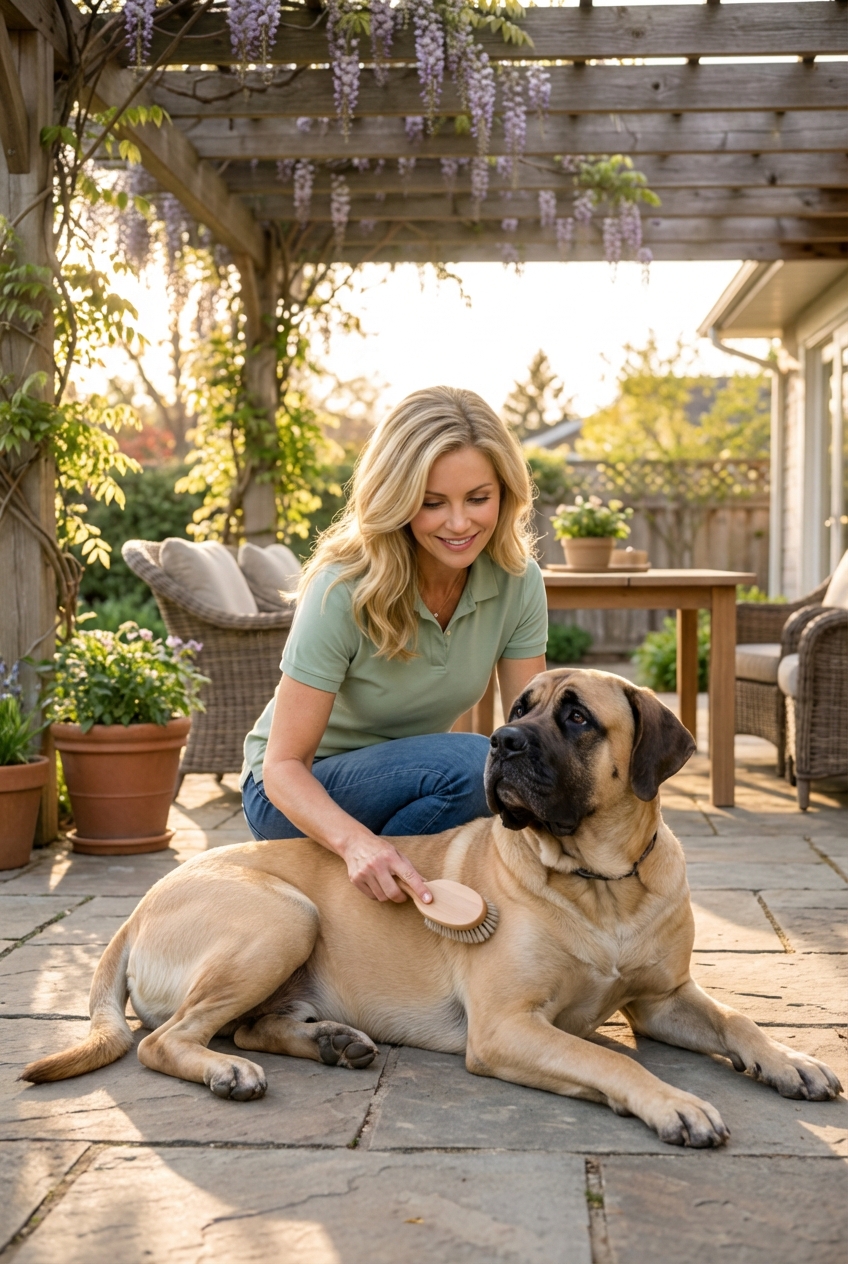
- Brush 1 to 3 times per week with a rubber curry brush or grooming mitt.
- Bathe as needed, usually every 4 to 8 weeks depending on skin and lifestyle.
Drool and folds
- Keep a small towel handy for the jowls.
- Wipe and dry facial skin if moisture sits in wrinkles, especially if you notice odor or redness.
Ears, nails, teeth
- Ears: Check weekly for redness, odor, or debris.
- Nails: Trim every 2 to 4 weeks. Long nails change gait and add joint stress. If home trims are stressful, your vet clinic or groomer can help.
- Teeth: Brush several times a week if possible. Dental disease is associated with whole-body inflammation and may affect overall health and comfort over time.
Training and socialization
Training is not optional with giant breeds. The good news is Mastiffs often respond beautifully to calm, reward-based methods.
Skills to teach early
- Loose-leash walking and “let’s go”
- Sit, down, and stay
- Place (go to bed or mat), especially when guests arrive
- Polite greetings with four paws on the floor
- Handling tolerance for paws, ears, mouth, and brushing
Short sessions work best. Think 3 to 5 minutes, a few times a day, and lots of praise. Socialization should focus on calm confidence, not overwhelming exposure.
Common health concerns
Not every Mastiff will face these issues, but they are common enough that it is smart to plan ahead. Preventive care and early detection truly matter with this breed.
Orthopedic issues
- Hip dysplasia and elbow dysplasia
- Osteoarthritis, often earlier than in smaller breeds
- ACL tears can occur, especially with extra weight
Keeping your dog lean, building slow muscle with low-impact exercise, and using vet-recommended joint support can help.
Heart disease
- Cardiac disease can occur in giant breeds, including conditions like dilated cardiomyopathy (DCM) or subaortic stenosis (SAS) in some lines.
Your veterinarian may recommend periodic heart auscultation and, if indicated, echocardiograms or blood tests.
Eye issues
- Entropion or ectropion (eyelid rolling in or out)
- Cherry eye
Eye irritation is not something to wait out. Chronic rubbing and tearing deserve a veterinary exam.
Skin and allergies
Short coats can hide skin redness. Watch for itching, ear infections, and chronic paw licking. Many allergies are manageable, but they need a plan.
Cancer risk
Sadly, cancer risk rises with age in many breeds, and giant breeds are not immune. Get any new lump checked. “Wait and see” is not a strategy I love in vet med, especially when early treatment can change outcomes.
Vet care
Because of their size, Mastiffs can be more expensive to treat. Preventive care protects both your dog and your budget. It also helps you plan ahead as they move into their senior years sooner than many families expect.
- Wellness exams: At least yearly, and every 6 months for seniors
- Vaccines: Based on lifestyle and your veterinarian’s recommendations
- Parasite prevention: Heartworm prevention is essential in Texas, plus flea and tick control
- Baseline labs: Consider annual bloodwork as your dog reaches middle age
- Pain and mobility checks: Ask for a joint and gait assessment during exams
- Spay and neuter timing: Giant breeds are not one-size-fits-all. Timing can affect growth and orthopedic development, so discuss the best plan for your individual dog with your veterinarian.
Big-dog logistics
The day-to-day stuff matters with Mastiffs. A few planning choices can prevent injuries (yours and theirs) and make care easier.
- Ramps and traction: Ramps for cars or porch steps can protect joints. Traction on floors helps prevent slips, especially during growth and in older age.
- Lifting plan: Many Mastiffs cannot be safely lifted by one person. Ask your vet how to prepare for mobility issues, including slings or help getting in and out of vehicles.
- Medication costs and dosing: Bigger dogs often need higher doses, which can increase cost. Pet insurance or a dedicated savings fund can be a lifesaver.
- Grooming support: Nail trims and ear care are easier when your dog is trained to accept handling, but it is totally fine to use your vet clinic or groomer when needed.
Breeder or rescue
The healthiest Mastiff starts with good genetics and good early care.
Choosing a breeder
- Ask about health testing for hips, elbows, and heart
- Meet the parents if possible and observe temperament
- Look for puppies raised in a home environment with early handling and socialization
- Avoid anyone who will not take a dog back if life changes
Adopting
- Ask the rescue what they know about mobility, prior injuries, and behavior around other animals
- Plan a slow decompression period at home
- Schedule a vet visit soon after adoption to establish a baseline
Daily checklist
- Two calm potty and sniff breaks, plus a relaxed walk
- Measured meals, fresh water, and a slow-feeding option if needed
- 5 minutes of training or enrichment (snuffle mat, simple cues, chew time)
- Quick skin, ears, and paws check
- Comfortable rest on supportive bedding
The English Mastiff does not need constant activity. They need thoughtful care, steady routines, and an owner who protects their joints, heart, and comfort as they grow.
When to call your vet
For giant breeds, it is always better to call early. Contact your veterinarian promptly if you notice:
- Sudden weakness, collapse, or heavy panting at rest
- Retching, a swollen abdomen, or signs of severe restlessness (possible bloat)
- Limping that lasts more than 24 hours, or any severe pain
- Rapid weight gain or unexplained weight loss
- Persistent diarrhea, vomiting, or refusal to eat
- New lumps, sores that do not heal, or recurring ear infections