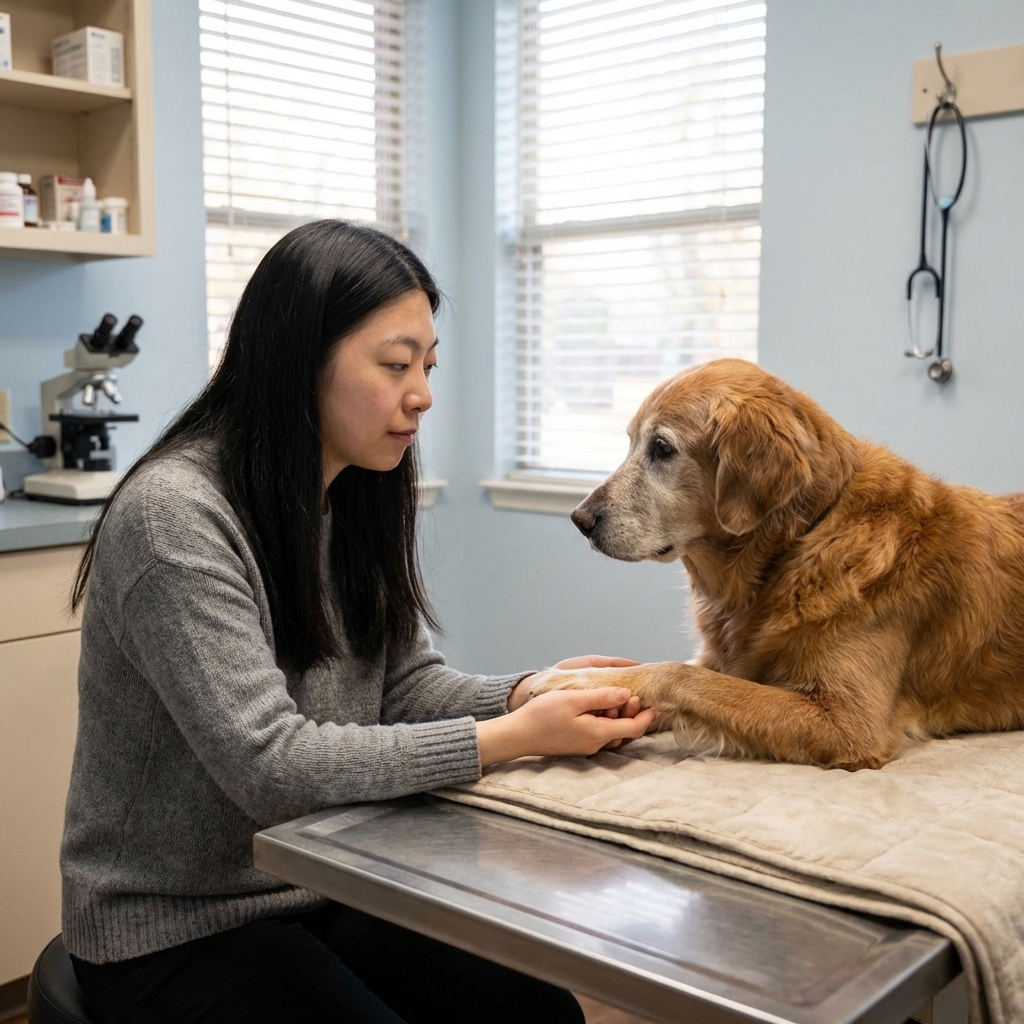
Use this printable dog quality of life checklist to score pain, breathing, appetite, hydration, mobility and mood. Track trends, add notes, and prepare for v...
Article
•
Designer Mixes
End of Life Signs in Dogs: Timeline and Stages

Shari Shidate
Designer Mixes contributor
Saying goodbye to a dog is one of the hardest things we do as pet parents. As a veterinary assistant here in Frisco, Texas, I have sat with families who felt unsure, guilty, or simply overwhelmed because they did not know what was “normal” at the end of life.
This guide walks you through common end of life signs in dogs in a gentle, clinically informed way, including a timeline and stages you may notice. Every dog’s journey is unique, and some changes happen slowly while others can appear within hours. Your veterinarian can help you interpret what you are seeing and make a plan that honors your dog’s comfort and dignity.
One quick note: Some changes are part of a gradual decline, while others are emergencies that need immediate care. “End-of-life signs” often progress over days to months. “Emergency signs” tend to be sudden, severe, or escalating.
Also, not every senior-dog change means a dog is dying. Older dogs commonly slow down, sleep more, and get stiffer. What matters is the overall trend, especially when comfort and function begin to drop despite support.
Important: If your dog is struggling to breathe, collapses, has repeated seizures, cannot get comfortable, has a swollen painful abdomen, has pale or blue gums, or you suspect severe pain, contact an emergency veterinarian right away.
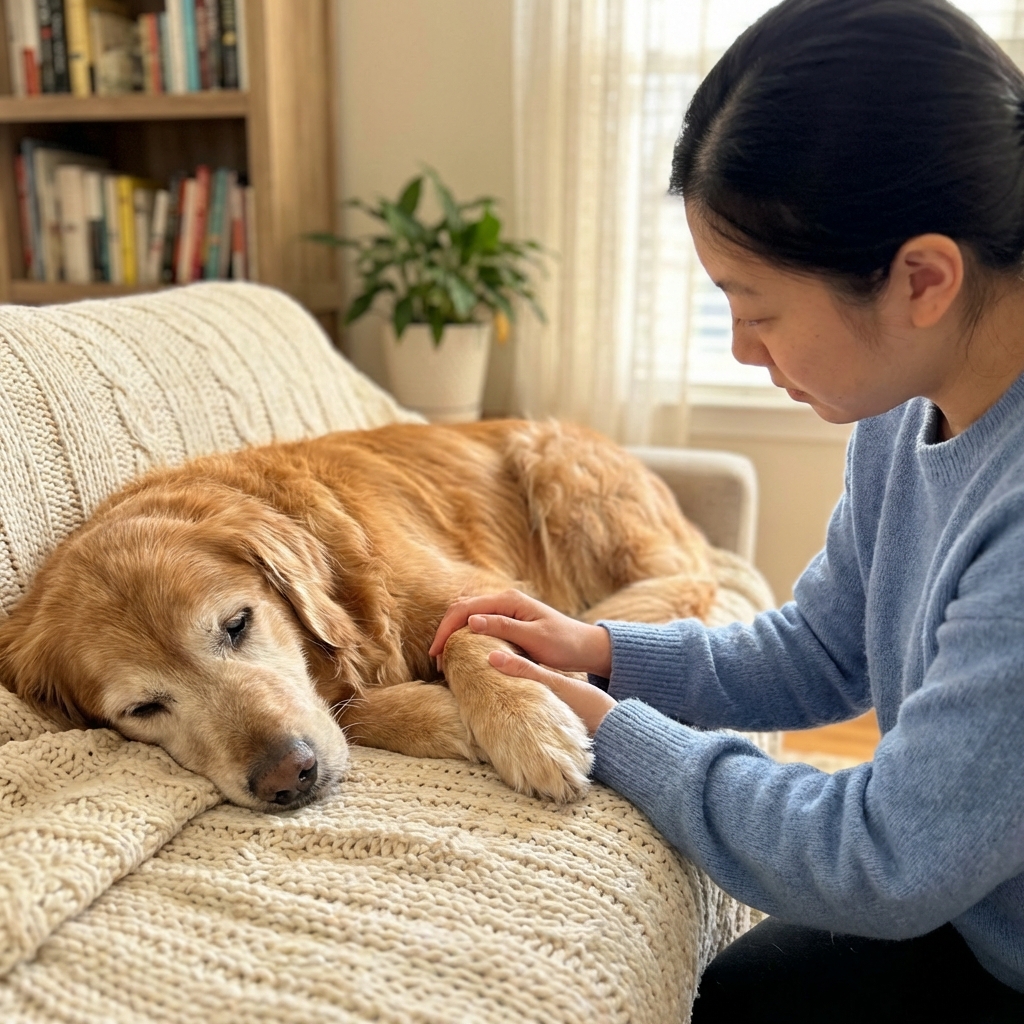
The stages at a glance
When we talk about “stages,” we are describing patterns that many families observe. This is not a formal medical staging system, just a helpful framework. Dogs do not always move neatly from one stage to the next, and some signs overlap.
- Stage 1: Subtle decline (weeks to months)
- Stage 2: Noticeable functional changes (days to weeks)
- Stage 3: Late-stage decline (hours to days)
- Stage 4: Actively dying (minutes to hours)
Below, we will walk through each stage and what you can do to help.
Stage 1: Subtle decline
This stage can be emotionally confusing because your dog may still have good days. Many chronic conditions slowly progress, especially cancer, kidney disease, heart disease, arthritis, and neurologic conditions.
Common signs
- Lower energy and shorter walks
- More sleeping, less interest in play
- Weight loss or muscle wasting, especially over the back and hips
- Changes in appetite or becoming “picky”
- Increased thirst and urination (common with kidney disease, diabetes, some endocrine issues)
- Mild coughing or exercise intolerance (possible heart or lung disease)
- Stiffness when getting up, slipping on floors, difficulty with stairs
- Behavior changes like clinginess, irritability, or mild confusion
How you can help
- Schedule a quality-of-life check and ask your vet what changes to watch for next.
- Track trends with a simple daily note: appetite, breathing, sleep, mobility, and bathroom habits.
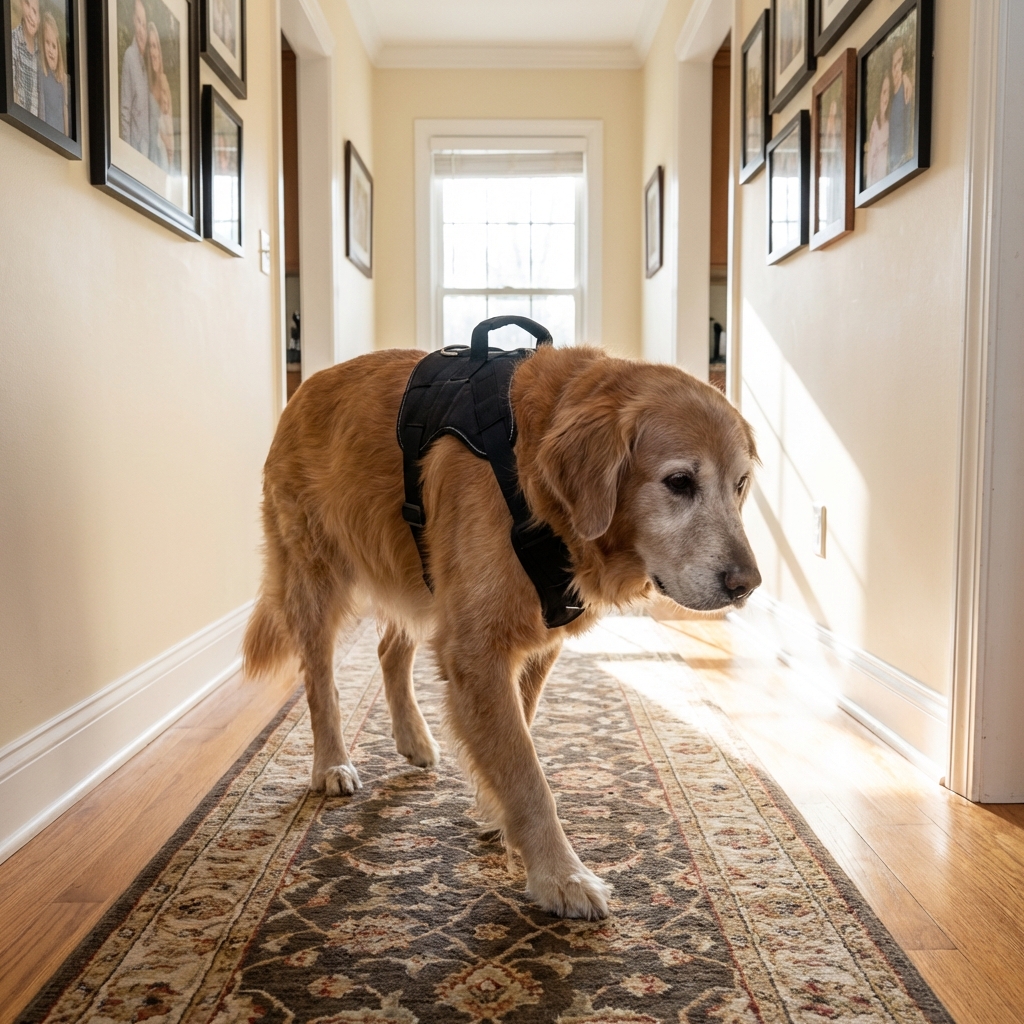
- Support mobility with rugs or yoga mats for traction, a harness for stability, and a warm, padded bed.
- Protect nutrition and hydration with vet-approved appetite support, warming food slightly for aroma, and offering water in multiple spots.
Stage 2: Functional changes
In this stage, decline becomes more visible. Many dogs begin to have more “bad days” than good, and daily care needs increase. Some signs like panting, pacing, or hiding can be caused by pain, nausea, anxiety, or cognitive dysfunction, so it is worth asking your veterinarian to help you sort out what is driving the change.
Common signs
- Reduced interest in food, eating only favorite items, or stopping meals early
- Nausea (lip-licking, drooling, swallowing, occasional vomiting)
- More frequent accidents in the house or trouble posturing to urinate or defecate
- Difficulty standing, wobbliness, knuckling, or weakness in the back end
- Restlessness at night or trouble settling
- Panting or faster breathing at rest (can be pain, anxiety, fever, heart or lung disease)
- Social changes: hiding, seeking solitude, or becoming unusually attached
What to discuss with your veterinarian
- Pain control options and what “breakthrough pain” looks like
- Anti-nausea support and appetite strategies
- Constipation management and hydration support
- Sleep and anxiety support if nighttime pacing begins
- Hospice-style care and whether in-home euthanasia is available in your area
If you have not used a quality-of-life scale before, this is a good time. Many veterinarians recommend tools like the HHHHHMM approach (Hurt, Hunger, Hydration, Hygiene, Happiness, Mobility, More good days than bad) to guide decisions.

Stage 3: Late-stage decline
This is often the stage where families feel a shift from “my dog is old and sick” to “my dog may be nearing the end.” Some dogs become very quiet. Others become unsettled. Both can be normal, and both deserve support.
Common signs
- Very low appetite or not eating at all
- Marked weakness, needing help to stand or walk
- Labored or faster breathing at rest
- Less interest in family interaction or favorite routines
- Dehydration (tacky gums are common; other signs like sunken eyes and reduced skin elasticity can be subtle and are not always reliable in older dogs)
- Incontinence or inability to posture
- Confusion, staring, getting stuck in corners, or unusual vocalizing
- Temperature changes: ears and paws may feel cooler as circulation changes
Comfort care at home
Always follow your veterinarian’s guidance, but these supportive steps can help many dogs feel safer and more comfortable:
- Create a calm “nest”: a quiet room, dim light, soft bedding, and a familiar blanket.
- Help with repositioning: gently change sides every few hours to reduce pressure discomfort.
- Keep hygiene simple: use fragrance-free wipes, keep fur dry, and use pee pads if needed.
- Offer water and food without pressure: small amounts, favorite smells, and easy-to-lick options can be kinder than urging a full meal.
- Prevent slipping: traction mats and controlled assistance reduce panic and injury.
If your dog seems distressed, cannot rest, or is working hard to breathe, call your veterinarian. These are not signs you should “wait out” alone.
Stage 4: Actively dying
When a dog is actively dying, the body is shutting down. This can be quiet and gradual, or it can include moments that look scary if you have never seen them before. Knowing what can happen does not remove the sadness, but it can reduce fear and help you stay present with your dog.
Common signs
- Profound weakness and inability to rise
- Minimal response to voices or touch
- Very slow or irregular breathing, long pauses between breaths
- Open-mouth or noisy breathing from relaxed tissues and pooled secretions in the throat or upper airways
- Cool paws and ears, pale gums, weak pulse
- Eyes may stay partially open, and blinking may decrease
- Loss of bladder or bowel control
- Small muscle twitches or reflex movements (these are not always a sign of pain)
If you have chosen euthanasia, this is the time to call your veterinarian if you have not already arranged it. If your dog is passing naturally and you are uncertain whether they are comfortable, an urgent call to a vet or hospice service is appropriate.

A realistic timeline
Families often ask for a “timeline.” The truth is that disease, age, and individual temperament create a wide range. Still, these general time windows can help you recognize patterns.
Months to weeks before
- Gradual weight loss, muscle loss
- Lower stamina, more sleep
- Subtle appetite changes
- Increasing stiffness or mobility limitations
Weeks to days before
- Appetite becomes inconsistent
- More accidents or difficulty going outside
- Nighttime restlessness or increased panting
- More time spent resting, less engagement
Days to hours before
- Minimal eating and drinking
- Significant weakness, needing assistance
- Breathing changes at rest
- Confusion or withdrawal
Hours to minutes before
- Irregular breathing with pauses
- Very low responsiveness
- Cool extremities and pale gums
- Incontinence
If something feels “off” to you, that matters. Pet parents are incredibly good at sensing when their dog has turned a corner.
Pain or distress signs
Some end-of-life changes are expected, but pain and distress should never be ignored. Call your veterinarian promptly if you notice any of the following:
- Rapid breathing at rest or obvious effort to breathe (belly heaving, elbows held out, neck extended)
- Repeated crying, yelping, or groaning
- Inability to get comfortable, constant shifting positions
- Sudden collapse or fainting
- Uncontrolled vomiting or diarrhea
- Seizures, especially clusters or prolonged episodes
- Blue or gray gums (possible oxygenation issue)
Comfort is the goal. There are often medical options to help, even if a cure is not possible.
When it may not be end of life
Not every sudden downturn is “the end.” Some issues can look like end-of-life decline but are actually acute emergencies or treatable problems. Call a veterinarian urgently if your dog declines suddenly, especially with a swollen abdomen, repeated unproductive retching, suspected toxin exposure, severe weakness, or very pale gums. Conditions like bloat (GDV), internal bleeding, diabetic crises, and poisoning can move fast.
Medication safety at home
When a dog is struggling, it is tempting to reach for whatever helped you. Please do not give human pain medications unless your veterinarian specifically instructs you to. Many are toxic to dogs, including ibuprofen, naproxen, acetaminophen, and many cold and flu products. If you think your dog needs better symptom control, your vet can often adjust pain relief, nausea meds, anxiety support, or constipation plans safely.
When to consider euthanasia
Euthanasia is a compassionate medical option when suffering cannot be adequately controlled or when a dog no longer has the ability to enjoy basic comforts. Many families tell me they are afraid of choosing “too early” or “too late.” What helps is focusing on your dog’s lived experience each day.
Practical questions to ask
- Is my dog eating and drinking enough to sustain comfort?
- Can my dog get up, walk, and use the bathroom with dignity (with reasonable help)?
- Is breathing comfortable at rest?
- Is pain controlled most of the day?
- Does my dog still enjoy anything consistently (sunbathing, gentle petting, a favorite person, a treat)?
- Are there more good days than bad days this week?
If the answer is mostly “no,” it is worth having an honest conversation with your veterinarian about timing. Choosing a peaceful goodbye is not giving up. It is an act of love.
What to expect with euthanasia
Knowing the general process can ease fear. Clinics vary a bit, but most euthanasia appointments include:
- Comfort measures: soft blankets, quiet room, time to say goodbye.
- Sedation first in many cases, so your dog relaxes and becomes sleepy.
- A final medication that causes rapid unconsciousness, then breathing and heart stop, typically within minutes.
You may see a few reflexes afterward (a breath, a small twitch, the eyes remaining open). These can be normal and do not necessarily mean your dog was aware or in pain. Your veterinary team can explain what you are seeing in the moment.
If your dog passes at home
If your dog dies naturally at home, it can help to have a simple plan, especially in warm climates.
What to do next
- Take a moment. If you are unsure whether your dog has passed, call a veterinarian for guidance.
- Keep other pets calm and allow them space. Some families choose to let other pets briefly sniff and then move them to a quiet area.
- Call your veterinarian (or an after-hours clinic) to discuss aftercare options and next steps.
- Keep the body cool if you cannot transport right away. Place your dog on an absorbent pad or towel, in a cool room. You can place bagged ice packs near the abdomen and chest area (not directly on the skin) to slow changes.
- Plan transport. Many clinics and cremation services can guide you on safe transport and paperwork.
It is normal to see urine or stool release after death, and muscles can twitch as nerves relax. If anything about the process feels distressing or uncertain, reach out. You do not have to handle it alone.
Supporting your family
Grief can start before your dog is gone. That is called anticipatory grief, and it is real. Try to keep support practical and kind.
- Ask for help with errands, childcare, or pet care tasks.
- Take photos and short videos of ordinary moments if that feels right.
- Plan ahead for aftercare (private cremation, communal cremation, home burial if legal where you live).
- Talk to your vet about local pet loss support groups or counselors.
Your love is the constant in all of this. Your dog has felt it every day.
Quick FAQ
Do dogs know they are dying?
We cannot know exactly what dogs understand about death, but we do know they experience changes in their bodies and environment. Many dogs seek comfort, routine, and closeness. Keeping things calm and familiar can help.
Is it normal for a dog to stop eating at the end?
Yes. As the body slows down, appetite often decreases. Your veterinarian can help you tell the difference between expected decline and treatable nausea or pain.
How can I tell if my dog is suffering?
Signs can include labored breathing, restlessness, inability to sleep, vocalizing, and refusal to move due to pain. When in doubt, call your veterinarian. You do not have to figure it out alone.