A practical guide to caring for hairless cats: skin checks, warming and bedding, wipe-downs, bathing routines, ear/nail/teeth care, sun safety, and when to c...
Article
•
Designer Mixes
Elf Cat Breed Guide: Temperament, Care, Health, and What to Know Before You Adopt

Shari Shidate
Designer Mixes contributor
Meet the Elf Cat: A Striking Companion With a Big Personality
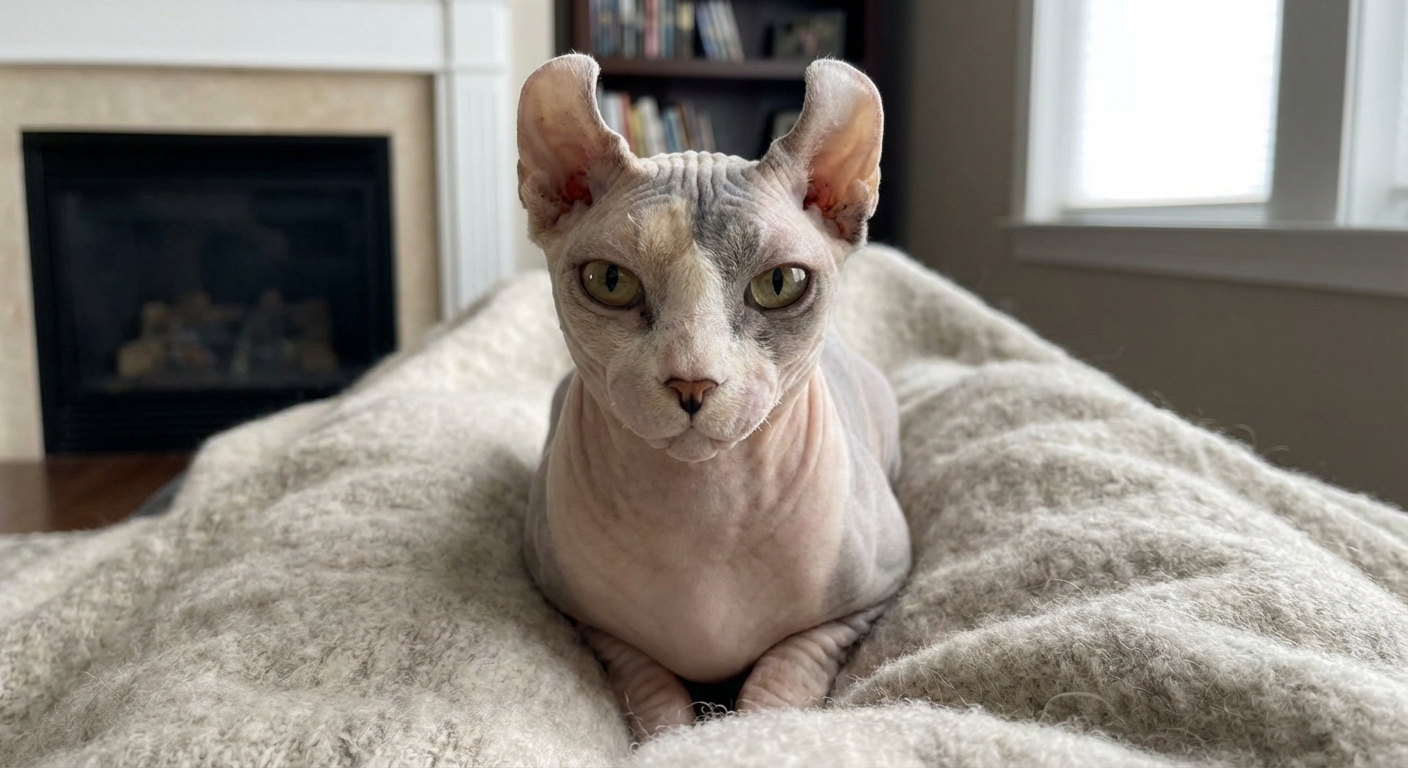
The Elf cat is one of those breeds that stops people mid-sentence. With its hairless or nearly hairless body and distinctive curled ears, it looks almost otherworldly. But the real story is its temperament. In many homes, Elf cats behave like affectionate, people-focused companions who want to be involved in everything you do.
I always remind pet parents that a cat’s look is only one piece of the puzzle. What matters day-to-day is comfort, health, and the match between your lifestyle and your pet’s needs. This guide walks you through the Elf cat’s origin, personality, care, and common health considerations so you can decide if this breed is right for you.
Origin and Breed Background
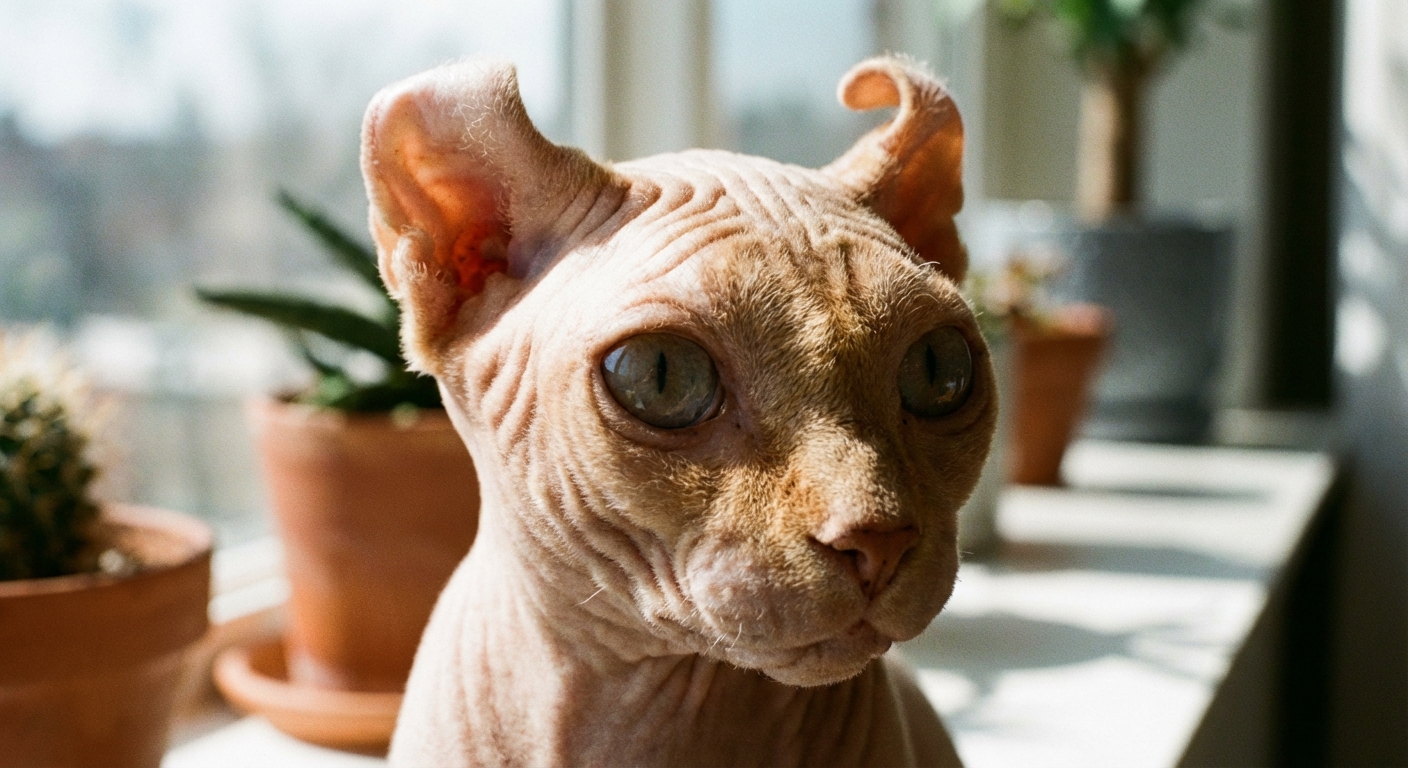
The Elf cat is a newer, rare breed developed in the United States. Breeders aimed to combine the hairless traits of the Sphynx with the curled ears of the American Curl. The result is a cat with a sleek, warm-to-the-touch body and ears that curl back in a signature arc.
Because the breed is still relatively uncommon, availability can be limited and breeder quality varies. If you are considering an Elf kitten, it is worth taking extra time to find a breeder who prioritizes health testing, responsible socialization, and transparent veterinary records.
It also helps to know that some cat associations treat the Elf as a developing breed, and recognition categories can change over time. For example, The International Cat Association (TICA) has historically listed the Elf in a provisional or developmental category (often described as “experimental” or “new breed”). If registration matters to you, ask the breeder what paperwork you will receive and confirm the current status directly with the association.
Appearance and Size
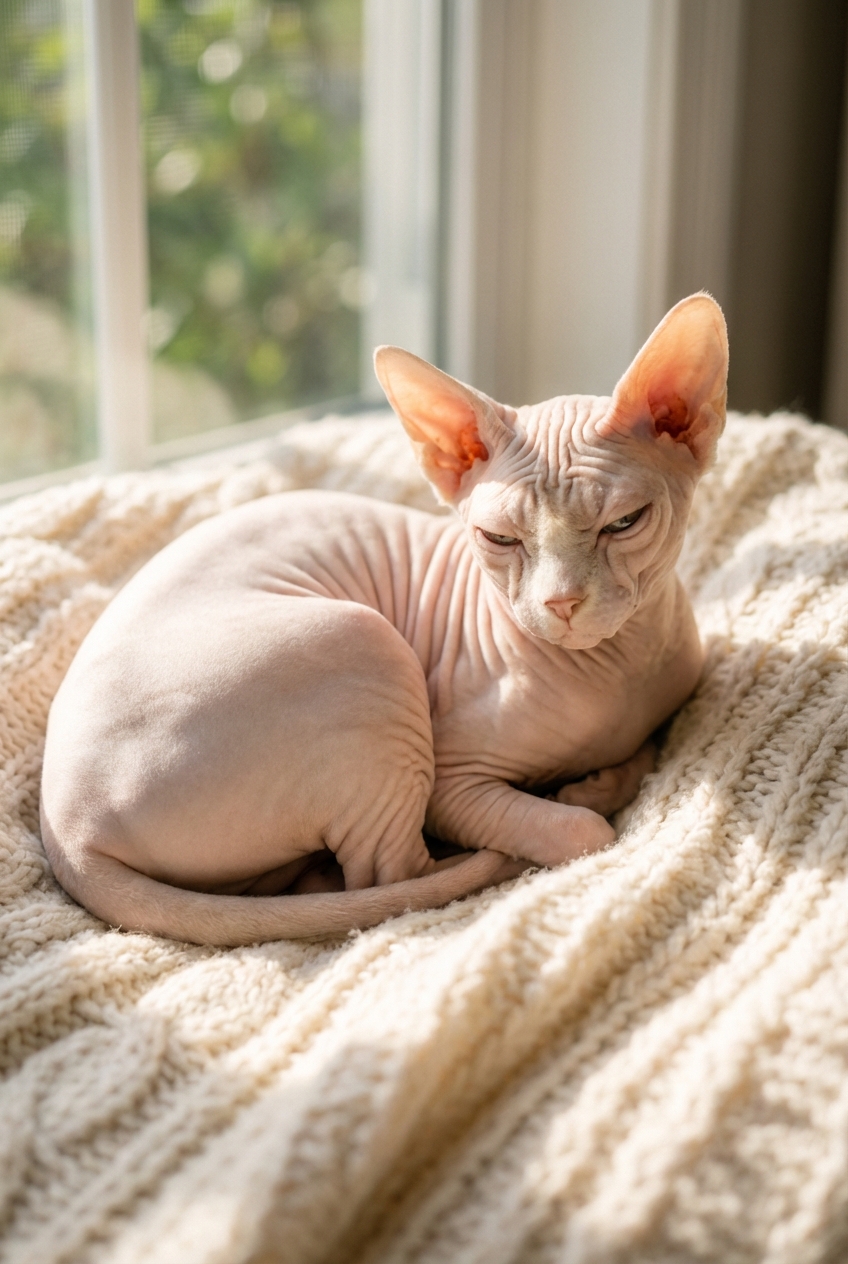
Elf cats are typically medium-sized with a muscular, sturdy build. They can have fine peach fuzz, very short down, or appear hairless. Their skin may show wrinkles, especially around the shoulders, neck, and face. Colors and patterns are expressed in the skin pigmentation and any fine coat present.
Common physical traits
- Ears: Curled backward like the American Curl, often a defining feature.
- Body: Athletic and firm, not delicate.
- Skin: Warm and soft, may feel slightly suede-like.
- Eyes: Often large and expressive, contributing to the breed’s curious look.
Temperament: Social, Curious, and People-Oriented
Most Elf cats are known for being affectionate and social. They often follow their people from room to room and enjoy interactive play. Many do well with respectful children and can coexist with other pets when introduced thoughtfully.
That said, individuals vary. Some are more outgoing than others, and energy levels can shift with age, environment, and routine.
If you want an independent cat who prefers to be left alone most of the day, this may not be your best match. Elf cats tend to thrive on attention and routine.
What many owners love
- They often enjoy cuddling and warmth.
- They are playful and can be quite entertaining.
- They frequently form strong bonds with their primary caregiver.
Potential challenges
- They may become bored or lonely without enough interaction.
- Some are vocal, especially when they want attention or food.
Is an Elf Cat a Good Pet for You?
Elf cats can make wonderful companions for the right household. Think of them as a high-touch cat. They often want closeness, play, and a warm environment.
Elf cats may be a great fit if you
- Spend a lot of time at home or can provide frequent interaction.
- Enjoy a cat that is affectionate and involved in daily life.
- Can commit to regular skin care and routine vet visits.
They may not be ideal if you
- Travel often or are away long workdays with little time for play.
- Prefer a low-maintenance grooming routine.
- Keep your home very cool and cannot provide warm resting spots.
Daily Care: Skin, Ears, Nails, and Warmth
Hairless and near-hairless cats have different care needs than fluffy breeds. Without a full coat to absorb skin oils, Elf cats can develop oily buildup on the skin. This does not mean they are dirty. It just means their skin needs support.
Skin care and bathing
Many Elf cats do best with regular baths, often weekly or every couple of weeks depending on oil production and lifestyle. Use a gentle, cat-safe cleanser recommended by your veterinarian. Overbathing or harsh products can dry the skin and cause irritation.
- Wipe visible oil buildup with a soft, damp cloth between baths.
- Check skin folds for redness, odor, or irritation.
- Wash bedding regularly since skin oils transfer to fabric.
Ear cleaning
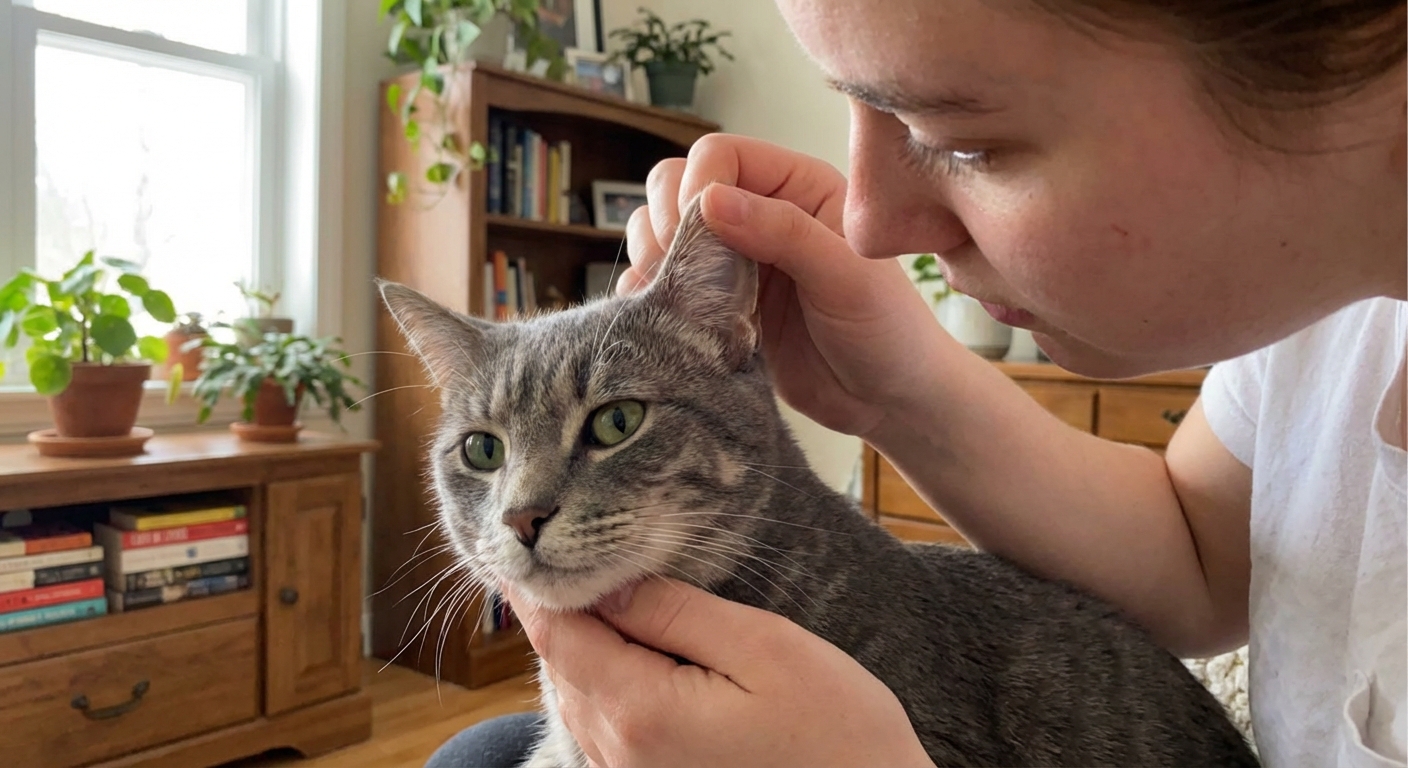
Elf cats can accumulate wax and debris in the ears. Their curled ear shape can make routine checks especially important. Your vet can show you how to clean safely with an appropriate ear solution.
Nail and paw care
Oil and debris can collect around nail beds. Trimming nails and gently cleaning around them helps prevent irritation and odor.
Temperature and sun safety
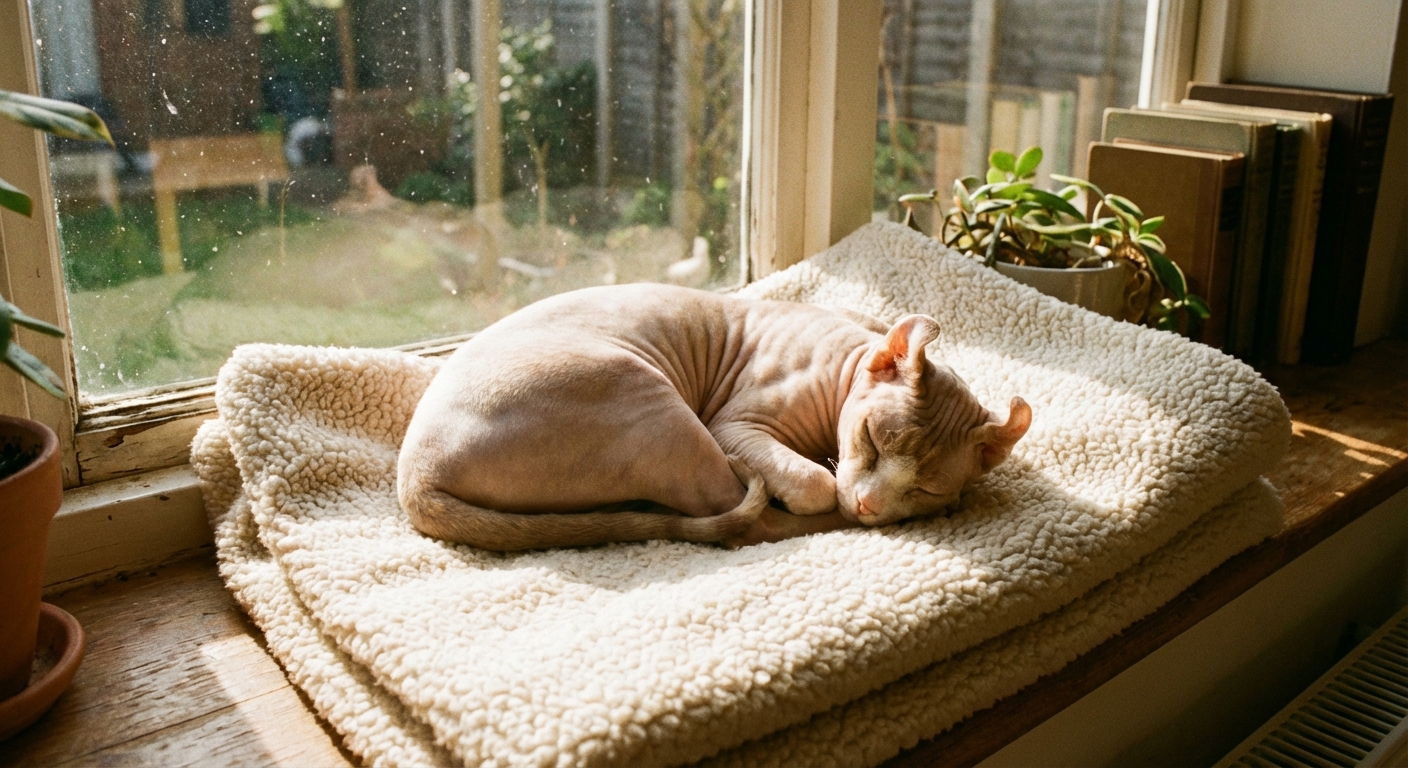
Elf cats are sensitive to cold and can also be vulnerable to sunburn. For most households, indoor-only living is the safest choice for hairless and near-hairless cats. Keep the home comfortably warm, provide cozy beds, and limit direct sun exposure. Ask your veterinarian before using any sunscreen, since many human products are not safe for cats.
Nutrition: Supporting Skin and Lean Muscle
Many hairless breeds are reported to have higher calorie needs, likely because they burn energy to stay warm. Appetite varies by individual, so the best approach is feeding to body condition, not assumptions.
Practical nutrition tips
- Choose a complete and balanced diet that meets AAFCO or equivalent standards.
- Prioritize animal-based protein as the foundation of the diet.
- Monitor body condition, not just the scale. Ask your vet what a healthy shape looks like.
- If the skin seems excessively oily or there are frequent digestive issues, discuss diet adjustments with your veterinarian.
Fresh water matters for every cat, but it is especially helpful when you are aiming for healthy skin and digestion. Consider a pet fountain if your cat prefers moving water.
Exercise and Enrichment: Keep the Mind Busy
Elf cats are typically curious and interactive. Daily play is not optional if you want a happy, well-adjusted companion. The goal is to meet natural hunting behaviors in a safe, indoor environment.
Enrichment ideas
- Short wand toy sessions 1 to 2 times per day.
- Food puzzles or slow feeders to add mental work.
- Cat trees and climbing shelves for vertical space.
- Rotating toys weekly to prevent boredom.
Health Considerations and Veterinary Care
No breed is completely free of health risks. Because the Elf cat is closely related to the Sphynx, it may share some similar predispositions. The best protection is preventive care and working with an ethical breeder who screens breeding cats appropriately.
Potential concerns to discuss with your veterinarian
- Heart health: Some Sphynx lines are known to have increased hypertrophic cardiomyopathy (HCM) risk. Ask your vet about cardiac screening and whether echocardiograms are appropriate for your cat.
- Skin issues: Oil buildup, yeast overgrowth, acne-like bumps, and irritation can occur if hygiene is inconsistent or products are too harsh.
- Dental health: Regular dental checkups and home care help reduce periodontal disease risk.
- Ear problems: Wax buildup can contribute to discomfort or infection if not monitored.
Schedule routine wellness exams at least annually, and more often for kittens and seniors. If you notice rapid breathing, lethargy, appetite changes, persistent skin redness, or a strong odor from the ears, do not wait it out. Early assessment makes a big difference.
Grooming Checklist
If you like structured routines, you will do well with an Elf cat. The key is consistency. Small, steady habits prevent most issues from snowballing.
- Weekly: Skin wipe-downs as needed; check ears; inspect nail beds.
- Every 1 to 2 weeks: Bathing, depending on oil production.
- Every 2 to 4 weeks: Nail trim.
- Daily: Quick check for redness in skin folds, make sure warm beds are available.
Living With an Elf Cat: Home Setup Tips
Because Elf cats seek warmth and companionship, small home adjustments can make a big impact on comfort.
Simple ways to set your cat up for success
- Provide warm, washable bedding in multiple rooms.
- Use a soft blanket layer on favorite resting spots to catch skin oils.
- Keep indoor temperatures stable and avoid cold drafts.
- Create a quiet retreat space for naps and decompression.
Allergies: Are Elf Cats Hypoallergenic?
It is a common myth that hairless cats are hypoallergenic. Elf cats can still trigger allergies because allergens are typically carried in saliva and skin (dander), not just fur. If allergies are a concern, spend time with the breed before committing and talk with your healthcare provider about practical strategies for managing symptoms.
Adoption and Ethical Breeding: What to Look For
Elf cats are rare, so many families go through breeders. Please take your time here. A responsible breeder should welcome questions and provide documentation of veterinary care and any recommended screening tests.
Green flags
- Kittens raised in the home with handling and early socialization.
- Clear explanation of health testing and family history.
- Contract that includes spay-and-neuter terms and a health guarantee.
- Willingness to take the cat back if circumstances change.
Red flags
- No vet records or vague answers about screening.
- Pressure to buy quickly.
- Unwillingness to let you see living conditions.
Also consider breed-specific rescues and general shelters. While Elf cats are uncommon in rescue, Sphynx-type cats do sometimes appear and may be a great match if you are open to an adult cat.
Time and Cost Expectations
Before you commit, it helps to be realistic about the ongoing investment. Regular bathing and ear care take time, and you will likely go through gentle cleansers, ear solution, and extra laundry. Some families also budget for optional screening like a baseline cardiac evaluation, especially if there is a known family history of heart disease.
Quick Summary: Elf Cat Pros and Cons
Pros
- Affectionate, social, and often great with families
- Playful and intelligent, enjoys interaction
- Unique appearance with curled ears and expressive face
Cons
- Requires regular skin and ear care
- Can be sensitive to cold and sun
- Needs attention and daily enrichment to thrive
Final Thoughts
The Elf cat is not a hands-off pet, but for the right person, that is exactly the appeal. If you enjoy routines, gentle grooming, and a companion who truly wants to share your day, this breed can be a wonderful addition to your home.
If you are considering adoption, talk with a veterinarian early and ask a breeder or rescue detailed questions. The healthiest, happiest outcomes come from thoughtful preparation, not impulse decisions.