
Eclampsia (Milk Fever) in Nursing Dogs

Eclampsia, also called puerperal tetany or periparturient (puerperal) hypocalcemia, is one of those postpartum emergencies that can look like it comes out of nowhere. You might also hear people call it milk fever. That is a common lay term, but it can be confusing because the “fever” is usually overheating from constant muscle activity, not an infection-related fever.
As a veterinary assistant in Frisco, Texas, I want you to remember one simple rule: if a nursing dog has tremors, stiffness, or seizures, assume it could be eclampsia and treat it like an emergency until a veterinarian proves otherwise.
Quick note: This article is for education and safety, not a substitute for an exam or diagnosis.
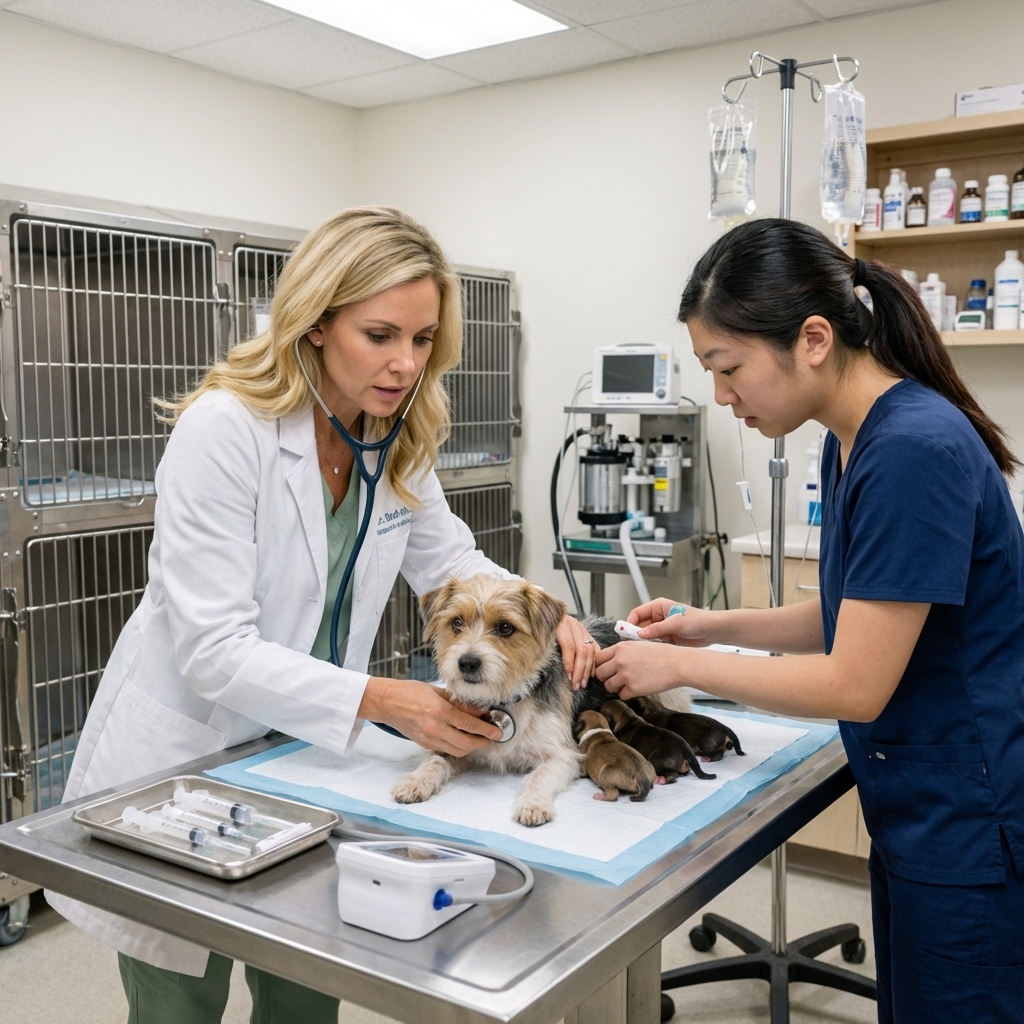
What it is
Periparturient hypocalcemia means a dangerous drop in blood calcium around the time of giving birth or while nursing.
Calcium is not only for bones. It is essential for:
- Normal muscle function (including the heart)
- Nerve signaling
- Keeping muscles from becoming overexcitable
When a mom dog is making a lot of milk, her body can suddenly fall behind on keeping blood calcium stable. That “calcium crash” can trigger tremors, stiffness, and seizures. If she becomes hot, it is often because the muscles are working nonstop, not because calcium directly controls body temperature.
Who is at risk
Eclampsia can happen to any nursing dog, but it is most common in:
- Small breeds and toy breeds
- Moms with large litters or very demanding puppies
- Dogs in the first few weeks of lactation (often when milk demand peaks, though it can occur earlier or later)
- Moms who are thin, stressed, or not eating well
It is also more likely when milk production is peaking and puppies are nursing aggressively.

Early signs
Eclampsia often starts with subtle signs that can be mistaken for normal postpartum behavior. Watch for:
- Restlessness or pacing
- Anxious, panicky behavior or “not acting like herself”
- Excessive panting unrelated to heat or exercise
- Whining, hypersensitivity, or acting “wired”
- Stiffness or a strange, tight gait
- Muscle twitching, facial tremors, or tremors in the legs
If you see these signs in a dog who recently had puppies or is nursing heavily, call an emergency vet right away. Early treatment can prevent seizures.
Advanced signs
As calcium drops further, symptoms can escalate quickly:
- Whole-body tremors that you cannot calm
- Rigid limbs or a “locked up” posture
- Overheating (often due to constant muscle activity)
- Disorientation or wobbliness
- Seizures
- Collapse
Seizures plus recent whelping or heavy nursing are a giant red flag for eclampsia. Time matters because overheating and prolonged muscle activity can cause secondary injury.
Why it happens
Milk is calcium-rich. In a high-demand situation, a mom dog must:
- absorb enough calcium from her diet, and
- mobilize calcium from bone stores, and
- regulate all of this through hormones that keep blood levels steady
If any part of that system cannot keep up, blood calcium drops and the nervous system becomes overexcitable. That overexcitability is what causes the tremors and seizures.
Important note: “More calcium” during pregnancy is not always better. In some cases, unnecessary calcium supplementation during pregnancy may interfere with normal hormonal regulation that prepares the body to mobilize calcium when lactation begins. A balanced, veterinarian-recommended pregnancy or lactation diet usually provides appropriate calcium for most dogs. Always ask your veterinarian before supplementing.
Eclampsia vs other causes
Seizures are always urgent. Eclampsia is common in nursing moms, but it is not the only possibility. Other causes your veterinarian may consider include:
- Low blood sugar (hypoglycemia), especially in small dogs that are not eating
- Toxin exposure (rodenticides, certain insecticides, human medications, illicit substances)
- Heatstroke, especially in hot climates or poor ventilation
- Epilepsy (less likely to start suddenly in the immediate postpartum window, but possible)
- Infection or inflammation (such as meningitis or severe systemic infection)
- Organ disease (liver shunt, kidney disease)
Here is the practical takeaway at home: you do not need to diagnose the exact cause to act correctly. A nursing mom with new tremors, stiffness, or seizures needs emergency veterinary care now, and eclampsia is high on the list.
Why it is an emergency
Eclampsia is dangerous because:
- Seizures can be prolonged and difficult to stop without medication
- Body temperature can rise quickly due to constant muscle activity
- Abnormal calcium affects the heart and muscles
- Without treatment, it can be fatal
Definitive treatment typically requires vet-prescribed calcium dosing, often IV calcium gluconate with careful monitoring of heart rhythm. Many dogs also need temperature management, seizure control, and bloodwork to confirm the calcium level and check glucose and other electrolytes.
First steps at home
If you suspect eclampsia, your job is to stabilize safely and transport immediately.
Do
- Call an emergency veterinarian and say: “My nursing dog is trembling or seizing. I am worried about eclampsia.”
- Call ahead so the team can be ready when you arrive.
- Separate puppies from mom to stop milk demand. Place puppies in a warm, safe box with a heat source that cannot burn them.
- Keep mom in a quiet, dim area. Reduce stimulation.
- If she is actively seizing, protect her from injury: move furniture away, cushion her with blankets, and keep your hands away from her mouth.
- Begin gentle cooling only if she is hot: use a fan, cool room air, and cool (not ice-cold) damp towels on paws, belly, and groin.
- Transport ASAP. Drive safely. Bring another adult to ride with you if possible so one person can focus on the road.
Do not
- Do not put your hands in her mouth. Dogs do not “swallow their tongue,” and you can be badly bitten during a seizure.
- Do not try to hold her down during a seizure. Focus on preventing injury.
- Do not force oral calcium into a dog who is trembling hard, disoriented, or seizing. Aspiration is a real risk.
- Do not give human seizure medications or pain relievers.
- Do not immerse her in an ice bath. Overcooling and stress can worsen outcomes.
- Do not delay care to “see if it passes.” Eclampsia often escalates.
- Do not let puppies continue nursing once you suspect eclampsia.

About calcium at home
Owners often ask whether they should give calcium right away. The honest answer is: only follow a veterinarian’s instructions.
If your dog is alert and able to swallow normally, some veterinarians may instruct you by phone to give a specific, dog-safe oral calcium product on the way in. But the wrong product, the wrong dose, or giving it to a dog who cannot swallow safely can create new emergencies.
For seizures, severe tremors, collapse, or confusion: skip oral dosing and focus on safe transport and cooling if needed.
What the vet will do
In the clinic or ER, care often includes:
- Confirming hypocalcemia with bloodwork (and checking glucose and other electrolytes)
- IV calcium supplementation given slowly while monitoring heart rhythm
- Seizure control medications if needed
- Temperature control and IV fluids as appropriate
- Feeding plan for puppies and a lactation management plan for mom
Many dogs improve dramatically once calcium is corrected, but relapse can happen if nursing resumes too quickly without a plan.
Aftercare
Once your dog is stable, your veterinarian may recommend a combination of:
- Temporary weaning or limiting nursing sessions
- Puppy supplementation with an appropriate commercial puppy milk replacer (not cow’s milk)
- Oral calcium and vitamin D strategy if indicated
- High-quality, energy-dense diet formulated for lactation
- Recheck exams if any tremors, panting, or restlessness returns
If puppies are separated, they may need help staying warm and a structured feeding schedule. Your veterinarian can tell you how often to feed and how to monitor weight gain safely.
If you notice early warning signs again, treat it as urgent. Some dogs can have repeat episodes during the same nursing period.

Prevention tips
You cannot prevent every case, but you can reduce risk with good planning:
- Schedule a postpartum check for mom, especially with large litters
- Feed a veterinarian-recommended diet for pregnancy and lactation (balanced diets are typically calcium-appropriate)
- Avoid supplementing calcium during pregnancy unless your veterinarian specifically recommends it
- Monitor mom closely during the first few weeks postpartum, especially small breeds
- Have emergency numbers ready before whelping: your vet, the nearest ER, and the route to get there
- Plan for puppy supplementation if litter demand is high
If your nursing dog seems suddenly anxious, trembly, stiff, or “too hot,” trust your instincts and call an emergency vet. With eclampsia, acting early can prevent seizures and save her life.
When to go now
Go immediately if your nursing dog has any of the following:
- Tremors or muscle twitching that are new or worsening
- Stiff walking, rigid limbs, or trouble standing
- Uncontrolled panting and agitation
- Rectal temperature that is high, or she feels very hot to the touch
- Any seizure activity, even a brief seizure
- Collapse, extreme weakness, or confusion
If you are reading this because you are worried in real time, this is your permission to stop Googling and start moving. Call the ER and go.