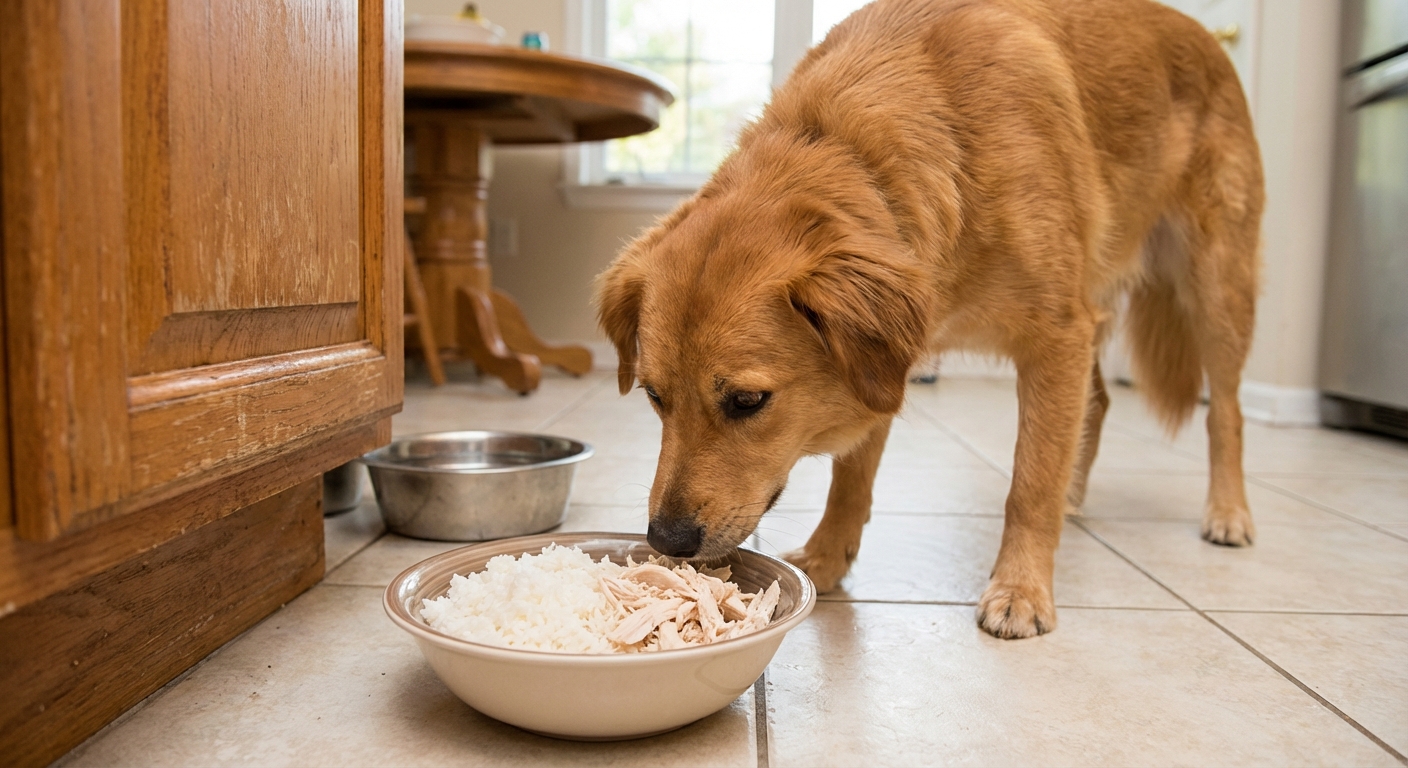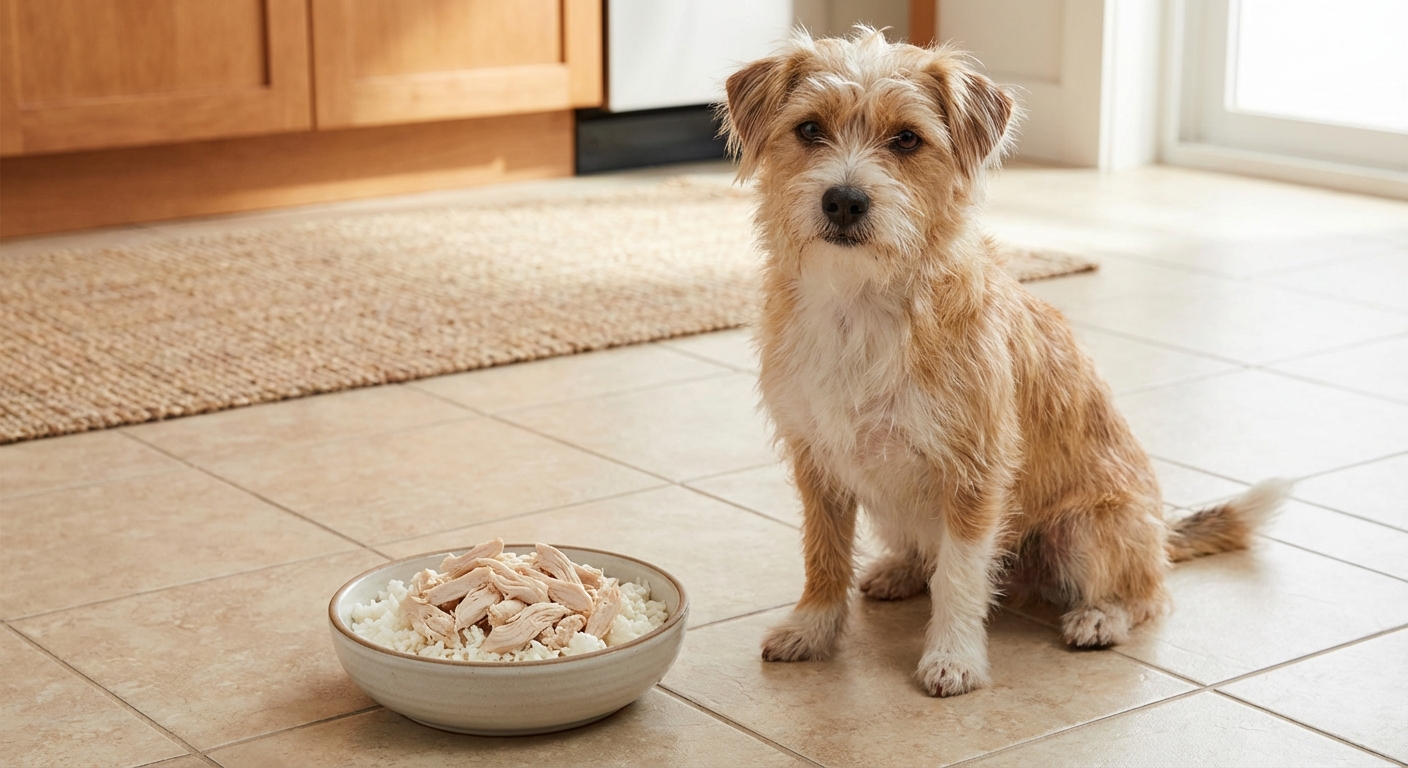
Chicken and rice can soothe mild stomach upset and help dogs transition back to normal food. Learn safe recipes, portions, how long to feed it, and when to c...
Article
•
Designer Mixes
Easy Homemade Dog Food for Sensitive Stomachs

Shari Shidate
Designer Mixes contributor
If your dog has a sensitive stomach, mealtimes can feel like a guessing game. One day they are fine, and the next day you are cleaning up soft stool, excessive gas, or even vomiting. As a veterinary assistant here in Frisco, Texas, I have seen how much relief the right food plan can bring.
The good news is you do not have to become a gourmet chef or overhaul everything overnight. You can start slowly and build simple, gentle meals using human-grade ingredients you recognize, while still keeping nutrition in mind.
What it can look like
A “sensitive stomach” is not a diagnosis on its own. It is a pattern of digestive upset that can have several causes. Common signs include:
- Soft stool or diarrhea, sometimes on and off
- Vomiting, lip licking, or nausea after meals
- Excess gas or belly gurgling
- Skipping meals or acting hungry but uncomfortable
- Itchy skin or ear issues, which can sometimes overlap with food sensitivities
If these symptoms are frequent, getting worse, or your dog seems painful or lethargic, it is worth scheduling a vet visit before you change the diet. Parasites, pancreatitis, infections, inflammatory bowel disease, Addison’s disease, and other conditions can look like “just” a sensitive belly.
Call your vet now
Please seek veterinary care promptly if you notice any of the following:
- Repeated vomiting or vomiting with blood
- Black, tarry stool or blood in stool
- Severe lethargy, weakness, collapse, or dehydration
- A swollen or painful abdomen
- Diarrhea lasting more than 24 to 48 hours, especially in puppies or seniors
- Rapid weight loss
Food changes can help many dogs, but urgent symptoms should never be “wait and see.”
Why homemade can help
For many dogs, the benefit of homemade food is simplicity and control. You can:
- Use a short ingredient list
- Avoid common triggers like heavy fat, rich treats, and mystery proteins
- Choose gentle cooking methods and consistent portions
- Adjust texture and fiber to your dog’s stool response
That said, homemade is only helpful when it is balanced over time. Sensitive dogs still need the right calcium-to-phosphorus balance, essential fatty acids, and key vitamins and minerals.
Common diet triggers
Every dog is unique, but these are frequent troublemakers I see:
- High fat meals: especially greasy meats, bacon, sausage, rich table scraps, and too much oil. High fat can trigger pancreatitis in some dogs.
- Sudden diet switches: even a healthy food can cause diarrhea if the transition is too fast.
- Too many new foods at once: it becomes impossible to tell what helped or hurt.
- Dairy: some dogs tolerate plain yogurt or kefir, but others do not tolerate lactose well.
- Fiber overload: fiber is helpful, but too much can cause gas and loose stool.
Gentle 3-ingredient reset
If your vet has ruled out urgent problems, many dogs do well with a short, bland-style menu for a few days while you observe stool quality.
A common starting mix: about 1 part lean protein to 2 parts carbohydrate (roughly 33% protein and 67% carb), plus a small amount of pumpkin if it agrees with your dog.
A simple starting point is:
- Lean protein: boiled chicken breast or 93% lean ground turkey
- Easy carb: well-cooked white rice (commonly used during flare-ups because it is usually easy to digest, but some dogs do better with a different starch)
- Simple fiber: plain canned pumpkin (not pie filling)
Why these work: they are generally low fat and easy to digest. Pumpkin can help some dogs normalize stool by adding soluble fiber, but it does not help every case and can increase gas or loosen stool in some dogs.
How long to use it: typically 2 to 5 days unless your veterinarian directs otherwise, then transition to a long-term plan.
How much to feed (general): portion needs vary a lot by size, age, and activity. Some people use “2 to 3% of body weight per day” as a very rough starting point, but it can overfeed or underfeed. The safer target is calories (your vet can calculate daily needs), and many sensitive dogs do better with smaller, more frequent meals (2 to 3 meals daily, sometimes 4 smaller meals during a flare-up).
Hydration matters: diarrhea can dehydrate dogs quickly. Make sure fresh water is always available. If your dog will not drink, call your vet.
Important note: this “reset” is not a complete diet. Think of it as a calm starting place, not the forever plan.
Extra caution: if your dog has a history of pancreatitis, diabetes, kidney disease, is on a prescription diet, or takes medications affected by diet, do not change foods without veterinary guidance. Some of these dogs need very specific fat, protein, and mineral targets.
Easy gentle recipes
These recipes are designed to be gentle, not fancy. They are meant for short-term use during transition and troubleshooting, or as a base you will balance with your veterinarian or a board-certified veterinary nutritionist.
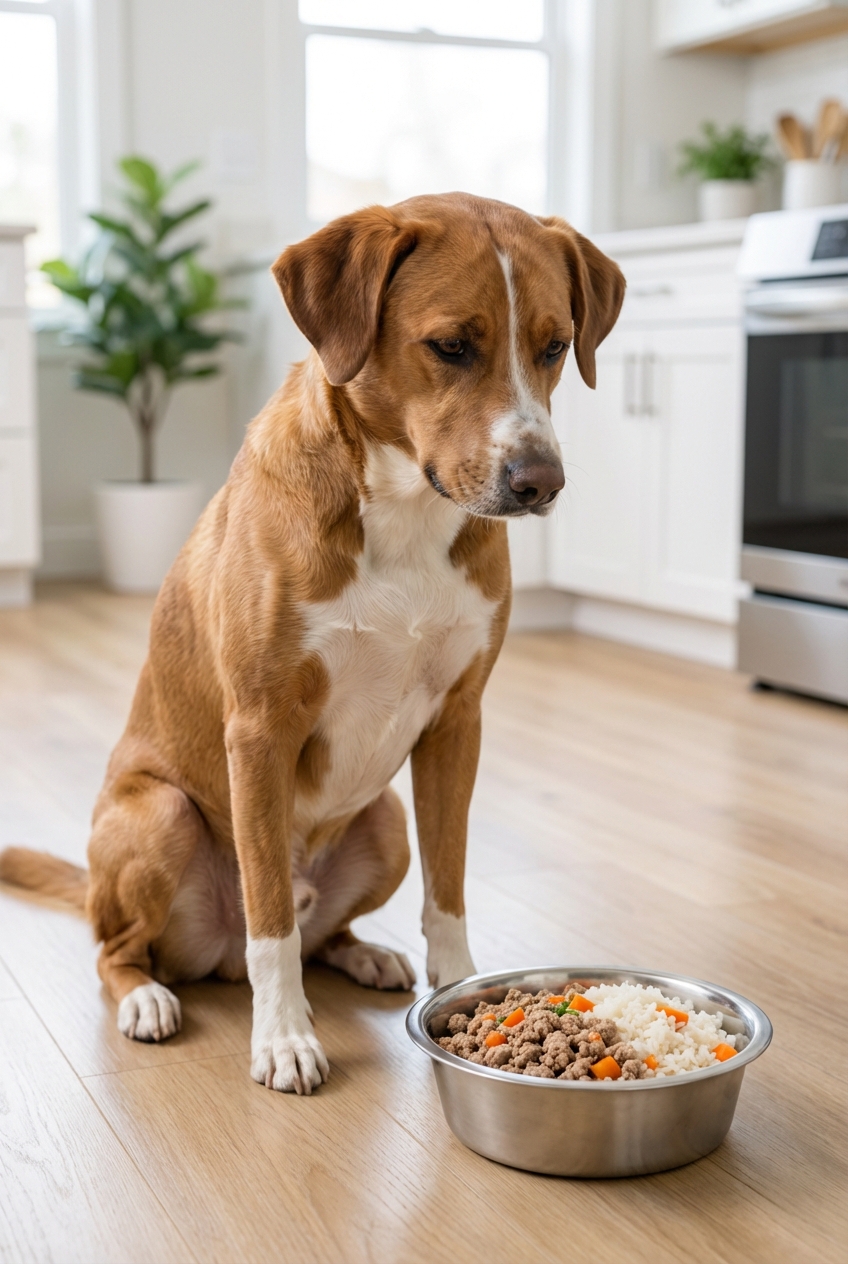
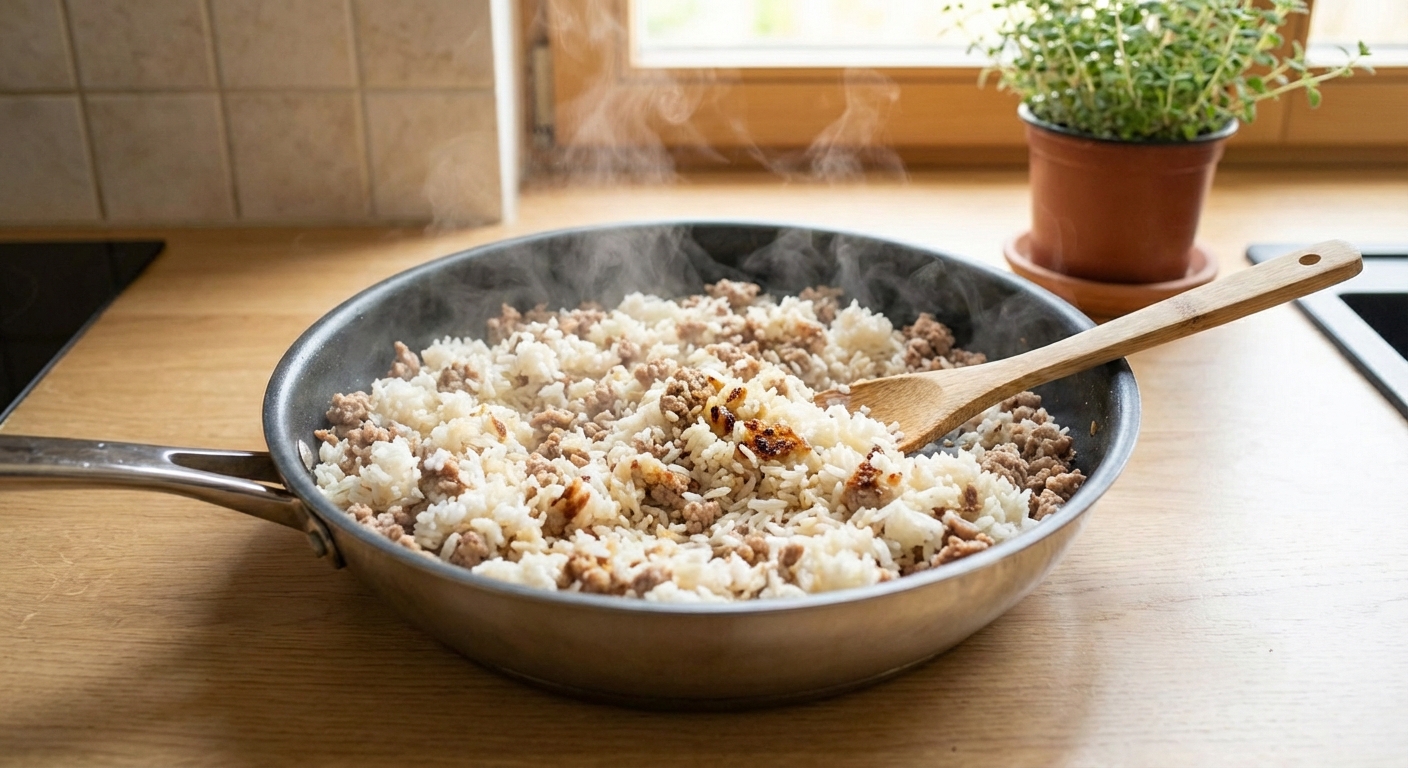
Recipe 1: Turkey, rice, pumpkin
Starting ratio: 1 part turkey to 2 parts rice (by volume), plus pumpkin if tolerated.
- Lean ground turkey, cooked and rinsed if needed to reduce fat
- White rice, cooked very soft
- Optional pumpkin: start small (for example, 1 teaspoon per 10 pounds of body weight daily, divided across meals), then adjust
Tip: If stool is too firm, reduce rice a little or add a tiny bit more pumpkin. If stool is too soft or gassy, skip pumpkin and keep meals very simple and low fat while you reassess.
Recipe 2: Chicken and sweet potato
Starting ratio: 1 part chicken to 2 parts sweet potato (by volume).
- Boiled chicken breast, shredded
- Baked or steamed sweet potato, mashed
- Optional: steamed zucchini, finely chopped
Why it is gentle: sweet potato is often well tolerated and provides soluble fiber, but keep portions moderate since too much can loosen stool.
Recipe 3: White fish, rice, carrots
Starting ratio: 1 part fish to 2 parts rice (by volume), with a small amount of carrots.
- Cod or tilapia, baked or poached with no seasoning
- White rice
- Carrots, steamed until very soft and chopped small
Great for: dogs who do not do well on chicken or turkey and need a different protein to test.
Switch foods slowly
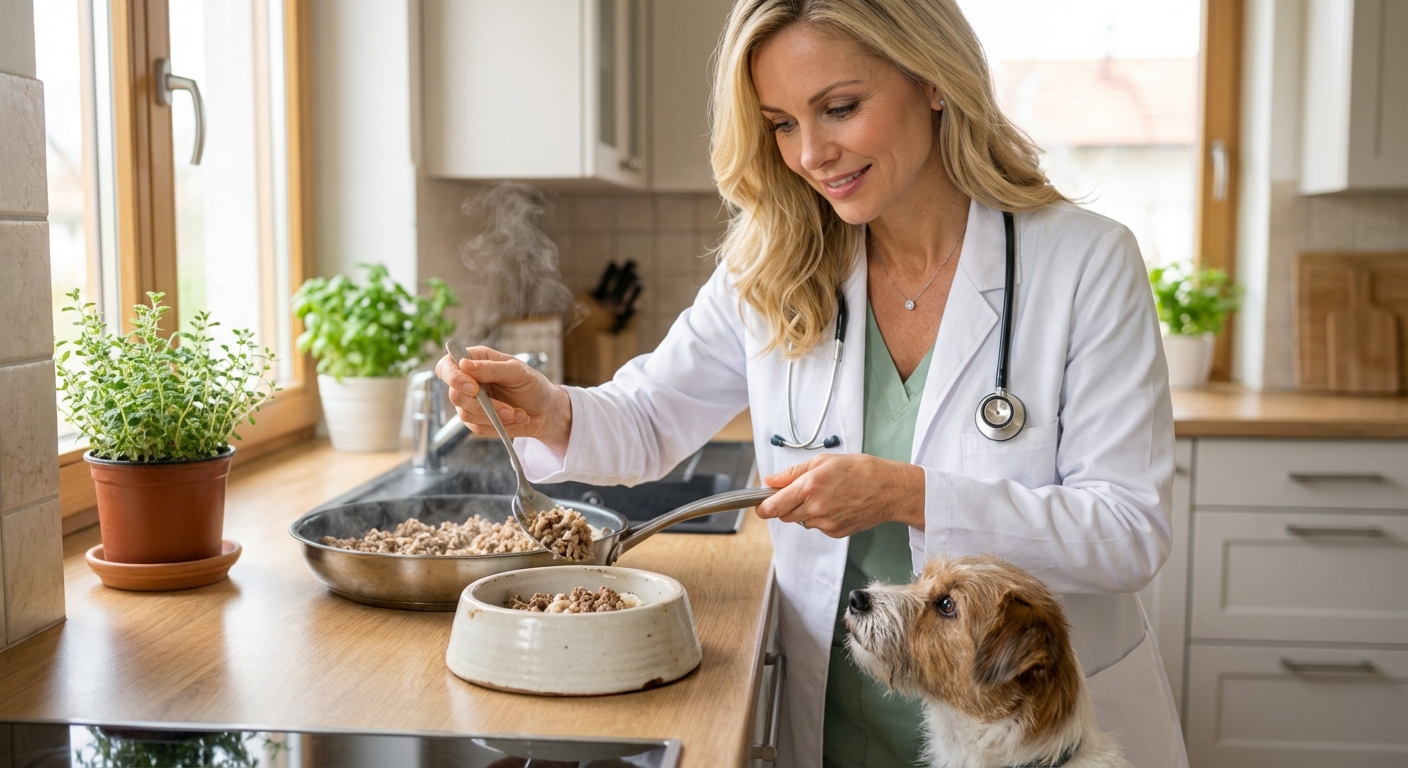
With sensitive dogs, slow is kind. A general transition schedule is:
- Days 1 to 3: 25% new food, 75% current food
- Days 4 to 6: 50% new food, 50% current food
- Days 7 to 9: 75% new food, 25% current food
- Days 10 to 14: 100% new food
If your dog has a history of flare-ups, take longer. In my experience, some dogs need a full 3 to 4 weeks to transition comfortably.
Watch the stool like it is your report card. You are aiming for stool that is formed, easy to pick up, and not watery. If it gets softer or watery, hold at the current ratio for a few days before increasing.
Make homemade safer
This is the part most loving pet parents do not hear enough: dogs need minerals and vitamins in specific ratios. The most common homemade mistake is not adding a reliable calcium source, which can throw off calcium-to-phosphorus balance over time.
Calcium basics
Meat is high in phosphorus and low in calcium. If you feed meat and rice without calcium long-term, you risk nutrient deficiencies. Safer options include:
- Veterinary-formulated calcium supplement designed for homemade diets
- Finely ground eggshell powder (only if you have a trusted recipe with correct amounts)
Because dosing depends on your dog’s weight and the exact ingredients, I strongly recommend asking your vet for a recipe or using a veterinary nutritionist-approved recipe and supplement plan.
Helpful add-ins (once stable)
- Probiotics: may help some dogs with diarrhea or after antibiotics. Use a dog-specific product and introduce slowly.
- Omega-3s (EPA and DHA): can support skin and gut inflammation. Choose a purified fish oil and dose carefully to avoid loose stool.
- Cooked vegetables: once your dog is steady, small amounts of steamed zucchini or green beans can add nutrients. (If your dog is prone to certain bladder stones, ask your vet before using higher-oxalate veggies like spinach.)
What to avoid
- Seasonings: onion and chives are toxic, and heavy spices can irritate the stomach
- Greasy leftovers: fat is a common trigger
- Cooked bones: choking and intestinal injury risk
- Grapes and raisins: toxic
- Xylitol: toxic, found in some peanut butters and sugar-free products
- Frequent treat mixing: keep treats boring during a flare-up
Troubleshooting checklist
If your dog’s stomach is still unsettled, run through this list:
- Did the transition happen too fast?
- Is fat too high, even from “healthy” oils?
- Are you feeding too much at once? Try 3 smaller meals.
- Are treats or chews sneaking in?
- Is your dog getting into trash or cat food?
- Have you changed proteins too quickly?
For many sensitive dogs, consistency is the medicine.
Food allergy vs intolerance
Digestive upset can be an intolerance, but true food allergies can also show up as itchy skin, recurrent ear infections, and chronic GI signs. If your vet suspects an allergy, the next step is often a strict elimination diet (single protein and single carb, or a prescription hydrolyzed diet) for several weeks. The key is no extras, meaning no flavored treats, chews, or table scraps during the trial, or you may not get a clear answer.
FAQ
Is bland food balanced?
No. Bland diets can be helpful short-term, but most are not complete and balanced for long-term feeding without a plan for calcium, essential fatty acids, and vitamins.
Can I use oats instead of rice?
Many dogs tolerate well-cooked oats, but rice is commonly used during flare-ups. If you try oats, introduce them slowly and watch stool and gas.
How fast will I see improvement?
Some dogs improve in 24 to 72 hours on a gentle plan. Others need a longer transition, parasite testing, or a different protein. If you see no improvement, loop your veterinarian in.
Final thoughts
If your dog has a sensitive stomach, you are not failing. You are learning what their body can handle. Start with a few gentle ingredients, keep portions consistent, and change things slowly. Once your dog is stable, you can build variety thoughtfully and work toward a balanced homemade plan that supports long-term health.
If you want, you can share your dog’s age, breed mix, weight, and symptoms, and I can help you brainstorm a simple starting plan to discuss with your veterinarian.