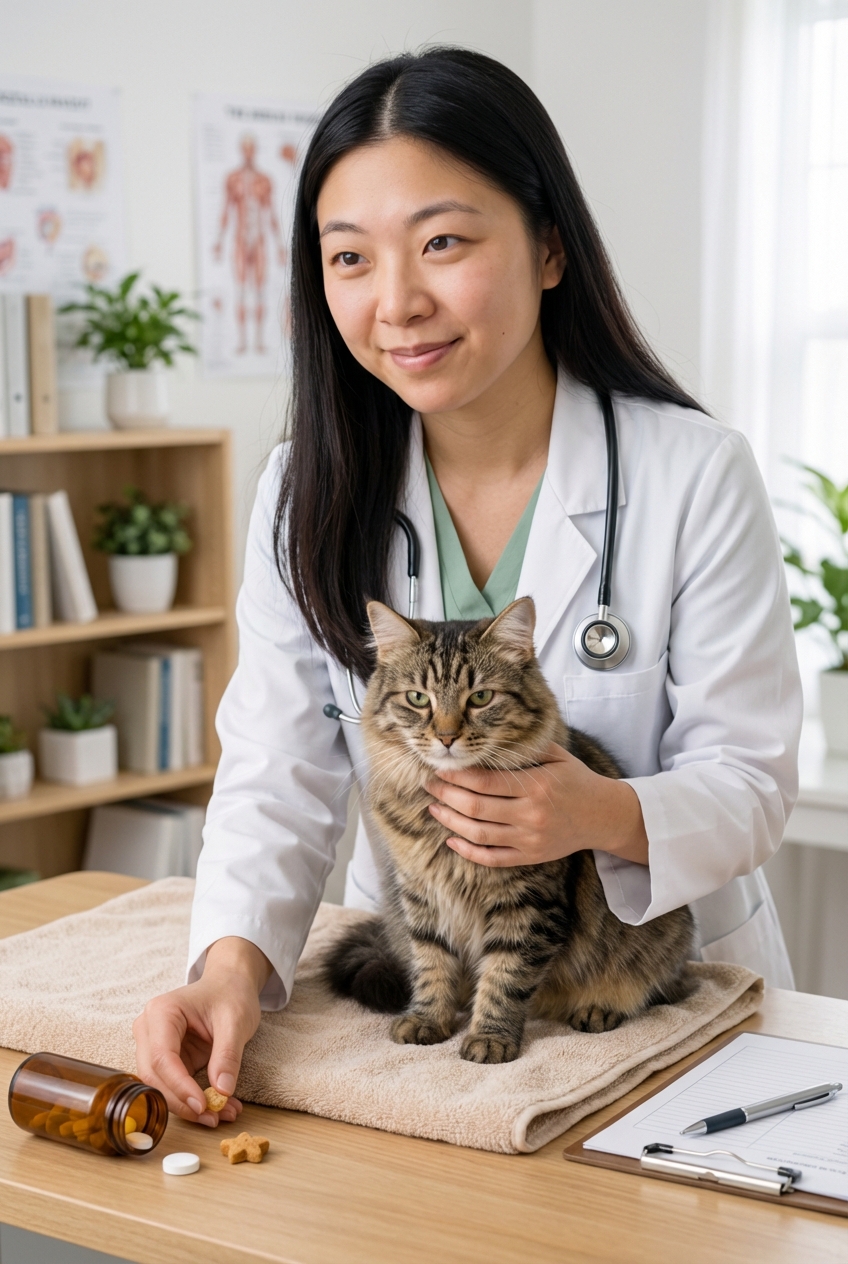
Make pilling easier with vet-aligned methods: hide in food, pill pockets, direct pilling, pill poppers, and calm training steps. Includes safety tips and whe...
Article
•
Designer Mixes
Easiest Way to Give a Cat a Pill

Shari Shidate
Designer Mixes contributor
Giving a cat a pill can feel like a tiny wrestling match you did not sign up for. I get it. As a veterinary assistant, I have helped a lot of families through this exact moment, and the good news is that there often is an “easiest way” for most cats. It is usually pill hiding first, and if that fails, a calm, gentle pilling technique with a quick swallow follow-up.
Your goal is simple: get the full dose down safely while keeping your cat’s stress as low as possible. Let’s walk through the methods that tend to work best, step by step.
Quick note: This is general guidance. Always follow your veterinarian’s instructions for your cat’s specific medication.
Before you start: safety and setup
A few quick checks can prevent most pill problems.
1) Confirm how the medication should be given
- With food or on an empty stomach: Some meds cause nausea without food, others absorb better without it.
- Can it be crushed or opened: Many cannot. Extended-release tablets, enteric-coated pills, and some bitter meds should never be crushed unless your vet says it is safe.
- Food and supplement interactions: Ask your vet or pharmacist if this medication has any known interactions with foods, vitamins, or supplements your cat takes.
If the label is unclear, call your vet or pharmacist. It is always worth the 2-minute check.
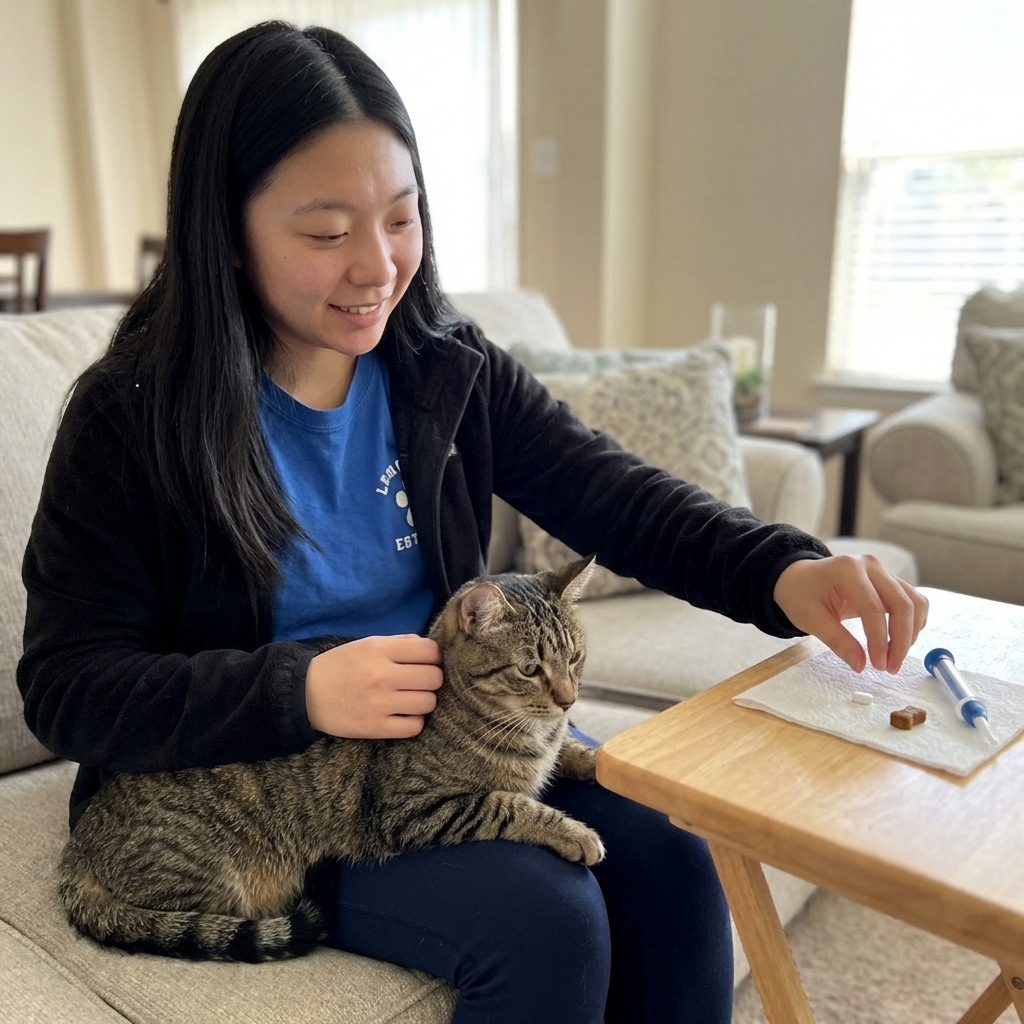
2) Set up your “pill station”
- The pill or capsule (already out of the bottle)
- 2 to 3 high-value food options (more on that below)
- A small syringe of water, tuna water, or low-sodium broth (no onion or garlic) if your vet approves
- A towel (for a gentle wrap if needed)
- A treat your cat loves for afterward
Choose a quiet room and close the door. Cats do better without an audience, loud noises, or other pets hovering.
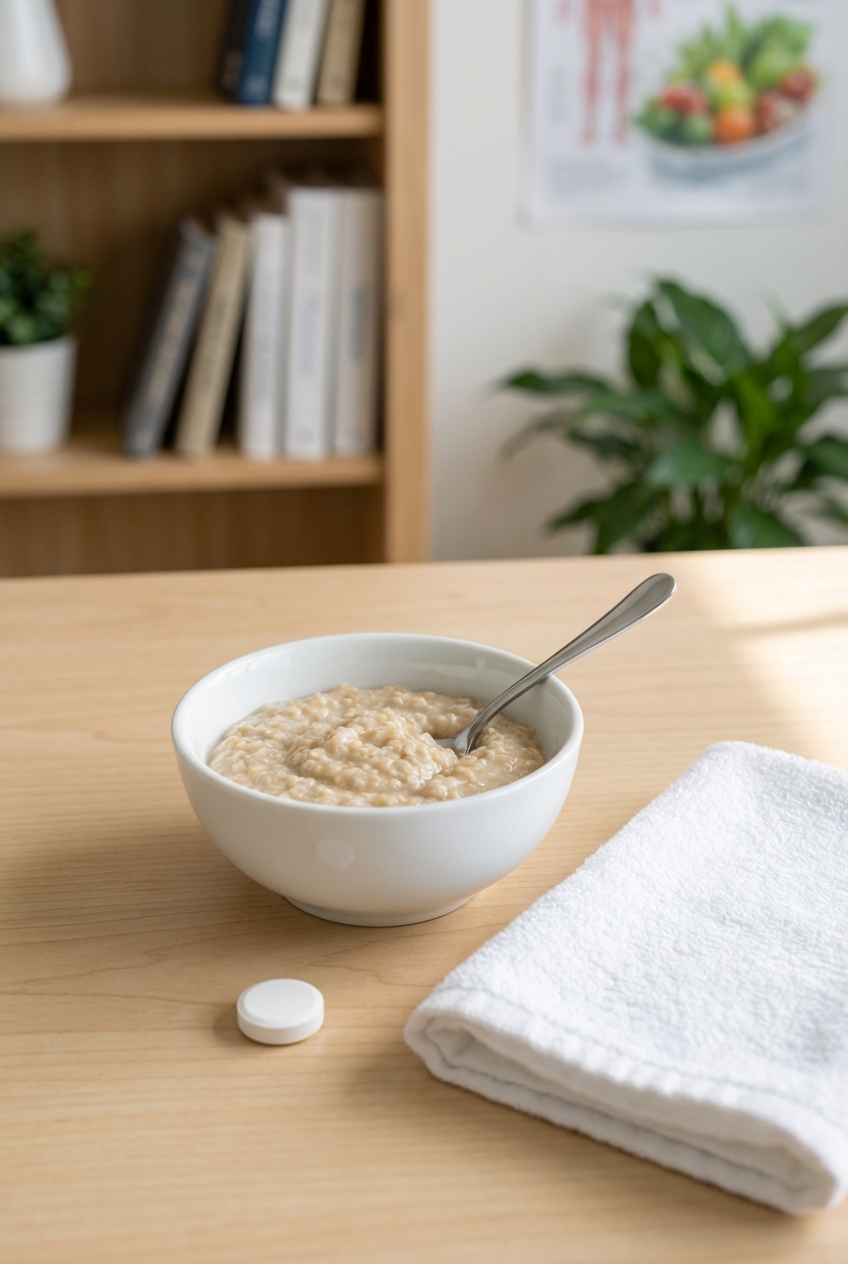
The easiest method for most cats: hide the pill in food
If your cat will take a “bait” bite, this is usually the least stressful option. The trick is to use the right texture and avoid making the pill obvious.
Best foods for hiding pills
- Pill pockets: Designed to mask smell and texture. Warm them slightly in your fingers so they seal well.
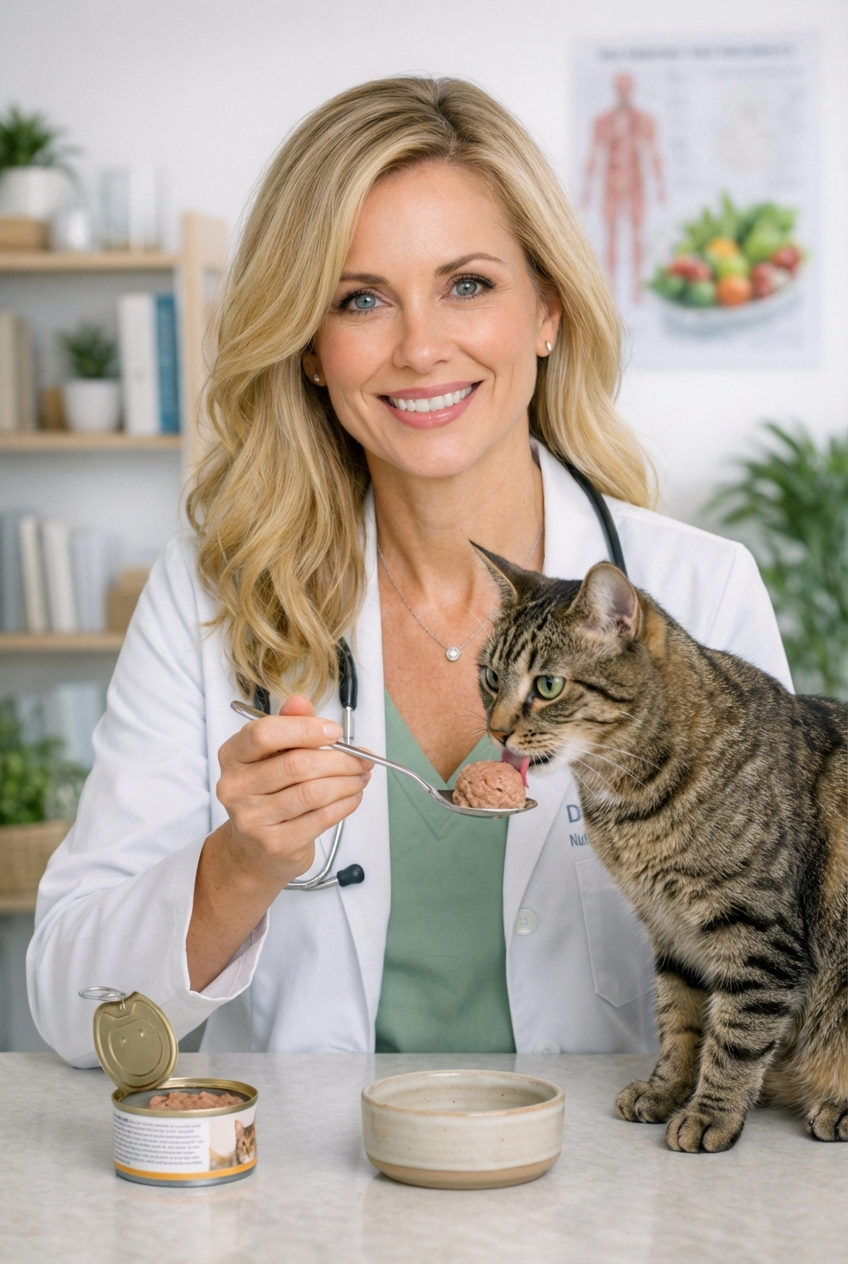
- Canned cat food pate: A small sticky “meatball” works better than chunks in gravy.
- Creamy treats: Lickable treats can hide small pills, especially if you sandwich the pill between two small squeezes.
- Cooked chicken or tuna: Use a tiny piece, not a whole meal. Tuna is best as an occasional tool, not a daily habit.
Tip: Avoid large portions. If your cat does not finish, you cannot be sure the full dose was taken.
The 3-bite trick (my go-to)
This reduces suspicion and increases success:
- Bite 1: A plain treat or small food ball with no pill.
- Bite 2: The pill-hidden bite.
- Bite 3: Another plain “chaser” bite right away.
That third bite encourages swallowing and helps prevent the classic “pill spit” a minute later.
If your cat is a master at detecting pills
- Keep your hands clean: Cats can smell medication on your fingers. Wash and dry your hands first.
- Fully seal the pill: No edges poking out, no powdery coating on the outside.
- Try a different bait: Some pills are bitter and leak flavor fast. Switching to a stronger-smelling food often solves it.
If food fails: the calm “direct pill” technique
Some cats will not take pills hidden in anything, especially after a few attempts. When that happens, direct pilling can be fast and humane when done correctly.
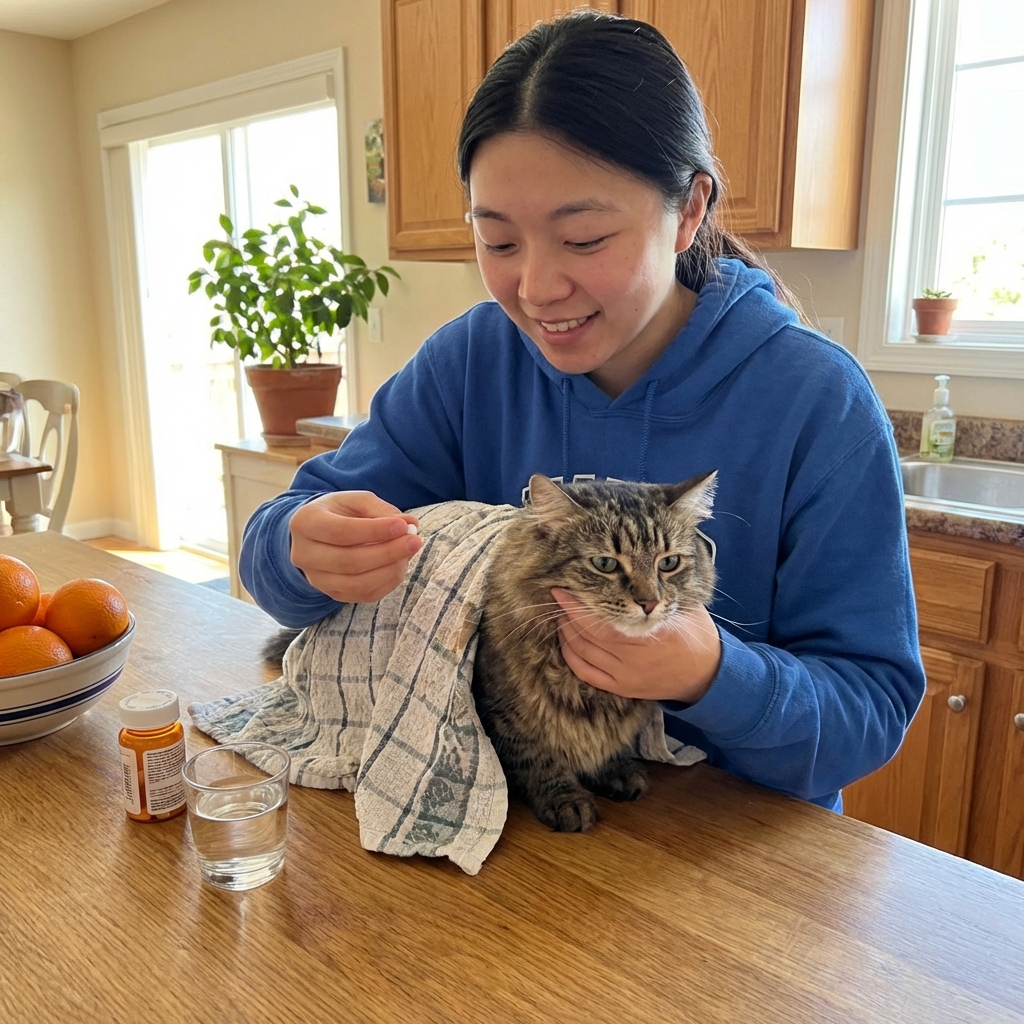
Step-by-step: gentle pilling
- Position your cat: Place your cat on a non-slip surface. Many cats do best facing away from you, with their back against your stomach.
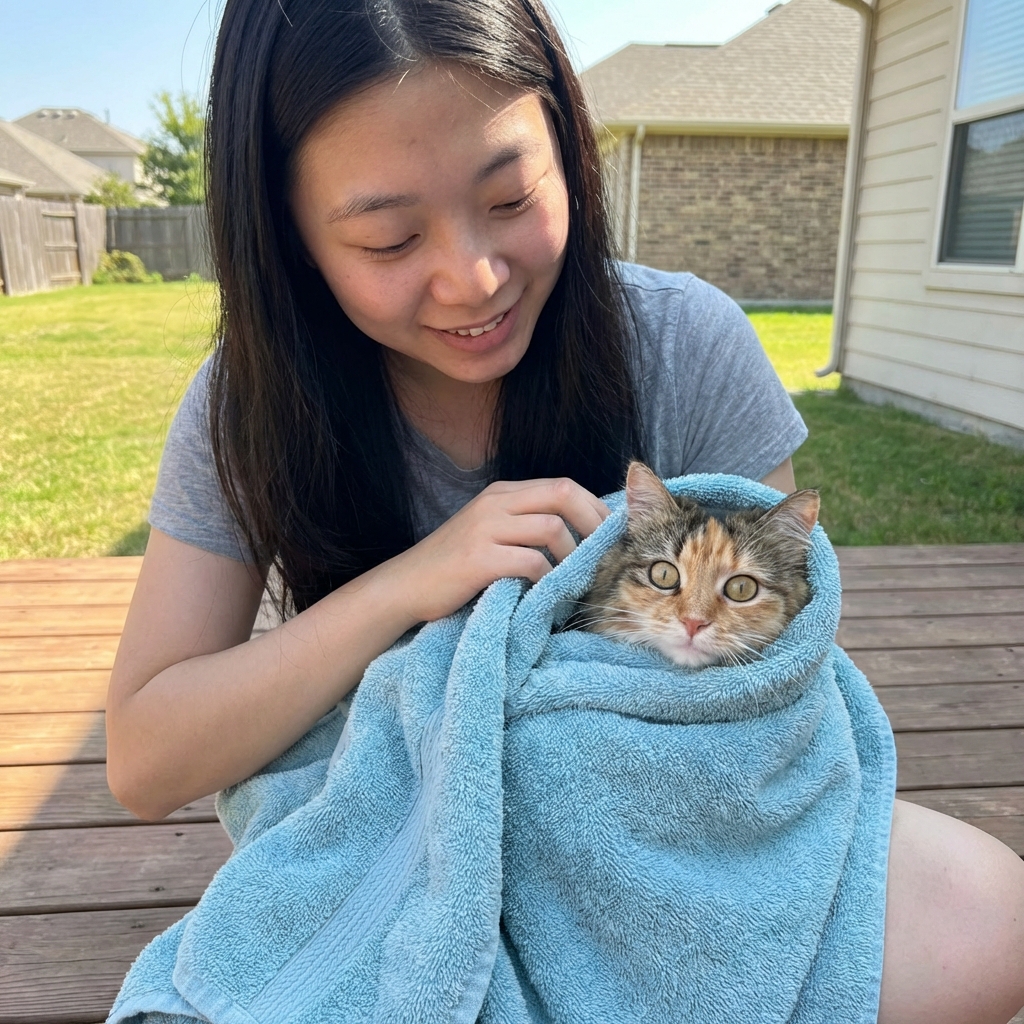
- Use a towel wrap if needed: Wrap snugly with only the head out if paws are flying. This is not punishment, it is safety.
- Hold the head correctly: Place your non-dominant hand over the top of the head, thumb and index finger behind the canine teeth area. Lift the nose slightly just to help the mouth open.
- Open the mouth: With your dominant hand, use a finger to gently lower the jaw by applying light pressure at the front of the lower jaw (not pushing on the teeth).
- Place the pill safely: Place it as far back on the tongue as you safely can, then remove your fingers.
- Close, then encourage a swallow: Close the mouth and bring the head back to a neutral, level position for swallowing. Gently stroke the throat. Blowing softly toward the nose may help some cats, but the key is to watch for an actual swallow.
- Follow with a chaser: Offer a lickable treat or a small amount of food right after.
Key point: You do not need to force the head way back. Over-tilting can make some cats panic and can increase the chance of coughing.
If they spit it out
- Stay calm and pause for a moment so stress does not spike.
- Only give another full dose if you are sure the pill did not go down. If you are not sure, call your vet for guidance.
Pill poppers and syringes: when they help
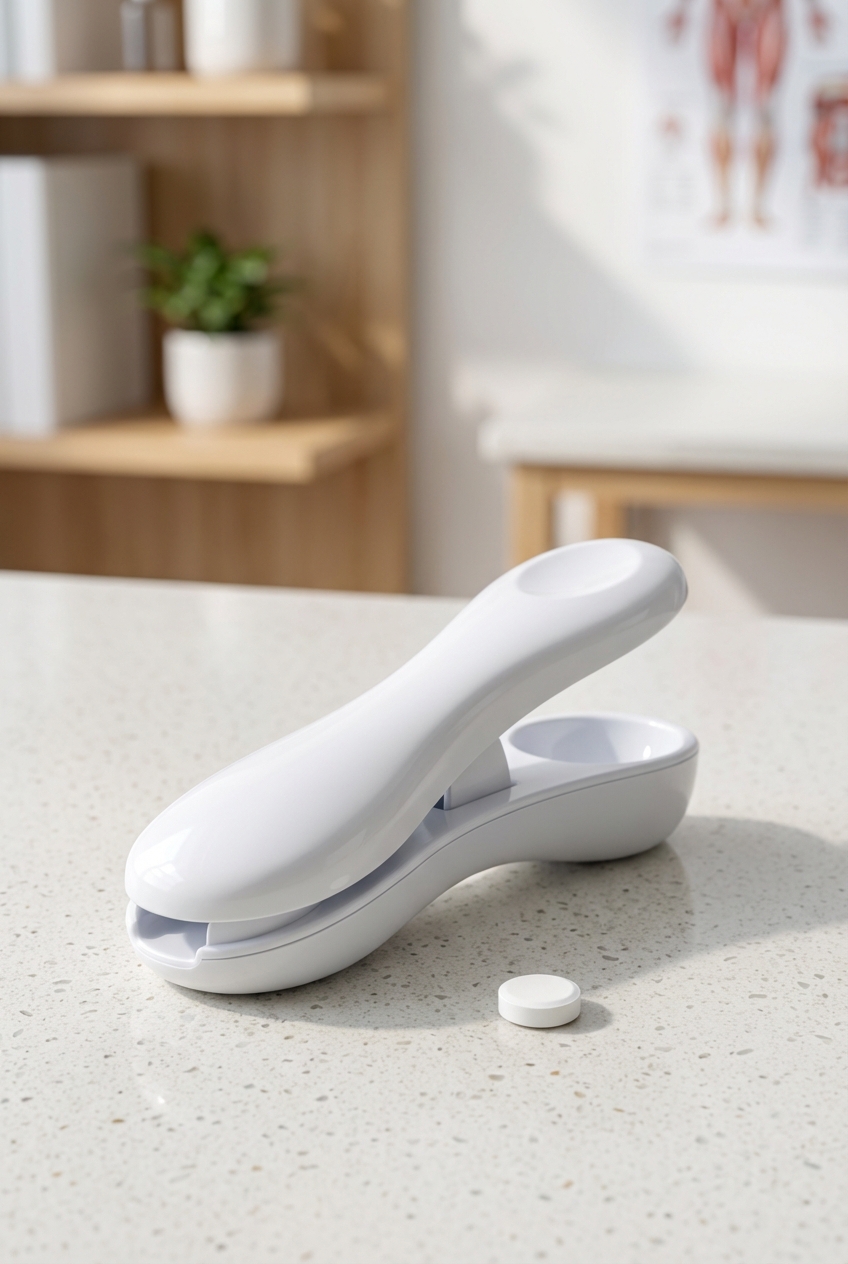
A pill popper (also called a pill gun) can be a game changer for cats who clamp their mouth shut or for very tiny pills that are hard to place by hand.
- Pros: Faster placement farther back on the tongue, less chance of getting bitten.
- Cons: Some cats dislike the device, and it takes a bit of practice.
If you use one, ask your veterinary team to demonstrate. Small adjustments in angle and timing make a big difference.
About water syringes: If your vet recommends a little water after a pill, do not squirt forcefully. Give tiny amounts slowly with your cat upright (standing or sitting), and stop right away if there is coughing or struggling.
Prevent “pill stuck” problems (very important)
Cats can sometimes get pills stuck in the esophagus, especially dry tablets. This can irritate tissue and, in some cases, lead to significant inflammation.
Some medications are known to be higher risk for esophageal injury in cats, especially doxycycline and clindamycin. With these, a food or water chaser is extra important. Follow your veterinarian’s instructions closely.
To help prevent that:
- Give a small food chaser after the pill.
- If approved by your vet, offer a small amount of water after dosing (slowly, with your cat upright).
- Ask your vet if the medication can be given as a capsule, liquid, or compounded flavored form if your cat struggles.
If your cat drools excessively, gags repeatedly, coughs, paws at the mouth, or seems distressed after a pill, call your veterinarian for guidance.
Common mistakes that make pilling harder
- Trying too many times in a row: If you miss twice, pause. Reset with calm and a positive treat, then try again later.
- Hiding the pill in a full meal: You lose dose certainty.
- Crushing without permission: Some meds become ineffective or unsafe when altered.
- Using risky human foods: Avoid anything with xylitol, and stick to cat-safe options. If you use broth, keep it onion- and garlic-free.
- Letting stress build: Cats read our tension. Slow your breathing, speak softly, and keep movements predictable.
When to call your vet
Please reach out to your veterinary team if:
- Your cat misses doses because the process is not working.
- The medication causes vomiting, severe drooling, or refusal to eat.
- Your cat has a history of aspiration, breathing issues, or you notice coughing during dosing.
- You were instructed to give the pill, but your cat is hiding, aggressive, or terrified. There may be a better formulation.
There are often alternatives: smaller tablets, capsules, transdermal gels (for certain meds), long-acting injections, or a compounded liquid in a flavor your cat accepts.
Make it easier over time
If your cat needs ongoing meds, a little practice can help. Pair gentle handling with rewards when you are not medicating. Even 10 seconds of calm mouth and cheek touches followed by a treat can make future dosing feel less scary.
A quick encouragement from me to you
If this feels hard right now, you are not failing. Cats are brilliant, sensitive little creatures, and medication is not what they had in mind for the day. Start with the lowest-stress option, keep it quick, and reward afterward. With the right method, most cats and humans find a routine that works.
And if you want a simple starting point, try this: the 3-bite trick with a high-value treat. It is often the easiest win.