Track your dog’s pregnancy week by week with vet-informed milestones, common symptoms, confirmation tests, feeding guidance, whelping setup, labor signs, a...
Article
•
Designer Mixes
Early Signs of Dog Pregnancy

Shari Shidate
Designer Mixes contributor
When you love dogs, it is hard not to get excited at the thought of puppies. If you suspect your female dog may be pregnant, the first step is to slow down, observe carefully, and get your veterinarian involved early. Many early signs of dog pregnancy are subtle, and a few can look like other health issues. This guide will help you spot the early clues, understand what is normal, and know when it is time to call the vet.
Quick note: I am writing from the perspective of a veterinary assistant, but this article is not a substitute for a veterinary exam or diagnosis.

How soon can you tell?
Dog pregnancy averages about 63 days from ovulation, give or take a few days. From the breeding date, the window is often broader, roughly 57 to 65 days, because ovulation timing can vary.
The tricky part is that the first 2 to 3 weeks often look completely normal. Most pet parents start noticing changes between weeks 3 and 5, but some dogs show very few outward signs until later, especially with smaller litters or first-time pregnancies.
Early signs (week by week)
Week 1 to 2: Often no visible changes
- Behavior shifts: a little clingier or a little more independent than usual.
- Mild fatigue: more naps, less interest in long play sessions.
- Appetite changes: some dogs eat a bit less, others seem hungrier.
These signs are not specific to pregnancy, so think of this stage as “watch and wait.”
Week 3: Subtle but more meaningful clues
- Morning-sickness-like nausea: occasional vomiting, lip smacking, drooling, or reduced appetite.
- More sleeping: energy may dip as hormones rise.
- Gentler mood: some dogs become more affectionate, some become more sensitive.
Important: vomiting is never “automatically normal.” If it is persistent, severe, or your dog cannot keep water down, check in with your veterinarian.
Week 4: Body changes start to show
- Nipple changes: nipples may look slightly larger, more pink, and more prominent.
- Mammary gland development: mild swelling can begin.
- Weight gain: sometimes slight, sometimes not yet obvious.
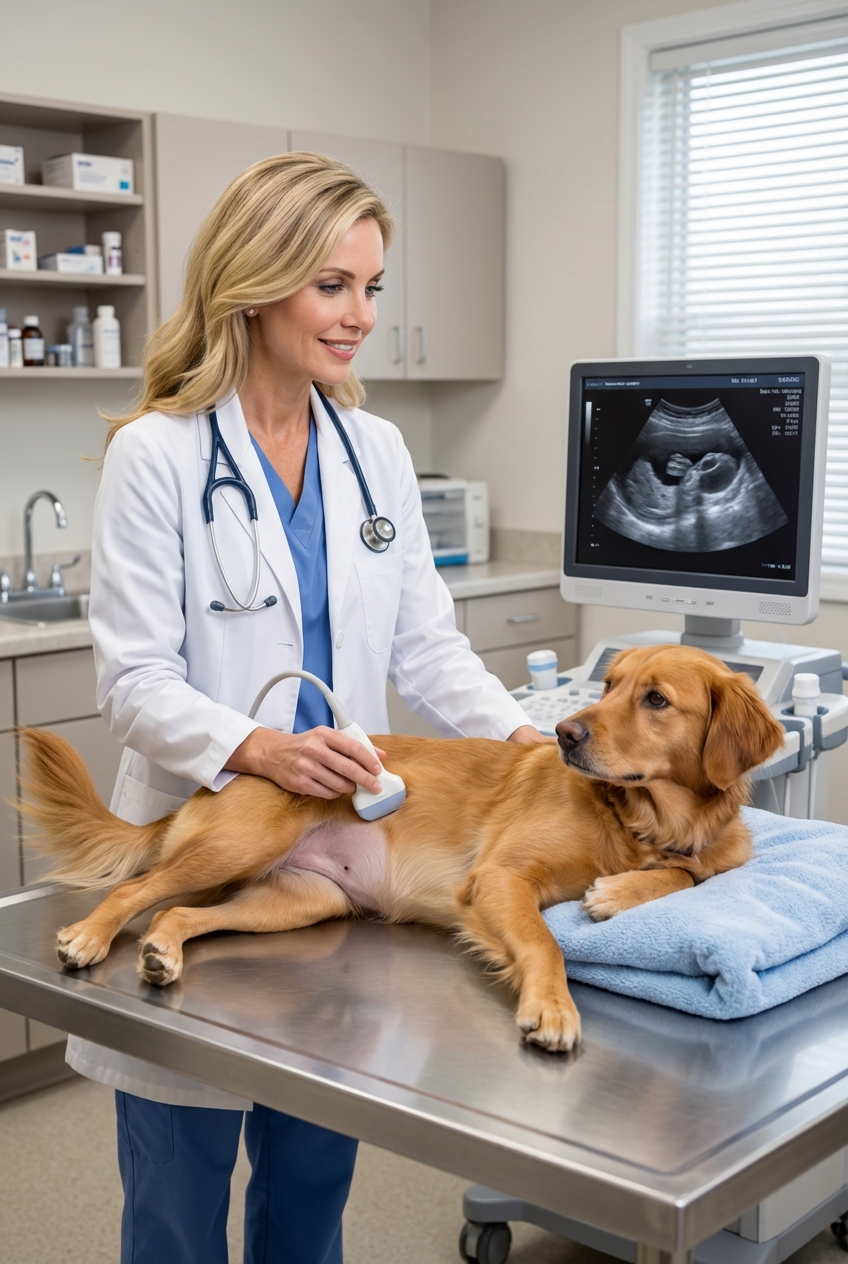
Week 4 is also a common time for a vet to confirm pregnancy by ultrasound, depending on timing and clinic equipment.
Week 5: Changes may become easier to notice
- Belly may begin to round out: some dogs show early, but many do not look obviously pregnant until weeks 6 or 7 (day 40+), especially with small litters or first-time moms.
- Increased appetite: nausea often improves and hunger increases.
- Calmer behavior: many pregnant dogs conserve energy.
Signs that look similar
One reason I encourage people to confirm pregnancy with a veterinarian is that several conditions can mimic pregnancy signs. If something feels “off,” it is worth checking.
- False pregnancy (pseudopregnancy): common after a heat cycle, often most noticeable about 6 to 12 weeks after heat. Dogs can develop enlarged mammary glands, produce milk, nest, and act motherly even when not pregnant.
- Pyometra: a life-threatening uterine infection that can occur after heat. It can cause lethargy, vomiting, increased thirst, and sometimes vaginal discharge. Closed pyometra may have no discharge, which is one reason it can be missed.
- GI upset or parasites: can cause a pot-bellied look, appetite changes, and low energy.
- Weight gain: simple calorie surplus can be mistaken for pregnancy, especially in dogs with thick coats.
My rule of thumb as a veterinary assistant: if you are seeing vomiting, lethargy, or appetite loss and you are not sure what is going on, it is worth a vet visit sooner rather than later.
How vets confirm pregnancy
Home observation is helpful, but confirmation is best done with your veterinary team. Common options include:
- Ultrasound: often used around day 25 to 35 after breeding to confirm pregnancy and assess viability. Some clinics may detect earlier (around day 21 to 25), depending on equipment and operator.
- Relaxin blood test: often detectable around day 25 to 30 after breeding. Testing too early can lead to false negatives, so timing matters.
- Abdominal palpation: sometimes possible around day 28 to 35, but it takes experience and is not always reliable.
- X-rays: best for counting puppies in the final stretch, often after day 55 (or during the last week of pregnancy), when it is easier to see and count skulls and spines accurately.
What to do next
1) Schedule a vet appointment
If breeding was intentional, call your vet and ask about the best time to confirm pregnancy. If breeding was accidental, still call. You have options and you deserve clear, compassionate guidance.
2) Do not change food too early
In early pregnancy, most dogs do not need a major diet change immediately. Overfeeding too soon can cause unnecessary weight gain. Around the second half of pregnancy, your vet may recommend a gradual transition to a nutrient-dense diet (often a high-quality puppy or growth formula) depending on your dog’s body condition and health history.
3) Keep exercise gentle and consistent
Normal walks and play are usually fine for healthy dogs early on. Avoid intense new workouts, rough play, or high jumps if she is showing fatigue or belly enlargement.
4) Review medications and preventatives
Do not assume a product is pregnancy-safe. Ask your veterinarian about flea, tick, heartworm preventatives, deworming, vaccines, and any supplements. This is also a good time to discuss household hazards and toxin risks that can matter more during pregnancy.
When to call the vet urgently
Pregnancy should not make your dog severely ill. Contact your veterinarian or an emergency clinic right away if you notice:
- Repeated vomiting or inability to keep water down
- Severe lethargy, weakness, or collapse
- Fever, pale gums, or signs of pain
- Foul-smelling vaginal discharge, pus-like discharge, or heavy bleeding
- Bloated abdomen with distress
- Increased thirst and urination with vomiting or lethargy (possible red flag after heat)
Gentle support at home
Pregnant dogs often seek comfort and predictability. A few small changes can make a big difference.
- Create a quiet rest area: a comfy bed in a calm corner, away from high traffic.
- Track changes: note appetite, energy, vomiting, stool quality, and weight weekly.
- Keep stress low: avoid big schedule changes, new pets, or loud events if you can.
- Start thinking about whelping: your vet can advise when to set up a whelping box and what supplies to have ready.
And please hear this: you do not have to be perfect. You just have to be observant and willing to get help early.
FAQ
Can I feel puppies by touching her belly?
It is not recommended to press on the abdomen at home. Palpation is safest when performed by a trained veterinary professional, and only during a certain window of time.
Will her nipples always change if she is pregnant?
Many dogs show nipple enlargement and pinking, but not all. And nipple changes can also happen with a false pregnancy.
Can a dog have a period while pregnant?
Dogs do not menstruate like humans. Light discharge can occur for various reasons, but bleeding should always be discussed with your veterinarian.