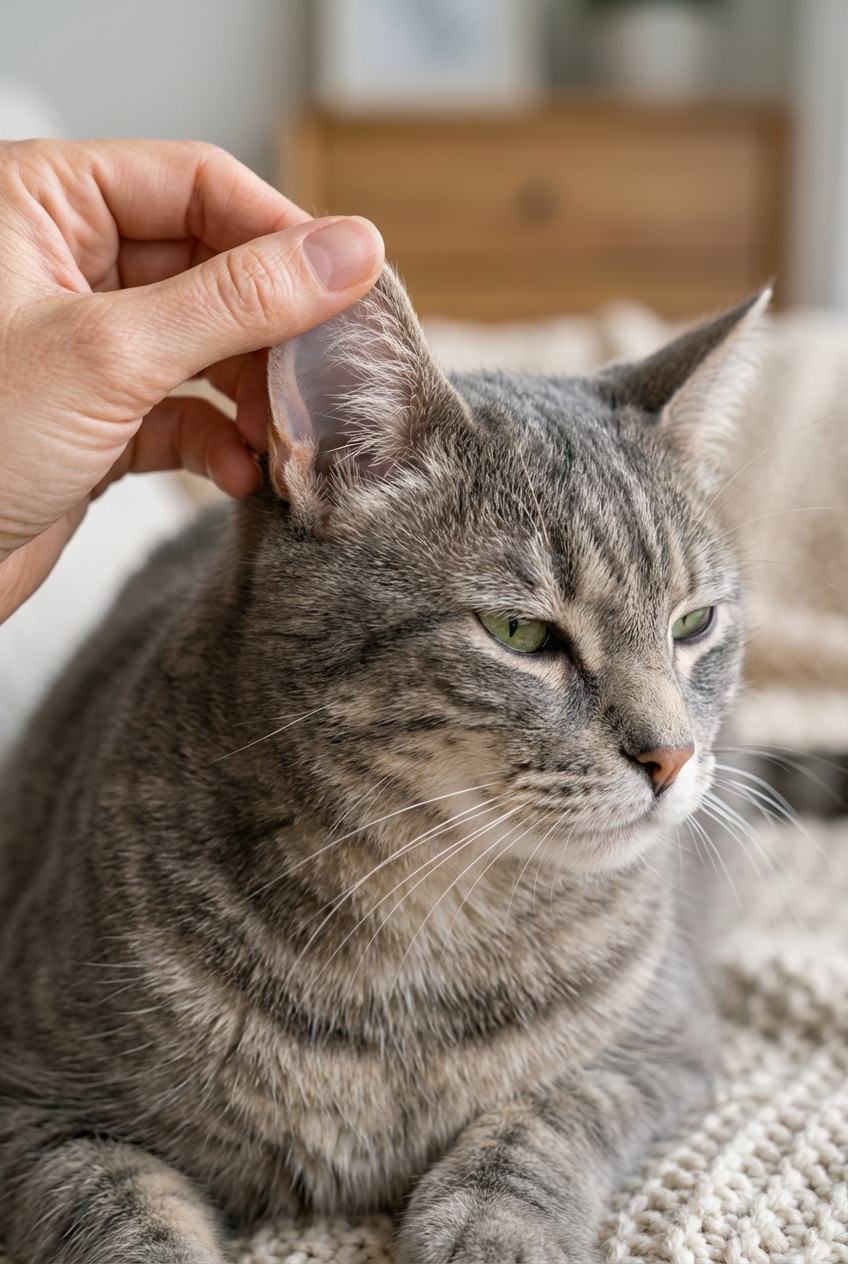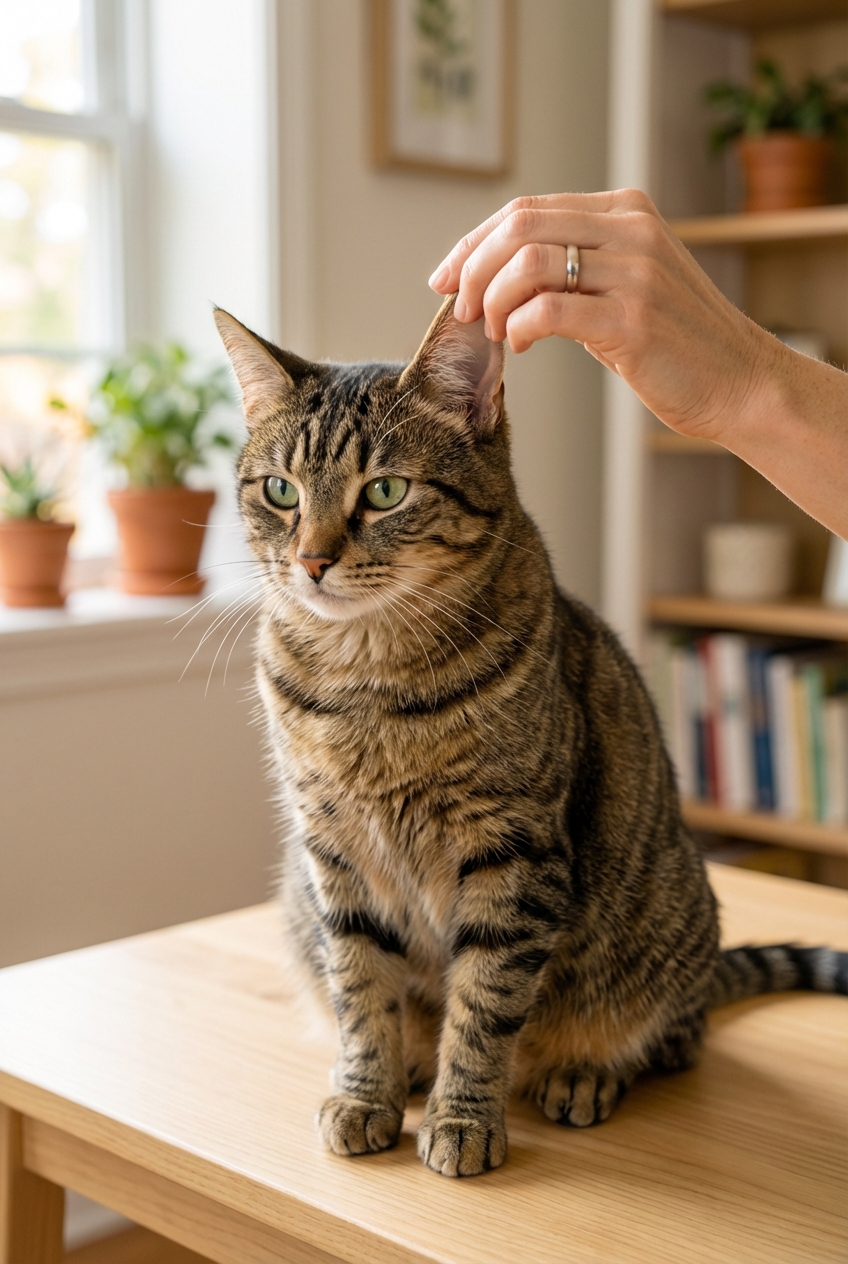
From “coffee ground” ear debris to nonstop scratching, learn how vets diagnose ear mites and the most effective treatments, safe ear cleaning steps, and ...
Article
•
Designer Mixes
Ear Mites in Cats: Symptoms, Treatment, and Home Care

Shari Shidate
Designer Mixes contributor
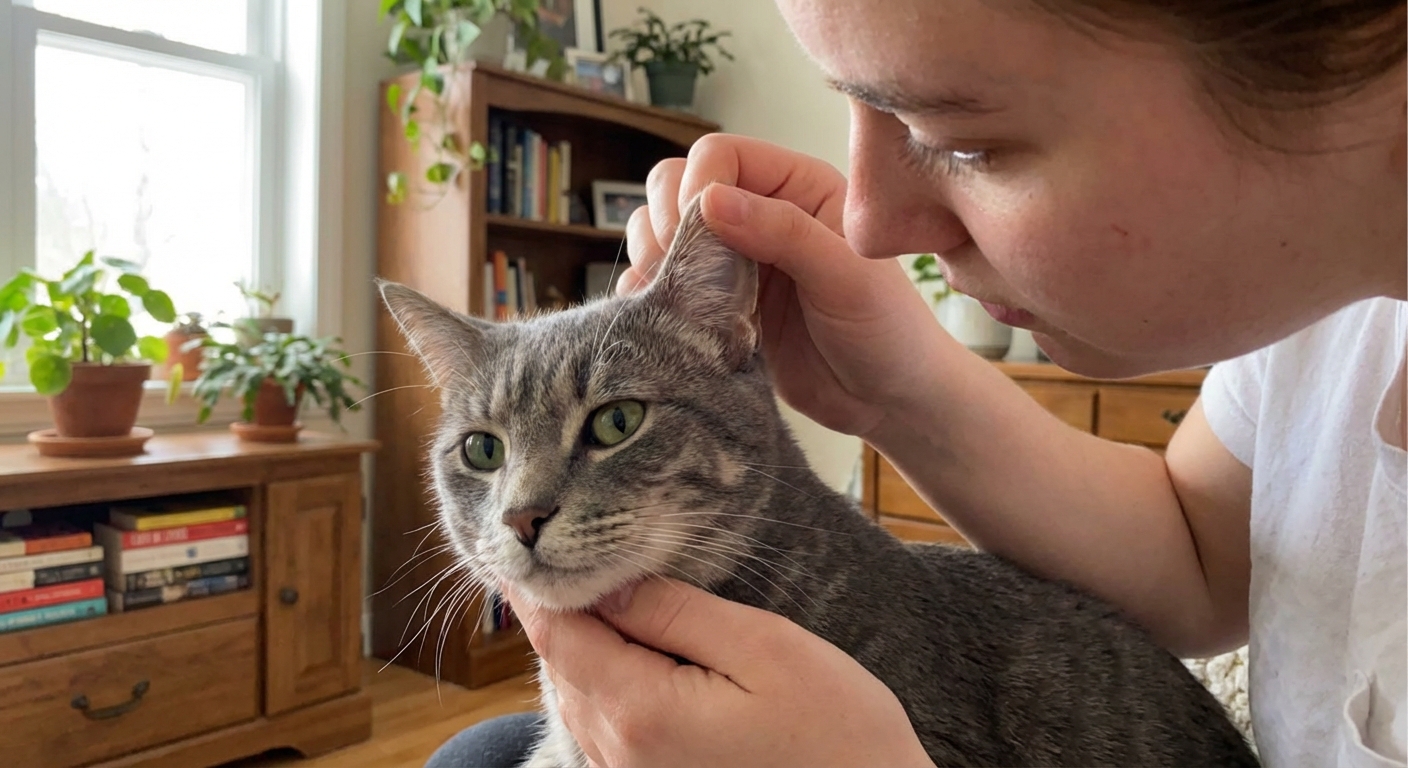
Few things are more frustrating than watching your cat scratch nonstop. If you have noticed intense ear itching, dark debris, or head shaking, ear mites may be the culprit. The good news is that ear mites are very treatable, but they require the right approach and a little patience to fully clear.
In this guide, I will walk you through the common symptoms, what your veterinarian may recommend, and safe home care steps that support healing.
What are ear mites?
Ear mites are tiny parasites, most commonly Otodectes cynotis, that live on the surface of the ear canal skin. They feed on skin debris and oils, triggering irritation and inflammation. Ear mites are especially common in kittens, cats who spend time outdoors, and multi-pet households.
They spread easily through close contact, so if one pet in the home has ear mites, it is wise to assume others may be exposed.
Common symptoms to watch for
Ear mites can look similar to yeast or bacterial ear infections at first. These signs raise suspicion for mites, especially when several happen together:
- Intense scratching at the ears or rubbing the head on furniture or carpet
- Frequent head shaking
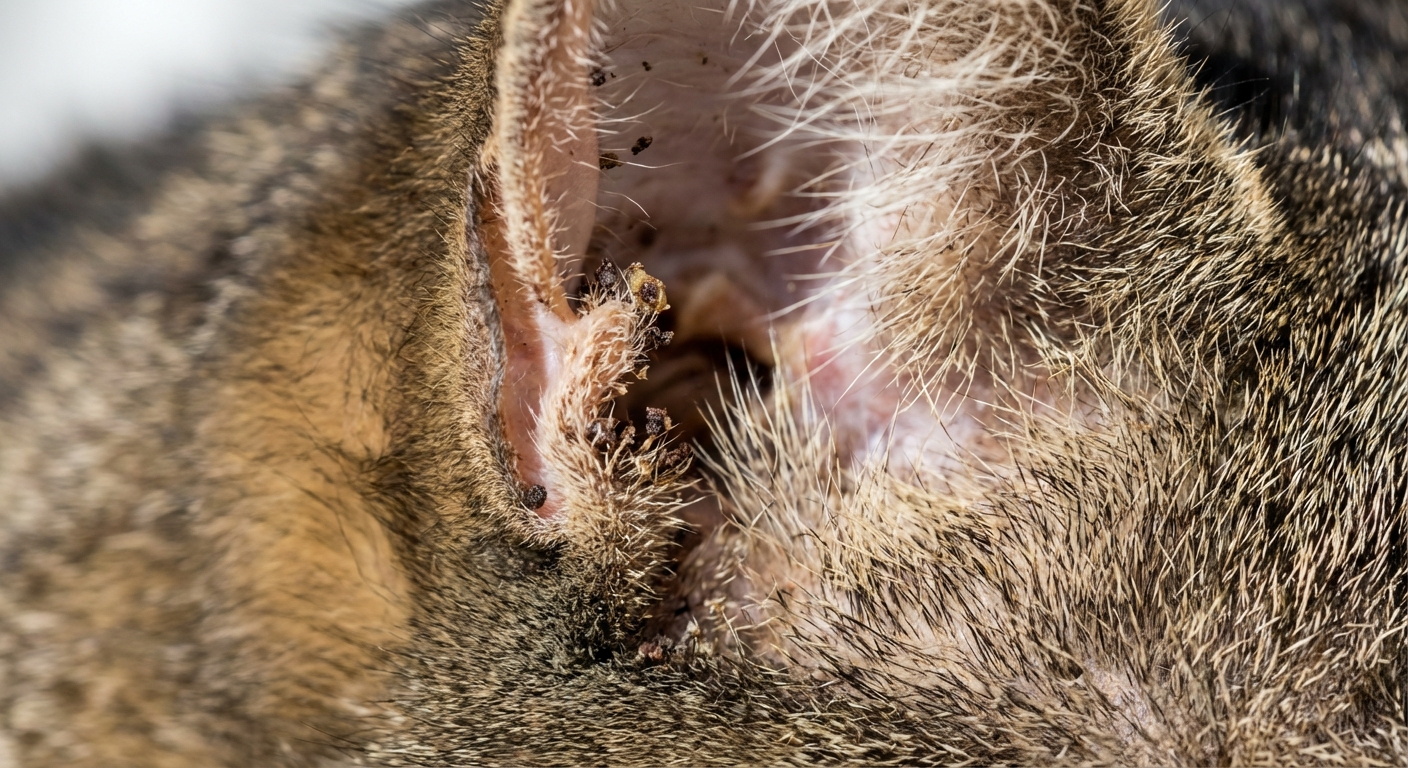
- Dark, crumbly ear debris that can resemble coffee grounds
- Redness and irritation inside the ear flap or canal
- Small scabs around the ears from scratching
- Hair loss near the ears or head in more severe cases
- Strong odor can occur, though odor is more typical with infection than mites alone
Some cats become sensitive to touch around the ears due to soreness. Kittens may act restless or have trouble settling.
When to call the vet
Because ear problems can worsen quickly, it is smart to contact your veterinarian if symptoms persist beyond 24 to 48 hours, are severe, or if your cat seems very uncomfortable. Seek veterinary care promptly if you see:
- Swelling of the ear flap
- Bleeding or raw skin from scratching
- Head tilt, loss of balance, or walking oddly
- Pus-like discharge, significant odor, or worsening pain
- Symptoms in a young kitten, senior cat, or immunocompromised cat
Those signs can indicate a secondary bacterial or yeast infection, or a deeper ear issue that needs targeted treatment.
How ear mites are diagnosed
Veterinarians typically diagnose ear mites by:
- Looking into the ear with an otoscope
- Examining ear debris under a microscope
This matters because ear mites, yeast, bacteria, allergies , and ear polyps can overlap in symptoms, but the treatments are different. A correct diagnosis helps you avoid ineffective products and repeated flare-ups.
Effective treatment options
Ear mite treatment usually involves medication that kills mites and, when needed, treatment for any secondary infection or inflammation.
Prescription medications
Many vets prefer prescription products because they are reliable and easier to use correctly. Common approaches include:
- Topical spot-on parasiticides applied to the skin. Many are used monthly, but timing and parasite coverage depend on the specific product. Some also treat fleas and certain intestinal parasites, while others do not.
- Ear drops with anti-parasitic medication, sometimes combined with antibiotics or anti-inflammatory ingredients if infection is present.
Your vet will choose based on your cat’s age, weight, health history, and whether the ear canal is inflamed or infected.
Ear cleaning, when appropriate
Some cats benefit from gentle ear cleaning to remove debris so medication can reach the skin more effectively. Your veterinarian may clean the ears in clinic and send you home with an ear cleanser, or advise you to skip cleaning if the canal is too tender. In severe cases, a deeper cleaning may be performed by your vet, sometimes with sedation, to keep your cat safe and comfortable.
Important: Never put anything into your cat’s ear if you suspect a ruptured eardrum or if your cat is in significant pain. This is one reason veterinary evaluation is so valuable.
How long treatment takes
Mites have a life cycle, and treatments need enough time to catch newly hatched mites. Some products work with one or two doses, while others require daily ear drops for a set number of days. Even if your cat seems better quickly, follow the full plan your veterinarian prescribed and attend any recheck if recommended.
Safe home care you can do
Medication is the main treatment for ear mites. Home care is supportive, focusing on comfort and helping prevent spread to other pets.
1) Treat all pets in the household if your vet advises it
Ear mites spread through contact. Dogs and cats can pass mites back and forth. Ask your veterinarian whether all pets should be treated, even if they are not scratching yet.
2) Wash soft items and clean common areas
Ear mites primarily live on the pet, not in the home. Still, basic cleaning can help remove shed debris and any stray mites while supporting overall hygiene:
- Wash bedding in hot water if possible
- Vacuum rugs and upholstered areas
- Wipe down favorite sleeping spots
3) Support healing by protecting the skin
Scratching can cause tiny wounds that may become infected. Keep nails trimmed, and ask your vet if an e-collar is appropriate for severe scratching.
4) Use only vet-approved products
Avoid home remedies like oils, vinegar, hydrogen peroxide, or alcohol in the ear canal. These can irritate inflamed tissue, trap debris, or worsen infection. Also avoid using dog-only parasite products on cats, as some ingredients (including permethrin) can be dangerous for cats. Over-the-counter products may help in some situations, but only after confirmation that mites are the cause and that the eardrum is intact.
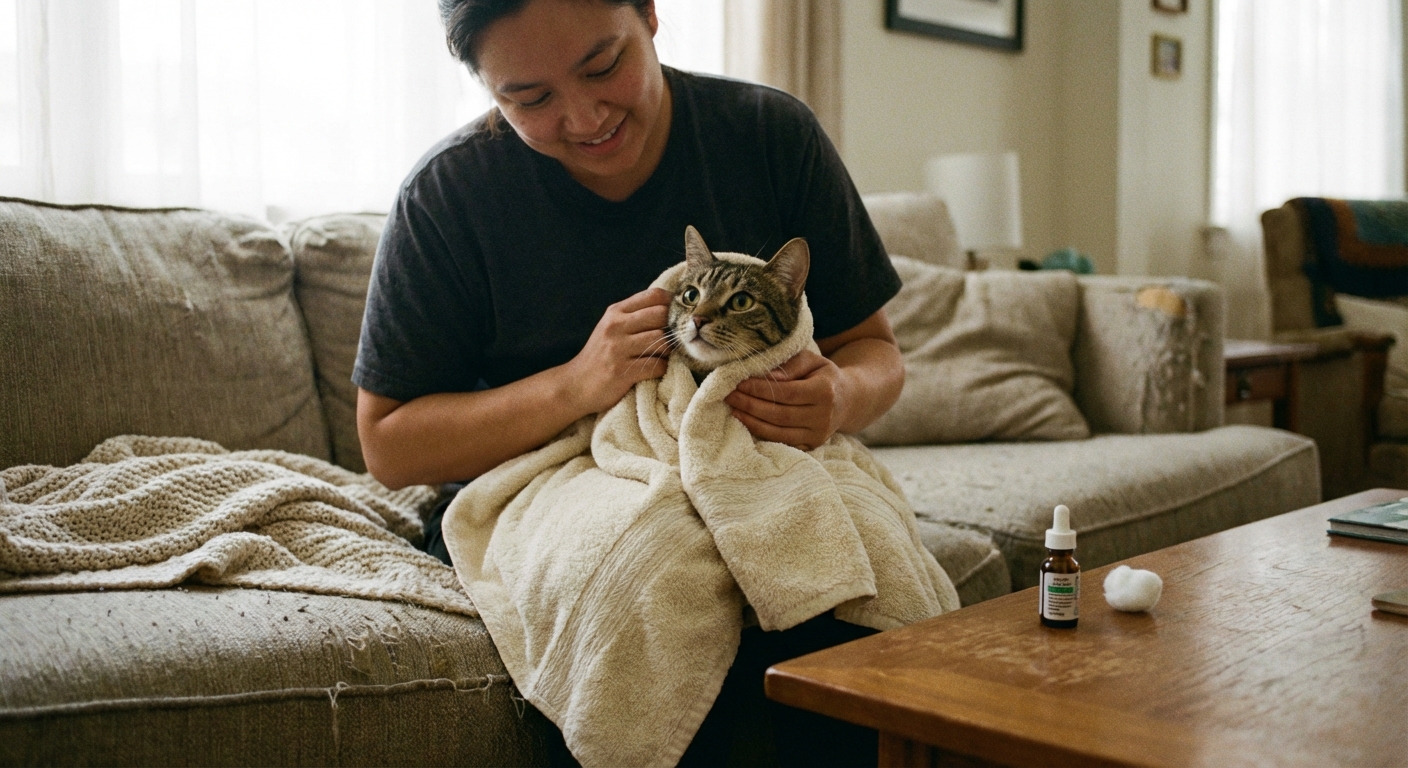
How to apply ear medication
Many cats dislike ear handling, but a calm, consistent routine goes a long way. Try this:
- Pick a quiet time when your cat is naturally calmer.
- Use a towel wrap to gently secure wiggly cats, leaving the head exposed.
- Warm the bottle in your hands for a minute so drops are not startlingly cold.
- Aim for the ear canal opening, then massage the base of the ear for 10 to 20 seconds (unless your vet instructed otherwise).
- Reward immediately with a favorite treat or play session to build cooperation over time.
If medication time becomes a daily struggle, tell your vet. There may be an alternative product with fewer applications.
Can ear mites cause complications?
They can, especially when symptoms are ignored. Potential complications include:
- Secondary bacterial or yeast infection
- Hematoma, a blood-filled swelling of the ear flap caused by vigorous head shaking
- Skin infections from scratching
- Chronic inflammation that makes future ear issues more likely
If your cat has severe pain, a head tilt, balance issues, or signs of a deeper ear infection, they may need different management than a simple ear mite case. Your veterinarian can guide you.
Prevention tips
Ear mites are common, but recurrence is often preventable. Consider these strategies:
- Use regular parasite prevention as recommended by your veterinarian, especially in multi-pet homes.
- Quarantine new pets until they have had a veterinary check.
- Schedule rechecks if your vet recommends them, even if symptoms improve quickly.
- Keep an eye on ear hygiene, but avoid routine deep cleaning unless advised. Over-cleaning can irritate ears.
Quick FAQ
Are ear mites contagious to humans?
Ear mites are primarily a pet parasite. People do not typically develop an ongoing infestation from O. cynotis, but temporary skin irritation can occur in rare cases after close contact. If you develop a rash and your pets have mites, contact a healthcare professional.
Do indoor cats get ear mites?
Yes. Indoor cats can be exposed from other pets, visiting animals, or a newly adopted kitten.
Will ear mites go away on their own?
Typically no. Without treatment, the irritation continues and complications become more likely.
The bottom line
Ear mites are uncomfortable, but with proper diagnosis and consistent treatment, most cats feel relief quickly and recover fully. If you suspect mites, schedule a vet visit, follow the full treatment plan, and treat household pets if advised. Small, consistent steps add up, and your cat’s ears will thank you for it.
Note: This article is for informational purposes and does not replace veterinary advice.