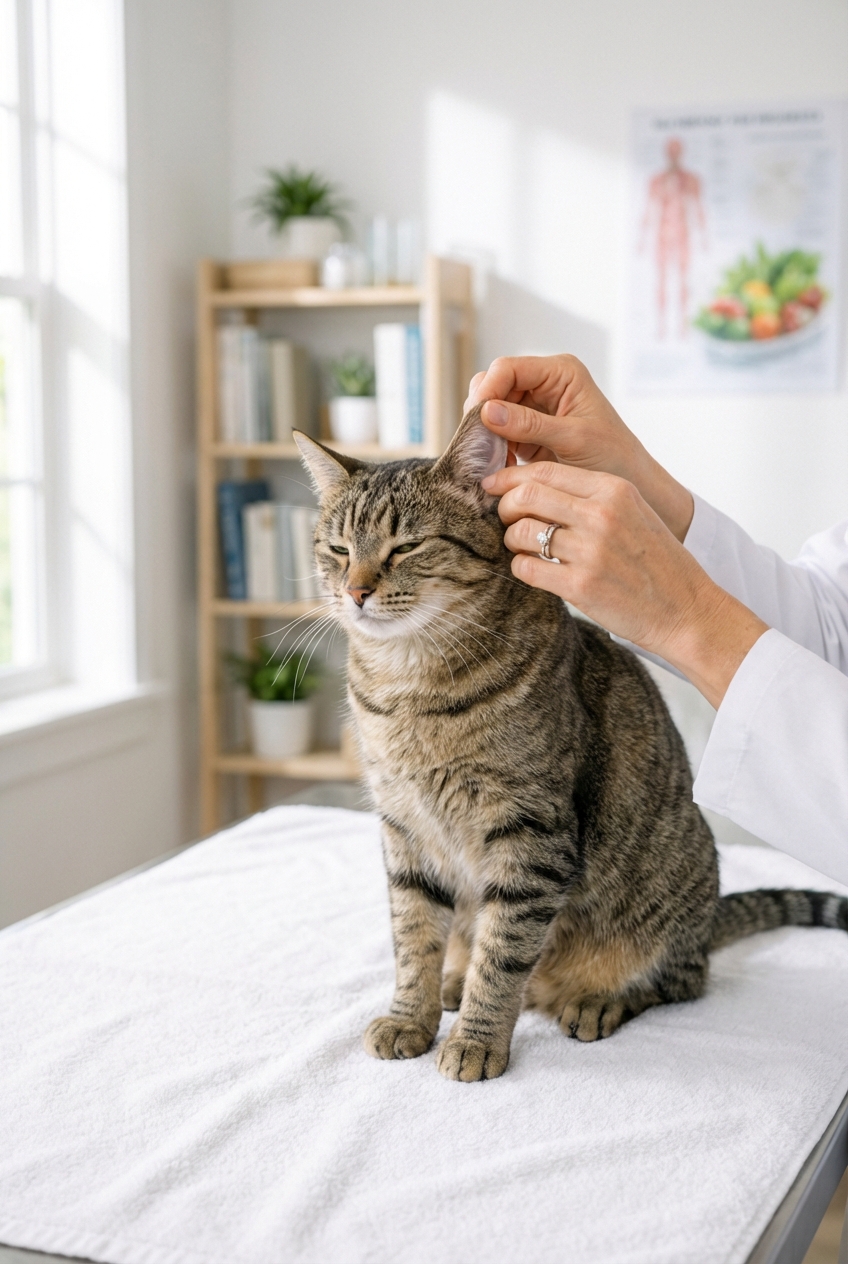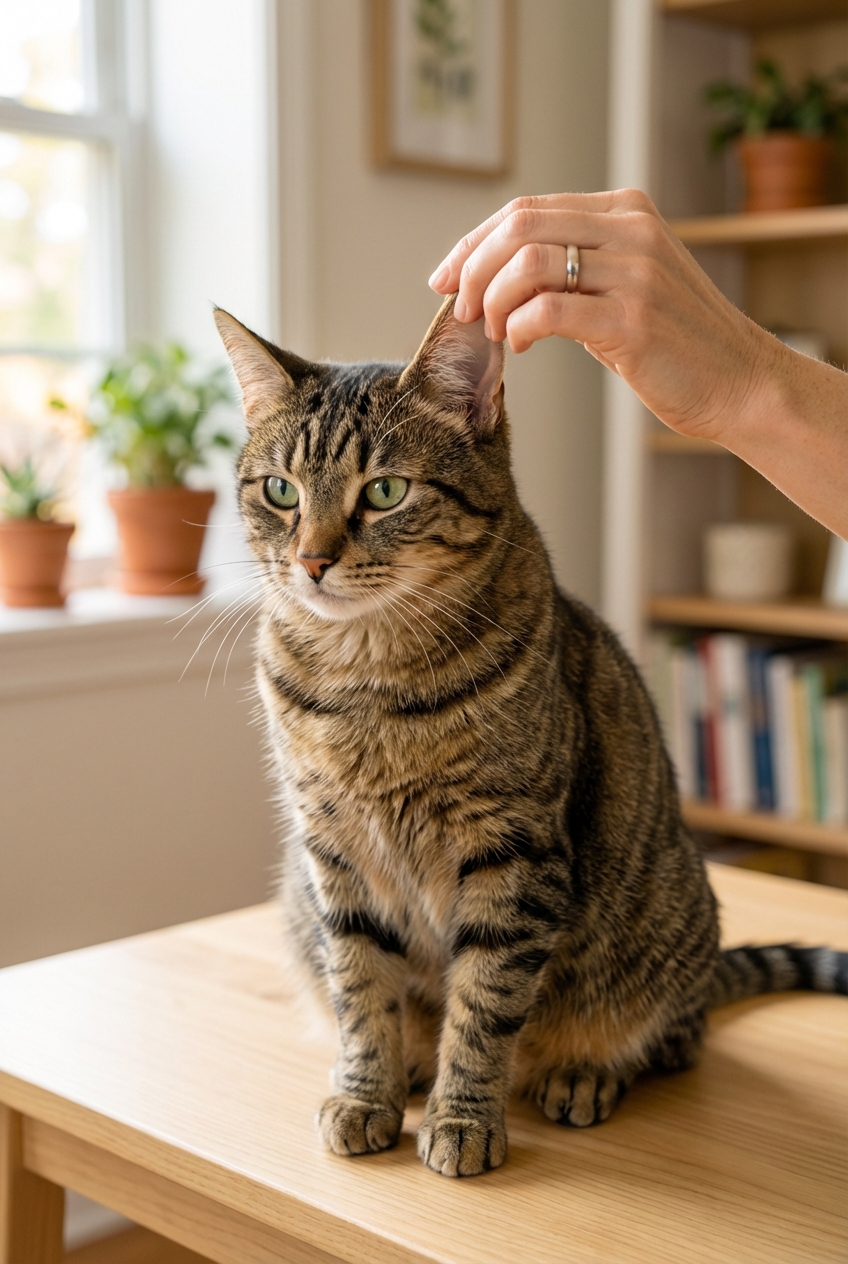
From “coffee ground” ear debris to nonstop scratching, learn how vets diagnose ear mites and the most effective treatments, safe ear cleaning steps, and ...
Article
•
Designer Mixes
Ear Mites in Cats: How to Spot Them and Treat Them at Home

Shari Shidate
Designer Mixes contributor
If your cat is suddenly scratching like crazy, shaking their head, or acting tender when you touch their ears, ear mites are high on the list of possibilities. The good news is that ear mites are very common and very treatable. The tricky part is that the irritation can look like other ear problems, and the wrong treatment can make things worse.
As a veterinary assistant, I like to keep this simple and evidence-based: know the signs, know what is safe to do at home, and know when it is time to get your veterinarian involved.
What ear mites are
Ear mites are tiny parasites, most often Otodectes cynotis, that live on the surface of the ear canal skin. They feed on skin debris and cause intense itching and inflammation. They are especially common in kittens, outdoor cats, cats from shelters, and multi-pet households.
Important: Ear mites are contagious between cats and can spread to dogs and ferrets. If one pet has confirmed ear mites, your veterinarian may recommend treating all pets in the home, even if some are not showing symptoms yet.
How cats get ear mites
Cats typically pick up ear mites through close contact with an infected animal. Ear mites do not jump or fly, but they spread easily through cuddling, grooming, and shared bedding.
- Kitten to kitten: very common in litters
- New pet introduction: bringing home a new cat or kitten can introduce mites
- Shelter or rescue environment: high exposure risk
- Outdoor roaming: contact with community cats or wildlife
Signs to watch for
Some cats are dramatically itchy, while others show subtle clues. These are the classic ear mite signs:
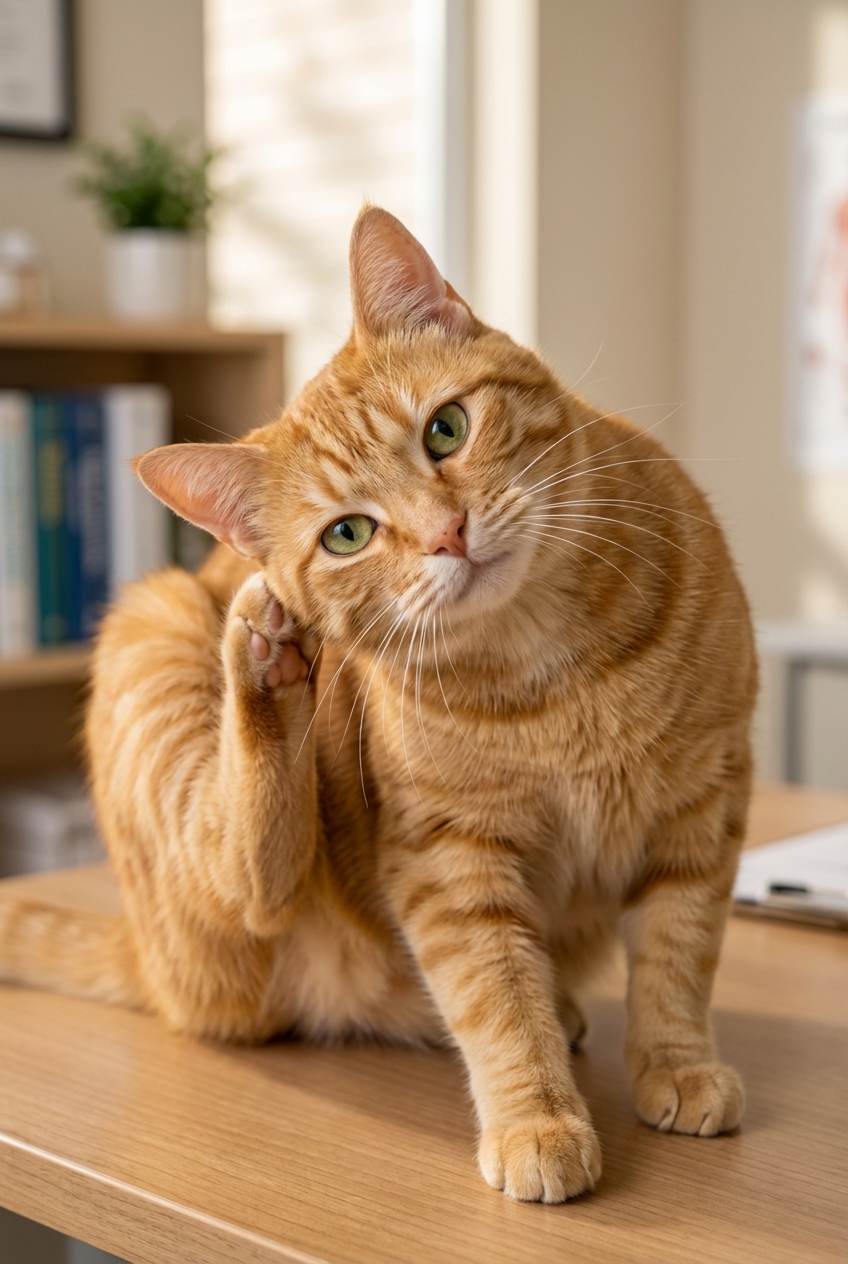
- Frequent scratching at the ears and rubbing the head on furniture or carpet
- Head shaking or head tilt
- Dark, crumbly ear debris that can look like coffee grounds
- Red, inflamed ear canals
- Hair loss or scabs around the ears and neck from scratching
- Ear odor (not always present)
Ear mites can also lead to secondary problems like bacterial or yeast infections. That is one reason persistent ear issues should not be treated blindly.
Ear mites vs. infection
The debris from ear mites often looks like a dirty ear, but similar debris can show up with yeast, bacteria, allergies, or even ear polyps. And while ear mites are common, they are not the only cause of itching.
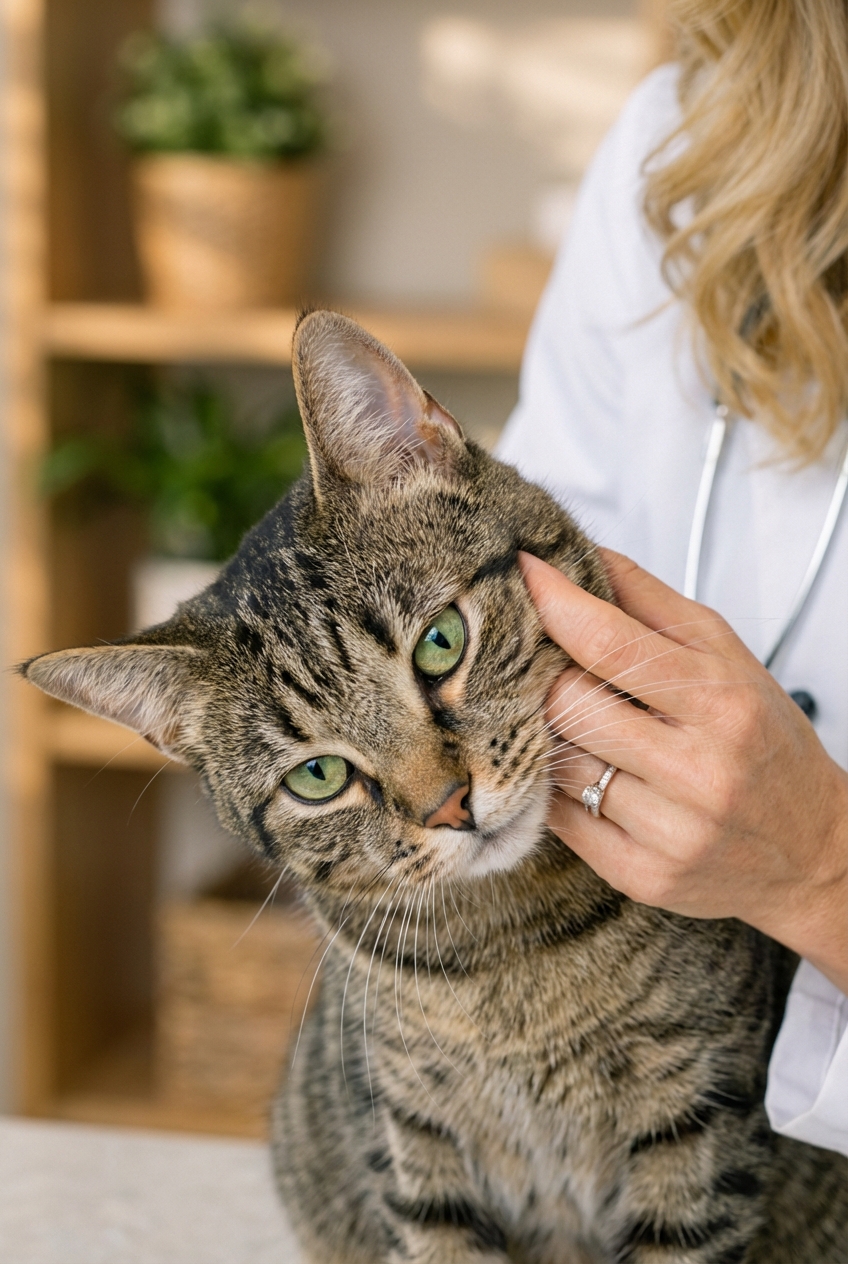
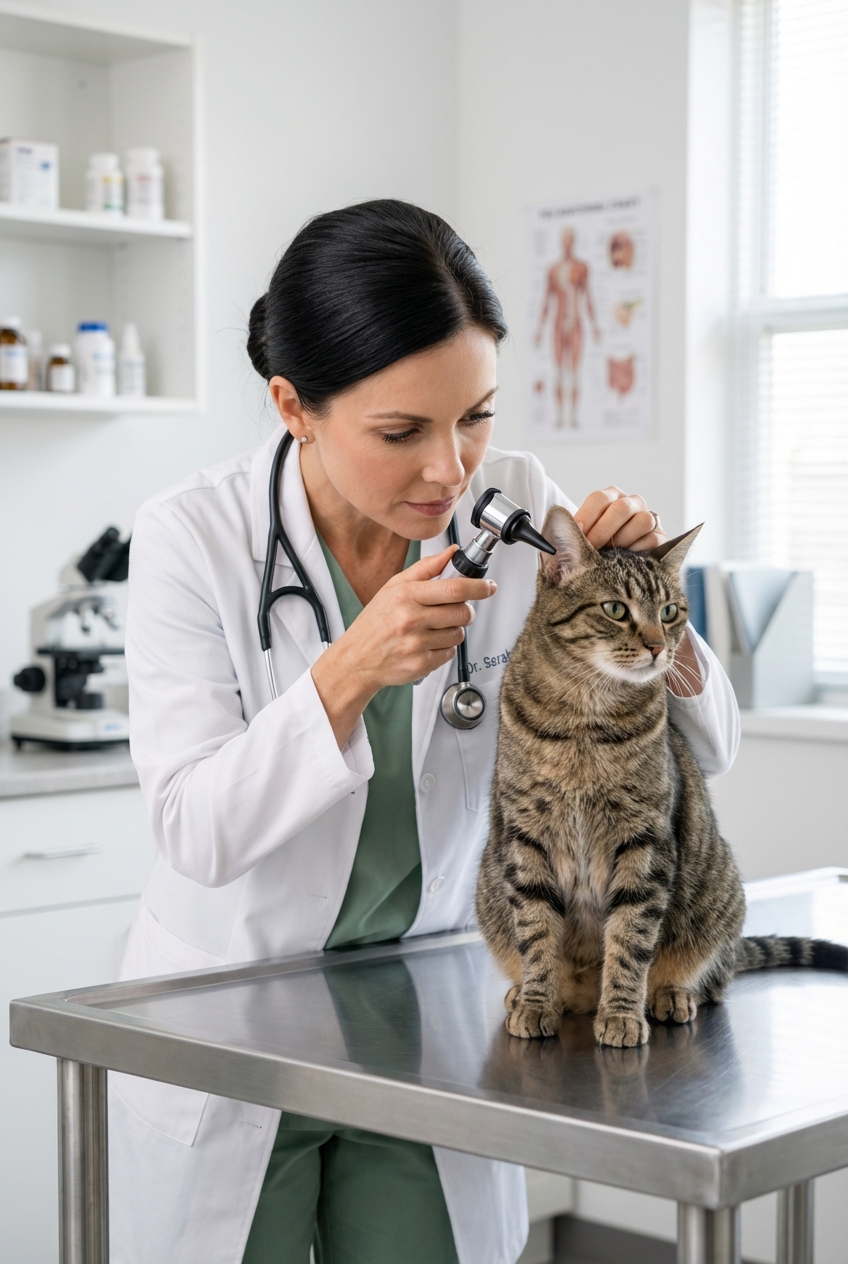
Here is the key safety point: some ear medications are not safe if the eardrum is damaged, and severe inflammation can increase that risk. Your veterinarian can look down the ear canal with an otoscope and check a sample under the microscope to confirm mites and rule out infection.
If your cat has severe pain, swelling, a head tilt, loss of balance, or any bloody discharge, skip home care and call your vet the same day.
How ear mites are diagnosed
In a clinic, diagnosis is usually quick:
- Ear exam: to check inflammation, debris, and eardrum status
- Microscope exam: a swab of ear debris is checked for mites, eggs, and infection
If your cat is very painful, some veterinarians will treat presumptively and recheck later, but ideally we confirm what is actually going on so you are not treating the wrong condition.
Home treatment options
When people say “treat at home,” what I recommend is home administration of veterinarian-recommended treatments, plus safe ear hygiene. The most effective, modern options are prescription products, and many are simple to use.
1) Prescription parasite preventives
Many vets treat ear mites using topical preventives that also cover fleas and some intestinal parasites. Depending on your cat and your region, common active ingredients may include:
- Selamectin (topical)
- Moxidectin (often combined with other ingredients)
- Fluralaner plus moxidectin (topical combination)
These are popular because you do not have to put medication deep into a sore ear canal every day.
2) Prescription ear drops
Some cases are treated with miticidal ear drops, especially if there is heavy debris or a concurrent infection that needs targeted medication. Your vet will tell you how many days to treat and how to apply it safely.
3) Cleaning the ears
Cleaning does not kill mites on its own, but it removes debris, reduces irritation, and helps medication work better.
- Use a cat-safe ear cleaner recommended by your veterinarian.
- Warm the bottle in your hands first, then place a small amount in the ear canal.
- Massage the base of the ear for 20 to 30 seconds.
- Let your cat shake their head.
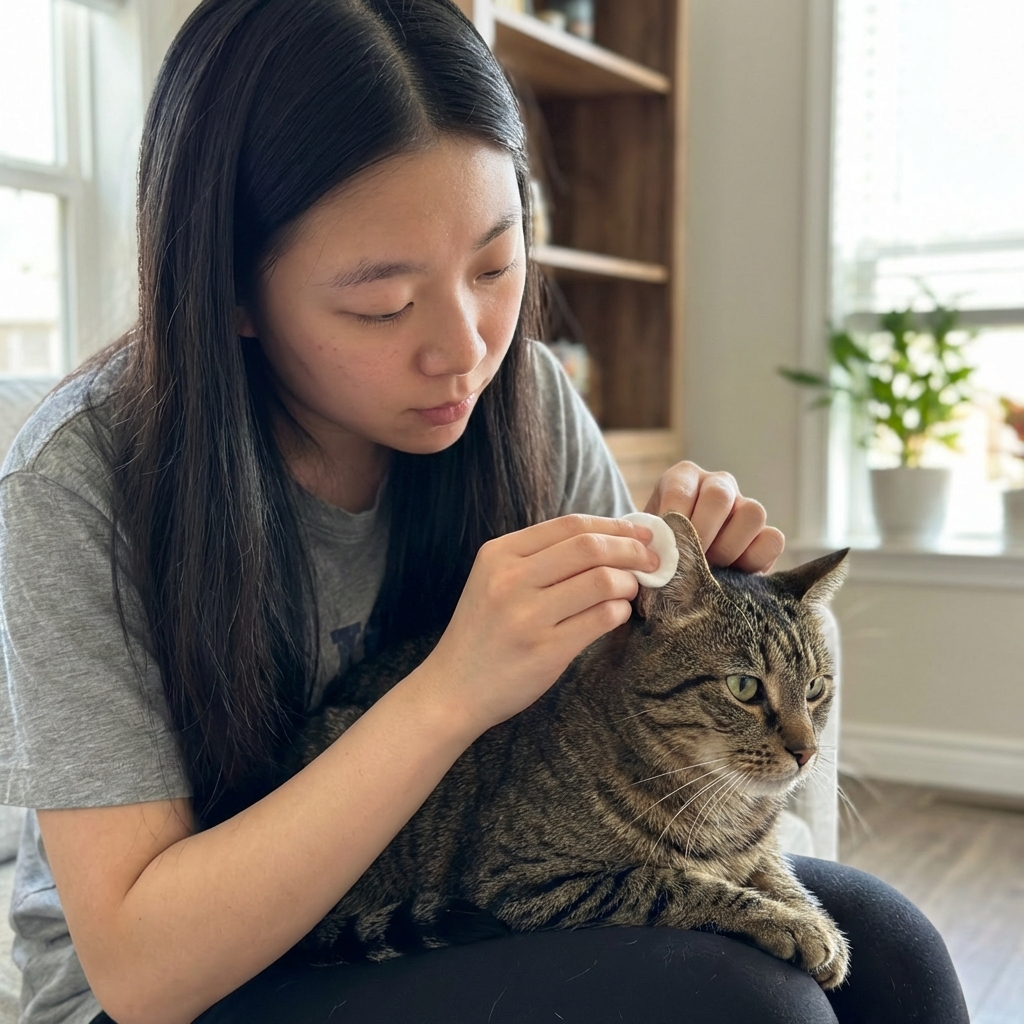
- Wipe away loosened debris with cotton rounds or gauze.
Avoid: Q-tips in the ear canal, hydrogen peroxide, alcohol, vinegar mixes, and essential oils . These can irritate the tissue and make inflammation worse.
What not to do
I completely understand wanting to help your cat right away, but these are the most common mistakes I see:
- Using dog-only products: some ingredients are unsafe for cats.
- Using random oils (olive, coconut, etc.): they can trap debris and do not reliably eliminate mites.
- Over-cleaning: irritated ear canals swell and become more painful.
- Stopping treatment early: mites have a life cycle, so stopping early can cause a rebound.
- Treating only one pet when mites are spreading in the household.
Safe at-home plan
If your cat seems stable and you are waiting on a vet appointment, you can focus on comfort and prevention of worsening.
Step 1: Check comfort
- If your cat is crying, won’t let you touch the ear, has a head tilt, or seems off balance, do not clean the ear. Call your vet.
- If your cat is mildly itchy but otherwise normal, keep handling gentle and brief.
Step 2: Prevent self-trauma
- Trim sharp nails if your cat tolerates it, or ask a groomer or vet team.
- Consider a soft e-collar if scratching is causing bleeding.
Step 3: Clean only the outer ear
You can wipe visible debris on the outer ear flap with a damp cotton round. Avoid pushing anything into the canal.
Step 4: Use vet-approved medication
Once you have a confirmed plan from your veterinarian, follow the full course exactly as directed, even if symptoms improve quickly.
How long it takes
Many cats feel better within a few days of starting effective treatment, but complete resolution can take 2 to 4 weeks, depending on the product used, the severity, and whether a secondary infection is present.
If your cat is still itchy after treatment, that does not automatically mean the mites are still there. The ear canal can stay inflamed, or a yeast or bacterial infection may need separate treatment.
Clean the home
Ear mites do not live long off the host, but basic cleaning helps, especially in multi-pet homes:
- Wash bedding in hot water.
- Vacuum carpets and upholstery.
- Clean brushes and carriers.
- Keep new pets separated until they are examined and treated.
For prevention, talk with your veterinarian about a monthly parasite preventive that fits your cat’s lifestyle. Indoor cats can still get mites, especially if they live with other pets or have contact with foster animals.
When to call the vet
Please do not wait if you notice any of the following:
- Head tilt, stumbling, circling, or balance changes
- Severe pain or swelling
- Blood, pus, or a strong foul odor
- Ear flap swelling that looks like a balloon (possible aural hematoma)
- Your cat is a kitten, senior, immunocompromised, or has chronic ear disease
Those signs can indicate complications that need prompt care and prescription medication.
Bottom line
Ear mites are miserable, but they are also very treatable. The best home approach is a combination of gentle ear hygiene and a vet-recommended medication that actually targets mites and their life cycle. If you are unsure whether it is mites, do not guess. A quick ear exam can save your cat a lot of discomfort and can prevent a simple issue from turning into a painful infection.