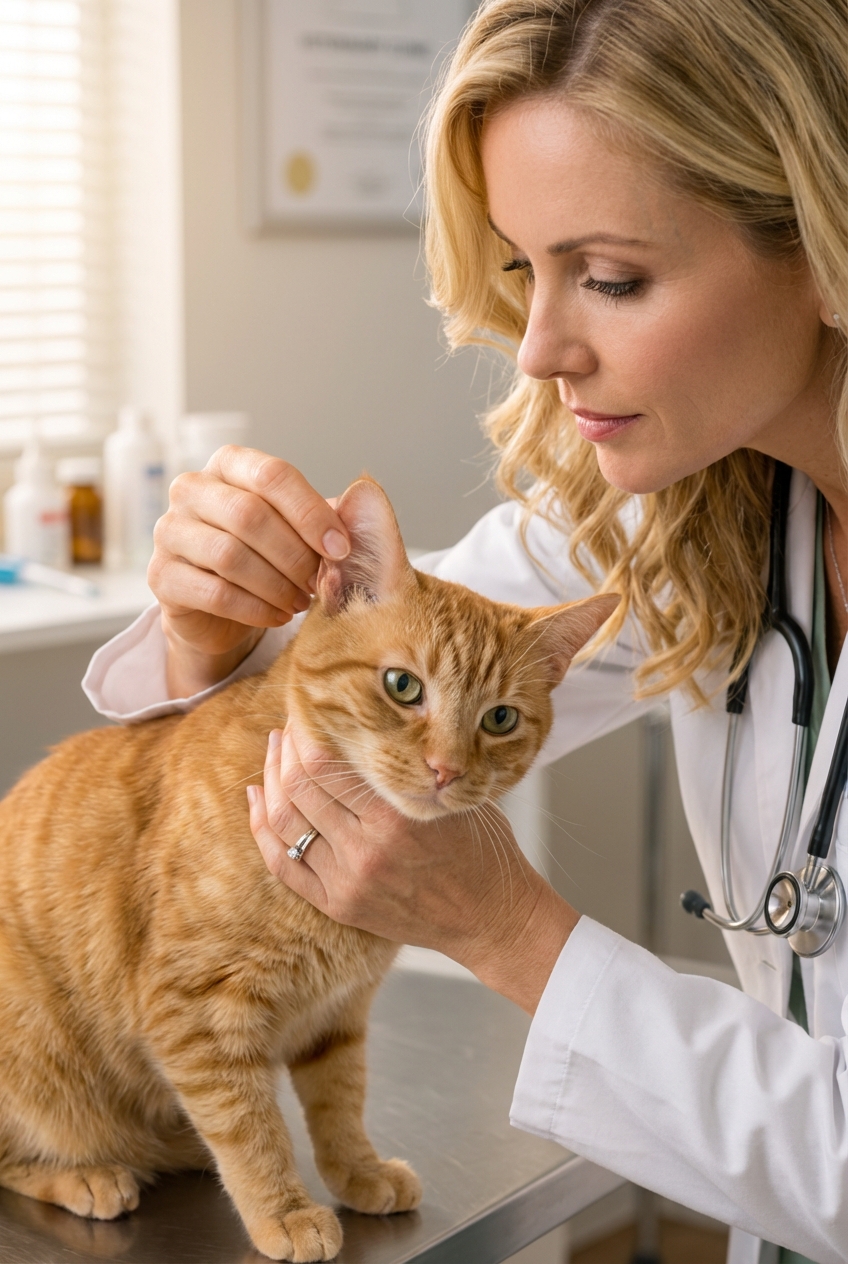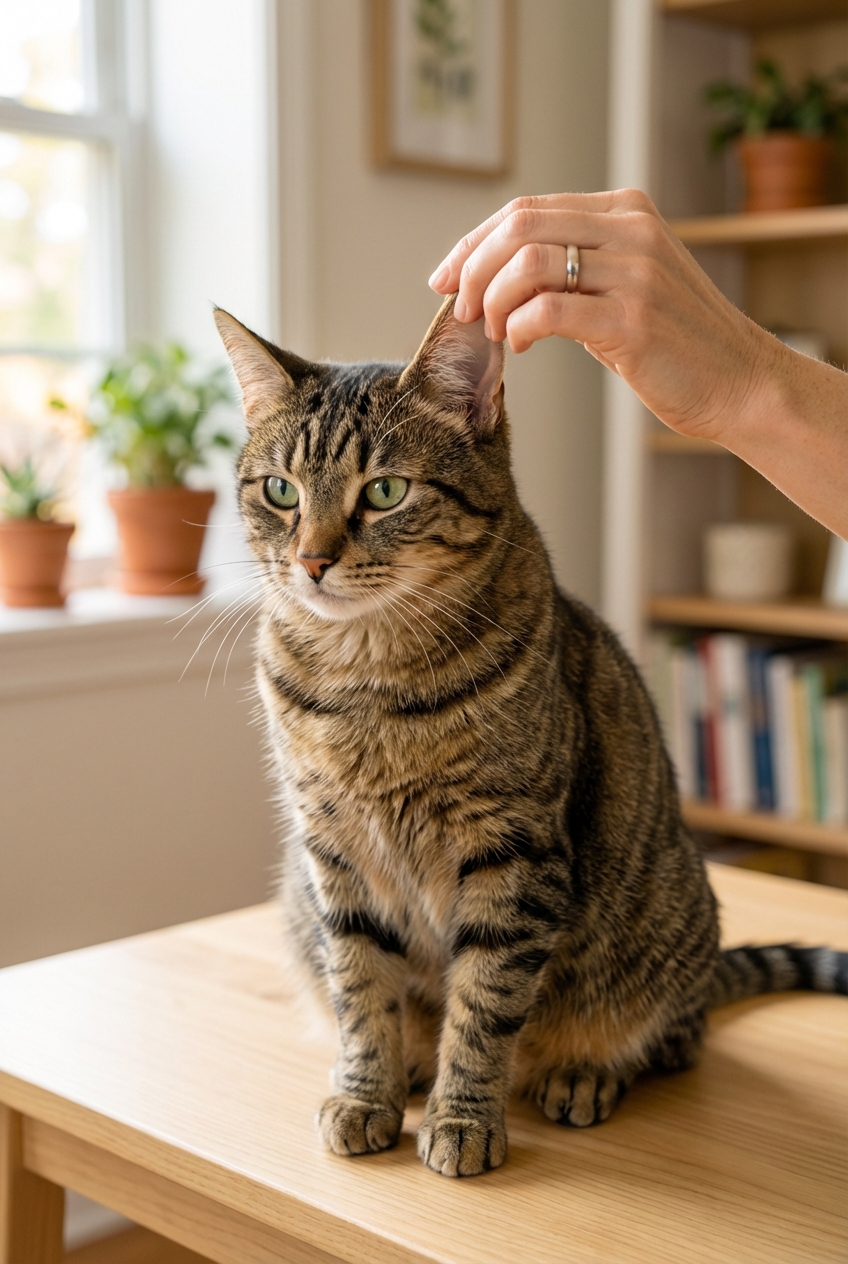
From “coffee ground” ear debris to nonstop scratching, learn how vets diagnose ear mites and the most effective treatments, safe ear cleaning steps, and ...
Article
•
Designer Mixes
Ear Mites in Cats: Facts Every Owner Should Know

Shari Shidate
Designer Mixes contributor
If your cat is suddenly scratching like crazy, shaking their head, or you notice dark, crumbly debris in the ears, ear mites may be the reason. Ear mites are common, contagious, and very treatable, but they can cause a lot of discomfort fast. As a veterinary assistant here in Frisco, Texas, I have seen how quickly a simple ear problem can turn into a painful infection when it is ignored.
Let’s walk through what ear mites are, what they look like, how vets diagnose them, and what truly works to get your cat comfortable again.
What ear mites are
Most feline ear mite cases are caused by Otodectes cynotis, a tiny parasite that lives on the surface of the ear canal skin. They feed on skin debris and ear wax, and their presence triggers intense itch and inflammation.
Ear mites matter because:
- They are extremely itchy and can quickly reduce your cat’s quality of life.
- They are contagious to other cats and can spread to dogs in the home, although they are less common in dogs than in cats.
- They can lead to secondary infections (bacterial or yeast) if the ear canal becomes damaged and inflamed.
- Severe scratching can cause wounds on the ears, face, and neck, and can sometimes contribute to an aural hematoma (a painful blood-filled swelling of the ear flap).
Ear mites are most common in kittens, outdoor cats, cats from shelters, or multi-cat households, but any cat can get them.
How cats get ear mites
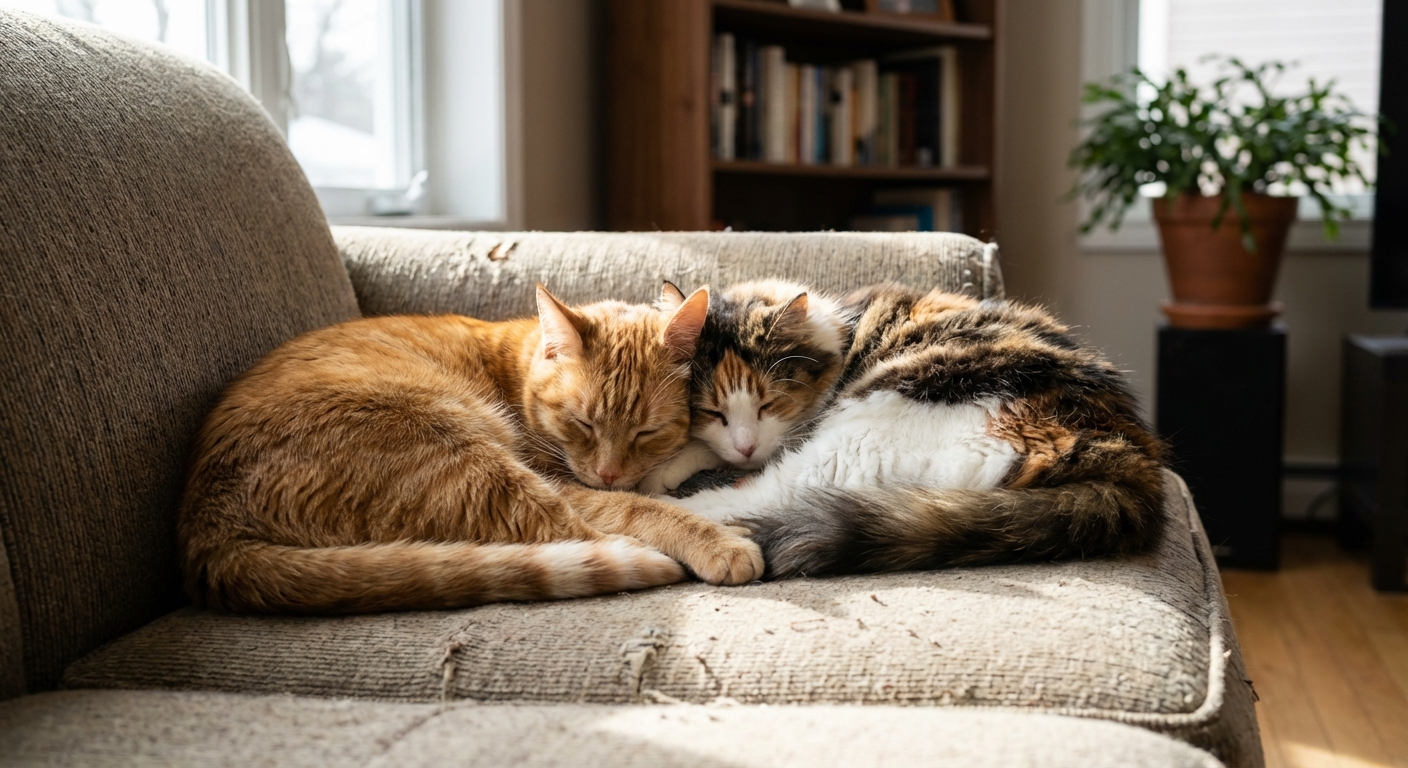
Ear mites spread through close contact. A cat does not need to be “dirty” or neglected to get mites. It can be as simple as snuggling with an infected kitten or sharing space with a pet that has mites.
Common situations
- New kitten or cat brought into the home
- Contact with stray or outdoor cats
- Shelter or rescue environments
- Grooming, play, or sleeping close together in multi-pet homes
Mites can survive off a pet for a short time, but environmental transmission is considered uncommon compared with direct pet-to-pet contact.
Signs to watch for
Some cats show obvious symptoms, while others are surprisingly subtle. Watch for:
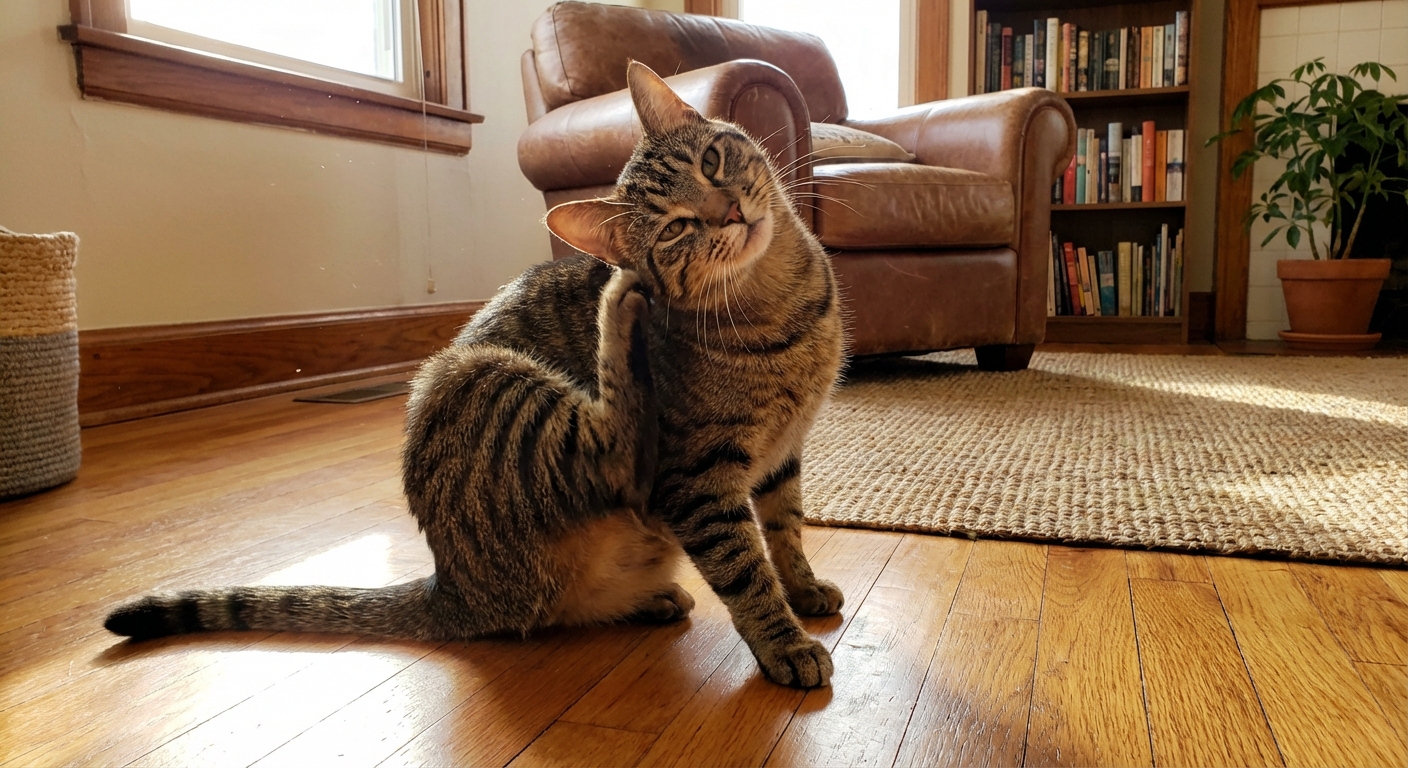
- Frequent head shaking
- Intense ear scratching (sometimes to the point of scabs)
- Dark brown or black debris in the ear, often described as coffee-ground-like
- Red, irritated ear canals
- Hair loss or scratches around the ears, head, or neck
- Crusty skin on or near the ear flap
- Ear odor (more common when infection is also present)
Important: Dark ear debris is not automatically mites. Yeast infections, bacterial infections, allergies, and even ear wax buildup can look similar. That is why diagnosis matters.
What ear mites look like
Ear mites are tiny and usually not visible to the naked eye. Under magnification, they can look like small white moving specks. In heavy infestations, you might occasionally see movement in debris, but most of the time mites are confirmed by a microscope exam at the clinic.
At-home guessing can lead to the wrong treatment. Ear conditions can look alike, but the right medication depends on the cause.
How vets diagnose them
A typical vet visit for itchy ears includes:
- History: indoor or outdoor, new pets, itching duration, past ear issues
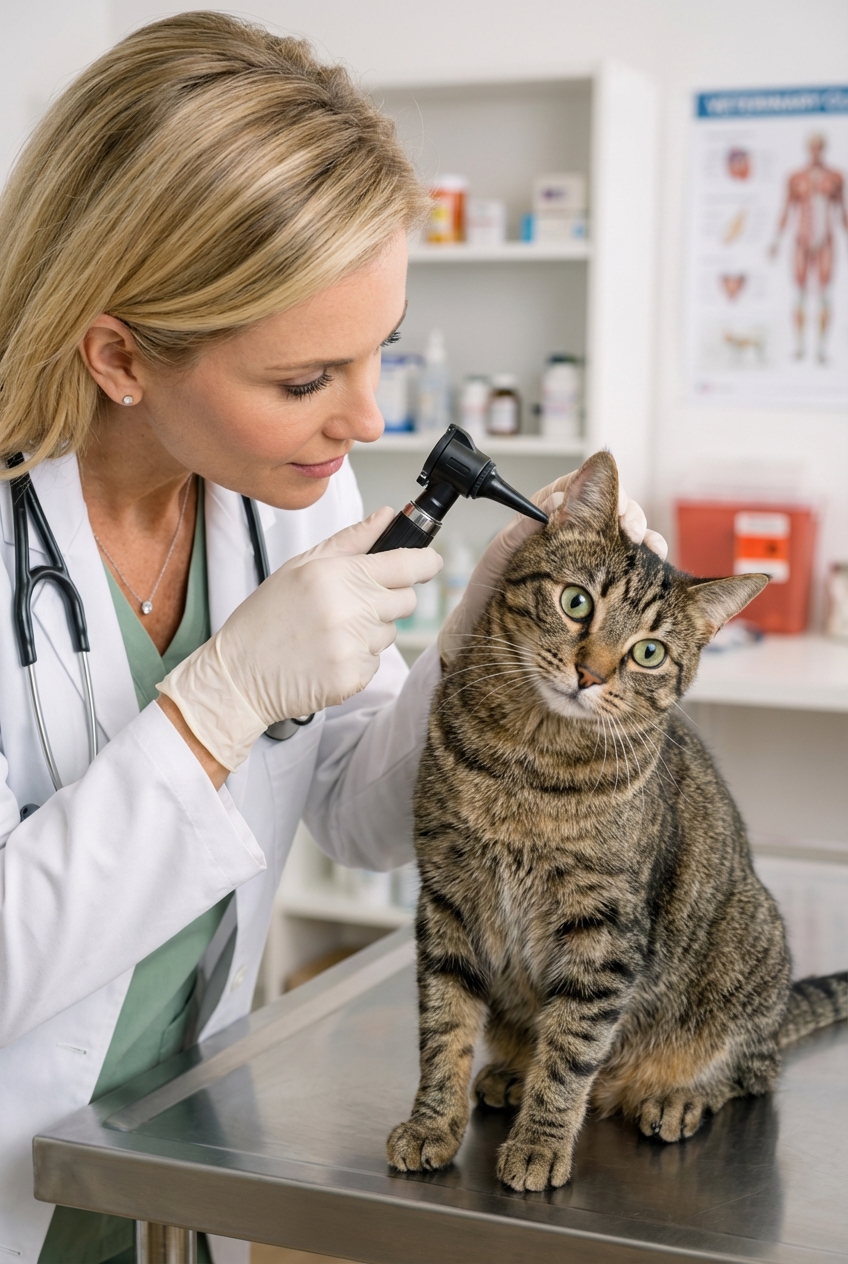
- Ear exam: checking the ear canal and eardrum (tympanic membrane) when possible
- Microscope testing: ear cytology (bacteria, yeast, inflammation) plus a microscopic exam for mites and eggs
This matters because cats can have mites and a secondary infection. Treating only one piece often leaves your cat uncomfortable.
Treatment that works
The good news: ear mites are very treatable. The best option depends on your cat’s age, weight, health status, and whether there is an ear infection present.
Common vet-recommended options
- Prescription topical parasiticides applied to the skin (often on the back of the neck). Many products treat ear mites and also cover fleas and some intestinal parasites.
- Ear medications when the ear canal is inflamed or infected. These may include anti-inflammatory medication, plus antibacterial or antifungal ingredients if needed.
- Ear cleaning done in-clinic or at home with a vet-approved cleaner, depending on how painful the ears are and whether the eardrum is intact. Some cats need in-clinic cleaning, and occasionally mild sedation, when ears are very painful.
How long treatment takes
Some modern products can work quickly, but eggs can hatch later and inflammation can linger. Many treatment plans involve a single dose or a repeat dose a few weeks later, depending on the product. Follow your veterinarian’s timeline exactly, even if your cat seems better in a few days.
Treating other pets
Usually, yes. If you have multiple cats, assume everyone has been exposed. Treating only the itchy cat is a common reason mites come right back.
Common mistakes to avoid
- Do not use dog ear meds on cats. Some ingredients are dangerous for cats.
- Avoid OTC products not labeled for cats, especially anything containing permethrin or other dog-only insecticides.
- Do not put oils, peroxide, or random home remedies in the ears. They can worsen irritation, trap debris, or hide an infection.
- Do not use cotton swabs deep in the ear canal. You can push debris deeper or injure the ear canal.
Comfort care at home
While your cat is being treated, small adjustments can make a big difference.
- Trim sharp nails to reduce self-trauma from scratching.
- Use an e-collar if recommended, especially if the ear flap is being scratched raw.
- Wash bedding and vacuum soft areas where pets sleep.
- Give medications consistently and finish the full course.
If your cat’s ears seem too painful to touch, let your vet know. Some cats need in-clinic cleaning and pain control.
When it is urgent
Ear mites are uncomfortable, but some ear symptoms need prompt attention. Call your veterinarian quickly if you notice:
- Head tilt, loss of balance, or circling
- Swelling of the ear flap (possible aural hematoma)
- Bleeding, open wounds, or significant swelling
- Foul smell, pus-like discharge, or severe pain
- Not eating or hiding more than usual
Prevention
Once you have lived through ear mites, you usually want a solid prevention plan.
Simple prevention habits
- Quarantine and vet-check new pets before introducing them to the household.
- Use veterinarian-recommended parasite prevention as appropriate for your cat’s lifestyle.
- Schedule rechecks if your vet recommends one, especially if there was infection.
- Watch for early signs like head shaking or a new ear odor.
If your cat has recurring ear issues, ask your vet about underlying contributors like allergies, ear anatomy, or chronic infections. Mites are common, but they are not the only cause of itchy ears.
Quick FAQ
Can humans get ear mites from cats?
Ear mites are adapted to animals and rarely cause issues in humans. In rare cases, people may notice temporary skin irritation after close contact. They can spread easily between pets, so focus on treating all animals in the home as directed.
Can indoor cats get ear mites?
Yes. Indoor cats can be exposed through new pets, foster animals, or contact with an infected pet that visits the home.
Does coffee-ground debris always mean mites?
No. It is a classic clue, but yeast or bacterial infections can look similar. A quick microscope check is the most reliable way to know.
The bottom line
Ear mites are common, contagious, and miserable for cats, but they are also very treatable with the right diagnosis and medication. If you are seeing head shaking, scratching, or dark ear debris, your best next step is a vet visit so you can treat the true cause and prevent complications.
Your cat deserves comfortable ears, restful sleep, and fewer itchy days. With prompt care, that is absolutely doable.