From “coffee ground” ear debris to nonstop scratching, learn how vets diagnose ear mites and the most effective treatments, safe ear cleaning steps, and ...
Article
•
Designer Mixes
Ear Infections in Cats: Symptoms, Causes, and Treatment

Shari Shidate
Designer Mixes contributor
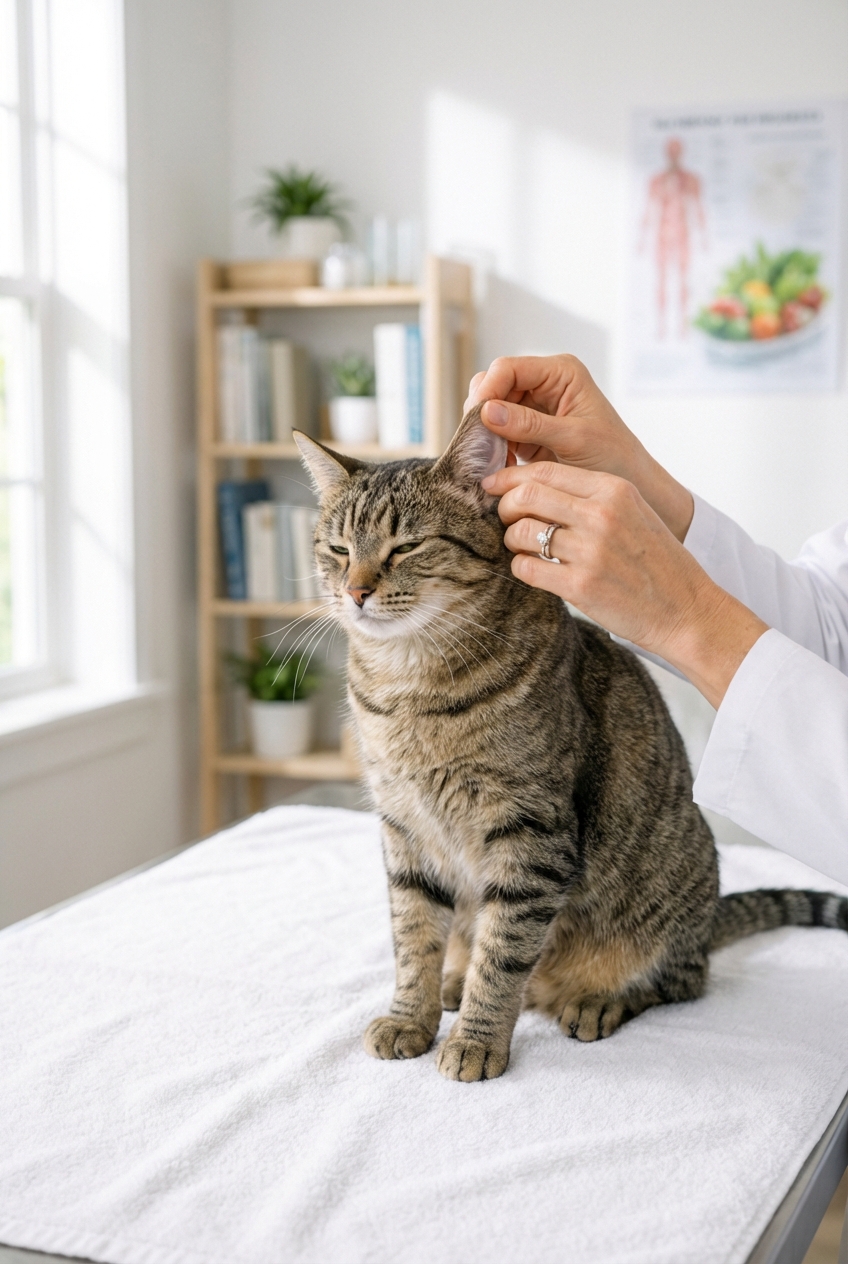
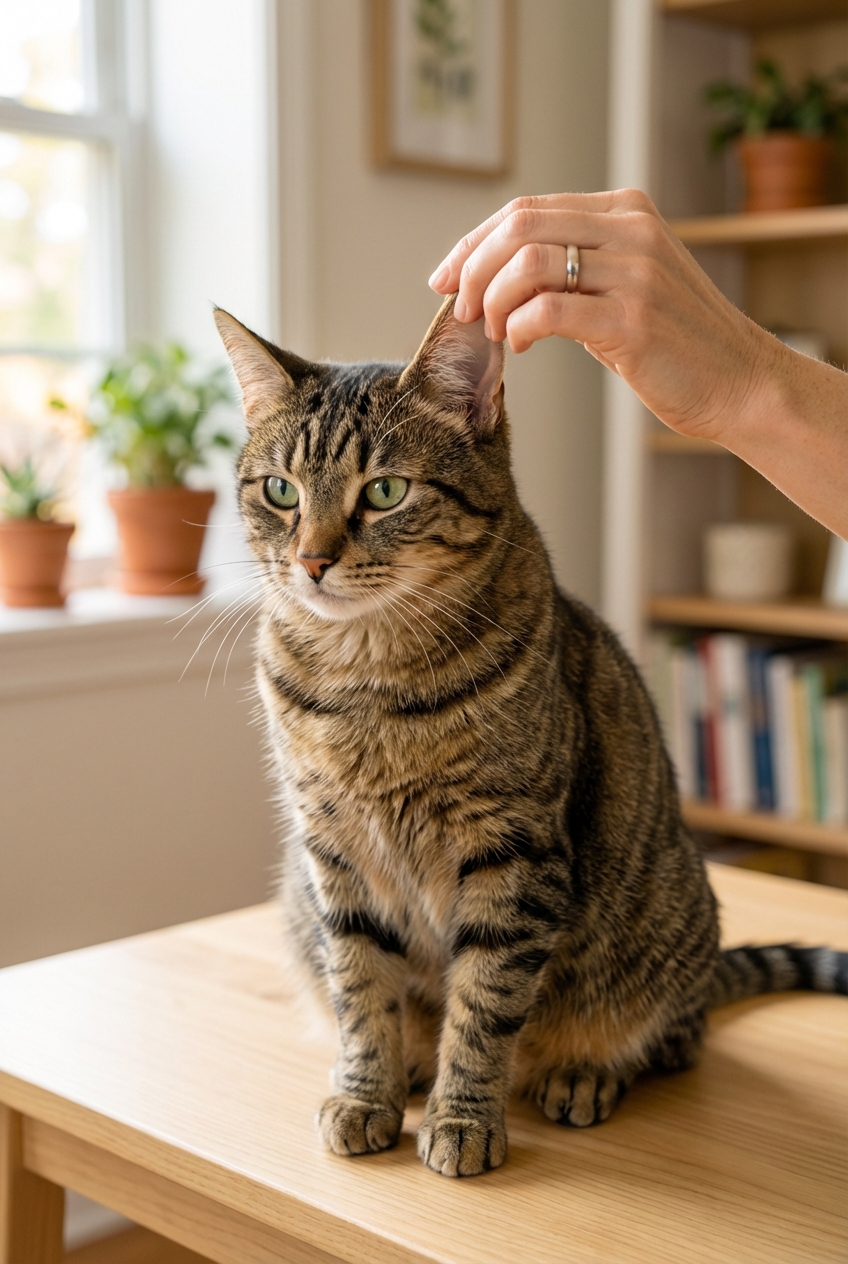
If your cat is shaking their head, tilting it to one side, or you are noticing a “not quite right” smell from the ears, you are right to pay attention. Cat ear problems are common, and one of the biggest reasons they drag on is simple confusion: ear mites are not the same thing as bacterial or yeast ear infections. They can look similar at home, but the causes and treatments are different.
As a veterinary assistant, I have seen many loving owners try an over-the-counter mite product when what their cat really needed was an ear cytology and the right medication. The good news is that most cats feel better quickly once you treat the true cause.
Mites vs infections: the key difference
Ear mites are tiny parasites that live in the ear canal and trigger intense itchiness. Bacterial and yeast ear infections happen when organisms that can be present on the skin and in the ear overgrow due to inflammation, moisture, debris buildup, or another underlying trigger.
Here is the practical takeaway: mites need anti-parasitic treatment. Infections need targeted ear medication (often an antifungal, an antibiotic, and sometimes a steroid), and occasionally additional treatment depending on how severe the problem is.
One important cat-specific note: compared with dogs, cats tend to have fewer true “primary” ear infections. When we see yeast or bacterial overgrowth in cats, it is often secondary to something else (mites, allergies, a polyp, chronic inflammation, or debris). Finding and addressing that trigger helps prevent repeat flare-ups.
Clues you might be dealing with mites
- Very itchy ears, lots of scratching
- Dark, dry, crumbly debris that can look like coffee grounds
- Often spreads to other pets in the home
- More common in kittens, outdoor cats, rescues, and multi-cat households
Clues you might be dealing with an infection
- Odor from the ear (often noticeable when you cuddle)
- Moist discharge or waxy buildup
- Redness and discomfort when touched
- Head tilt or balance changes can happen if the ear is very painful or deeper structures are involved
Important: mites and infections can occur together. That is why veterinary testing is so helpful.
Ear infection symptoms
Cats are experts at hiding discomfort, so subtle changes matter. Watch for:
- Head shaking or repeated ear flicking
- Head tilting to one side
- Scratching at one ear more than the other
- Odor, ranging from musty to “sour”
- Red, irritated ear canal or visible swelling
- Discharge in or around the ear
- Crusting on the ear flap
- Pain when you touch the ear or when your cat eats or yawns
- Behavior changes like hiding, grumpiness, or not wanting to be held
Discharge and odor clues
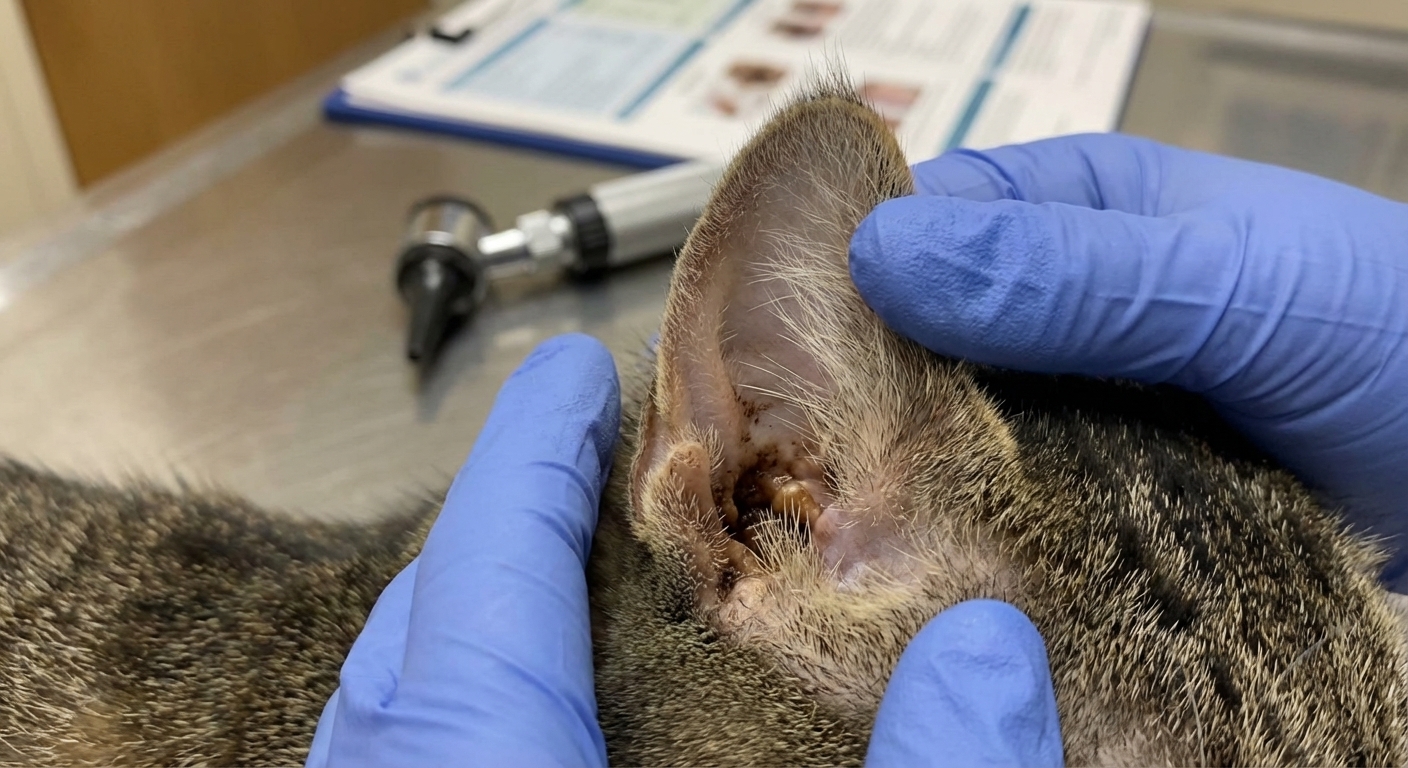
Ear discharge is not a reliable way to diagnose what is going on. Color and texture can overlap with wax, mixed infections, and inflammation. Still, these patterns can provide clues that help you describe what you are seeing to your veterinarian:
- Dark brown to black, dry and crumbly: often seen with ear mites, but can overlap with wax and infection
- Yellow or cream, thicker: can be consistent with bacterial infection, but cytology is needed to confirm
- Tan to light brown, waxy or greasy: can be consistent with yeast overgrowth, but can also be cerumen or mixed infection
- Greenish discharge: can happen with infection and should be checked promptly
- Bloody discharge: may be from trauma (scratching), a severe infection, a foreign body, a polyp, or another underlying issue
Odor is a big hint. Yeast can create a noticeable musty smell, while bacteria can cause a stronger, unpleasant odor. Either way, if you can smell it, it is time to schedule an exam.
What causes ear infections in cats?
Many ear infections are not “random bad luck.” They often happen when something changes the ear environment or triggers inflammation.
Common causes and risk factors
- Moisture: water trapped in the ear after bathing, grooming, or cleaning can set the stage for overgrowth
- Allergies: food allergies and environmental allergies can inflame the ear canal and weaken its normal defenses
- Ear polyps: more common in younger cats, polyps can cause chronic discharge, head shaking, and recurrent infections
- Foreign material: plant debris or excessive wax can irritate the canal
- Underlying skin conditions: if the skin barrier is compromised, ears can be affected too
- Anatomy: some cats have narrower or hairier ear canals that hold wax and moisture more easily
- Ear mites: mites can cause inflammation that later becomes infected
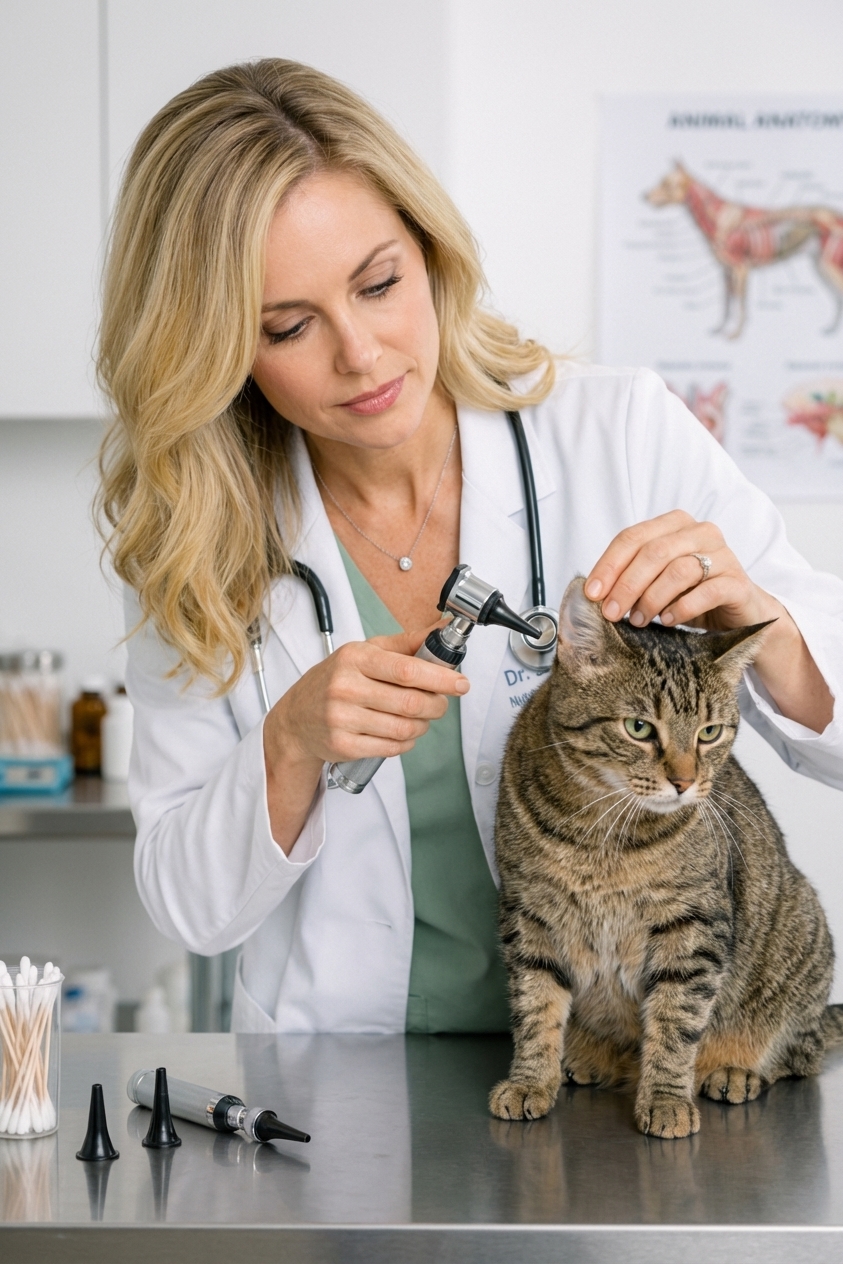
How vets diagnose ear problems
In clinic, the most helpful steps are usually quick and straightforward:
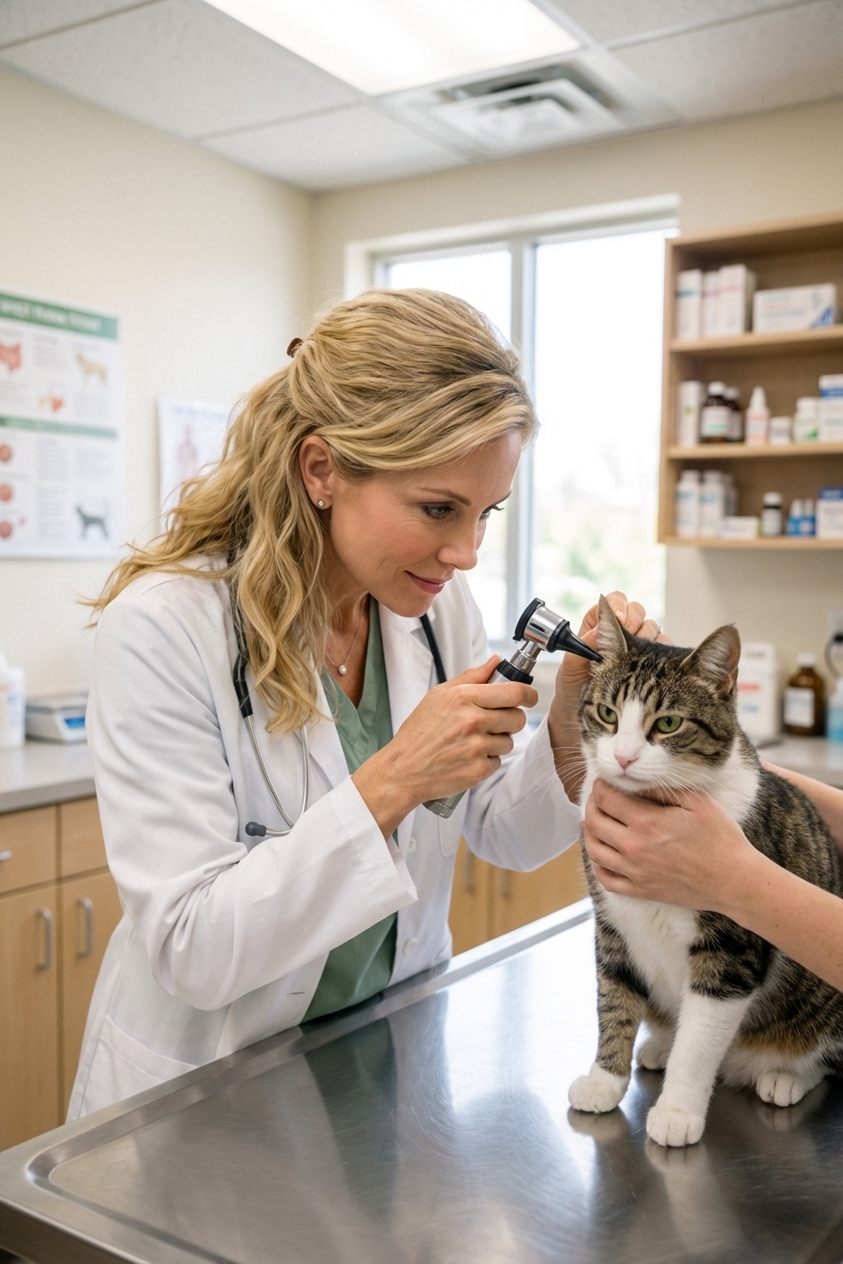
- Otoscope exam: to look down the ear canal and check the eardrum if possible
- Ear cytology: a swab of the discharge is examined under a microscope to look for yeast, bacteria, mites, and inflammation
- Culture and sensitivity: used for severe, recurrent, or non-responsive infections to identify the bacteria and which antibiotics work best
This is why guessing can backfire. Using the wrong medication can delay relief, and some products can be unsafe if the eardrum is damaged.
Home care: safe cleaning
Home ear care can be helpful, but it should be gentle and cat-safe. If your cat is in obvious pain, if the ear is very red and swollen, or if there is a head tilt, skip home cleaning and call your veterinarian.
If you suspect an infection (odor, discharge, significant redness), it is also reasonable to get guidance first. Some cats do fine with careful cleaning, while others need pain control or an exam before anything goes into the ear.
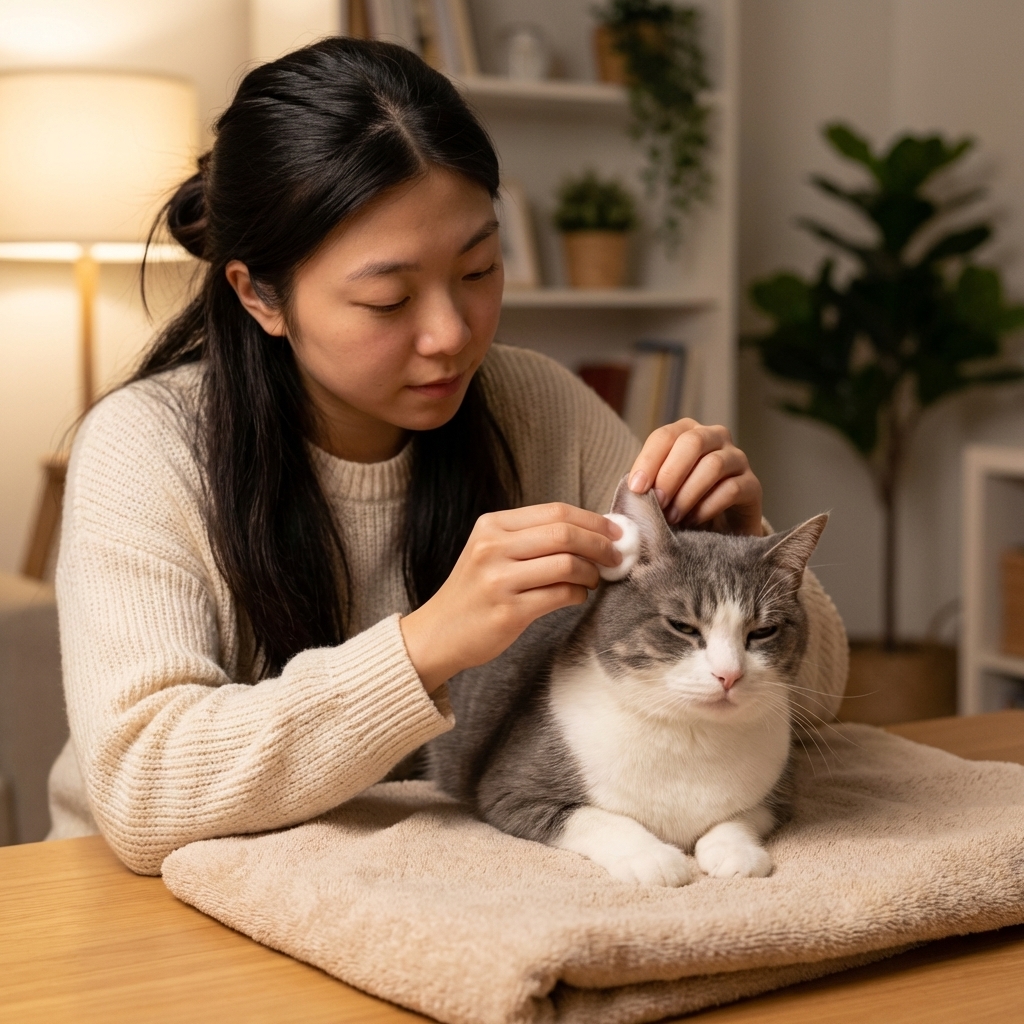
How to clean your cat’s ears
- Use a veterinary ear cleaner made for cats, or one recommended by your clinic.
- Warm the bottle in your hands for a minute. Cold solution can be uncomfortable.
- Lift the ear flap and place the nozzle at the opening of the ear canal. Do not force it inside.
- If your cat tolerates it, apply cleaner as directed (usually enough to coat the canal). Then gently massage the base of the ear for 20 to 30 seconds. You should hear a soft squishing sound.
- Let your cat shake. This helps bring debris outward.
- Wipe only what you can see using cotton balls or gauze.
- Reward and stop. Short, calm sessions prevent fear and wrestling.
What to avoid
- Do not use Q-tips inside the ear canal. They can push debris deeper and cause injury.
- Do not use hydrogen peroxide, alcohol, vinegar mixes, or essential oils unless your veterinarian specifically instructs you. These can irritate inflamed tissue and are risky for cats.
- Never put human ear drops or pain relievers in your cat’s ear unless your veterinarian prescribes them for your cat.
- Do not use leftover ear medication from another pet or an old prescription.
Treatment options
Treatment depends on what is found on cytology, the condition of the ear canal, and whether this is a first-time or recurring problem.
Yeast overgrowth
Yeast overgrowth is often treated with:
- Antifungal ear drops
- Anti-inflammatory medication (often included in combination drops) to reduce swelling and itching
- An ear cleaning plan to remove wax and reduce the conditions yeast likes
Bacterial infection
Bacterial infections may require:
- Antibiotic ear drops, sometimes combined with antifungal and steroid ingredients
- Culture and sensitivity for resistant or recurrent cases
When are oral antibiotics used?
Many uncomplicated outer ear infections are treated with topical medication. Oral antibiotics are not routine, but your veterinarian may prescribe them if infection is severe, if the ear canal is too swollen for drops to work well, if a middle ear infection is suspected, or if there are other skin issues that need systemic treatment.
What about ear mites?
When mites are confirmed (or strongly suspected), treatment usually involves a prescription anti-parasitic (often a topical medication applied to the skin). Your veterinarian may also recommend cleaning and treating other pets in the home. Over-the-counter mite products are sometimes ineffective, and some are not a good fit for cats, so it is worth checking with your clinic.
When to see a vet urgently
Please schedule prompt veterinary care if you notice any of the following:
- Head tilt, stumbling, or balance issues (can suggest middle or inner ear involvement)
- Severe pain, yowling, or your cat will not allow ear touch
- Swelling of the ear flap (possible aural hematoma)
- Bloody discharge or a strong foul odor
- No improvement in 24 to 48 hours, symptoms are worsening, or there is any odor, discharge, or significant redness
- Recurring infections, which can signal allergies, polyps, or another underlying problem
- Any concern for a ruptured eardrum (your vet must choose safe medications)
Your cat does not need to suffer through an ear infection. With the right diagnosis, most cats get relief fast.
Preventing future infections
Some cats never get another ear infection after proper treatment. Others need a prevention plan, especially if allergies or anatomy play a role.
- Finish the full course of medication, even if your cat seems better in a few days.
- Recheck when recommended. Many infections look improved on the outside while organisms remain deeper in the canal.
- Keep ears dry after baths and grooming. If your cat hates baths, you are not alone, but do your best to avoid water in the ears.
- Ask about allergies if infections recur. Managing the root trigger can reduce repeat flare-ups.
- Treat all pets when mites are confirmed, if your veterinarian advises it, since mites spread easily.
Quick FAQ
Can I treat a cat ear infection at home?
You can do gentle outer-ear cleaning with a cat-safe ear cleaner, but you cannot reliably treat bacterial or yeast infections without the right medication. If symptoms persist, or there is odor, discharge, or pain, your cat needs an exam and ear cytology.
Why does my cat keep getting ear infections?
Recurring infections often point to an underlying issue like allergies, ear polyps, chronic inflammation, mites, or incomplete resolution of the previous infection. A recheck and sometimes culture testing can be a game-changer.
Are ear mites always the cause of dark ear wax?
No. Dark wax can occur with mites, yeast, infection, or simple wax buildup. The “coffee ground” look is a common mite clue, but it is not definitive without a microscope check.
A gentle next step
If you are reading this because your cat’s ears seem off, you are already doing the right thing by paying attention early. Take a quick look for discharge, notice any odor, and jot down whether the issue is one ear or both. Then schedule a veterinary visit for an otoscope exam and cytology. Once you know whether you are dealing with mites, yeast, bacteria, or a mix, treatment becomes more targeted and effective.
Educational content only. Always consult your veterinarian for diagnosis and treatment, especially for painful ears, head tilt, balance changes, or recurring infections.