Spot dog ear infection symptoms early—head shaking, odor, redness, discharge. Learn when to see a vet urgently, what exams involve, and safe cleaning, meds...
Article
•
Designer Mixes
Ear Infection Symptoms in Dogs

Shari Shidate
Designer Mixes contributor
Ear infections are a very common reason dogs end up uncomfortable, itchy, and miserable. As a veterinary assistant here in Frisco, Texas, I have seen how quickly a simple “ear scratch” can turn into a painful problem that affects sleep, appetite, and sometimes even balance.
The good news is that when you know the early symptoms and get the right care, most dogs feel better fast. The key is catching it early and avoiding well-meaning home treatments that can make things worse.
Quick note: This article is not a diagnosis. It is a guide to help you spot warning signs and know when to contact your veterinarian.
What an ear infection is
Most canine ear infections involve inflammation of the external ear canal, often called otitis externa. The ear canal in dogs is long and L-shaped, which makes it warm and a little less ventilated. That environment can trap moisture, wax, and debris, giving yeast or bacteria a chance to overgrow.
In some cases, infection or inflammation can extend deeper to the middle or inner ear, which can be more serious and may affect balance and hearing.
Symptoms to watch for
Some dogs show obvious signs right away, and others are surprisingly subtle. If you notice any of the symptoms below, it is worth a call to your veterinarian.
Common early signs
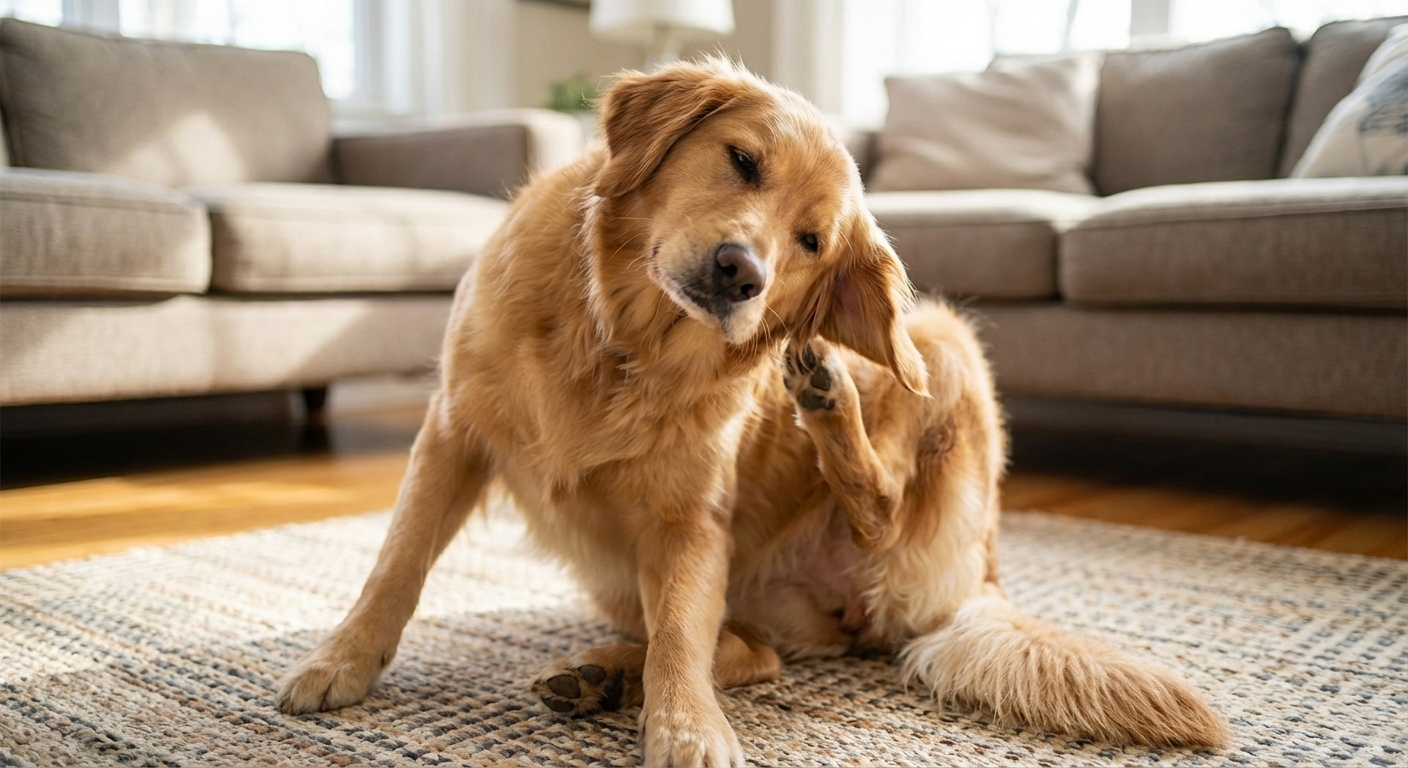
- Frequent scratching at one or both ears
- Head shaking, sometimes intense
- Head tilt to one side
- Redness or visible irritation inside the ear flap
- Ear odor that smells yeasty, musty, or sour
- Waxy buildup or discharge (tan, brown, yellow, or even bloody)
- Touch sensitivity, pulling away when you try to examine the ear
Signs that suggest a more serious problem
- Swelling of the ear canal or thickened “leathery” ear tissue
- Crusting around the ear opening
- Hair loss near the ear from persistent scratching
- Pain when opening the mouth or chewing
- Loss of balance, stumbling, or circling
- Eye movements that flick back and forth or severe dizziness
- Hearing changes or not responding like usual
If your dog seems dizzy, cannot keep balance, has sudden head tilt, or you see blood or severe swelling, treat it as urgent and contact your veterinarian right away.
What causes ear infections in dogs
It helps to know that yeast or bacteria are often the “overgrowth,” but there is usually an underlying reason the ear got inflamed in the first place. Addressing the root cause can prevent repeat infections.
Common contributing factors
- Allergies (environmental or food related) are a major cause of ongoing ear trouble.
- Moisture from swimming, bathing, or high humidity, especially in dogs with heavy or floppy ear flaps.
- Ear anatomy like narrow canals, pendulous ears, or reduced airflow.
- Hair in the ear canal or heavy ear furnishings that trap debris.
- Excess wax production or trapped debris.
- Ear mites, more common in puppies and in multi-pet homes.
- Foreign material like grass awns or foxtails.
- Endocrine conditions such as hypothyroidism that can affect skin health.
Dogs that swim often, have pendulous ears, or have hair that grows into the canal tend to be more prone than dogs with upright, well-ventilated ears.
At-home check
You do not need special equipment to notice a developing ear problem. A quick, gentle check once or twice a week is plenty for most dogs.
Safe steps
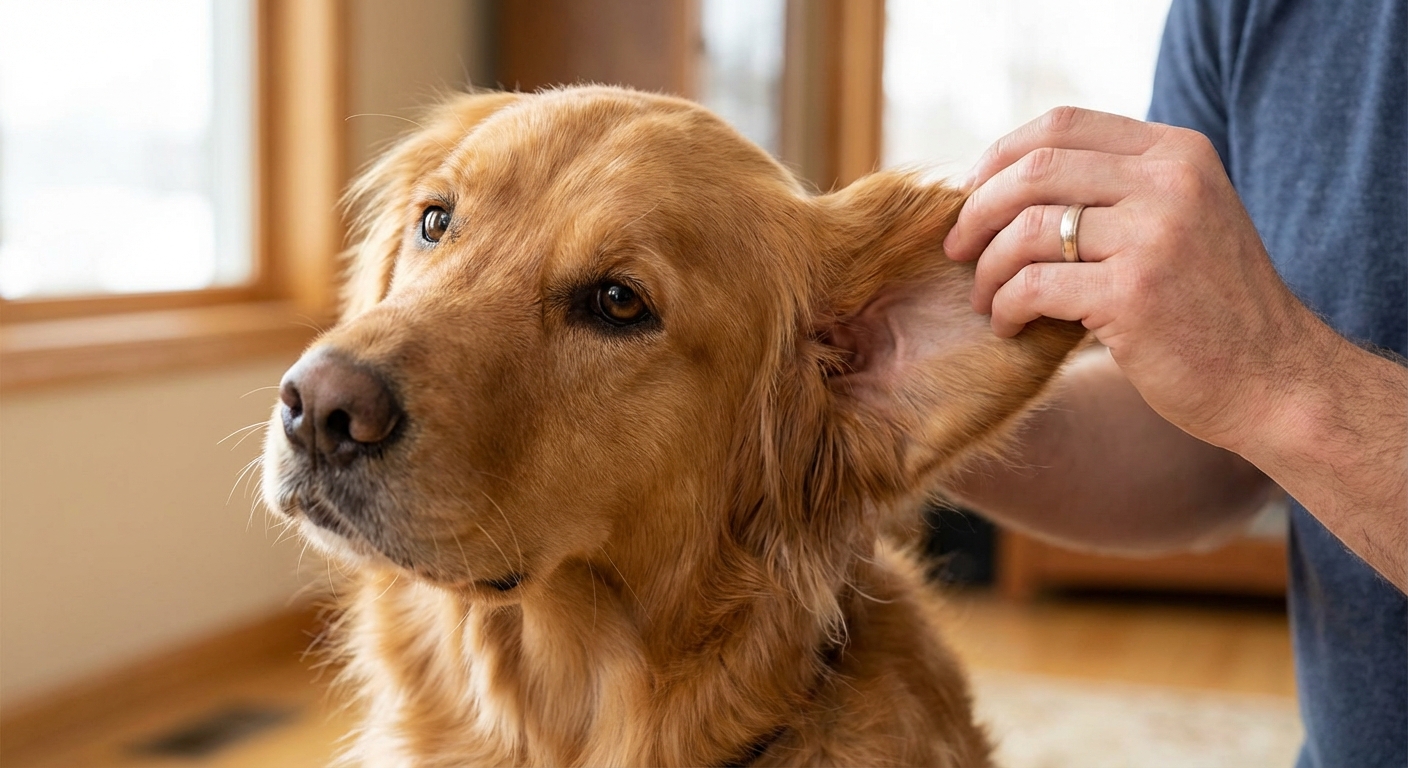
- Look: Lift the ear flap and check for redness, swelling, dark wax, or discharge.
- Smell: A sudden odor change is often one of the earliest clues.
- Observe behavior: Head shaking after a bath or after playing outside can be a hint.
Safety tips
- Stop if it hurts: If your dog yelps, snaps, or seems very painful, do not push through an exam or cleaning. Call your veterinarian.
- Handle carefully: Painful ears can make even sweet dogs react. Use calm restraint and consider having another adult help you.
What not to do
- Do not put hydrogen peroxide, alcohol, essential oils, or random “drops” in the ear.
- Avoid vinegar or acidifying mixtures unless your veterinarian has specifically instructed you to use them for your dog.
- Do not use cotton swabs inside the canal. They can push debris deeper and irritate the ear.
- Do not use leftover medication from another pet or from an older episode.
One important reason to avoid home remedies is that if the eardrum is damaged, certain products can be painful or harmful. Your vet needs to look down the canal to check.
When to call the vet
If you notice odor, discharge, obvious redness, or your dog seems painful, call your veterinarian promptly. If mild signs like occasional scratching or brief head shaking last beyond 24 hours, that is also a good reason to schedule an exam. Early treatment can prevent the ear canal from becoming chronically thickened, which makes future infections harder to treat.
Seek urgent care the same day if you notice
- Balance issues, falling, severe head tilt
- Bleeding, a swollen ear flap, or sudden intense pain
- A foreign object you can see but cannot safely remove
- Symptoms in a dog with known chronic ear disease that is suddenly worse
Look-alikes and related problems
Not every ear issue is a straightforward infection. A few problems can look similar and need veterinary care:
- Ear hematoma: A swollen, puffy ear flap that can happen after vigorous head shaking.
- Allergic ear inflammation: The ear can be red and itchy even before yeast or bacteria overgrow.
- Foreign body: Foxtails and other plant material can cause sudden one-sided pain and head shaking.
- Polyps or tumors: Less common, but can cause chronic discharge, odor, or recurring infections.
- Ruptured eardrum: This is one reason you should not put products into a painful ear without an exam.
Diagnosis and treatment
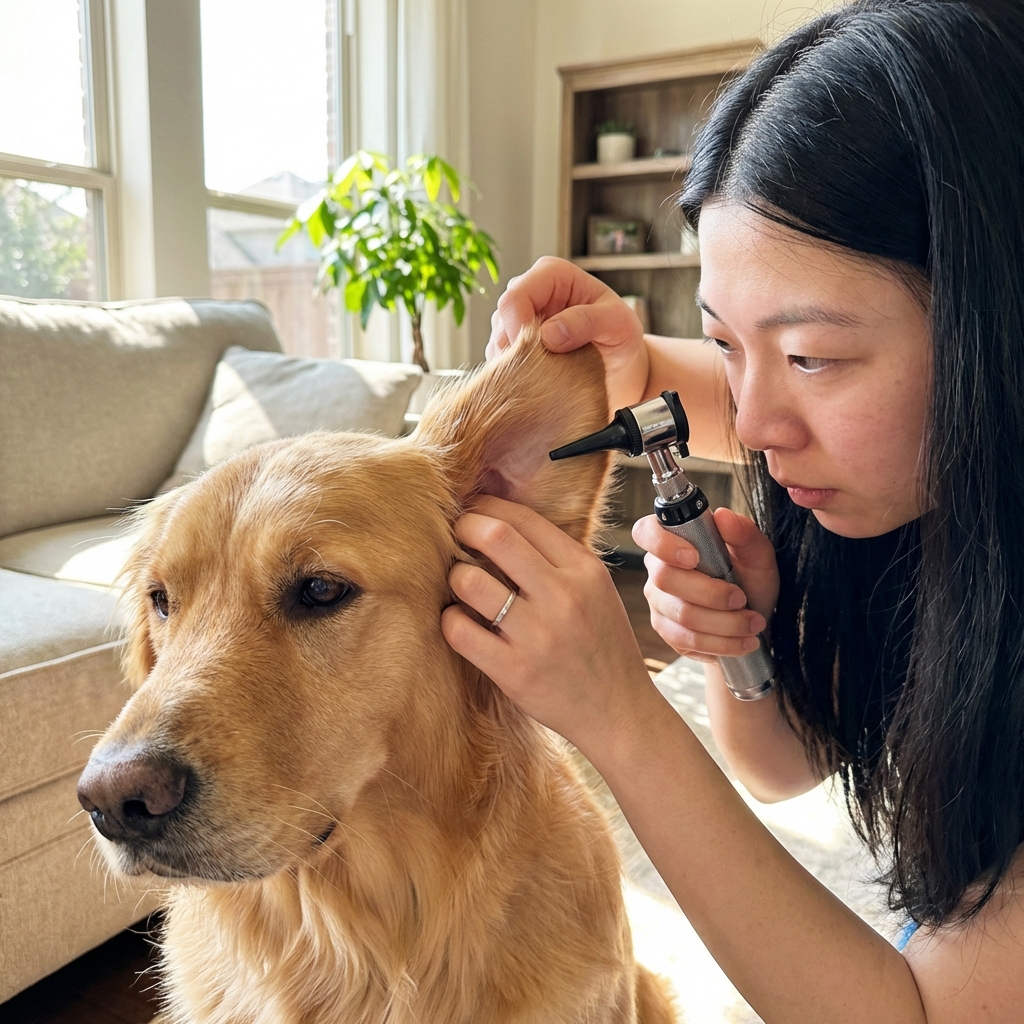
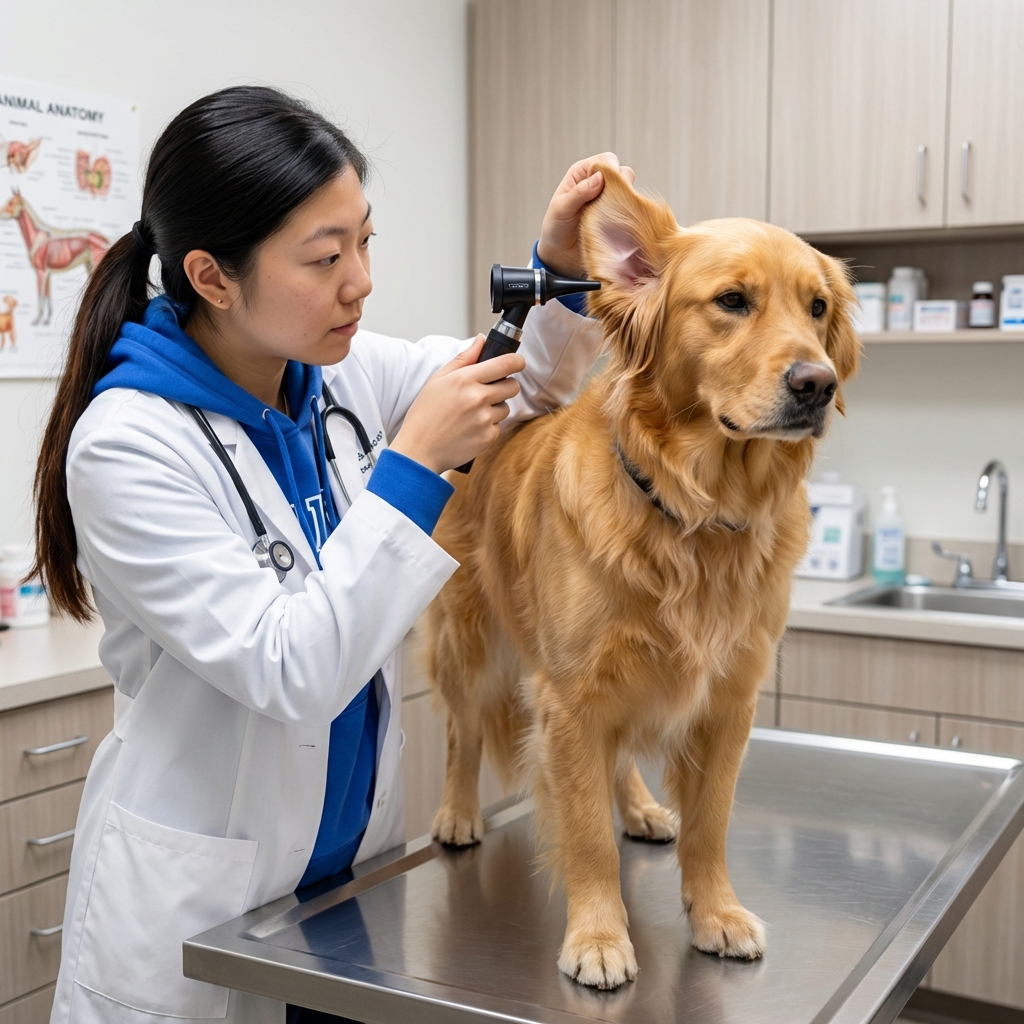
In a clinic visit, your veterinarian typically examines the ear with an otoscope, then may take a sample of the debris for a microscope check. That quick test, often called cytology, helps determine whether yeast, bacteria, mites, or inflammation is the main issue.
Treatment may include
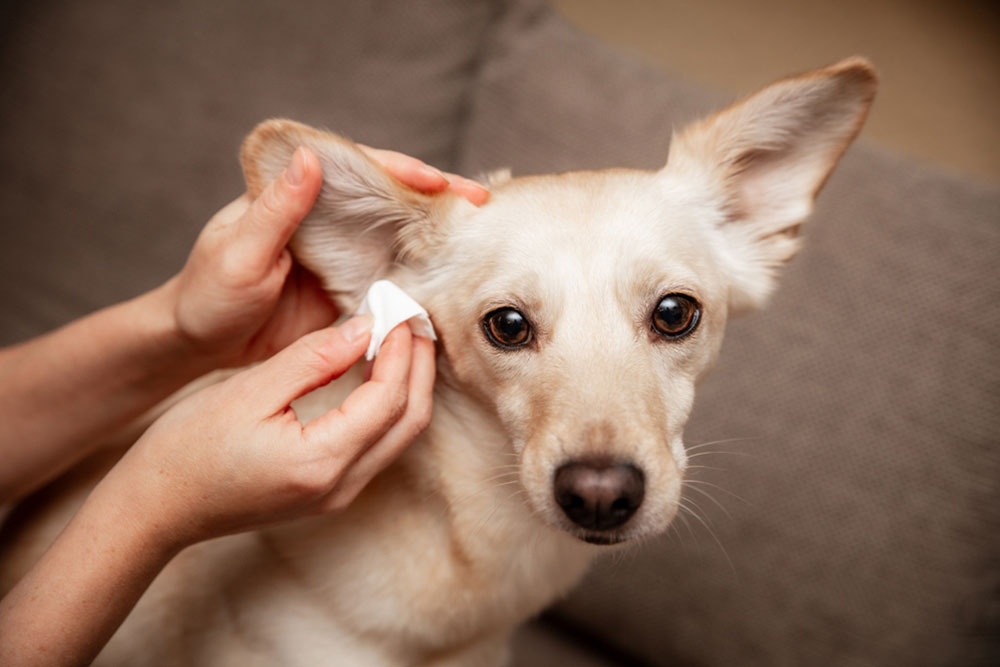
- Professional ear cleaning to remove debris so medication can work.
- Prescription ear drops that may include antifungal, antibiotic, and anti-inflammatory medication.
- Oral medications in more severe cases or when the infection extends deeper.
- Pain relief, especially if the ear is very inflamed.
- Follow-up rechecks to make sure the infection is truly gone. Stopping early is a common reason infections come right back.
If your dog gets recurring infections, your veterinarian may also discuss allergy testing, diet trials, or long-term ear maintenance routines. If an infection is not responding as expected, your vet may recommend repeat cytology and sometimes a culture and sensitivity test to target the right medication.
Prevention and ongoing care
Prevention is not about cleaning constantly. Over-cleaning can irritate the ear. The goal is keeping ears dry, calm, and healthy.
Helpful habits
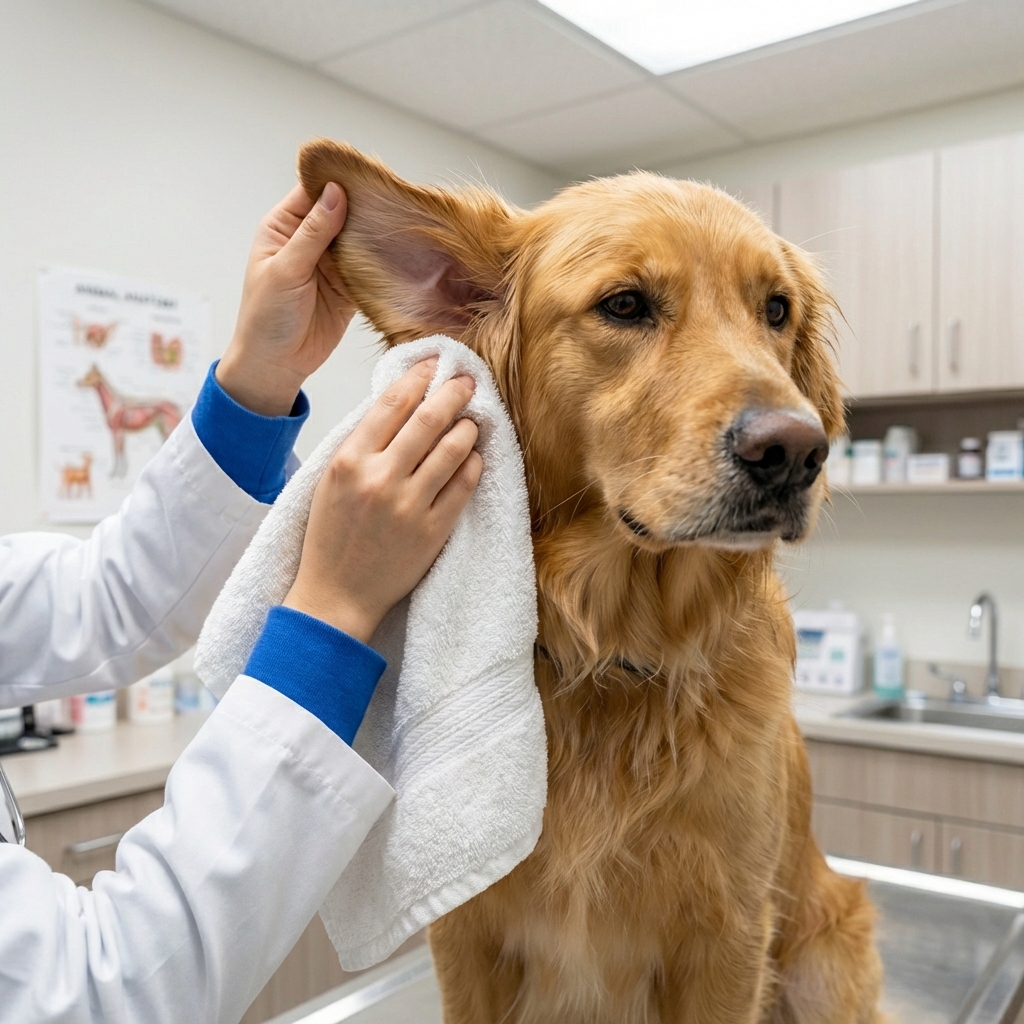
- Dry ears after swimming or baths using a soft towel on the outer ear flap.
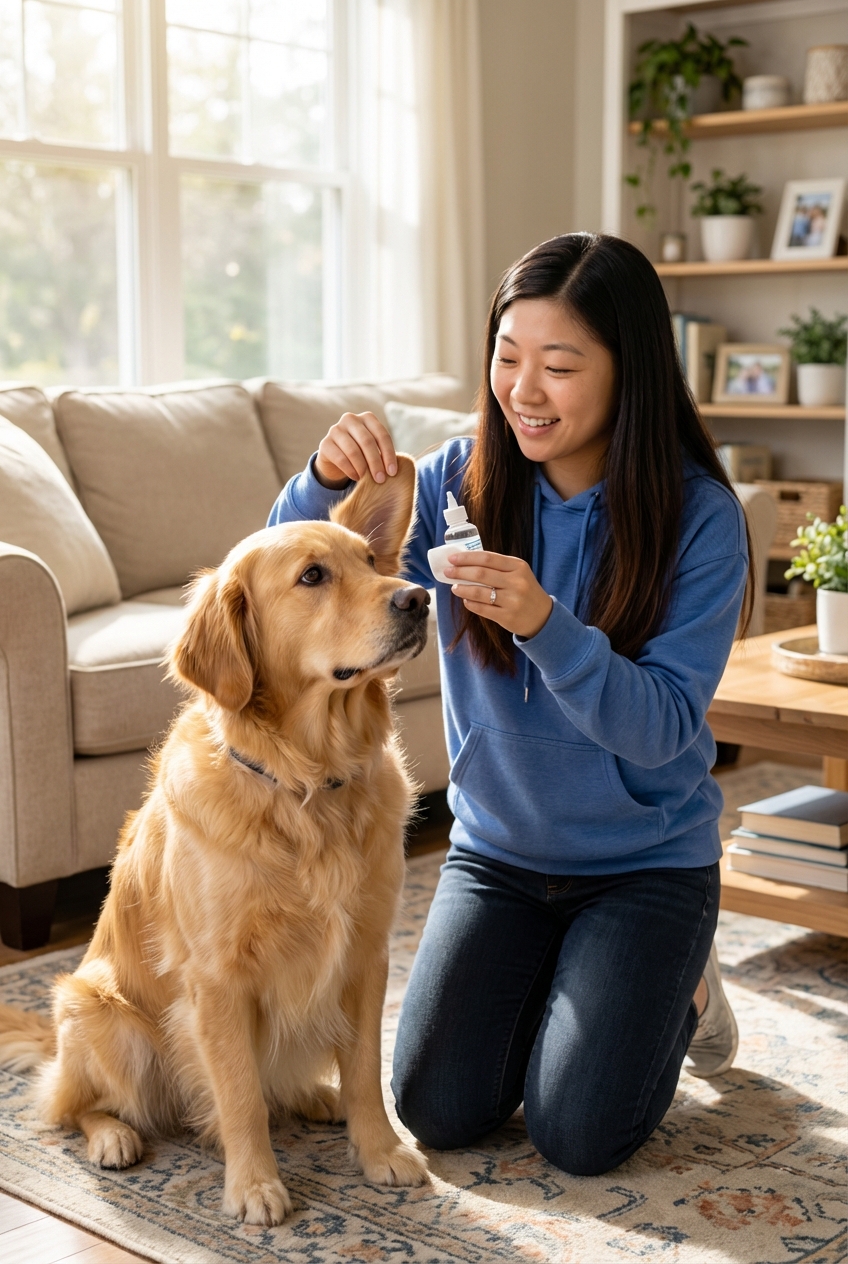
- Use a vet-recommended ear cleaner only as directed, especially for dogs prone to wax buildup.
- Ask about post-swim care: Some dogs benefit from a vet-approved drying or acidifying ear product, but only when appropriate for that dog and that ear.
- Keep hair managed around the ear opening if your groomer recommends it for airflow.
- Address allergies with a plan. This often reduces repeat ear infections dramatically.
- Watch for seasonal patterns. Many dogs flare in spring and fall.
Nutrition also matters because skin and ear health are connected. If your dog has recurring ear issues, ask your vet whether allergies or food sensitivities could be part of the picture and whether an evidence-based diet trial makes sense.
Quick checklist
If you are wondering, “Is this an ear infection?” this simple checklist can help you decide what to do next.
- Head shaking or ear scratching
- Ear redness or heat
- Odor that is new or stronger than usual
- Waxy buildup or discharge
- Pain when touched
- Head tilt or balance changes
If you check two or more boxes, it is a good time to call your veterinarian and get an exam scheduled. If any one sign is severe or sudden, like pain, discharge, bleeding, or head tilt, do not wait.