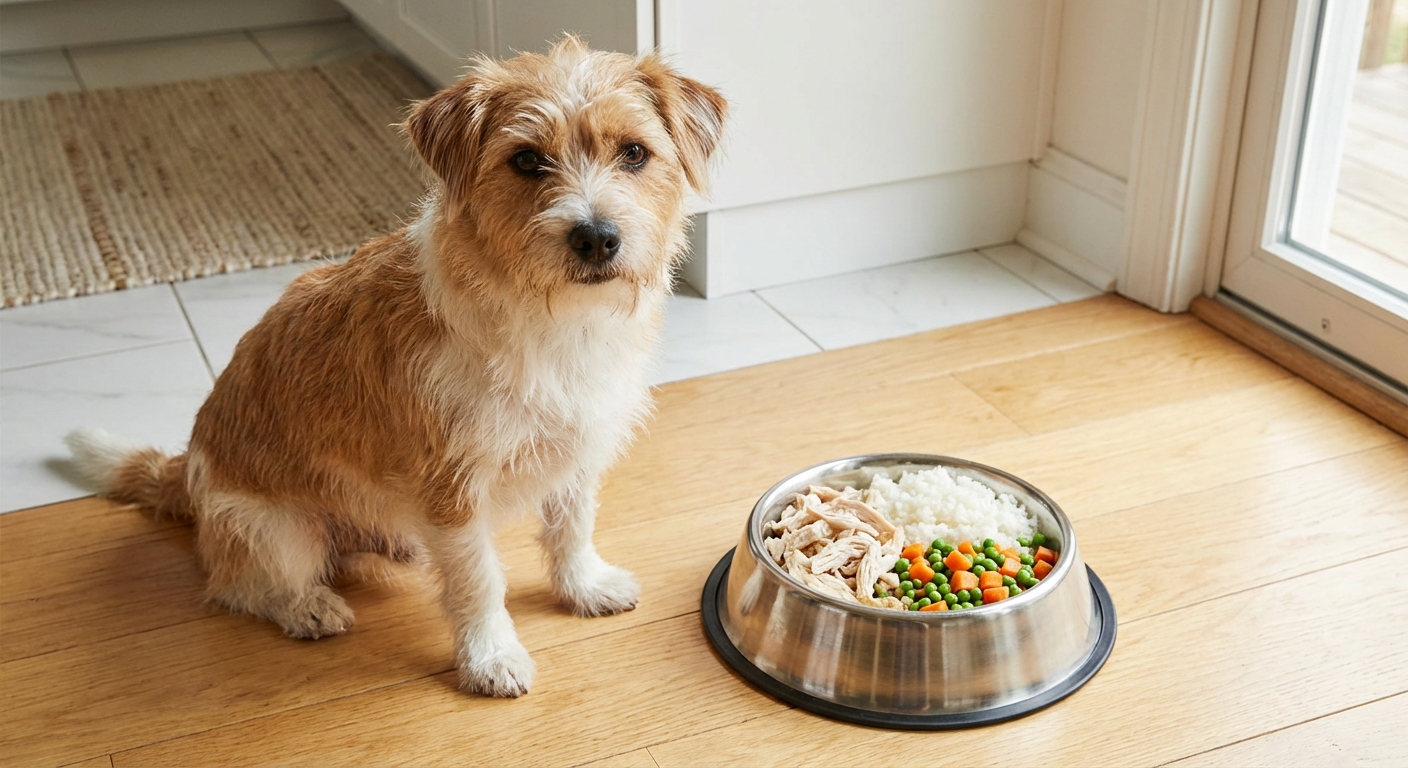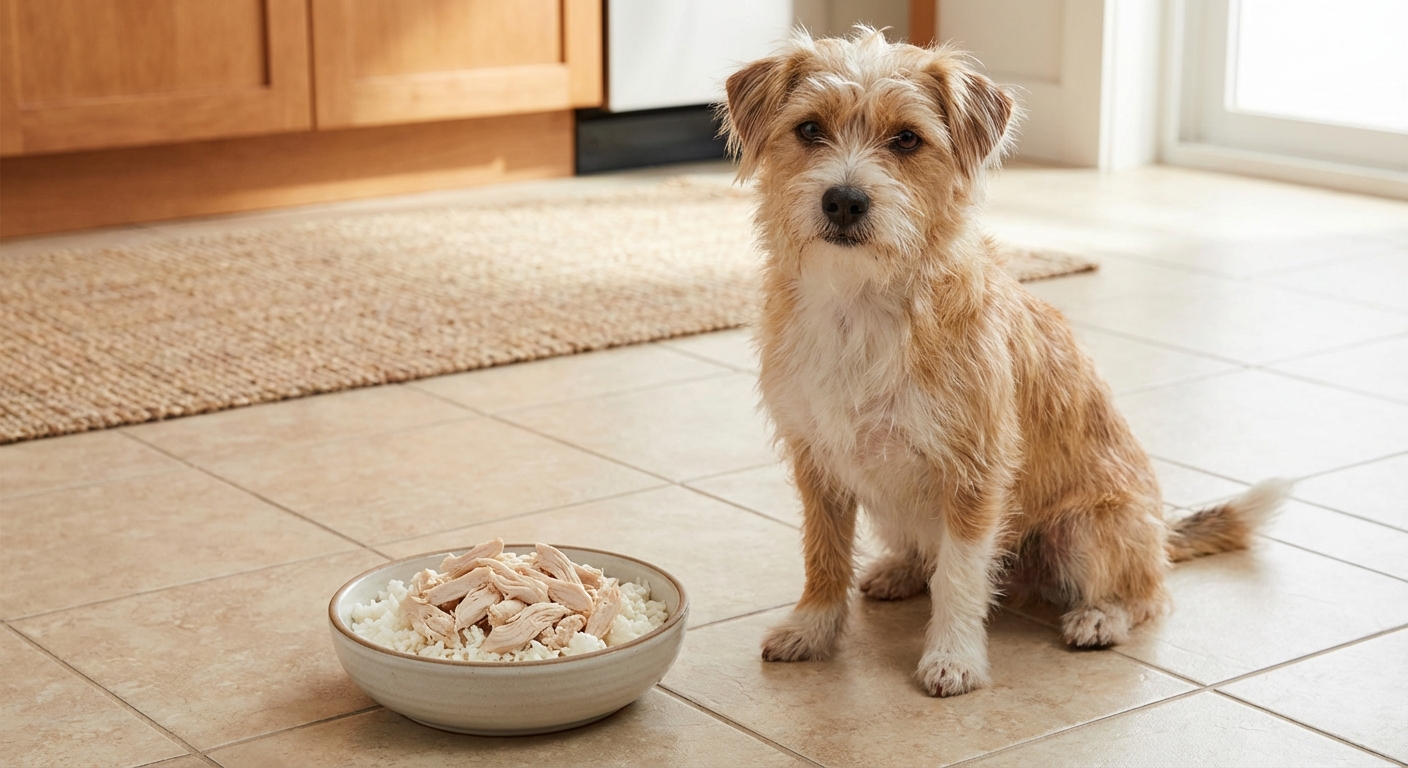
Chicken and rice can soothe mild stomach upset and help dogs transition back to normal food. Learn safe recipes, portions, how long to feed it, and when to c...
Article
•
Designer Mixes
Double Doodle: What to Expect

Shari Shidate
Designer Mixes contributor
A Double Doodle is most commonly what you get when a Goldendoodle (Golden Retriever + Poodle) is crossed with a Labradoodle (Labrador Retriever + Poodle). In other words, you are typically looking at a dog with Poodle genetics on both sides, plus the friendly, people-loving traits that made Labs and Goldens famous family dogs.
One important caveat: “Double Doodle” is not a standardized label. Some sellers use it loosely for almost any Lab, Golden, and Poodle combination, or other doodle-to-doodle pairings. So it helps to focus less on the name and more on the parents, the health testing, and the puppy in front of you.
Here is the most important thing to know up front: coat, size, and energy level can vary a lot depending on the parents (and whether they are F1, F1B, multigen, and so on). The good news is that if you know what to ask a breeder and what to look for in health testing, you can stack the odds in your favor.
What is a Double Doodle?
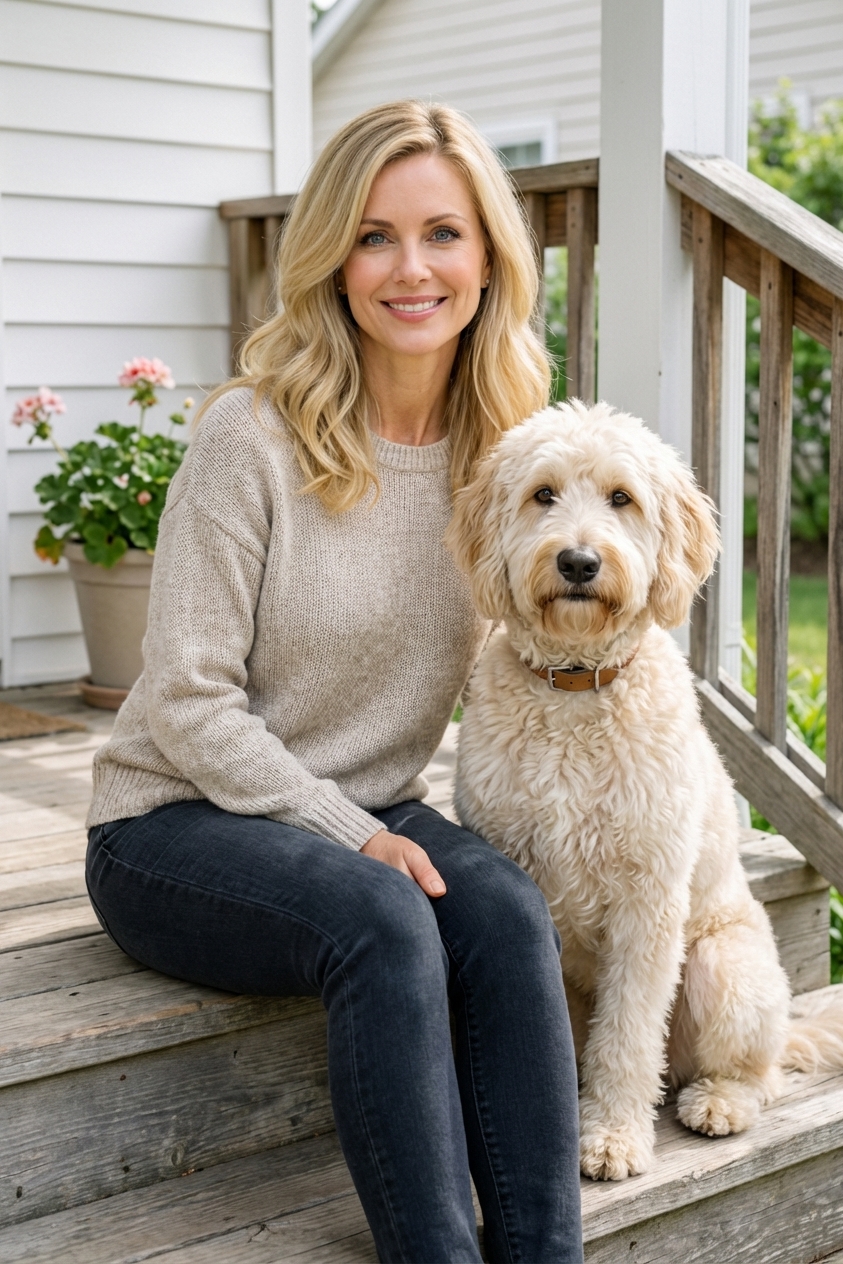
A Double Doodle is a designer mix most often created by breeding a Goldendoodle with a Labradoodle. Since both “doodle” parents already contain Poodle, many Double Doodles are effectively a multi-generation Poodle mix. That can increase the chances of a curlier, lower-shedding coat, but it does not guarantee it.
Double Doodles are commonly chosen by families who want:
- A sociable, trainable companion
- A coat that may shed less than a typical Lab or Golden
- A dog that fits well into an active home
They can be wonderful dogs, but they still need structure, grooming, training, and thoughtful breeding behind them.
Size and weight
Double Doodles can land in a wide size range. Labs and Goldens are similar in size, but Poodles may be toy, miniature, or standard. Some breeders also use “moyen” or “medium” informally, even though it is not recognized by every major kennel club (for example, AKC).
Common size ranges (rough estimates)
- Standard-type Double Doodle: commonly 45 to 70 lbs, about 21 to 26 inches at the shoulder (can exceed 75 lbs in some lines)
- Medium-type Double Doodle: often 30 to 50 lbs, about 17 to 22 inches
- Smaller lines: less common, but may be 15 to 30 lbs if toy or miniature Poodle ancestry is in the mix
What to ask a breeder: adult weights of both parents, adult weights in prior litters, and which Poodle size variety is in the lineage. If the breeder cannot clearly answer these, expect surprises.
Coat and shedding
People often search for Double Doodles hoping for a “non-shedding” dog. As a veterinary assistant, I love setting realistic expectations here because it prevents disappointment and, more importantly, helps dogs stay in their homes.
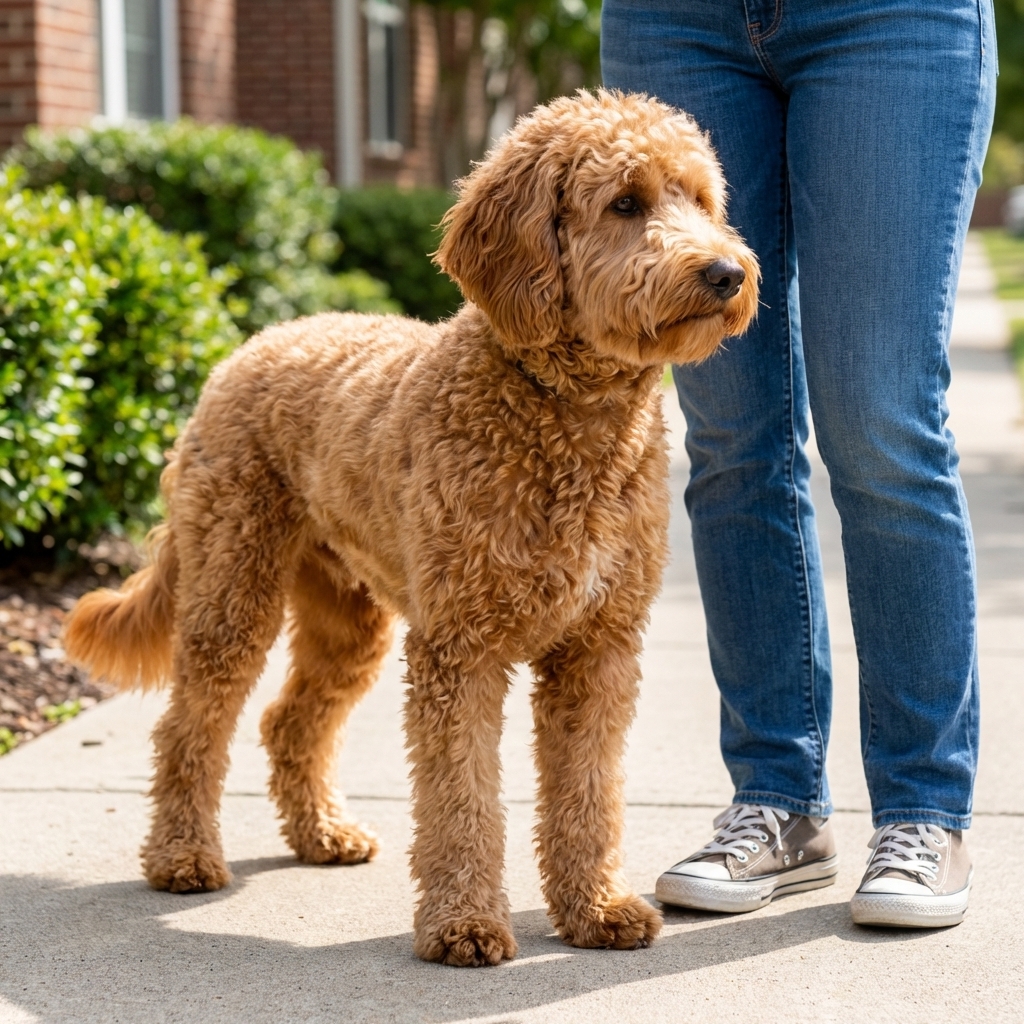
Double Doodles may have one of several coat types:
- Curly coat: often the lowest shedding, usually higher grooming needs, can mat quickly if not brushed
- Wavy (fleece) coat: a common middle ground, moderate grooming needs, may shed lightly
- Straighter coat: can shed more, may look more like a Lab or Golden with facial furnishings
Do Double Doodles shed?
Some shed very little. Some shed seasonally. A few shed quite a bit. Shedding and allergy-friendliness are influenced by coat type, dander, saliva proteins, and individual sensitivity. The only truly reliable way to gauge “allergy friendly” is real-life exposure to that specific dog or dogs from the same line.
Smart buyer tip: Ask the breeder what coat types show up most often in their lines, and request photos of adult dogs produced from similar pairings.
Puppy coat vs adult coat
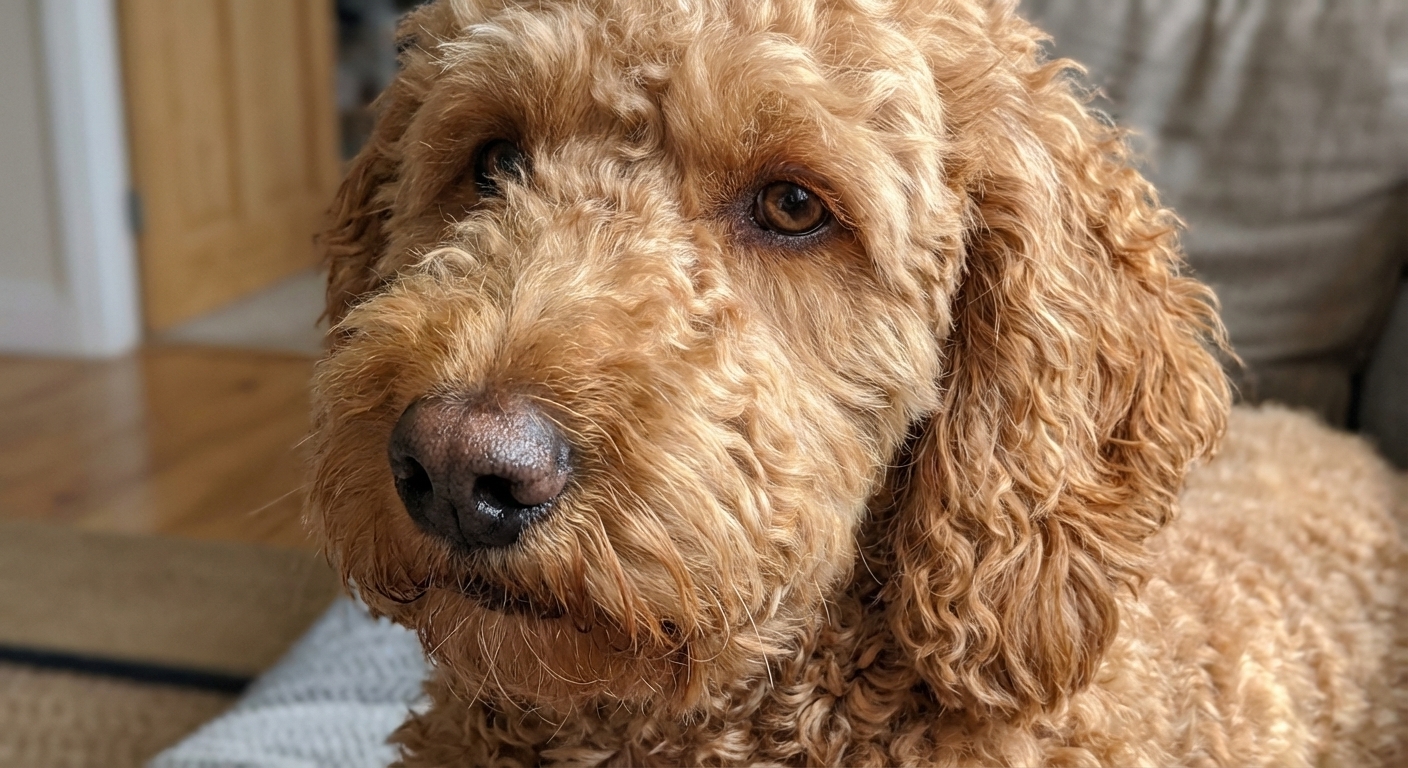
One surprise for first-time doodle owners is that the coat you see at 8 weeks is not always the coat you live with at 12 to 18 months. Many puppies start with a softer, fluffier puppy coat and then shift toward a curlier, denser, or sometimes straighter adult coat. Colors can also lighten over time, especially in Poodle-heavy lines.
Why it matters: grooming needs, matting risk, and even how much a dog seems to bother someone with allergies can change as the adult coat comes in. Plan for flexibility and keep your grooming routine consistent from day one.
Temperament
Double Doodles often blend the best of Golden Retrievers, Labrador Retrievers, and Poodles: affectionate, social, and eager to learn. But each of those breeds also brings real needs you should plan for.
Common traits
- People-oriented: many bond closely with family and may dislike being alone for long periods
- Smart and trainable: Poodle intelligence plus retriever biddability often makes them quick learners
- Playful energy: these are sporting-breed roots, so plan for daily movement
- Mouthy puppy stage: retriever mixes commonly love to carry and chew things
Common challenges
- Jumping and excitement: common in adolescent doodles without consistent training
- Separation-related behaviors: barking, chewing, or anxiety if under-exercised or left alone too long
- Overstimulation: very social dogs can get busy-brained without calm routines
What helps most: early puppy socialization, reward-based training, and teaching calm skills (settle on a mat, polite greetings, impulse control games).
Exercise and enrichment
Most Double Doodles do best with a combination of physical exercise and brain work. A quick backyard potty break is rarely enough for these dogs long-term.
A realistic daily baseline for many
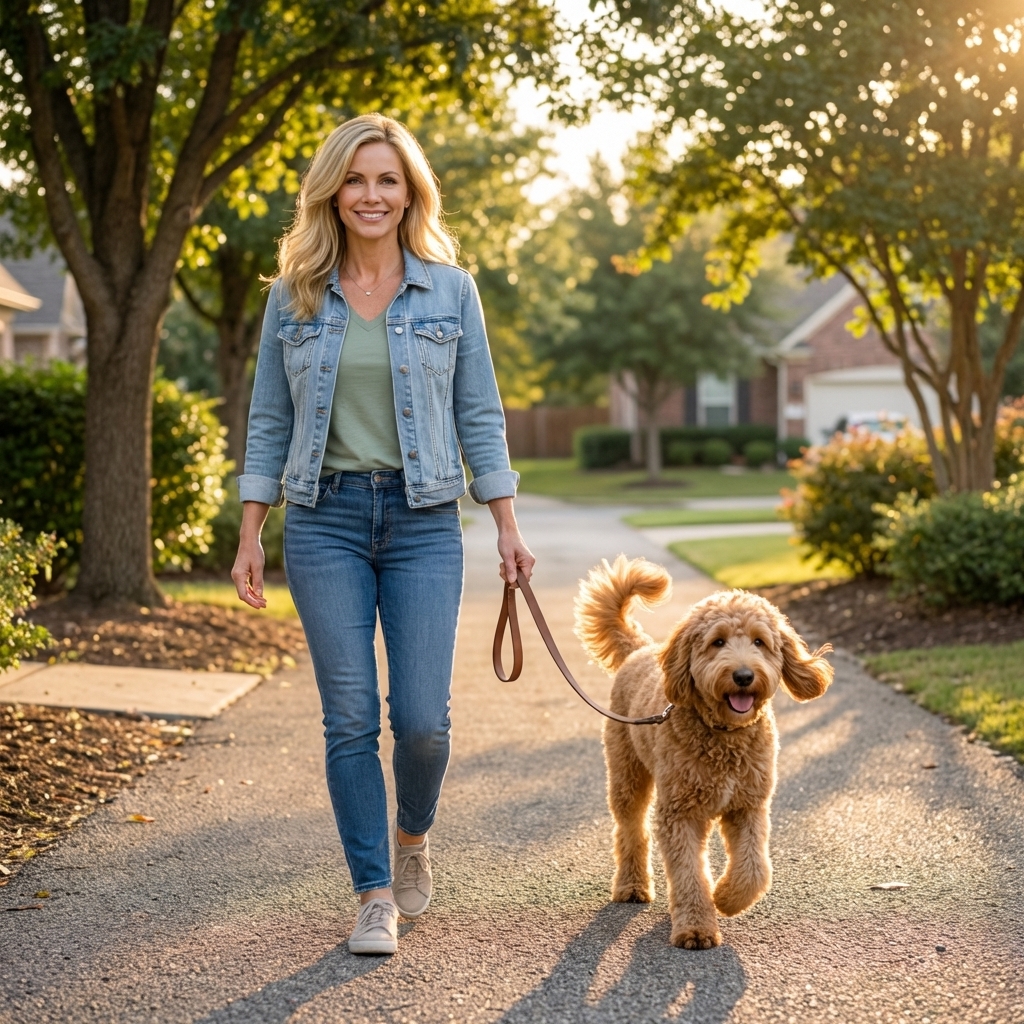
- Movement: 45 to 90 minutes total per day (walks, fetch, hikes, swimming, jogging after growth plates close)
- Mental work: 10 to 20 minutes (training, sniff games, puzzle feeders, hide-and-seek)
- Connection time: they tend to thrive when included in family routines
Puppies need shorter sessions and age-appropriate exercise to protect developing joints, especially if the dog is on the larger side.
Health and testing
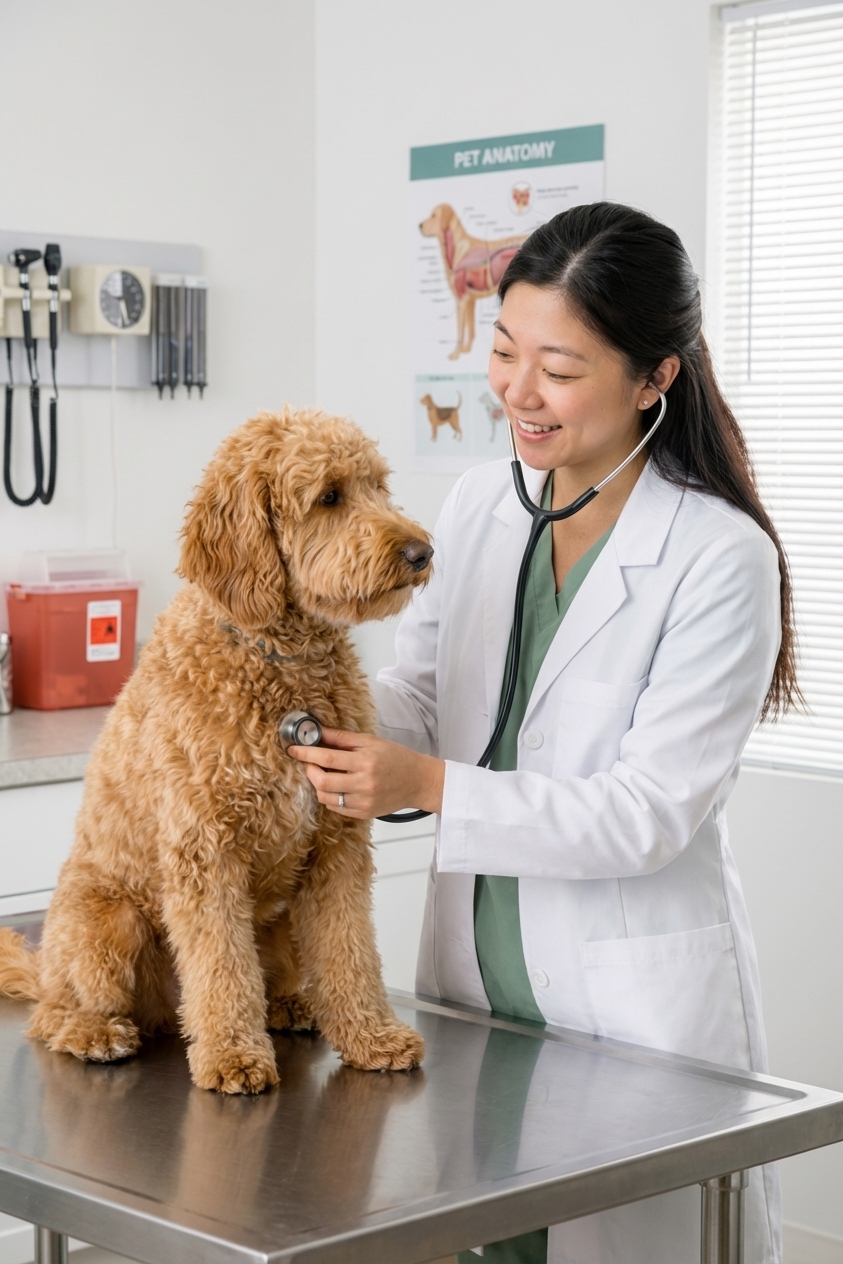
Mixing breeds does not automatically eliminate genetic disease risk. The healthiest outcomes come from breeders who do evidence-based health testing and can show you documentation.
Key concerns across Golden, Lab, and Poodle lines
- Hip and elbow dysplasia
- Eye disease (inherited cataracts, progressive retinal atrophy)
- Heart disease (varies by line, and is a bigger focus in some Golden lines)
- Allergies and ear infections (often related to coat, environment, and anatomy)
- Cruciate ligament tears (common in active, medium-to-large dogs)
Recommended testing (what to ask to see)
At minimum, reputable breeders commonly provide results from organizations like OFA (Orthopedic Foundation for Animals) or equivalent, plus breed-relevant DNA testing. Ask for:
- Hips: OFA or PennHIP results for both parents
- Elbows: OFA results for both parents
- Eyes: current CAER eye exam by a veterinary ophthalmologist
- Cardiac: OFA cardiac screening when indicated for the line (for example, some Golden lines prioritize screening for issues like subaortic stenosis)
- DNA panel: Poodle, Lab, and Golden relevant tests (the breeder should explain what was tested and why)
Practical tip: A screenshot is not enough. Ask for links to the public OFA database entries or the official report PDFs.
If a breeder tells you “our dogs are healthy so we do not test,” that is not reassuring. Health testing is how you prove it.
Note: This is general educational information and not a substitute for veterinary advice for your specific dog.
Grooming needs
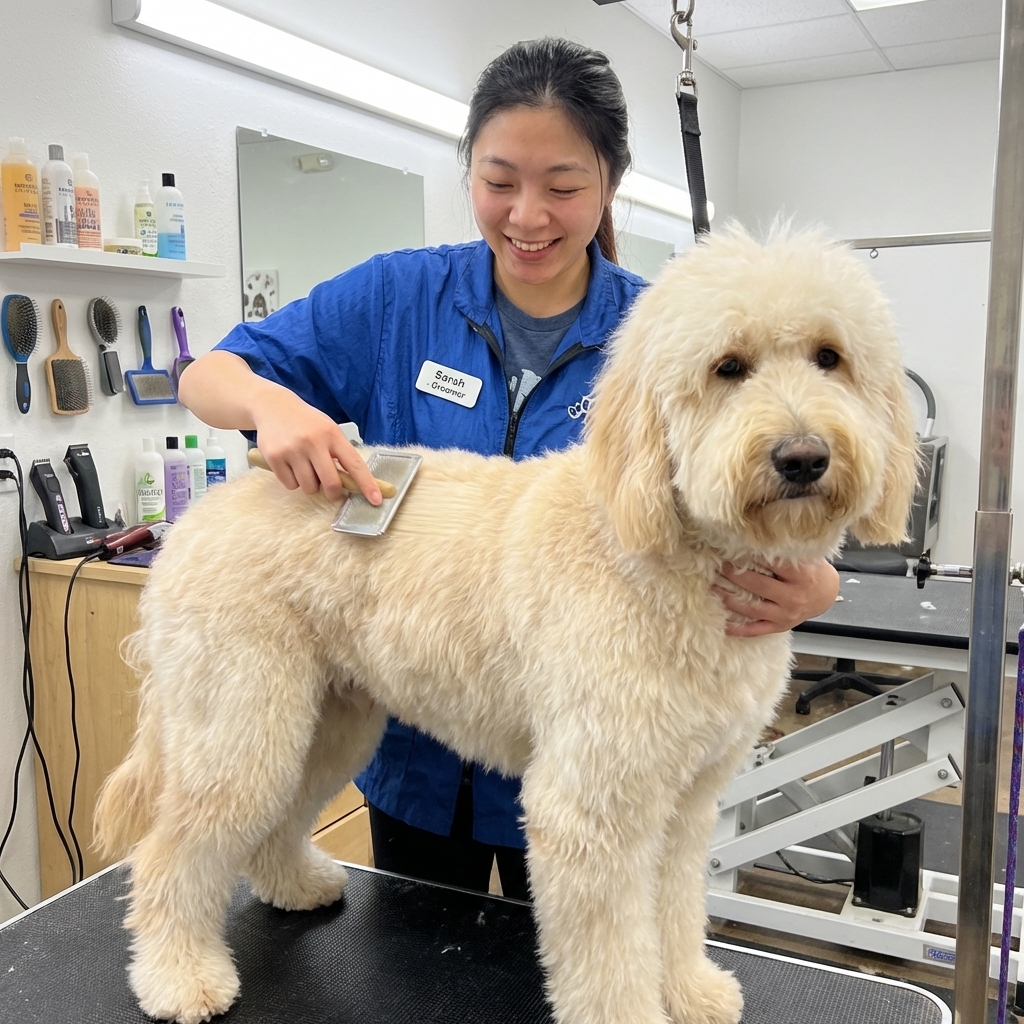
Double Doodles are often adorable because of their fluffy coats, but that coat comes with responsibility. Matting is not just cosmetic. Severe mats can bruise the skin, trap moisture, and make grooming painful.
Typical routine
- Brushing: 3 to 5 times per week for wavy coats, often daily for curly coats prone to matting
- Professional grooming: every 4 to 8 weeks is common depending on coat length and lifestyle
- Bathing: about every 3 to 6 weeks, using dog-safe shampoo and fully drying the coat
- Ears: check weekly, keep dry, and clean as directed by your vet if your dog is infection-prone
- Nails: trim every 2 to 4 weeks
- Teeth: brush several times a week, ideally daily
Ask for a practical trim
If you are new to doodle grooming, a shorter pet trim is often kinder and easier to maintain than a long teddy-bear coat.
Cost and planning
Double Doodles can be a bigger financial commitment than many first-time dog owners expect, mostly because of grooming and training needs. Typical costs to plan for include:
- Purchase or adoption fees: vary widely by region and breeder practices
- Professional grooming: ongoing every 4 to 8 weeks for many coats
- Training: at least one puppy class, often followed by a manners class
- Vet care: routine preventive care plus the reality that active medium-to-large dogs can get injuries
- Pet insurance: worth considering, especially if you want help budgeting for emergencies
Feeding and weight
Retriever mixes often love food, and it is easy for weight to creep up. Keeping your Double Doodle lean helps protect joints, reduces injury risk, and supports long-term health.
Simple habits that help: measure meals, go easy on high-calorie treats, use part of dinner as training rewards, and ask your veterinarian what a healthy body condition looks like for your dog.
Common questions
Are Double Doodles hypoallergenic?
No dog is truly hypoallergenic. Many Double Doodles are lower-shedding, which can help some allergy sufferers, but allergies are individual. Spend time with the breeder’s adult dogs and, if possible, dogs from the same pairing.
Are they calmer than a Goldendoodle or Labradoodle?
Sometimes, but not reliably. Temperament depends on genetics, early handling, training, and daily routine. Ask about the parents’ temperaments and request real-life videos, not just posed photos.
Do they make good family dogs?
Often yes. They are typically social and affectionate. That said, their enthusiasm can overwhelm toddlers, so supervision, training, and teaching polite greetings matter a lot.
Are they good with other dogs?
Many are. Early socialization and ongoing positive experiences help. A shy or reactive dog can happen in any mix, so prioritize stable temperament in the parents.
How long do Double Doodles live?
Many live around 10 to 15 years, depending on size, genetics, and overall health care. Larger, standard-type dogs tend toward the lower end of that range, while smaller dogs more often land toward the higher end.
Is this mix right for you?
A Double Doodle may be a great fit if you want a social, trainable dog and you are ready for the unglamorous parts too.
Often a good match
- You want an affectionate dog that enjoys being part of daily life
- You can commit to training and consistent routines
- You have time and budget for regular grooming
- You enjoy an active lifestyle or can provide daily exercise and enrichment
Think twice if
- You want a guaranteed non-shedding or allergy-safe dog
- You do not have time for grooming, training, and daily activity
- You need a very low-energy dog
Choosing a breeder or rescue
If you take only one thing from this page, let it be this: you are not just buying a puppy. You are buying a breeder’s decisions, priorities, and ethics.
Green flags
- Documented OFA or equivalent health testing
- Clear, consistent answers about coat types, size range, and temperament
- Puppies raised in the home with structured socialization
- A contract that includes return-to-breeder policies
- They ask you questions to make sure the match is right
Red flags
- No proof of health testing
- Many litters always available
- Guaranteeing “non-shedding” or “hypoallergenic”
- Unwilling to let you see where puppies are raised
And if you are open to adoption, doodle mixes do show up in rescues and shelters. Adult dogs can be easier to match for size, coat, and energy level because what you see is what you get.
The bottom line
A Double Doodle can be a joyful, loving, highly trainable companion, especially for families who want a social dog and are ready for the grooming and daily activity that comes with a doodle coat and sporting-dog energy.
If you choose a breeder who tests health properly, prioritize early training, and commit to coat care, you will be setting your Double Doodle up for the best possible life with you. And that is always the goal.