
From a dry honk to a wet cough, learn common causes of coughing in dogs, what to track at home, safe steps to reduce irritation, and urgent signs that need a...
Article
•
Designer Mixes
Dogs With Chronic Bronchitis Secrets Revealed

Shari Shidate
Designer Mixes contributor
If your dog has a chronic cough that just will not quit, you are not alone. In vet clinics, we see this a lot, especially in small breeds and older pups. Chronic bronchitis can sound scary, but the most helpful “secrets” are actually practical, everyday choices that reduce airway irritation and help your dog breathe easier.
Here is the evidence-based reality: canine chronic bronchitis is typically long-term inflammation of the lower airways. It is often managed, not “cured,” and the goal is fewer coughing fits, better exercise tolerance, and a happier day-to-day life.

What chronic bronchitis is
Many veterinarians define chronic bronchitis as a cough that lasts about 2 months or longer (often discussed as 2 to 3 months) and is linked to ongoing lower-airway inflammation rather than a short-lived infection. Many dogs have a dry, harsh cough or a gagging cough that can be worse with excitement, pulling on the leash, or after drinking.
It is also important to know what chronic bronchitis is not. A cough can come from heart disease, collapsing trachea, pneumonia, parasites, fungal disease, airway foreign material, laryngeal problems, or even cancer. Coughing after drinking, for example, can sometimes point more toward throat or tracheal issues than the lower airways. That is why a proper diagnosis matters, and why it is often a rule-out process.
Common signs you might notice
- Coughing most days, often worse at night or early morning
- Wheezing or noisy breathing
- Gagging, retching, or bringing up foamy mucus
- Exercise intolerance, your dog “tires out” faster
- Flare-ups triggered by smoke, perfumes, essential oils, dust, or weather changes
Practical secret: keep a simple cough log for 2 weeks. Note time of day, triggers (walks, excitement, meals), and whether it is dry or productive. This helps your vet choose the right diagnostics and medications.
Diagnosis owners miss
Many dogs are treated for “kennel cough” repeatedly when the real issue is chronic airway inflammation or a combination of problems (for example, chronic bronchitis plus collapsing trachea, or bronchitis plus early heart disease). If your dog has had multiple rounds of antibiotics with little improvement, it is time to ask for a deeper workup.
Tests your veterinarian may recommend
- Chest radiographs (X-rays) to look for bronchial pattern, heart size, and lung changes
- Heartworm testing and parasite screening when appropriate
- Airway sampling (like bronchoscopy, bronchoalveolar lavage, or a tracheal wash) in selected cases to identify infection, inflammation type, or unusual organisms
- Culture and sensitivity if infection is suspected, so antibiotics are targeted instead of guesswork
If you are in a cycle of “cough, meds, temporary relief, cough again,” a clear diagnosis is one of the biggest quality-of-life upgrades you can give your dog.

Secret #1: cleaner air, fewer triggers
Inflamed airways react to irritants the way sensitive skin reacts to harsh soap. You cannot always control pollen, but you can reduce indoor triggers in a big way. For many dogs, this can meaningfully reduce symptoms and sometimes reduce how much medication they need long term.
High-impact home changes
- Avoid smoke and strong airborne irritants as much as possible, including cigarettes, vaping, incense, fireplace smoke, and smoky candles
- Skip essential oil diffusers and strongly scented sprays. “Natural” can still be a potent airway irritant
- Use a HEPA air purifier in the room where your dog sleeps most
- Switch to unscented products for laundry and cleaning, and avoid plug-ins and air fresheners
- Control dust by wet-mopping floors and using a vacuum with a HEPA filter
- Watch humidity. Very dry air can be irritating. A clean, well-maintained humidifier can help some dogs, especially in winter
In my experience as a veterinary assistant, dogs often improve noticeably when irritants are reduced, even before we change prescriptions.
Secret #2: harnesses, not collars
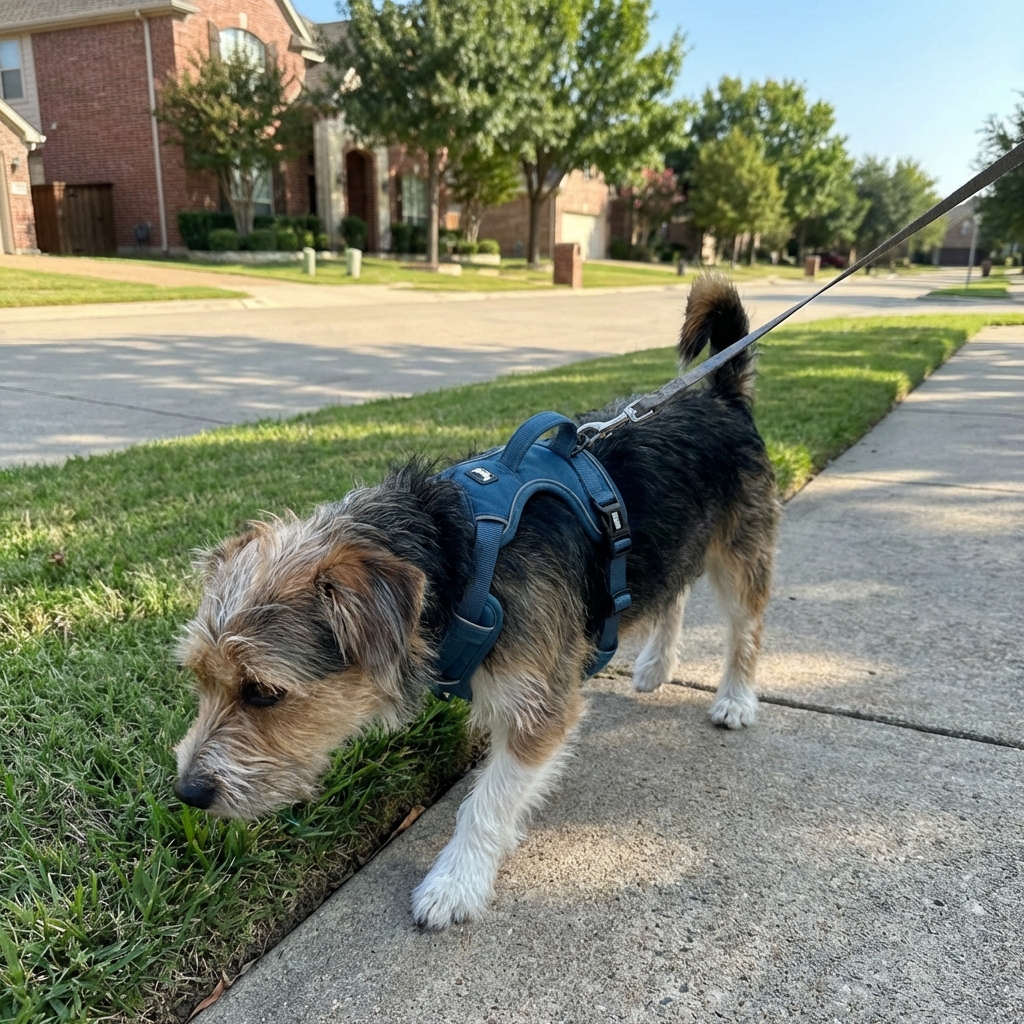
Pressure on the neck can trigger coughing, especially in dogs with sensitive airways or concurrent tracheal issues. For dogs with chronic bronchitis, a well-fitted front-clip harness is one of the simplest ways to reduce mechanical irritation during walks.
- Choose a harness that does not restrict shoulder movement
- Avoid tight straps around the throat area
- Pair it with loose-leash training to reduce pulling
Secret #3: healthy weight helps breathing
Extra weight increases the work of breathing and can worsen coughing. In the clinic, we often see coughing improve when a dog loses even a small amount of excess weight.
Actionable steps
- Ask your veterinarian for a target weight and calorie goal
- Measure meals with a real measuring cup or kitchen scale
- Use low-calorie rewards like tiny pieces of cooked lean meat or a few blueberries (if tolerated)
- Keep exercise gentle and consistent. Short, frequent walks are often better than one long one
If your dog coughs during activity, talk with your vet about adjusting intensity and timing, not just “pushing through.”
Secret #4: meds and delivery matter
Chronic bronchitis is commonly managed with a combination of medications tailored to your dog’s symptoms and test results. One helpful “secret” is that how a medication is delivered can matter almost as much as which medication you choose.
Common medication categories your vet may use
- Anti-inflammatories (often corticosteroids) to reduce airway swelling and mucus production
- Bronchodilators to open lower airways in dogs who wheeze or struggle with airflow
- Antitussives (cough suppressants) in select cases, typically when the cough is non-productive and disruptive
- Antibiotics only when there is evidence of infection, not automatically
Ask about inhaled therapy
For some dogs, inhaled medications (using a veterinary spacer and mask) can reduce systemic side effects compared with long-term oral steroids. Technique and cooperation matter, and there is an equipment cost, so it is not the right fit for every family. Still, it is worth discussing if your dog needs ongoing control.
Safety note: never start, stop, or change steroid doses on your own. Steroids require veterinary guidance and proper tapering when needed.
Secret #5: nutrition, safely
There is no single “bronchitis diet,” but nutrition supports immune function, healthy body weight, and recovery from flare-ups. The goal is a consistent, balanced plan your dog thrives on, not a perfect trend diet.
Helpful food strategies
- Prioritize a lean body condition by choosing appropriate calories and protein
- Discuss omega-3s (EPA and DHA) with your veterinarian. Omega-3s can support healthy inflammation responses in many dogs
- Be careful with toppers and homemade add-ons. As a general rule, unbalanced extras should stay at 10 percent or less of daily calories to avoid throwing off nutrient balance (including the calcium to phosphorus ratio)
If you want to add fresh or homemade foods, start slowly and keep portions modest. If you want to go beyond that 10 percent, ask your veterinarian about a fully balanced recipe or a referral to a board-certified veterinary nutritionist.
Secret #6: prevent flare-ups
Dogs with chronic bronchitis often live with a “baseline cough” plus occasional flare-ups. Your mission is to reduce those flare-ups and catch them early.
Common triggers
- Smoke, fragrance, cleaning sprays, essential oils
- Cold air, sudden weather changes
- High pollen days
- Excitement and barking
- Respiratory infections
Practical prevention
- Walk at quieter times when air quality is better
- Use a scarf or light jacket in cold weather for small dogs
- Keep vaccinations current as recommended by your vet
- Avoid dog-dense indoor spaces if your dog is prone to infection

Monitoring between visits
Chronic bronchitis is a long game. Monitoring helps you and your vet adjust the plan before a small flare-up becomes a big one.
Simple things to track
- Resting respiratory rate when your dog is asleep or truly resting
- Cough trend using your log (frequency, triggers, dry versus productive)
- Energy and exercise tolerance
Common medication side effects to report
- Steroids: increased thirst and urination, increased appetite, panting, restlessness
- Bronchodilators: restlessness, faster heart rate, jitteriness
If something feels off after a medication change, call your veterinarian. Many plans just need a dose adjustment or a different approach, not a full restart.
When coughing is an emergency
Most chronic bronchitis coughing is uncomfortable, not immediately life-threatening. But some signs mean you should seek urgent veterinary care.
Go in right away if you notice
- Labored breathing, open-mouth breathing, or your dog cannot settle
- Blue, gray, or very pale gums
- Fainting, collapse, or extreme weakness
- Coughing up blood
- Sudden severe change in breathing after exertion or heat exposure
If you are ever unsure, call your veterinarian or an emergency clinic and describe what you are seeing.
A simple plan for this week
Chronic bronchitis management works best when you combine medical care with lifestyle support. Here is a starter checklist many families find doable.
- Day 1: Switch to a harness and remove scented sprays, plug-ins, and diffusers from your home routine
- Day 2: Start a cough log with triggers and frequency
- Day 3: Add a HEPA purifier near your dog’s sleeping spot
- Day 4: Measure meals and treats for accurate calories (and keep any toppers to 10 percent or less)
- Day 5: Schedule or recheck your veterinary visit to review diagnostics and medication plan
- Day 6 to 7: Create a flare-up plan with your vet, including what to watch for and when to call
You do not have to do everything at once. Small changes, consistently applied, often make the biggest difference.