Worried about a vomiting dog? Learn when vomiting is an emergency, how to offer small sips safely, and the best bland foods (chicken/rice, turkey, pumpkin, e...
Article
•
Designer Mixes
Dogs Vomiting Yellow: Step-by-Step Answers

Shari Shidate
Designer Mixes contributor
Seeing yellow vomit from your dog can be alarming, especially when it seems to come out of nowhere. In many cases, that yellow color is bile, a digestive fluid made by the liver and stored in the gallbladder. Bile is normally released into the small intestine to help digest fats, but when a dog vomits on an empty stomach, bile is often what you see.
As a veterinary assistant in Frisco, Texas, I want you to feel supported and informed. Let’s walk through what yellow vomit can mean, what to do right now, and when it’s time to call your veterinarian.
Quick note: This article is for general education and is not a substitute for veterinary care. If your dog seems unwell or you are unsure, it is always okay to call your vet.
What yellow vomit usually is
Most of the time, yellow vomit is bile. Dogs may bring up:
- Yellow, foamy liquid (classic bile vomit)
- Yellow liquid with a little mucus
- Yellow vomit with bits of grass (some dogs eat grass when nauseated)
One important clue is timing. If it happens early morning, late night, or long after the last meal, an empty stomach is often involved.
Also, double-check that it is truly vomiting (heaving, nausea, abdominal effort) and not regurgitation (food or liquid coming up passively, often shortly after eating). Regurgitation can point to different problems, so mention the difference to your vet.
Step 1: Check for emergency red flags
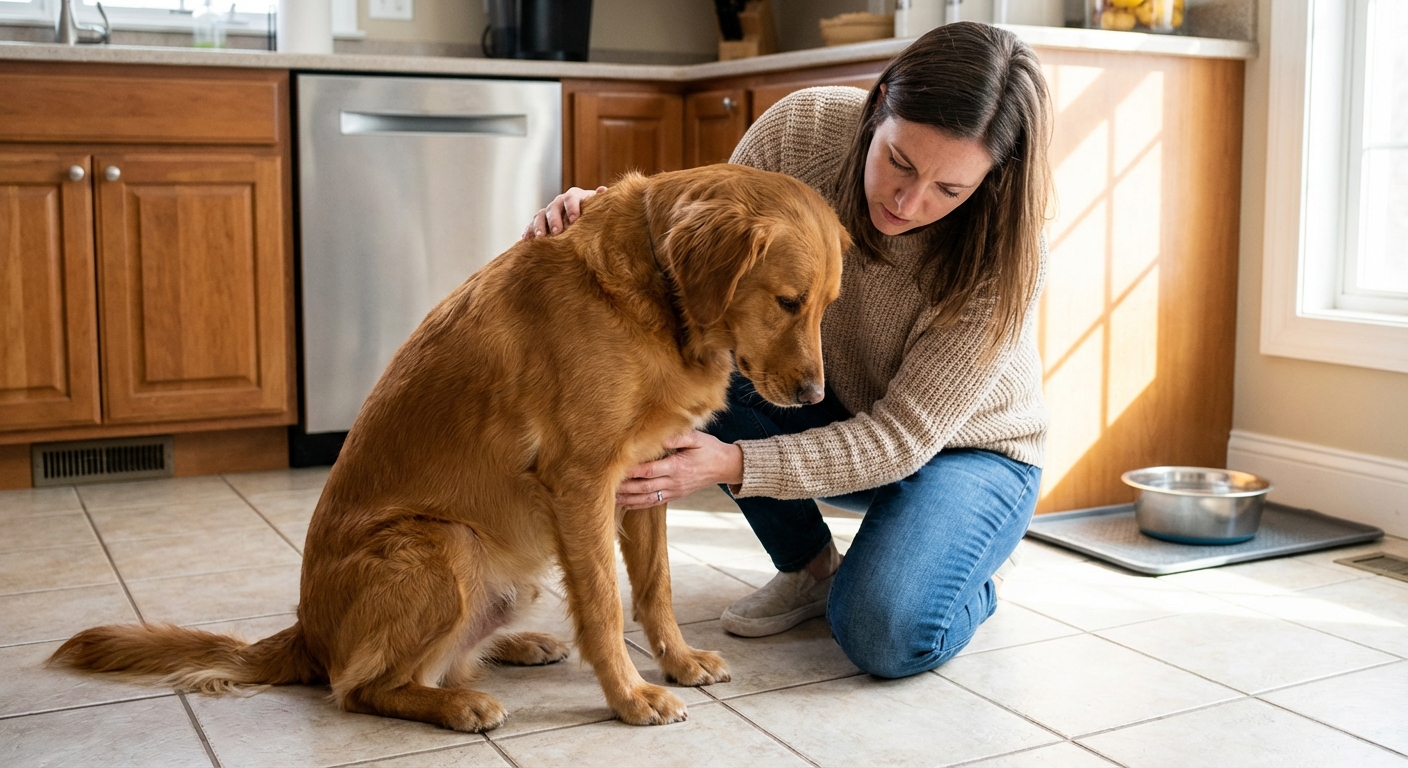
Yellow vomit can be mild, but it can also be the first sign of something serious. Seek urgent veterinary care today if you notice any of the following:
- Repeated vomiting or vomiting that will not stop
- Blood in vomit (red streaks or dark coffee-ground material)
- A swollen, tight abdomen, or unproductive retching (trying to vomit with little coming up)
- Severe lethargy, collapse, pale gums, or trouble breathing
- Signs of significant pain (crying, praying position, guarding the belly)
- Known or possible toxin exposure (xylitol, medications, rodent bait, chocolate, grapes or raisins, marijuana products)
- Possible foreign object ingestion (toys, socks, corn cobs, bones)
- Your dog is a puppy, senior, or has chronic disease (diabetes, kidney disease, Addison’s disease)
- Cannot keep water down
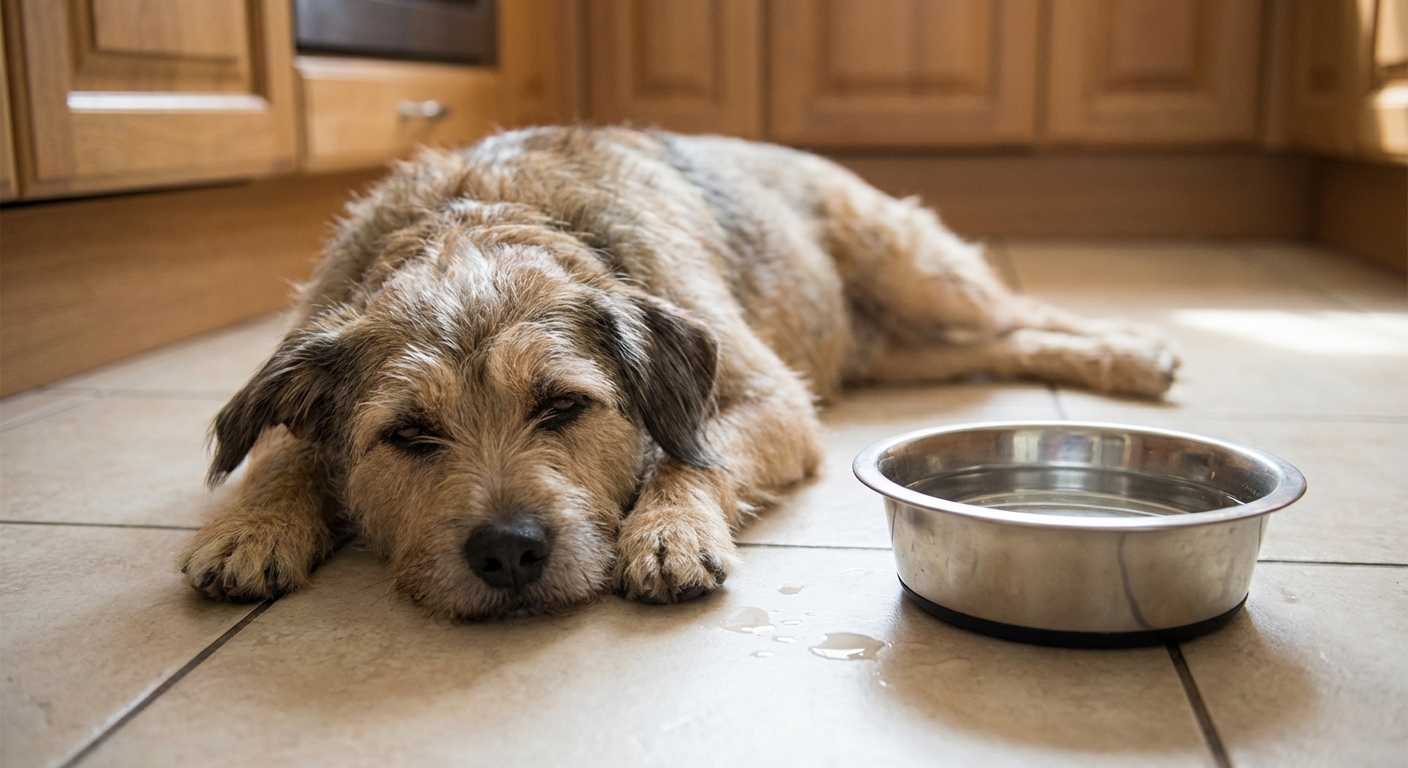
- Signs of dehydration (tacky or dry gums, sunken-looking eyes, weakness)
If any of these fit, it is safest to call your vet or an emergency clinic right away.
Step 2: Note the pattern and details
These quick details help your veterinarian narrow down causes fast:
- How many times has your dog vomited?
- When did it happen (early morning, after eating, after exercise)?
- What did it look like (foam, liquid, food, grass, worms, blood)?
- Any diarrhea (especially black/tarry or bloody)?
- Appetite and water intake normal or decreased?
- Any new treats, chews, people food, table scraps, or trash access?
- Any recent diet change, boarding, stress, or travel?
If you can safely do so, take a clear photo of the vomit for your vet. If your clinic wants a sample, they will tell you what to bring and how to store it.
Step 3: Is this likely “empty stomach” bile vomiting?
A common, non-emergency pattern is sometimes called bilious vomiting syndrome. It is a descriptive syndrome, not a final diagnosis, and persistent cases should be checked by your veterinarian to rule out underlying causes.
It tends to happen when bile irritates an empty stomach, often:
- Early morning before breakfast
- Late at night if dinner was early
- In dogs who go a long time between meals
These dogs often act fairly normal afterward, and the vomit is usually small volume, yellow, and foamy.
But if it becomes frequent, or your dog seems unwell, we treat that as a medical issue that deserves a vet call. “Common” does not mean “ignore it.”
Step 4: What you can do at home (single mild episode)
If your dog vomited once, seems bright and alert, has no red flags, and is acting mostly normal, these gentle steps are often reasonable while you monitor.
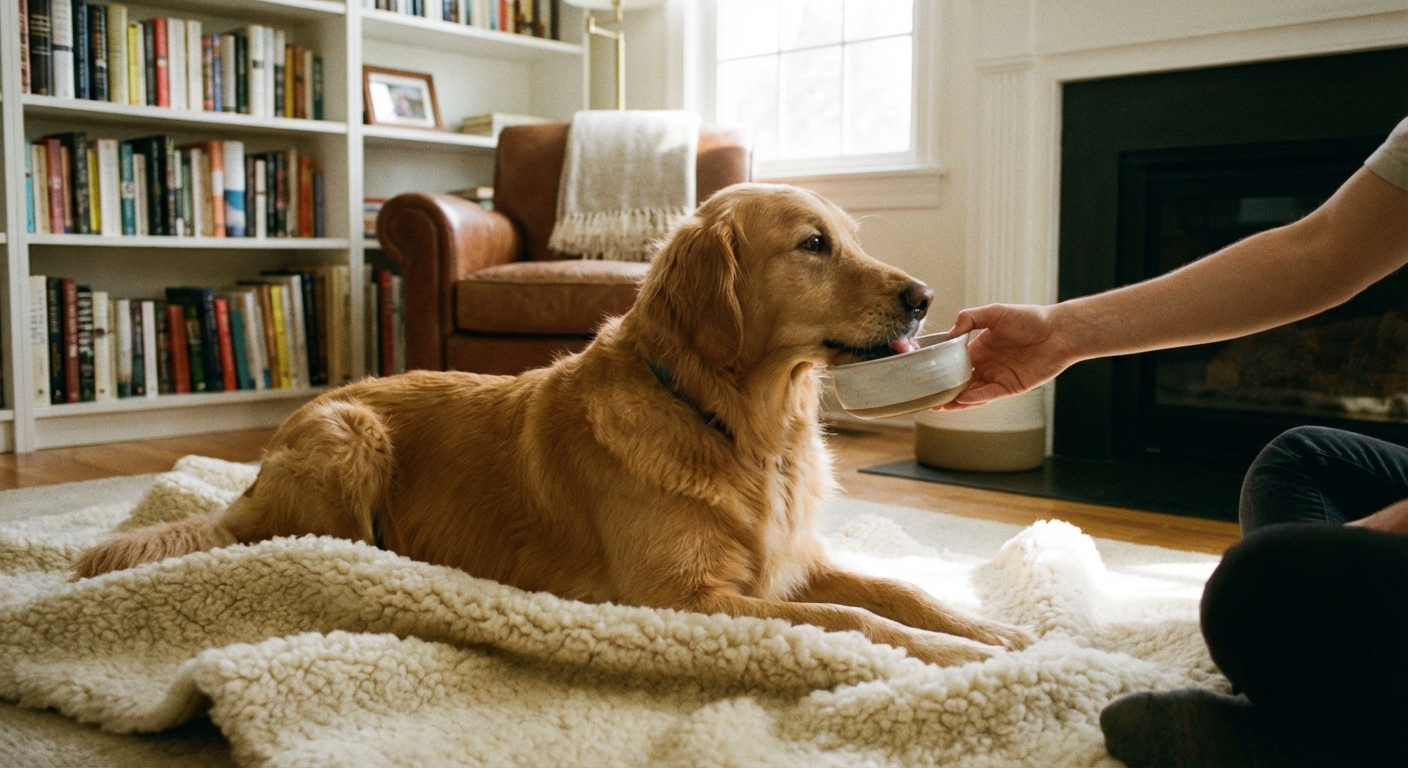
Offer a stomach break, then small amounts of water
- Some vets recommend waiting about 30 to 60 minutes after vomiting before offering water, especially if your dog is trying to gulp.
- Then offer small sips or a few ice chips at a time.
- Do not withhold water for long periods, particularly for puppies, small dogs, seniors, or dogs with medical conditions.
- If your dog cannot keep even small amounts of water down, stop and call your vet.
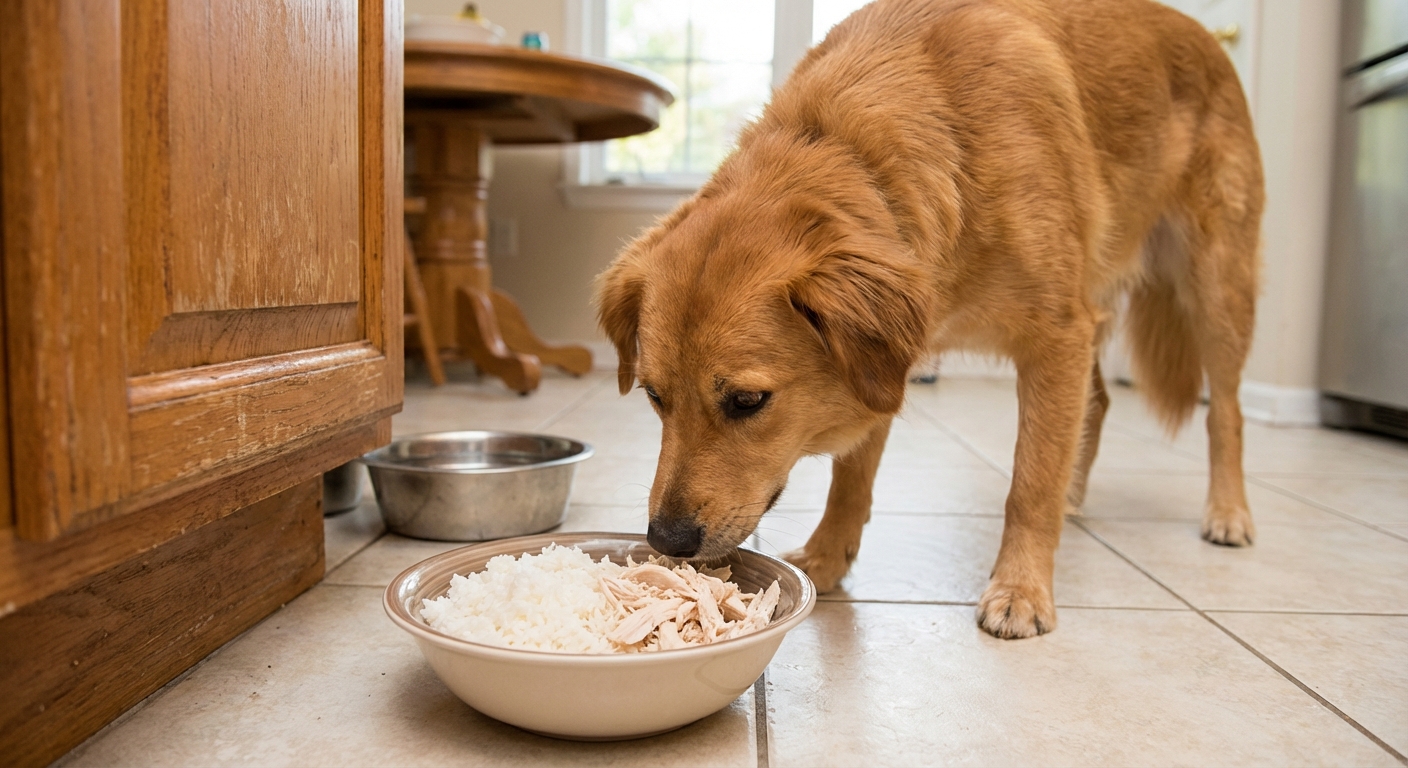
Feed a small, bland meal (if water stays down)
After water stays down, you can try a small bland meal. Common vet-approved bland options include:
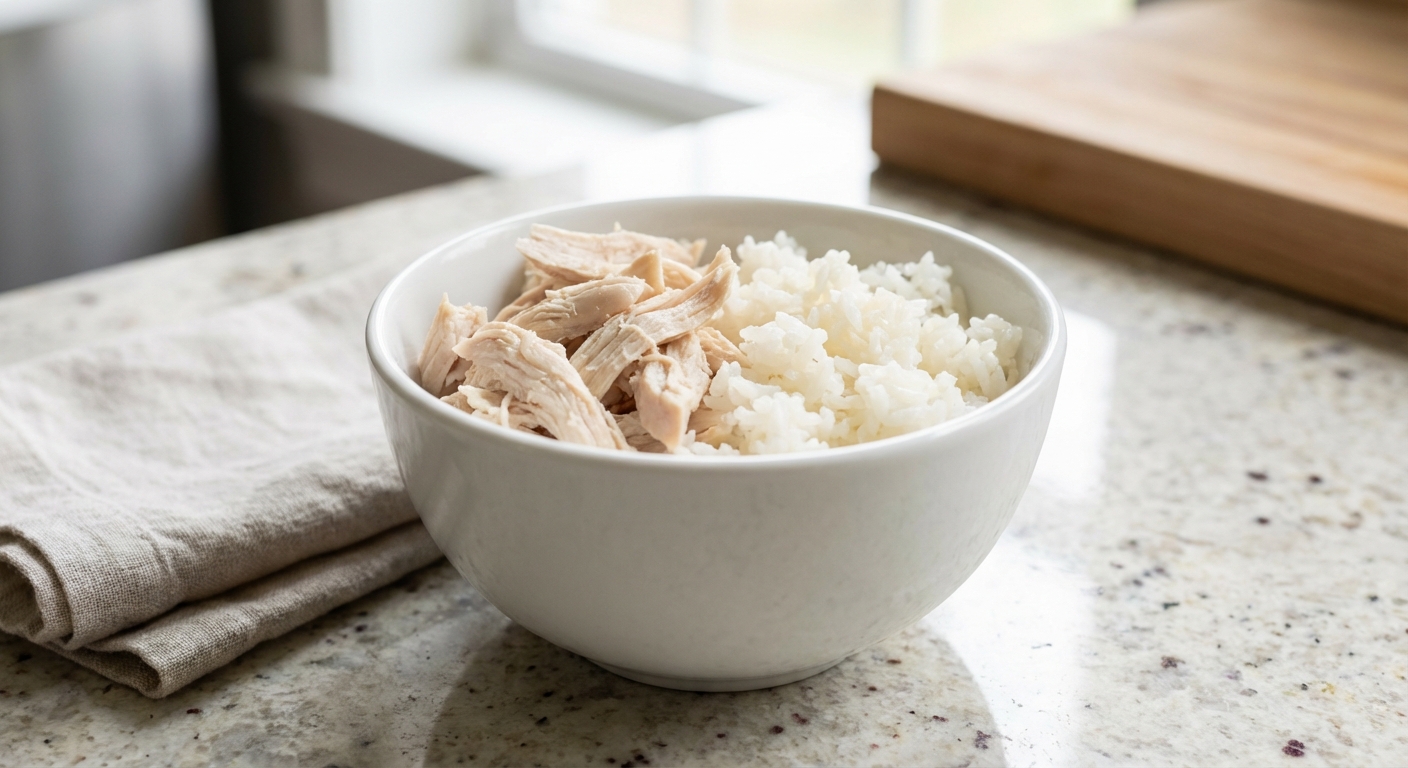
- Boiled skinless chicken breast with plain white rice
- Lean ground turkey (well-cooked and drained) with white rice
Give a small portion first, then repeat small meals every 6 to 8 hours if tolerated. Avoid fatty foods, rich treats, and sudden diet experiments during an upset stomach.
Add a bedtime snack if the pattern is morning bile vomit
If yellow vomit tends to happen first thing in the morning, a small bedtime snack can help shorten the overnight fasting time. Many dogs do better on:
- 3 to 4 smaller meals per day, or
- Normal meals plus a small bedtime snack
If that simple change solves it, great. If it keeps happening more than occasionally, talk with your veterinarian to rule out underlying causes.
If your dog is still a little off after a mild episode, or symptoms linger beyond 24 hours even without red flags, it is worth calling your vet for guidance.
Common causes of yellow vomiting
Yellow vomit is a symptom, not a diagnosis. Here are some possibilities your vet may consider based on your dog’s age, history, and exam:
- Dietary indiscretion: trash, fatty leftovers, greasy food
- Gastroenteritis: inflammation of the stomach and intestines
- Parasites: especially in puppies or newly adopted dogs
- Pancreatitis: often linked to fatty foods; can be painful and serious
- Food intolerance or food allergy: may come with chronic GI signs
- Foreign body: toy, sock, bone, corn cob, etc.
- Reflux or nausea from medications: some meds irritate the stomach
- Liver or gallbladder disease: may show appetite changes, lethargy, weight loss
- Addison’s disease: can cause intermittent vomiting and weakness
Color alone is not diagnostic. Yellow is often bile, but it can also be influenced by stomach contents or food dyes. If vomit looks bright green, is persistent, or your dog seems painful or unwell, contact your vet promptly.
Step 5: When to call your vet (even if not an emergency)
Call your veterinarian within 24 hours if:
- Vomiting happens again after the first episode
- Your dog is not interested in food for more than one meal
- There is diarrhea along with vomiting
- Your dog seems unusually tired, clingy, restless, or uncomfortable
- Yellow vomiting happens more than once a week
Your vet may recommend an exam, fecal test, bloodwork, X-rays, or an ultrasound depending on the history and physical findings.
Step 6: How to help prevent episodes
Not every case is preventable, but these evidence-based habits often reduce episodes in otherwise healthy dogs:
- Consistent meal schedule, avoiding long fasting periods
- Smaller, more frequent meals for sensitive stomachs
- Slow diet transitions over 7 to 10 days
- Limit fatty treats and people food
- Prevent trash access with secure lids and baby gates
- Use safe chews and supervise dogs that swallow toys
If your dog’s stomach is frequently upset, ask your veterinarian about a long-term plan. Sometimes it is as simple as meal timing. Other times we need to address reflux, inflammation, parasites, or a more specific condition.

Home remedies and over-the-counter meds
Please do not give human anti-nausea, anti-diarrheal, or pain medications without veterinary guidance. Some are dangerous for dogs, and others can mask symptoms we need to see clearly.
When in doubt, call your vet. A two-minute phone conversation can save you hours of worry and help your dog feel better faster.
Bottom line
Yellow vomit is often bile and commonly happens when a dog’s stomach is empty. Many dogs improve with smaller meals and a bedtime snack. But frequent vomiting, behavior changes, pain, dehydration, or any red flags deserve prompt veterinary attention. You know your dog best. If something feels off, trust that instinct and reach out for help.