Vet-informed guide to a short-term bland diet for dogs: chicken and rice 1:2 ratio, daily cup ranges by weight, how many meals to split into, and red flags t...
Article
•
Designer Mixes
Dog’s Stomach Is Gurgling: Causes and Solutions

Shari Shidate
Designer Mixes contributor
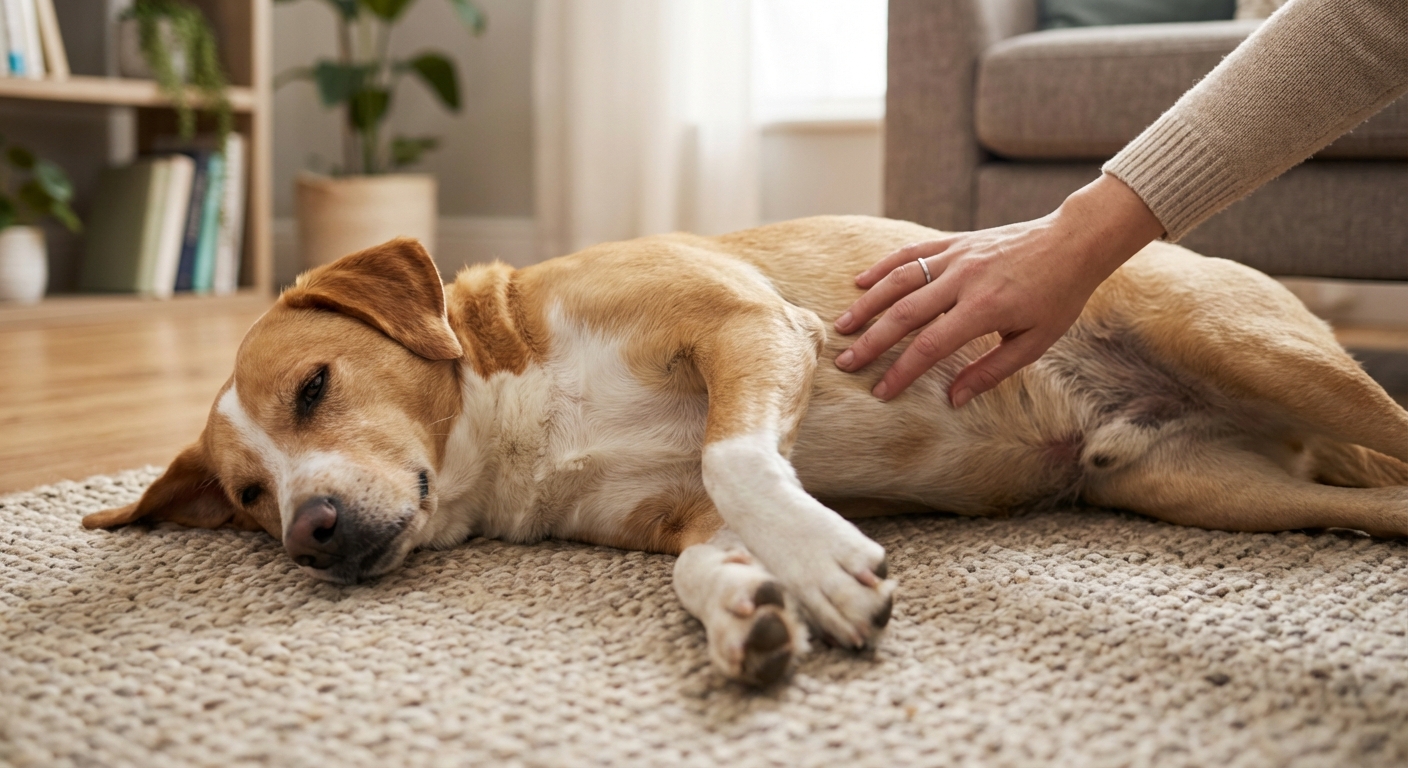
That loud gurgling sound coming from your dog’s belly can be surprising, especially when it happens in a quiet room. Veterinarians call these noises borborygmi, which is a medical term for the rumbling you can hear when gas and fluid move through the stomach and intestines.
Most of the time, a gurgly tummy is harmless and short-lived. But sometimes it’s your dog’s way of saying, “Hey, something’s not sitting right.” Let’s walk through what it can mean, what you can do at home, and when it’s time to call your vet.
What the gurgling actually is
Your dog’s stomach and intestines are constantly moving food along, mixing it with digestive juices, and pushing gas through. That movement creates sound. Some dogs are naturally louder than others, and you might hear more noise when:
- They’re hungry and the GI tract is moving while empty.
- They just ate, especially if they ate fast and swallowed air.
- They’re stressed (stress can affect gut motility).
- They had a sudden diet change or a new treat.
What matters most is the whole picture including appetite, energy level, vomiting, diarrhea, and belly pain. It also matters how long it lasts. If the gurgling persists more than 24 to 48 hours, keeps coming back, or comes with other symptoms, it’s worth a call to your vet.
Common causes of a gurgling dog stomach
1) Normal digestion or an empty stomach
If your dog is acting normal, eating normally, and the sounds come and go, it may simply be digestion. Some dogs also get loud tummy noises when their stomach is empty, similar to “hunger rumbles” in people.
2) Eating too fast or swallowing air
Fast eaters can gulp air (aerophagia), which increases gas and leads to louder gut sounds. This is especially common in enthusiastic eaters, multi-pet homes where dogs feel rushed, and some flat-faced (brachycephalic) breeds.
3) Mild GI upset
A mild upset stomach can happen from:
- New foods or rich treats
- Table scraps
- Greasy foods
- Sudden diet transitions
You might also see soft stool, extra gas, lip-licking, or grass-eating.
4) Food intolerance or sensitivity
Some dogs have sensitive digestion with certain proteins, dairy, or high-fat foods. In these cases, gurgling may come with recurring loose stool or frequent gas. Some dogs with adverse food reactions may also have skin or ear symptoms like itchiness or recurrent ear infections, but those signs can have many other causes too.
5) Parasites or infectious enteritis
Giardia and other intestinal parasites can cause noisy guts, diarrhea, mucus in stool, or weight loss. Dogs can also develop infectious enteritis (bacterial or viral), and the symptoms can look similar. Puppies and dogs who visit dog parks or daycare can be higher-risk.
6) Inflammatory bowel disease (IBD) or chronic GI disease
If your dog has frequent stomach noises along with recurring vomiting, diarrhea, poor appetite, or weight changes, your vet may discuss chronic GI conditions that need a tailored plan.
7) Foreign material or partial obstruction
Dogs explore with their mouths. Socks, toys, corn cobs, bones, and other objects can irritate the GI tract or block it. Gurgling can occur, but it’s the other symptoms that raise red flags.
8) Medication side effects
Some medications can upset the stomach or change gut bacteria, which may lead to gurgling, nausea, vomiting, or diarrhea. Common examples include some antibiotics and anti-inflammatory pain medications (NSAIDs). If symptoms start soon after a new medication, call your vet before giving the next dose.
Trust your instincts: If your dog seems uncomfortable, can’t keep food down, or is acting “off,” it is always safer to check in with your veterinarian.
When gurgling is an emergency
Call your veterinarian or an emergency clinic right away if gurgling happens along with any of the following:
- Repeated vomiting or trying to vomit without producing anything (unproductive retching)
- Distended or tight abdomen, pacing, restlessness, or obvious pain
- Severe lethargy or collapse
- Bloody diarrhea or black, tarry stool
- Not eating, especially if your dog is a puppy, a toy breed, a senior, has diabetes or another chronic illness, or is also vomiting or acting painful
- Signs of dehydration like tacky gums, sunken eyes, or weakness
- Possible toxin exposure (xylitol, grapes or raisins, chocolate, rodent bait, medications)
Deep-chested breeds (like Great Danes, Standard Poodles, Dobermans, German Shepherds, and mixes) are at higher risk for bloat (GDV), which is life-threatening.
What you can do at home (safe, practical steps)
Step 1: Check the basics
- Is your dog bright and alert?
- Any vomiting or diarrhea?
- Eating and drinking normally?
- Any belly tenderness when you gently touch the abdomen?
If everything looks normal besides the noise, you can usually start with simple support.
Step 2: Offer smaller, more frequent meals
If hunger rumbles seem to be the issue, try splitting meals into 2 to 4 smaller feedings. A small bedtime snack can also help some dogs.
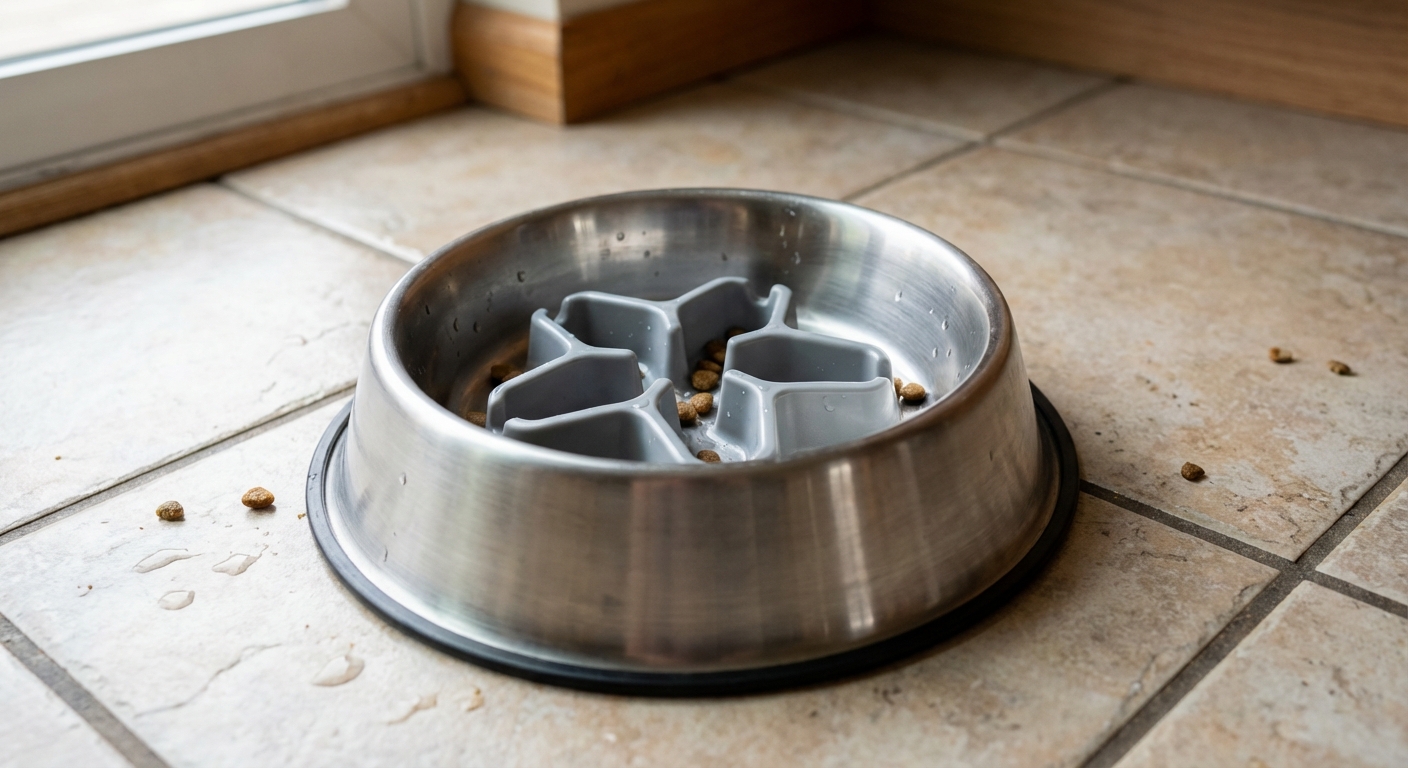
Step 3: Slow down fast eaters
- Use a slow-feeder bowl or puzzle feeder
- Spread food on a large tray or snuffle mat
- Feed pets separately to reduce competition
Step 4: Keep hydration steady
Fresh water should always be available. If your dog has mild stomach upset but is still drinking, you can also ask your vet if adding water to meals or offering a little low-sodium broth is appropriate for your dog. Important: many store-bought broths contain onion or garlic, which are toxic to dogs. Only use broth that is confirmed onion-free and garlic-free.
Step 5: Keep treats simple for a few days
If you suspect a food-related tummy upset, press pause on new treats, chews, and “extras.” The goal is to let the gut calm down.
Step 6: Consider a vet-approved probiotic
Probiotics can support a healthier gut environment, especially after dietary changes or stress. Choose products made for dogs, and if your dog is immunocompromised or very ill, check with your veterinarian first.
Step 7: Avoid common at-home medication mistakes
Do not give human stomach medications unless your veterinarian tells you to. Some can be dangerous or inappropriate depending on your dog’s size, symptoms, and medical history. This includes products like Pepto-Bismol, Imodium, and many antacids.
Should you try a bland diet?
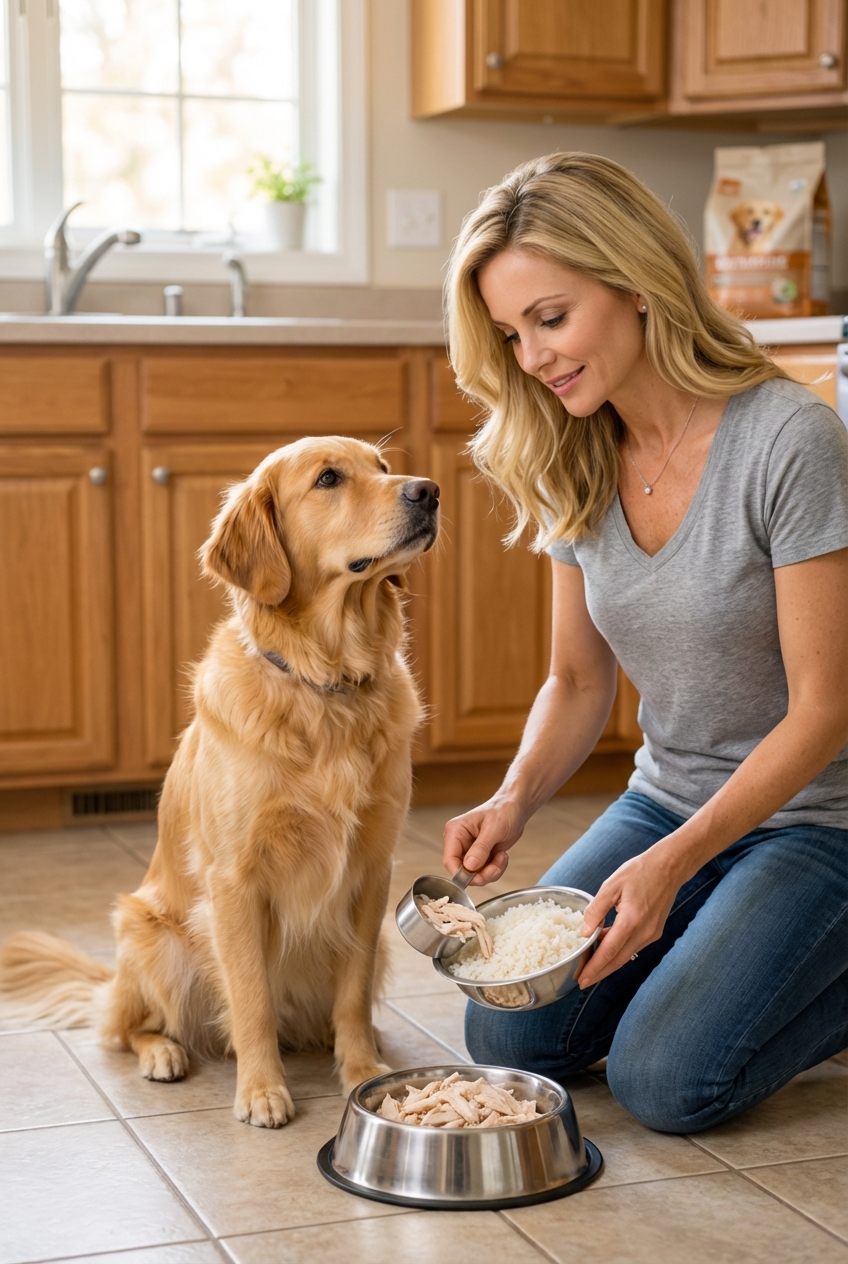
A short-term bland diet is sometimes recommended for mild GI upset, but it is not the right move for every dog. Dogs with pancreatitis, a history of pancreatitis, chronic disease, or other medical conditions need individualized guidance.
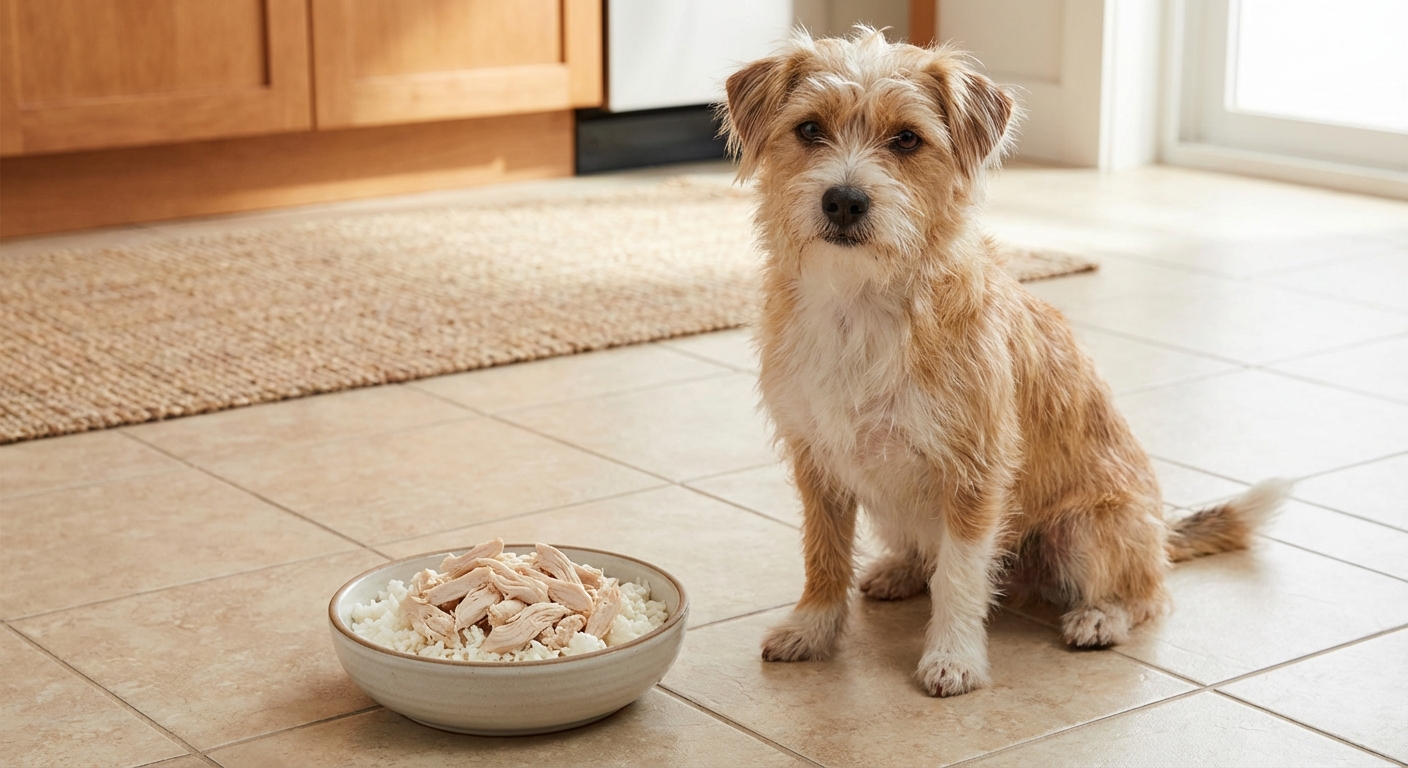
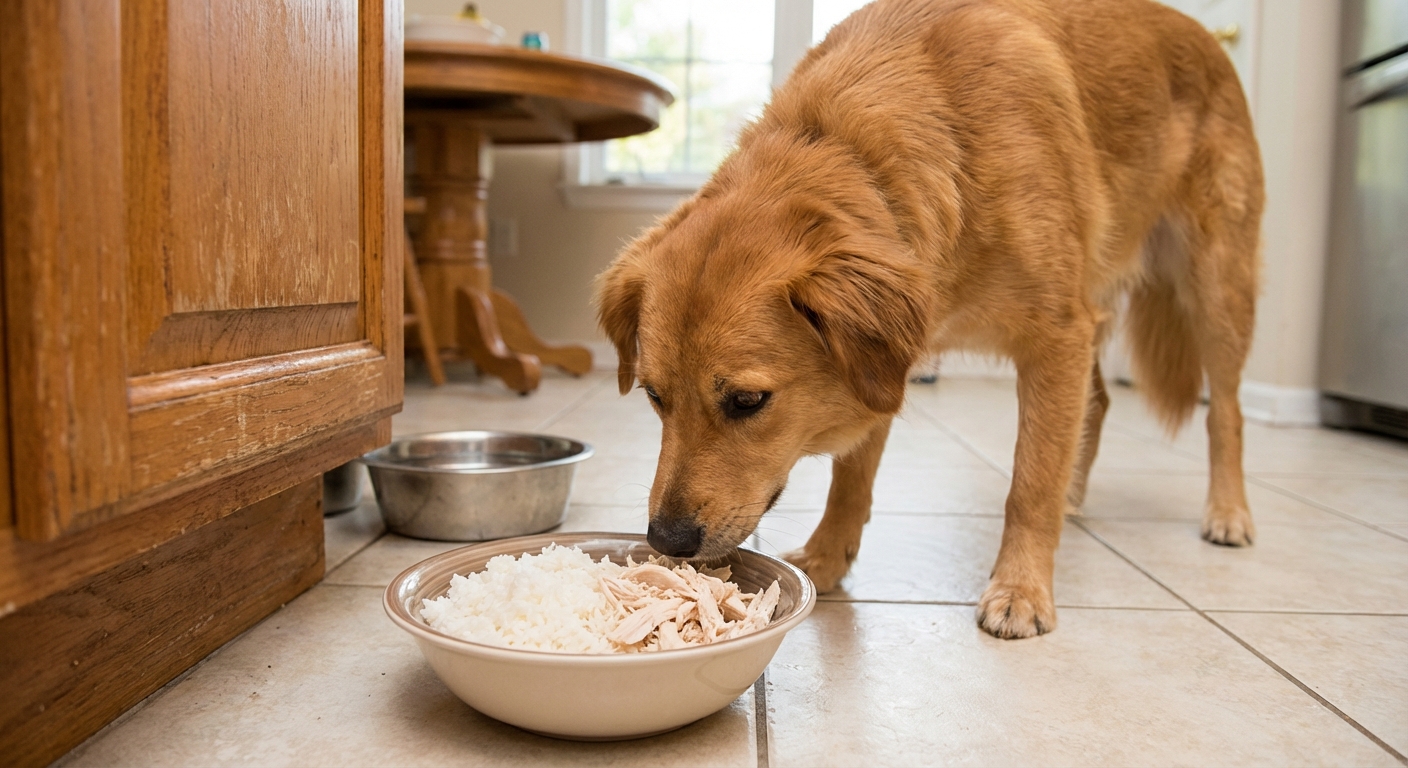
If your veterinarian recommends it, a classic bland option is plain cooked chicken breast (no skin, no seasoning) and white rice in small portions for a day or two. Avoid fatty cuts, skin, butter, oils, and rich add-ins. The key is slow transitions, because sudden changes can worsen gurgling and loose stool. Remember that chicken and rice is not complete and balanced, so it should be short-term only.
If your dog is not clearly improving within 24 to 48 hours, or symptoms worsen at any point, stop home care and call your vet.
If your dog’s stomach noises are frequent, talk with your vet about a longer-term plan. Depending on the situation, that may include a veterinary therapeutic GI diet or a vet-formulated home-cooked diet. For long-term home cooking, it is safest to work with your veterinarian and, when possible, a board-certified veterinary nutritionist.
How to prevent future gurgly belly episodes
- Transition foods slowly over 7 to 10 days when possible.
- Limit fatty leftovers and rich treats.
- Use food puzzles or slow-feeders for dogs who inhale meals.
- Keep trash and chew hazards secured to prevent foreign body problems.
- Stay current on fecal testing and parasite prevention, especially for social dogs.
- Track patterns: what your dog ate, stress events, stool quality, and timing of symptoms.
One of the most helpful things you can do is keep a simple note on your phone: “What did my dog eat today and how was the poop?” It sounds basic, but it gives your vet real clues.
Questions your vet may ask
If you end up calling the clinic, here’s what helps us help you faster:
- When did the gurgling start?
- Any vomiting, diarrhea, straining, or gas?
- Is your dog eating, drinking, and acting normal?
- Any diet changes, new treats, table scraps, or chews?
- Any chance they ate a toy, sock, bone, or trash?
- Are they on parasite prevention?
- Any recent boarding, daycare, or dog park visits?
- Any new medications or supplements?
The bottom line
A gurgling stomach is often just digestion doing its job. But when it comes with vomiting, diarrhea, pain, bloating, lethargy, or appetite changes, it can signal something more serious.
When in doubt, go with the safest option and call your veterinarian. You know your dog best, and you are never “overreacting” by asking questions when your pup’s belly is trying to tell you something.