Make meals more tempting and nutritious with simple dog food toppers: bone broth, cooked eggs, sardines, pumpkin, and steamed veggies—plus portions, storag...
Article
•
Designer Mixes
Dogs and Pumpkin

Shari Shidate
Designer Mixes contributor
Pumpkin is one of those simple foods that can be genuinely useful for many dogs. As a veterinary assistant here in Frisco, Texas, I have seen pumpkin help with everything from occasional diarrhea to finicky appetites. The key is using the right kind of pumpkin, in the right amount, and knowing when it is not the right fit.
Quick note: This is general education and not a substitute for veterinary care. If your dog seems very ill, is in pain, or symptoms are not improving, call your veterinarian.
This guide walks you through how to use pumpkin safely, what benefits are realistic, and how to make it part of your dog’s routine without upsetting their stomach.
Why pumpkin can help dogs
Plain pumpkin puree is mostly water with fiber, plus small amounts of vitamins and minerals. The big star is fiber, which can support digestion in two different ways:
- Diarrhea: Soluble fiber can absorb water in the intestines and help firm stool.
- Constipation: Fiber can add bulk and encourage movement through the gut, especially when your dog is well hydrated.
Pumpkin also adds flavor and moisture to meals, which can help dogs that need a little encouragement to eat or dogs on dry kibble who could benefit from extra hydration.
Realistic expectations: Pumpkin is not a cure for parasites, infections, pancreatitis, foreign body obstructions, or chronic inflammatory bowel disease. Think of it as a gentle, food-based tool for mild, occasional digestive bumps.
Best pumpkin to buy
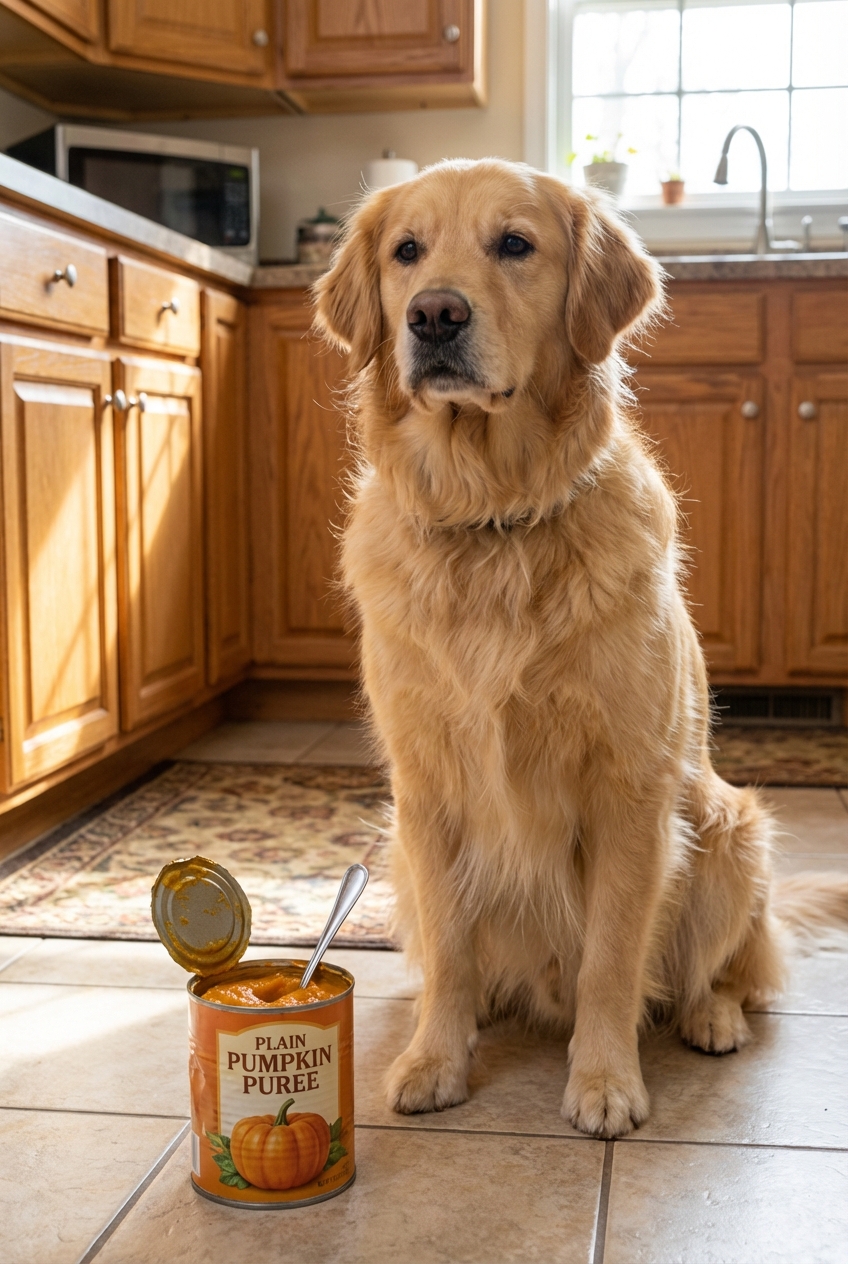
Use plain pumpkin puree
Choose 100% pumpkin (canned or cooked and pureed at home). The ingredient list should be pumpkin only.
Avoid pumpkin pie filling
Pumpkin pie filling often contains sugar and spices. Some spice blends may not agree with dogs. Too much sugar can also worsen diarrhea and is not supportive of long-term health.
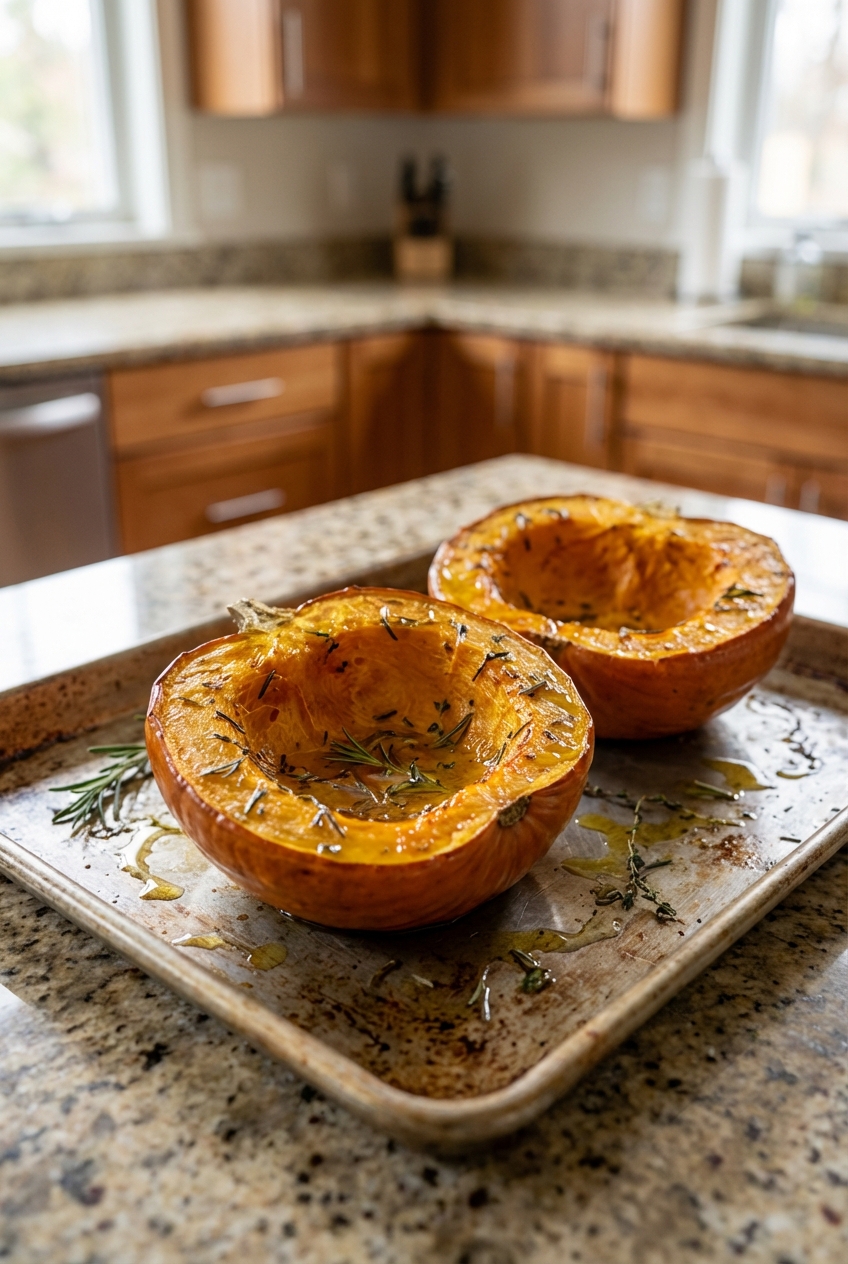
Fresh pumpkin is fine if prepared correctly
If you want to use fresh pumpkin:
- Use a cooking pumpkin (often labeled sugar pumpkin), not the stringy carving type.
- Roast or steam until soft.
- Remove the rind and seeds.
- Mash or puree to a smooth texture.
How to introduce pumpkin
Even though pumpkin is considered gentle, it is still a diet change. If your dog is prone to gas or a sensitive stomach, start smaller than the amounts below for the first day or two.
- Mix it into food rather than feeding a plain spoonful.
- Increase gradually as long as stool stays normal and your dog feels good.
- Stop and call your veterinarian if you see vomiting, worsening diarrhea, significant belly discomfort, or lethargy.
How much pumpkin to give a dog
There is no single perfect dose for every dog, but these are commonly recommended starting amounts used in practice for otherwise healthy dogs.
Starter amounts
- Small dogs (under 20 lb): 1 to 2 teaspoons once daily
- Medium dogs (20 to 50 lb): 1 to 2 tablespoons once daily
- Large dogs (over 50 lb): 2 to 4 tablespoons once daily
If you are using pumpkin for diarrhea, start on the lower end. If stool improves and your dog is comfortable, you can stay there. More is not always better.
How often
For occasional digestive support, many families use pumpkin for 1 to 3 days. For dogs who do well with it, pumpkin can be used a few times per week as a topper, as long as it does not cause gas or soft stool.
Important: If your dog is on a complete and balanced diet, pumpkin should be a small add-on. Treats and toppers should generally stay under about 10% of daily calories unless your veterinarian recommends otherwise.
Pumpkin for diarrhea: step-by-step
For mild, short-term diarrhea in an otherwise bright, eating, drinking dog, pumpkin can be a helpful part of a simple plan.
Try this approach
- Confirm it is plain pumpkin puree.
- Start small using the starter amounts above.
- Mix into a bland meal (for example, boiled chicken and white rice) if your veterinarian has recommended bland feeding.
- Provide fresh water and monitor hydration.
- Reassess in 24 hours. If stool is improving, continue up to 2 to 3 days.
When diarrhea is not a pumpkin problem
Call your veterinarian promptly if you see:
- Blood in the stool or black, tarry stool
- Vomiting, lethargy, refusal to eat
- Suspected toxin exposure
- Severe diarrhea, dehydration, or diarrhea lasting more than 24 to 48 hours
- Puppies, seniors, or dogs with chronic disease (they can decline quickly)
Pumpkin for constipation
If your dog is straining, passing small hard stools, or not stooling as usual, pumpkin may help. Constipation can also be a sign of pain, dehydration, intestinal blockage, or other medical issues. If your dog is repeatedly straining, seems uncomfortable, or cannot pass stool, treat it as urgent.
How to use pumpkin gently
- Use the starter amount once daily.
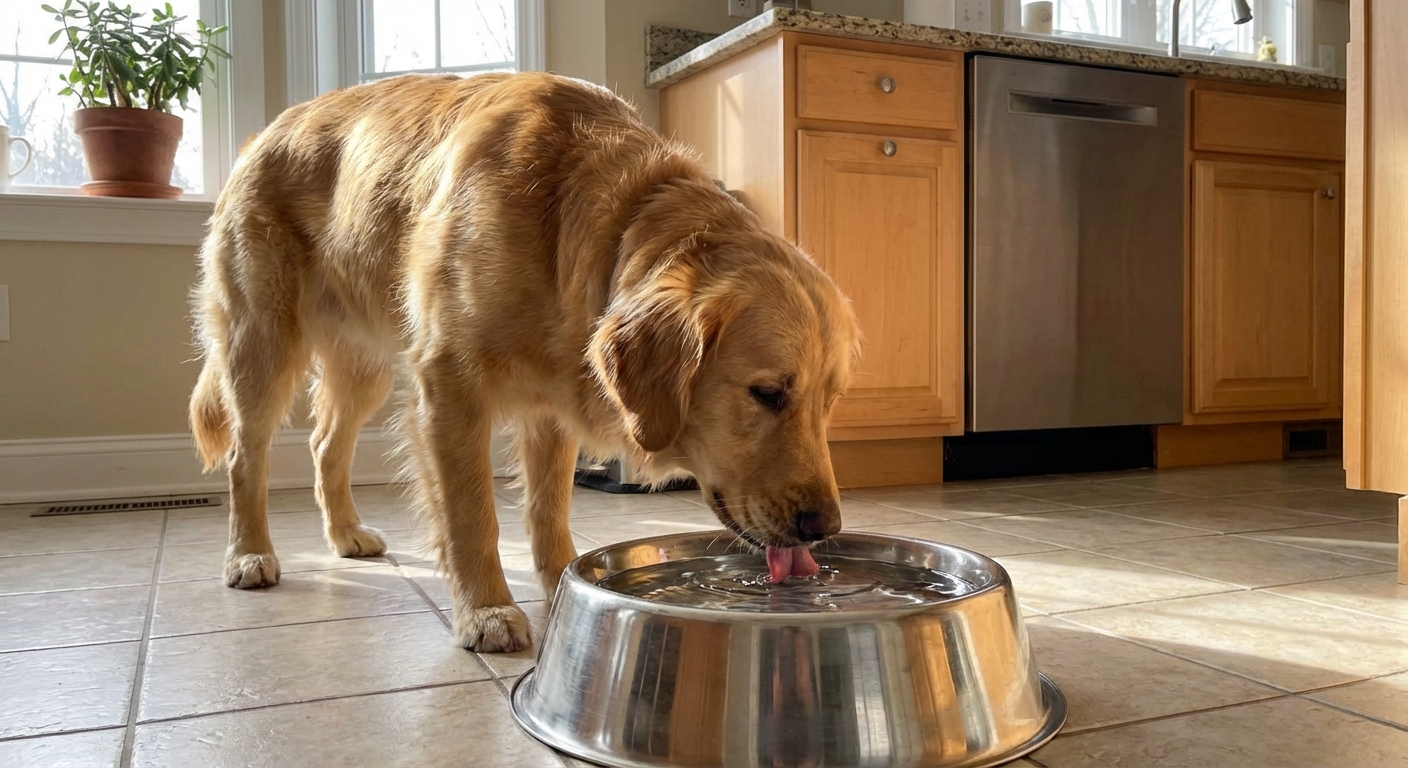
- Encourage water intake. Fiber works best when the body has enough fluid.
- Add a little warm water or low-sodium broth to food for extra moisture.
If there is no improvement within a day, or if your dog appears painful, call your veterinarian.
Pumpkin and anal glands
Some dogs have recurring anal gland fullness, scooting, or fishy odor. For certain dogs, adding fiber can help produce a bulkier stool that naturally expresses the anal glands during bowel movements.
That said, not all anal gland problems are fiber problems. Allergies, skin inflammation, soft stool from diet intolerance, and anatomy can all play a role. Pumpkin can be worth trying, but if scooting persists, your dog may need a veterinary exam and possibly a gland expression or a deeper plan.
Can puppies have pumpkin?
Yes, but go especially slow. Puppies have sensitive digestive systems, and diarrhea can become dangerous faster due to dehydration.
- Start with 1/4 to 1/2 teaspoon mixed into food.
- Do not use pumpkin to delay vet care for diarrhea that lasts more than a day, includes blood, or comes with vomiting or lethargy.
Dogs who should be cautious
Pumpkin is considered safe for most dogs, but caution is smart in these situations:
- Diabetes or weight management: Pumpkin is relatively low calorie, but it still adds carbs. Ask your veterinarian how it fits your plan.
- Food sensitivities: Some dogs get gassy or develop loose stool from added fiber.
- Kidney disease: Diet changes should be guided by your veterinarian.
- Pancreatitis history: Plain pumpkin is low fat, but any diet change can trigger sensitive dogs. Confirm with your veterinarian.
And of course, if your dog has sudden severe GI signs, do not rely on pumpkin alone.
Easy ways to serve pumpkin
Mix-ins and toppers
- Stir into your dog’s regular food
- Mix with plain cooked chicken or turkey
- Add a spoonful to a lick mat for slower eating
Frozen pumpkin treats
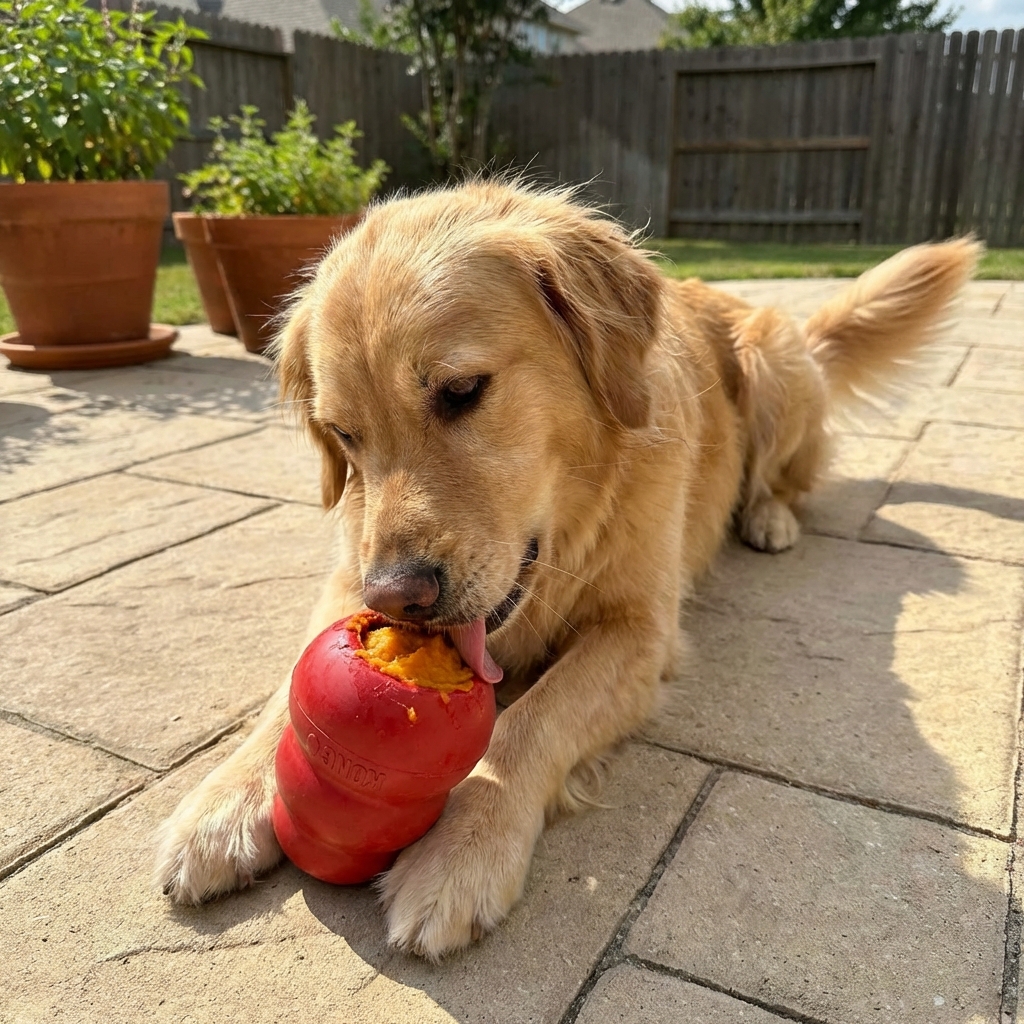
Freezing pumpkin can be soothing for some dogs, especially during hot Texas afternoons.
- Freeze small spoonfuls on parchment paper
- Or fill a Kong-style toy with pumpkin and freeze
Pumpkin storage tips
- Refrigerate after opening: Transfer canned pumpkin to a sealed container and refrigerate.
- Use within about a week: A common household guideline is 5 to 7 days.
- Freeze extras: Portion into an ice cube tray, freeze, then store cubes in a freezer bag for quick use.
Pumpkin seeds for dogs
Pumpkin seeds are optional and not necessary for digestive support. If you want to offer them, keep it simple and small.
From a safety standpoint, seeds can be offered only if they are:
- Plain (no salt, no seasoning)
- Ground or finely chopped to reduce choking risk and improve digestibility
- Given in small amounts to avoid stomach upset
Some dogs do fine with raw, plain pepitas, while others tolerate roasted better. Whole seeds can be a choking risk for some dogs and may be hard to digest. If you want to use seeds for a specific nutrition goal, ask your veterinarian for an appropriate amount for your dog’s size and health history.
Common mistakes
Mistake: Expecting pumpkin to fix everything
Pumpkin is helpful for mild, occasional issues. It cannot treat infections, parasites, toxins, or blockages.
Mistake: Using too much
Too much fiber can cause gas, cramping, and more diarrhea. Start low and adjust based on your dog’s stool and comfort.
Mistake: Using pie mix
Stick to 100% pumpkin.
Mistake: Using “pumpkin flavored” products
Skip pumpkin cookies, pumpkin syrups, and other flavored items. These can be loaded with sugar or salt and may include ingredients that are unsafe for dogs. If a product is sugar-free, double check that it does not contain xylitol.
A simple bland meal idea
If your veterinarian has cleared your dog for a bland diet for a short period, this simple combination can be gentle:
- Boiled, skinless chicken breast
- White rice (well cooked)
- 1 to 2 teaspoons to 1 tablespoon of plain pumpkin (based on size)
Serve small meals and reassess stool over the next 24 hours. Once things look normal, transition back to your dog’s regular balanced diet slowly to avoid another upset.
Quick FAQ
Can dogs eat pumpkin every day?
Many can, in small amounts. If it causes gas or softer stool, reduce frequency or stop.
Is pumpkin better than sweet potato?
They are both nutrient-rich. Pumpkin is often lower in calories and softer, and many dogs digest it easily. For digestive support, pumpkin is often the first choice because of its fiber and water content.
Should I use pumpkin powder?
Powdered pumpkin can be convenient, but it is more concentrated and varies by brand. Follow the label carefully and start with a smaller amount than you think you need.
Bottom line
Pumpkin is a simple, whole-food option that can support healthy digestion when used correctly. Choose plain pumpkin puree, start with a small amount, and watch your dog’s stool, energy, and appetite. If symptoms are severe, persistent, or paired with vomiting or lethargy, stop the home trial and call your veterinarian. Your dog’s gut is talking, and it is worth listening closely.