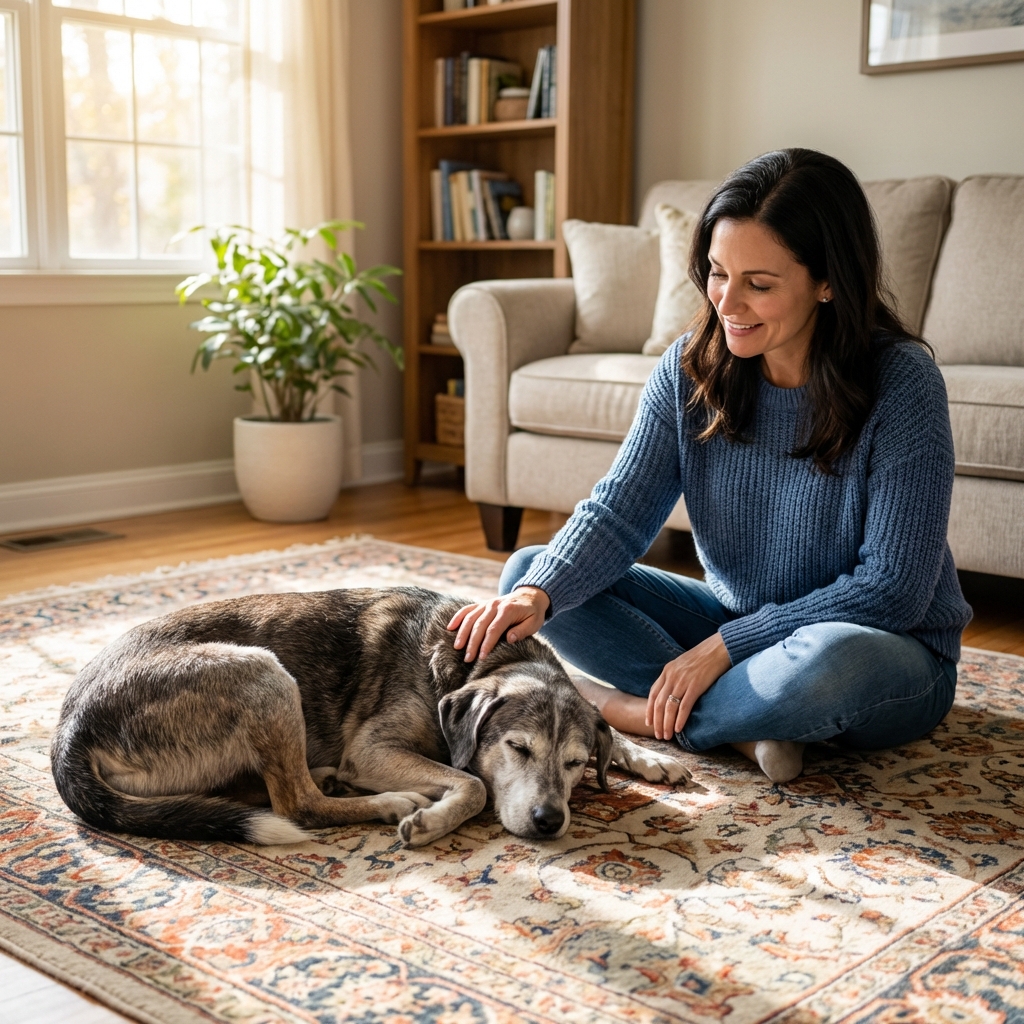
Understand canine cognitive dysfunction (CCD) in senior dogs. Learn DISHA signs, rule-outs to discuss with your vet, and home + routine changes to ease pacin...
Article
•
Designer Mixes
Dogs and Dementia: Care Guide

Shari Shidate
Designer Mixes contributor
When a dog starts seeming “off” in ways that do not match their age or personality, families often worry about pain, hearing loss, or even stubbornness. Sometimes, though, the changes point to something else: canine cognitive dysfunction (CCD), commonly called dog dementia.
As a veterinary assistant in Frisco, Texas, I have seen how stressful and emotional this can feel. The good news is that CCD is not something you have to face empty-handed. While we cannot cure it, we can support brain health, reduce anxiety, and make daily life safer and more comfortable for your dog.
Note: This article is for education and support. It is not a substitute for a veterinary exam or diagnosis.
What is canine cognitive dysfunction (CCD)?
CCD is an age-related brain condition that affects memory, learning, awareness, and sleep patterns. It is most common in senior dogs, and the risk increases with age.
Researchers believe CCD involves several changes in the brain over time, including oxidative stress, inflammation, reduced blood flow, and protein deposits that have been observed in some studies. CCD is a medical condition, not a behavior problem. Many dogs show subtle signs for months before anyone realizes what is happening.
Common signs of dog dementia
Veterinary teams often use a simple checklist to remember the most common CCD signs: DISHA. You might notice one or several.
- Disorientation: seeming lost in familiar rooms, getting stuck in corners, staring at walls, wandering without purpose
- Interactions change: less interest in family, clingier than usual, irritability, reduced greeting behaviors
- Sleep-wake cycle changes: pacing at night, waking you up, sleeping more during the day
- House soiling: accidents despite being housetrained, seeming unaware they need to go out
- Anxiety or activity changes: restlessness, repetitive pacing, new fears, decreased play, confusion with routines
Other possible clues include decreased response to their name, changes in appetite, and vocalizing for no clear reason, especially in the evening.
CCD or something else?
Many health issues can look like dementia, and it is so important not to guess. Conditions that can mimic or worsen cognitive signs include:
- Arthritis or pain (a painful dog may avoid interaction, pace, or have accidents)
- Vision or hearing loss
- Urinary tract infection, kidney disease, diabetes, Cushing’s disease
- Neurologic issues (brain tumor, stroke, seizures)
- Medication side effects
Your veterinarian may recommend a physical exam, a neurologic exam, bloodwork, urinalysis, a blood pressure check, and sometimes imaging. The goal is to treat what is treatable and identify whether CCD is the most likely explanation.
How CCD is treated
Think of CCD care as a support plan with a few pillars. Most dogs do best with a combination of environment changes, routine, brain-friendly nutrition, and in some cases medications or supplements.
1) Keep life predictable
Dogs with cognitive changes often feel safer when the day looks the same. Aim for consistency with:
- Meals at similar times
- Walks and potty breaks on a routine
- Sleeping space in the same location
- Furniture layout stable (avoid frequent rearranging)
2) Gentle enrichment
Mental engagement can support quality of life, but it needs to be simple and success-based.
- Short sniff walks in quiet areas
- Easy puzzle feeders or a snuffle mat
- Training refreshers using cues your dog already knows
- Food “treasure hunts” with 3 to 5 treats placed in easy spots
If your dog seems frustrated, scale it back. With CCD, a little bit done consistently is often better than big challenges.
3) Nutrition and brain support
Nutrition can be a helpful part of a CCD plan, but the strength of evidence varies by intervention and results are individual. In general, the most studied options tend to be complete commercial diets formulated for senior brain health.
- Omega-3s (especially DHA and EPA) may support brain function and help with inflammation. Ask your vet about a quality fish oil and correct dosing.
- Antioxidants may help support the body’s response to oxidative stress. Instead of relying on random add-ins, consider a veterinary-recommended diet that has a consistent formulation.
- Therapeutic senior diets designed for cognitive support may include targeted nutrient blends (for example, diets that incorporate antioxidants and other brain-support ingredients). Your veterinarian can help you choose a reputable option that fits your dog’s other health needs.
If you are interested in homemade food, go slowly and partner with your veterinarian or a veterinary nutritionist. In senior dogs, we want meals that are not only wholesome, but also correctly balanced for calcium, phosphorus, essential fatty acids, and calories.
Action step: If your dog is currently on a standard adult diet, ask your veterinarian whether a senior or cognitive-support diet makes sense for your dog’s health history.
4) Medications and supplements
Some dogs benefit from prescription medications to support cognition and reduce anxiety. One commonly used prescription option for CCD is selegiline, though it is not right for every dog and your vet will consider other medications and health conditions.
Veterinarians may also discuss supplements with varying levels of evidence, such as products that include SAMe, MCTs, or calming ingredients. Because supplements vary widely in quality and can interact with other medications, it is best to choose products with strong quality control and to get a personalized plan.
Home changes that help
Prevent getting stuck
- Use baby gates to block stairways and confusing areas
- Provide clear pathways between favorite rooms
- Add non-slip rugs or runners to reduce falls
Support bathroom success
- Increase potty breaks, especially after naps and meals
- Use a consistent door and route to the potty area
- Try washable pee pads in a predictable spot if needed
- Schedule a veterinary check for incontinence or urinary infection if accidents increase suddenly
Make nights easier
- Keep evenings calm and dimly lit
- Offer a final potty break right before bed
- Use a nightlight to reduce disorientation
- Ask your veterinarian about safe options if nighttime pacing or vocalizing is frequent
What not to do
- Do not punish accidents. CCD dogs are not being “bad,” and punishment often increases anxiety and confusion.
- Do not make abrupt routine changes when you can avoid it.
- Do not allow off-leash time in unfenced areas if your dog is disoriented or prone to wandering.
When to call the vet
CCD typically progresses gradually. Contact your veterinarian promptly if you see:
- Sudden severe disorientation, collapse, or extreme weakness
- Seizure activity
- Head tilt, circling, loss of balance, or weakness on one side
- Sudden blindness
- Loss of appetite lasting about a day, or sooner if your dog is small, diabetic, very young or very old, or if it comes with lethargy, vomiting, or diarrhea
- Any rapid behavior change, especially with signs of pain
What progression looks like
CCD is often slowly progressive, and the pace varies by dog. Some dogs stay stable for a long time with supportive care. Others gradually need more help with routines, nighttime rest, and house training.
A helpful approach is to track changes monthly. Write down sleep patterns, accidents, pacing episodes, appetite, and anxiety triggers. This gives your vet better data and helps you notice small wins, too.
It is also reasonable to plan regular rechecks. Many families do best with a follow-up after starting a new medication, supplement, or diet, and then ongoing senior checkups based on your veterinarian’s guidance.
Quality of life
One of the hardest parts of CCD is the emotional weight for the family. You are not failing your dog if they are changing. You are adapting to a medical condition.
If you feel unsure about your dog’s comfort, talk with your veterinarian about a quality-of-life assessment. It can bring clarity and help you make decisions rooted in compassion, not panic.
Takeaway
Dogs with dementia can still have good days, happy moments, and a loving connection with you. The goal is not perfection. It is safety, comfort, and predictable routines, plus medical support where appropriate.
If you suspect CCD, schedule a veterinary exam and bring notes about what you are seeing at home. With a thoughtful plan, many families find their dog settles more, sleeps better, and feels more secure.