Noticing blood in your dog’s poop? Learn the difference between bright red blood and black tarry stool, likely causes, safe home steps, and urgent signs to...
Article
•
Designer Mixes
Dog With Red Diarrhea: What It Means and What to Do

Shari Shidate
Designer Mixes contributor
Seeing red diarrhea in your dog can be scary, and I completely get why. As a veterinary assistant, I’ve learned that the best first step is to slow down and look at a few key details: how your dog looks and acts, how much red you’re seeing, and how long it has been going on. Some causes are mild and pass quickly. Others need urgent care.
This guide will help you understand what red diarrhea can mean, what you can safely do at home, and when it’s time to call your vet right away.
What “red diarrhea” usually means
Red diarrhea often means there is blood in the stool. However, stool can also look red from things like red treats, food dyes, or eating beets. Because true blood in the stool can signal anything from mild colitis to a serious illness, it’s safest to assume it may be blood until proven otherwise.
The color and appearance can offer clues about where bleeding might be coming from.
Bright red blood (fresh blood)
Bright red streaks, drops, or red-tinged mucus often point to bleeding in the lower intestinal tract, like the colon or rectum. This is commonly called hematochezia.
Darker, tarry stool
If stool looks black and sticky, that can mean digested blood from higher up in the GI tract (stomach or small intestine). This is called melena and it warrants prompt veterinary evaluation because it can reflect significant upper GI bleeding.
Red watery diarrhea with mucus
When diarrhea is watery and red with mucus, we often worry about colitis (inflammation of the colon). Colitis can happen from stress, diet changes, parasites, infections, or other triggers.
Common causes of red diarrhea in dogs
There are several possibilities. Some are simple and short-lived, and some are serious. Here are the most common causes we see in clinics.
- Dietary indiscretion: eating trash, greasy foods, spoiled food, or a sudden diet change.
- Stress colitis: boarding, travel, guests at home, storms, moving, or changes in routine.
- Parasites: like hookworms, whipworms, and giardia, especially in puppies or dogs with unknown prevention history.
- Infections: bacterial or viral infections can inflame the gut and cause bleeding.
- Food intolerance or allergy: some dogs react to certain proteins or ingredients.
- Acute hemorrhagic diarrhea syndrome (AHDS): can cause sudden, severe bloody diarrhea and dehydration. You may also hear the older term hemorrhagic gastroenteritis (HGE). Many clinics now use AHDS.
- Pancreatitis: more common after fatty foods, may include vomiting, belly pain, and lethargy.
- Foreign body: swallowing toys, socks, bones, or other objects can irritate or block the intestines.
- Toxins: rat poison anticoagulants, some medications, or toxic foods can cause internal bleeding.
- Anal gland or rectal irritation: can cause small amounts of bright red blood.
- Inflammatory bowel disease or other chronic GI diseases: typically recurring or ongoing symptoms.
When this is an emergency
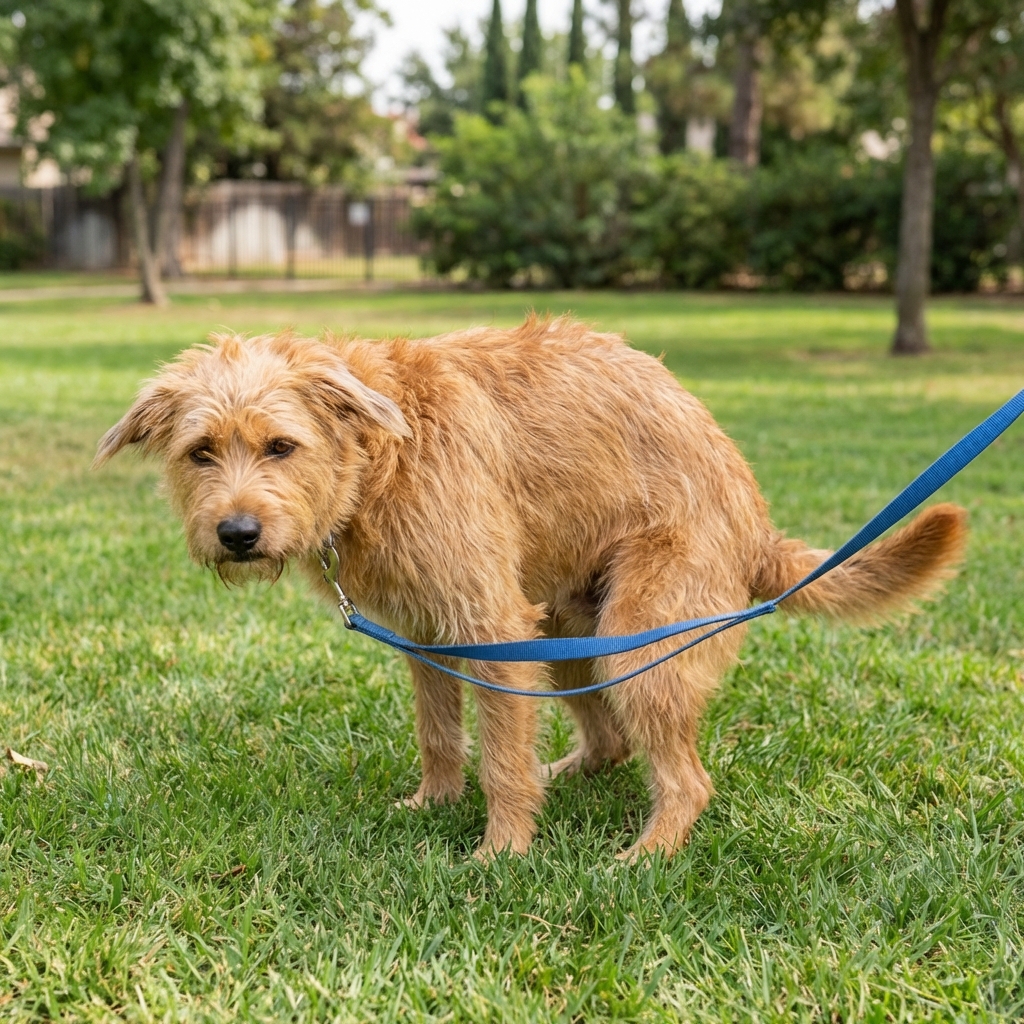
Here is a practical rule: blood plus a sick-looking dog is urgent. Please contact your veterinarian or an emergency hospital now if you notice any of the following:
- Large amounts of blood or the stool looks like raspberry jam (this can indicate significant bleeding and inflammation)
- Repeated vomiting or can’t keep water down
- Weakness, collapse, pale gums, or rapid breathing
- Severe lethargy or your dog seems “not themselves”
- Signs of dehydration: tacky or sticky gums, sunken eyes, skin tenting (skin stays raised when gently lifted), decreased urination
- Black, tarry stool
- Puppies, seniors, or dogs with chronic conditions (kidney disease, diabetes, Addison’s, etc.)
- Known toxin exposure (especially rodenticide) or possible foreign body ingestion
- Bloody diarrhea lasting more than 24 hours, even if your dog seems okay
If you are on the fence, call. A quick conversation can prevent a bad situation from escalating.
What you can do at home (only if your dog is acting normal)
If your dog has mild red-tinged diarrhea but is bright, alert, drinking, and not vomiting, you can often support the gut at home for a short window while you monitor closely. In general, you want to see clear improvement within 12 to 24 hours. If it worsens at any time, or does not improve within that window, contact your vet.
1) Pause rich foods
Skip treats, chews, table scraps, and new foods for now. The goal is to reduce irritation and let the intestinal lining calm down.
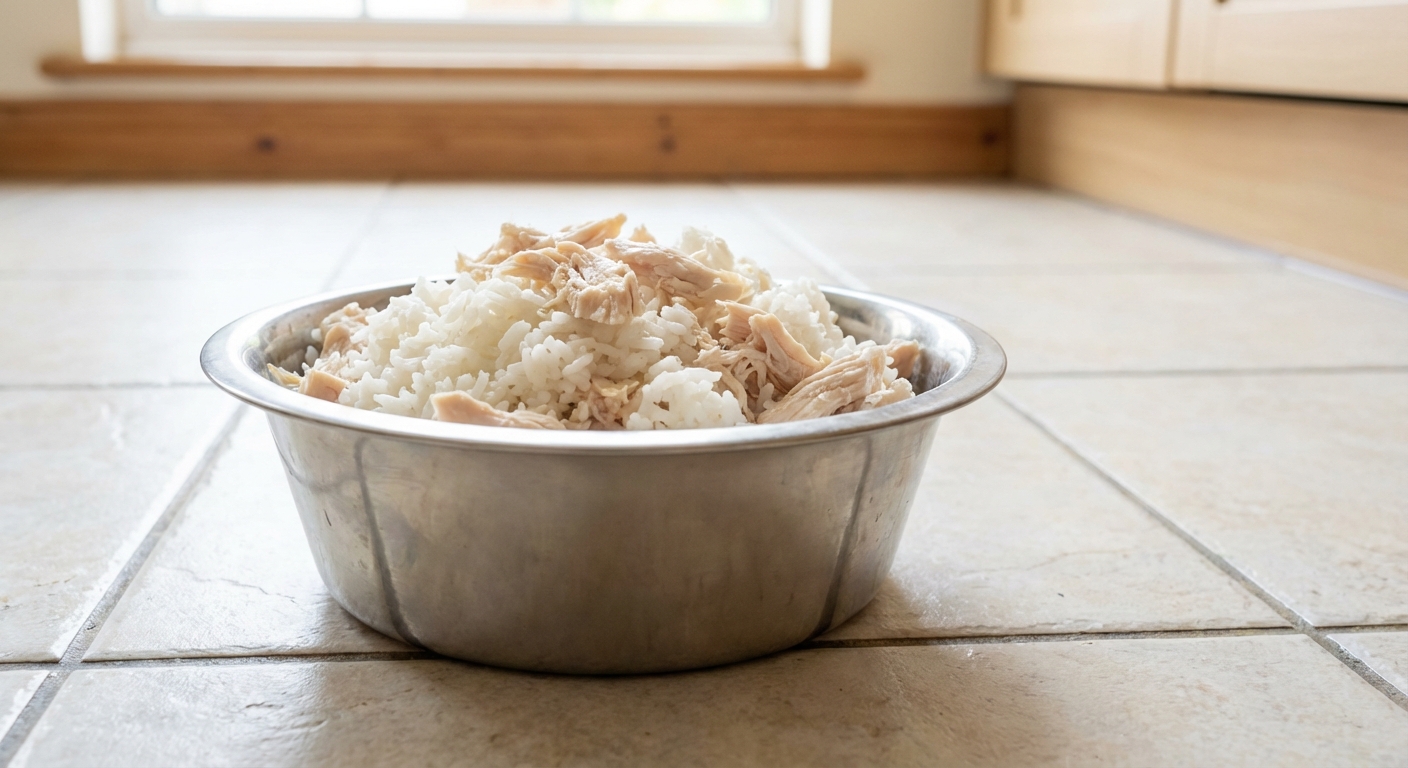
2) Offer a bland meal (short-term)
Many vets recommend a short bland diet such as:
- Boiled skinless chicken breast and plain white rice, or
- Lean ground turkey and rice
Feed small portions more frequently. If your dog has a history of pancreatitis, ask your vet what to use because fat content matters. Also, home bland diets are not balanced for long-term feeding, so keep this as a short-term bridge while the gut settles or until your vet gives a plan.
3) Focus on hydration
Encourage water intake. If your dog will not drink, or keeps vomiting, that is not a home-care situation anymore.
4) Consider a dog-specific probiotic
Some evidence suggests certain probiotics may help in acute diarrhea, but results vary by strain and product. Use a pet-specific probiotic and follow label directions. If you are not sure which one is appropriate, your vet can recommend a reliable option.
5) Monitor closely
Keep notes on frequency, volume, and color. Also watch energy level, appetite, water intake, and vomiting. Changes here are often the earliest sign things are getting worse.
Please avoid giving human anti-diarrhea medications (like loperamide/Imodium) unless your veterinarian specifically tells you to. These drugs can be unsafe for some dogs and can complicate certain conditions.
Protect other pets and your home
Some causes of diarrhea can be contagious (for example, giardia, other parasites, and viruses like parvovirus in puppies or unvaccinated dogs). If your dog has diarrhea and has recently been to daycare, a dog park, boarding, or is a new puppy, it’s smart to take a few precautions while you sort it out.
- Pick up stool promptly and dispose of it securely.
- Wash hands after cleanup.
- Clean soiled areas and consider keeping your dog separated from other pets until you’ve talked with your vet.
What your veterinarian may do
Red diarrhea is a symptom, not a diagnosis. Your vet will focus on your dog’s overall stability first, then investigate the cause.
Questions you will likely be asked
- When did it start and how often is your dog going?
- Any vomiting, appetite changes, or lethargy?
- Any diet changes, new treats, or possible garbage exposure?
- Any travel, boarding, dog park visits, or stressors?
- Is your dog on parasite prevention?
- Any chance of toxin exposure or foreign body ingestion?
Common tests
- Fecal testing for parasites and giardia
- Parvovirus test for puppies or unvaccinated dogs
- Bloodwork to assess dehydration, infection, organ stress, and clotting concerns
- X-rays or ultrasound if obstruction or foreign body is suspected
Possible treatments
- Fluids (subcutaneous or IV) to correct dehydration
- Anti-nausea medication if vomiting is present
- Prescription GI diet for easier digestion
- Deworming even if parasites are not seen on a single sample (common, and sometimes appropriate)
- Targeted antibiotics in select cases, not as a default for every diarrhea episode
How to prevent it
You cannot prevent every upset stomach, but you can reduce the risk dramatically with a few simple habits.
- Keep parasite prevention consistent, especially if your dog visits parks or daycare.
- Transition foods slowly over 7 to 10 days when switching diets.
- Skip fatty table foods and keep trash secured.
- Use safe chews and supervise to reduce foreign body risk.
- Manage stress with routine, exercise, and calming support before boarding or travel if your dog is sensitive.
- Feed high-quality, simple ingredients that your dog tolerates well. Many dogs do beautifully with thoughtfully prepared fresh foods, as long as the diet is balanced and vet-approved.
If your dog has repeated episodes, ask your vet about a deeper GI workup. Chronic or recurring bloody diarrhea is not something to “wait out.”
Quick checklist for your vet
If you call or go in, this information helps your clinic triage faster:
- Photo of the stool (yes, it helps)
- How long it has been happening
- How many times in the last 12 hours
- Any vomiting (and how many times)
- Energy level and appetite
- Current diet and any recent changes
- Medications and supplements
- Vaccination and parasite prevention status
Stool sample tip
If you can, bring a fresh stool sample (about a teaspoon to tablespoon) in a clean bag or container. If you cannot get it to the clinic right away, refrigerate it and bring it within 24 hours. Do not freeze unless your clinic tells you to.
You are doing the right thing by paying attention. Trust your instincts. When in doubt, call your veterinarian.