Puppy whining is usually normal communication. Use a quick needs check, reward quiet moments, build positive crate routines, and spot red flags that need a vet.
Article
•
Designer Mixes
Dog Whines All the Time: Causes and Vet-Friendly Solutions

Shari Shidate
Designer Mixes contributor
When your dog whines all the time, it can tug at your heart and test your patience at the same time. As a veterinary assistant, I can tell you this: whining is communication, not “bad behavior.” The key is figuring out what your dog is trying to say, then responding in a way that supports both their health and your household sanity.
This guide walks you through the most common medical and behavioral reasons for chronic whining, what to try at home, and when it is time to call your veterinarian.
Why dogs whine
Whining is a normal canine vocalization. Dogs may whine to:
- Ask for something (attention, food, play, outside time)
- Express discomfort or pain
- Show anxiety, fear, or stress
- Seek proximity to their people
- Communicate excitement or frustration
- Signal cognitive changes in senior years
What matters most is the pattern. A dog who whines only at the door is different from a dog who whines while resting, overnight, in a crate, or when being touched.
Quick context: Some breeds are naturally more vocal (many herding and companion breeds), and adolescence can bring a surge of attention-seeking. That does not make constant whining “normal,” but it can help explain why it shows up.
Rule out medical causes first
If your dog’s whining is new, increasing, happening at rest, or paired with other symptoms, schedule a veterinary visit. Many dogs are treated for “behavior problems” when the real issue is pain or illness.
Common health reasons for constant whining
- Pain (arthritis, dental pain, ear infections, injuries, neck or back pain)
- Gastrointestinal discomfort (nausea, gas, constipation, pancreatitis)
- Urinary issues (UTI, bladder stones, difficulty urinating)
- Skin allergies (itching can make dogs restless and vocal)
- Vision or hearing loss (especially in seniors who feel disoriented)
- Cognitive dysfunction (canine dementia, often worse at night)
- Endocrine disease (for example, diabetes or Cushing’s can increase restlessness)
Red flags that need prompt vet care
- Whining plus panting, pacing, trembling, or hiding
- Swollen or tight belly, repeated unproductive retching, drooling, or sudden severe restlessness (possible bloat or GDV). Go to an emergency vet immediately.
- Whining when trying to pee, accidents, blood in urine, or frequent squatting
- Limping, yelping, or sensitivity when picked up or touched
- Not eating, vomiting, diarrhea, or a sudden change in thirst
- Nighttime confusion, getting stuck in corners, or staring into space
What to bring to your appointment
- A short video of the whining episodes
- When it happens (time of day, at rest, during handling, in the crate, after meals, during storms)
- Recent changes (food, treats, supplements, meds, schedule, travel, new pets or people)
- Appetite, water intake, stool and urination notes
- Any mobility changes (stairs, jumping, slipping, stiffness)

Common behavioral causes
1) Learned attention whining
Dogs repeat what works. If whining reliably earns petting, eye contact, being picked up, or a snack, it becomes a habit.
Clues: Whining stops the moment you engage. It happens most when you are on the phone, working, cooking, or sitting down.
2) Demand whining
This is common around meal times, for walks, or when a toy is out of reach.
Clues: Your dog whines in a predictable location like the kitchen, by the leash, near the door, or at the treat cabinet.
3) Separation-related distress
Some dogs whine when you leave, when you close a door between you, or even when you move around the house.
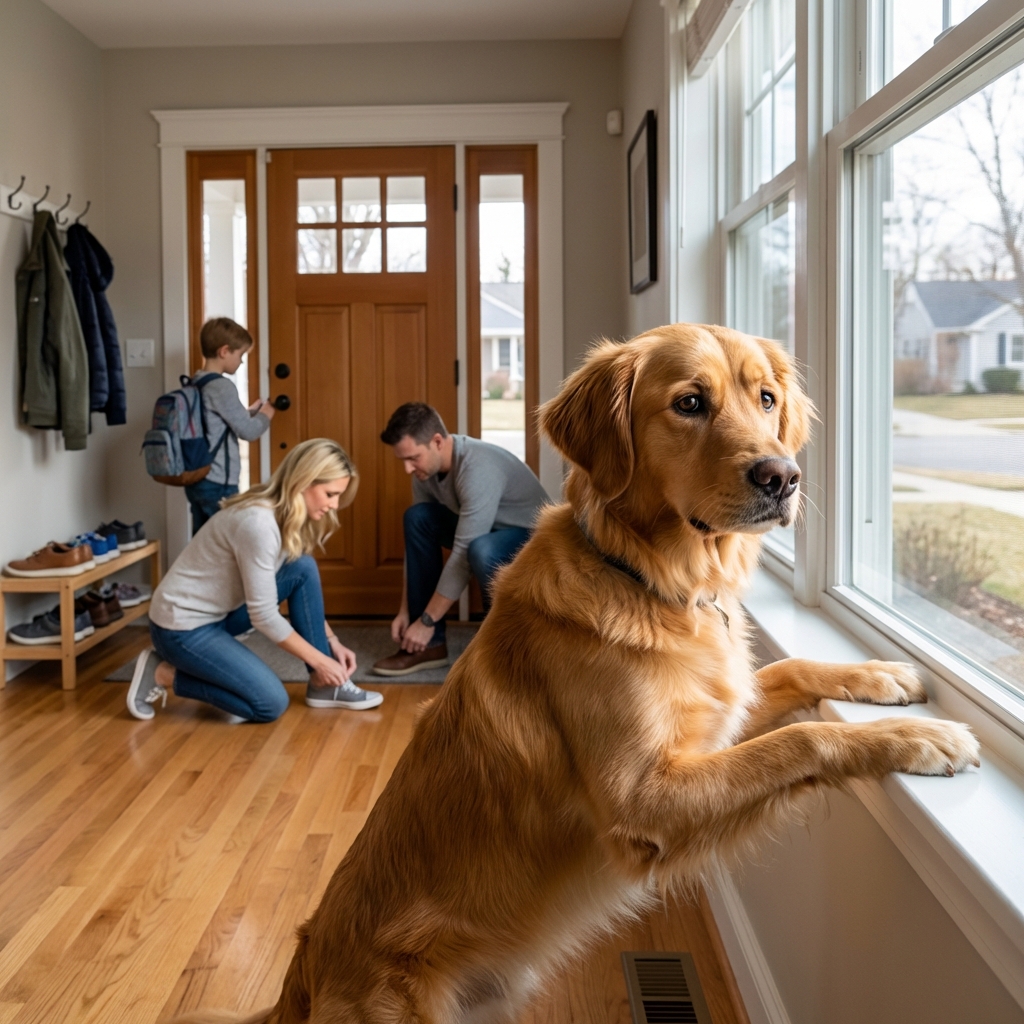
Clues: Shadowing you, inability to settle, whining escalates when you pick up keys or shoes.
Important: Mild distress can improve with training, but true separation anxiety often needs a structured plan (gradual desensitization) and sometimes medication. If your dog panics, injures themselves, or cannot settle, involve your veterinarian and a qualified behavior professional.
4) Fear and noise sensitivity
Storms, fireworks, construction, and even high-pitched beeps can trigger anxious whining.
Clues: Trembling, panting, trying to hide, clinginess, dilated pupils.
5) Overstimulation and boredom
Young dogs and high-energy mixes may whine when they are under-exercised, under-enriched, or living in an unpredictable routine.
Clues: Whining pairs with pacing, grabbing toys, mouthing, or “cannot turn off” behavior.
Note: More exercise is not always the answer, especially for anxious dogs. Decompression activities like sniffing, licking, and chewing can be more calming than fast-paced workouts.
6) Senior changes
Older dogs may whine due to cognitive changes, hearing loss, or subtle discomfort.
Clues: Night waking, wandering, staring, getting stuck, more clingy than usual.
What you can do today
These strategies are commonly veterinarian-recommended and trainer-approved for many dogs. They work best when you apply them consistently. Many families see improvement within 2 to 4 weeks, but timelines vary based on the cause and your dog’s history.
Safety note: If you suspect pain, your dog is showing severe anxiety or panic, there is aggression, or your dog has diet restrictions (pancreatitis history, food allergies, weight loss plan), check in with your veterinarian before making big changes.
Step 1: Meet basic needs first
- Potty break: especially for puppies, seniors, and small dogs.
- Comfort check: Is their bedding supportive? Too hot or too cold? Nails too long? Matting pulling skin?
- Hunger: If your dog is on a strict diet plan, ask your vet whether meal timing or volume should be adjusted.
- Movement: A short sniff walk often calms whining better than fast-paced exercise.
Step 2: Do not reward the whining
This is the hardest step, because we love them. But if your dog is medically cleared, rewarding whining teaches them to do it more.
- When whining starts, pause interaction. No talking, no eye contact, no touching.
- Wait for a 2 to 3 second quiet moment, then calmly reward with attention or a marker word like “yes” and a treat.
- If your dog escalates, redirect to a trained behavior (see next step) instead of giving in.
Step 3: Teach a replacement behavior
Dogs do better when we tell them what to do, not only what not to do. Pick one of these and practice when your dog is calm.
- Go to mat: Teach your dog to lie on a bed or mat for rewards.
- Sit to say please: Ask for a sit before meals, leashing, door opening, and play.
- Touch: Nose target to your hand helps redirect anxious energy.
Step 4: Add calm enrichment
Many chronic whiners are stressed or bored. Calm enrichment drains mental energy in a healthy way.
- Food puzzles or stuffed Kongs (adjust meal portions so calories stay reasonable)
- Snuffle mat or scatter feeding in the yard
- Frozen lick mat (use plain, unsweetened, xylitol-free options). Plain yogurt works for some dogs, but skip it for dogs with lactose intolerance, sensitive stomachs, or pancreatitis risk. When in doubt, ask your vet.
- Short training sessions (3 to 5 minutes) spaced through the day

Step 5: Build a predictable routine
Dogs thrive on “knowing what happens next.” Aim for consistent wake time, meals, potty, walks, and quiet time. If your dog whines most in the evening, build a calming routine like a sniff walk, then a puzzle feeder, then lights dimmed and a chew.
Step 6: Handle anxiety with a plan
If fear or separation issues are driving the whining, ignoring it is not enough. You will need a plan that changes the emotion underneath the noise.
- Noise sensitivity: Close curtains, play white noise, create a safe room, and talk to your vet about calming supplements or prescription options.
- Separation distress: Practice short, successful departures and return before panic starts. Gradually increase time. For moderate to severe cases, work with a certified trainer or veterinary behaviorist and involve your veterinarian early. Medication can be an important part of humane treatment for true panic.
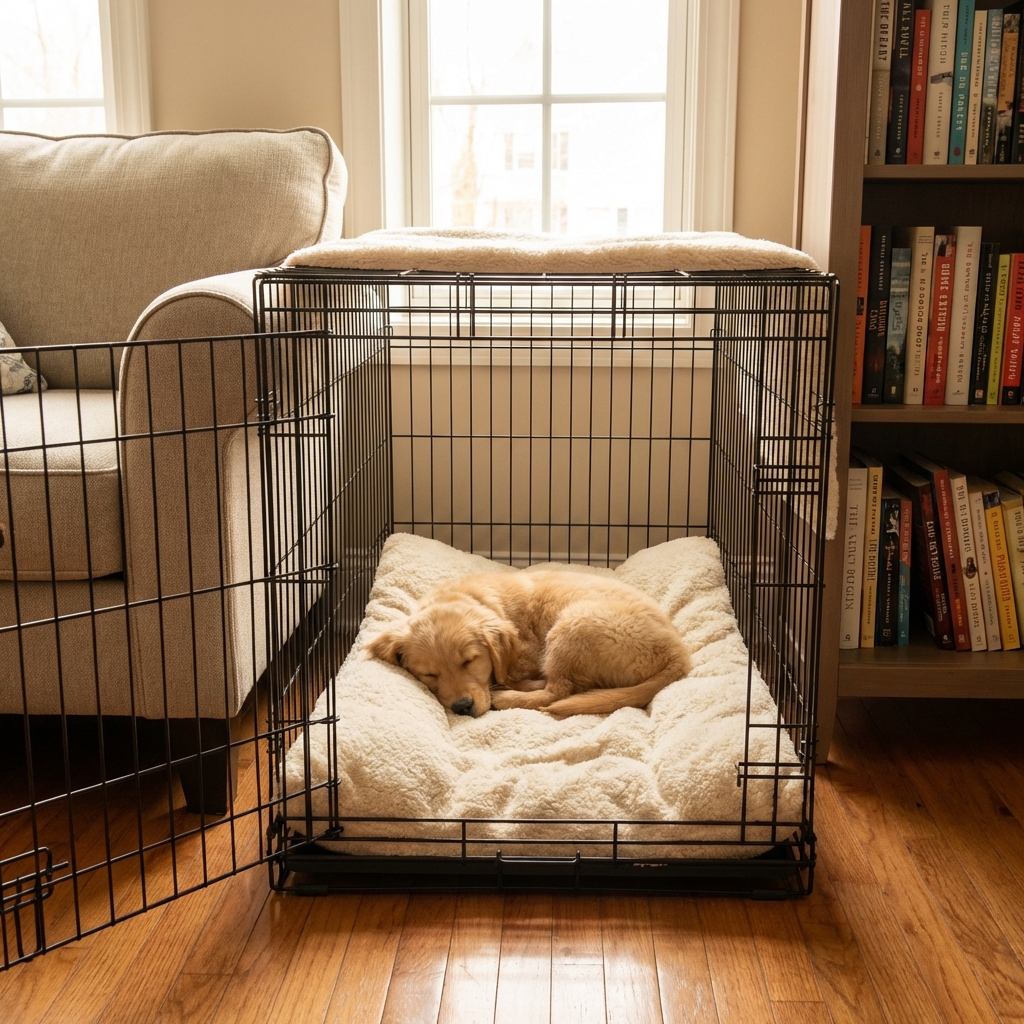
Step 7: Crate and confinement whining
A lot of owners notice whining spike in the crate, behind a baby gate, or when doors are closed.
- Make the crate a good deal: feed meals in it, use a special chew only in the crate, and start with very short sessions.
- Build duration gradually: seconds to minutes to longer, always ending before your dog gets worked up.
- Do not crate through panic: If your dog is drooling heavily, trying to escape, hurting teeth, or tearing at the crate, stop and get professional help. That level of distress needs a different plan.
Night whining
Night whining is especially draining, and it is often connected to discomfort, anxiety, or senior changes.
Try this checklist
- Last potty break right before bed
- Supportive orthopedic bed for older dogs
- Keep water available but ask your vet if increased thirst is a concern
- Use a dim night light for seniors with vision changes
- White noise machine to buffer outside sounds
- Calm chew or food puzzle 30 to 60 minutes before bed
If nighttime whining starts suddenly in a senior dog, ask your veterinarian about pain management and screening for cognitive dysfunction.

What not to do
- Do not punish whining. Yelling or startling can increase anxiety and make the behavior worse.
- Do not assume it is stubbornness. Many dogs whine because they are uncomfortable.
- Do not overuse treats without a plan. Random feeding can reinforce whining and contribute to weight gain.
- Do not rely on sedating products without guidance. Always check with your veterinarian, especially if your dog has heart, liver, or seizure concerns.
When to get help
Get support if:
- Whining has lasted more than 2 weeks despite consistent training
- Your dog is harming themselves (scratching doors, breaking crates, chewing until bleeding)
- You suspect separation anxiety, panic, or severe noise phobia
- Your household is losing sleep or feeling overwhelmed
Look for a reward-based trainer with credentials (CPDT-KA, KPA, IAABC), and involve your veterinarian to rule out pain and discuss behavior medication if appropriate. For more complex cases, a board-certified veterinary behaviorist can be life-changing.
Bottom line
A dog who whines constantly is not trying to drive you crazy. They are telling you something. Start by ruling out pain and illness, then use clear, consistent training that rewards calm behavior and meets your dog’s real needs. Small changes, done daily, can bring the peace back to your home and help your dog feel secure again.