Vet-informed guide to a short-term bland diet for dogs: chicken and rice 1:2 ratio, daily cup ranges by weight, how many meals to split into, and red flags t...
Article
•
Designer Mixes
Dog Vomiting Yellow

Shari Shidate
Designer Mixes contributor
Seeing yellow vomit on the floor can be unsettling. As a veterinary assistant in Frisco, Texas, I can tell you this is one of the most common “panic moments” I hear about, and the good news is that many cases are mild and short-lived. Yellow vomit is usually bile mixed with stomach fluid. Bile is a digestive fluid made by the liver and stored in the gallbladder. It often shows up when the stomach is empty, but it can also happen with stomach irritation, parasites, diet changes, or more serious illness.
This guide will help you understand what yellow vomit can mean in puppies, adult dogs, and seniors, what you can safely do at home, and when it is time to call your veterinarian right away. This is general education, not a diagnosis. When in doubt, your vet is the best next step.
Vomit or regurgitation?
Pet parents often use “vomit” for both, but they are different and that changes what we worry about.
- Vomiting is an active heave. You may see drooling, lip licking, retching, and abdominal effort. The material can be food, foam, or yellow bile.
- Regurgitation is more passive. Food or fluid comes up without much effort and may look tubular. Regurgitation can point to an esophagus issue and should be discussed with your vet, especially if it keeps happening.
What yellow vomit usually is
Most of the time, yellow vomit is a mix of stomach fluid and bile. Bile is naturally yellow to greenish-yellow and helps digest fats in the small intestine. When a dog vomits bile, it often looks like:
- Watery or foamy yellow liquid
- Yellow liquid with small bits of food
- Yellow mucus, sometimes with grass
One key clue is timing. Bile vomiting is especially common early in the morning, late at night, or anytime your dog has gone a long time without food.
Common reasons dogs vomit yellow
1) Empty stomach and bilious vomiting
Many otherwise healthy dogs vomit yellow when their stomach is empty for long stretches. This is often called bilious vomiting syndrome. It may be related to bile reflux from the small intestine, stomach acid, and motility changes when there is no food “buffer.”
Typical pattern: intermittent yellow vomit (often in the morning), dog seems normal afterward, appetite returns quickly.
2) Diet changes, rich foods, or scavenging
Dogs are talented at finding things they should not eat. A sudden change in diet, table scraps, fatty foods, spoiled food, or trash can irritate the stomach and trigger vomiting.
3) Reflux or gastritis
Inflammation of the stomach lining can cause nausea and bile vomiting. Triggers include stress, medications (especially some anti-inflammatories), abrupt diet changes, and underlying illness.
4) Parasites (especially in puppies)
Intestinal parasites like roundworms and hookworms can cause vomiting, poor appetite, diarrhea, and a pot-bellied look in young dogs. Even adult dogs can have parasite issues, especially if prevention is inconsistent.
5) Pancreatitis
Pancreatitis can range from mild to life-threatening. Yellow vomit can happen, but you will often see other signs like repeated vomiting, belly pain, lethargy, refusing food, and sometimes diarrhea. Fatty foods are a common trigger.
6) Intestinal blockage or foreign body
If a dog swallows a toy, sock, corn cob, or something that cannot pass, vomiting may start with food and progress to bile. A blockage is an emergency.
7) Liver or gallbladder disease
Because bile is involved, liver and gallbladder issues can be part of the picture, especially in older dogs. You may also notice appetite loss, weight loss, yellowing of the eyes or gums, or ongoing digestive upset.
8) Motion sickness
Some dogs vomit yellow foam during or after car rides if their stomach is empty.
9) Addison’s disease (less common, but important)
Addison’s disease can cause intermittent vomiting, diarrhea, lethargy, weakness, and dehydration. It is more common in young to middle-aged dogs and can be easy to miss because symptoms come and go. If vomiting keeps recurring with low energy, talk to your vet about ruling out underlying causes.
What to look for right now
If your dog vomits yellow, take a quick moment to gather “clues” that help you decide what to do next. If your dog is collapsing, struggling to breathe, or you suspect a toxin or blockage, skip this and go in.
- How many times? One time versus repeated episodes
- How does your dog act? Bright and normal versus lethargic, hiding, painful
- Can your dog keep water down?
- Any diarrhea? Especially watery or bloody
- Any chance of toxin exposure? Human meds, xylitol gum, grapes or raisins, rodent bait, compost
- Any chance of foreign body? Missing toy, chewed fabric, bones
- Color and contents: Foamy bile, food, blood (red or coffee-ground), green material
Yellow vomit by age
Puppies
Puppies can get dehydrated quickly. Common causes include parasites, dietary upset, eating too fast, and infections. If a puppy vomits yellow more than once, refuses food, has diarrhea, or seems quiet, it is safest to call your vet the same day.
Puppy red flags: vomiting plus diarrhea, bloated belly, weakness, pale gums, or no interest in water.
Parvo note: If your puppy is not fully vaccinated (or you are not sure), vomiting with lethargy and foul or bloody diarrhea is a same-day emergency. Parvo can become life-threatening fast.
Adult dogs
In adults, a single bile vomit episode with a normal appetite and energy often points to an empty stomach or mild irritation. Repeated episodes, belly pain, or changes in thirst, appetite, stool, or urination should be checked.
Senior dogs
In seniors, we worry more about underlying disease (kidney, liver, pancreatitis, endocrine problems) and medication side effects. Even “mild” vomiting that keeps happening is worth a veterinary visit sooner rather than later.
When to call the vet now
Please call your veterinarian or an emergency clinic promptly if you notice any of the following:
- Repeated vomiting (more than 2 to 3 times in a day) or vomiting that continues beyond 24 hours
- Your dog cannot keep water down
- Blood in vomit (bright red or coffee-ground appearance)
- Severe lethargy, collapse, weakness, or confusion
- Swollen, painful abdomen or “prayer position” (front down, rear up) that can indicate abdominal pain
- Suspected foreign body (missing toy, chewed cloth, bones) or ongoing choking or gagging
- Suspected toxin exposure (human medications, grapes or raisins, xylitol, rodent poison)
- Signs of dehydration (tacky gums, sunken eyes, skin slow to snap back, or reduced urination)
- Green vomit or bright green fluid that is repeated or paired with lethargy, pain, or inability to keep water down (green can be bile, but it can also be grass or dye, so we look at the whole picture)
- Puppies, tiny dogs, diabetic dogs, or dogs with known chronic disease vomiting at all
Home care for one mild episode
If your dog vomits yellow one time, then acts normal, has normal gum color, and is able to drink, these gentle steps may help. If you are unsure, call your vet first.
Step 1: Give the stomach a break
For healthy adult dogs, your vet may recommend a brief pause from food (often 6 to 12 hours) or very small bland meals instead of fasting. Follow your clinic’s guidance. Do not fast puppies without veterinary direction.
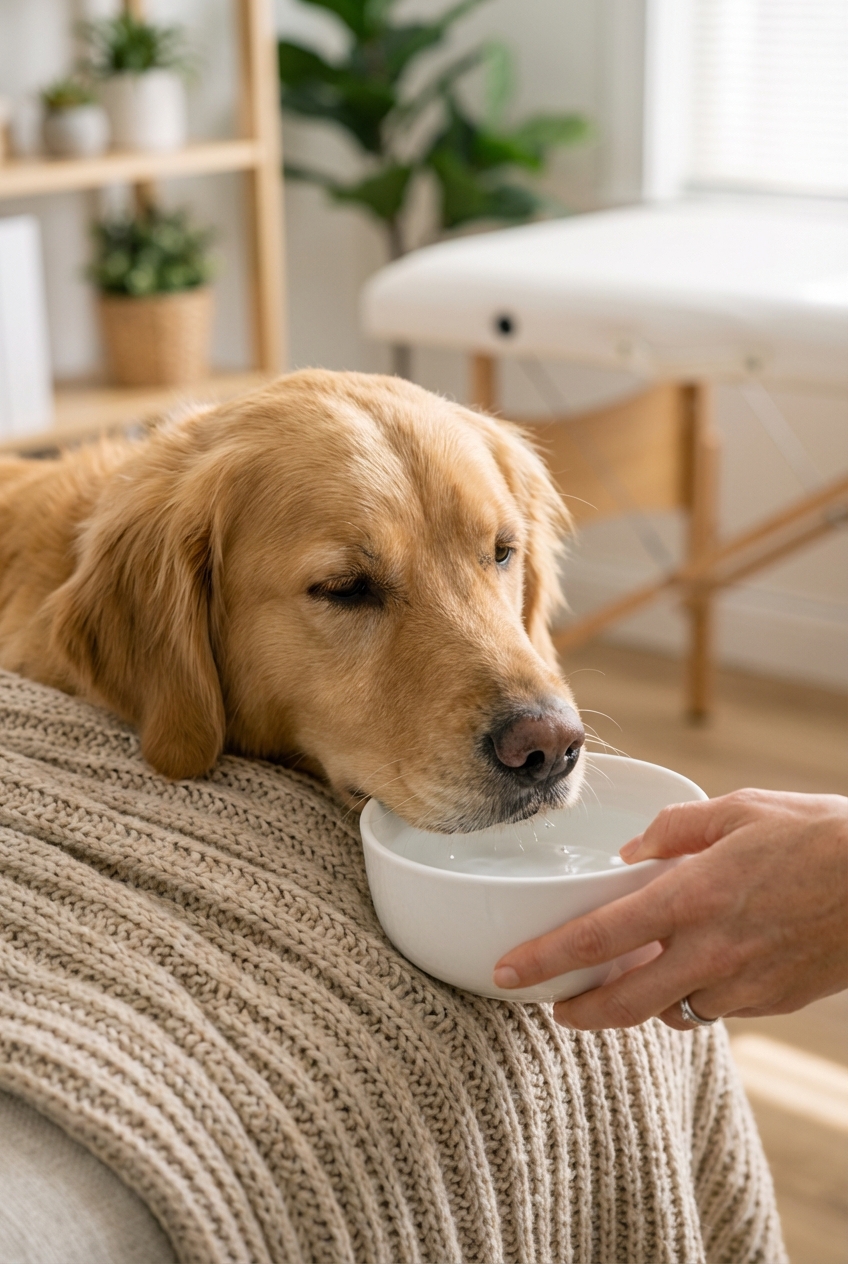
Step 2: Offer small sips of water
Give small amounts frequently. If your dog gulps and vomits again, remove the bowl and offer teaspoons to tablespoons at a time. Some dogs do better with ice cubes to lick.
If you are considering electrolyte solutions, check with your vet first. Some products are not a good fit for every dog.
Step 3: Offer a bland meal slowly
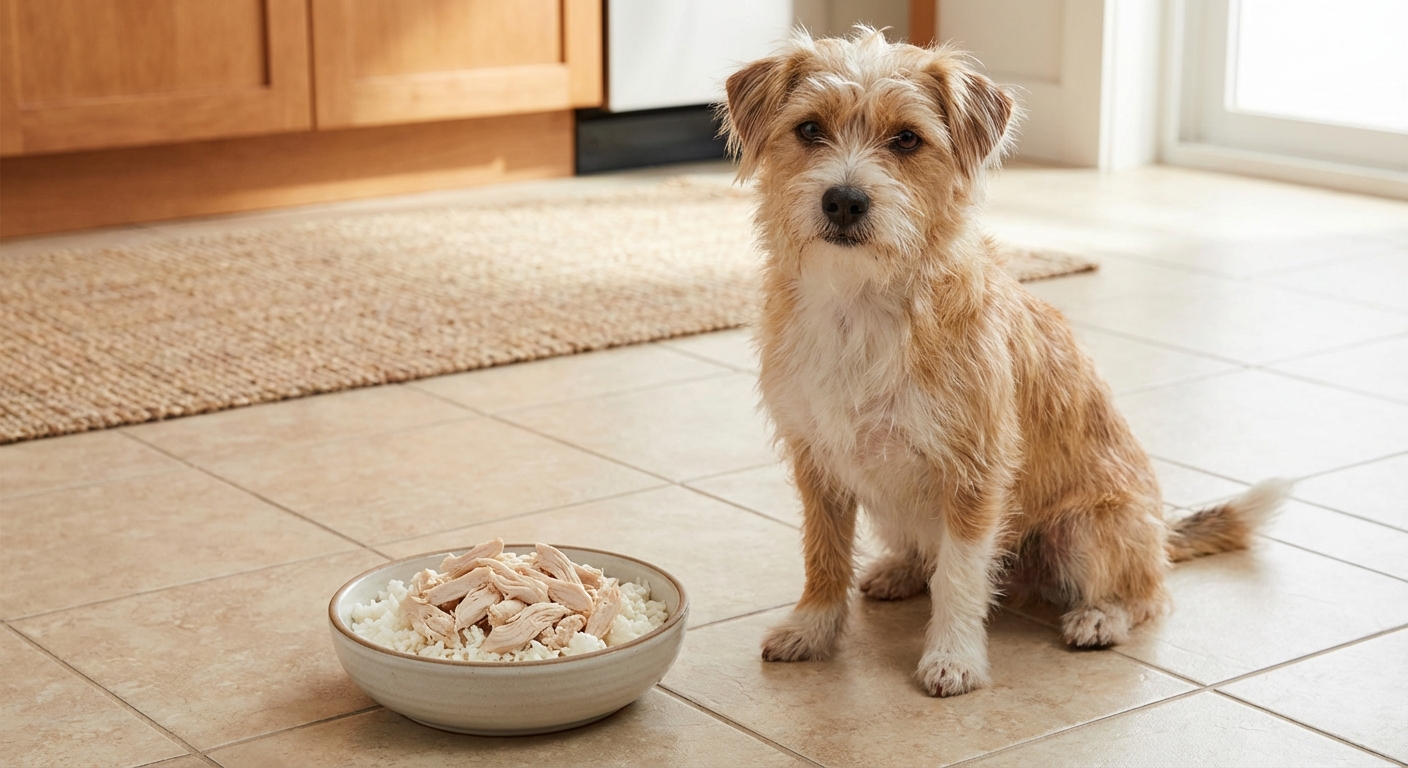
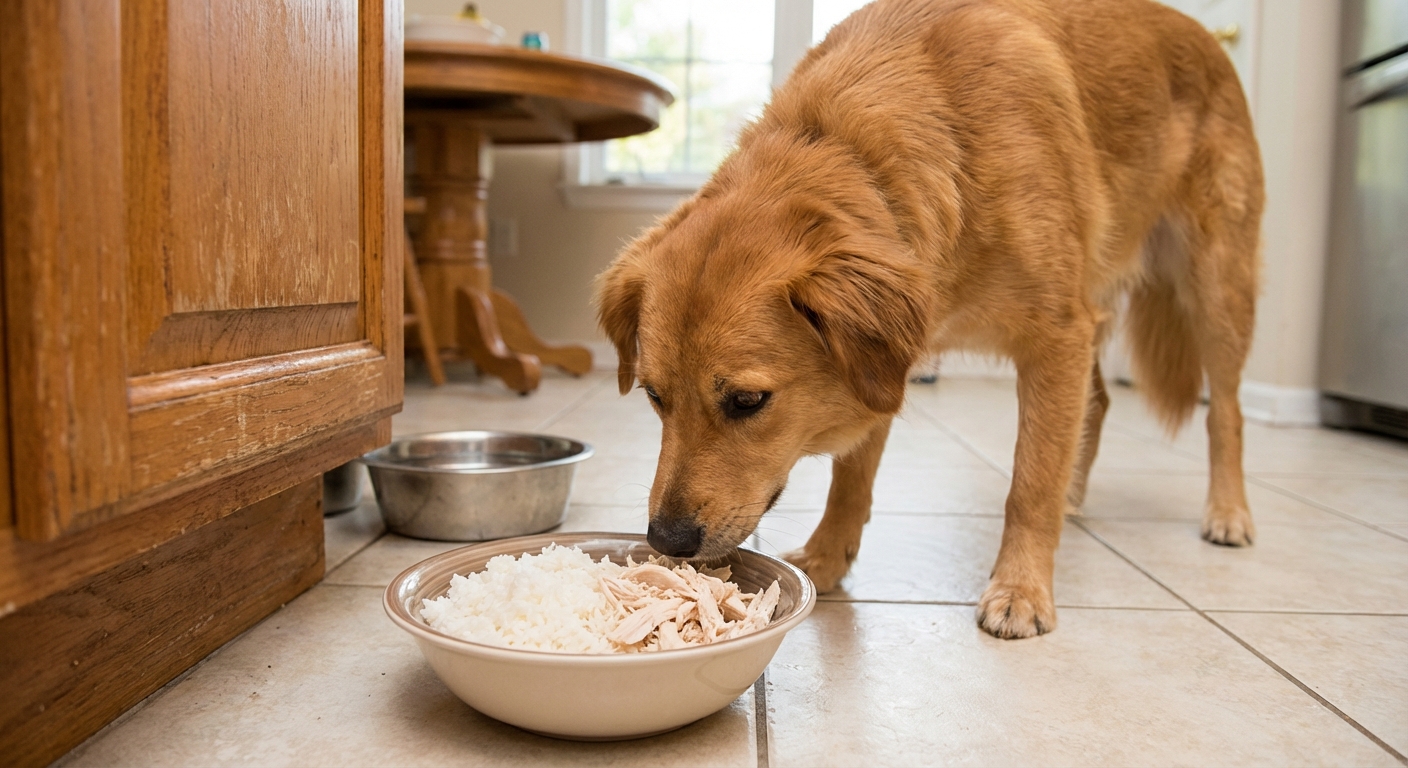
If there is no more vomiting and your dog keeps water down, offer a small bland meal such as:
- Boiled chicken breast and white rice
- Lean ground turkey and rice
- Plain scrambled egg (no butter) with rice
Keep portions small and feed 3 to 4 small meals that day. Avoid fatty foods.
Step 4: Transition back to the normal diet
Bland diets are meant to be temporary. Once your dog is stable for 24 hours (no vomiting, normal energy improving), transition back to the regular diet over 2 to 3 days by mixing increasing amounts of the regular food into the bland food.
Step 5: If this is a morning pattern
If yellow bile vomiting tends to happen early morning, talk with your vet about trying:
- A small bedtime snack
- Smaller, more frequent meals
- Vet-recommended meds for reflux or nausea when appropriate
Important: do not give human medications like Pepto-Bismol, Imodium, or acid reducers unless your veterinarian approves. Some can be unsafe for certain dogs (including some herding breeds with MDR1 sensitivity) or can mask a more serious problem.
Feeding tips to help prevent bile vomiting
For dogs prone to bile vomiting, nutrition and meal timing can make a real difference.
- Stick to routine: consistent meal times help regulate stomach acids
- Avoid long gaps: consider breakfast, dinner, and a small bedtime snack
- Go slow with new foods: transition over 7 to 10 days
- Skip greasy treats: fatty foods can trigger pancreatitis and gastritis
- Hydration matters: always provide fresh water and clean bowls
What your vet may recommend
If vomiting is frequent, your vet will tailor diagnostics to your dog’s age, history, and symptoms. Common next steps include:
- Fecal testing for parasites
- Bloodwork to evaluate hydration, infection, liver, kidney, and pancreas markers
- X-rays to check for obstruction or foreign material
- Ultrasound to look at the liver, gallbladder, pancreas, and intestines
- Diet trial for food sensitivity
- Medications such as anti-nausea drugs or stomach protectants when appropriate
Helpful tip: bring a photo of the vomit, a list of foods and treats from the past few days, and any medications or supplements your dog takes.
Quick FAQ
Is yellow vomit always bile?
Most of the time, yes. Occasionally it can be food dyed yellow, mucus, or stomach fluid that looks yellow. If you see repeated episodes, bring a photo and details to your vet.
My dog vomited yellow and then ate normally. Should I worry?
One isolated episode with normal behavior afterward is often mild. Still, track it. If it happens again, especially with morning-only vomiting, talk with your vet about meal timing and possible reflux or gastritis.
Can hunger really cause vomiting?
Yes. For some dogs, an empty stomach triggers nausea and bile reflux. A small bedtime snack is a simple, vet-approved strategy for many families.
Bottom line
Yellow vomit is commonly bile mixed with stomach fluid, and it often happens when a dog’s stomach is empty. But repeated vomiting, signs of pain, dehydration, toxin exposure, foreign body risk, or a sick-acting dog should be treated as urgent. If you are ever on the fence, call your veterinarian and share the timing, frequency, and a photo. Those details help your vet make the safest recommendation for your dog’s age and health.