Clear liquid vomit in dogs is often from gulping water, an empty stomach, or mild gastritis—but it can signal pancreatitis, obstruction, or bloat. Learn wh...
Article
•
Designer Mixes
Dog Vomiting Clear Liquid: Causes and Solutions

Shari Shidate
Designer Mixes contributor
Seeing your dog vomit clear liquid can be alarming, especially when it seems to come out of nowhere. The good news is that clear, watery vomit can be linked to mild stomach irritation, drinking too fast, or an empty stomach. But if it keeps happening, it can also be an early sign of something more serious (like pancreatitis, an intestinal blockage, or organ disease), so patterns and repeat episodes matter.
As a veterinary assistant in Frisco, Texas, I have seen many “mystery pukes” turn out to be simple, fixable issues. In this article, I will walk you through what clear liquid vomiting can mean, what you can safely do at home, and when it is time to call your veterinarian.
What is the clear liquid your dog is vomiting?
Most of the time, clear liquid vomit is one of these:
- Water your dog drank quickly, then brought back up.
- Foamy saliva that looks like clear or white bubbles.
- Stomach fluid (gastric juices) that can appear clear, watery, or slightly frothy.
- Mucus from mild nausea or irritation.
Color and texture matter. Clear or white foam is common with mild nausea. Yellow or green fluid often suggests bile, which can show up with an empty stomach or reflux, but it can also happen with many other gastrointestinal issues.
Vomiting, regurgitation, or coughing?
Owners are not wrong to lump these together. They look similar in the moment, but the difference helps your vet narrow the cause.
- Vomiting: usually includes nausea signs (lip-licking, drooling) and heaving or abdominal contractions. You may see food, foam, or fluid.
- Regurgitation: more passive, often happens soon after eating or drinking. Material may look tubular or undigested. This can point to esophagus issues and carries an aspiration risk, so it deserves a vet call.
- Coughing or gagging: looks like a respiratory effort, often with a honking cough or irritation, and may bring up clear foam or fluid.
If you can, take a short video of the episode. It helps more than you might think.
Common causes of clear liquid vomiting
1) Empty stomach (hunger pukes)
Many dogs vomit clear or white foam in the morning or when meals are spaced far apart. This can happen when stomach acid builds up with nothing to digest.
Clues: vomiting happens before breakfast, your dog seems normal afterward, appetite stays strong.
Even if it seems mild, frequent hunger pukes are worth discussing with your veterinarian to rule out reflux, gastritis, diet sensitivity, or other causes.
2) Drinking water too fast
After play, excitement, or heat, dogs may gulp water and vomit it right back up. Sometimes it is a one-time event, but repeated episodes can also be seen with nausea or other illness.
Clues: vomiting occurs soon after drinking, it looks mostly like water, your dog recovers quickly.
3) Mild stomach upset
A dietary slip, a new treat, table scraps, rich foods, or even stress can irritate the stomach.
Clues: one to two episodes, mild lip-licking or drooling, energy only slightly lower.
4) Acid reflux or indigestion
Just like people, dogs can get reflux. Clear foamy vomit can appear when stomach contents irritate the esophagus.
Clues: frequent swallowing, licking lips, burping, discomfort after eating.
5) Coughing or kennel cough that looks like vomiting
Sometimes what looks like vomiting is actually coughing and bringing up clear fluid or foam.
Clues: honking cough, gagging, worsens with excitement or pulling on the leash.
6) Parasites or gastrointestinal infection
Some intestinal parasites and gastrointestinal infections (viral, bacterial, or dietary) can cause nausea and vomiting. Clear liquid may show up early before food comes back up.
Clues: diarrhea, soft stool, loss of appetite, lethargy, weight loss, recent exposure to other dogs or contaminated areas.
7) Pancreatitis (can start subtly)
Pancreatitis is inflammation of the pancreas, often triggered by fatty foods. Vomiting can start as clear fluid and progress.
Clues: repeated vomiting, abdominal pain, hunched posture, refusing food, diarrhea, weakness.
8) Foreign body (something stuck)
If a dog swallows a toy piece, sock, corn cob, bone fragment, or other object, vomiting can begin with liquid and become frequent.
Clues: repeated vomiting, inability to keep water down, no appetite, constipation or straining, restlessness.
When it is an emergency
Please contact a veterinarian urgently or go to an ER if you notice any of the following:
- Repeated vomiting (more than 2 to 3 times in a day) or vomiting that continues beyond 12 to 24 hours. Seek care sooner if your dog is very small, very young, a senior, or has health conditions.
- Blood in vomit (red streaks or coffee-ground appearance).
- Bloated abdomen, unproductive retching, severe restlessness, or signs of pain (this can be bloat in deep-chested breeds).
- Cannot keep water down, or vomiting immediately after every drink.
- Lethargy, collapse, pale gums, weakness, or rapid breathing.
- Diarrhea plus vomiting, especially if watery or bloody.
- Suspected toxin exposure (grapes/raisins, xylitol, rodent poison, medications, THC, cleaning products).
- Overheating risk: vomiting after heat exposure or intense exercise, heavy panting, bright red gums, weakness, or collapse (possible heat-related illness).
- Puppies, seniors, or dogs with health conditions (kidney disease, diabetes, Addison’s disease, liver disease, etc.) should be treated more cautiously. Addison’s disease, in particular, can cause vomiting that seems to come and go.
If your gut says “this is not my dog acting normal,” trust that. Vomiting is a symptom, and patterns matter.
What you can do at home
If your adult dog vomited clear liquid once and is otherwise acting normal, these steps are often reasonable while you monitor closely. When in doubt, call your vet first, especially if your dog has other medical issues.
Step 1: Pause food briefly, do not deprive water
For many healthy adult dogs, a short rest for the stomach helps. A conservative window many clinics use is 6 to 12 hours without food, then a gentle reintroduce, but your veterinarian may recommend something different based on your dog and symptoms.
Offer small sips of water or ice chips rather than a full bowl if your dog tends to gulp.
- If vomiting repeats after drinking, stop and call your veterinarian.
- Do not fast puppies, toy breeds, or dogs with diabetes without veterinary guidance. It can be risky.
Step 2: Reintroduce food gently
If your dog has gone several hours with no more vomiting and seems bright, you can offer a small meal of bland food.
Simple bland options (short-term only):
- Boiled skinless chicken breast with plain white rice
- Lean ground turkey (drained) with rice
- Plain canned pumpkin (not pie filling) in small amounts
Feed small portions, then gradually return to normal meals over 24 to 48 hours if your dog improves.
Two important notes: Chicken and rice is not nutritionally complete for long-term feeding, and it may not be appropriate for dogs with poultry allergies or a history of pancreatitis. If your dog has had pancreatitis before, call your veterinarian for the safest plan.
Step 3: Adjust meal timing for hunger pukes
If vomiting tends to happen early morning or late night, meal timing can be a game changer.
- Add a small bedtime snack (a tablespoon or two of a balanced food, depending on size).
- Split meals into 3 to 4 smaller feedings instead of one or two large meals.
Step 4: Slow down fast drinkers safely
- Offer water in smaller amounts more frequently.
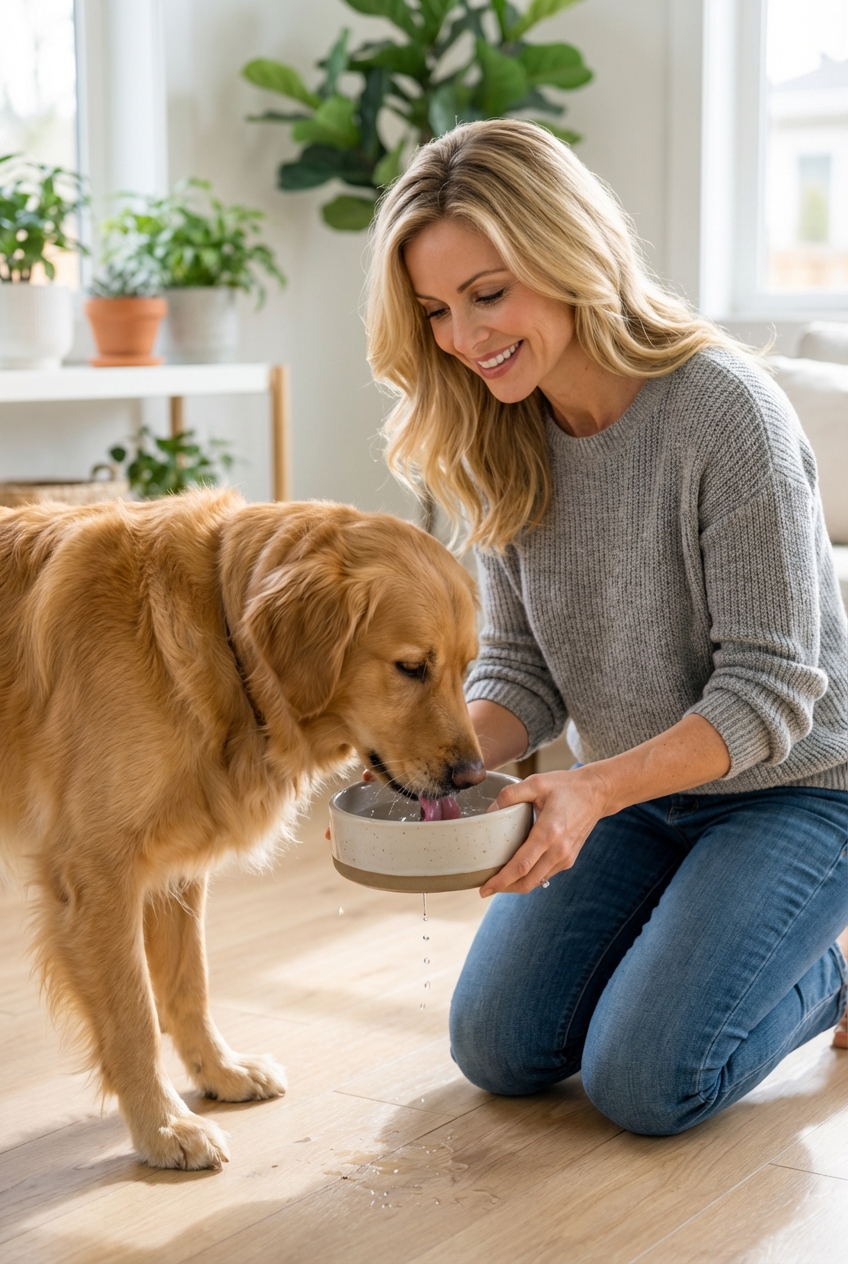
- Use a slow-water bowl or a wide, shallow bowl to reduce gulping.
- After heavy exercise, encourage a few minutes of rest first, then controlled hydration.
Avoid placing random objects in the water bowl. Even “clean” items can chip teeth or become a choking hazard.
Step 5: Avoid unapproved medications
Please do not give Pepto, antacids, pain relievers, or other human medications unless your veterinarian tells you to. Some products can be dangerous for dogs or mask important symptoms.
How to observe like a pro
If you need to call your veterinarian, these details make diagnosis faster and more accurate:
- How many times your dog vomited and over what time period
- What it looked like (clear, foamy, yellow bile, undigested food, presence of blood)
- Timing (before meals, after meals, after water, middle of night)
- Any diet change in the last 7 days (new food, treats, chews)
- Possible scavenging (trash, compost, sticks, socks, toys)
- Other symptoms (diarrhea, coughing, appetite changes, energy level)
- Hydration and urination (drinking more or less than normal)
- Bring evidence if you can: a photo of the vomit, a short video of the episode, and packaging of any possible toxin or chew
Quick dehydration check
These are not perfect, but they help you decide how urgently to call:
- Tacky or dry gums
- Sunken-looking eyes
- Skin tenting (gently lift skin over the shoulders and see how quickly it returns)
If you suspect dehydration, or if your dog cannot keep water down, contact your veterinarian promptly.
Prevention
Not all vomiting is preventable, but many cases are. Here are habits I love because they are simple and evidence-based.
Keep meals consistent
Sudden diet changes are a common trigger for GI upset. If you are switching foods, do it gradually over 7 to 10 days.
Choose digestible, balanced food
Whether you feed kibble, fresh food, or a mix, prioritize clearly identified proteins and avoid overly rich, greasy add-ons. If you are curious about homemade food, start slowly and keep it balanced.
Be careful with chews and toys
Choose size-appropriate chews, supervise chew time, and replace worn toys. Many foreign-body emergencies start as a “small piece that could not hurt.”
Stay current on parasite prevention
Parasites can cause chronic stomach upset. Routine prevention and veterinarian-recommended fecal testing are worth it.
Bottom line
Clear liquid vomiting in dogs is common and often mild, especially if it is a one-time episode and your dog is otherwise acting normal. The key is to look at the full picture: frequency, timing, hydration, energy, appetite, and any red flags.
If you are ever unsure, call your veterinarian. You are not overreacting. You are advocating for your dog, and that is exactly what a loving pet parent does.