Worried about a vomiting dog? Learn when vomiting is an emergency, how to offer small sips safely, and the best bland foods (chicken/rice, turkey, pumpkin, e...
Article
•
Designer Mixes
Dog Vomiting: Causes, When to Worry, and What to Do

Shari Shidate
Designer Mixes contributor
Seeing your dog vomit can be upsetting, especially when it seems to come out of nowhere. The good news is that many causes are mild and short-lived. The not-so-good news is that vomiting can also be an early sign of something serious, like a blockage, toxin exposure, pancreatitis, or a systemic illness.
As a veterinary assistant here in Frisco, Texas, I always tell pet parents this: your job is not to diagnose the exact cause at home. Your job is to notice the pattern, look for red flags, and know when to call or go in.
Vomiting vs. regurgitation
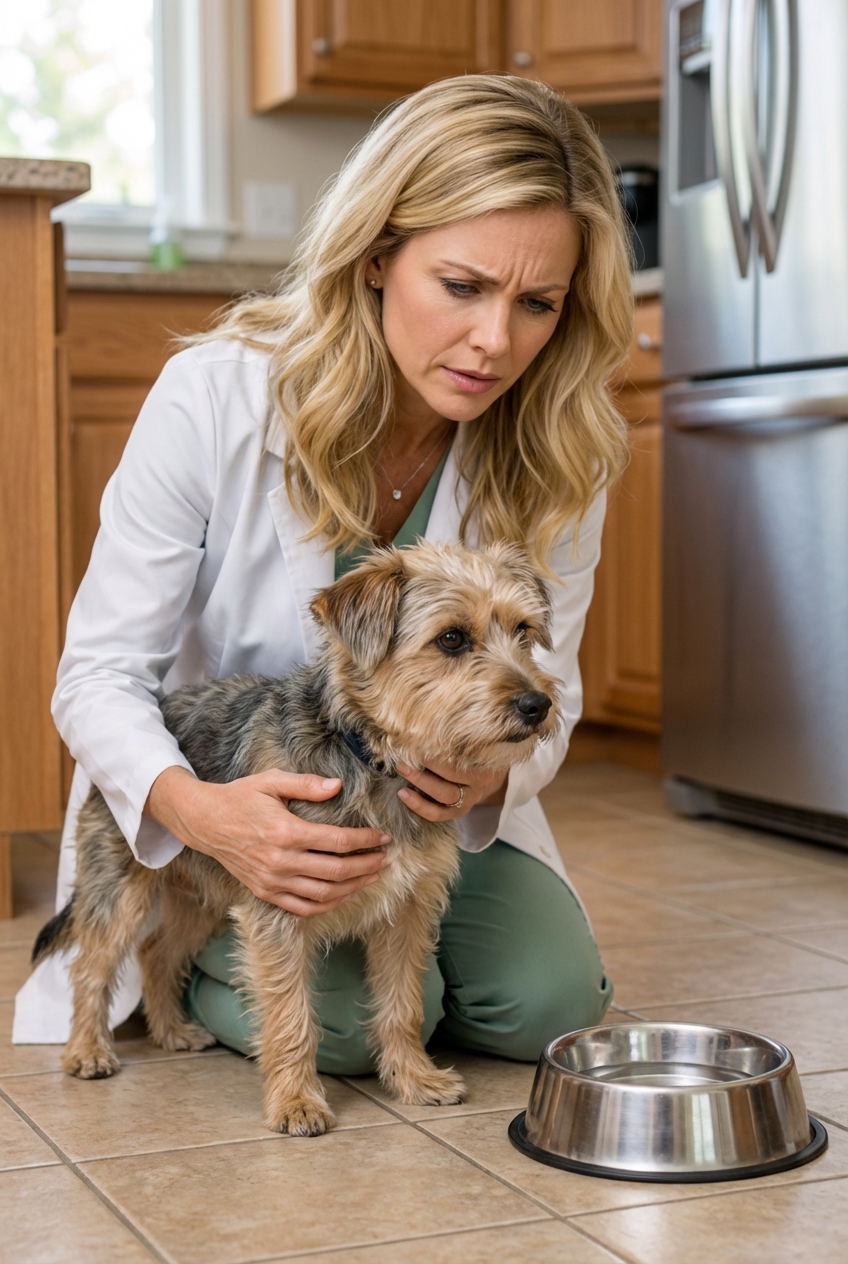
These look similar, but they are different events, and veterinarians think about them differently.
- Vomiting usually involves nausea and effort. You may see drooling, lip licking, frequent swallowing, pacing, gulping, or belly heaving before your dog brings up food or fluid.
- Regurgitation is more passive. Food or water comes back up without retching, often soon after eating. It may look like a tube-shaped pile of undigested food.
Extra note: Dogs with known megaesophagus and some flat-faced (brachycephalic) breeds are more prone to regurgitation and aspiration risk. If you suspect regurgitation, call your vet sooner rather than later.
If you can capture a short video (and it is safe to do so), it can help your vet tremendously.
Common causes
Vomiting is a symptom, not a diagnosis. Here are some of the most common categories we see in clinics.
1) Dietary indiscretion (ate something weird)
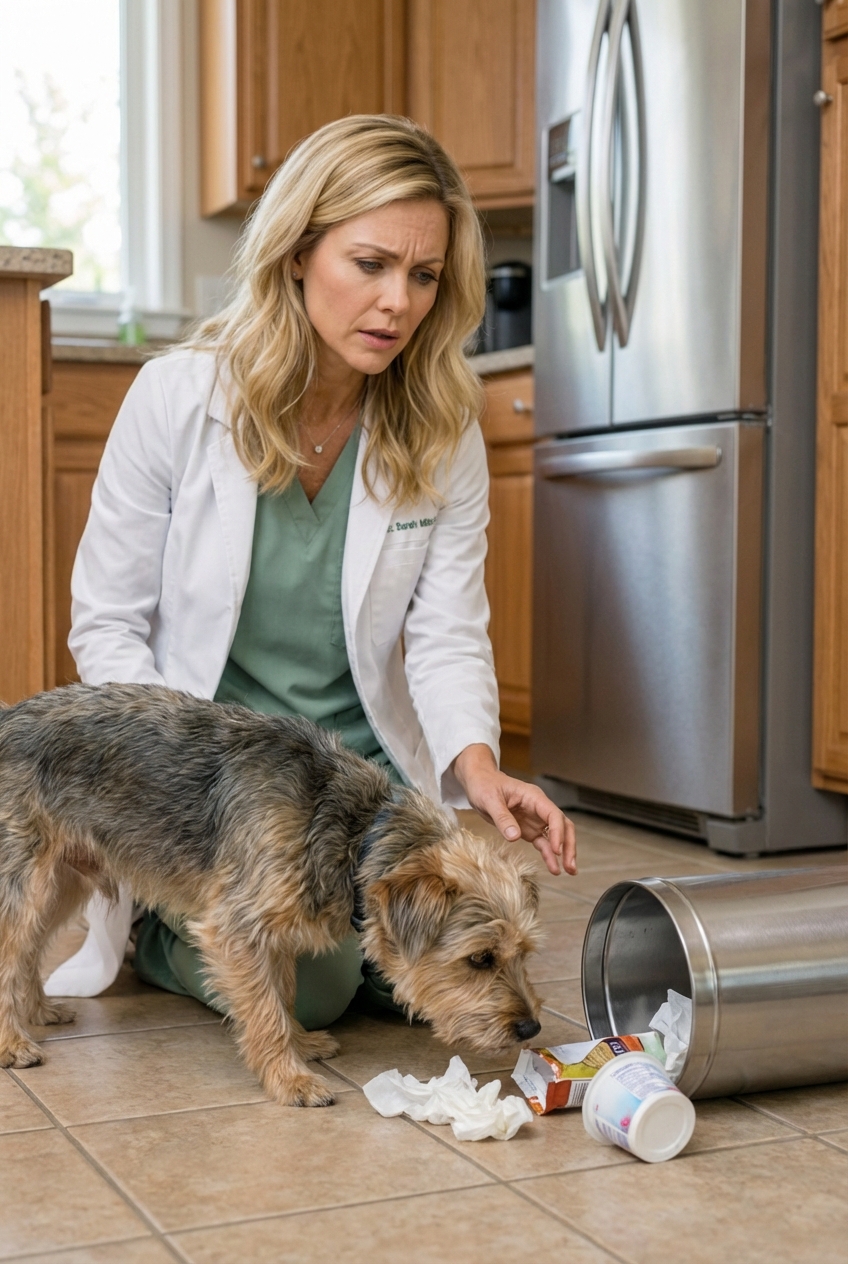
Dogs are talented scavengers. Vomiting can happen after getting into trash, table scraps, fatty foods, spoiled food, compost, or unfamiliar treats.
2) Eating too fast or drinking too much water
Some dogs vomit right after meals if they inhale their food. Others vomit after intense play followed by large gulps of water.
3) Sudden diet change
A quick food switch can irritate the stomach and intestines. Most dogs do better with a gradual transition over 5 to 10 days.
4) Parasites
Roundworms, hookworms, and other parasites can cause vomiting, diarrhea, weight loss, and a dull coat, especially in puppies or newly adopted dogs.
5) Motion sickness or stress
Car rides, boarding, fireworks, or a major household change can trigger vomiting in sensitive dogs.
6) Gastritis, reflux, or bilious vomiting
Some dogs vomit yellow foam or bile, often early in the morning. This can happen when the stomach is empty for too long or with acid reflux. It is usually manageable, but it still deserves a vet conversation if it is recurring.
7) Pancreatitis
Pancreatitis is inflammation of the pancreas, often associated with fatty foods. Common signs include repeated vomiting, belly pain, loss of appetite, lethargy, and sometimes diarrhea.
8) Foreign body or intestinal blockage
This is one of the biggest “do not wait” causes. Dogs may swallow toys, socks, corn cobs, bones, string, or parts of chew items. Vomiting can start mild and become frequent, especially after eating or drinking.
9) Toxins and poisonous foods
Many toxins cause vomiting early on. This includes certain human medications, xylitol (found in some sugar-free products), grapes and raisins, rodenticides, antifreeze, and more. Lilies are especially dangerous for cats. In dogs, many lilies are more likely to cause gastrointestinal upset, but any potential plant or toxin ingestion is still worth an urgent call.
10) Underlying disease
Kidney disease, liver disease, diabetes (including diabetic ketoacidosis), Addison’s disease, infections, and some cancers can all cause vomiting. This is why repeated or unexplained vomiting should be evaluated.
What vomit can tell you
It is not glamorous, but details are helpful. If you can, note the color, contents, and timing.
- Undigested food: could be eating too fast, regurgitation, or vomiting soon after a meal.
- Yellow foam or bile: common with an empty stomach, reflux, or GI upset.
- White foam: can be mild nausea, reflux, or swallowed saliva. If you see repeated retching, a bloated belly, obvious distress, or your dog cannot settle, seek urgent care (concern for obstruction or bloat).
- Blood: fresh red streaks can happen with irritation after repeated vomiting, but any blood should prompt a call. Dark, coffee-ground material suggests digested blood and is more urgent.
- Green material: often bile, grass, plant material, or food dye. Green color by itself does not point to a specific poison. If you suspect toxin exposure (rodenticide, medications, mushrooms, antifreeze, etc.), call immediately.
- Worms: bring the sample or a clear photo to your vet, and schedule promptly.
When to act now
Use this as a practical triage list. If any of these are present, call your veterinarian, urgent care, or an ER now.
- Repeated vomiting (more than 2 to 3 episodes in a few hours) or vomiting that continues beyond 24 hours
- Cannot keep water down or signs of dehydration (sticky gums, sunken eyes, weakness)
- Blood in vomit or vomit that looks like coffee grounds
- Bloated abdomen, unproductive retching, restlessness, or drooling (concern for bloat or GDV, especially in large deep-chested breeds)
- Severe lethargy, collapse, pale gums, or weakness
- Abdominal pain (hunched posture, crying, guarding the belly)
- Possible toxin exposure (medications, xylitol, grapes/raisins, rodenticides, mushrooms, antifreeze, etc.)
- Possible foreign body (toy missing pieces, string, socks, bones, corn cob)
- Black/tarry stool, profuse diarrhea, or vomiting plus diarrhea that is rapidly worsening
- Puppies, seniors, or dogs with chronic disease (they can crash faster)
If you are debating whether it is “bad enough,” that is usually your cue to call. Veterinary teams would much rather talk you through it early than treat a crisis later.
Home care for mild vomiting
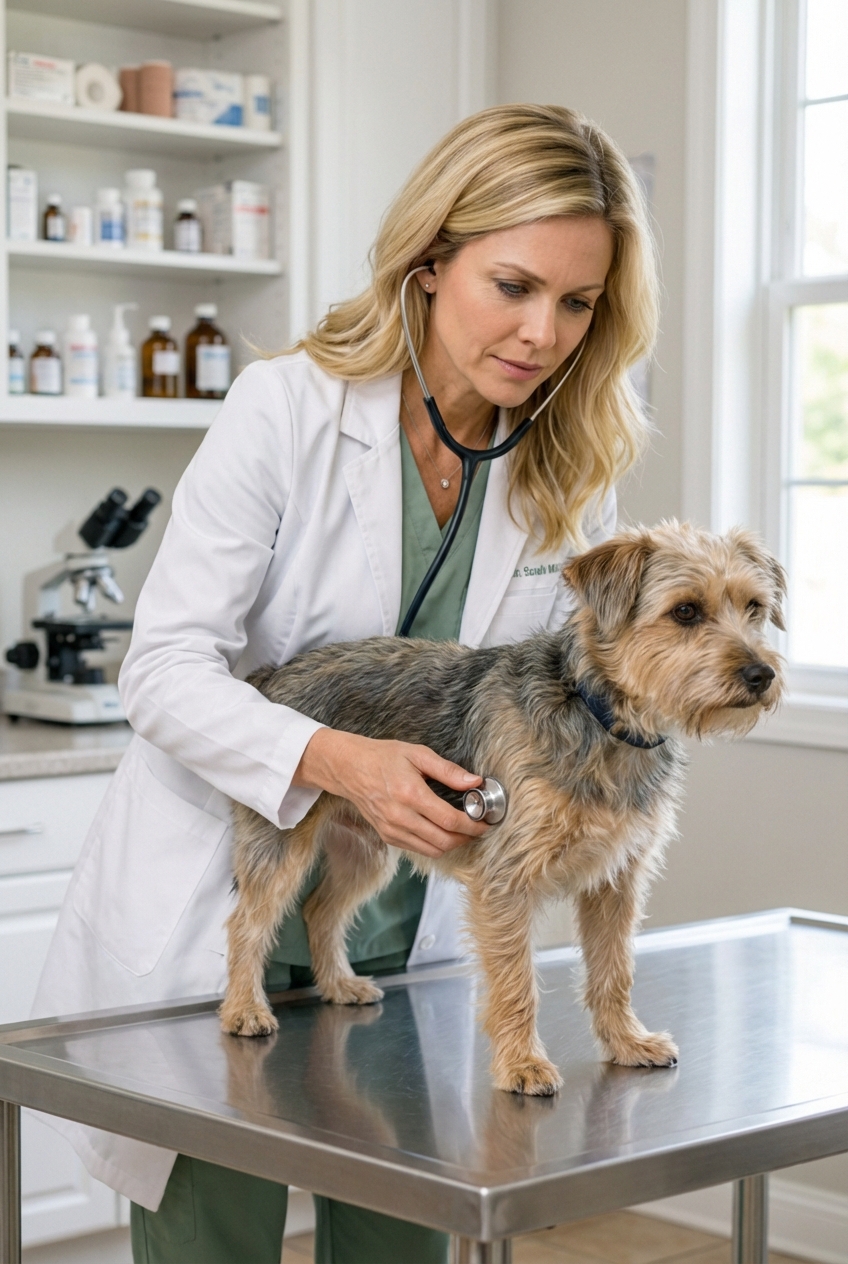
If your dog vomited once, is acting normal, and has no red flags, supportive care may be appropriate. When in doubt, call your vet for personalized guidance.
Step 1: Pause food briefly
For many adult dogs with mild vomiting, your vet may recommend a short break from food, often 6 to 12 hours, then a gentle re-introduction. Do not fast puppies without veterinary guidance.
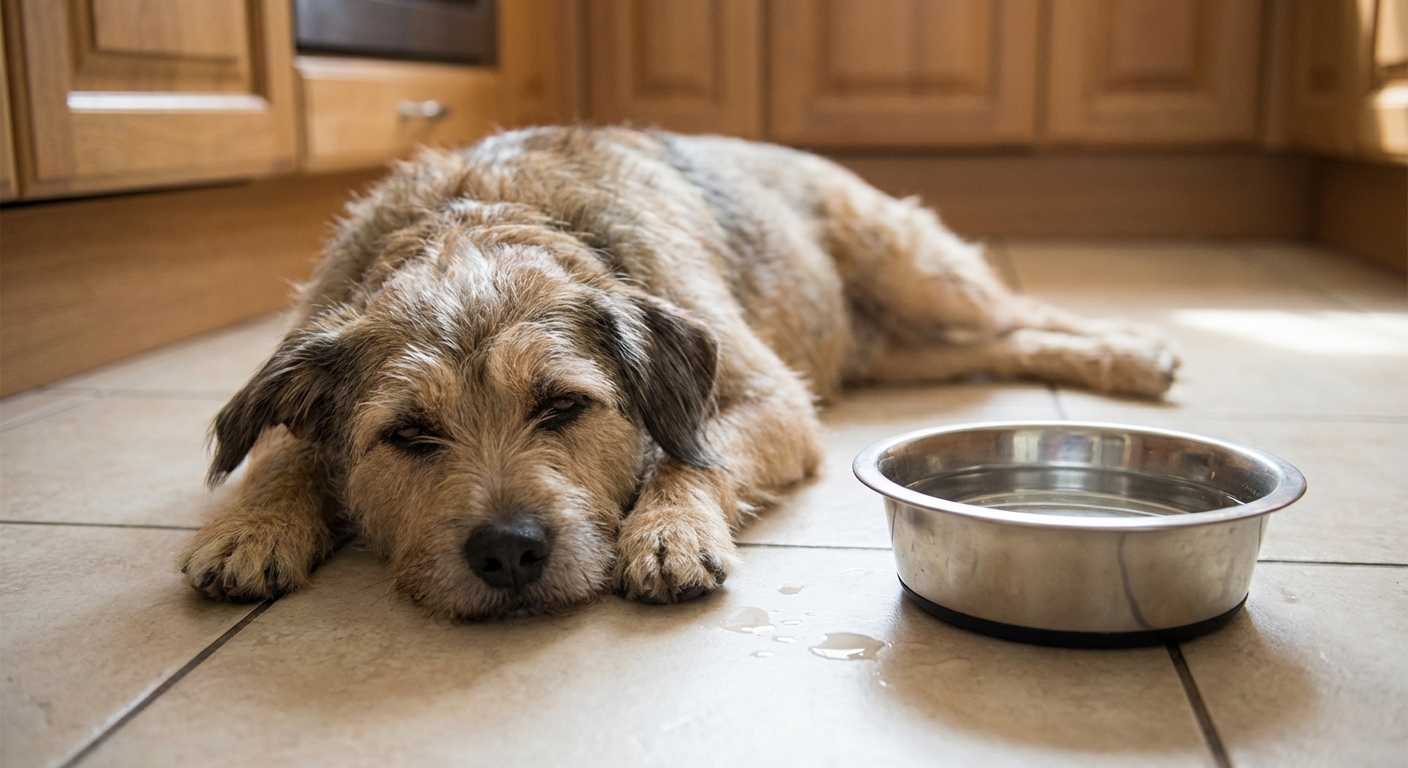
Step 2: Offer small amounts of water
Small, frequent sips are safer than a full bowl gulp. If your dog vomits water repeatedly, that is a reason to call urgently.
Step 3: Reintroduce a bland diet slowly
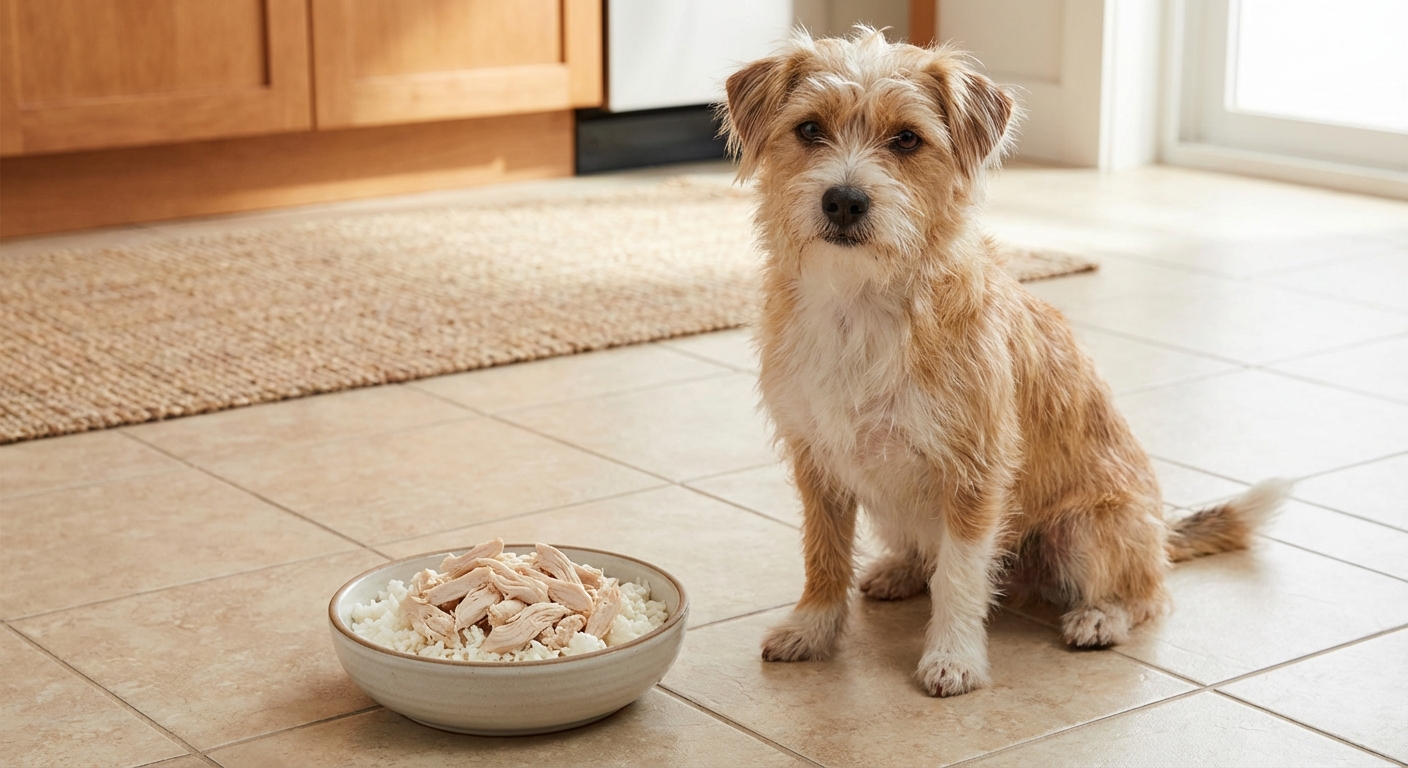
Common bland options include boiled chicken or turkey (no skin, no seasoning) with plain white rice. Feed small portions, and gradually return to the regular diet over several days if things stay calm. If vomiting returns, stop and call your vet.
Step 4: Rest and observe
Keep activity calm, and track:
- How many times your dog vomited (and roughly when)
- Whether they can keep water down
- Appetite and energy
- Stool quality and frequency
- Any possible “suspicious” items chewed or eaten
- Any current medications or supplements
If you call the clinic, these details (or a clear photo of the vomit, and a short video if you caught the episode) can help the team triage you faster.
What not to do
- Do not give human medications like Pepto-Bismol, ibuprofen, or acetaminophen unless your veterinarian specifically instructs you. Some are dangerous for dogs, and dosing and timing matter.
- Do not force food right after vomiting.
- Do not ignore possible foreign body ingestion. Waiting can turn a treatable problem into surgery or worse.
- Do not assume “they got it all out” if vomiting is persistent, worsening, or paired with pain or lethargy.
What your vet may do
Depending on your dog’s age, symptoms, and exam, your veterinarian may suggest:
- Fecal testing for parasites
- Bloodwork to check hydration, infection, pancreatitis indicators, kidney and liver values, and electrolytes
- X-rays to look for blockages, abnormal gas patterns, or foreign material
- Ultrasound for a closer look at the stomach, intestines, pancreas, liver, and gallbladder
- Supportive care such as anti-nausea medication, fluids (under the skin or IV), probiotics, and a GI diet
Prevention tips
- Slow down fast eaters with a slow feeder bowl or puzzle feeder.
- Make trash inaccessible with a lidded can or cabinet latch.
- Transition foods slowly over 5 to 10 days.
- Choose chews wisely and supervise. Avoid items that splinter or can be swallowed in chunks.
- Stay current on parasite prevention and routine fecal checks.
- Know toxin risks in your home, including medications and sugar-free products.
You do not have to do everything perfectly. Small changes, like locking the trash and slowing meals, prevent a huge number of vomiting episodes we see in practice.
Quick decision guide
Monitor at home (call if unsure)
- One vomit episode
- Normal energy
- Normal gums and breathing
- Drinking small amounts and keeping water down
- No belly pain, no known toxin or foreign body
Call your vet today
- Vomiting more than once, or recurring over days
- Decreased appetite, mild lethargy, or diarrhea
- Yellow bile vomiting happening regularly
- Puppy, senior, or dog with chronic illness
Go to urgent care or ER now
- Repeated vomiting with inability to keep water down
- Blood, coffee-ground vomit, or black/tarry stool
- Bloated belly, unproductive retching, collapse, pale gums
- Suspected toxin or foreign body