
Blood in your dog’s vomit can be an emergency. Learn what it may look like, how to tell vomit vs cough, ER red flags, common causes, and safe at-home steps.
Article
•
Designer Mixes
Dog Vomiting Blood: Emergency Signs to Know

Shari Shidate
Designer Mixes contributor
Seeing blood when your dog vomits is one of those moments that makes your stomach drop, and for good reason. Blood can mean anything from a small irritation to a true emergency like internal bleeding or toxin exposure. As a veterinary assistant, I always tell families the same thing: if your dog is vomiting blood (or anything that looks like coffee grounds), treat it as urgent until a veterinarian tells you otherwise.

What it can look like
Blood in vomit does not always look bright red. It can show up in a few forms:
- Bright red streaks or clots: Often indicates fresh bleeding from the mouth, gums, oropharynx, esophagus, or upper stomach. It can also be swallowed blood from a nosebleed or oral injury that is vomited later.
- Dark brown or black “coffee grounds”: This often looks like dark, granular material. It typically means blood has been partially digested, which can point to bleeding in the stomach or upper intestines.
- Pink, frothy fluid: This is often coughed up (not truly vomited) and can be associated with serious lung or heart problems such as fluid in the lungs, bleeding in the airways, or other respiratory emergencies.
If you are not sure whether your dog is vomiting blood (hematemesis) or coughing up blood or foam (hemoptysis), treat it as an emergency sign either way and get prompt veterinary guidance.
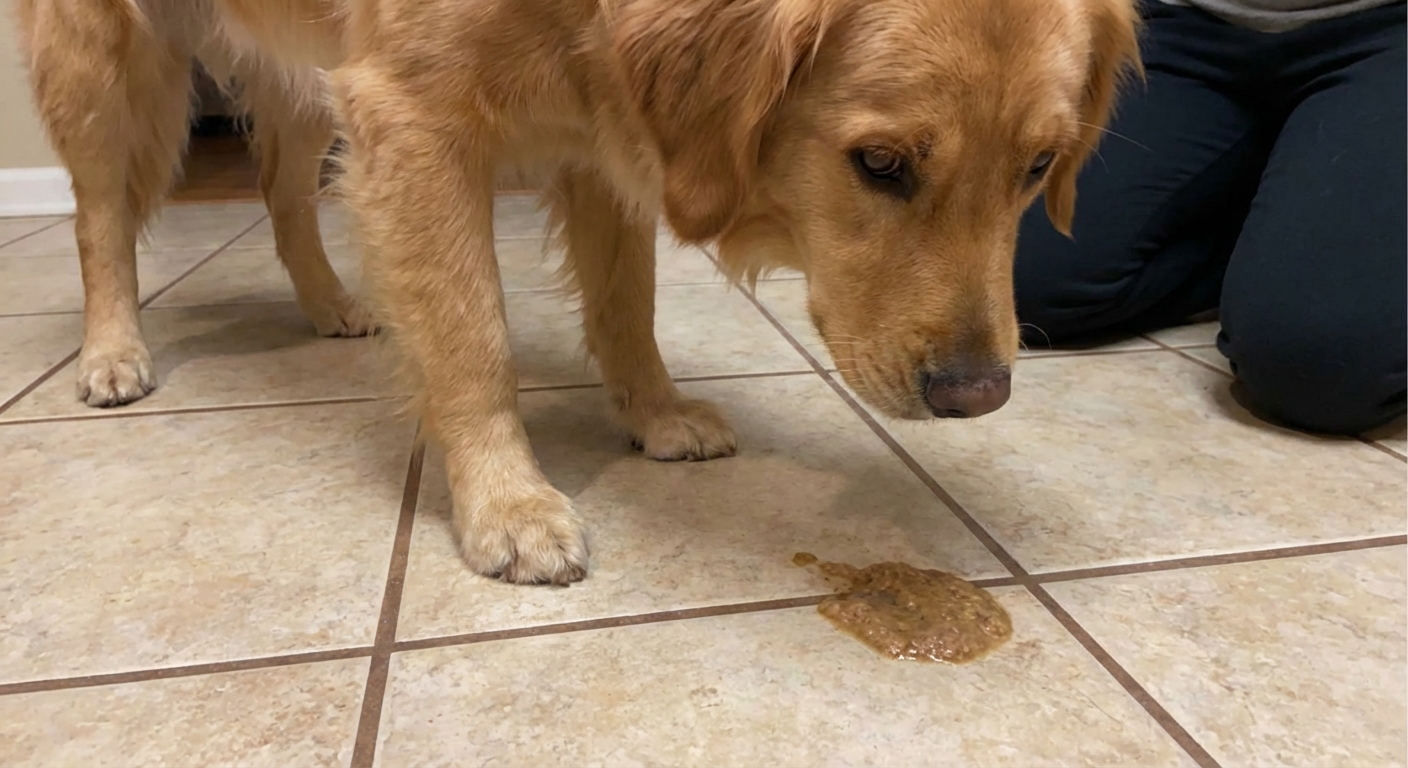
Emergency signs: go now
Blood plus certain symptoms increases the odds that your dog is dealing with a life-threatening problem. Do not wait it out if you notice any of the following:
- Repeated vomiting (especially if it will not stop, or happens every few minutes)
- Weakness, collapse, or extreme lethargy
- Pale or white gums (possible shock or blood loss)
- Distended or painful belly, restlessness, or inability to get comfortable
- Rapid breathing, struggling to breathe, or blue-tinged gums or tongue
- Blood in stool (bright red or tarry black stools)
- Signs of dehydration (sticky gums, sunken eyes, skin that “tents”)
- Possible toxin exposure (rat poison, human medications, xylitol-containing products, mushrooms, illicit drugs)
- Known foreign object risk (toy pieces, socks, corn cobs, bones, rawhide-type chews)
- A deep-chested dog retching without producing much (this can be a red flag for bloat, which is a true emergency)
- A puppy, senior dog, or a dog with chronic disease (they can crash faster)
If any of these are happening, your safest move is to head to an emergency veterinarian immediately.
Common causes
There is no single cause of hematemesis (vomiting blood). Here are some of the more common possibilities veterinarians consider, and why timing matters:
Stomach or intestinal inflammation
Dietary indiscretion, sudden food changes, gastroenteritis, or stress related to illness can inflame the stomach lining and cause small bleeds. This might be mild, but it can also progress quickly, especially if vomiting continues.
Foreign body blockage
When something gets stuck, dogs can vomit repeatedly. The constant strain can injure the esophagus or stomach, and the obstruction itself can become life-threatening.
Stomach ulcers
Ulcers can develop from medications (especially NSAIDs like ibuprofen or naproxen, or dog-prescribed NSAIDs when misdosed), the combination of NSAIDs with steroids, kidney or liver disease, and sometimes certain tumors (including mast cell tumors). Ulcers can bleed slowly or suddenly.
Toxins and clotting problems
Rodenticides (rat poison) and some other toxins interfere with clotting and can cause internal bleeding. This is time-sensitive because early treatment can be lifesaving. Other toxins (including xylitol) are still urgent, but they are more likely to cause low blood sugar and liver injury than primary bleeding. Either way, potential toxin exposure warrants immediate veterinary advice.
Pancreatitis
Pancreatitis can cause severe vomiting, abdominal pain, and sometimes blood due to inflammation and irritation of the GI tract. Many dogs need supportive care and pain control.
Parvovirus or severe infection
In unvaccinated puppies especially, parvo can cause vomiting and diarrhea that may be bloody. It is highly contagious and can be fatal without aggressive treatment.
Swallowed blood (mouth or nose)
Sometimes the dog is swallowing blood from a bleeding tooth or gum, an oral injury, or a nosebleed, and then vomiting it up later.
Because the list ranges from “needs medication and rest” to “needs emergency surgery,” vomiting blood should not be diagnosed at home.
What to do right now
If you are reading this while actively dealing with it, here are calm, practical next steps:
- Call a veterinary clinic or ER now and describe what you see, including color, amount, and how often it is happening.
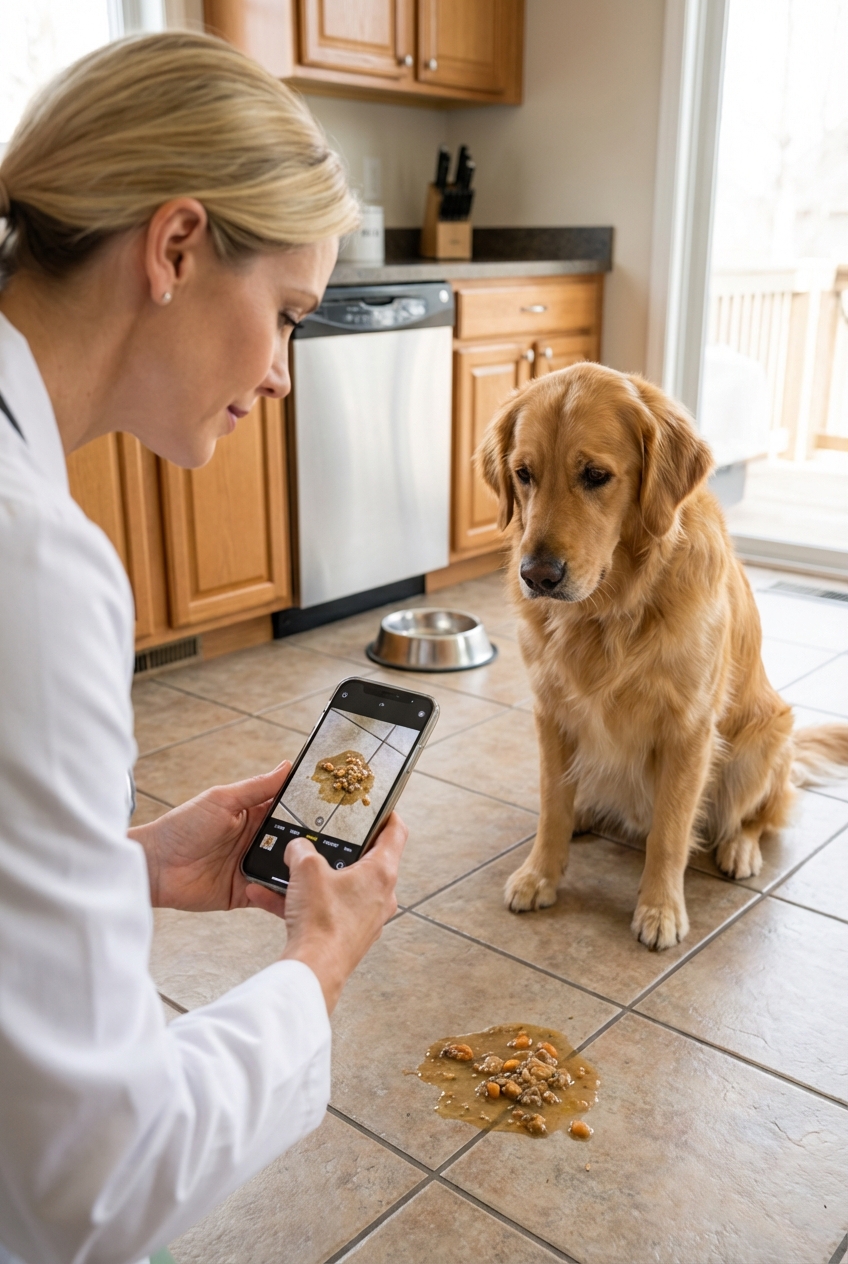
- Take a clear photo of the vomit and any stools. This is genuinely helpful for triage.
- Check gum color: Healthy gums are typically bubblegum pink and moist. Pale, gray, blue-tinged, or tacky gums are concerning.
- Prevent further eating: Remove food, chews, toys, and anything your dog might swallow.
- Do not give human medications (no Pepto-Bismol, no ibuprofen, no aspirin). Some can worsen bleeding, delay proper diagnosis, or be toxic.
- Water: do not force it. If your dog is actively vomiting, gagging, very lethargic, or bloated, do not push water. If your dog is stable and not actively vomiting, your clinic may advise small amounts of water or ice chips. Follow their guidance.
- Do not induce vomiting unless a veterinarian tells you to, especially if blood is already present.
- Bring possible toxin packaging (or a photo of it) to the vet, including supplements, cannabis products, pest control products, and medications.
Transport tip: Keep your dog warm and quiet. Minimize movement if your dog seems weak or painful. If you can do so safely, bring a photo or a small sample of vomit or stool in a sealed bag or container.
What the vet may do
Knowing what may happen at the clinic can reduce stress and help you prepare. Depending on how your dog looks on exam, your veterinarian may recommend:
- Physical exam and vitals (temperature, heart rate, hydration status, abdominal pain)
- Bloodwork (anemia, infection, organ function, electrolytes)
- Clotting tests if rodenticide or a bleeding disorder is suspected
- X-rays or ultrasound to look for foreign bodies, bloat, masses, or organ inflammation
- Parvo test in at-risk puppies or dogs with severe GI signs
- Treatment such as IV fluids, anti-nausea medication, stomach protectants, pain control, antibiotics when indicated, blood products in severe cases, or surgery if an obstruction is found
Your job is not to figure out which cause it is. Your job is to get your dog to care quickly and share good information.
When it may be less urgent
Occasionally, a dog vomits once and there are tiny specks or a faint streak of red from minor irritation, especially after repeated gagging. Even then, you should still call a veterinarian the same day because:
- Small bleeds can become bigger bleeds.
- Vomiting can escalate into dehydration quickly.
- The “small streak” can be the first sign of an ulcer, blockage, or toxin exposure.
If your dog is acting completely normal, has normal gum color, is not bloated, and vomiting happened only once, your vet may advise close monitoring. But please do not assume that without checking in.
What to note
Before you call or head in, gather these details if you can:
- How many times has your dog vomited and over what timeframe?
- What did it look like: bright red, clots, coffee grounds (dark granular material), or pink froth?
- Any diarrhea, black or tarry stool, or straining?
- Any coughing, labored breathing, or episodes that look more like coughing up foam than vomiting?
- Any access to trash, bones, toys, socks, compost, or dead animals?
- Any medications or supplements given recently (including flea and tick products)?
- Any possible toxin exposure (rodent bait, gummies, human medications)?
- Is your dog eating, drinking, and urinating normally?
- Energy level: normal, tired, weak, collapsing?
This information helps the team triage faster and choose the right tests.
A gentle note
If you are feeling panicked, that is completely normal. Vomiting blood is scary because it can be serious. The most evidence-based, loving thing you can do is to treat it as time-sensitive, keep your dog safe and calm, and get veterinary guidance quickly. In many cases, timely care makes all the difference.