Worried about a vomiting dog? Learn when vomiting is an emergency, how to offer small sips safely, and the best bland foods (chicken/rice, turkey, pumpkin, e...
Article
•
Designer Mixes
Dog Vomiting at Night: Causes and Home Steps

Shari Shidate
Designer Mixes contributor
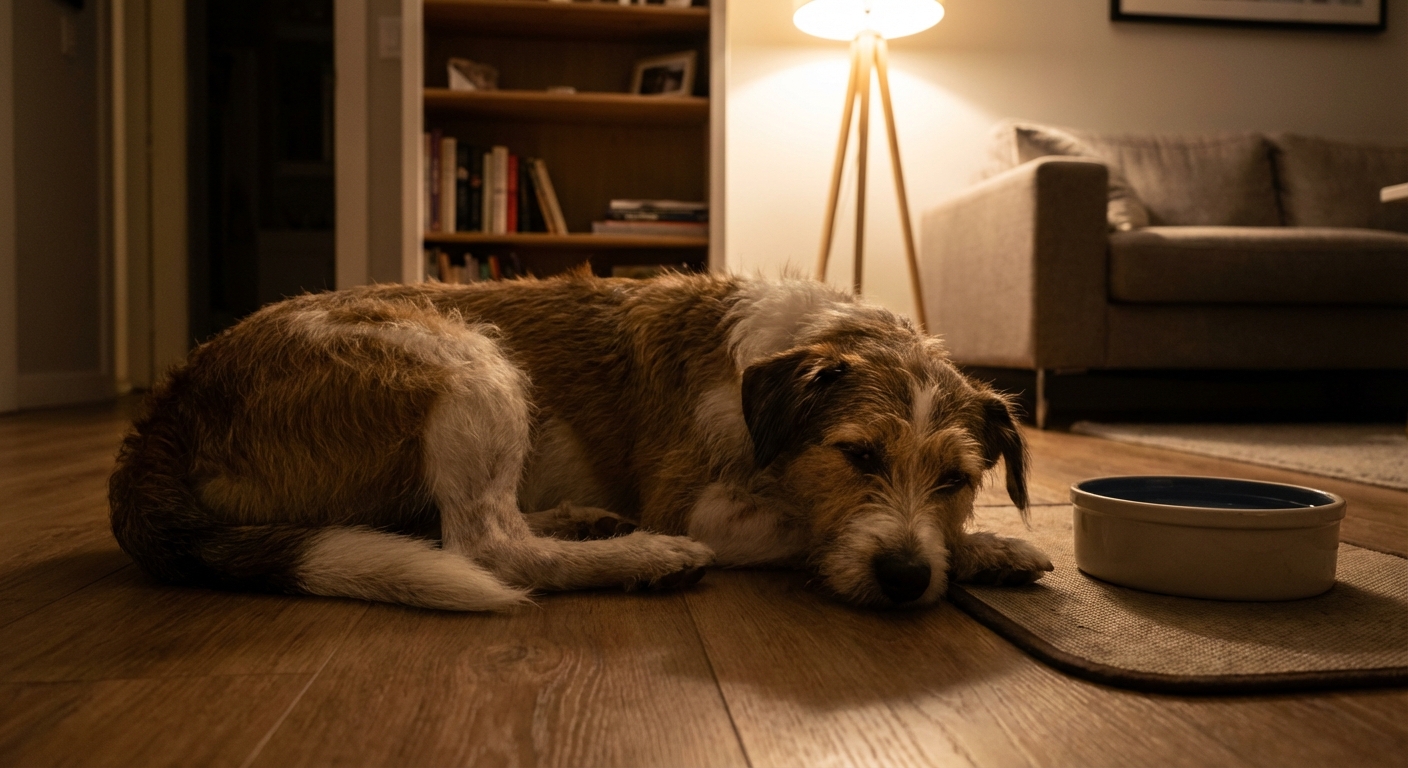
Waking up to the sound of your dog gagging or vomiting is stressful, and it can feel even scarier when it happens at night. As a veterinary assistant, I want you to know two things can be true at once: many nighttime vomiting episodes have manageable causes, and some situations need prompt veterinary care.
This guide will help you sort through the most common reasons dogs vomit at night, what you can safely do at home, and when it is time to call your vet or head to an emergency clinic.
Quick decision guide
- Vomited once, now acting normal: Monitor, offer small sips of water, and consider the home steps below.
- Vomiting 2 to 3 times in 24 hours, or vomiting plus diarrhea: Call your vet for advice (even if it is after hours).
- Repeated vomiting, unproductive retching, bloated belly, collapse, blood, toxin risk, or a possible swallowed object: Go to an emergency clinic.
- Puppy, senior, or chronic illness (especially diabetes): Call a vet sooner rather than later.
First, confirm it is vomiting
Pet parents often use “vomiting” as a catch-all, but vomiting, regurgitation, coughing, and reverse sneezing can look similar and point to different causes.
- Vomiting: Usually includes heaving or retching with abdominal effort. You may see partially digested food, yellow fluid or foam (often bile), or liquid.
- Regurgitation: Food comes up easily with little effort, often in a tube shape. It is typically undigested. This can suggest an esophagus issue and should be discussed with your vet.
- Coughing: Often more sudden, may involve neck extension, and produces foam or mucus. Persistent coughing can point to airway irritation, infectious respiratory disease (kennel cough type illnesses), or sometimes heart disease.
- Reverse sneezing: A loud, snorting inhale with an extended neck. It is usually related to upper airway or nasopharyngeal irritation and is often benign, but you should check in with your vet if it is frequent, worsening, or paired with breathing trouble or collapse.
If you can safely do so, take a quick video for your veterinarian. It helps more than you might think.
Common causes of dog vomiting at night
1) Empty stomach and bile (bilious vomiting)
A common pattern is a dog who vomits yellow fluid or foamy liquid late at night or very early morning. This can happen when the stomach stays empty for too long and becomes irritated by acid and bile.
Clues: Vomiting happens on an empty stomach, your dog seems hungry afterward, and they act normal between episodes.
2) Acid reflux and indigestion
Just like people, dogs can have reflux, especially when they lie down after eating. Some dogs will vomit at night, swallow repeatedly, lick lips, or seem restless.
Clues: Gulping, lip licking, burping, nausea signs at bedtime, or vomiting shortly after lying down.
3) Eating something they should not
Dogs are talented scavengers. A late-night vomit can be from raiding the trash, chewing a toy, eating cat food, or getting into rich treats earlier in the day.
Clues: Vomit contains unusual material, your dog is extra gassy, or there was access to trash, bones, fatty foods, or unfamiliar items.
4) Gastritis, parasites, or gut irritation
General gastritis (stomach inflammation), intestinal parasites, and some bacterial imbalance issues can cause vomiting that may show up more at night when the stomach is empty.
Clues: Loose stool, weight loss, a dull coat, or vomiting that repeats over days.
5) Food intolerance or diet change
A sudden switch in food, a new treat, or sensitivity to an ingredient can trigger vomiting. Nighttime vomiting can happen if dinner is the main trigger meal.
Clues: Vomiting after meals, itchiness, ear infections, soft stool, or symptoms that started after a diet change.
6) Pancreatitis (can worsen quickly)
Pancreatitis is inflammation of the pancreas and can be triggered by fatty meals, table scraps, or dietary indiscretion. Symptoms can progress over hours and can become serious quickly.
Clues: Repeated vomiting, belly pain, “praying position,” lethargy, refusing food, or diarrhea. This is a “call your vet” situation.
7) Foreign body or partial blockage
If a dog swallows something that gets stuck, vomiting can start suddenly and continue. This can become dangerous quickly.
Clues: Repeated vomiting, inability to keep water down, drooling, acting painful, straining to poop, bloated belly, or known toy or sock chewing.
8) Other medical causes
Less commonly, nighttime vomiting can be connected to kidney or liver disease, Addison’s disease, diabetes complications, medication side effects, or toxins. These typically come with other symptoms like increased thirst and urination, weakness, weight loss, or significant lethargy.
9) Late-night triggers
Sometimes the timing is not a disease, but a trigger. Dogs may vomit after gulping water, after intense play close to bedtime, from car rides, or from excitement and stress.
Clues: Vomiting shortly after chugging water, activity, travel, or an unusually stimulating evening.
What you can do at home
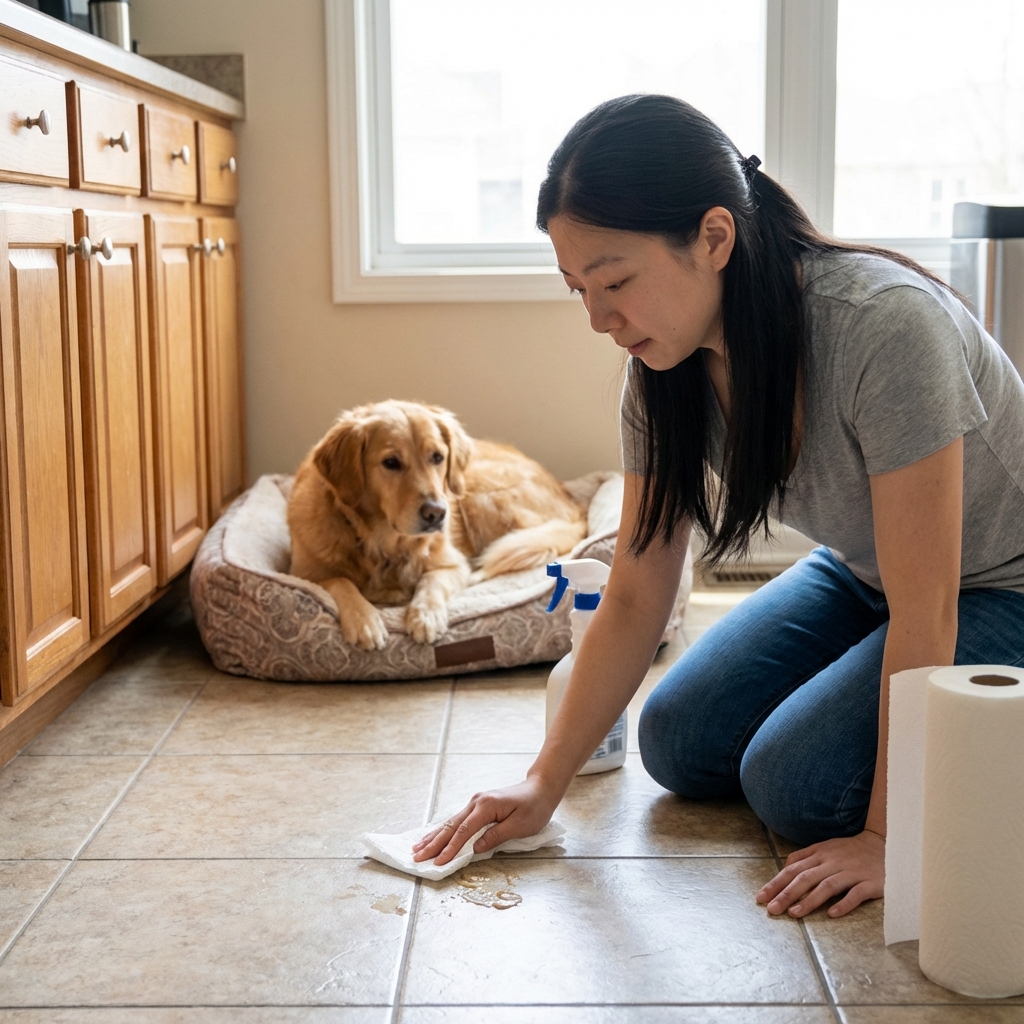
If your dog vomited once, is otherwise bright and alert, and is not showing red-flag symptoms, these steps can help you stabilize things overnight. If you are unsure, call an emergency clinic for guidance.
Step 1: Pause food briefly (do not restrict water)
For many adult dogs, a short break from food can give the stomach time to settle. Water should still be available, but offer it in small amounts if your dog wants to gulp. If your veterinarian has given you different instructions for your dog, follow those.
- Pick up food for 6 to 8 hours in a stable adult dog.
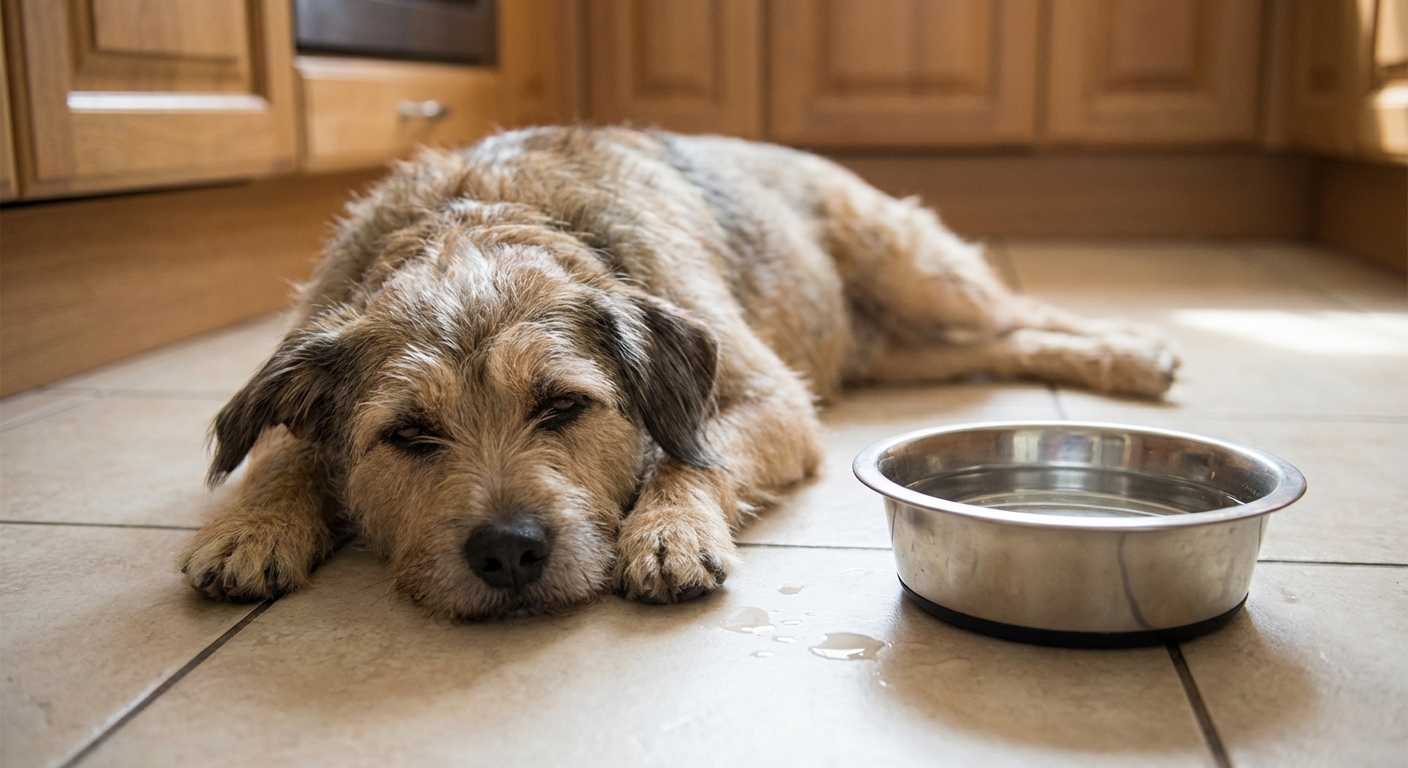
- Offer small sips of water every 20 to 30 minutes if they are drinking too fast.
Do not fast very young puppies, toy breeds prone to low blood sugar, diabetic dogs, or dogs with known medical conditions unless your veterinarian tells you to. If vomiting continues during the fasting window, stop home care and call a vet.
Step 2: Reintroduce a bland meal
If vomiting stops, offer a small bland meal. Good options include:
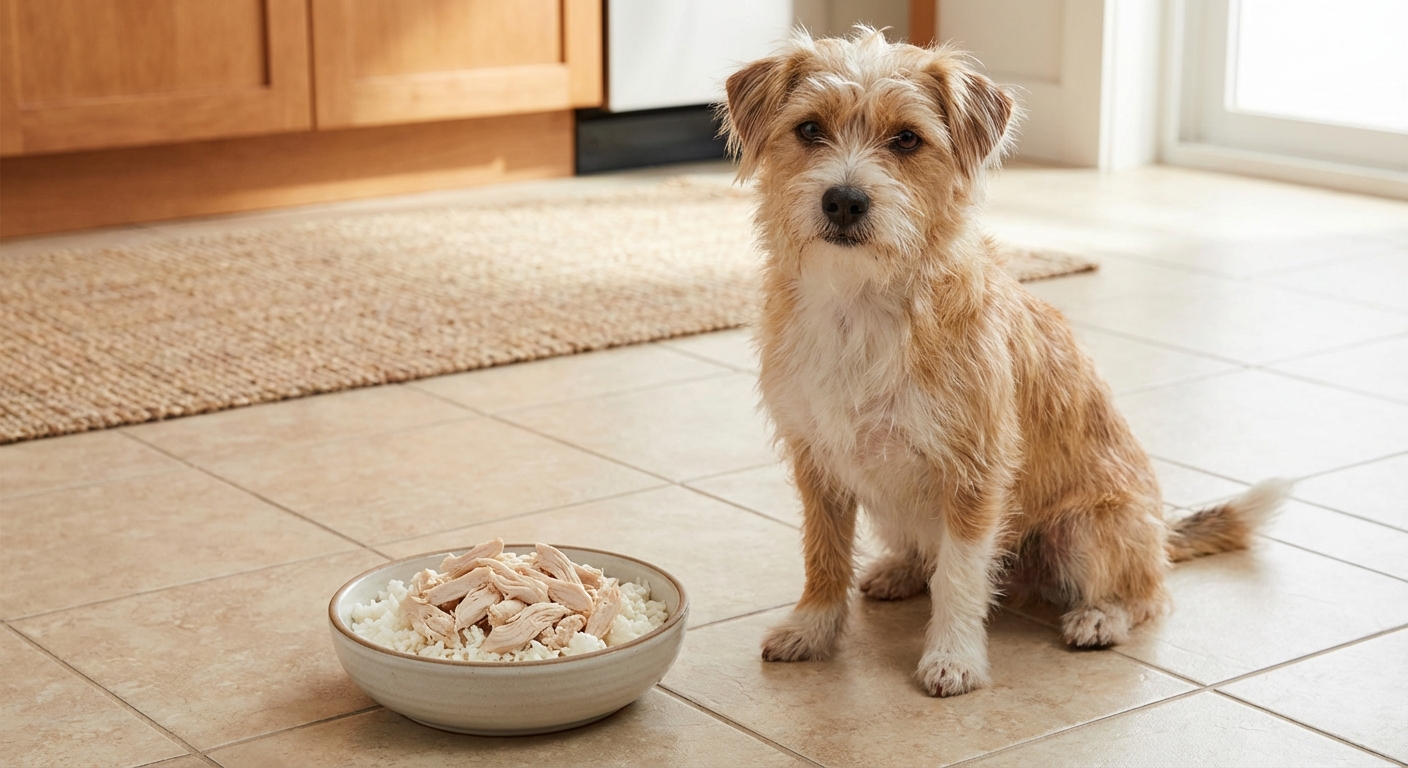
- Boiled skinless chicken breast with plain white rice
- Lean ground turkey (cooked, drained) with rice
Start with a small portion, about 25 percent of their normal meal size, then gradually increase over 24 to 48 hours if they keep it down.
Step 3: Add a bedtime snack (for bile vomiting)
If your dog’s vomiting is consistently yellow fluid late at night or early morning, a small bedtime snack can help buffer stomach acid.
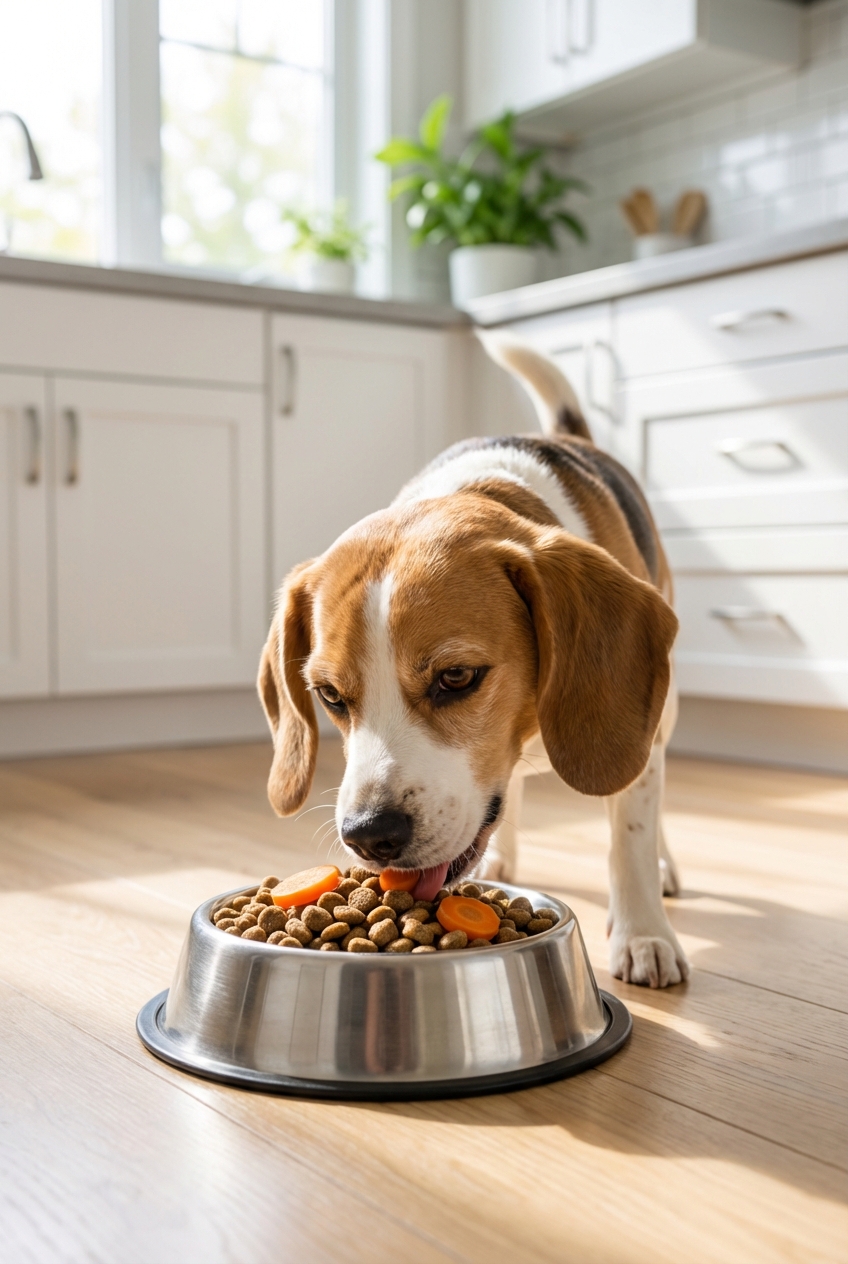
- A few bites of their regular kibble
- A spoonful of bland food
This simple trick often reduces bilious vomiting episodes. If it helps, let your veterinarian know so they can confirm the pattern and rule out other causes.
Step 4: Check hydration
Vomiting can dehydrate dogs quickly. Watch for:
- Dry or tacky gums
- Sunken eyes
- Weakness
- Skin that does not spring back quickly when gently lifted over the shoulder blades
Skin turgor checks are not perfect, especially in seniors, very thin dogs, or overweight dogs. If you suspect dehydration, or if vomiting repeats, your dog needs veterinary care.
Step 5: Do a quick cause audit
These details help your vet and help you decide next steps:
- What time was dinner and what exactly was eaten?
- Any new treats, chews, bones, supplements, or human food?
- Trash access, cat litter, compost, plants, or toys missing pieces?
- Any new or recent medications (NSAIDs, antibiotics, dewormers), or a dose that may have been repeated by accident?
- Any diarrhea, straining, coughing, reverse sneezing, or unusual behavior?
A note on over-the-counter meds
Please do not give human anti-nausea meds, Pepto-Bismol, or pain relievers unless your veterinarian specifically directs you on product and dose. Some are unsafe for dogs, can mask symptoms, or can complicate diagnosis.
When nighttime vomiting is an emergency
Seek urgent veterinary care if you notice any of the following:
- Repeated vomiting, vomiting more than 2 to 3 times in 24 hours, or your dog cannot keep water down
- Vomiting plus diarrhea, especially if your dog seems weak or dehydrated
- Blood in vomit (red or coffee-ground appearance)
- Bloated or painful abdomen, pacing, or unproductive retching
- Extreme lethargy, collapse, weakness, or pale gums
- Suspected toxin exposure (xylitol, chocolate, grapes and raisins, rodent bait, medications, cannabis products, antifreeze)
- Possible foreign body (sock, toy, corn cob, bones)
- Puppies, seniors, or dogs with chronic illness
- Signs of dehydration or very dark urine
If you are heading in, bring a photo of the vomit, a list of recent foods and treats, and any packaging from chews or potential toxins.
Preventing nighttime vomiting
Adjust meal timing
For many dogs, the simplest prevention is spreading calories out more evenly:
- Feed 2 to 3 smaller meals instead of one large meal.
- Add a small bedtime snack if bile vomiting is an issue.
Slow down fast eaters
Dogs that inhale dinner can swallow air and trigger reflux or vomiting. Try:
- Slow feeder bowls
- Food puzzle toys
- Scatter feeding in a safe area
Limit rich foods and risky chews
Fatty leftovers, greasy meats, and certain bones can trigger stomach upset and pancreatitis. Stick with consistent, dog-safe treats and monitor chewing to reduce foreign body risk.
Transition foods slowly
If you are changing diets, go gradually over 7 to 10 days. A slow transition is one of the easiest ways to prevent vomiting and diarrhea.
Talk to your vet about recurring episodes
Night vomiting that happens more than once or twice a month deserves a conversation. Your veterinarian may recommend fecal testing, bloodwork, diet trials, or reflux support depending on your dog’s history.
What your vet may ask and test
If you call or come in, expect questions like:
- How often is your dog vomiting and at what time?
- What does it look like (food, foam, yellow fluid, blood)?
- Any diarrhea, appetite changes, thirst changes, or weight loss?
- Any possible access to toxins, medications, or foreign objects?
Depending on the case, your vet may recommend:
- Fecal testing for parasites
- Bloodwork to assess hydration, organ function, inflammation
- X-rays or ultrasound if obstruction or pancreatitis is suspected
- Diet changes or a prescription gastrointestinal diet
Bottom line
Many dogs vomit at night because their stomach is empty too long, they have mild reflux, or they ate something that did not agree with them. When vomiting is persistent, painful, bloody, or paired with lethargy, it is time to involve your veterinarian quickly.
If you call your vet, it helps to share your dog’s age and health conditions, the timing, what the vomit looked like, any diet changes or possible “trash snacks,” and whether they are keeping water down.