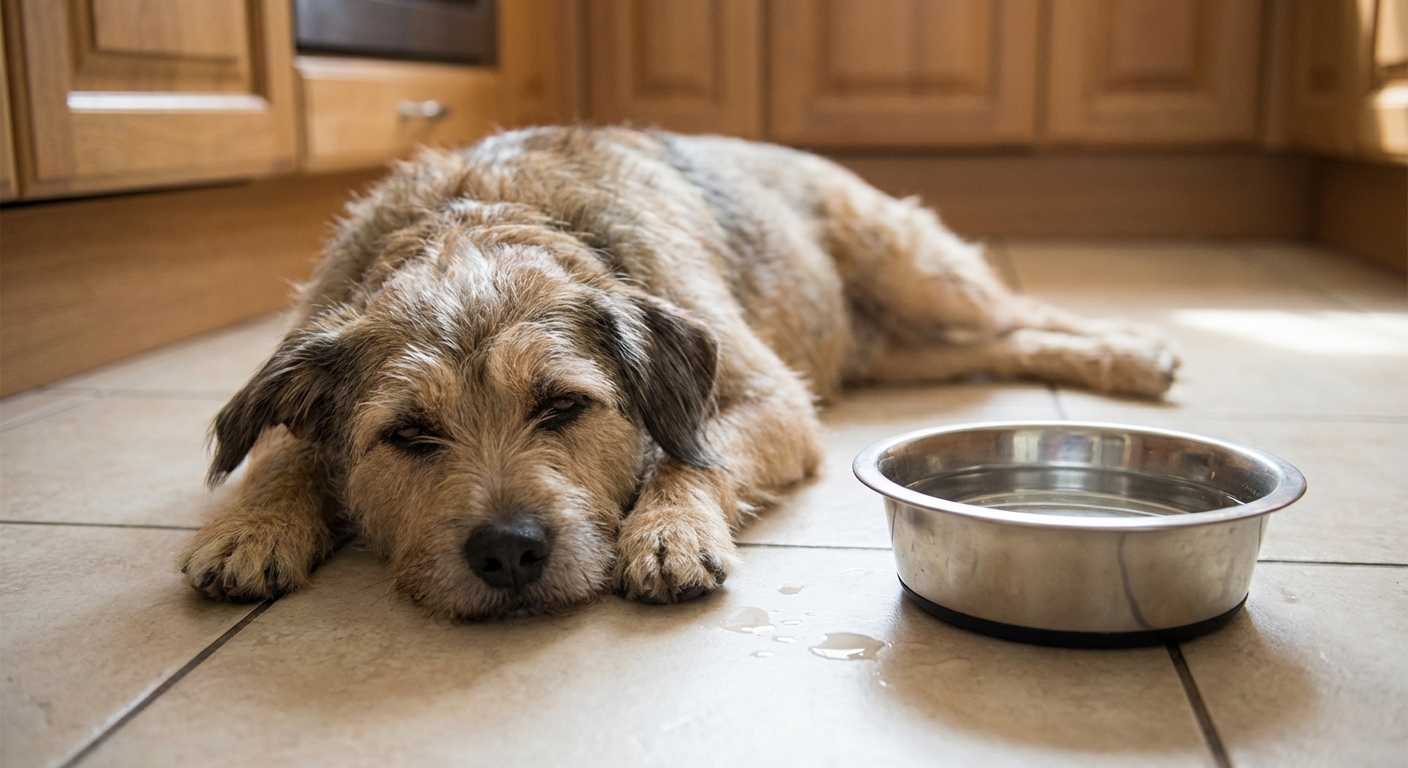
A practical dog vomiting guide from a veterinary assistant: what to note, emergency warning signs, safe at-home care, bland diet steps, vomit color clues, an...
Article
•
Designer Mixes
Dog Vomit Color Chart

Shari Shidate
Designer Mixes contributor
If you have ever cleaned up a surprise puddle and wondered, “What does this color mean?”, you are not alone. As a veterinary assistant in Frisco, Texas, I can tell you this is one of the most common questions pet parents ask. The color of your dog’s vomit can offer helpful clues about what is happening in the stomach and beyond, but color alone is not a diagnosis.
This guide walks you through the most common dog vomit colors, what they can mean, and when it is time to call your veterinarian.

First, quick safety check
Before you focus on color, take a moment to look at your dog’s whole picture. Vomit color matters much more when it comes with concerning symptoms.
ER now
- Repeated vomiting or your dog cannot keep even water down
- Bloated, painful abdomen, retching with little or no vomit (possible bloat in deep-chested dogs)
- Weakness, collapse, pale gums, or trouble breathing
- Vomiting plus diarrhea with lethargy, especially in puppies
- Suspected toxin exposure (xylitol, rodent bait, antifreeze, marijuana, human meds, etc.)
- String, ribbon, toy pieces, corn cob, rocks, or anything that suggests a blockage
- Blood in vomit or vomit that looks like coffee grounds
If your dog seems stable, the color chart below can help you decide what to do next.
Vomit vs regurgitation
One quick but important distinction: vomiting usually includes retching and heaving, and the material often looks digested or mixed with liquid. Regurgitation is more passive, often happens soon after eating or drinking, and may look like tube-shaped, undigested food or water.
Regurgitation can point to issues in the esophagus and should be discussed with your veterinarian, especially if it is repeated, your dog is coughing, or they seem to struggle with swallowing.
Dog vomit color chart
Vomit can be foamy, watery, chunky, or mixed with food. Color often reflects bile, stomach acid, blood, mucus, or something your dog ate.
Clear or white foam
Common causes: an empty stomach, reflux, mild nausea, motion sickness, drinking too fast, or a single gagging episode. Some dogs vomit white foam first thing in the morning when their stomach is empty.
What you can do (monitor): Offer small sips of water. If it is a one-off and your dog is otherwise normal, monitor.
Call your vet within 24 to 48 hours if: it is happening more than occasionally, your dog is losing weight, coughing, regurgitating, or seems painful.
Yellow (often bile)
What it can mean: bile is present in the vomit, which often happens on an empty stomach. Some dogs show a predictable pattern, like early-morning yellow vomit.
What you can do (monitor if mild): If your dog is otherwise bright and it happens occasionally, ask your vet if smaller, more frequent meals or a small bedtime snack could help.
Call your vet soon if: vomiting is repeated, your dog will not eat, there is diarrhea, your dog seems painful, or you suspect pancreatitis or a foreign body. Persistent or frequent “bile vomiting” needs a vet check to rule out parasites, reflux, diet intolerance, and other causes.
Green
Most common causes: eating grass or plants, bile mixed with stomach contents, or food dyes (for example, treats or something colored your dog got into).
Toxin note: Green color by itself does not confirm poisoning. The concern is the exposure history and your dog’s symptoms. Some baits or toxic substances can be dyed, and dogs can also vomit green after chewing plants.
What you can do: Remove access to plants and monitor closely.
Call your vet or poison control right away if: you suspect rodent bait exposure, your dog got into chemicals or medications, or your dog seems weak, wobbly, confused, tremoring, or is vomiting repeatedly.
Brown
Common causes: your dog ate something brown (dirt, feces, chocolate-colored treats), stomach contents mixed with food, or digested blood.
Stool-like odor: A foul, stool-like smell can happen with coprophagia (eating feces) or severe GI disease. It can also be seen with obstruction, but odor and color alone cannot confirm a blockage.
Call your vet promptly if: brown vomit is recurring, it smells like stool and you did not see your dog eat feces, your dog is lethargic, has abdominal pain, is not passing stool, is straining, or keeps trying to vomit without producing much.
Red or pink (fresh blood)
What it can mean: fresh bleeding from the mouth, throat, or esophagus (chewing sticks, sharp toys, dental disease) or stomach irritation and ulcers. Even a small amount matters if it repeats.
What you can do: Check the mouth gently for obvious bleeding if your dog will allow it safely. Do not give human medications.
Same-day vet visit: and go to the ER immediately if there is a lot of blood, weakness, black stool, or repeated vomiting.
Black or coffee-ground
What it suggests: digested blood, often from bleeding in the stomach or upper small intestine. This can be linked to ulcers, certain medications (like NSAIDs), liver disease, tumors, or severe illness.
ER now: seek veterinary care immediately.
Orange
Possible causes: bile mixed with food, dietary pigments (pumpkin, carrots), or sometimes issues involving the liver or gallbladder.
What you can do (monitor if mild): If your dog ate orange foods and is otherwise well, monitor.
Call your vet within 24 hours if: orange vomit repeats, appetite drops, your dog seems painful, or you notice yellowing of the eyes or gums.
Tan or pale
What it can mean: pale, foamy vomit is often stomach fluid mixed with mucus, especially if your dog has been gagging, coughing, or vomiting on an empty stomach. Sometimes it is simply the color of partially digested food.
Call your vet if: it is repeated, your dog seems lethargic or painful, or it comes with diarrhea.
What helps your vet most
If you end up calling your veterinarian, these specifics can speed up the right next step.
- How many times in the last 2 to 6 hours
- Can your dog keep water down?
- Any diarrhea? (and what it looks like)
- Energy level (normal, tired, hiding, restless)
- Appetite and last normal meal
- Are they urinating? Any straining?
- Are they able to pass stool? Any constipation or no stool at all?
- Possible exposure to trash, toys, bones, socks, plants, chemicals, medications
- Anything unusual in the vomit (foreign material, string, worms, large amounts of mucus)
- Photo of the vomit in good lighting (gross but very useful)

Home care for mild, one-time vomiting
If your adult dog vomits once, then acts normal, has normal gum color, and can keep water down, home monitoring is reasonable in many cases. When in doubt, call your vet.
Supportive steps
- Offer water in small amounts to avoid gulping. Ice chips can help some dogs.
- Keep food boring for 24 hours. No new treats, no rich chews, no table scraps.
- Prevent repeat exposure to the likely culprit (trash, grass, toy pieces).
If vomiting continues: stop offering food and call your veterinarian for guidance. Do not try to “push through” multiple episodes at home.
Do not do this
- Do not give Pepto, ibuprofen, aspirin, or other human meds unless your vet specifically tells you to
- Do not force food right away if your dog is still nauseated
- Do not assume vomiting is normal if it is recurring
Special situations
Puppies
Puppies can dehydrate fast. Vomiting in a puppy deserves a quicker call, especially with diarrhea, low energy, or missed vaccines.
Senior dogs
Older dogs have less reserve and may have underlying conditions (kidney disease, liver disease, pancreatitis). Repeated vomiting or any blood should be treated seriously.
Chronic conditions
If your dog has diabetes, kidney disease, Addison’s disease, is on NSAIDs, or has a history of pancreatitis, contact your vet sooner rather than later.
FAQ
Why does my dog vomit yellow in the morning?
Often it happens on an empty stomach, and bile is present in the vomit. Many dogs do better with smaller, more frequent meals or a small bedtime snack. If it is frequent or worsening, your vet can help rule out parasites, reflux, diet intolerance, and other causes.
Is it normal for dogs to eat grass and then vomit green?
Some dogs do, but it is not always harmless. Frequent grass eating can signal nausea, reflux, diet intolerance, or boredom. If it is happening regularly, it is worth discussing with your veterinarian.
When should I worry about one episode of vomiting?
Worry sooner if your dog is a puppy, seems painful or lethargic, cannot keep water down, vomits repeatedly, regurgitates repeatedly, or if you see blood or coffee-ground material.
Bottom line
Vomit color can point you in the right direction, but your dog’s overall condition is the real decision-maker. If your dog vomits once and bounces back, monitor. If vomiting repeats, your dog seems off, or you see blood, black material, possible toxin exposure, or signs of a blockage, get veterinary help right away.
When you call your vet, share the color, how often it is happening, whether your dog can keep water down, and any possible exposures. Those details help your clinic triage you quickly and safely.