Dog UTI symptoms can mimic stones or other issues. Learn the full treatment plan: urinalysis and culture, correct antibiotics, pain control, hydration, home ...
Article
•
Designer Mixes
Dog UTI Symptoms

Shari Shidate
Designer Mixes contributor
When a dog has a urinary tract infection (UTI), the signs often look like “little problems” at first. A few extra potty breaks. A small wet spot on the rug. A dog who suddenly wants to lick their privates more than usual. But urinary issues can become painful quickly, and in some cases, symptoms that look like a simple infection can actually signal bladder stones or a dangerous urinary blockage.
As a veterinary assistant in Frisco, Texas, I have seen how much faster dogs feel better when their families recognize the early symptoms and get help right away. Let’s walk through the most practical, real-world UTI symptoms, what they can mean, and when it is time to treat it like an emergency.
What a UTI is (and what it is not)
A UTI simply means an infection somewhere in the urinary tract. In dogs, most “UTIs” we talk about day to day are actually bacterial bladder infections (bacterial cystitis). Bacteria usually move up the urethra (the tube that carries urine out) and irritate the bladder. This inflammation makes dogs feel like they need to pee constantly, even when the bladder is nearly empty.
Less commonly, infection can involve the upper urinary tract (the kidneys), which tends to cause a sicker dog overall.
Important: Not every dog with urinary symptoms has a UTI. Similar signs can happen with:
- Bladder stones (uroliths) (mineral stones that can form from crystals and irritate the bladder)
- Sterile cystitis (bladder inflammation without bacteria, and it is less common in dogs than cats)
- Urinary incontinence (leaking, often during sleep)
- Hormonal conditions (like Cushing’s disease or diabetes)
- Kidney infection (more serious, often with systemic illness)
That is why a vet exam and a urine test matter. Guessing can delay the right treatment.
Most common dog UTI symptoms
1) Frequent trips outside with little urine produced
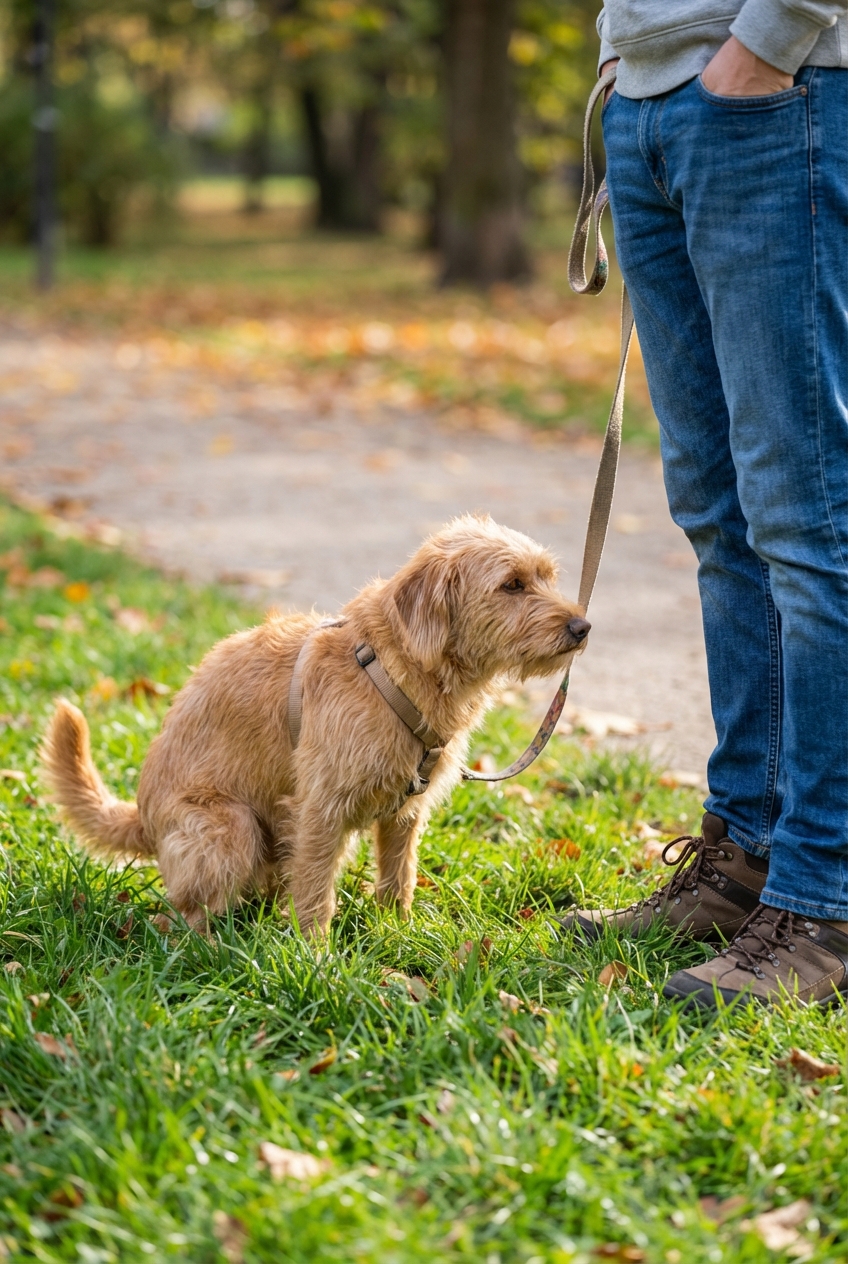
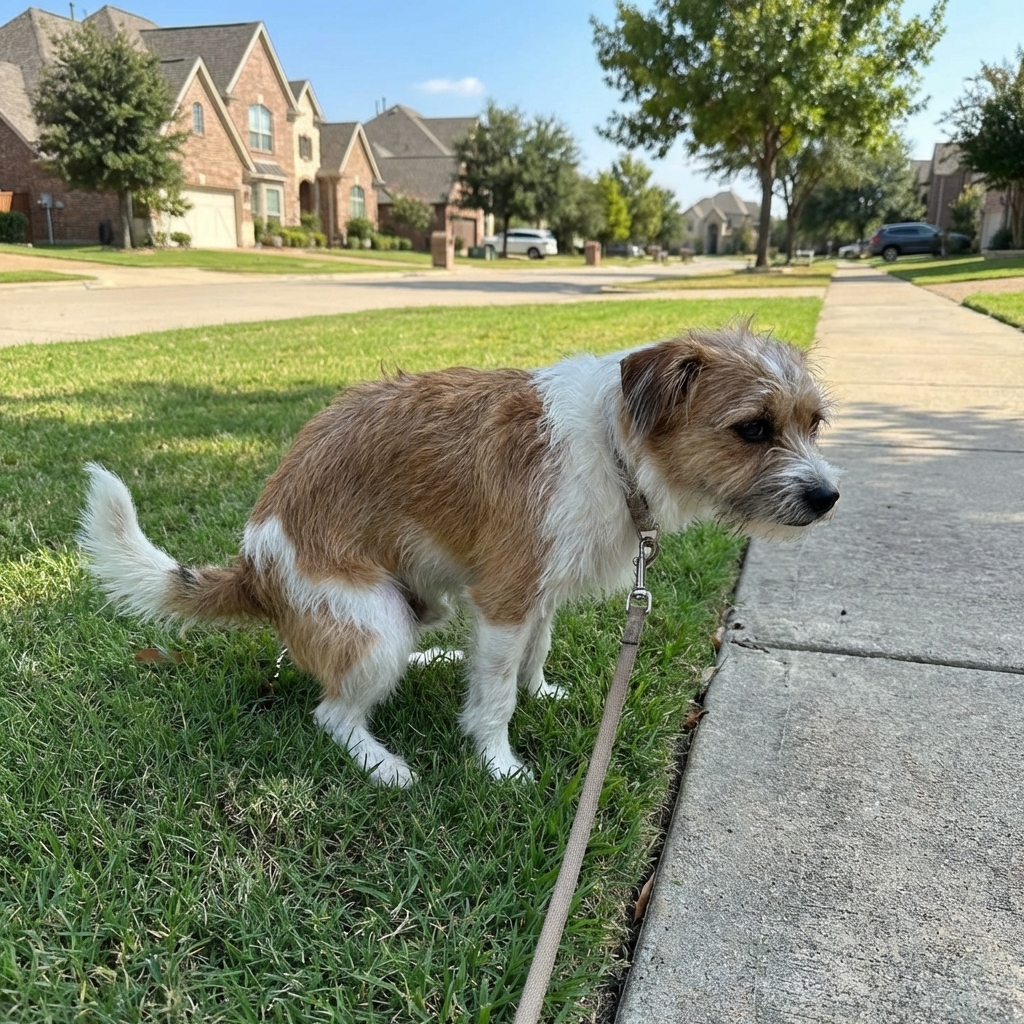
This is one of the most classic UTI clues. Your dog asks to go out, squats, and only a few drops come out. Then they try again minutes later.
2) Straining or taking a long time to pee
Straining can look like constipation, especially if your dog squats and seems uncomfortable. Some dogs arch their back, tremble, or look back at their rear end.
3) Accidents in the house
Even well-trained dogs can have accidents when the bladder feels constantly full. Many families interpret this as “behavior,” but when it happens suddenly, think medical first.
4) Blood in the urine
Urine may look pink, red, or tea-colored, or you may see a small streak of blood at the end of urination. Blood can happen with UTIs, but it also happens with stones or inflammation, so it always deserves a same-day call to your vet.
5) Strong or unusual urine odor
Some UTIs cause a sharper, more foul-smelling urine. This is not a perfect sign by itself, but when it shows up with frequent urination or discomfort, it raises suspicion.
6) Licking the genital area more than usual
Licking can be a self-soothing behavior when the urethra or vulva is irritated. If licking is new, intense, or paired with urinary changes, it is worth investigating.
7) Discomfort, restlessness, or whining
Some dogs are stoic. Others will pace, whine, or seem unsettled, especially after trying to pee.
Symptoms that can mean more than a simple UTI
Here is where I want you to be extra cautious. Certain symptoms can overlap with UTIs but point to more serious problems.
Blocked urination (emergency)
If your dog is straining and cannot pass urine or only produces a few drops repeatedly, treat it like an emergency, especially in male dogs. A blockage can be caused by stones, mucus plugs, swelling, urethral spasm, or other problems. It can become life-threatening quickly, sometimes within hours.
Go to an emergency vet now if you see:
- Repeated squatting with no urine coming out
- A tight or painful belly
- Vomiting, collapse, or extreme lethargy
- Crying out while trying to pee
Fever, vomiting, or marked lethargy
These can suggest the infection has moved beyond the bladder (such as a kidney infection) or that your dog is becoming systemically ill.
Drinking much more than normal
Increased thirst can happen with infection, but it can also be a sign of endocrine disease or kidney issues. Mention this to your vet because it helps guide testing.
Puppies, seniors, and female dogs
Puppies
Puppies pee frequently anyway, so UTIs can be easy to miss. Look for straining, discomfort, foul odor, or urine that seems unusually dark. Recurrent UTIs in a puppy may require checking for congenital issues.
Senior dogs
Older dogs may have weaker immune systems, arthritis that changes posture while urinating, or incontinence that looks like a UTI. Seniors also deserve a broader look at kidney values and other underlying factors if UTIs repeat.
Female dogs
Females tend to get UTIs more often because of anatomy. Also, licking and vulvar irritation can be mistaken for a skin issue when the real problem is urinary.
Why some dogs get repeat UTIs
If your dog has UTIs that keep coming back, it is not always “bad luck.” Common underlying contributors include:
- Bladder stones or urinary crystals
- Diabetes or other hormone-related conditions (including Cushing’s)
- Weakened immune system or certain medications
- Vulvar conformation issues (some females are more prone to contamination and infection)
- Bladder masses or polyps (less common, but important to rule out)
This is one reason your vet may recommend additional testing after the second or third infection, even if the first one was straightforward.
How veterinarians confirm a UTI
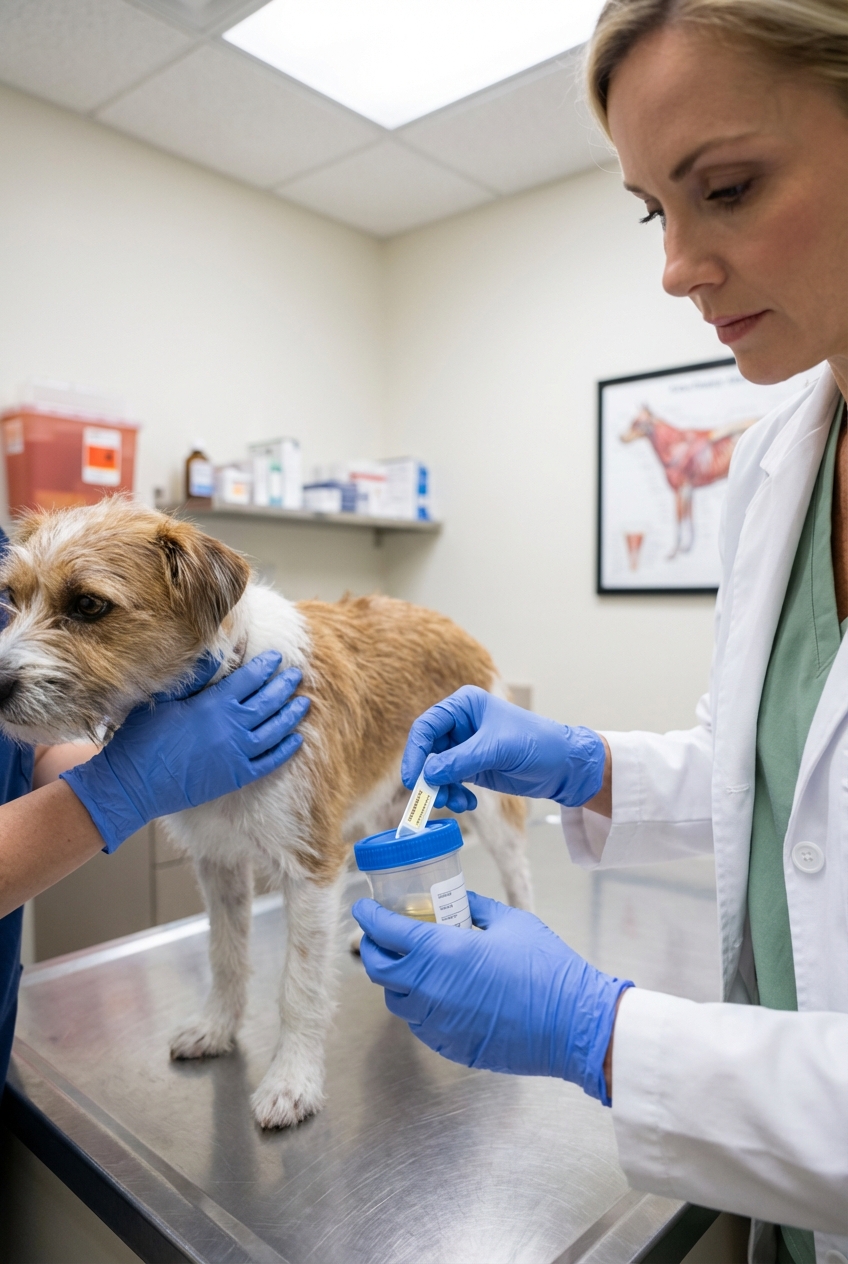
A correct diagnosis usually starts with a urinalysis to look for signs of infection and inflammation, such as bacteria, white blood cells, blood, protein changes, and urine concentration. In many cases, your vet may also recommend a urine culture and sensitivity, especially if:
- This is a repeat infection
- The infection does not clear up with the first antibiotic
- Your dog has other health conditions
- There is concern for resistant bacteria
Imaging like X-rays or ultrasound may be recommended if stones are suspected.
What treatment usually looks like
Treatment depends on what the testing shows, but many uncomplicated bladder infections improve quickly once the right medication is started. Your vet may prescribe:
- Antibiotics (the length varies based on your dog’s history and test results)
- Pain relief to reduce discomfort while the bladder heals
- Follow-up testing (often recommended for repeat infections, stubborn symptoms, or higher-risk dogs)
If stones, diabetes, or another underlying issue is involved, that has to be addressed too, or the symptoms tend to return.
What you can do at home while you wait
You cannot safely treat a UTI at home without testing, but you can support your dog and collect helpful info.
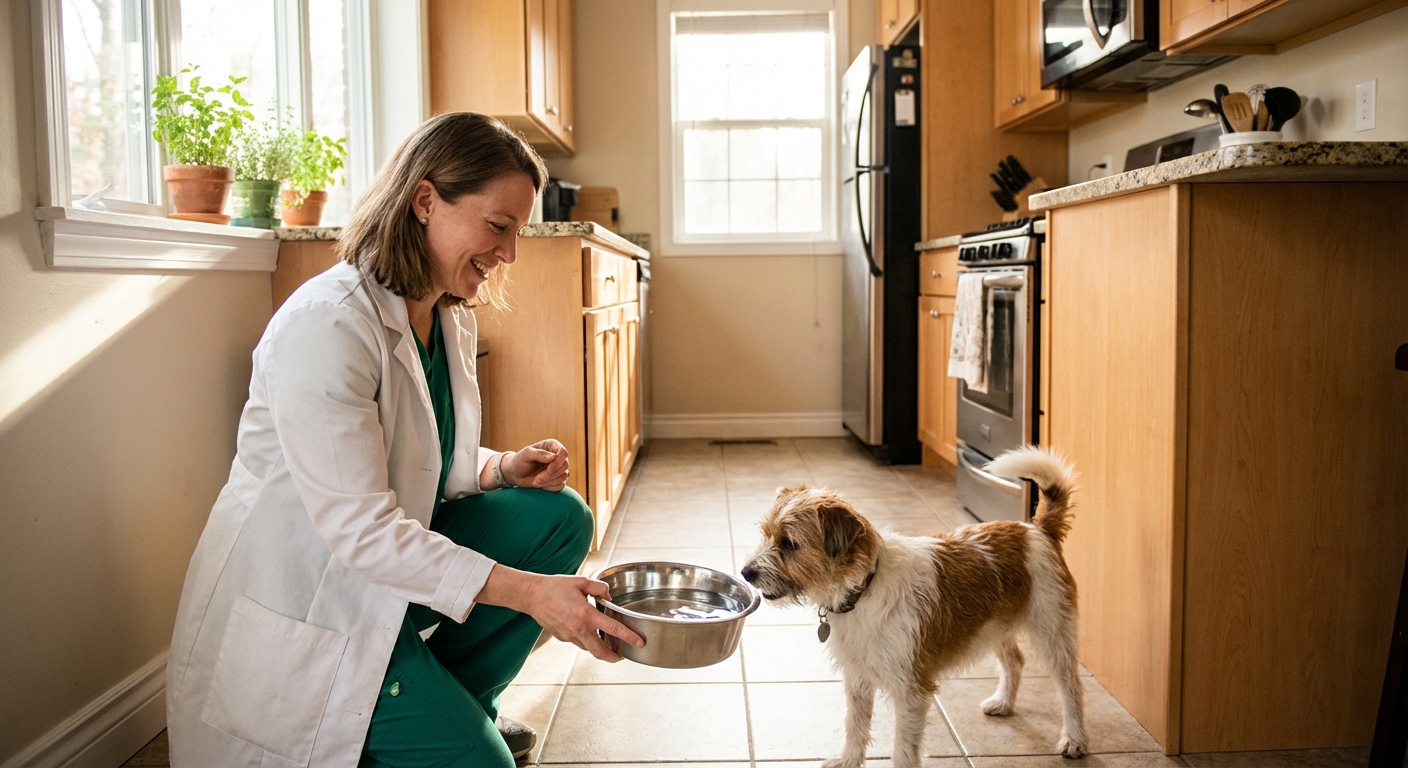
- Offer more water and let your dog out more frequently so they are not forced to “hold it.” If your dog has a condition where your vet limits fluids (certain heart or kidney cases), follow that plan and call your clinic for guidance.
- Keep a quick symptom log: how often they attempt to pee, any blood, accidents, or vomiting.
- Bring a urine sample if your clinic wants one. Use a clean container. Fresh is best. If you cannot drop it off within 1 hour, refrigerate it and bring it in within 4 to 6 hours (unless your clinic gives you different instructions). If you cannot get one, do not stress. Clinics can collect sterile samples when needed.
- Avoid giving leftover antibiotics or human medications. Incorrect dosing can worsen resistance or mask a more serious issue.
Preventing repeat UTIs
Some dogs have a one-time UTI and never deal with it again. Others are prone to repeats, and prevention becomes part of the plan.
- Finish all medications exactly as prescribed, even if your dog seems better.
- Schedule recheck testing if your vet recommends it. Rechecks catch infections that are quietly hanging on.
- Increase potty opportunities, especially for dogs left home for long stretches.
- Discuss diet and crystals with your vet. Some urinary issues are more about crystal and stone formation than bacteria.
- Consider targeted supplements only with guidance. Products like cranberry or D-mannose may be discussed for certain cases, but evidence in dogs is mixed and they are not a replacement for antibiotics when bacteria are present.
If your dog’s urinary symptoms come on suddenly, assume it is medical until proven otherwise. Early testing saves time, discomfort, and often money.
When to call the vet today
Call your veterinarian the same day if your dog has:
- Frequent urination with small amounts
- Straining or discomfort while peeing
- Blood in the urine
- New accidents in a previously house-trained dog
Seek emergency care now if your dog cannot pass urine, seems bloated or painful in the belly, is vomiting, collapses, or becomes severely lethargic.
Your dog does not have to suffer through urinary discomfort. With a quick exam and the right testing, most bladder infections improve fast and your pup can get back to feeling like themselves.