Worried about a vomiting dog? Learn when vomiting is an emergency, how to offer small sips safely, and the best bland foods (chicken/rice, turkey, pumpkin, e...
Article
•
Designer Mixes
Dog Upset Stomach Remedies

Shari Shidate
Designer Mixes contributor
If you have ever cleaned up a surprise mess at 2 a.m., you already know how quickly an upset stomach can derail your dog’s day and yours. The good news is that many mild tummy troubles improve with supportive home care. The key is knowing what is normal, what is not, and when to call your veterinarian.
As a veterinary assistant in Frisco, Texas, I have seen a wide range of stomach issues in puppies, adults, and seniors. This guide walks you through practical, vet-aligned remedies, safe foods, and red flags, so you can help your dog feel better fast while staying on the safe side.
What counts as an upset stomach?
“Upset stomach” usually means one or more of these signs:
- Vomiting (food, foam, bile, or repeated dry heaving)
- Diarrhea (soft stool to watery stool)
- GI noises and gas (gurgling belly, burping, flatulence)
- Signs of nausea (lip licking, drooling, swallowing hard)
- Reduced appetite or sudden picky eating
- Lethargy or acting “off”
Many cases are caused by dietary indiscretion (aka the classic trash raid), sudden food changes, stress, parasites, viral or bacterial infections, food sensitivities, or underlying conditions like pancreatitis or kidney disease. In seniors, even mild symptoms deserve extra attention because dehydration and complications can happen faster.
First: decide if this is an emergency
Home remedies are for mild symptoms in an otherwise stable dog. “Mild” generally looks like this: your dog is bright or only slightly tired, breathing normally, gums are pink, they can keep some water down, and vomiting is not ongoing.
Call your veterinarian or an emergency clinic right away if you notice any of the following:
- Repeated vomiting (more than 2 to 3 times in a few hours) or vomiting that will not stop
- Cannot keep water down or vomits every time they drink
- Blood in vomit or stool, or stool that looks black and tarry
- Profuse watery diarrhea, very frequent diarrhea, or large amounts of blood, even if there is no vomiting
- Severe lethargy, collapse, pale gums, or trouble breathing
- Swollen or painful abdomen, repeated unproductive retching, or a “praying” posture (can signal pain)
- Suspected toxin ingestion (xylitol, grapes or raisins, chocolate, rodent bait, medications, cannabis, antifreeze, etc.)
- Possible foreign body (toy pieces, socks, corn cobs, bones), especially with vomiting and little to no stool
- Puppy under 6 months with vomiting or diarrhea, or any unvaccinated puppy
- Senior dog with weakness, dehydration, or existing conditions (kidney, liver, diabetes, heart disease)
- Signs of dehydration: tacky or sticky gums, sunken eyes, skin that does not snap back quickly, reduced urination, plus lethargy
If you are on the fence, call. A quick phone conversation can prevent a small problem from becoming a big one.
Step-by-step home care for mild upset
1) Support hydration
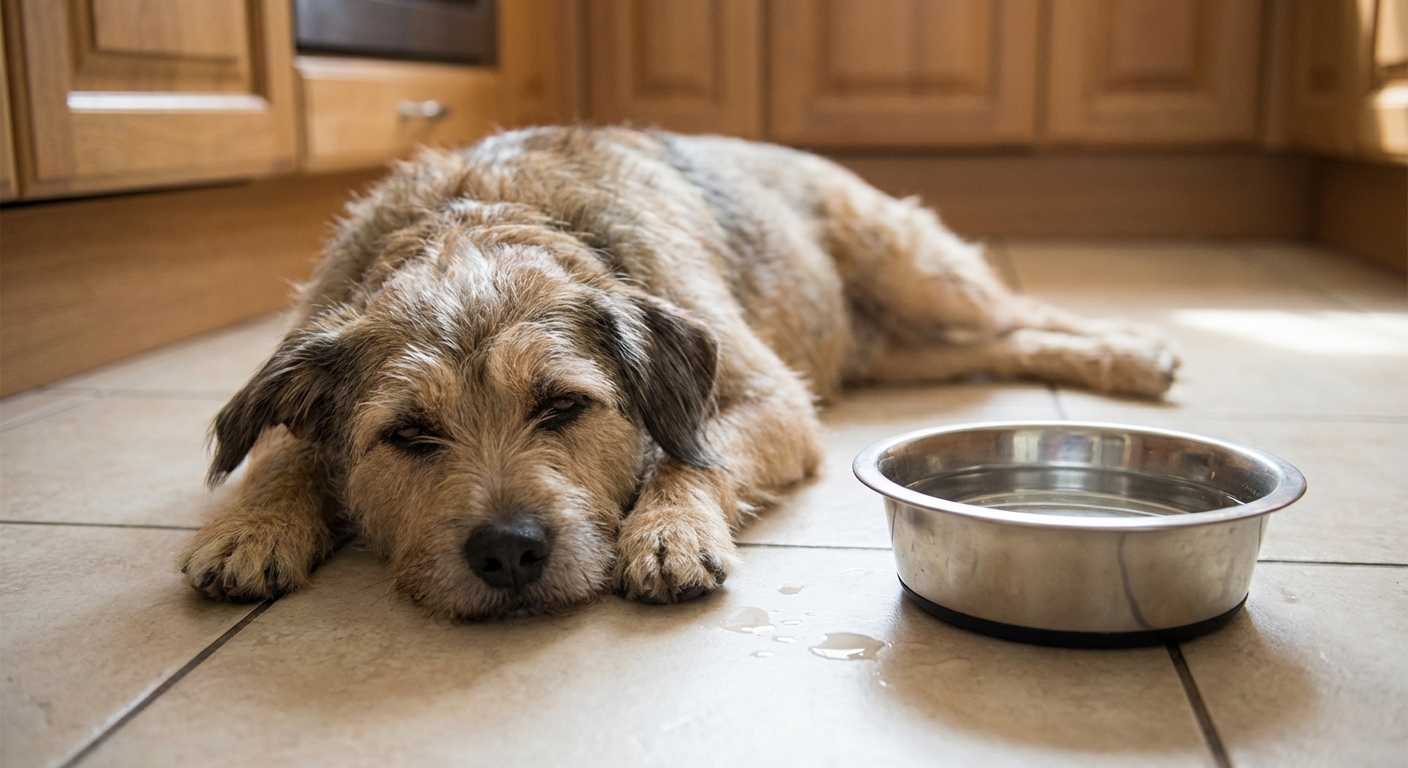
Dehydration is one of the biggest risks with vomiting and diarrhea. Offer small, frequent amounts of water. If your dog gulps and vomits, switch to teaspoon or tablespoon amounts every 10 to 15 minutes and slowly increase.
- Ice chips can be easier to tolerate than a full bowl of water.
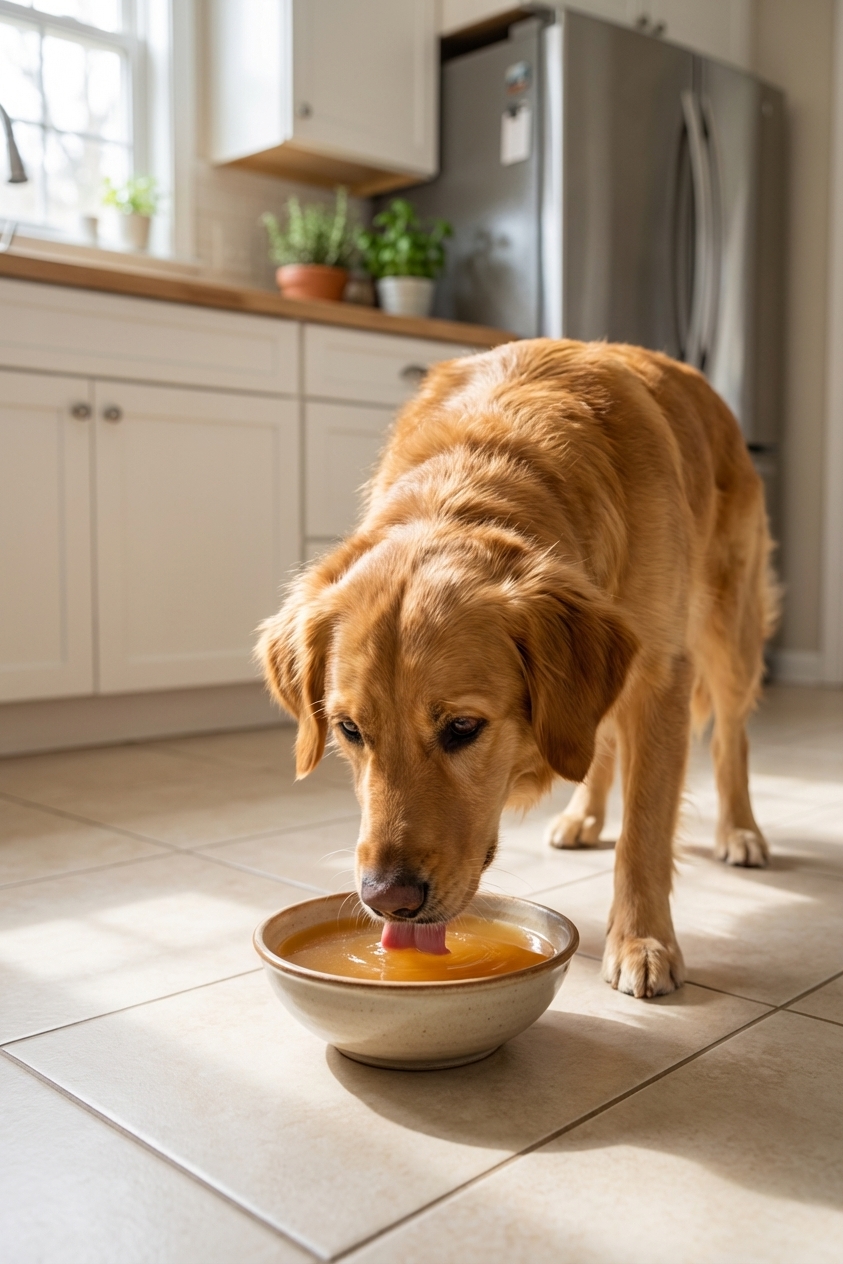
- Unseasoned broth (no onion, no garlic, low sodium) can encourage drinking.
- Electrolyte solutions are best chosen with veterinary guidance. If you use one, pick a pet-specific oral rehydration product and follow the label or your vet’s directions.
2) Consider a short food break (only if appropriate)
For a healthy adult dog with mild vomiting and no red flags, your veterinarian may recommend a short break from food to let the stomach settle. This is often around 6 to 12 hours, not a full day, and it is not right for every situation.
- Do not fast puppies, toy breeds prone to low blood sugar, pregnant dogs, or dogs with diabetes unless your veterinarian specifically instructs you to.
- If your dog has diarrhea only (no vomiting), fasting is not always helpful. Focus on hydration and a gentle diet, and call your vet if diarrhea is frequent or watery.
- If your dog is vomiting water, call your veterinarian.
3) Restart with a bland diet
Once vomiting has stopped and your dog is interested in food, offer a small meal. Think “simple, low fat, easy to digest.” Classic options include:
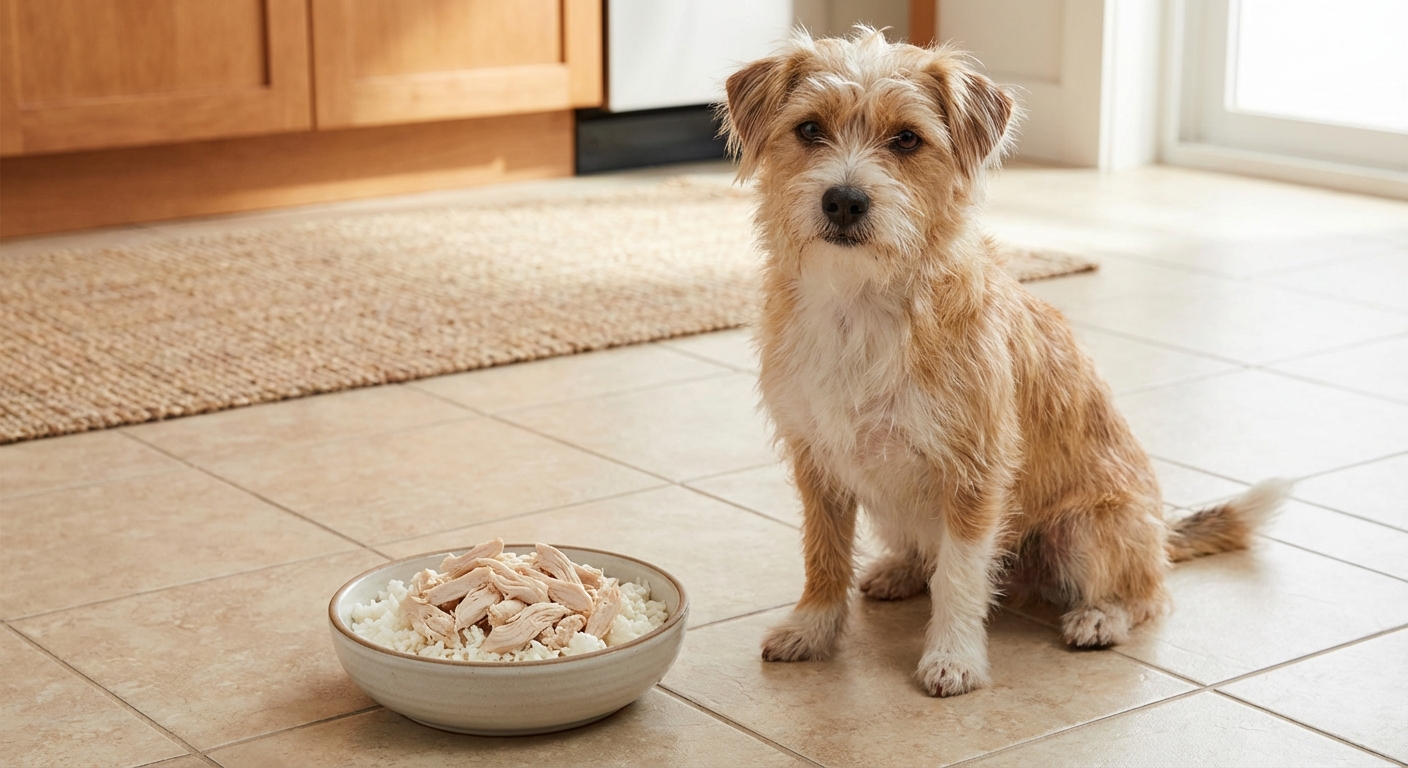
- Boiled skinless chicken breast plus white rice
- Lean ground turkey (well cooked and drained) plus white rice
- White fish (plain, cooked) plus white rice for dogs who do not tolerate chicken
- Prescription or veterinary GI diets (canned or dry), which can be especially helpful for sensitive stomachs
- Plain scrambled egg (no butter, no milk) in small amounts
Feed small portions 3 to 6 times a day for 24 to 48 hours, then transition back to regular food slowly. A gentle rule is to increase the regular food by about 25% each day if stools are improving.
Why low fat matters: Fatty foods can trigger pancreatitis in some dogs. Risk is multifactorial and can include dietary fat, obesity, certain medications, and endocrine disease, so it is safest to keep meals bland and low fat during recovery.
4) Add helpful extras carefully
- Plain canned pumpkin (not pie filling): Fiber can help some dogs with stool quality, but it is not a cure-all and can worsen diarrhea in certain cases. A common starting amount is 1 teaspoon for small dogs, 1 to 2 tablespoons for medium dogs, and 2 to 4 tablespoons for large dogs, mixed into food once or twice daily. Start small.
- Probiotics made for dogs: These can support the gut microbiome, especially after stress or mild diarrhea. Choose a veterinary or reputable pet brand and follow the label.
5) Reduce triggers while the gut heals
- No treats, chews, table scraps, or rich foods for a few days.
- Keep activity calm. Hard play can worsen nausea in some dogs.
- Prevent repeat offenses by securing trash cans and picking up yard hazards.
6) Monitor like a pro
If you are managing a mild case at home, track a few basics. This helps you spot trouble early and gives your vet useful details if you need to call.
- How many times your dog vomits or has diarrhea (and whether it is improving or worsening)
- Whether they can keep water down
- Urination (normal, decreased, or none)
- Gum color and moisture (pink and moist is reassuring; pale, white, or tacky is not)
- Energy level and comfort (resting is fine, painful or weak is not)
- If you have a thermometer and know how to use it safely, ask your vet what temperature range is appropriate for your dog
Remedies by age
Puppies
Puppies can dehydrate quickly, and parasites and contagious infections are more common. If your puppy has vomiting or diarrhea, it is smart to contact your veterinarian early, especially if vaccines are not complete.
- Ask about a fecal test for parasites like giardia and roundworms.
- Monitor for parvovirus signs: vomiting, foul-smelling diarrhea (often bloody), profound lethargy, and dehydration. If your puppy cannot keep water down or seems weak, treat it as an emergency.
- Feed bland food only under guidance, and avoid fasting unless your veterinarian says it is safe.
Adult dogs
Many adult dogs recover quickly from mild, diet-related upset with hydration support and a brief bland-diet plan.
- If symptoms last more than 24 to 48 hours, schedule an exam.
- If your dog has recurring episodes, ask your vet about food intolerance, inflammatory bowel disease, pancreatitis, or parasites.
Senior dogs
In older dogs, stomach upset can be the first hint of an underlying medical problem. Even if your senior seems “mostly fine,” consider a prompt veterinary check if symptoms repeat.
- Ask about bloodwork and urinalysis to screen for kidney, liver, thyroid, and metabolic concerns.
- Be extra cautious with fatty foods and treats.
- Watch for weight loss, increased thirst, or appetite changes.
What not to do
Avoid human meds unless your vet says
Some over-the-counter human medications can be dangerous for dogs or may hide symptoms that should be evaluated.
- Do not give ibuprofen or naproxen. These can cause serious GI ulceration and kidney damage.
- Do not give Pepto-Bismol without veterinary guidance. It contains salicylates and can darken stool, which can confuse bleeding evaluation.
- Do not give loperamide (Imodium) without veterinary guidance. It can be risky for herding breeds that may carry the MDR1 mutation (including Collies, Australian Shepherds, and Shetland Sheepdogs). It can also be the wrong choice for infectious diarrhea or certain toxin ingestions.
Skip high-risk foods
- Greasy meats, bacon, sausage, fried foods
- Dairy if your dog is sensitive
- Seasoned foods, especially anything with onion or large amounts of garlic
- Bones that can splinter or cause constipation or obstruction
How long does recovery take?
For a mild case, you should see improvement within 12 to 24 hours once your dog is resting, hydrated, and eating small bland meals. Stools often take a little longer to normalize, usually 2 to 4 days.
Call your veterinarian if symptoms persist, worsen, or keep returning. Repeated “tummy bugs” are often not random. They can be a clue that something deeper is going on.
Prevention tips
- Transition foods slowly: Mix new food in gradually over 7 to 10 days.
- Keep treats simple: Use a limited ingredient option and keep treats under 10% of daily calories.
- Stick to a schedule: Regular meal timing helps many dogs.
- Ask about parasite prevention: Routine deworming and testing matter, especially if your dog goes to parks or daycare.
- Choose quality nutrition: Highly digestible, appropriately formulated diets can reduce GI flare-ups.
Quick checklist
- Check for emergency signs first.
- Offer small, frequent water or ice chips.
- For healthy adults with vomiting, your vet may advise a short food break.
- Restart with small bland meals, low fat, several times per day.
- Consider a dog-specific probiotic and a small amount of plain pumpkin if appropriate.
- No rich treats until fully normal for at least 48 hours.
- If no improvement in 24 to 48 hours, contact your veterinarian.
- If episodes keep happening (for example, more than twice a month) or you notice weight loss or appetite changes, book a checkup.
Trust your instincts. If your dog looks painful, weak, or not like themselves, it is worth a professional check, even if the symptoms seem mild on paper.