Start homemade dog food safely with this vet-informed starter plan. Learn what “vet approved” means, choose a balancer, follow a 14-day transition, and u...
Article
•
Designer Mixes
Dog Training Basics: Calm Manners at Home

Shari Shidate
Designer Mixes contributor
Calm manners at home are not about having a “perfect” dog. They are about building a predictable routine, teaching a few clear skills, and rewarding the behaviors you want to see more often. As a veterinary assistant in Frisco, Texas, I see it all the time: when stress is lower at home, dogs settle better, learn faster, and even do better at the vet.
The good news is you can start small. A few minutes a day, done consistently, can change the whole feel of your household.
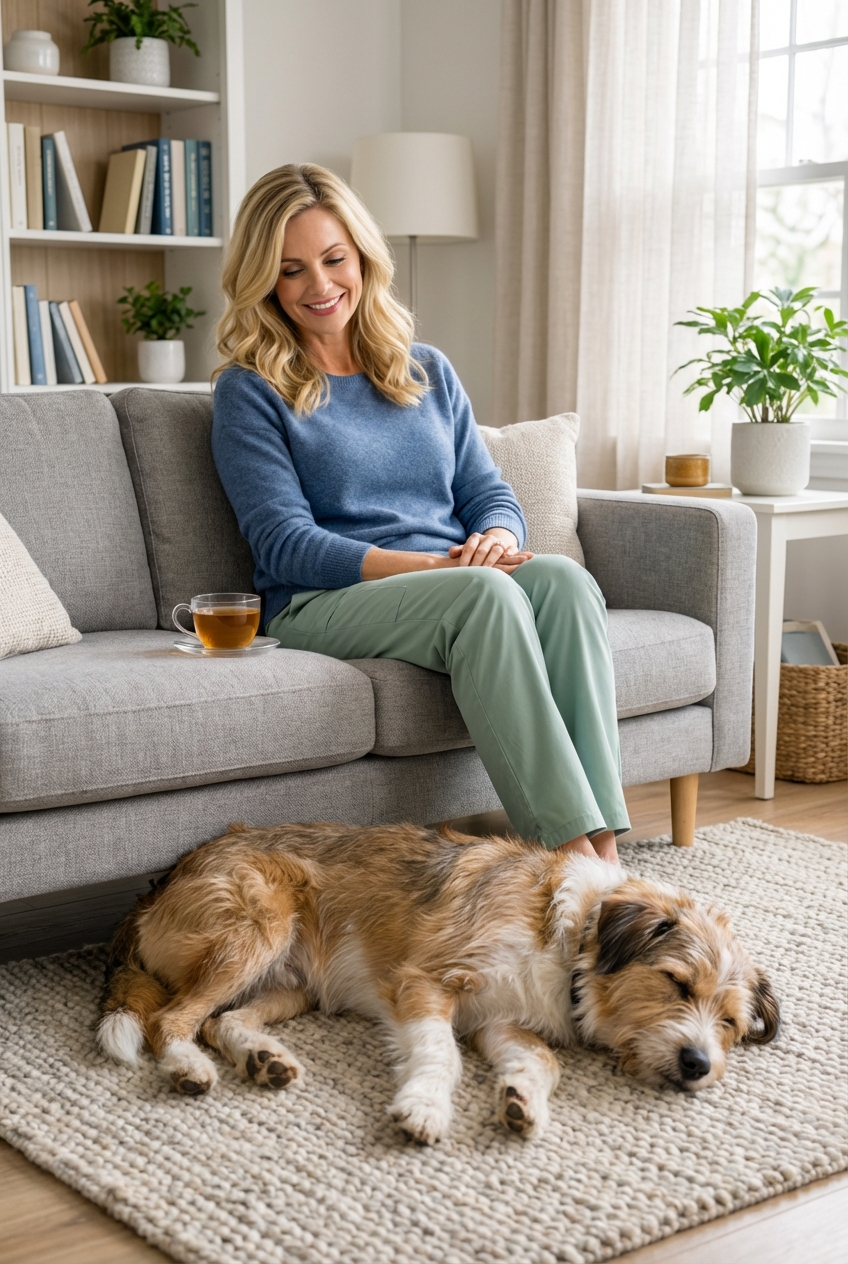
What “calm” means
Calm is not a personality trait. It is a set of teachable behaviors: relaxing on a mat, keeping four paws on the floor, waiting briefly for what you want, and choosing quiet activities when excitement is not needed.
For most dogs, calm manners come from three things:
- Meeting needs: exercise, enrichment, social time, sleep.
- Clear structure: predictable routines and consistent rules.
- Reinforcement: calm behavior “works” and gets rewarded.
Training is not just what you do during a session. It is what your dog practices all day long.
Calm manners are not about suppressing your dog. A calm home still includes play, walks, sniffing, and outlets. The goal is an off-switch you can teach and reward.
Set up success
1) Meet needs first
Many “hyper” behaviors are simply an under-filled cup: too little sleep, too little enrichment, or too much chaotic stimulation.
- Sleep: Many adult dogs sleep about 12 to 14 hours per day, and puppies need even more. Overtired dogs can act wired.
- Exercise: Aim for age-appropriate movement. For some dogs that is a brisk walk. For others it is sniffing time plus short play.
- Mental enrichment: Sniffing, puzzle feeders, training games, shredding cardboard, and food scatters can take the edge off in a healthy way.
2) Stop accidental rewards
Dogs repeat what works. If jumping makes people talk, touch, or even push them away, jumping can be reinforced. If barking makes the ball get thrown, barking grows stronger. Calm manners start when calm behavior becomes the easiest path to what your dog wants.
3) Pick simple management
Management is not failure. It is smart.
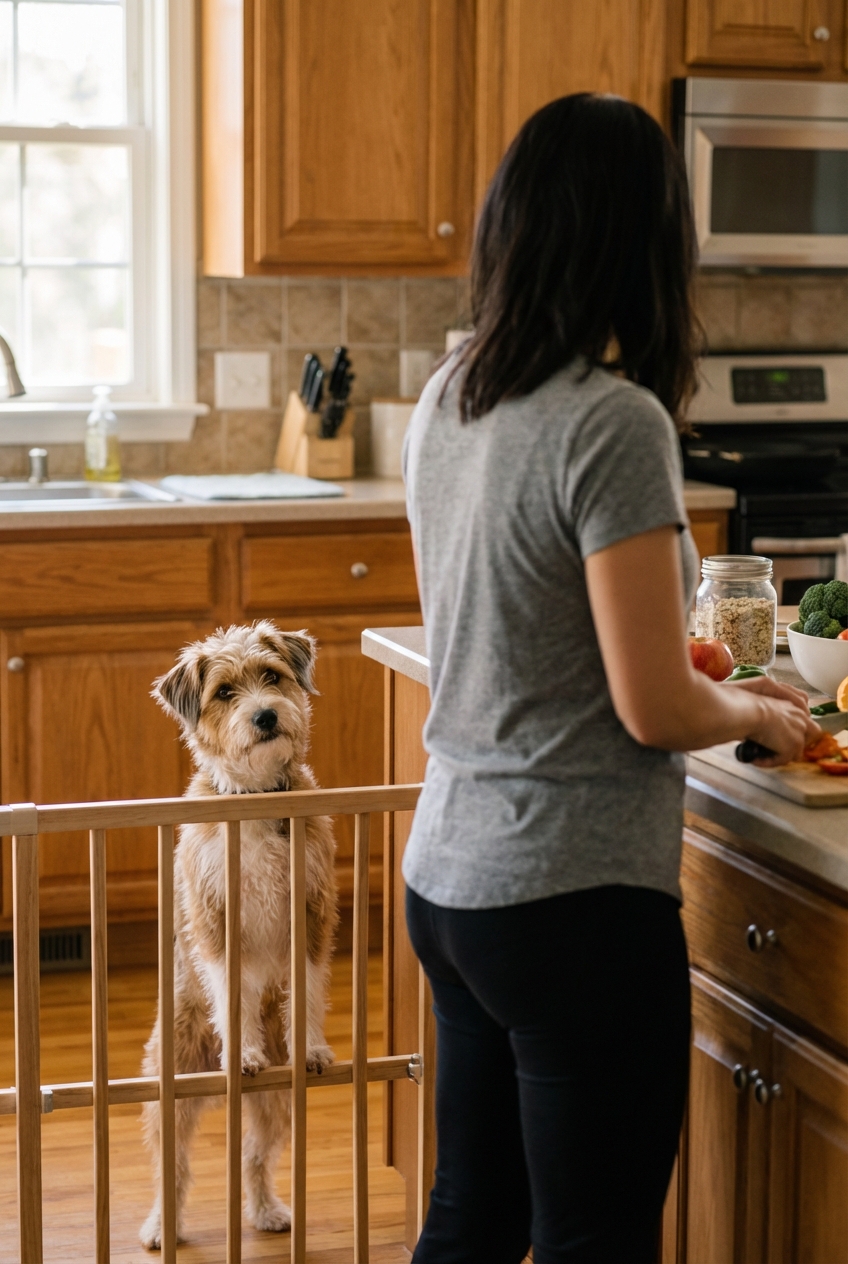
- Baby gates to prevent door rushing
- Leash indoors for short-term practice (supervised)
- Crate or pen for safe downtime (introduced gently)
- Covered trash, counters kept clear, chew items ready
Core skills
Skill 1: Settle on a mat
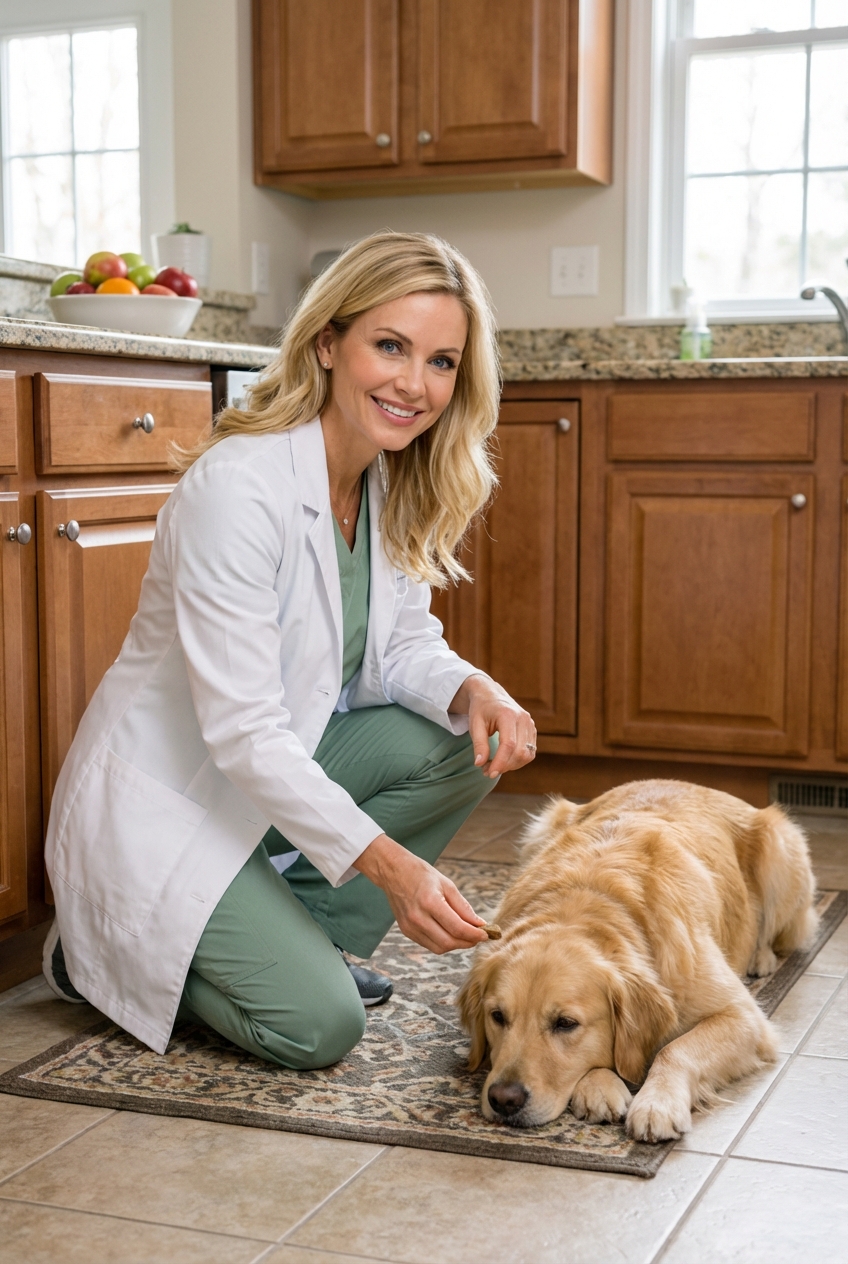
A mat or bed becomes a clear place where relaxing pays off. This is one of the most useful home skills because it is portable and practical.
How to teach it:
- Place the mat down and wait. The moment your dog steps on it, calmly drop a treat on the mat.
- Keep treating for staying on the mat. Deliver treats calmly, one at a time, right between the paws.
- When your dog offers a down on the mat, reward that heavily.
- Add a simple cue like “mat” or “place” only after your dog is reliably going there on their own.
Where it helps: dinner time, when guests arrive, while you work, during kids’ play, and before opening the front door.
Skill 2: Four paws (no jumping)
Jumping is normal dog behavior, but we can teach a friendlier greeting.
Training plan:
- Decide what your dog should do instead: sit, touch your hand, or stand politely.
- Approach your dog. If paws leave the floor, pause and turn slightly away.
- The instant paws are on the floor again, reward low (below your dog’s nose) or drop a treat on the floor.
- Practice with family first, then with visitors who will follow your plan.
Tip: If your dog is intense at the door, start greetings after a short sniff walk or a food puzzle so arousal is already lower.
Skill 3: Wait for doors and food
Wait is a brief pause. It is not a long stay. It teaches your dog that patience makes good things happen.
Easy places to start:
- Food bowl: bowl goes down, dog waits one second, then “okay” to eat.
- Doorway: hand on knob, dog pauses, door opens a crack, reward calm, then release.
- Car door: door opens, dog waits, then hops out on cue.
If your dog breaks the wait, just reset calmly. No scolding needed. The consequence is simply that the door or bowl pauses.
Skill 4: Calm leave it
Leave it is a safety skill and a manners skill. It can reduce conflict and help you manage situations, especially around food, kid items, and tempting trash. If your dog shows resource guarding (stiffness, hovering, growling, snapping), skip DIY fixes and work with your veterinarian and a qualified trainer on a tailored plan.
Teach it step-by-step:
- Hold a treat in a closed fist. Let your dog sniff. Do not say anything yet.
- When your dog looks away or backs off, mark (say “yes” or use a clicker) and give a different treat from the other hand.
- Add the cue “leave it” once your dog is reliably disengaging.
- Practice with food on the floor covered by your foot, then with real-life items like tissues or kid toys.
Safety note: Keep sessions short and easy. If your dog is getting frustrated, you are moving too fast. Make it simpler and end on a win.
Daily calm routine
Training works best when it is woven into normal life. Here are calm mini-sessions that take 30 to 90 seconds each:
- Morning: 5 treats for calm leash clipping, then a sniffy walk.
- Breakfast: ask for “wait” and reward once, then release to eat.
- Midday: food scatter in the yard or on a snuffle mat.
- Afternoon: two minutes of mat settle while you answer messages.
- Evening: calm chew time after exercise to help switch into rest mode.
If you only do one thing this week, do the mat settle. It is the closest thing I know to a calm button you can teach kindly and reliably.
Common challenges
Doorbell chaos
Doorbells can be exciting and, for some dogs, scary. Create a plan your dog can repeat.
- Teach “mat” far away from the door first.
- Practice with a low-volume doorbell sound from your phone and reward for going to the mat.
- Increase volume and realism gradually.
- When guests arrive, manage with a gate or leash until your dog is successful.
Mouthy play
Mouthiness is common, especially in puppies and adolescent dogs. Teething and big developmental brain changes can make it worse for a while.
- Keep chew options handy and redirect early.
- If teeth hit skin, calmly end play for 10 to 20 seconds.
- Reward gentle play. Teach “take it” and “drop” as structured games.
Stealing items
Dogs steal for fun, attention, or because the item is rewarding. Prevent rehearsals.
- Keep tempting items picked up or gated off.
- Teach “drop” with trades: treat for item, then give a toy back.
- Do not chase. Chasing turns stealing into a game.
Evening restlessness
The witching hour often means your dog needs a better off-switch routine.
- Do enrichment earlier in the day so the tank is not empty at night.
- After exercise, offer a long-lasting chew or a lick mat.
- Lower household stimulation: dim lights, reduce rough play, create a quiet spot.
Positive reinforcement
Evidence-based training focuses on reinforcing desired behaviors and reducing opportunities to practice unwanted ones. Rewards do not have to be big. They just need to matter to your dog.
- Food: tiny soft treats, kibble, or a spoon of wet food for high value.
- Life rewards: going outside, greeting a friend, sniffing a bush, getting the toy.
- Praise: calm, low voices often support calm behaviors better than excited squealing.
If your dog is not improving, it is usually one of these: the reward is not valuable enough, the steps are too big, or the environment is too distracting. Adjust one variable at a time.
When to get help
Some situations need extra support, and that is completely normal. Reach out to your veterinarian and a qualified trainer if you notice:
- Growling, snapping, or bites
- Resource guarding around food, toys, or spaces
- Separation anxiety signs like panic, self-injury, or destructive escape behaviors
- Sudden behavior changes, especially in adult or senior dogs
Look for trainers who use humane, reward-based methods. Credentials to consider include CPDT-KA, IAABC (Associate or Certified), and KPA CTP (Karen Pryor Academy graduate). Also ask about continuing education and experience with your specific issue.
7-day calm plan
If you want a starting point that feels doable, here is a gentle one-week reset.
- Day 1: Start rewarding calm moments you already see. Lying down, soft eyes, quiet choices.
- Day 2: Introduce the mat and reward any interaction.
- Day 3: Reward downs on the mat. Add a chew on the mat.
- Day 4: Teach “wait” at the food bowl.
- Day 5: Practice four paws greetings with family members only.
- Day 6: Teach the first step of “leave it” with a treat in your fist.
- Day 7: Combine: short mat settle while you open the door, then reward and release.
Remember, you are not aiming for perfection. You are building patterns. And patterns are what create calm.