Periodontal disease is common and often hidden. Learn the 4 stages, at-home warning signs, how dental cleanings work, typical costs, and prevention steps to ...
Article
•
Designer Mixes
Dog Tooth Abscess Symptoms

Shari Shidate
Designer Mixes contributor
As a veterinary assistant here in Frisco, Texas, I can tell you this is one of those problems that hides in plain sight. A dog tooth abscess may be mistaken for “just bad breath” or mild fussiness at first, then turn into serious pain, facial swelling, and infection that can affect overall health. The loving thing to do is learn the symptoms early, so you can get your pup comfortable and treated fast.
What a tooth abscess is
A tooth abscess is a pocket of infection, usually caused by bacteria getting inside the tooth (through a crack, fracture, worn enamel, or advanced gum disease). Once bacteria reach the root, the body reacts with inflammation and pus. That pressure builds inside a rigid space, which is why abscesses can be extremely painful.
Dogs are experts at masking pain. Many will keep eating, keep playing, and still wag their tail. So we have to look for the quieter clues.
Symptoms you can spot at home
Common symptoms
- Facial swelling, often under the eye (especially from an upper back tooth)
- Bad breath that is suddenly worse or has a foul, rotten odor
- Drooling more than usual
- Pawing at the mouth or rubbing the face on furniture or carpet
- Chewing on one side or dropping food
- Decreased appetite, eating slower, or walking away from crunchy kibble
- Yelping when chewing, playing tug, or when the face is touched
- Bleeding gums or blood-tinged saliva
- Behavior changes like irritability, hiding, or not wanting to be petted around the head
Symptoms that can look “non-dental”
Dental infection can create signs that feel confusing at first:
- Watery eye or squinting on one side
- Nasal discharge (sometimes one-sided), especially if an upper tooth root is involved
- Low energy or sleeping more
- Fever (not always present)
A classic sign: a draining bump
Some dogs develop a small pimple-like bump under the eye that may ooze or crust over. This can be a draining tract from an infected tooth root, and it can look like a skin issue even though the source is dental.
Swelling under the eye
One classic presentation is a soft, warm swelling under one eye. This frequently points to an abscessed upper fourth premolar (often called the carnassial tooth). That tooth has long roots close to the sinus and the area under the eye.
If you see this swelling, it is not something to wait on for several days. Dogs can worsen quickly, and abscesses rarely resolve without veterinary treatment.
Other possible causes
Swelling on the face is not always dental. It can also be caused by trauma, insect stings or allergic reactions, foreign material stuck in the mouth, salivary gland issues, and, less commonly, tumors. Because the right treatment depends on the cause, a veterinary exam is important.
When it is an emergency
Please seek urgent veterinary care (ER if your regular clinic is closed) if you notice:
- Rapidly increasing facial swelling
- Swelling affecting the eye, the eyelids, or the area around the throat
- Difficulty breathing or noisy breathing
- Inability to eat or drink
- Extreme lethargy, collapse, or suspected high fever
- Significant bleeding from the mouth
Dental infections are not “just in the mouth.” They can contribute to inflammation and bacteria entering the bloodstream, and the risk is more concerning in seniors or pets with other health issues. This is one reason veterinarians take dental infections seriously.
How vets diagnose it
In clinic, your veterinarian will often combine history and exam findings with dental diagnostics. The most helpful tool is dental X-rays, typically done under general anesthesia or deep sedation. That is because the problem is commonly below the gumline.
Diagnosis may include:
- Oral exam to look for gum swelling, draining tracts, broken teeth, and severe periodontal disease
- Dental radiographs (X-rays) to evaluate tooth roots and bone
- General health screening (bloodwork) in many dogs prior to anesthesia, especially seniors
Treatment options
The goal is to remove the source of infection and relieve pain. Antibiotics alone often provide temporary improvement, but if the tooth root remains infected, the abscess can come back.
Typical treatments
- Tooth extraction (very common and often curative)
- Root canal therapy (a specialist option that can save certain teeth)
- Antibiotics to control infection, especially when swelling is present
- Pain control (your vet will choose what is safe for your dog)
What to expect at the vet
- An exam and discussion of symptoms and chewing habits
- If dental disease or an abscess is suspected, a dental procedure may be recommended with anesthesia or deep sedation
- Dental X-rays to confirm which tooth is involved
- Treatment, often extraction or a referral option for root canal
- Aftercare at home with pain medication, sometimes antibiotics, and a soft-food plan
Important safety note
Do not give human pain relievers like ibuprofen (Advil), naproxen (Aleve), or acetaminophen (Tylenol) unless your veterinarian specifically tells you to. These can be dangerous or even fatal to dogs.
What to do at home
If your dog seems comfortable enough to be at home until the visit, these steps can help without making things worse:
- Offer soft foods (warm water-soaked kibble, canned food, or vet-approved bland options)
- Avoid hard chews (bones, antlers, nylon chews) and avoid tug games
- Prevent face rubbing if swelling is present (an e-collar may help)
- Monitor closely for rapid swelling, eye changes, or appetite drop
What not to do
- Do not press, massage, or try to lance a swelling or “pimple” under the eye
- Do not use leftover antibiotics or someone else’s medications
- Do not try to pull a tooth or scrape deep tartar at home
- Do not force the mouth open if your dog is painful
If your dog will allow it, you can gently look at the mouth, but do not force it. Pain can cause a normally sweet dog to snap when their face is handled.
Common causes
- Periodontal disease: the most common underlying cause in many adult dogs
- Broken or fractured teeth: chewing hard objects can expose the pulp
- Worn teeth: especially in dogs that chronically chew abrasive items
- Retained baby teeth or crowded teeth: can trap debris and bacteria
- Immune or health factors: some dogs are more prone to chronic oral inflammation
Prevention
The best prevention is a realistic routine you can actually keep up with. Even small steps help.
At-home habits
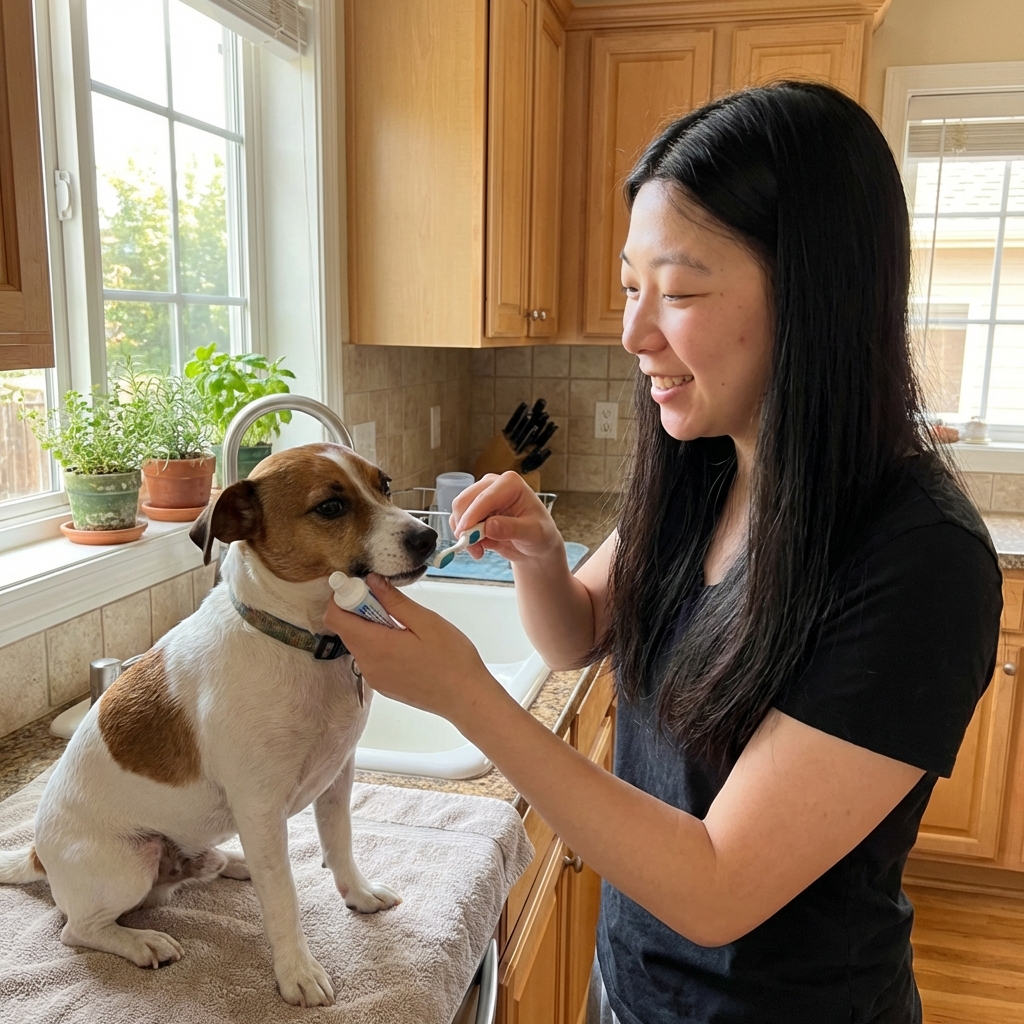
- Brush teeth with dog-safe toothpaste, ideally daily (even 3 to 4 times a week is meaningful)
- Use VOHC-accepted products (dental chews or water additives that have evidence behind them)
- Choose safer chews: if it is hard enough that you cannot indent it with a fingernail, it may be hard enough to fracture teeth
Vet care
- Regular oral exams at wellness visits
- Professional dental cleanings as recommended based on your dog’s mouth, age, breed, and history
Frequently asked questions
Can a tooth abscess go away on its own?
It is uncommon. Swelling can sometimes drain and look better temporarily, but the infected tooth root often remains. Without definitive treatment, the abscess frequently returns.
How fast can it get worse?
Some dogs stay stable for a bit, but others can worsen quickly, sometimes within 1 to 3 days, especially when swelling spreads. If you see facial swelling, eye squinting, or rapid changes, treat it as urgent.
Will my dog be okay if a tooth is extracted?
Most dogs do extremely well after extraction. In many cases they eat better and act more like themselves once chronic mouth pain is gone.
Final takeaway
If you suspect a tooth abscess, trust your instincts. Bad breath plus pain signs, drooling, facial swelling, or “chewing weird” is your dog asking for help the only way they can. With timely vet care, most dogs recover beautifully and feel relief fast.
Before your visit, it can help to write down your dog’s age, any health conditions, what side they seem to chew on, when the symptoms started, and whether you have noticed swelling under the eye or a draining bump. Bringing those details to your veterinarian can speed up the path to relief.