Worried about a vomiting dog? Learn when vomiting is an emergency, how to offer small sips safely, and the best bland foods (chicken/rice, turkey, pumpkin, e...
Article
•
Designer Mixes
Dog Throws Up Yellow: What It Means

Shari Shidate
Designer Mixes contributor
Seeing your dog throw up yellow liquid can be upsetting, especially when it seems to come out of nowhere. That yellow color is often bile, a digestive fluid made by the liver and stored in the gallbladder. Sometimes bile shows up in vomit for simple reasons like an empty stomach. Other times it can point to stomach irritation, inflammation, or a problem that needs veterinary care.
As a veterinary assistant in Frisco, Texas, I always tell pet parents the same thing: the color matters, but the whole story matters more. How your dog acts, how often they vomit, and what else you notice will point you toward the right next step.
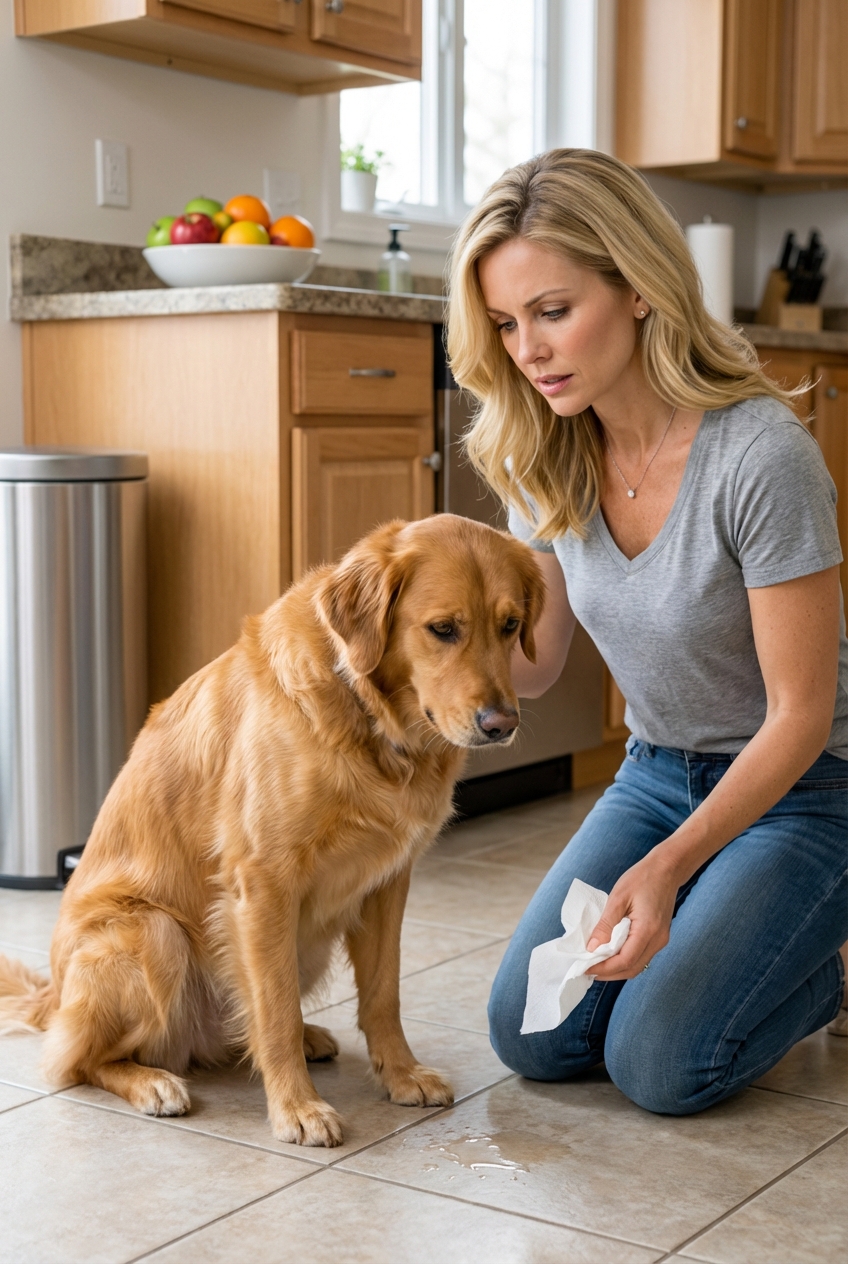
Vomit or regurgitation?
Pet parents often use “vomit” for both, but the difference matters.
- Vomiting usually includes heaving or abdominal contractions and brings up liquid, foam, bile, or digested food.
- Regurgitation is more passive (food just comes back up) and often looks like undigested food or a tube-shaped “sausage” of food shortly after eating.
If you are seeing repeated regurgitation, call your vet. It can point to an esophagus problem and needs a different workup than vomiting.
What yellow vomit usually is
Yellow vomit is most often bile mixed with stomach fluid. Bile is normally released into the small intestine to help digest fats. If the stomach is empty or the upper GI tract is irritated, bile can reflux into the stomach and contribute to nausea and vomiting. In some cases, yellow vomit can also include partially digested food or other fluids.
Yellow vomit may look like:
- Foamy yellow liquid
- Bright yellow watery fluid
- Yellow mixed with white foam
- Yellow with bits of grass or food
Common causes
1) Empty stomach (bilious vomiting pattern)
This is one of the most common patterns I see. A dog goes a long stretch without food, bile refluxes into the stomach, and they vomit yellow foam, often early in the morning.
Clues: Happens before breakfast, dog feels better quickly, appetite returns.
2) Eating grass, leaves, or something irritating
Some dogs graze when their stomach feels off, then vomit bile plus plant material. Grass is not always the cause so much as a sign the stomach is already upset.
3) Diet change, rich treats, or scavenging
New foods, table scraps, fatty chews, or getting into the trash can trigger stomach irritation. After the stomach empties, bile may be vomited.
4) Motion sickness or stress
Car rides, boarding, thunderstorms, or big routine changes can lead to nausea and bile vomiting.
5) Parasites or infection
Intestinal parasites and GI infections can cause vomiting that sometimes includes bile, especially if the dog is not keeping food down well.
6) Pancreatitis
Pancreatitis is inflammation of the pancreas and can be serious. Vomiting may be yellow, and dogs often seem painful or very unwell.
Clues: Repeated vomiting, refusal to eat, belly pain, hunched posture, lethargy, diarrhea.
7) GI obstruction (foreign body)
If something is blocking the stomach or intestines, vomiting can become frequent. As time goes on and the stomach empties, vomit may become more frothy and yellow.
Clues: Repeated vomiting, cannot keep water down, painful belly, no stool or very little stool, sudden decline.
8) Liver or gallbladder disease
Because bile is made by the liver, liver and gallbladder issues can be involved in some cases, especially when vomiting is ongoing or paired with other signs.
Clues: Poor appetite, weight loss, diarrhea, yellowing of gums or eyes, increased thirst.
9) Addison’s disease (hypoadrenocorticism)
Addison’s can look like a simple upset stomach at first. Dogs may have off-and-on vomiting or diarrhea, seem weak, or have episodes that come and go. It is less common, but important, because it can become an emergency if it progresses to an Addisonian crisis.
Clues: Recurrent GI upset, lethargy that seems out of proportion, shaking, weakness, collapse, dehydration.
When it is an emergency
Please seek urgent veterinary care (same day, emergency if needed) if any of these are true:
- Vomiting happens multiple times in a day or continues into the next day
- Your dog is lethargic, weak, disoriented, or collapses
- They cannot keep water down
- You see blood (red or coffee-ground appearance)
- The abdomen looks bloated, your dog seems painful, or you see repeated retching with little or nothing coming up (this can be a sign of bloat, also called GDV)
- There is straining with little stool or no stool
- Your dog may have eaten a toxin, string, sock, bones, corn cob, or other foreign material
- Your dog is a puppy, a senior, very small, or has diabetes, kidney disease, Addison’s, or another chronic condition
If your dog is vomiting and acting “not like themselves,” trust your instincts. It is always better to be the cautious pet parent than the one who waited too long.
What you can do at home
If your dog vomits yellow once, then acts normal (bright, wants water, normal energy), you can often do gentle support at home. This approach is meant for otherwise healthy adult dogs with a mild, one-time episode. If you are unsure, call your veterinarian first.
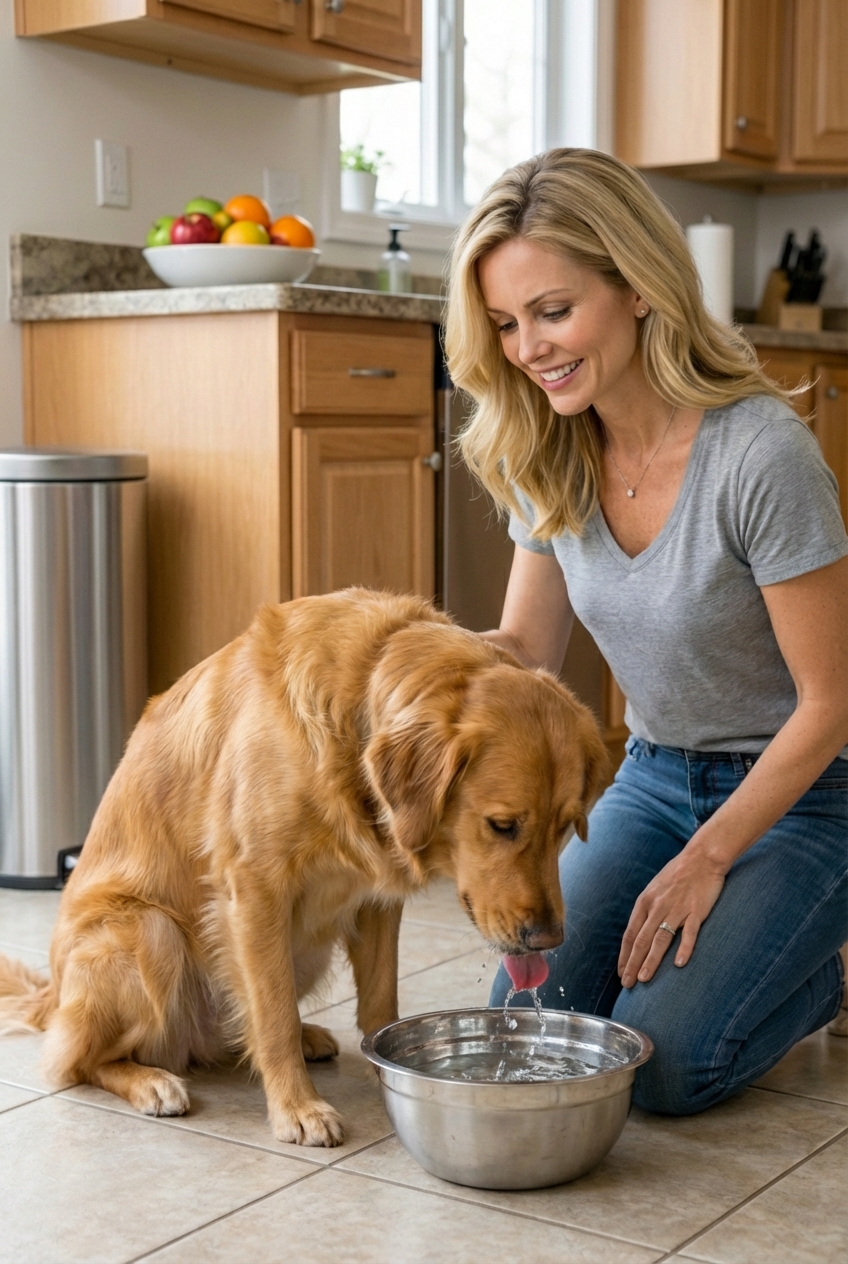
Step 1: Water, but in small amounts
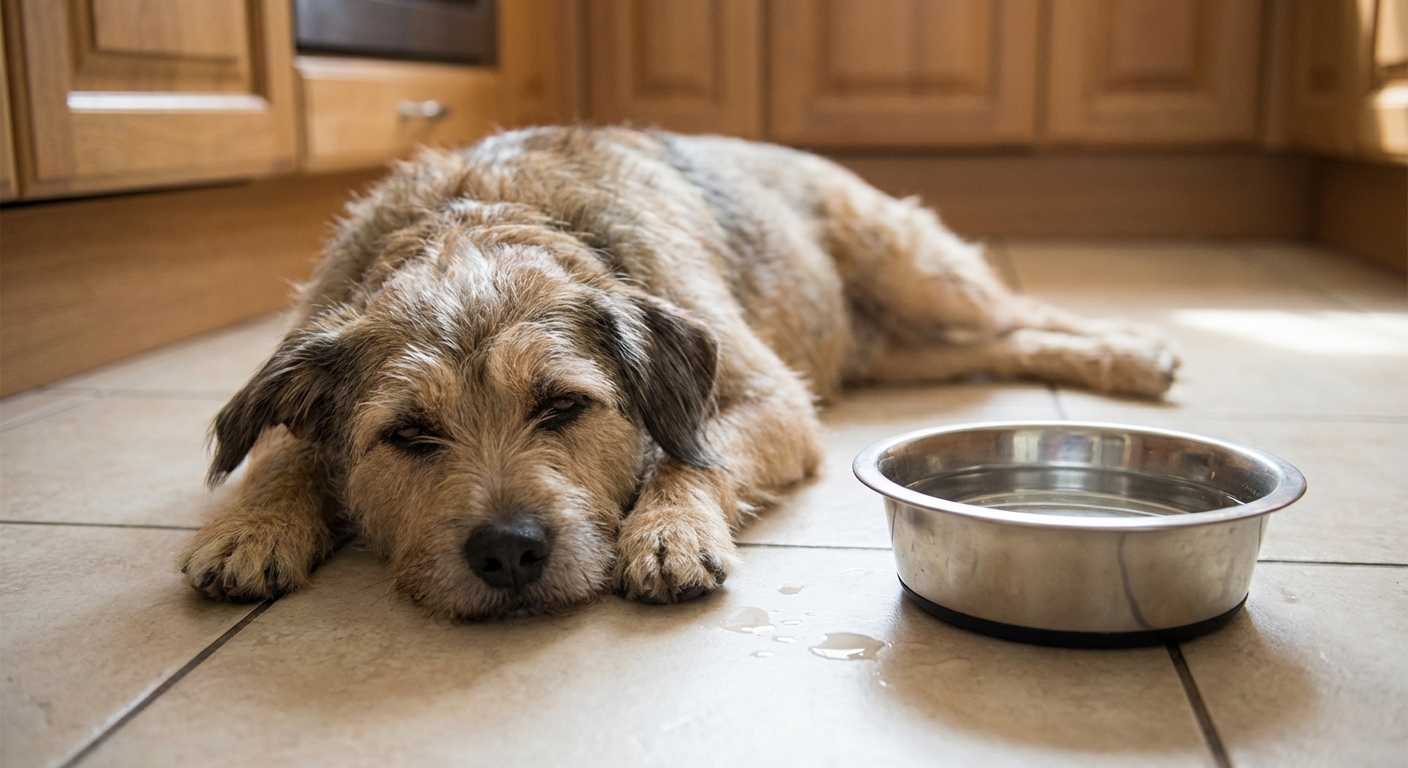
Keep water available, but offer small amounts more often if your dog tends to gulp. If your dog drinks and vomits right back up, call your vet.
Check hydration: tacky or dry gums, sunken eyes, or skin that “tents” and is slow to fall back can mean dehydration. Dehydration is a reason to call your vet, especially in small dogs and seniors.
Step 2: Food break, with puppy exceptions
For a single mild episode, a brief pause from food can help the stomach settle.
- Adult dogs: many vets recommend holding food for a short period and then restarting small bland meals once vomiting has stopped.
- Puppies and toy breeds: do not fast without veterinary guidance. They can get dehydrated and low blood sugar quickly. If a young puppy is vomiting, especially if not fully vaccinated, contact a vet promptly due to parvo risk.
Step 3: Restart with small, bland meals
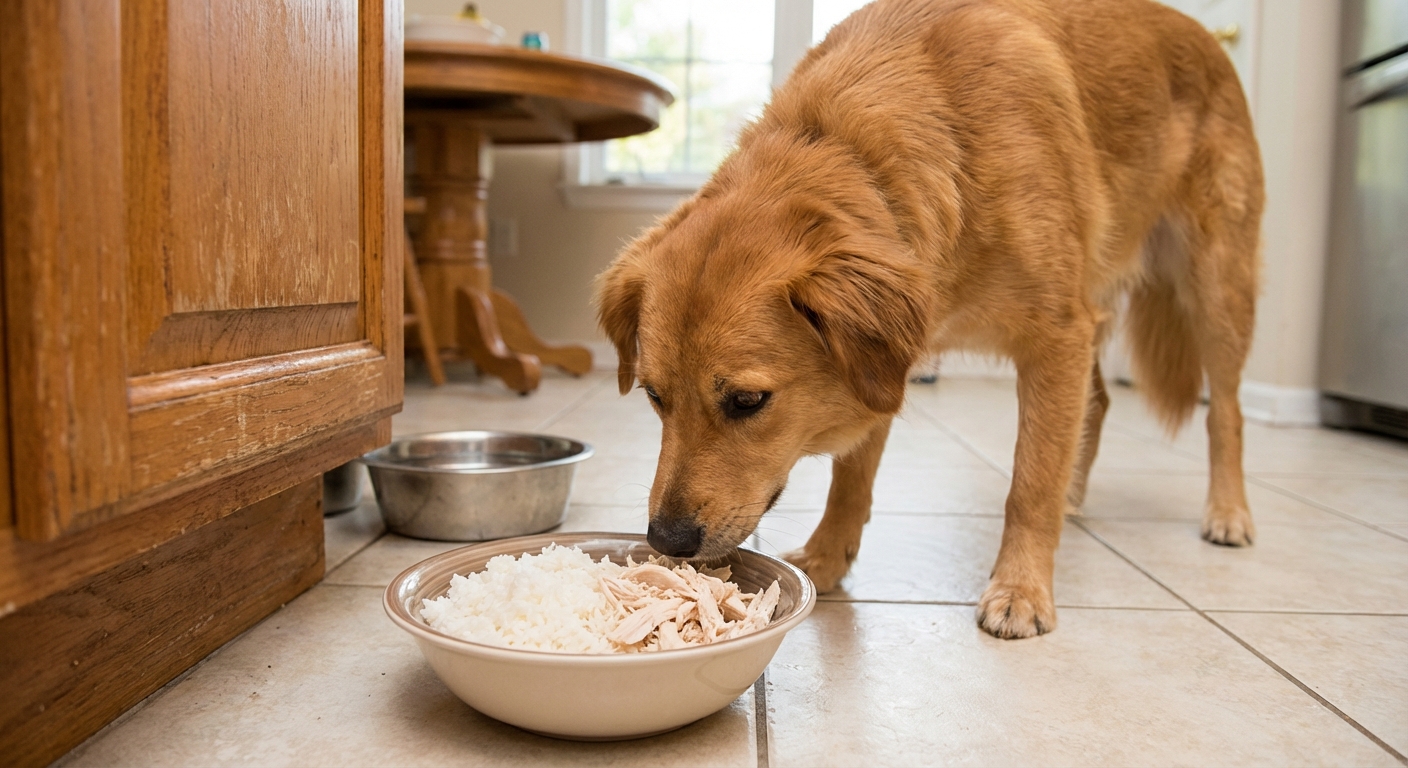
Once your dog has gone several hours without vomiting and is acting normal, offer a small bland meal. A common plan is small portions every 4 to 6 hours for the first day, then gradually increase portion size as tolerated.
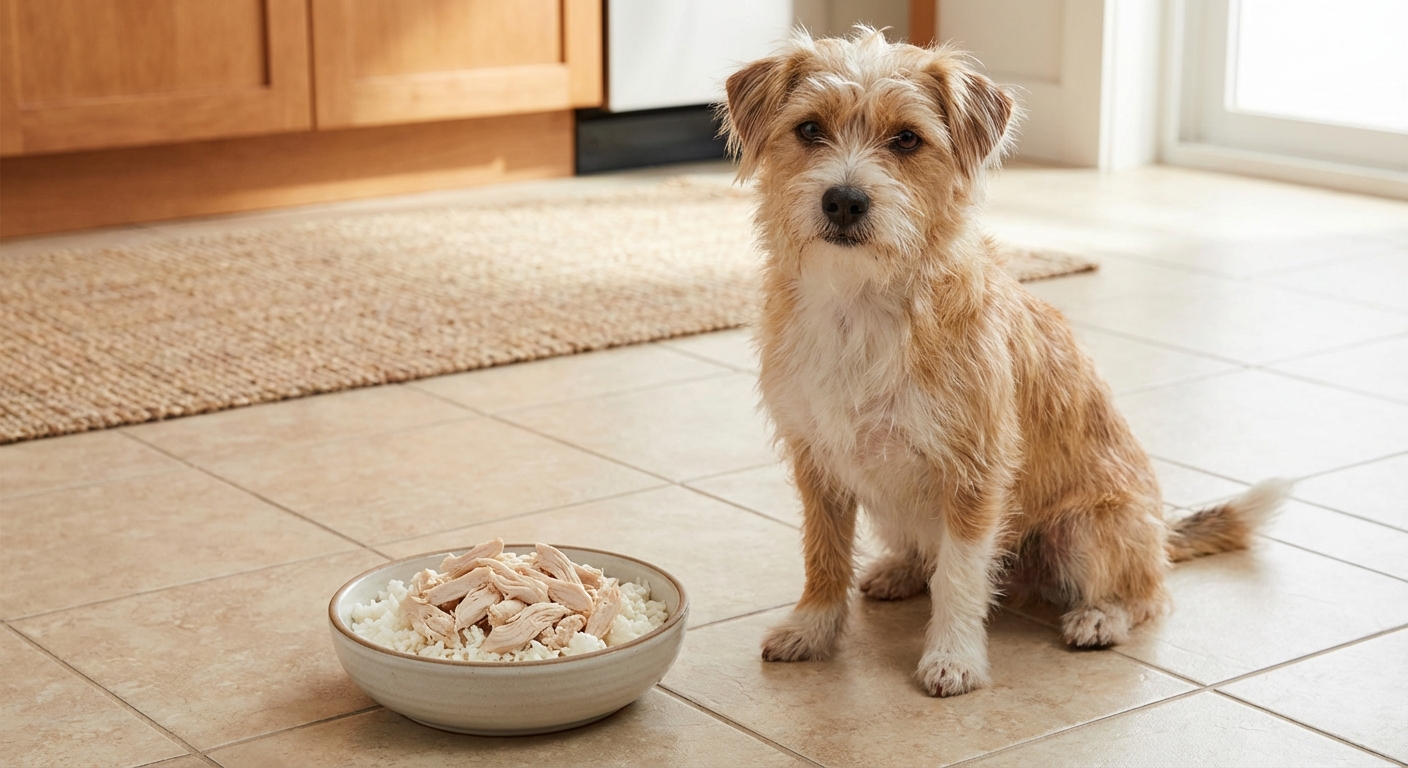
- Boiled chicken breast and plain white rice
- Lean turkey and rice
- Veterinary GI diet if you have it
Avoid fatty foods, rich treats, and new chews for several days. When your dog is back to normal, reintroduce their regular food gradually over 2 to 3 days (or longer if your vet advises).
Step 4: Prevent the empty-stomach cycle
If the pattern is early-morning yellow vomit, try:
- A small bedtime snack (a few bites of their normal balanced food)
- Splitting meals into 3 to 4 smaller meals instead of 1 to 2 large meals
- Keeping feeding times consistent
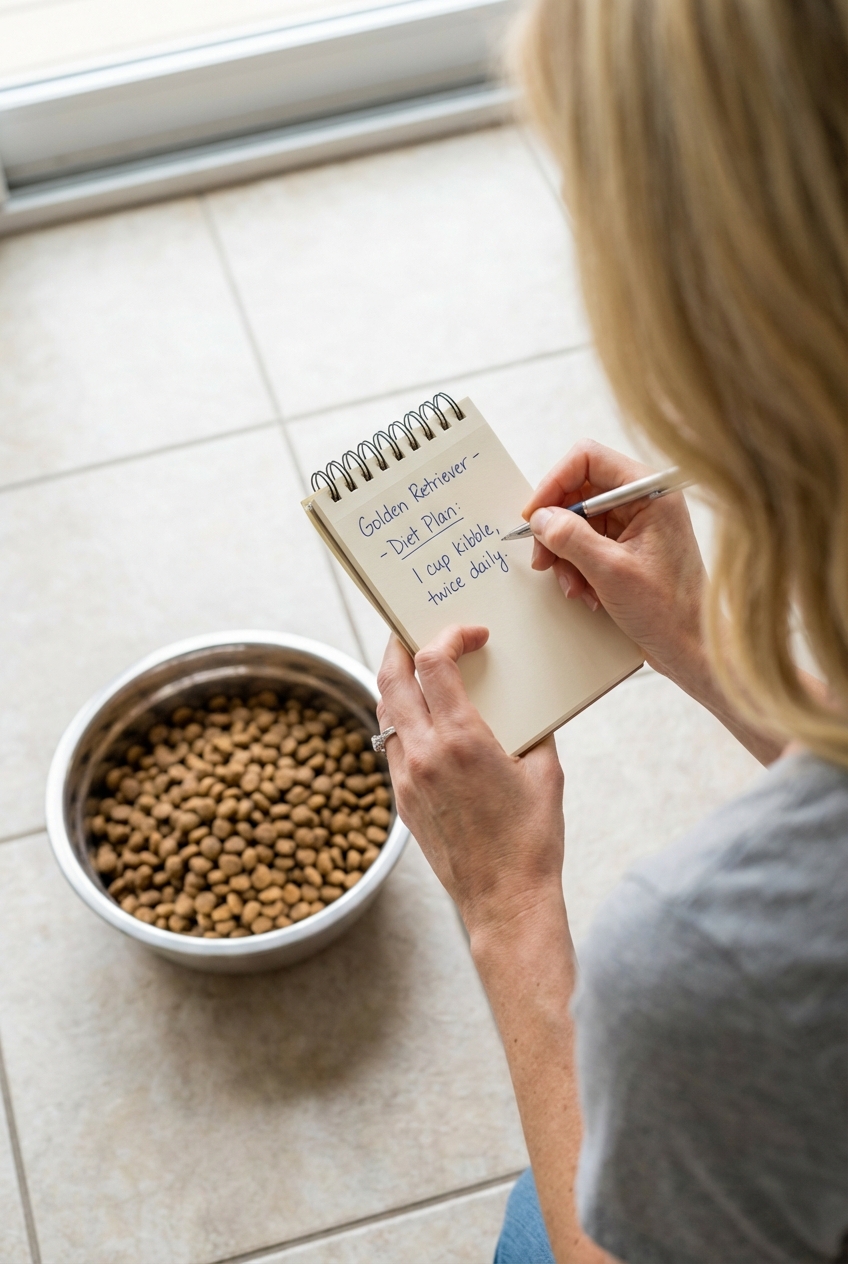
Step 5: Track what matters
Write down:
- Time and frequency of vomiting
- What it looked like (foam, liquid, food)
- Any diet changes or scavenging
- Stool quality and appetite
This helps your veterinarian make quicker, more accurate decisions.
What not to do
- Do not give human medications (like ibuprofen or anti-nausea meds) unless your veterinarian specifically instructs you. Some can be dangerous for dogs or can hide symptoms. Even products that are sometimes used in dogs, like Pepto-Bismol, can be risky in certain situations and can make it harder to interpret stool color.
- Do not fast puppies or toy breeds without veterinary guidance. They can get dehydrated and low blood sugar faster.
- Do not assume it is “just bile” if it keeps happening. Repeated bile vomiting can still mean inflammation, reflux, parasites, pancreatitis, or obstruction.
How vets check it out
If yellow vomiting is recurring or your dog seems sick, your veterinarian may recommend:
- Physical exam and abdominal palpation
- Fecal testing for parasites
- Bloodwork to evaluate dehydration, infection, pancreas, liver, kidneys
- X-rays to check for obstruction or abnormal gas patterns
- Ultrasound for a detailed look at the stomach, intestines, pancreas, liver, gallbladder
Treatment can include anti-nausea medication, stomach protectants, fluids, diet therapy, deworming, or additional care depending on the cause.
Prevention tips
- Feed consistent meals and avoid long stretches without food if your dog is prone to bile vomiting
- Transition foods slowly over 7 to 10 days
- Limit fatty treats and people food, especially for dogs with sensitive stomachs
- Use a trash-proof plan (secured lids, gates, training) for dogs who scavenge
- Stay current on parasite prevention and routine fecal testing
Bottom line
Yellow vomit is often bile, and a single episode in an otherwise healthy dog can be mild and short-lived. But frequent vomiting, changes in energy, belly pain, dehydration, or any concern for toxins or foreign objects should be treated as a prompt reason to call your veterinarian.
If you do need to call or go in, bring the basics: your dog’s age and size, when the vomiting happens (before meals or after), how often it has happened, what the vomit looked like, and any recent diet changes or possible scavenging.