Worried about a vomiting dog? Learn when vomiting is an emergency, how to offer small sips safely, and the best bland foods (chicken/rice, turkey, pumpkin, e...
Article
•
Designer Mixes
Dog Throwing Up Yellow: What It Means and What to Do

Shari Shidate
Designer Mixes contributor
Seeing yellow vomit on the floor is one of those moments that can make your stomach drop. The good news is that, in many cases, yellow vomit is often bile, and it can show up when a dog’s stomach is empty or mildly irritated. The concern is that yellow vomit can also happen with pancreatitis, intestinal blockage, or other issues that need veterinary care.
As a veterinary assistant, I like to focus on two things: what you are actually seeing and how your dog is acting. Those clues usually tell us whether you can monitor at home or should be seen right away.
Quick note: Many owners mix up vomiting and regurgitation. Vomiting usually involves heaving and nausea, and the material may be yellow/foamy or partially digested. Regurgitation is more effortless and often looks like undigested food or liquid that comes up soon after eating. If you are not sure which is happening, tell your vet what you observed (heaving or not, timing, and what it looked like).
Important: This is general information and not a substitute for an exam. Color alone cannot diagnose the cause, so use the full picture (frequency, duration, and how your dog feels) to guide next steps.
What is the yellow stuff?
Yellow vomit is often bile, a yellow-green fluid made by the liver and stored in the gallbladder. Bile normally flows into the small intestine to help digest fats. If the stomach is empty or the upper digestive tract is irritated, bile can reflux into the stomach and be vomited up.
That said, yellow color can also come from stomach fluid, partially digested food, or even dietary pigments. This is why we treat color as a clue, not a diagnosis.
Yellow vomit can look:
- Pale yellow and foamy (often bile mixed with stomach fluid)
- Bright yellow with a little liquid
- Yellow with mucus if there is irritation
If you also see grass, that is common too. Many dogs eat grass when their stomach feels off, then sometimes vomit shortly after.
Common causes
1) Empty stomach pattern (bilious vomiting)
This is a common pattern, especially when a dog goes a long stretch without food. You might hear it called “bilious vomiting syndrome,” but the label varies and not every vet uses it.
Typical pattern: yellow foam in the morning, then your dog acts mostly normal and still wants breakfast.
2) Mild stomach irritation
Diet changes, rich treats, getting into the trash, chewing toys, or a new medication can irritate the stomach lining. When the stomach is inflamed, bile or yellow stomach fluid can show up in vomit.
3) Eating too fast
Fast eaters can gulp air, overfill the stomach, and vomit soon after. Sometimes it looks yellow if the stomach was relatively empty beforehand or if mostly fluid comes up.
4) Gastroenteritis (diet, parasites, viral or bacterial causes)
Upset stomach from dietary indiscretion, intestinal parasites, or viral or bacterial causes can trigger nausea and vomiting. This is more common in puppies, recently adopted dogs, and dogs with new exposure risks. The exact cause often requires veterinary testing (like a fecal test) to confirm.
5) Pancreatitis
Pancreatitis can cause repeated vomiting, appetite loss, abdominal pain, and lethargy. High-fat foods and table scraps can increase the risk and may precipitate an episode in susceptible dogs, but it can happen even when owners do everything “right.” This is a common reason we recommend a veterinary visit sooner rather than later when vomiting is persistent.
6) Intestinal blockage (foreign body)
If a dog swallows a sock, toy pieces, corn cob, or other non-food item, vomiting can start and may become frequent. Yellow fluid can appear because the stomach is empty but the dog keeps retching.
Special caution: Linear foreign bodies (string, yarn, ribbon, tinsel, cloth) can be especially dangerous. If you see string hanging from the mouth or rectum, do not pull it. Contact a veterinarian urgently.
7) Other GI, liver, or hormone disease
Less commonly, ongoing vomiting may be related to chronic GI inflammation, gallbladder issues, liver disease, or endocrine disease.
For example, Addison’s disease can present with intermittent vomiting, diarrhea, weakness, and lethargy, and it can become an emergency. If your dog seems unusually weak or “off,” it is worth getting checked.
When it is an emergency
Please contact an emergency clinic or your regular veterinarian immediately if any of the following are true:
- Repeated vomiting (3 or more times in a day, or ongoing for more than 12 to 24 hours)
- Blood in vomit (red streaks or dark coffee-ground material)
- Severe lethargy, weakness, collapse, or your dog seems “not themselves”
- Bloated abdomen, unproductive retching, or signs of extreme discomfort (possible bloat)
- Abdominal pain (tensing, yelping, prayer position, guarding the belly)
- Cannot keep water down
- Diarrhea plus vomiting, especially if watery or bloody
- Possible toxin exposure (xylitol, grapes or raisins, medications, cannabis, cleaners, etc.)
- Suspected foreign body (missing toy, chewed socks, string, corn cob)
- Puppies, seniors, or dogs with chronic conditions (kidney disease, diabetes, Addison’s, etc.)
If you are unsure, it is always appropriate to contact your veterinary clinic. A quick phone triage can save you hours of worry.
Home care (mild, one-time vomiting)
If your dog vomits yellow once, then acts normal, has normal gum color, and is not showing any red flags, you can often try gentle home care while keeping a close eye on them.
The biggest decision drivers are frequency, duration, and whether your dog can keep water and food down.
Step 1: Pause food briefly (healthy adults only)
For many healthy adult dogs, a short break from food can help the stomach settle. Water should still be available.
- Adults (otherwise healthy): consider holding food for about 6 to 8 hours, then offer a small meal. If your veterinarian has given you different guidance for your dog, follow that.
- Puppies and tiny breeds: do not fast without veterinary guidance. They can develop low blood sugar more easily.
If vomiting repeats, your dog seems weak, or you are worried about dehydration or an underlying condition, skip the fasting plan and seek veterinary advice.
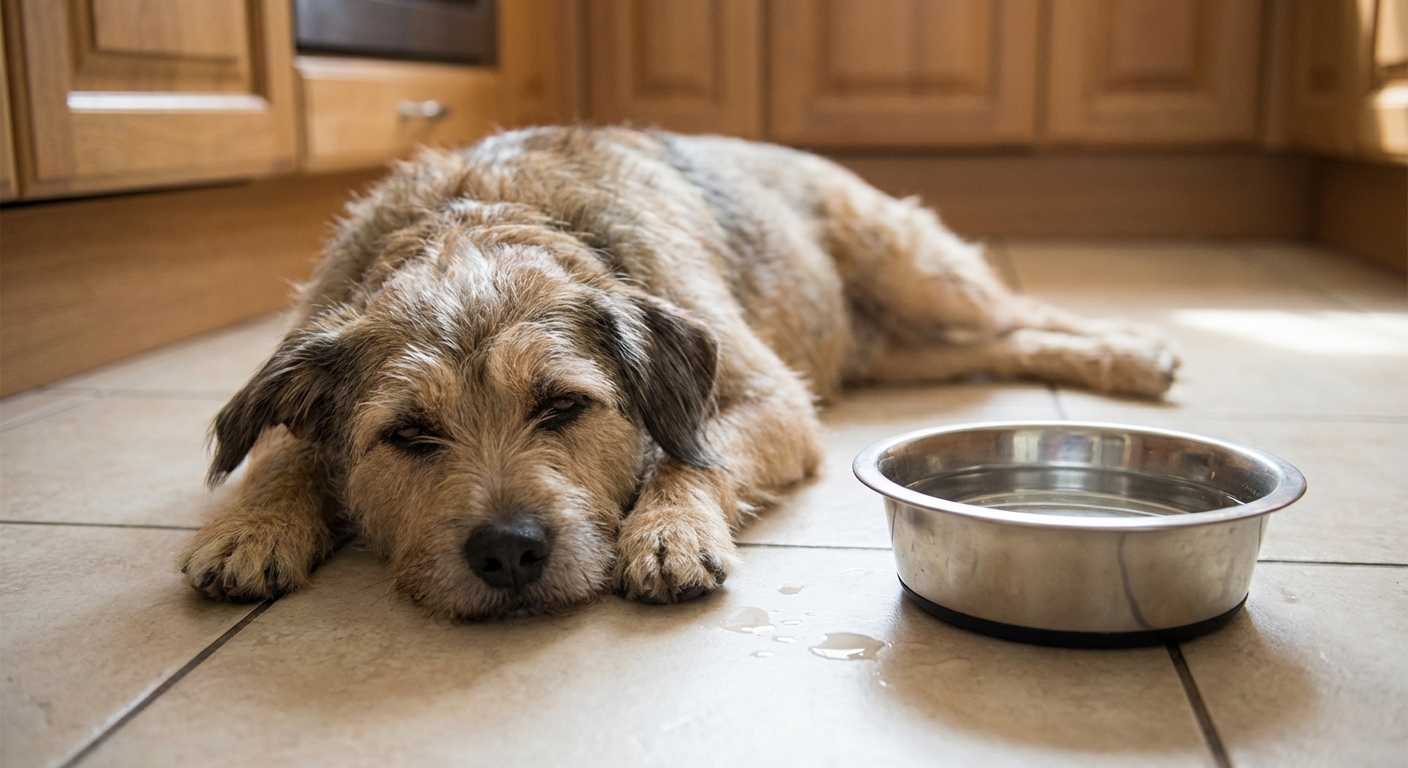
Step 2: Offer small amounts of water
Large drinks can trigger another vomit. Offer small sips more frequently. If your dog vomits water, contact a veterinarian.
Watch for dehydration signs like tacky or dry gums, sunken eyes, or reduced energy. These are reasons to call sooner, especially in small dogs and seniors.
Step 3: Feed a bland, small meal
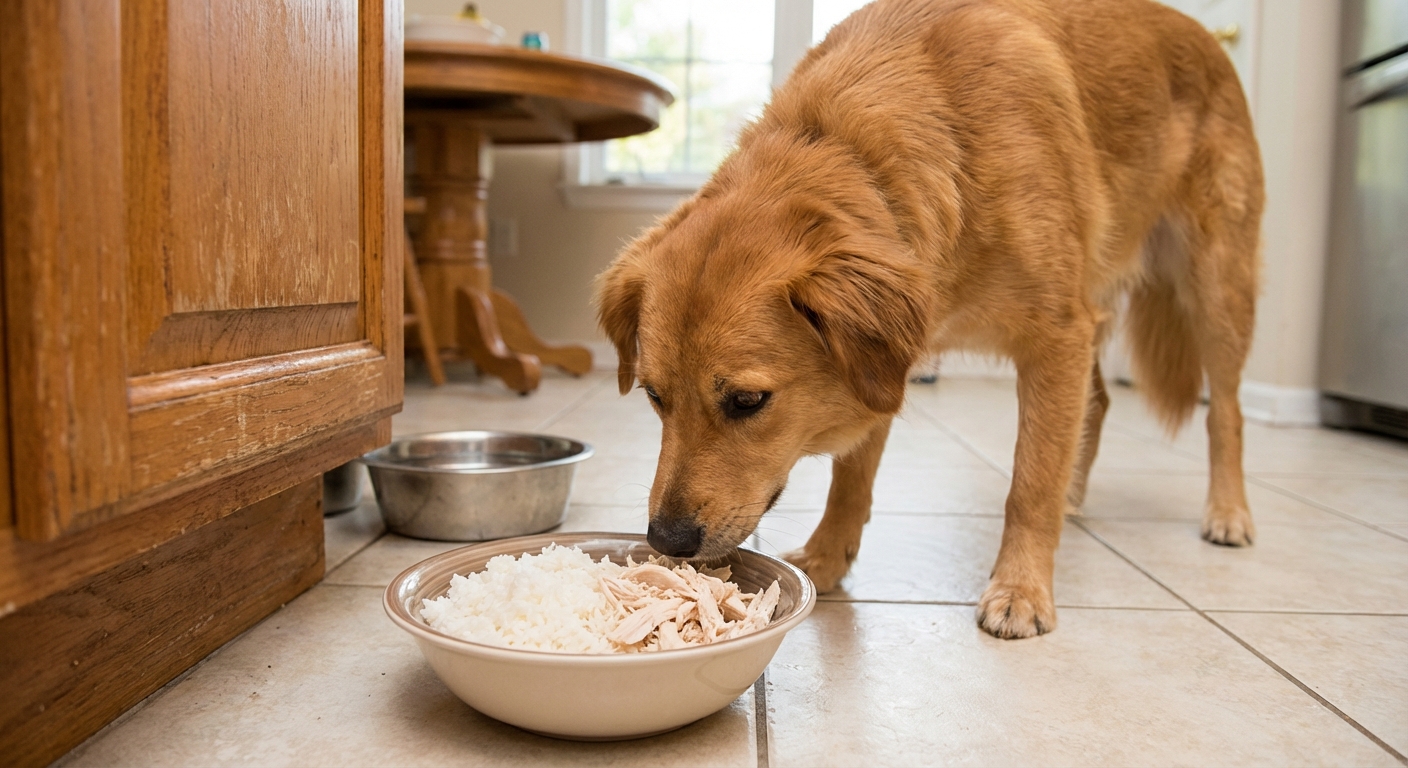
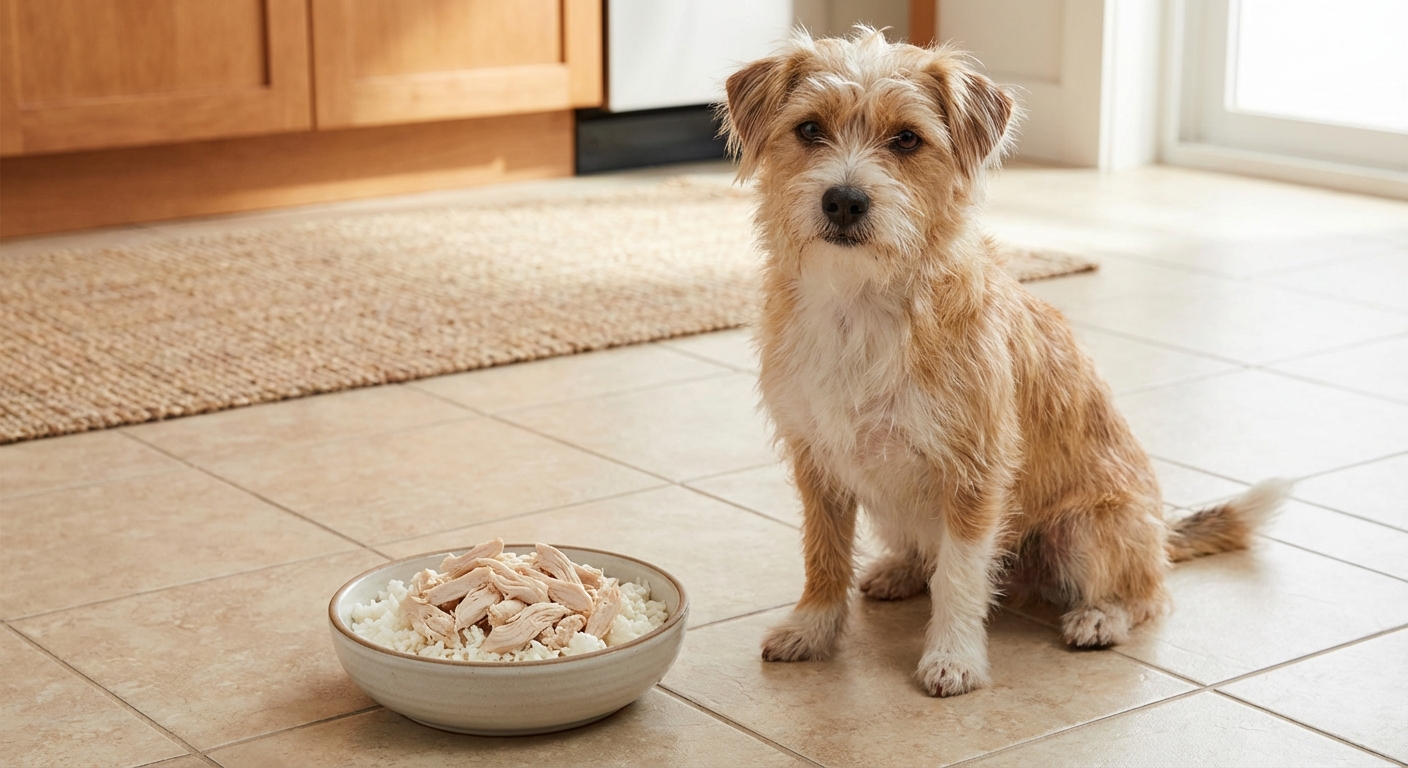
Once vomiting has stopped for several hours, offer a small bland meal. Common vet-approved options include:
- Boiled skinless chicken breast and plain white rice
- Boiled lean turkey and rice
- Plain scrambled egg (no butter, no seasoning) in a small amount, ideally alongside rice
Feed small portions for 24 hours, then gradually transition back to their normal diet over 2 to 3 days.
Step 4: Adjust the schedule if mornings are the pattern
If your dog vomits yellow foam mainly in the morning, ask your veterinarian about trying:
- A small bedtime snack
- Splitting daily food into 3 to 4 smaller meals
- A slow feeder bowl if gulping is a factor
Many dogs improve simply by avoiding long stretches on an empty stomach.
What to avoid
- Do not give human medications like Pepto-Bismol, ibuprofen, naproxen, or acetaminophen unless your veterinarian instructs you to. Some are toxic, and others can complicate diagnosis.
- Avoid fatty foods (bacon, sausage, greasy leftovers). Fat may worsen nausea and can increase the risk of pancreatitis or trigger a flare in susceptible dogs.
- Do not force food if your dog is still nauseated.
- Do not ignore repeat episodes. “He vomits bile sometimes” can be a pattern worth evaluating.
- Do not pull string if you suspect a linear foreign body. Seek veterinary care urgently.
What your vet may do
If vomiting is persistent or your dog has concerning symptoms, your veterinarian may suggest diagnostics and treatment such as:
- Physical exam and abdominal palpation
- Fecal test for parasites
- Bloodwork (to check hydration, infection markers, liver and kidney values, pancreatitis screening)
- X-rays to look for obstruction or abnormal gas patterns
- Ultrasound to evaluate organs and the intestinal tract more closely
- Anti-nausea medication and stomach protectants when appropriate
- Fluids (subcutaneous or IV) if dehydrated
That may sound like a lot, but vomiting is one of those signs where the “why” matters. A simple upset stomach and a foreign body can look similar on day one.
Quick checklist
If you can, write these down. It genuinely helps your veterinary team make faster decisions:
- How many times your dog vomited and over what time period
- Color and texture (yellow foam, liquid, food present, blood present)
- Whether there was heaving (vomiting) or it came up effortlessly (regurgitation)
- Any diarrhea, straining, or constipation
- Energy level and appetite changes
- Any possible diet change, new treats, trash access, toy chewing, or toxin exposure
- Current medications and supplements
- Whether your dog can keep water down
- Any signs of dehydration (tacky gums, weakness)
Bottom line
Yellow vomit often involves bile or yellow stomach fluid, and it is commonly linked to an empty stomach or mild irritation. If it is a one-time episode and your dog seems bright, comfortable, and willing to eat later, you can often monitor at home with bland food and smaller meals.
But if vomiting repeats, your dog seems painful or lethargic, or you suspect toxins or a blockage, please do not wait. Getting seen early is often simpler, less expensive, and much safer for your dog.
If your gut says, “This is not normal for my dog,” trust that. You know them best.