Worried about a vomiting dog? Learn when vomiting is an emergency, how to offer small sips safely, and the best bland foods (chicken/rice, turkey, pumpkin, e...
Article
•
Designer Mixes
Dog Throwing Up Yellow Mucus

Shari Shidate
Designer Mixes contributor
Seeing your dog throw up yellow mucus can feel scary, especially when it happens out of nowhere. The good news is that yellow vomit is often bile mixed with stomach fluid. In some cases it can also be partially digested food that looks yellow. Many times, the cause is something we can improve at home with smart feeding habits. But sometimes it is your dog’s early warning sign that something bigger is going on.
As a veterinary assistant, I think of yellow mucus vomit as your dog’s body saying: “My stomach is irritated, and there is not much in here.” Let’s walk through what it can mean, what to do today, and when you should call your vet.
What the yellow mucus usually is
Yellow vomit is often bile, a digestive fluid made by the liver and stored in the gallbladder. Bile is released into the small intestine to help digest fats. If the stomach is empty or irritated, bile can move backward into the stomach and get vomited up.
Yellow vomit can look like:
- Foamy yellow liquid
- Yellow mucus that is thick or stringy
- Yellow liquid mixed with a little clear fluid
- Yellowish vomit with a small amount of partially digested food
If you also see grass, that is common too. Some dogs eat grass when they feel nauseated, and some dogs just like to eat it, then vomit it back up.
Vomit or regurgitation?
Owners often use “vomit” for both, but it helps to know the difference:
- Vomiting: usually includes retching or heaving, and you may see foam, bile, or digested food.
- Regurgitation: food or liquid comes up more effortlessly, often in a tube shape, with little to no retching. This can point to esophagus issues and deserves a vet call, especially if it repeats.
Common triggers
1) Empty stomach
A very common pattern is vomiting yellow foam early in the morning or late at night when the stomach has been empty for a while. Many vets call this bilious vomiting syndrome.
Why it happens: acid and bile can irritate an empty stomach lining.
2) Meal timing
Some dogs do great on the same food but vomit if meals are too far apart. A simple schedule change can make a big difference.
3) Fast food switches and rich treats
Sudden diet changes, table scraps, fatty treats, and new chews can trigger vomiting and mild gastritis. Even “healthy” foods can be too much too fast.
4) Stress and scavenging
Boarding, travel, a new pet, getting into the trash, or chewing on irritating items can all upset the stomach.
Quick triage
Go to a vet now if you notice:
- Repeated vomiting, especially multiple times over a few hours, or your dog cannot settle
- Blood in vomit or vomit that looks like coffee grounds
- Swollen or painful belly, hunching, or crying when picked up
- Cannot keep water down or refuses all water
- Weakness, collapse, pale gums, or severe lethargy
- Diarrhea plus vomiting that is profuse or ongoing
- Known toxin risk (xylitol, chocolate, grapes or raisins, medications, rodent bait, cannabis)
- Bloat signs: unproductive retching, distended abdomen, pacing, drooling
- Puppy, senior, pregnant dog, or a dog with chronic disease (kidney disease, diabetes, Addison’s disease)
Often safe to monitor at home if:
- Your dog vomited once or twice, then seems mostly normal
- They are interested in water and can keep small sips down
- No significant abdominal pain
- No toxin or foreign object concern
If you are ever unsure, it is absolutely okay to call your vet and describe exactly what you saw. A quick phone triage can save you a lot of stress.
What to do at home today
Step 1: Pause and observe
Take a breath and gather a few details. These clues help your veterinarian enormously:
- How many times did your dog vomit, and over what time period?
- What time of day?
- Any diarrhea?
- Any new foods, treats, chews, trash, grass, or medications?
- Energy level right now?
- Any chance of swallowing a toy, sock, bone, or string?
Step 2: Offer small amounts of water
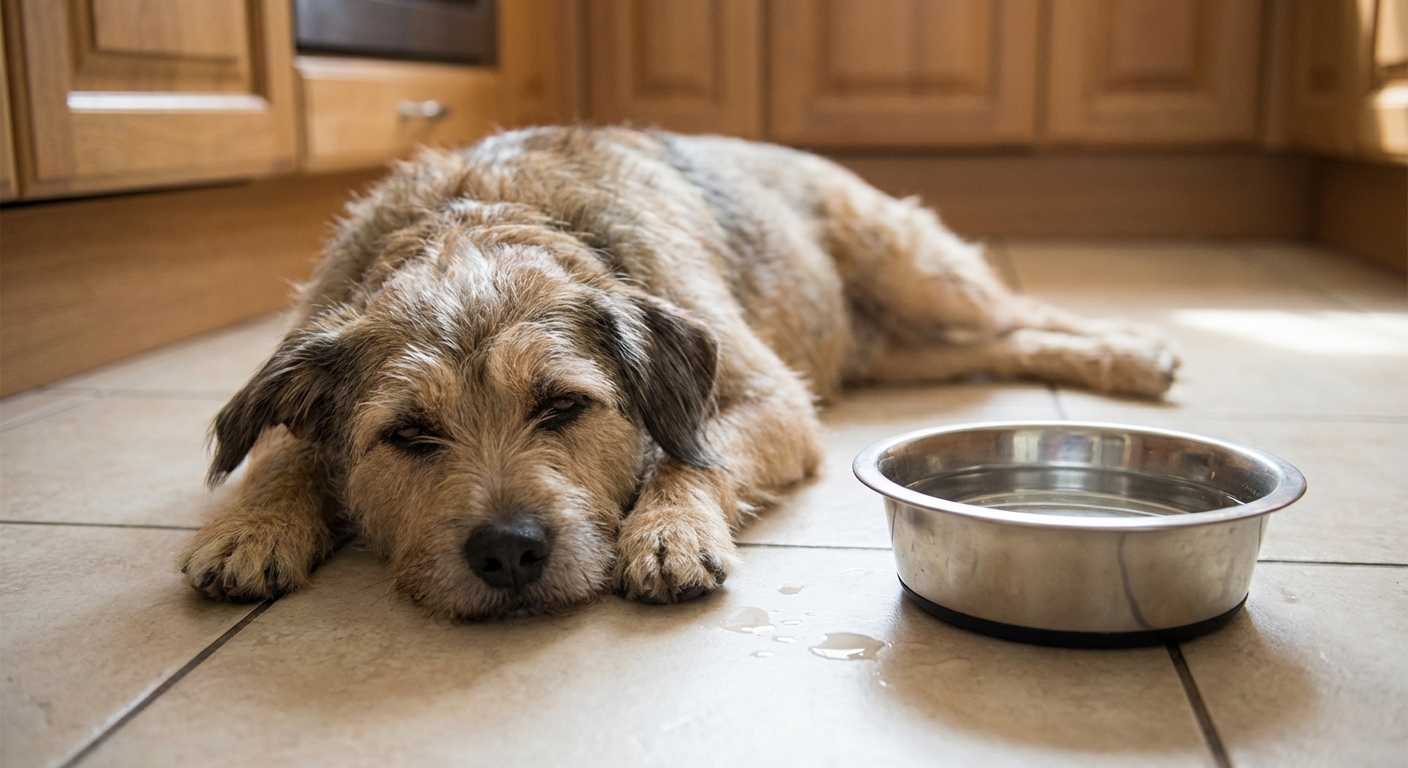
If your dog wants to drink, let them take small sips. Gulping a full bowl can trigger more vomiting. If your dog keeps vomiting water, call your vet.
Watch for dehydration signs like tacky gums, decreased urination, or unusual tiredness. If you see these, it is safer to get veterinary guidance. Do not use electrolyte drinks unless your vet recommends a specific plan.
Step 3: Offer a bland meal once vomiting has stopped
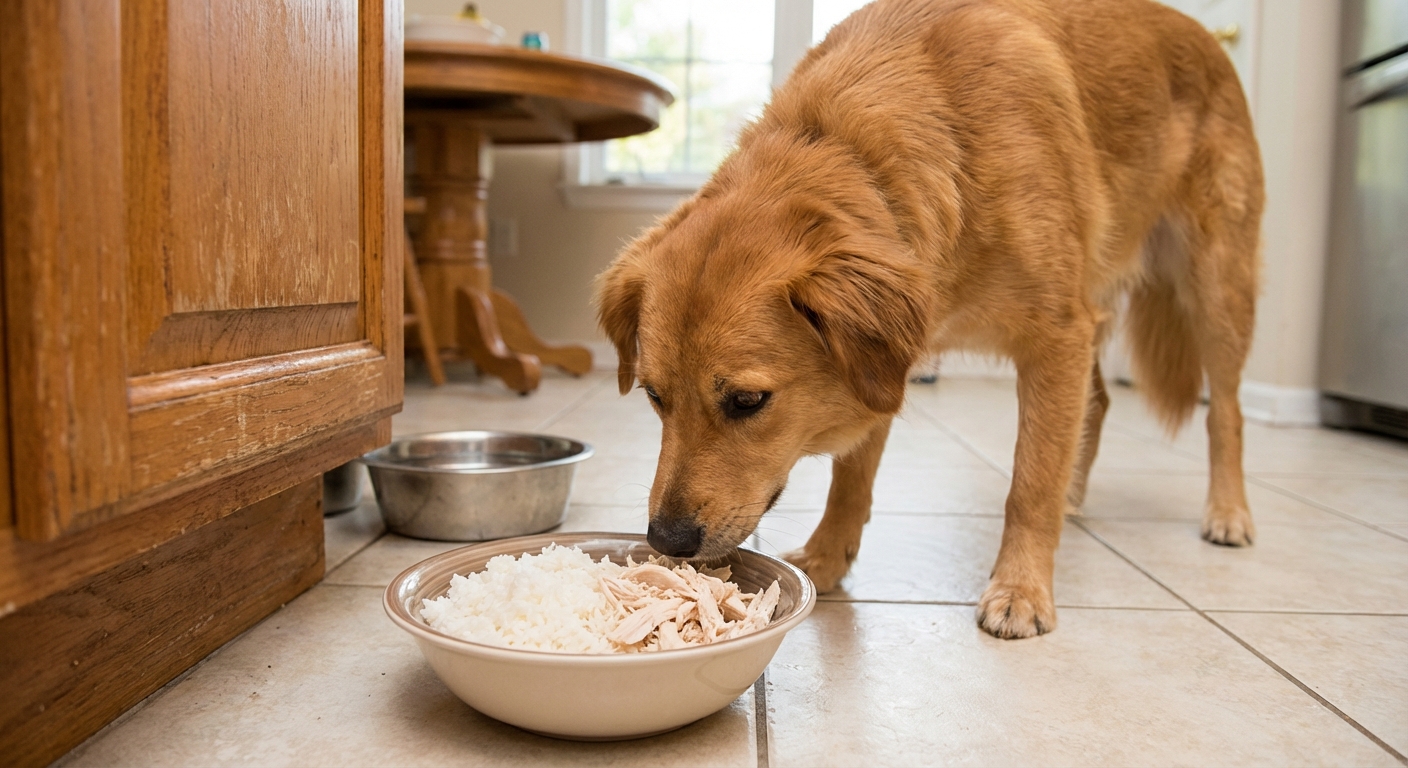
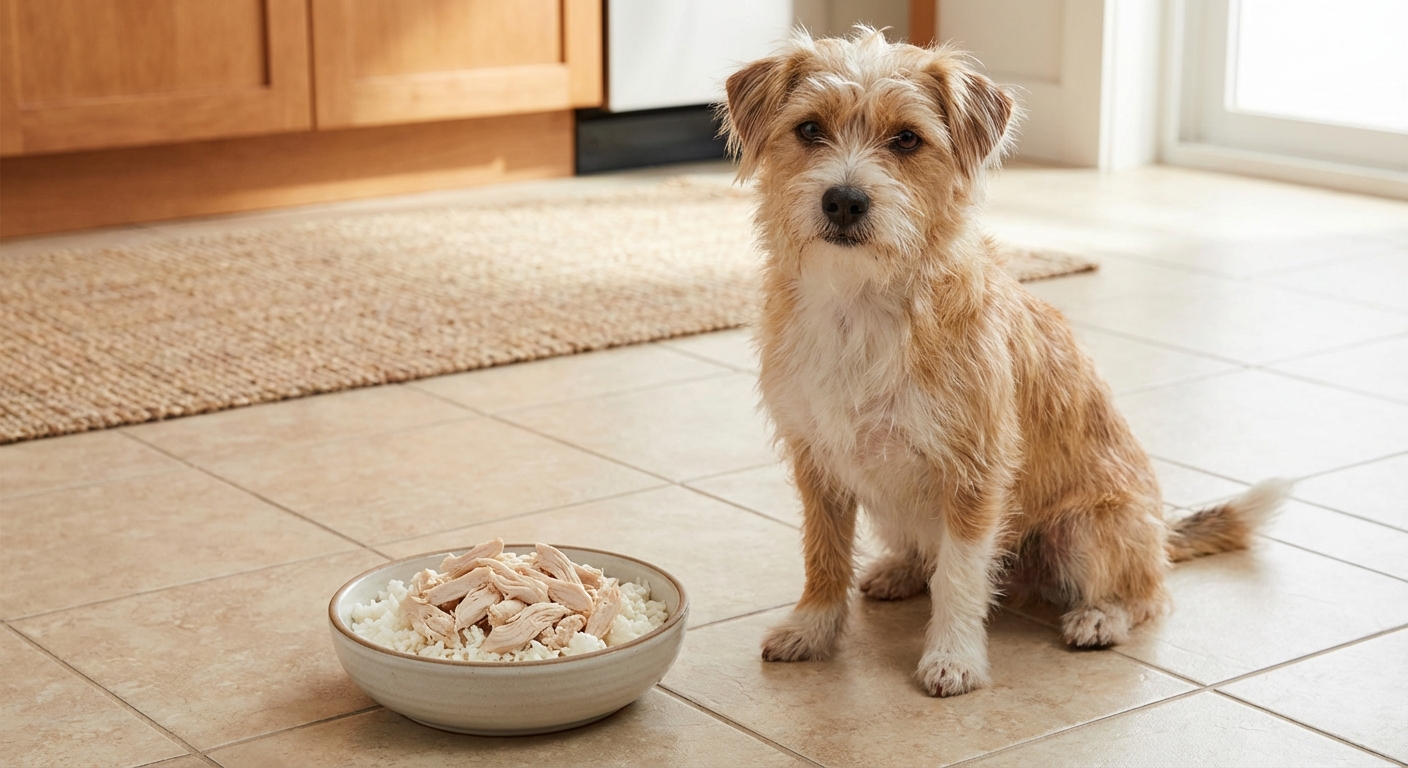
If your dog has not vomited for several hours and is acting fairly normal, many vets recommend a small bland meal such as:
- Boiled skinless chicken breast and white rice
- Boiled lean turkey and white rice
Serve a small portion first. If it stays down, you can feed small meals for 24 to 48 hours, then gradually return to the regular diet over 2 to 3 days.
Important: chicken and rice is not complete nutrition, so it is a short-term tool only. Some dogs do better with a prescription gastrointestinal diet. If your dog has pancreatitis history, food allergies, or chronic GI issues, ask your vet what bland option is best.
Step 4: Fix the empty-stomach cycle
If the vomiting is happening in the morning, try a small bedtime snack. If it happens late afternoon, try splitting meals into 3 to 4 smaller meals instead of 1 to 2 big ones.
Simple snack ideas to discuss with your vet:
- A small portion of their regular kibble
- A spoonful of a vet-approved wet food
- A small bite of boiled chicken
For many dogs with bilious vomiting syndrome, this one change makes a big difference.
What not to do
- Do not give human medications like Pepto-Bismol, ibuprofen, or acetaminophen unless your veterinarian specifically instructed you. Some can be dangerous for dogs. Bismuth subsalicylate (Pepto-Bismol) can be risky in certain situations and can also darken stool or vomit, which makes it harder to monitor for bleeding.
- Do not fast for too long without guidance. For many healthy adult dogs, skipping one meal is often tolerated, but fasting more than 12 to 24 hours can create new problems or delay care. For puppies, toy breeds, and very small dogs, missing even a single meal can raise low blood sugar risk, so call your vet early.
- Do not keep offering new foods every hour. Too many changes can irritate the gut further.
Common causes
Bilious vomiting syndrome
Classic sign: yellow foam vomit on an empty stomach, often morning. Usually improves with smaller, more frequent meals and a bedtime snack.
Mild gastritis
Can be triggered by diet changes, rich treats, stress, eating garbage, or swallowing something irritating. Often self-limited, but monitor closely.
Parasites
Intestinal parasites (like roundworms or hookworms) can cause intermittent vomiting and sometimes diarrhea, pot-belly (especially puppies), and poor coat. A stool test and appropriate deworming are key.
Pancreatitis
This can be serious. Signs can include repeated vomiting, decreased appetite, belly pain, and lethargy. It needs veterinary care and a specific diet plan.
Foreign body
Dogs swallow socks, toys, corn cobs, and more. Vomiting may start as bile and then become frequent. String, yarn, or ribbon can cause a dangerous linear foreign body. Partial obstructions can cause intermittent bile vomiting that comes and goes. If your dog cannot keep food down or is repeatedly vomiting, call your vet.
Reflux
Some dogs experience nausea and bile vomiting, especially on an empty stomach or after certain foods. Your vet may recommend a diet plan or medications.
Other medical causes
Persistent or recurring vomiting can also be linked to conditions like inflammatory bowel disease, kidney disease (uremia), liver or gallbladder disease, and Addison’s disease. These are not things you can diagnose at home, but they are part of why repeat vomiting deserves a vet visit.
When to schedule a vet visit
Even if it is not an emergency, it is worth booking an appointment if:
- Yellow mucus vomiting happens more than once a week
- Your dog is losing weight, eating less, or seems nauseous often
- There is frequent grass eating and lip licking (common nausea signs)
- There are recurring soft stools or diarrhea
Your veterinarian may recommend a fecal test, bloodwork, a diet trial, or imaging depending on your dog’s age and symptoms.
What to tell your vet
If you do call or go in, these details help a lot:
- A timeline of vomiting (when it started, how often)
- Meal schedule, treats, chews, and any diet changes
- Any possible toxin exposure or foreign body risk
- Stool quality and urination changes
- A photo of the vomit if you can safely get one
- Bring a stool sample if your clinic asks for it
Preventing bile vomiting long-term
- Feed on a consistent schedule, and try smaller meals more often if your dog gets bile vomiting.
- Transition foods slowly over 7 to 10 days when changing diets.
- Limit fatty treats, especially in breeds prone to pancreatitis.
- Stay current on parasite prevention and do fecal testing as your vet recommends.
- Reduce scavenging with a leash, training, and a basket muzzle if needed for chronic trash eaters.
If your dog is vomiting yellow mucus and also seems painful, weak, or cannot keep water down, trust your instincts and get veterinary help. It is always better to be cautious.