Worried about a vomiting dog? Learn when vomiting is an emergency, how to offer small sips safely, and the best bland foods (chicken/rice, turkey, pumpkin, e...
Article
•
Designer Mixes
Dog Throwing Up Yellow Bile

Shari Shidate
Designer Mixes contributor
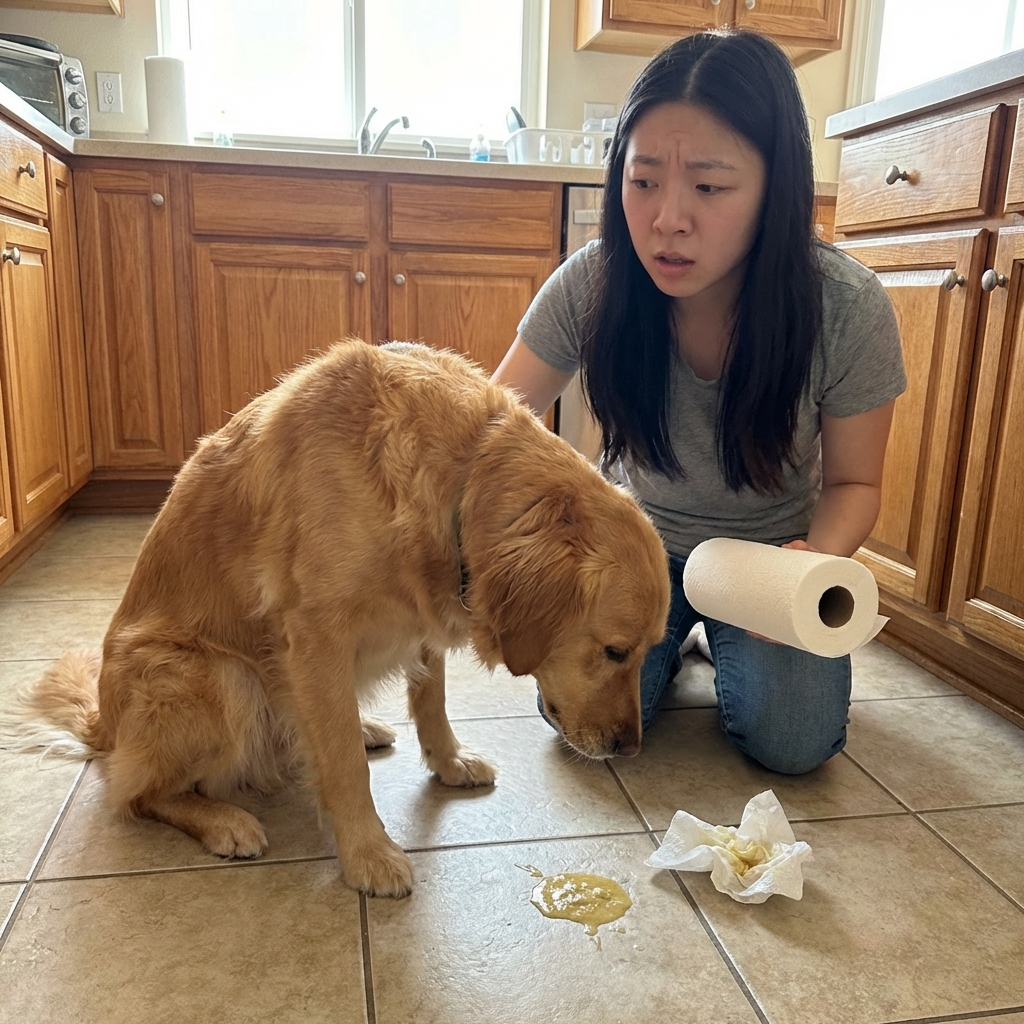
Seeing your dog throw up yellow fluid can be scary, especially when it seems to come out of nowhere. The good news is that yellow vomit is common and is often tied to an empty stomach or mild stomach irritation. The not-so-good news is that sometimes it is a sign you need a veterinarian quickly.
As a veterinary assistant, I like to approach this with two goals: keep your dog safe today, and help you prevent the next episode with simple, evidence-based steps.
Quick note: Many owners mix up vomiting and regurgitation. Vomiting usually includes heaving and abdominal effort. Regurgitation often looks more sudden and effortless, and the food may look undigested and tube-shaped. If you suspect regurgitation, contact your vet, since it can point to esophageal issues and changes what we worry about.
What yellow vomit means
That bright yellow or yellow-green fluid is often bile, a digestive liquid made by the liver and stored in the gallbladder. Bile helps break down fats and normally flows into the small intestine. When a dog’s stomach is empty or irritated, bile can reflux into the stomach and trigger vomiting.
That said, color alone does not diagnose the cause. Yellow fluid can be bile, stomach fluid mixed with bile, or vomit that looks yellow because there was not much food in the stomach.
Common, less serious reasons you may see yellow vomit:
- Empty stomach (often early morning vomiting)
- Eating too fast or going too long between meals
- Mild gastritis from eating something rich, greasy, or unfamiliar
- Motion sickness
- Stress or a big change in routine
One common pattern is called bilious vomiting syndrome. Dogs vomit yellow fluid on an empty stomach and then often seem fine afterward. Some dogs still act a little nauseated or picky about food, so it is worth monitoring closely.
When it is an emergency
Please seek urgent veterinary care (same day, or emergency clinic) if any of the following are true:
- Repeated vomiting (more than 2 to 3 times in a day), or vomiting that will not stop
- Cannot keep water down or is drooling heavily
- Bloated abdomen, unproductive retching, pacing, or obvious pain (concern for bloat or obstruction)
- Blood in vomit (red or coffee-ground appearance) or black, tarry stool
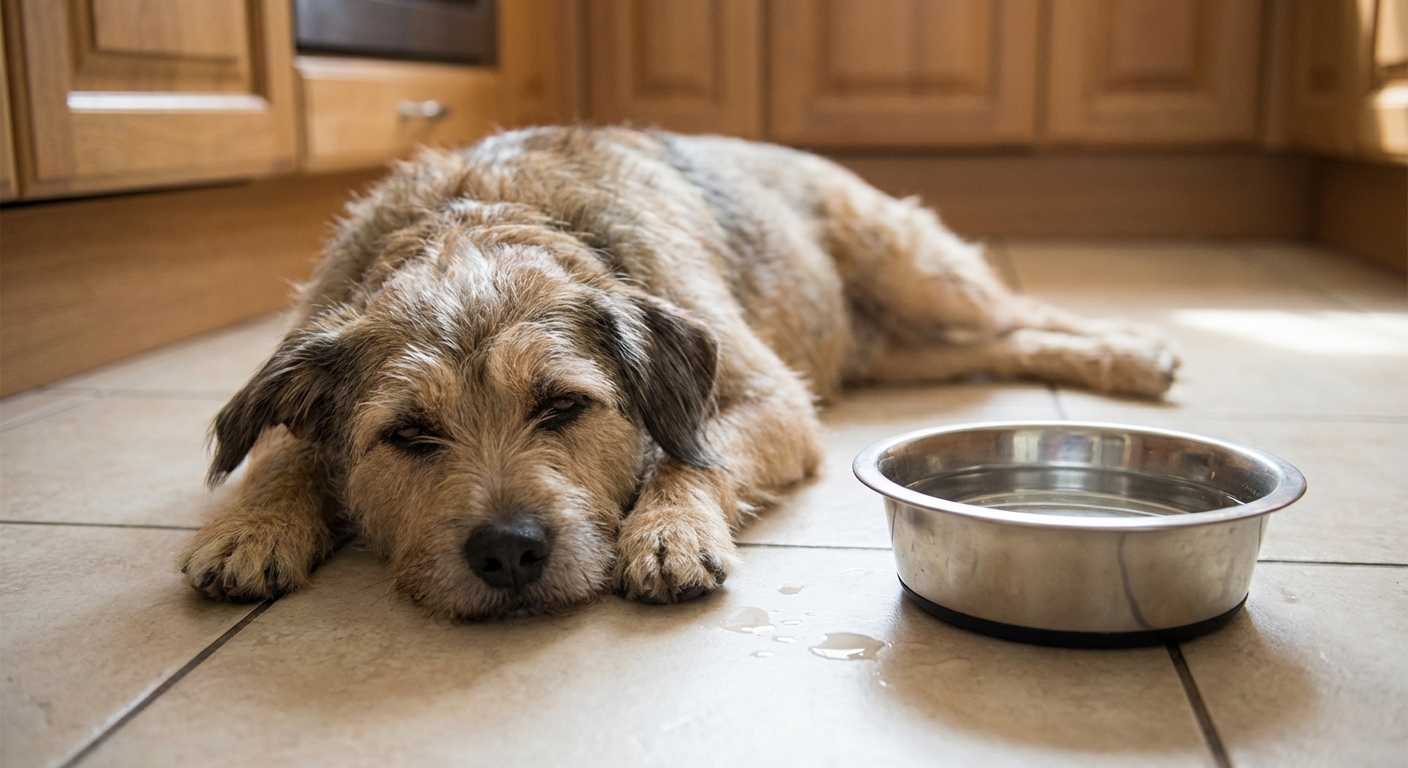
- Severe lethargy, weakness, collapse, pale gums, or trouble breathing
- Diarrhea plus vomiting, especially watery diarrhea
- Puppy, senior, or medically fragile dog (diabetes, kidney disease, Addison’s disease, etc.)
- Possible toxin exposure (xylitol, grapes/raisins, medications, cannabis, rodent bait, etc.)
- Suspected foreign body (toy pieces, socks, bones, corn cobs)
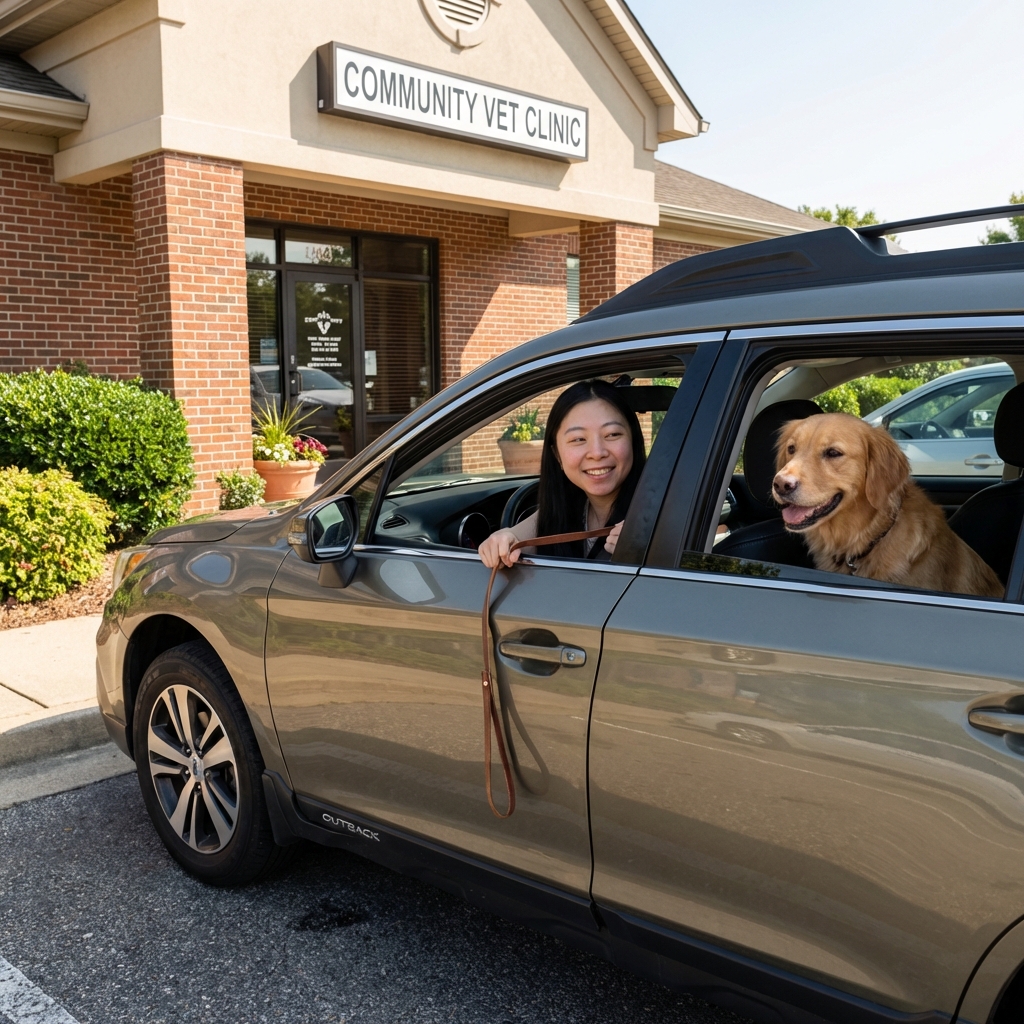
If your dog is trying to vomit but nothing comes up, or the belly looks suddenly swollen, do not wait. Those signs can be life-threatening. Dogs that gulp air (including many brachycephalic breeds) can be at higher risk for stomach issues, so take retching and bloat signs seriously.
What to do at home
If your dog vomited yellow fluid once, seems comfortable, and is otherwise acting normal, you can usually start with gentle home care while you monitor closely.
Step 1: Pause food briefly
For a healthy adult dog who vomited once, it is often reasonable to withhold food for 6 to 8 hours to let the stomach settle, then offer a small, bland meal.
Do not overfast. Long fasts can make empty-stomach vomiting worse in some dogs. Also, fasting is not appropriate for every dog. Call your vet first if your dog is:
- Diabetic (especially insulin-treated)
- A puppy
- A tiny/toy breed or has a history of low blood sugar
- Medically fragile for any reason
Step 2: Offer water in small amounts
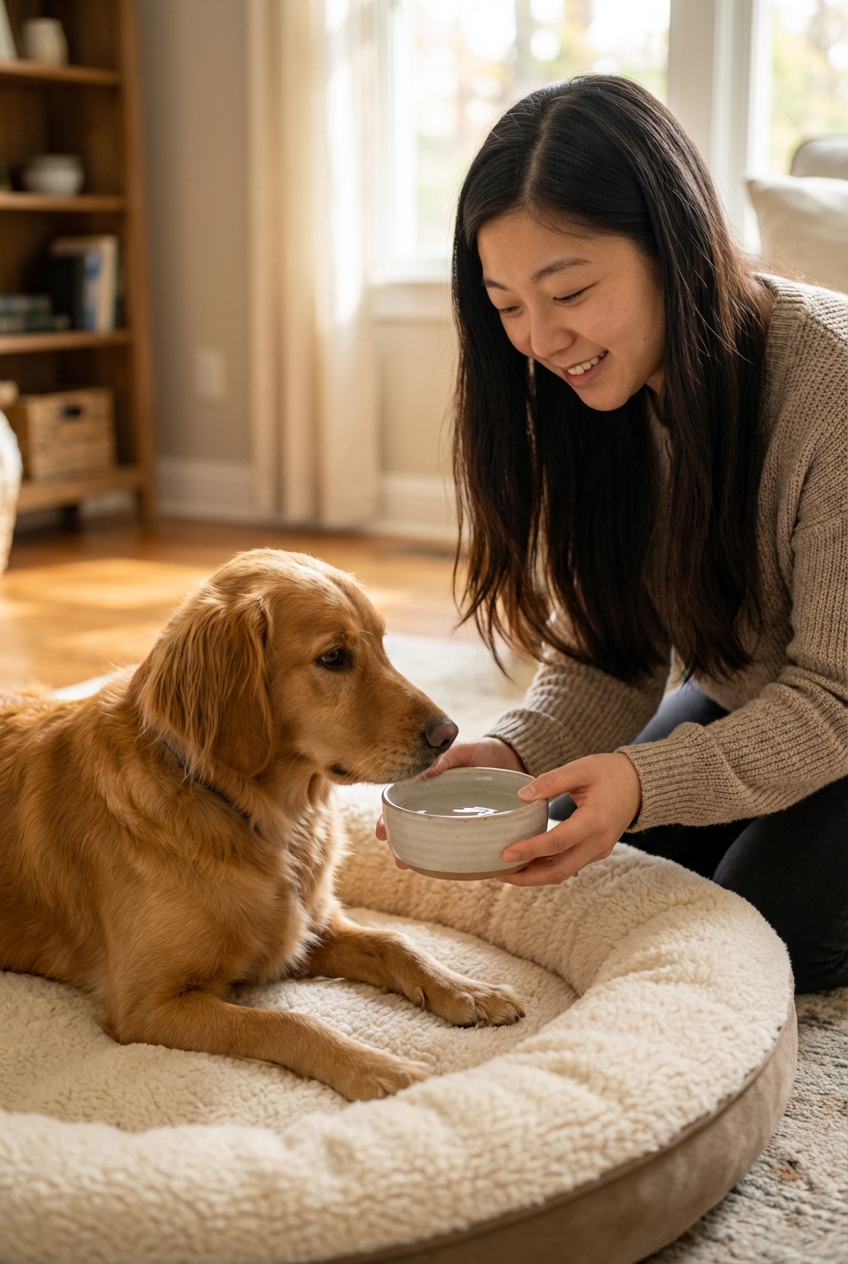
Hydration matters. Offer small sips every 15 to 30 minutes. If your dog gulps water and vomits again, pause and call your veterinarian.
Some dogs do better with ice chips or a very small amount of an oral rehydration solution recommended by your vet, but only if your dog tolerates it and your clinic agrees it is appropriate.
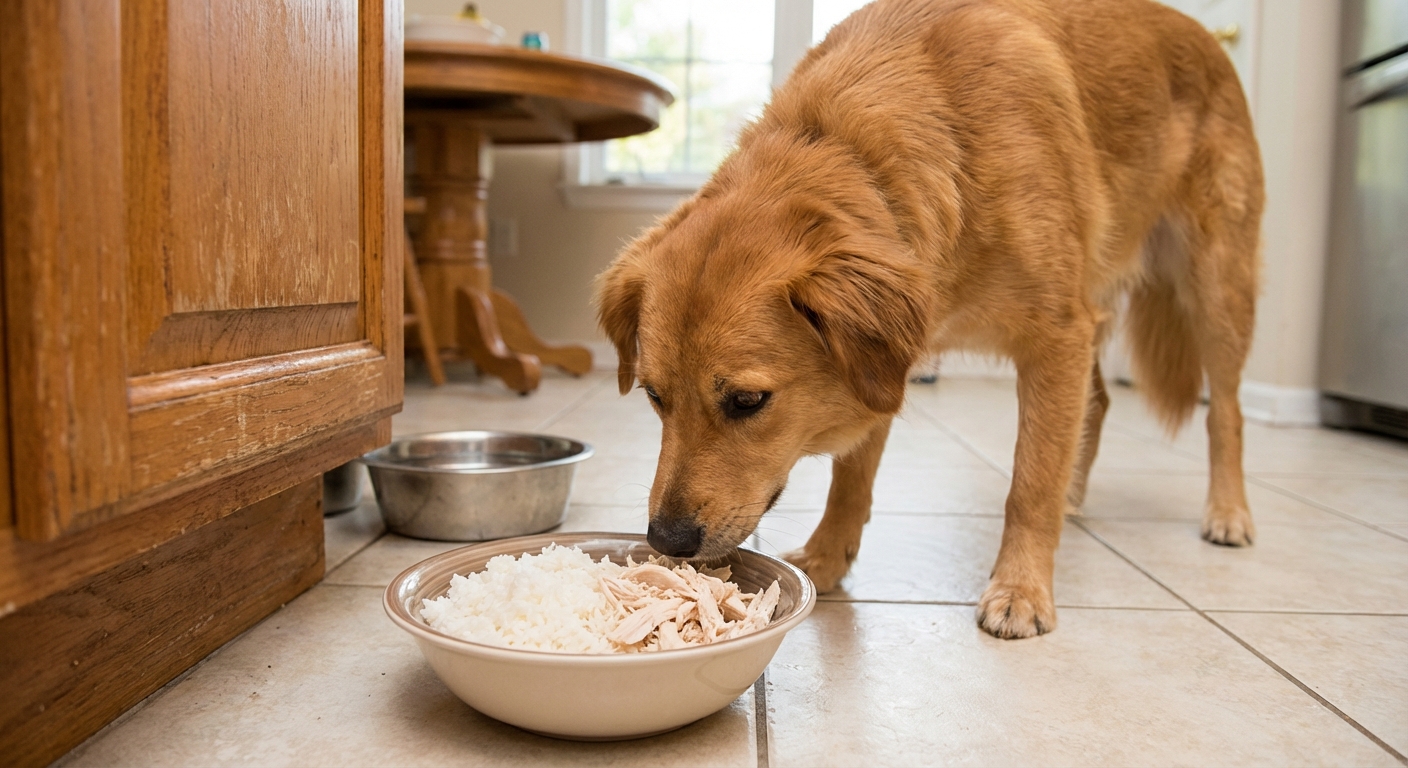
Step 3: Feed a bland, low-fat meal
After the brief rest, offer a small portion. Good bland options include:
- Boiled chicken breast (no skin, no seasoning) with plain white rice
- Lean turkey with rice
- Veterinary GI diet if you have it on hand
Feed small meals for 24 to 48 hours, then gradually transition back to the normal diet.
Step 4: Skip rich treats and human foods
Fatty foods can trigger pancreatitis and worsen vomiting. Avoid bacon, sausage, cheese-heavy snacks, buttery foods, and anything spicy.
Step 5: Watch the “big three”
- Energy: bright and responsive, or quiet and withdrawn?
- Hydration: moist gums and normal skin elasticity, or tacky gums and sunken eyes?
- Poop: normal, diarrhea, black/tarry, or no stool at all?
Why it happens in the morning
Morning bile vomiting is classic for an empty stomach. Many dogs go a long stretch overnight without food, bile builds up, and the stomach gets irritated.
Try this simple prevention strategy for 1 to 2 weeks:
- Add a small bedtime snack that is low-fat and easy to digest
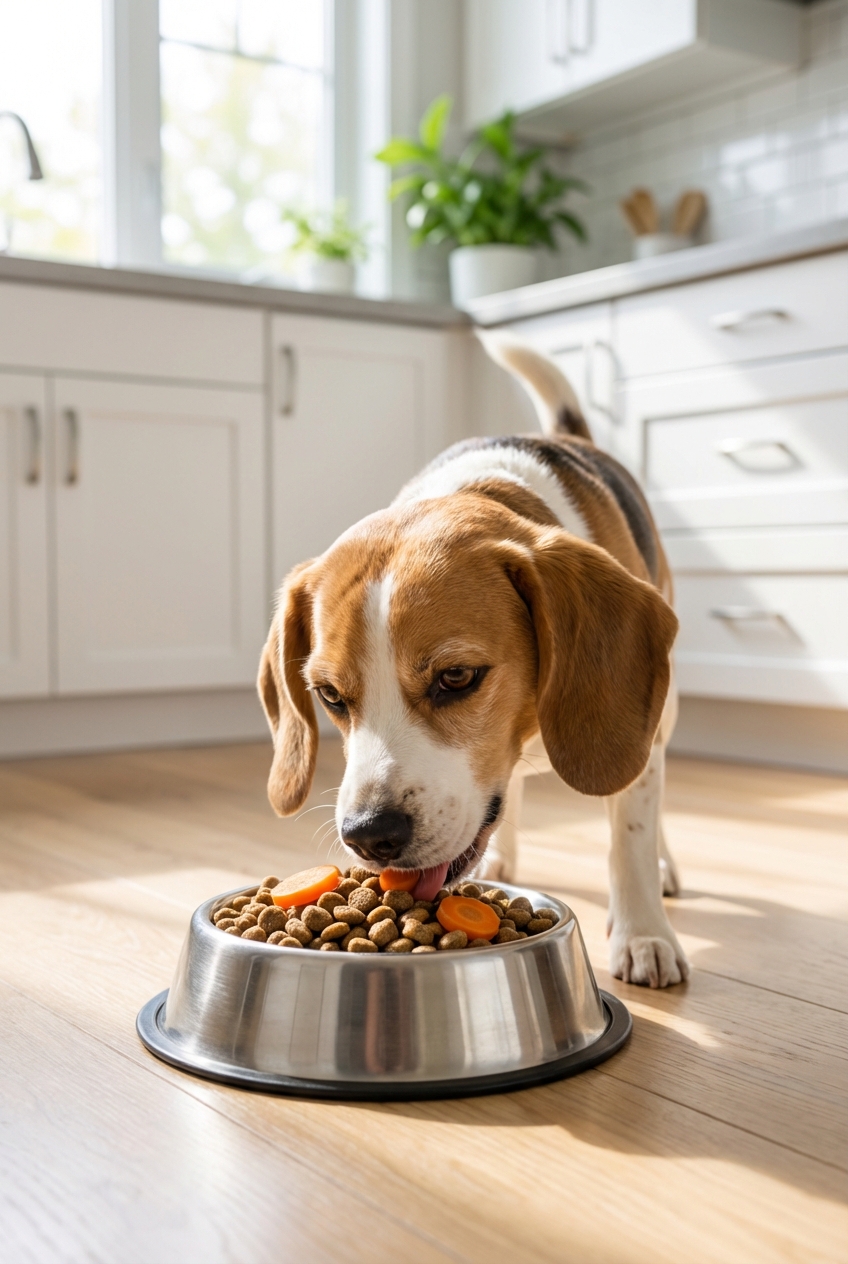
- Split meals into 3 smaller meals instead of 1 to 2 large meals
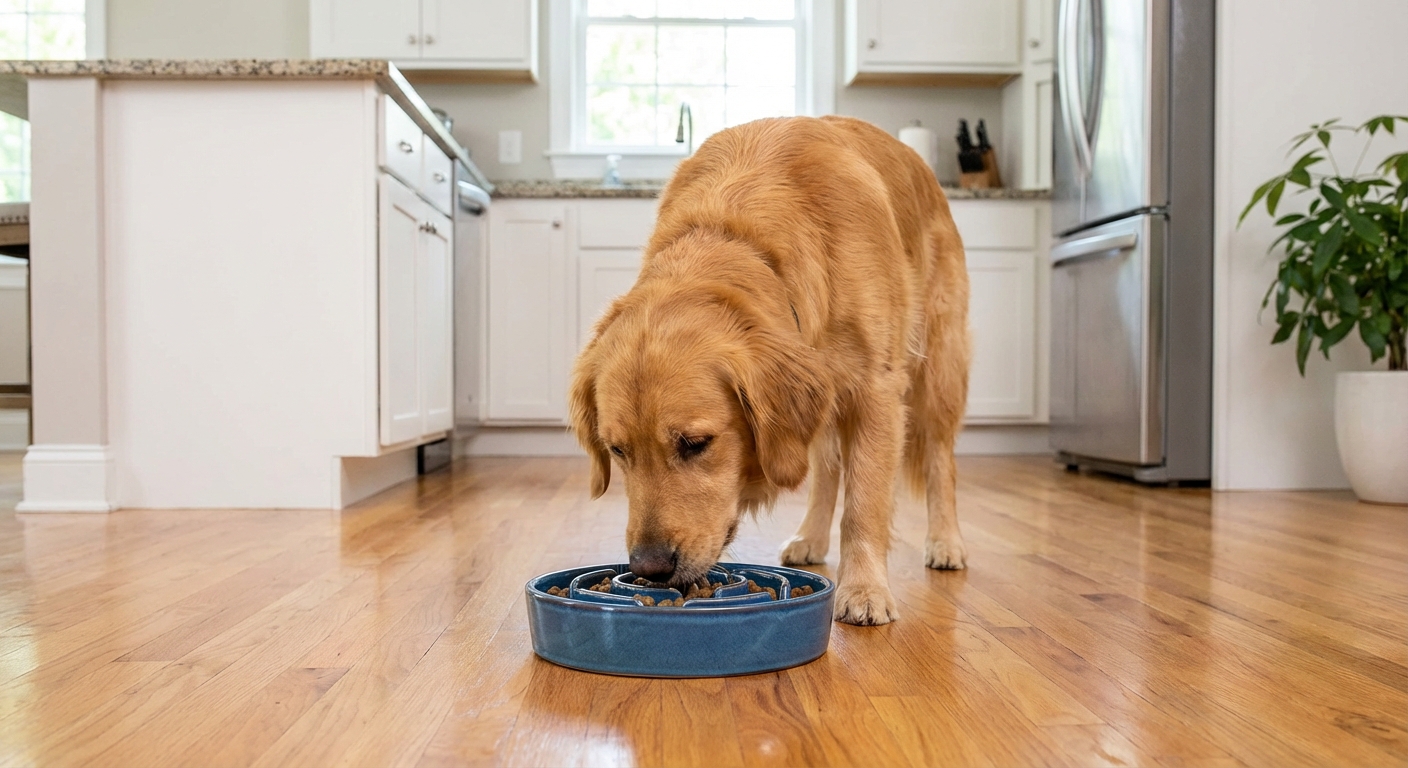
- Use a slow feeder if your dog eats fast
Other possible causes
Yes, yellow vomiting can also be linked to other issues, and this is where patterns matter. If it keeps happening, it is not always “just bile.” Persistent or recurring episodes can be associated with GI disease (including reflux and inflammatory bowel disease), parasites, diet issues, and metabolic disease.
Bilious vomiting syndrome
- Vomits yellow fluid, often early morning
- Often seems mostly normal after vomiting
- May improve with smaller, more frequent meals and a bedtime snack
Pancreatitis
- Vomiting plus painful belly, hunched posture, refusing food
- Often after a fatty meal or dietary indiscretion
- May have diarrhea, dehydration, fever
Diet intolerance
- Vomiting and sometimes soft stool
- Often tied to a new treat, new chew, or new food
Foreign body
- Repeated vomiting, poor appetite, lethargy
- May still pass some stool early on
- History of chewing toys, socks, bones
Parasites or GI infection
- Vomiting plus diarrhea, appetite changes
- More common in puppies or dogs with exposure to dog parks, boarding, or wildlife stool
Addison’s disease
- Intermittent vomiting and diarrhea, weakness
- May seem to come and go
- Needs bloodwork to diagnose
If vomiting is recurring or your dog is not fully normal in between episodes, it is time to schedule a vet visit. As a practical rule, book a non-urgent appointment if it happens more than once in a week, or if it keeps recurring over more than 2 weeks, even if your dog seems okay in between.
What your vet may do
Veterinarians typically start with a good history and physical exam. Helpful details include: when it happens (morning vs after meals), how often, what the vomit looks like, appetite, stool changes, and any possible “trash can snacks.”
Depending on your dog’s signs, your vet may recommend:
- Fecal test for parasites
- Bloodwork to assess dehydration, liver values, electrolytes, pancreas markers
- X-rays to look for foreign bodies or obstruction patterns
- Ultrasound for pancreatitis, gallbladder issues, intestinal disease
- Anti-nausea medication and stomach protectants
- Fluids if dehydrated
Please do not give human medications like ibuprofen, naproxen, or acetaminophen unless your veterinarian specifically tells you to.
About Pepto-Bismol: Some veterinarians do use it in specific situations, but it contains salicylates and can be risky in the wrong dog or dose. It can also darken stools, which can confuse the picture if we are worried about true black, tarry stool from bleeding. Only use it if your vet instructs you to.
Prevention you can start
Many bile-vomiting dogs improve with a few small changes.
1) Tighten the schedule
- Feed at consistent times
- Use 3 smaller meals if your dog is prone to empty-stomach nausea
- Add a small bedtime snack
2) Keep nutrition steady
Whether you feed kibble, fresh, or homemade, keep it consistent, and avoid rapid diet changes. If you want to introduce fresh whole foods, do it slowly. Even a 25% fresh-food addition can be a nice step, but it should be done gradually and thoughtfully.
3) Reduce scavenging
- Secure trash cans
- Supervise yard time if your dog eats grass, sticks, or animal stool
- Pick safe chews that do not splinter
4) Track it for one week
Keep a simple note in your phone: time of vomiting, what your dog ate, stool quality, and energy level. Patterns help your veterinarian, and they help you figure out if this is a one-off upset or a recurring issue that needs treatment.
If your dog vomits yellow fluid repeatedly, seems painful, or is not acting like themselves, trust your instincts and call your veterinarian. It is always better to check early than to wait too long.
Quick recap
- Go in urgently for repeated vomiting, bloat signs, blood, collapse, severe lethargy, toxin risk, or possible swallowed object
- Call your vet sooner if your dog cannot keep water down, has vomiting plus diarrhea, or is a puppy, senior, or has conditions like diabetes
- Schedule a visit if it happens more than once a week or keeps recurring over more than 2 weeks
If you are ever unsure, take a short video of the episode and a clear photo of the vomit to show your clinic. Those details can be surprisingly helpful.