Worried about a vomiting dog? Learn when vomiting is an emergency, how to offer small sips safely, and the best bland foods (chicken/rice, turkey, pumpkin, e...
Article
•
Designer Mixes
Dog Throwing Up Food: Step-by-Step Guide

Shari Shidate
Designer Mixes contributor
If your dog just ate and then threw it up, your brain goes straight to the worst-case scenario. I get it. As a veterinary assistant in Frisco, Texas, I have seen everything from harmless gulping to true emergencies. The key is that the details matter: when it happened, what it looks like, and how your dog is acting.
This guide will walk you through what to do step by step, what the vomit can tell you, and when it is time to get to a vet now. This is general information and not a substitute for veterinary care.
Quick triage
- Go now: repeated unproductive retching with a bloated belly, trouble breathing, collapse, severe pain, or suspected bloat.
- Go now: possible toxin exposure, possible swallowed object, blood or coffee-ground vomit, or black tarry stool.
- Call a vet urgently: cannot keep water down, repeated vomiting (more than 2 to 3 times in a day), or vomiting plus significant lethargy.
- Monitor closely: one mild episode, normal energy, no pain or bloating, no toxin or foreign body concerns.
Vomit or regurgitation?
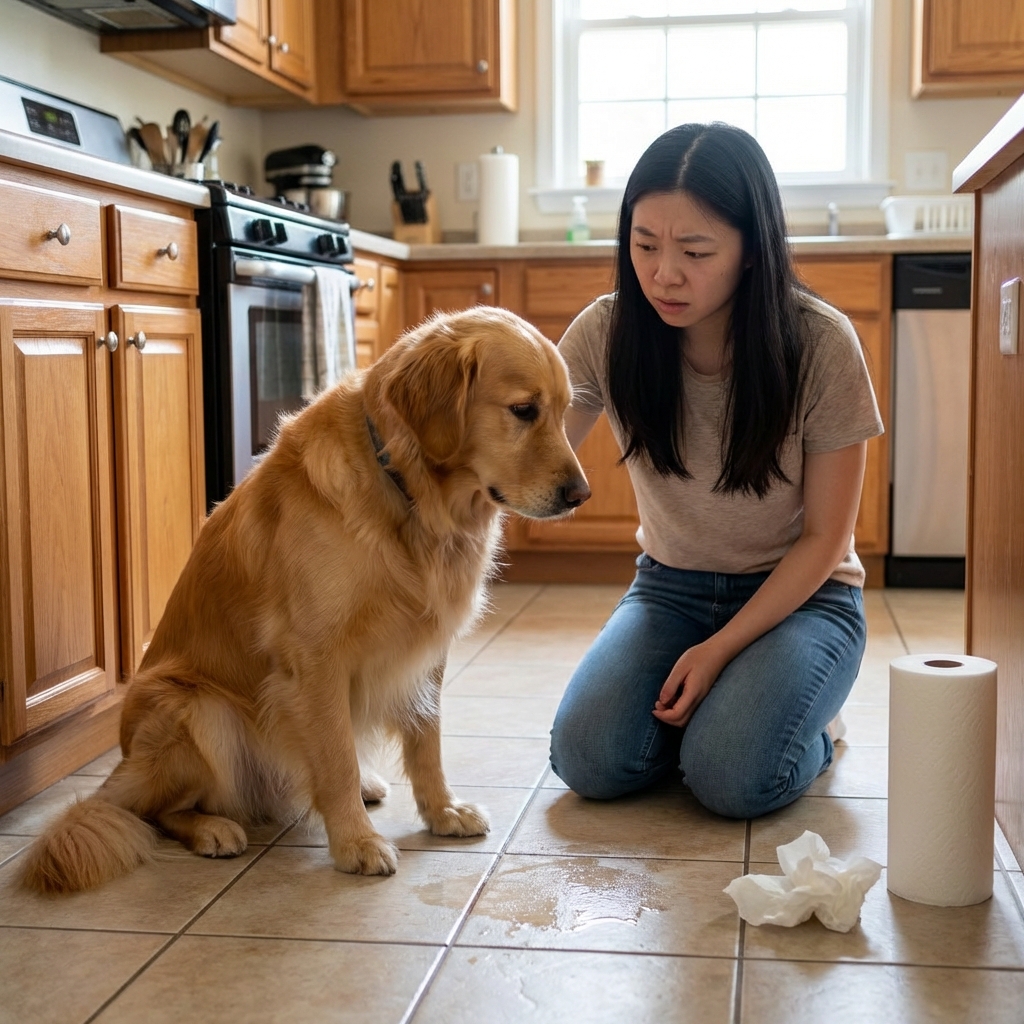
This is the biggest “aha” that helps you and your vet. Dogs can bring food back up in two main ways, and they point to different problems.
Regurgitation
- Timing: Often minutes to an hour after eating.
- What it looks like: Food comes up undigested, often in a tube or log shape.
- Your dog’s body: Little to no retching. It can look effortless.
- Common causes: Eating too fast, excitement, drinking a lot of water after eating, esophagus irritation, or less commonly, esophageal disease.
Note: If regurgitation keeps happening, even if it looks “easy,” it is worth an exam. Repeated regurgitation can be associated with esophageal problems (including megaesophagus).
Vomiting
- Timing: Can be soon after eating or hours later.
- What it looks like: Food may be partially digested, mixed with fluid, foam, or bile.
- Your dog’s body: You usually see nausea signs and retching or abdominal heaving.
- Common causes: dietary indiscretion, sudden diet change, infections, parasites, pancreatitis, toxin exposure, obstruction, and more.
Quick tip: If you can safely take a short video of the episode or a photo of the material afterward, it can be surprisingly helpful for your veterinary team.
First 30 minutes
Step 1: Remove food, offer small water
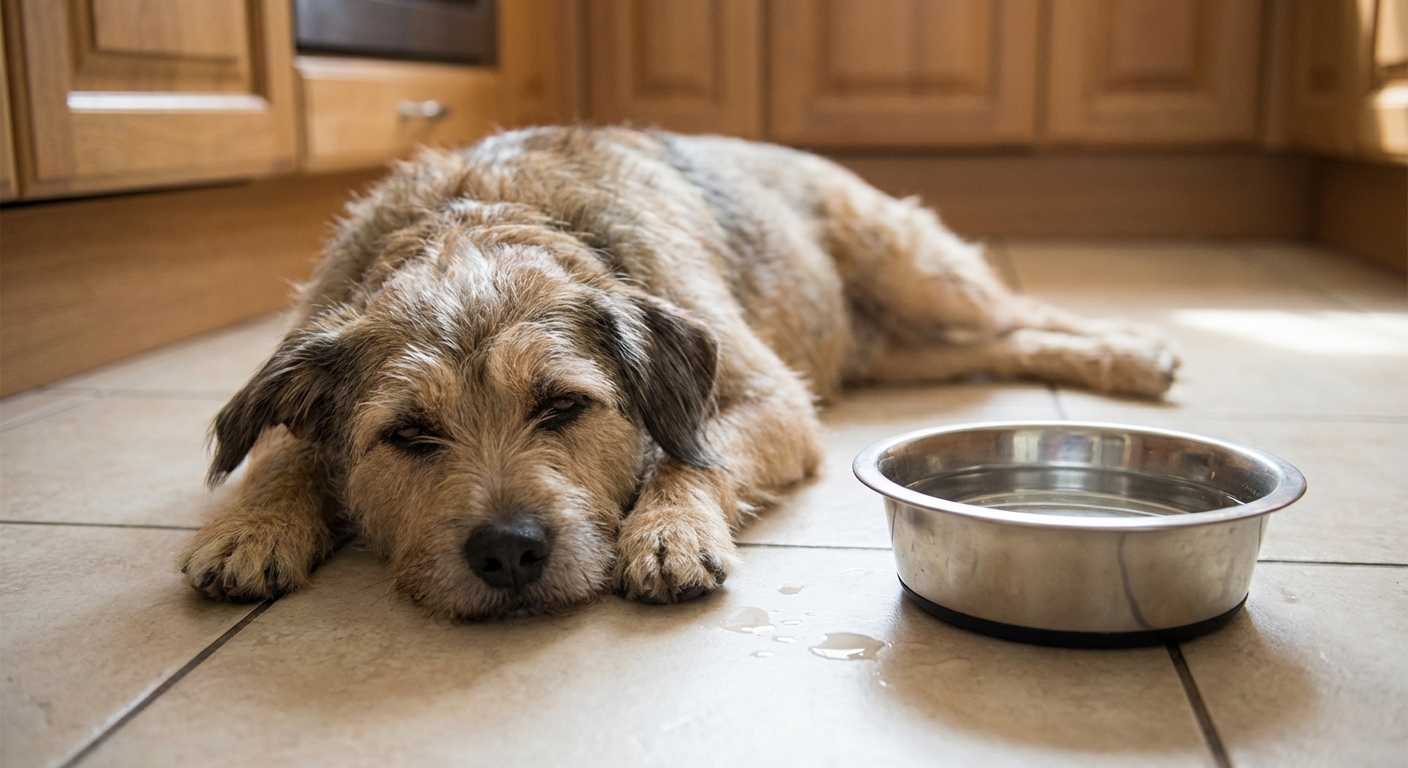
Pick up the food bowl for now. You can offer small amounts of water, but avoid letting your dog chug.
If your dog keeps vomiting water: stop offering water for the moment and call your veterinarian or an emergency clinic for next steps. Ongoing vomiting with inability to keep water down can lead to dehydration quickly.
Step 2: Check behavior and breathing
Ask yourself:
- Is my dog bright and alert, or weak and quiet?
- Is the belly painfully tight or bloated?
- Is there repeated unproductive retching?
- Is breathing normal, or labored?
If you see repeated dry heaves with a big belly, drooling, and distress, treat it like an emergency.
Step 3: Look for danger signs in the vomit
- Blood: bright red streaks or a coffee-ground look.
- Foreign material: toys, socks, corn cob pieces, string, bones.
- Frequent yellow-green fluid (bile): can be seen with significant GI irritation (including empty-stomach bile vomiting), but if it is persistent or paired with pain, lethargy, or inability to keep water down, obstruction is one concern and you should call a vet.
- Very dark vomit or foul odor: can mean digested blood (coffee-ground material) or, more concerning, fecal-tinged vomit. Either way, this needs prompt evaluation.
Important: If you ever see string, ribbon, or anything thread-like, do not pull it. Keep your dog from chewing it further and seek veterinary care right away.
What timing suggests
Right after eating
Common “everyday” causes include eating too fast, exercise right after meals, rich treats, table food, sudden diet changes, and stress. If your dog is otherwise acting normal and it happens once, this can be monitored closely.
Hours after eating
This can happen with gastritis, pancreatitis, parasites, infections, or if something is slowing down the stomach. When it is paired with lethargy, abdominal pain, or repeated episodes, it is vet time.
Overnight or early morning
This can be seen with empty-stomach irritation in some dogs, but it can also be a sign of underlying GI disease. If it becomes a pattern, schedule an exam.
What it looks like
It is not glamorous, but the appearance gives clues.
- Undigested kibble: more consistent with regurgitation or rapid eating.
- Partially digested food: more consistent with true vomiting.
- White foam: stomach irritation, nausea, reflux, or vomiting on an empty stomach.
- Yellow foam or liquid (bile): bile reflux, fasting-related irritation, or ongoing GI upset. If it is frequent or your dog cannot keep water down, call your vet.
- Green material: bile, grass, or something ingested. If paired with repeated vomiting, check in with your vet.
- Worms: spaghetti-like worms can show up in vomit. Save a photo and call your vet for deworming guidance.
Important: None of these signs replace an exam. They simply help you decide urgency and communicate clearly.
When to go now
Please treat the following as urgent. If you are unsure, it is always appropriate to call an emergency clinic for triage advice.
- Repeated vomiting (more than 2 to 3 times in a day), or vomiting that will not stop
- Cannot keep water down
- Vomiting with lethargy, collapse, weakness, or confusion
- Vomiting plus diarrhea that is severe, bloody, or causing fast dehydration
- Blood in vomit, or black tarry stool
- Signs of dehydration: tacky gums, sunken eyes, not peeing normally
- Severe abdominal pain or a swollen, tight belly
- Unproductive retching, especially in deep-chested breeds (concern for bloat)
- Possible toxin exposure (xylitol, chocolate, grapes or raisins, rodenticides, medications, marijuana products, essential oils)
- Possible obstruction (toy, sock, corn cob, bones, string, rocks)
- Puppies, seniors, or dogs with chronic disease (kidney disease, diabetes, Addison’s, etc.)
If you suspect toxin exposure in the U.S., you can also call ASPCA Animal Poison Control or Pet Poison Helpline for time-sensitive guidance (fees may apply).
Home plan for one mild episode
This is for dogs who vomited once, are acting normal, have no bloating or pain, and you have no reason to suspect toxin exposure or a swallowed object.
Step 1: Brief stomach rest
Pick up food for a short period only if your dog is stable. Many clinics recommend about 6 to 12 hours for healthy adult dogs, but follow your vet’s guidance.
Do not fast puppies, tiny dogs, dogs with diabetes, or dogs with other medical conditions without veterinary direction. Low blood sugar is a real risk.
Step 2: Small, frequent water
Give a few laps or a small measured amount every 20 to 30 minutes. If it stays down, you can gradually increase.
Step 3: Bland, low-fat meals
Common vet-approved bland options include plain boiled chicken with white rice, or (often better) a balanced prescription gastrointestinal diet.
Keep it low-fat. If your dog has a history of pancreatitis, is prone to it, or you are seeing belly pain, ask your vet before using chicken and rice. A prescription low-fat GI diet may be safer.
Step 4: Transition back slowly
Once stools and appetite normalize, mix regular food back in over several days to avoid triggering another upset.
One more helpful detail: Many dogs relapse because we go back to normal portions too quickly. Small meals are your friend during recovery.
What not to give
Avoid giving human over-the-counter stomach meds (like Pepto-Bismol, Imodium, or ibuprofen) unless your veterinarian specifically tells you to. Some can be dangerous or mask symptoms your vet needs to see.
Prevent it next time
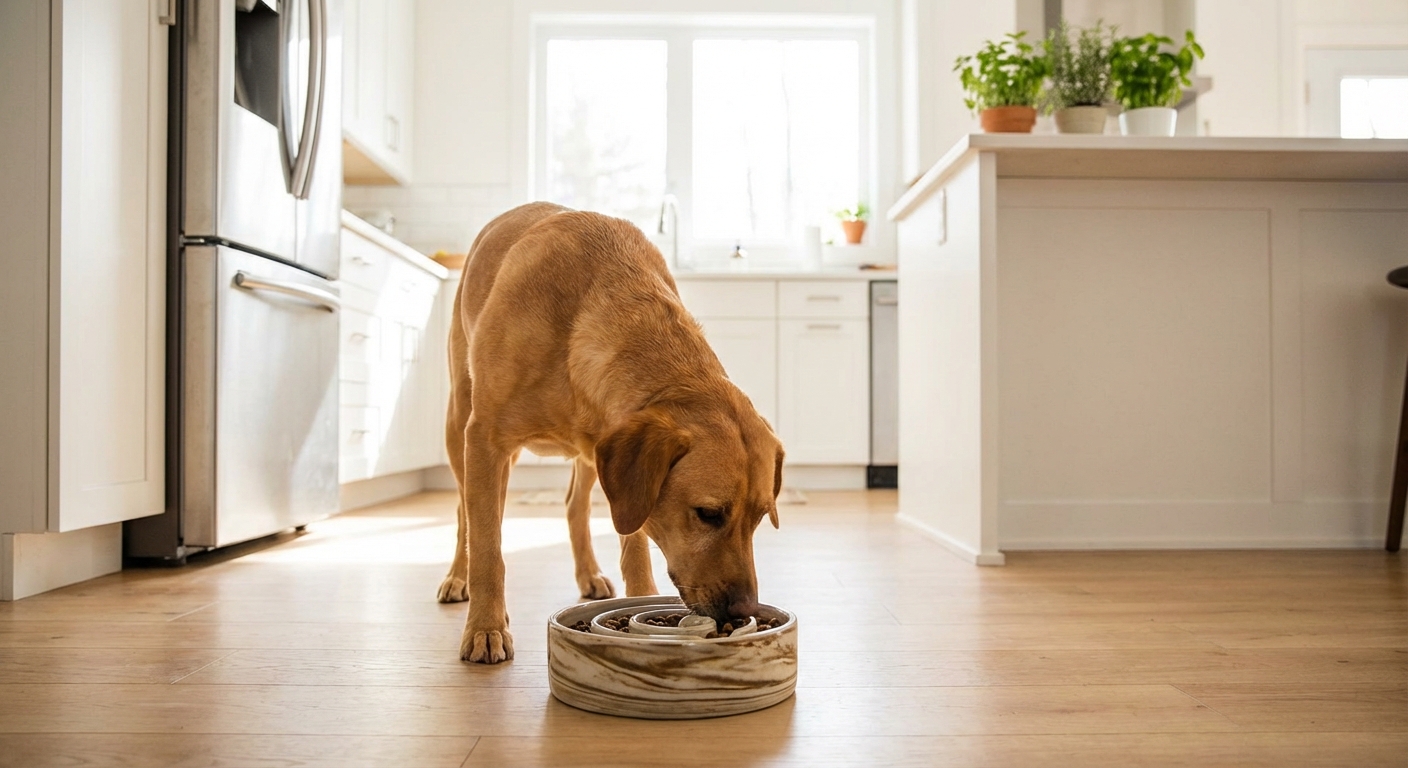
Slow down fast eaters
- Use a slow feeder bowl or a puzzle feeder
- Split meals into 2 to 4 smaller meals per day
- Try scatter feeding, a snuffle mat, or a feeder ball for dogs who inhale meals
- Adding a small amount of warm water to kibble may help some dogs, but for others it can make food easier to gulp. If it seems to speed things up, skip it.
Change diets slowly
Switch foods gradually over 7 to 10 days, sometimes longer for sensitive dogs.
Pause the post-meal zoomies
Some dogs vomit if they run hard right after eating. Quiet time for 20 to 30 minutes after meals can help.
Choose treats wisely
Fatty scraps and rich chews can trigger vomiting and even pancreatitis in prone dogs. Keep treats simple and limited.
What to bring to the vet
If vomiting continues or you are worried, the most helpful things you can provide are simple observations.
- When it started and how many episodes
- What your dog ate in the last 48 hours (including chews, trash, table scraps)
- Any new meds or supplements
- Photos of the vomit and stool
- Your dog’s energy level, thirst, and urination
- Any diarrhea (and whether it is watery or bloody)
Those details help your veterinarian decide whether your dog needs supportive care, bloodwork, X-rays or ultrasound, parasite testing, or additional treatment.
Final reassurance
Most dogs will vomit at some point in their lives, and many cases are mild and short-lived. The key is not to ignore patterns. If vomiting is frequent, forceful, paired with lethargy, or you suspect a toxin or a swallowed object, trust your instincts and get help promptly.
When in doubt, call your vet. A quick conversation can save you hours of worry and can be truly life-saving in the right scenario.