Worried about a vomiting dog? Learn when vomiting is an emergency, how to offer small sips safely, and the best bland foods (chicken/rice, turkey, pumpkin, e...
Article
•
Designer Mixes
Dog Throwing Up Bright Yellow: Causes, Care, and When to Worry

Shari Shidate
Designer Mixes contributor
Seeing your dog throw up bright yellow can be alarming. In many cases, that yellow color is bile, a digestive fluid made by the liver and stored in the gallbladder. Bile helps break down fats, and when it shows up in vomit it often means your dog’s stomach was empty or their GI tract is irritated. However, yellow vomit is not always bile. It can also be partially digested food, refluxed intestinal fluid, or even color from something your dog ate. The key is figuring out whether this is a one-off “upset tummy” moment or a sign you need veterinary help.
What bright yellow vomit can mean
Yellow vomit is often bile. You might see it as foamy yellow liquid, sometimes with a little clear mucus. It often happens:
- Early morning before breakfast
- Late at night if dinner was early
- After your dog has been eating less than usual, stressed, or mildly nauseated
That said, color alone cannot confirm bile. It is a clue, not a diagnosis. The “why” matters.
Vomiting vs. regurgitation
Owners sometimes describe “yellow throw-up” that is actually regurgitation. Vomiting usually includes belly heaving and nausea signs like drooling or lip-licking. Regurgitation is more passive and often happens soon after eating or drinking. If you are unsure which one you are seeing, tell your vet what it looked like and when it happened. A quick phone call can help you triage the next step.
Common causes
1) Empty stomach or bilious vomiting syndrome
One of the most common and least scary causes is an empty stomach. In some dogs, digestive fluids can reflux and irritate the stomach lining when there is no food to buffer things. This is often called bilious vomiting syndrome.
- Typically happens in the morning or when meals are spaced too far apart
- Many dogs seem to feel better after eating
2) Dietary indiscretion (my dog ate something weird)
Trash snacks, fatty table scraps, new treats, or chewing on toys can all irritate the stomach. If your dog vomits once and then acts normal, this is often the culprit.
If vomiting repeats, your dog becomes lethargic, or the belly seems painful, treat it as more than a mild tummy upset and call your vet.
3) Acid reflux or gastritis
Inflammation of the stomach lining can cause nausea, lip-licking, gulping, and yellow vomit. Stress, medications (especially some anti-inflammatories), parasites, or abrupt food changes can contribute.
4) Parasites or intestinal imbalance
Worms and other GI parasites can lead to vomiting, diarrhea, weight loss, or a pot-bellied look. Puppies are especially vulnerable.
5) Pancreatitis
Pancreatitis is inflammation of the pancreas and can be serious. It is often linked to fatty foods, but not always. Watch for repeated vomiting, belly pain, diarrhea, and lethargy.
6) Liver or gallbladder disease
Because bile comes from the liver and gallbladder system, ongoing vomiting with other signs like yellowing of the gums or eyes (jaundice), poor appetite, or weight loss should be evaluated promptly.
7) Foreign body (intestinal blockage)
If your dog swallowed something that cannot pass (sock, toy pieces, corn cob, etc.), vomiting can become frequent and severe. This is an emergency situation.
8) Chronic GI disease (recurring cases)
If yellow vomiting keeps coming back, your vet may consider longer-term issues like food intolerance, inflammatory bowel disease (IBD), or motility problems. These are treatable, but they usually require an exam and a plan, not guesswork at home.
Quick severity check
These questions help you decide what to do next:
- How many times? One episode is often mild. Repeated vomiting is more urgent.
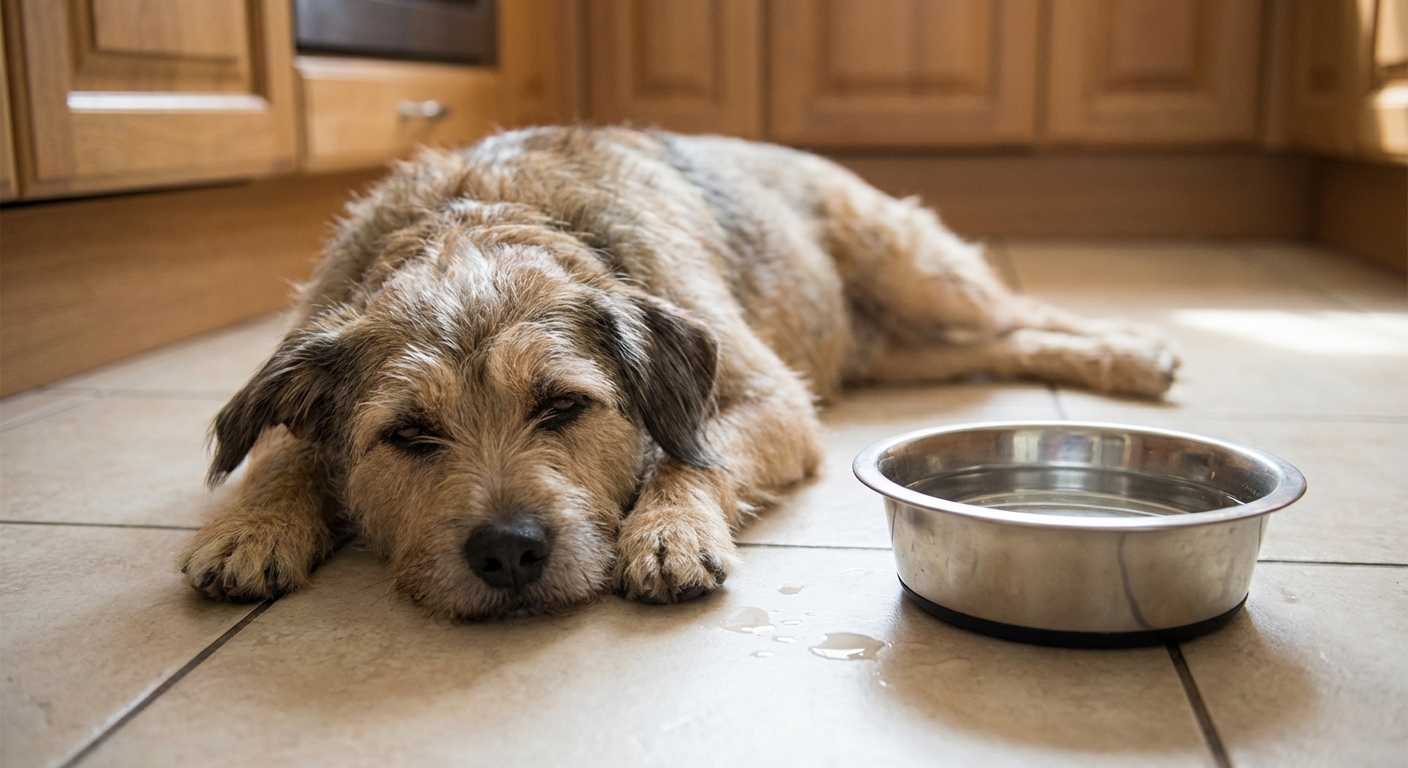
- How does your dog look? Bright, alert, and interested in food is reassuring. Lethargic, weak, or hiding is not.
- Any diarrhea? Vomiting plus diarrhea increases dehydration risk.
- Any blood? Red blood or coffee-ground material needs prompt vet care.
- Any belly pain? Praying position, yelping, tense abdomen, or refusal to move can be serious.
- Puppy, senior, very small breed, or chronic illness? These dogs dehydrate faster and should be treated more cautiously.
Call the vet right away
Contact your veterinarian (or an emergency clinic) promptly if you notice any of the following:
- Vomiting more than 2 to 3 times in a day, or continuing beyond 24 hours
- Can’t keep water down
- Blood in vomit, black or tarry stool, or severe diarrhea
- Signs of dehydration (dry gums, sunken eyes, weakness)
- Severe lethargy, collapse, or pale gums
- Bloated abdomen, unproductive retching, or restlessness (concern for bloat)
- Known or suspected foreign body ingestion
- Your dog is a puppy, very small dog, senior, diabetic, or has kidney or liver disease
Bloat is most common in large, deep-chested breeds, but it can happen in others too. It is urgent because it can become life-threatening quickly.
If your gut says “this is not my normal dog,” trust that feeling and call.
What you can do at home
If your adult dog vomited once, is acting normal, and has no red-flag symptoms, these steps are commonly recommended. Always follow your veterinarian’s guidance for your specific dog.
Step 1: Short stomach rest
Some vets recommend a brief break from food for 6 to 12 hours for otherwise healthy adult dogs, then reintroduce food slowly. Not every vomiting dog needs fasting, and it is not appropriate for very young puppies, very small breeds, or dogs with medical conditions (like diabetes) without veterinary guidance.
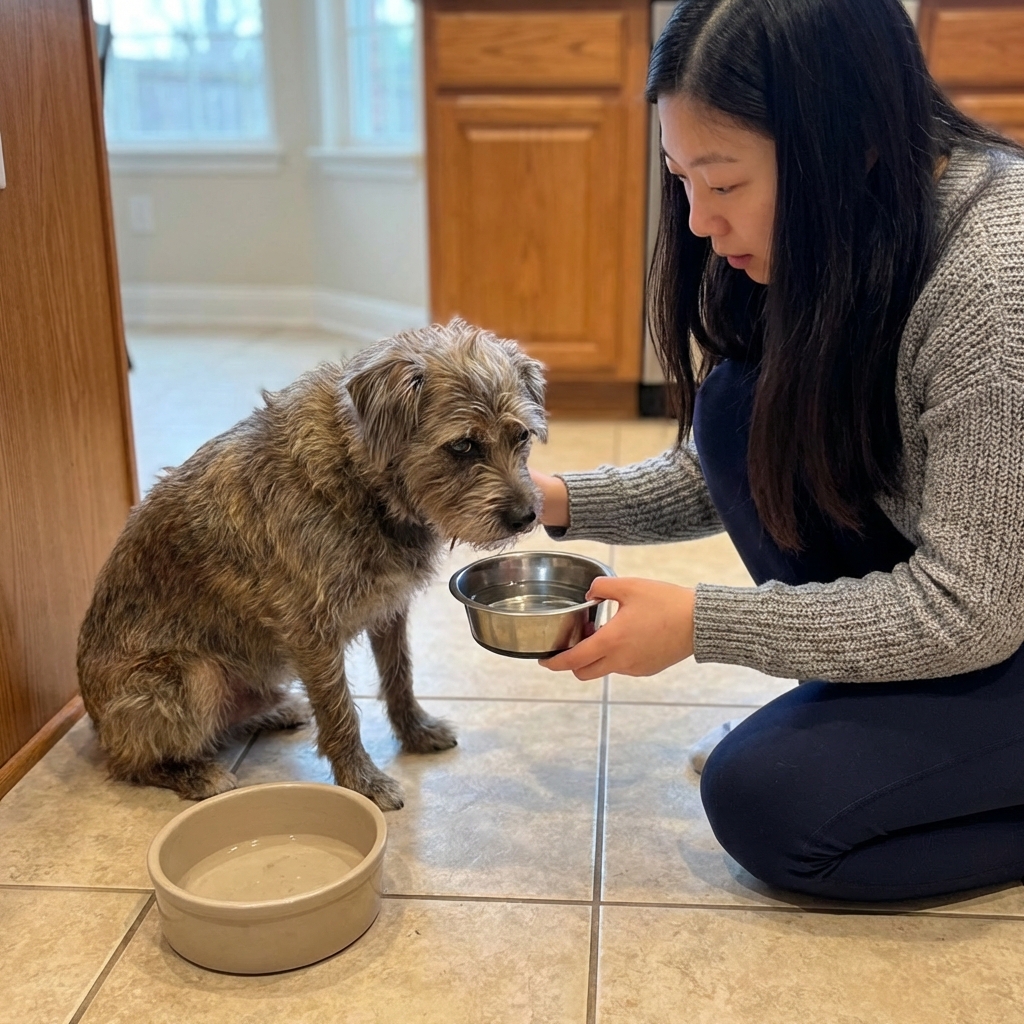
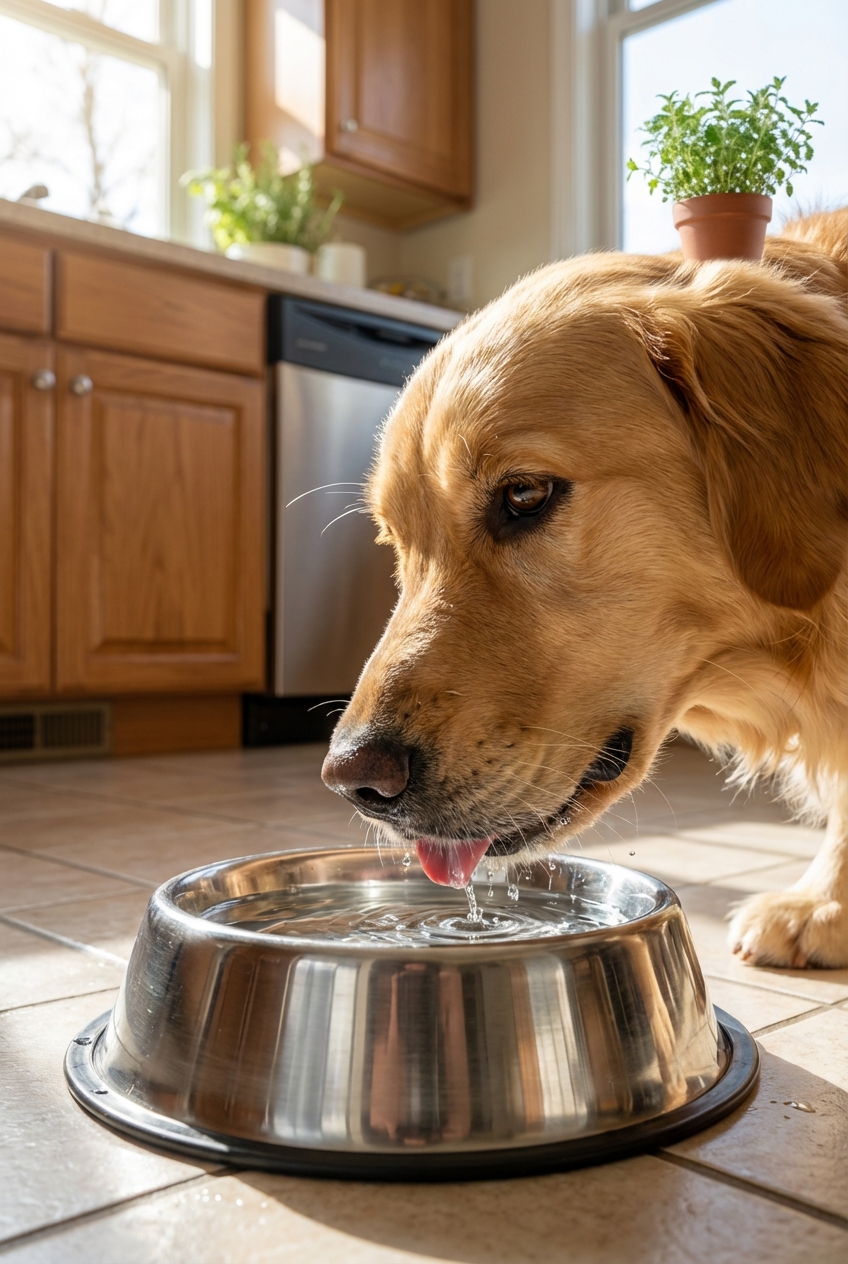
Step 2: Small sips of water
Offer small sips frequently. If your dog gulps and vomits again, pause and call your vet. In some cases, licking ice chips can be gentler.
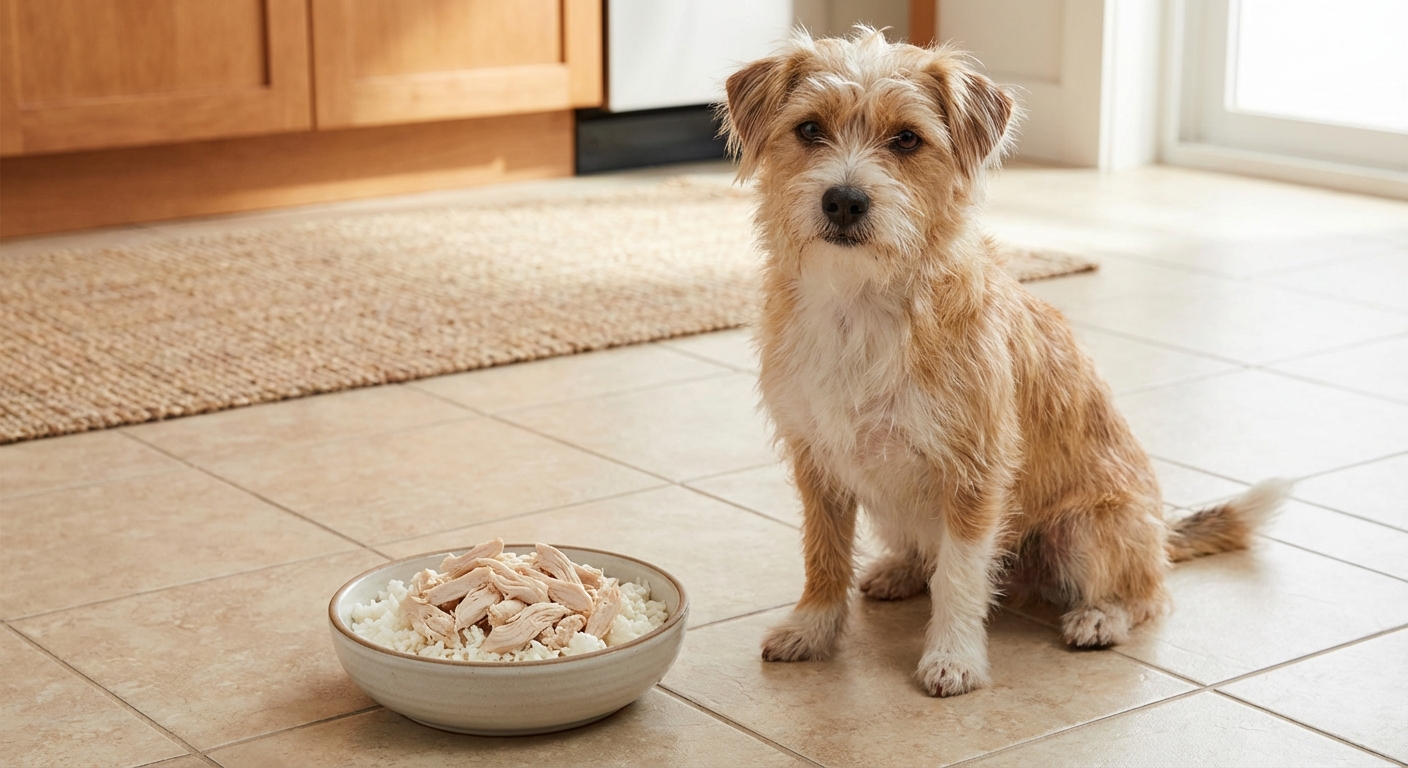
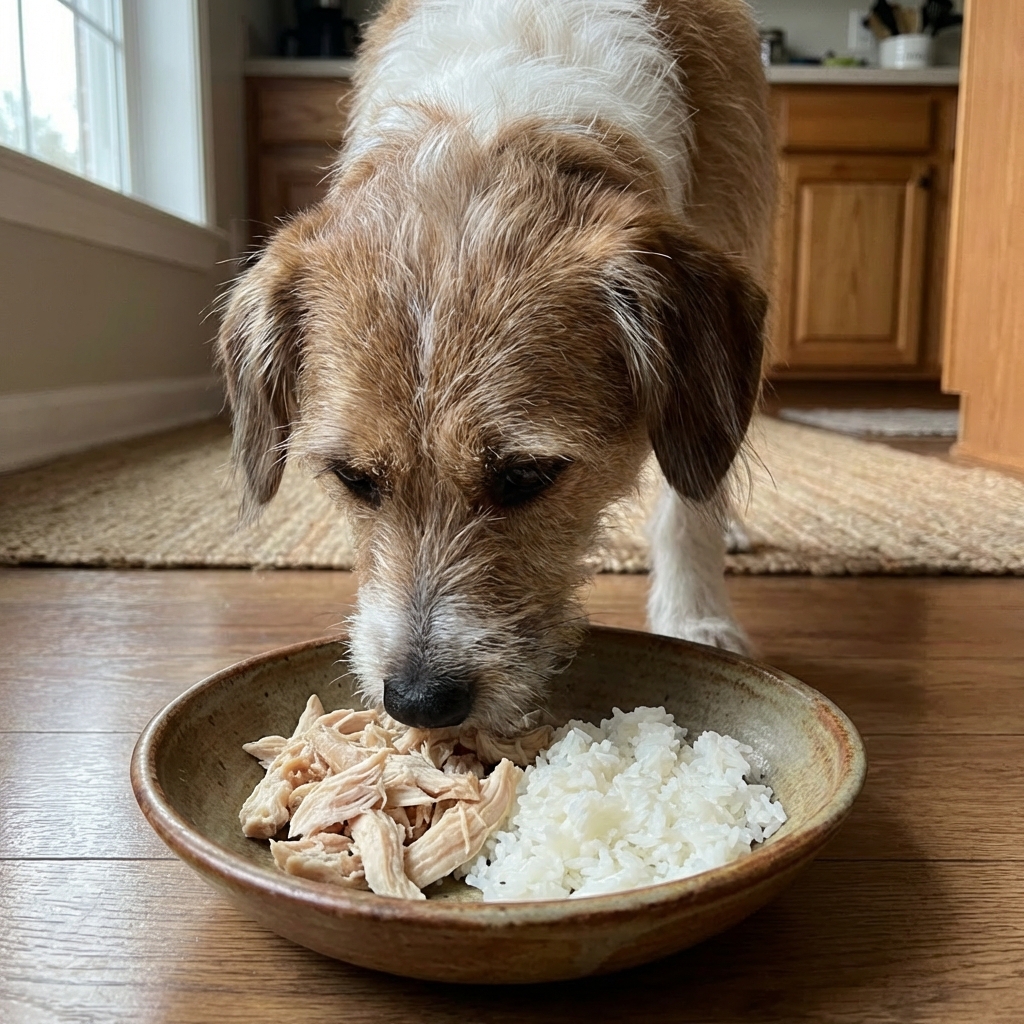
Step 3: Bland food
Once vomiting has stopped, start with small portions of a gentle meal such as:
- Boiled chicken breast (no skin, no seasoning) with plain white rice
- Plain scrambled egg (no butter) with rice
Feed tiny amounts every few hours, then gradually return to normal meals over 2 to 3 days.
Step 4: Prevent an empty stomach cycle
If yellow vomiting happens early in the morning, many dogs improve with:
- A small bedtime snack
- More frequent meals (for example, 3 smaller meals instead of 1 to 2 large meals)
What not to do
Avoid giving OTC human medications (like Pepto-Bismol, antacids, or pain relievers) unless your veterinarian specifically tells you to. Some are unsafe for dogs, can interact with prescriptions, or can mask worsening disease.
Food tips for sensitive stomachs
As a veterinary assistant, I have seen how much meal timing and simple routines can affect sensitive stomachs. If your dog tends to vomit yellow fluid, consider these vet-common habits:
- Go slow with diet changes. Transition over 7 to 10 days to avoid GI upset.
- Avoid high-fat surprises. Fatty treats and rich scraps are a common trigger for pancreatitis and vomiting.
- Choose simple, digestible ingredients. Many dogs do better on diets with clearly named proteins and fewer add-ins.
- Ask your vet about probiotics. Certain canine probiotics can help support stool quality and GI resilience.
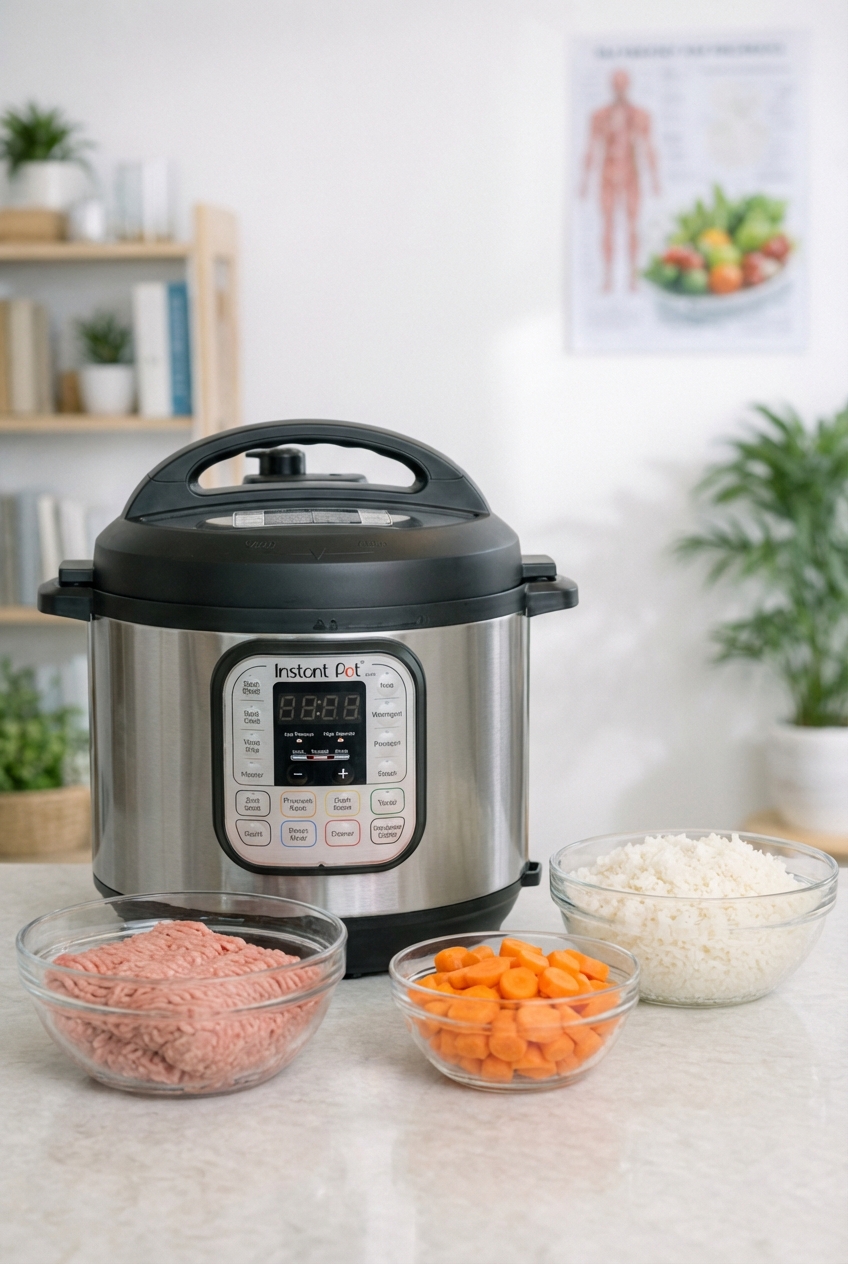
If you love the idea of adding fresh, whole foods, start small and keep it balanced. Some dogs tolerate a modest topper or small fresh-food addition, but the overall diet should still be complete for your dog’s life stage and health needs. Your vet (or a veterinary nutritionist) can help you do this safely.
What your vet may check
If vomiting is recurring or your dog seems unwell, your veterinarian may recommend some combination of:
- Physical exam and hydration assessment
- Fecal test for parasites
- Bloodwork to evaluate liver values, kidney function, inflammation, and pancreatic markers
- X-rays or ultrasound to check for foreign bodies, obstruction, pancreatitis, gallbladder issues, or other GI disease
- Medications such as anti-nausea therapy, stomach protectants, or diet trials
Bring notes if you can: when it happens, what the vomit looks like (foam, food, yellow fluid), recent treats or chews, and any stool changes. Those details save time and help your vet pinpoint the cause.
The takeaway
Bright yellow vomit is often related to bile or refluxed digestive fluids, and many dogs experience it occasionally when their stomach is empty or mildly irritated. The most helpful approach is to watch the whole dog, not just the color. If your pup is acting normal and it is a single episode, simple home care and meal timing adjustments may help. If vomiting repeats, your dog seems painful or lethargic, you see blood, or you suspect they ate something dangerous, it is time to call your veterinarian.