Learn how to safely feed a vomiting dog: start with hydration, wait to reintroduce food, use bland options like chicken and rice, and spot urgent red flags t...
Article
•
Designer Mixes
Dog Throwing Up Bile: Causes, Care, and Training Tips

Shari Shidate
Designer Mixes contributor
If your dog is throwing up yellow or foamy fluid, you are often seeing bile, sometimes mixed with stomach fluid or mucus. As a veterinary assistant here in Frisco, Texas, I can tell you this is one of the most common “what is happening?” moments for caring dog parents. The good news is that bile-type vomiting is often manageable once you figure out the pattern and the trigger.
Still, vomiting can also be a sign of something more serious. In this guide, I will walk you through what bile is, why it shows up, what you can do at home, when to call your vet, and how simple training routines can reduce repeat episodes.
Quick note: This article is educational and cannot diagnose your dog. When in doubt, call your veterinarian.
What bile vomit looks like
Bile is a digestive fluid made by the liver and stored in the gallbladder. It helps break down fats in the small intestine. When a dog vomits bile, it often appears:
- Yellow, yellow-green, or bright green
- Foamy or watery
- Sometimes mixed with a small amount of clear mucus
Timing matters. Many dogs vomit bile early in the morning or late at night, especially if they have gone many hours without food.
A small caution: Bright green vomit can be bile, but if the color is unusually vivid or you suspect your dog could have gotten into dyed products, plants, or toxins, treat it as a reason to call your vet.
Vomiting vs regurgitation
People often use these words interchangeably, but they are not the same.
- Vomiting usually involves nausea, retching, abdominal effort, and you may see foam, bile, or partially digested food.
- Regurgitation is more passive and “falls out” shortly after eating or drinking, often looking like undigested food or a tube-shaped pile.
If it seems more like regurgitation, let your vet know. It can point to a different set of causes.
Common reasons dogs throw up bile
Here are the most frequent causes I see in practice and hear about from dog parents. Some are mild, some need veterinary support.
1) Empty stomach (bilious vomiting syndrome)
One of the top patterns is called bilious vomiting syndrome. The classic story is: your dog feels fine otherwise, but vomits yellow foam in the morning before breakfast (or after a long stretch between meals). The stomach empties, bile can reflux into it, and the irritation triggers vomiting.
Because other problems can look similar, bilious vomiting syndrome is often a presumptive, diagnosis-of-exclusion label, meaning your vet may want to rule out other causes if it is frequent or your dog seems unwell.
2) Eating something irritating
Trash raids, greasy table scraps, chews that are too rich, grass, or a sudden new treat can inflame the stomach and lead to bile vomiting, sometimes along with diarrhea.
3) Fast diet changes
Switching foods abruptly can upset the gut. Many dogs do better with a slow transition over 7 to 10 days.
4) Motion sickness or stress
Car rides, boarding, moving homes, thunderstorms, or changes in routine can cause nausea and bile vomiting. This is especially common in younger dogs and sensitive dogs.
5) Parasites or gut imbalance
Intestinal parasites, bacterial overgrowth, or inflammation can contribute to nausea and vomiting. Your vet may recommend a fecal test, deworming, or other diagnostics depending on the bigger picture.
6) Pancreatitis or other conditions
Vomiting bile can also occur with pancreatitis, inflammatory bowel disease, reflux or gastritis, gallbladder issues, liver disease, intestinal obstruction, or endocrine disease. This is why pattern, frequency, and your dog’s overall behavior matter.
When it is an emergency
Please call your veterinarian or an emergency clinic right away if you notice any of the following:
- Repeated vomiting (for example, multiple times in 24 hours)
- Vomiting plus blood (red or coffee-ground looking material)
- Severe lethargy, weakness, collapse, or trouble breathing
- A swollen, painful abdomen, repeated unproductive retching, or a “praying position” that does not resolve
- Inability to keep water down, or signs of dehydration (tacky gums, sunken eyes)
- Suspected toxin exposure (xylitol, raisins, grapes, chocolate, medications)
- Possible obstruction risk (chewed toys, socks, bones, corn cobs), or straining with no stool
- Puppies, seniors, or dogs with chronic illness who vomit even once or twice
If your dog is acting “off” in addition to vomiting, trust your instincts. A quick call to your vet can save you time, stress, and sometimes your dog’s life.
At-home care
If your dog vomits bile once, seems otherwise normal, and is not showing emergency signs, these gentle steps often help. Always follow your veterinarian’s advice, especially if your dog has a history of pancreatitis, diabetes, kidney disease, or is on medications.
Important: Puppies, very small dogs, and dogs on insulin can be at higher risk from food withholding. Call your vet before fasting these pets, even briefly.
Step 1: Short break, not a long fast
For many healthy adult dogs, a brief pause can help settle nausea. But long fasts can worsen bile vomiting in dogs prone to an empty-stomach trigger. A common, gentle approach is:
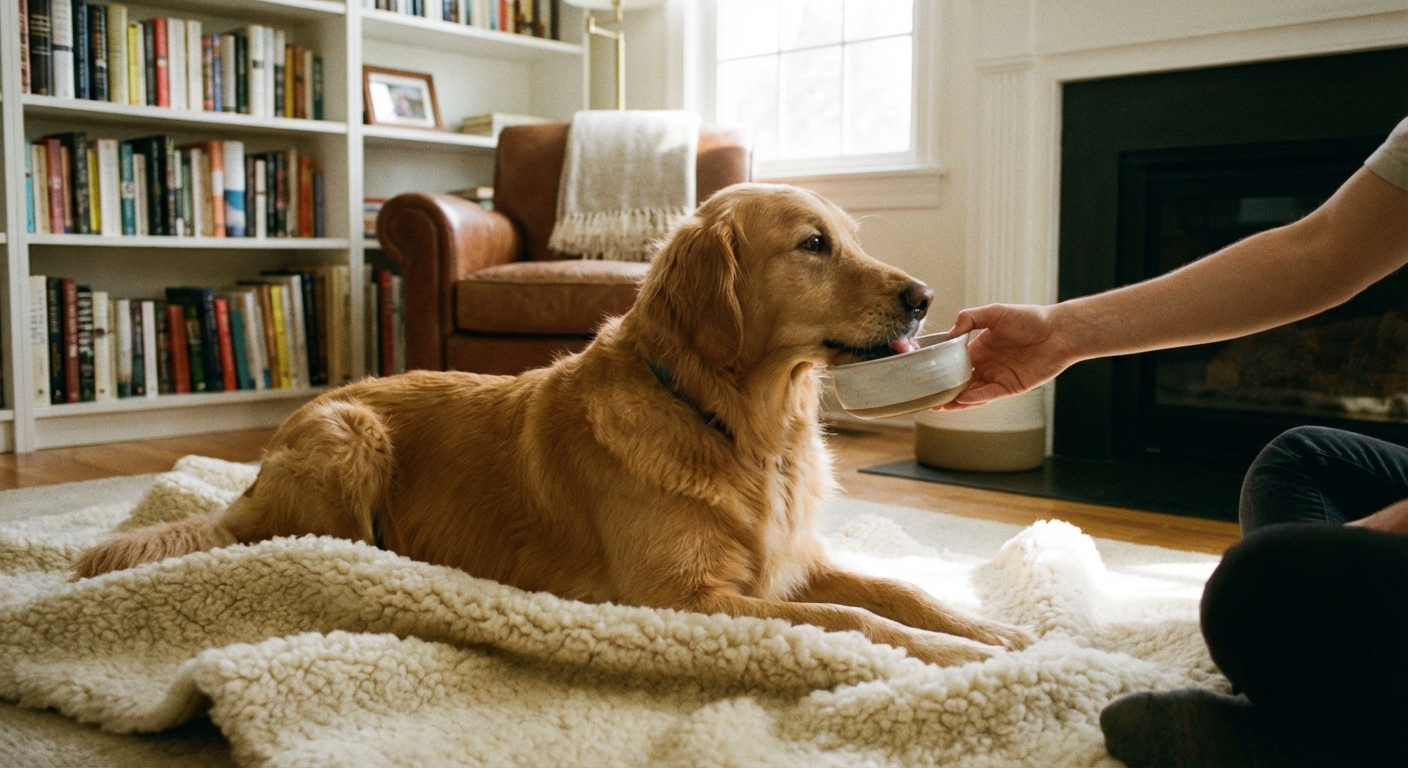
- Wait about 2 to 4 hours after vomiting before offering a small amount of food
- Offer small, frequent meals for the next 24 hours
Step 2: Offer water thoughtfully
Hydration matters. If your dog gulps water after vomiting, it may come right back up.
- Offer small amounts of water frequently
- If your vet approves, consider ice chips for dogs that gulp
Step 3: Bland, low-fat meals for 1 to 2 days
Many dogs do well short-term on a simple bland diet. Ask your vet which option is best for your dog, but common choices include:
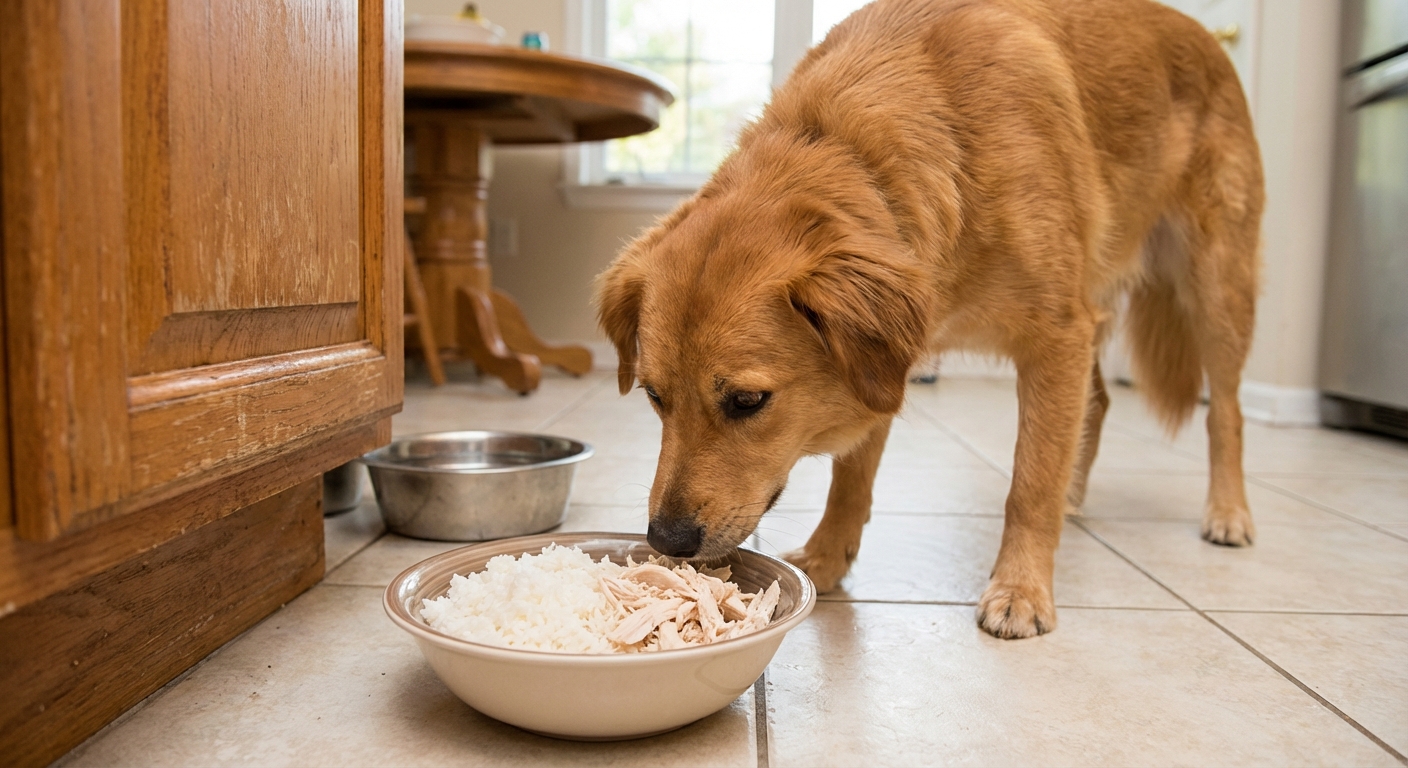
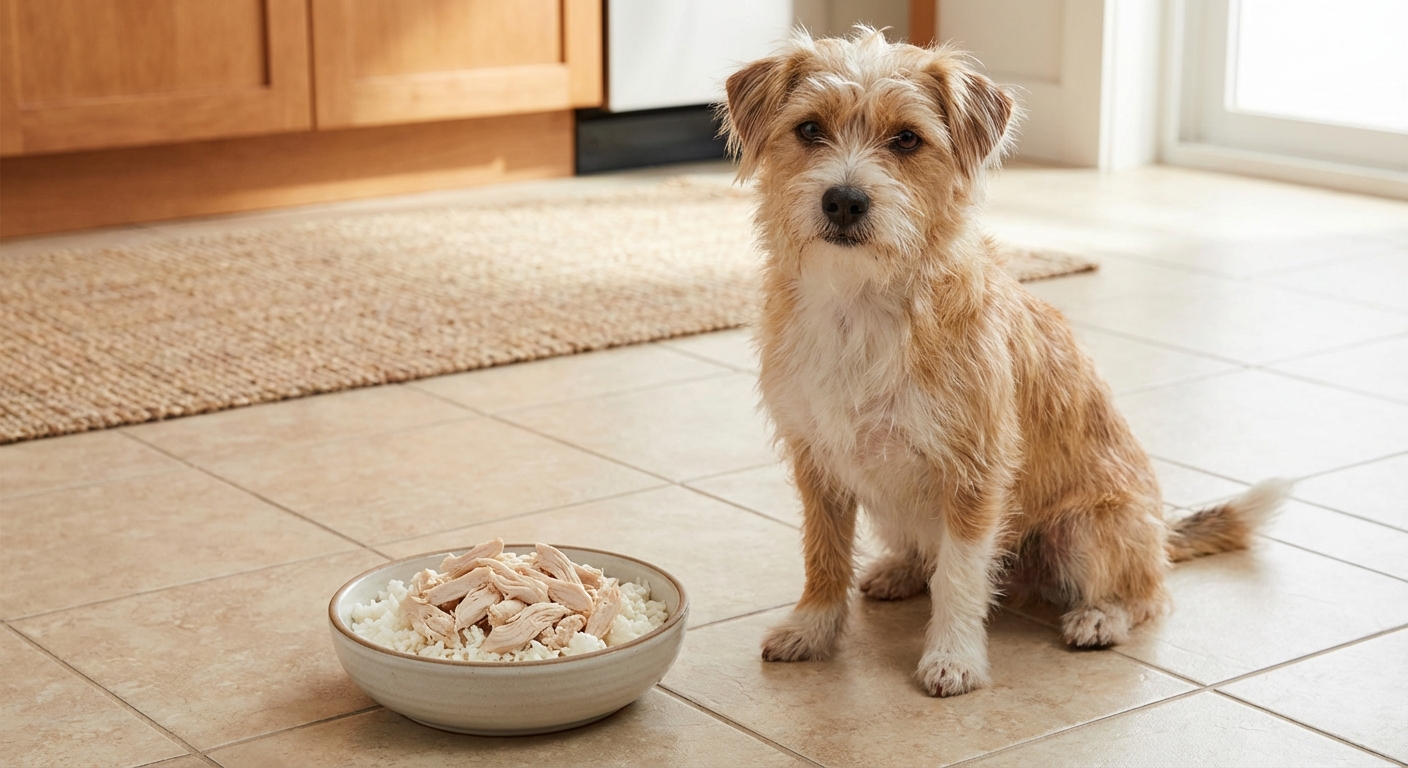
- Boiled skinless chicken breast with white rice
- Low-fat cottage cheese with rice (if dairy is tolerated)
- A veterinary gastrointestinal diet if vomiting is recurrent
Keep portions small and feed 3 to 6 mini-meals per day temporarily.
Step 4: Check for triggers
- Secure trash cans and laundry
- Pick up chew hazards and bones
- Pause new treats, chews, and rich foods
- Limit grass access if your dog tends to graze and vomit
Feeding schedule fixes
For dogs that vomit bile mainly in the morning, the simplest fix is often a smarter feeding schedule.
Try this for 7 days
- Split meals into 2 to 3 feedings per day instead of one large meal
- Add a small bedtime snack to reduce overnight empty stomach time
- Keep treats low-fat and consistent while you evaluate the pattern
A bedtime snack can be something small and boring, like a tablespoon or two of your dog’s regular kibble, or a tiny portion of a vet-approved bland diet. Consistency is what you are testing.
Training tips
Training is not just for manners. Good routines reduce stress, prevent scavenging, and slow down frantic eating, all of which can lower the chances of repeat stomach upset.
Training is supportive care, not a substitute for medical evaluation if your dog is sick or worsening.
Teach “Leave it”
Dogs that grab grass, sticks, or mystery snacks off the sidewalk are at higher risk for GI upset. Practice:
- Start indoors with low-value items and reward heavily for disengaging
- Graduate to the yard, then quiet sidewalks
- Use a leash and reward quickly when your dog chooses you instead of the ground
Slow down fast eaters
Rapid eating can contribute to regurgitation, vomiting, and general GI upset. Tools that can help include:
- Slow feeder bowls
- Snuffle mats
- Scatter feeding in a safe, clean area
- Food puzzle toys
Keep a predictable routine
Dogs thrive on rhythm. If your dog tends to vomit bile during stressful periods, focus on:
- Consistent meal times
- Regular potty breaks
- Daily enrichment like short sniff walks and training games
- A quiet resting spot away from household traffic
What your vet may recommend
If bile vomiting is frequent or recurrent, your veterinarian may suggest diagnostics and targeted treatment. Common next steps can include:
- History and pattern review: timing of vomiting, food type, treats, stressors, stool quality
- Physical exam and abdominal palpation
- Fecal testing for parasites
- Bloodwork to assess hydration, liver values, pancreas markers, infection, and more
- X-rays or ultrasound if obstruction, pancreatitis, or organ disease is suspected
- Medications such as anti-nausea support or stomach protectants, when appropriate
Do not give human medications like bismuth subsalicylate or acid reducers unless your vet tells you to. Some products are unsafe for dogs, can interact with other medications, or can be risky in dogs with bleeding concerns or certain medical conditions.
Keep a vomit log
If your dog is throwing up bile more than once, start tracking details for 3 to 7 days. Bring this to your vet. It speeds up answers.
- Time of vomiting (especially early morning vs. after meals)
- Color and appearance (yellow foam, yellow liquid, food present)
- Meals and treats in the past 24 hours
- Any new chews, trash access, grass eating, or stress events
- Stool quality and frequency
- Energy level and appetite
Frequently asked questions
Is bile vomiting always serious?
No. One isolated episode in an otherwise bright, hydrated dog can be mild. But repeated bile vomiting, vomiting with other symptoms, or vomiting in a vulnerable dog should be evaluated.
Why does my dog only vomit bile in the morning?
This pattern often points to an empty stomach trigger. A small bedtime snack and splitting meals can help many dogs within a week.
Should I change foods?
Sometimes, yes, but do not jump from food to food quickly. If a food change is needed, transition slowly. If vomiting continues, your vet may recommend a veterinary gastrointestinal diet or a vet-guided diet trial to look for sensitivities.
Bottom line
Bile-type vomiting is common, and it is often fixable with a few practical steps: safer scavenging habits, slower eating, a steadier routine, and meals timed to prevent a long empty stomach. If vomiting becomes frequent, your dog seems painful or “off,” or you are seeing bright green vomit that concerns you, your veterinarian is your best partner in ruling out conditions that need treatment.
Your dog does not need perfection. They need consistency, observation, and calm support. You have got this.