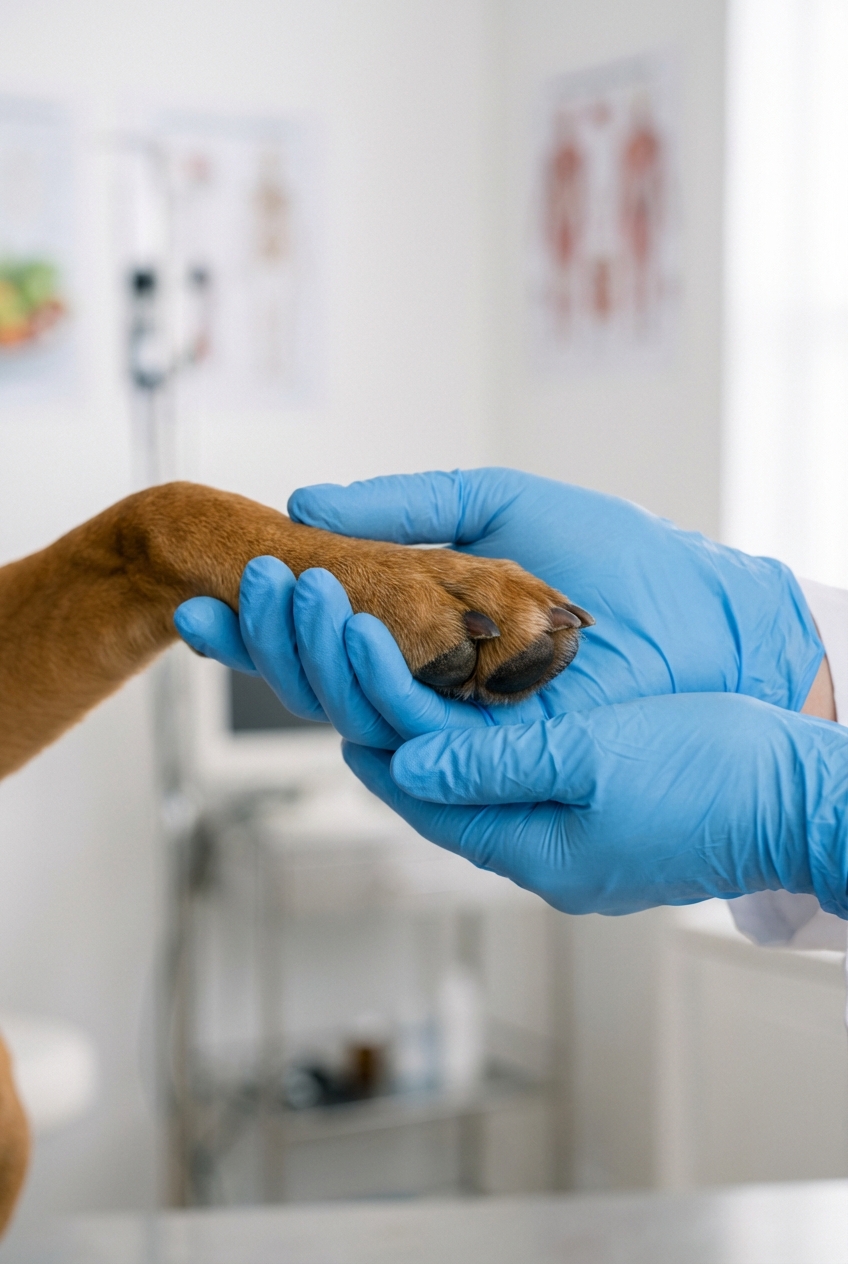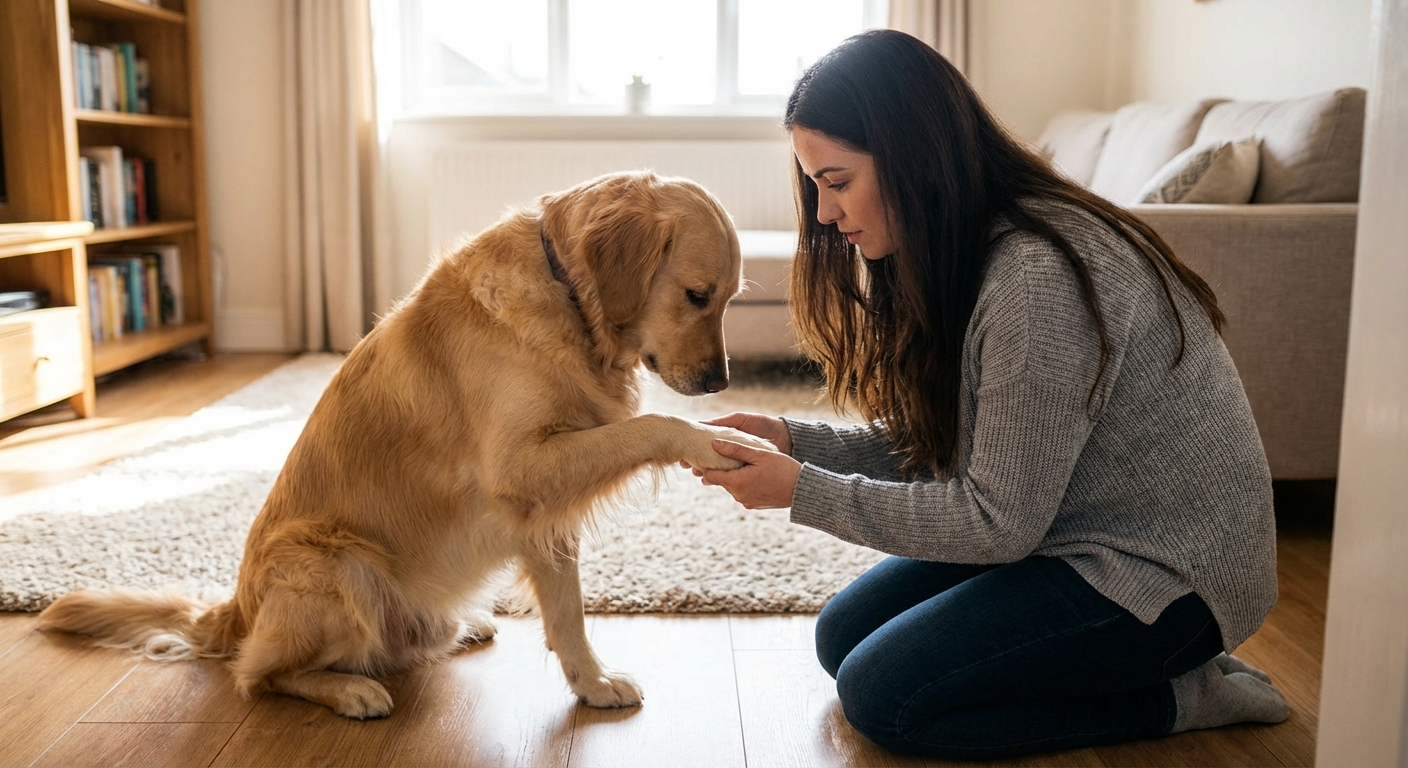
A calm, step-by-step home check to spot paw injuries (thorn, foxtail, broken nail) vs knee CCL tears. Learn urgent warning signs, what not to do, and vet nex...
Article
•
Designer Mixes
Dog Swollen Paw: Causes and What to Do

Shari Shidate
Designer Mixes contributor
A swollen paw can look scary, especially when your dog is suddenly limping, licking, or refusing to put weight on a foot. The good news is that some causes are minor and can improve with careful home care. The not-so-good news is that paw swelling can also signal a broken toe, an abscess, a foreign object stuck between the toes, or a serious infection that needs veterinary care.
As a veterinary assistant, I always encourage pet parents to start with a calm, gentle check at home, then use a few clear decision points to know when it is time to head in.
First: quick safety check
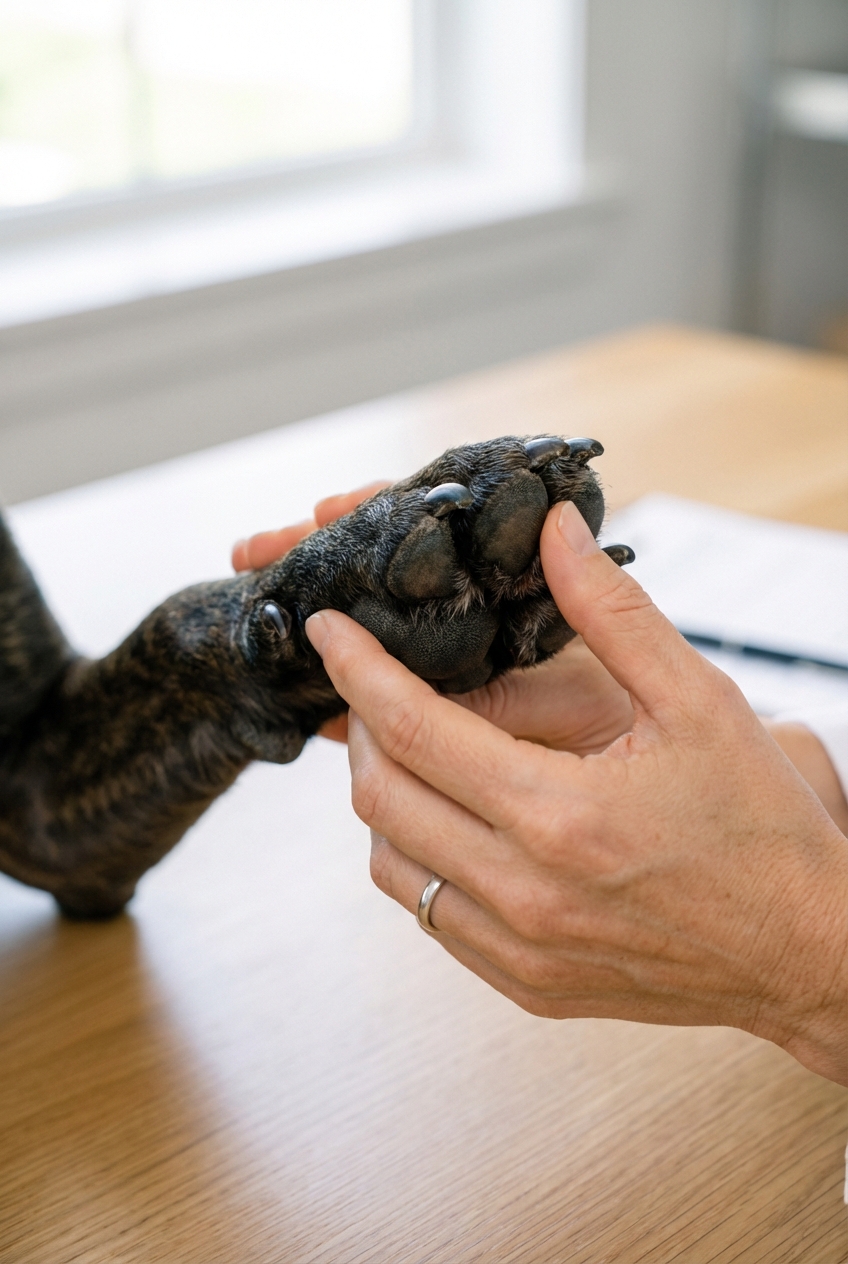
If your dog is in pain, growling, or snapping when you touch the paw, stop and protect yourself and your dog. Pain can make even sweet dogs react. If you have a second person, have them offer tiny treats while you look. If needed, use a basket muzzle and call your veterinarian for guidance.
Positioning tip: Most dogs do best on the floor on a non-slip mat. Keep your dog close to your body, support the leg above the paw, and avoid pulling the toes apart forcefully.
- Check for bleeding and apply gentle pressure with clean gauze for 5 to 10 minutes.
- Look at the whole dog: Is your dog lethargic, panting, vomiting, or breaking out in hives? Those can be allergy or shock signs.
- Limit movement: Leash walks only until you know what is going on.
Common causes of a swollen paw
Paws are busy, sensitive body parts. Swelling is basically the body saying, “Something irritated me, injured me, or infected me.” Here are the most common reasons we see in clinic.
Bee sting or insect bite
A sting often causes sudden swelling, redness, and intense licking. Some dogs will yelp and hold the paw up immediately after stepping on a bee, wasp, or fire ant mound.
- Typical clues: fast swelling, a single “puffy” area, possible small puncture, your dog seems otherwise okay.
- More concerning clues: hives, facial swelling, vomiting, weakness, pale gums, trouble breathing.
What to do: If your dog is stable, rinse the paw with cool water and apply a cool compress for 10 minutes on, 10 minutes off. Prevent licking with a cone if needed. If you can clearly see a stinger (most common with honeybees), you can gently scrape it out with a credit card edge. Do not dig around for it, and avoid squeezing with tweezers, which can push more venom in.
Important: Some over-the-counter antihistamines are commonly used in dogs, but do not give any human allergy medication unless your veterinarian has already told you which one to use and the correct dose for your dog.
Foreign object in the paw
Foxtails, burrs, thorns, glass, splinters, and even small rocks can wedge between toes or puncture the pad. Foxtails are especially tricky because they can migrate under the skin and create abscesses.
- Typical clues: sudden limping, obsessive licking, swelling between toes, a small draining hole, or a “bump” that seems to appear quickly.
What to do: In bright light, gently spread the toes and look for anything stuck. If it is superficial and easy to remove, you can pull it out with clean tweezers, then rinse with sterile saline wound wash if you have it (or plain saline). If it is embedded, if there is a puncture, or if swelling persists beyond 24 hours, schedule a vet visit.
Tick stuck between toes
Ticks love warm, hidden spots, including between the toes. A tick can cause localized swelling and lots of licking, and you might see a small gray or brown “bump” attached to the skin.
What to do: If you are comfortable removing ticks, use a tick tool or fine tweezers to grasp close to the skin and pull straight out. If the area is very swollen, painful, or you cannot remove it cleanly, have your vet do it.
Cut or broken nail
Nail injuries are very common and surprisingly painful. A torn nail can bleed a lot and lead to infection if the nail bed is exposed.
- Typical clues: bleeding, limping, your dog will not let you touch the toe, nail looks cracked or partially detached.
What to do: Apply gentle pressure with gauze. Keep it clean and dry. Many broken nails need veterinary trimming, pain relief, and sometimes antibiotics.
Sprain, strain, or bruise
Hard play, a slip on tile, or jumping off furniture can cause soft-tissue swelling in the paw or wrist (carpus). This may look mild at first and worsen over the next day.
- Typical clues: limping after activity, mild to moderate swelling, no obvious wound.
What to do: Rest is your best friend. Leash-only potty breaks, no running, and no stairs if possible. A cool compress can help in the first 24 hours. If limping is significant or lasts more than 24 to 48 hours, get an exam.
Broken toe or fracture
Dogs can fracture toes from catching a foot wrong, being stepped on, or a door accident. Some fractures are subtle but still very painful.
- Typical clues: obvious limping or non-weight-bearing, swelling in a single toe, toe looks crooked, pain when the toe is touched.
What to do: Keep your dog from walking as much as possible and see your vet promptly. X-rays are usually needed. Some toe fractures heal with rest and protection, but others may need splinting or more advanced care.
Infection or abscess (including interdigital “cysts”)
Infections can start from a tiny puncture, an ingrown hair, allergies, or foreign material. Between-the-toes infections can cause a painful, swollen lump that may rupture and drain. You may hear these called “interdigital cysts,” but many are actually inflamed or infected hair follicles (interdigital furunculosis) rather than a true cyst.
- Typical clues: swelling that is warm to the touch, redness, foul odor, pus or drainage, persistent licking, sometimes fever or decreased appetite.
What to do: This needs veterinary care. Dogs often need prescription antibiotics, pain control, and sometimes the area must be flushed or a foreign body removed.
Allergies and paw inflammation
Seasonal allergies, food sensitivities, and contact irritants (like lawn chemicals) can inflame the paws. Sometimes the swelling is mild but the licking is constant.
- Typical clues: multiple paws affected, red or pink staining between toes, recurrent ear issues, itchy skin elsewhere.
What to do: Rinse paws after walks, keep nails and hair trimmed between pads, and talk with your veterinarian about an allergy plan. Chronic licking can lead to secondary infections, so early help really matters.
Burns or chemical irritation
Hot pavement, de-icing salts, and household cleaners can irritate or burn pads.
- Typical clues: redness, blistering, peeling pads, sudden sensitivity on walks, multiple feet affected after exposure.
What to do: Rinse with cool water for several minutes and call your vet. Do not apply ointments without guidance because licking can cause stomach upset.
Swelling above the paw
If the swelling involves the whole foot, wrist/ankle, or even the full leg, the problem may be higher up than the paw. This can happen with more significant sprains, fractures, bites, snake envenomation in some regions, or other circulation and lymphatic issues.
What to do: Limit movement and call your veterinarian. Whole-limb swelling is a good reason to seek prompt evaluation.
At-home paw check
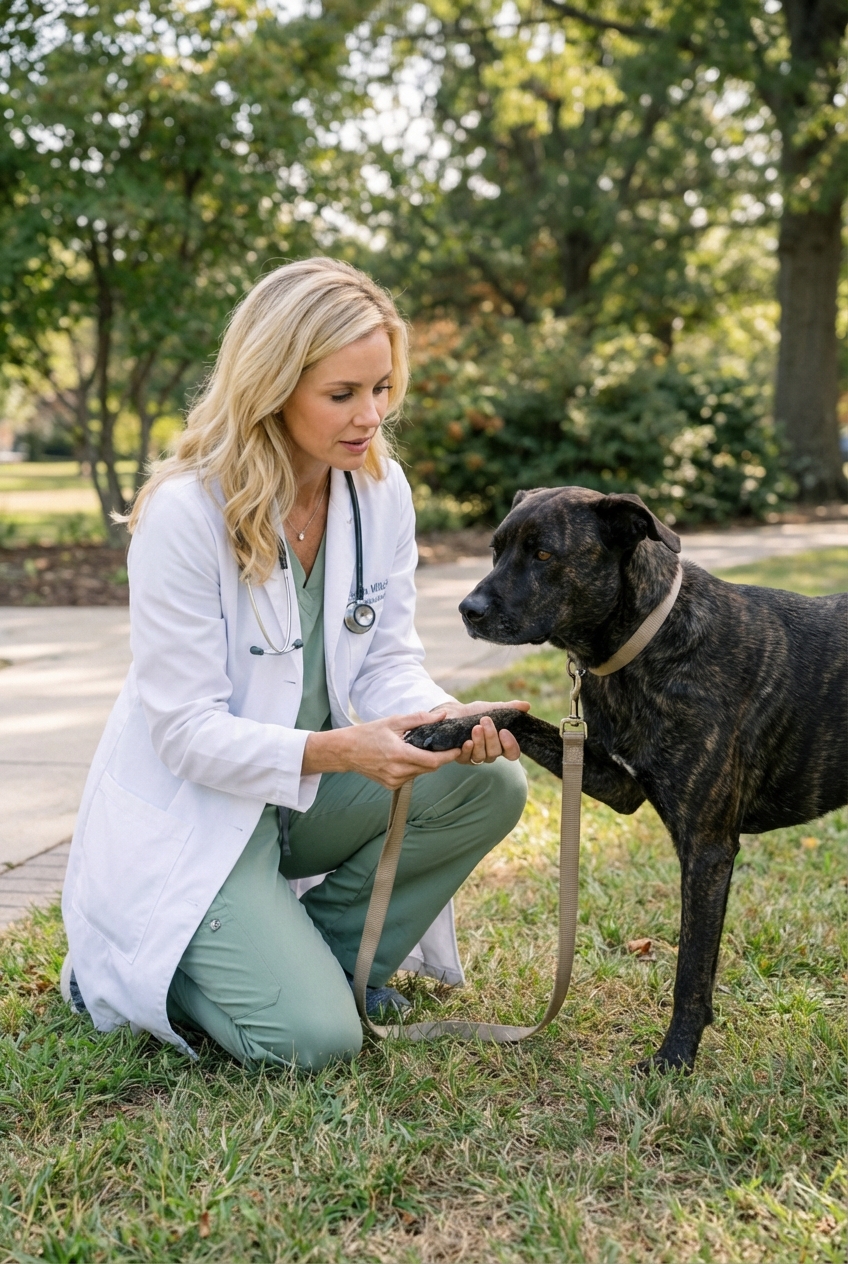
You do not need fancy tools, just good light and patience.
- Compare both sides. Look at the swollen paw and the matching paw on the other side.
- Check the pads. Look for cuts, punctures, stuck debris, or burns.
- Spread the toes. Look between toes for redness, swelling, foxtails, ticks, or discharge.
- Inspect each nail. Look for cracks, bleeding, or a nail that looks “shorter” from breaking.
- Smell the paw. A strong, yeasty or foul odor suggests infection.
- Feel for heat. Warmth plus swelling can point to inflammation or infection.
If your dog is in a lot of pain, stop. A vet exam is safer and faster than wrestling at home.
Home care and what to avoid
Helpful home care (mild cases)
- Rest: Leash-only potty breaks, no running or jumping for 24 to 48 hours.
- Cool compress: 10 minutes on, 10 minutes off for the first day if swelling is new.
- Rinse: If you suspect an irritant, rinse the paw with cool water or saline and pat dry.
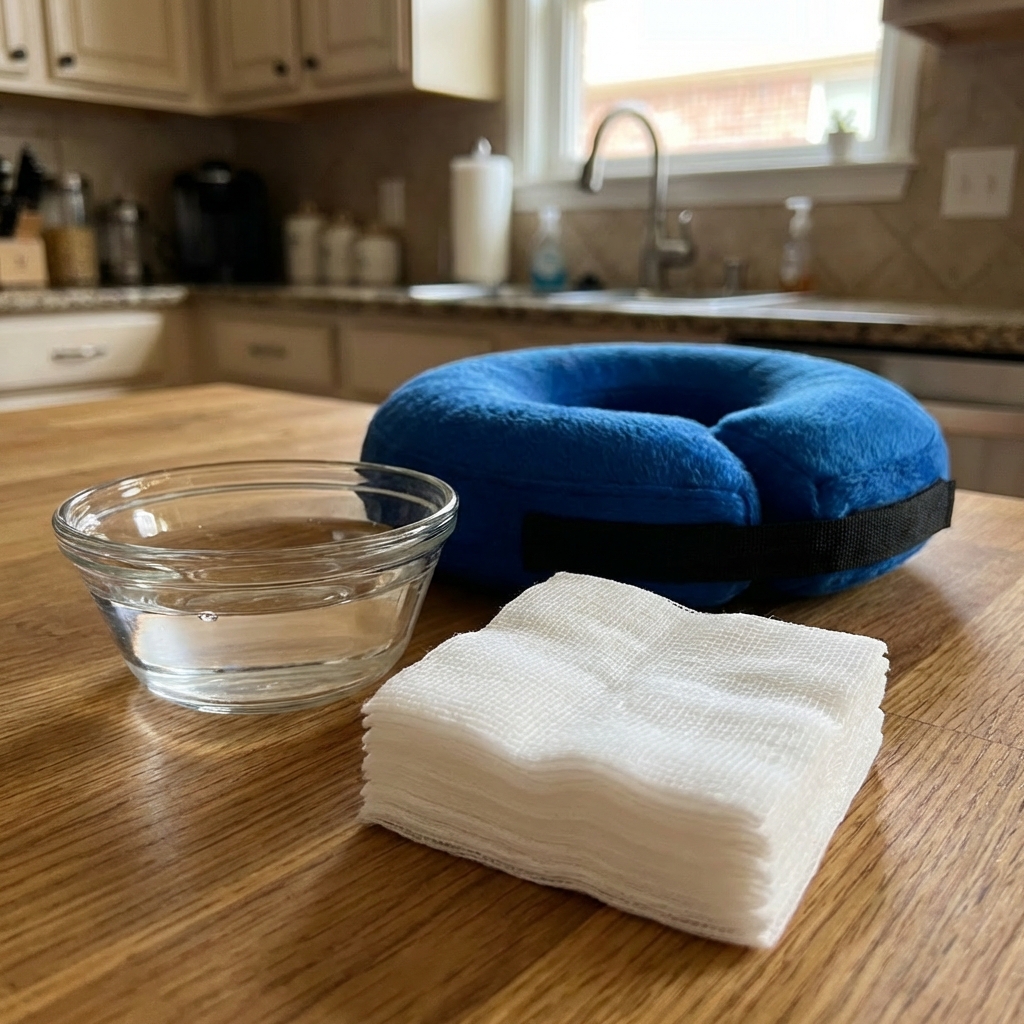
- Prevent licking: Cone, inflatable collar, or a properly fitted bootie for short periods.
Avoid these mistakes
- Do not give human pain meds like ibuprofen, naproxen, or acetaminophen unless specifically instructed by your veterinarian. These can be toxic to dogs.
- Do not use alcohol or hydrogen peroxide on paw wounds unless your veterinarian tells you to. They can damage tissue and slow healing.
- Do not soak unless your vet recommends it. Many people ask about Epsom salt or chlorhexidine soaks. These may be appropriate in some cases, but they can worsen irritation, and soaking is not a good idea for deep punctures or actively draining infections unless you have a plan from your vet.
- Do not tightly wrap the paw. Bandages that are too tight can cut off circulation and make things worse.
- Do not “wait it out” if there is a puncture wound, drainage, a bad smell, or your dog will not bear weight.
When to call the vet now
These are common red flags. If you see any of the following, call your veterinarian or an emergency clinic:
- Difficulty breathing, facial swelling, widespread hives, vomiting, or collapse after a sting or bite
- Non-weight-bearing lameness or severe pain
- Toe looks crooked or unstable
- Deep cut, puncture, or bleeding that does not stop within 10 minutes of steady pressure
- Swelling that is hot, rapidly increasing, or draining pus
- Fever, lethargy, loss of appetite
- Swelling that lasts more than 24 to 48 hours despite rest
- Your dog has diabetes, is on steroids, is immunocompromised, or has a history of serious infections
Trust your gut. If your dog is acting “not like themselves,” it is okay to seek care even if the paw looks only mildly swollen.
What the vet may do
Knowing what to expect can make a visit less stressful.
- Physical exam and sedation if needed: Painful paws sometimes require mild sedation for a safe, thorough look.
- X-rays: To check for fractures and joint issues. X-rays can sometimes suggest a foreign object, but many materials like wood and foxtails do not show up clearly.
- Ultrasound or other imaging: If a migrating foreign body is suspected, your vet may recommend ultrasound, advanced imaging, or careful exploration.
- Cytology or culture: If there is drainage, your vet may examine cells under a microscope or send a culture to target antibiotics.
- Foreign body removal: Especially common with foxtails and thorns.
- Medications: Pain relief, anti-inflammatories, antibiotics, allergy meds, or topical therapy depending on the cause.
- Bandage or bootie plan: If needed, they will show you how to keep it clean and when to recheck.
Prevention tips
Most paw issues are not your fault, but a few habits can reduce the odds of repeat swelling.
- Do quick paw checks after walks, especially in tall grass or hiking areas.
- Trim hair between pads so burrs and foxtails are less likely to stick.
- Keep nails at a healthy length to reduce toe injuries and slips.
- Use tick prevention and check toes during tick season, especially after wooded or grassy walks.
- Rinse paws after exposure to lawn chemicals, de-icing salts, or dusty trails.
- Talk to your vet about allergies if paw licking is frequent. Chronic inflammation often leads to secondary infections.
Bottom line
A dog’s swollen paw can be as simple as a mild sting or as serious as a fracture or infection. A calm home check, a little rest, and knowing the red flags can make all the difference. If you are unsure, it is always appropriate to call your veterinarian. That quick phone call can save your dog a lot of pain and get you peace of mind.