Step-by-step home care for mild dog diarrhea and vomiting: short food break, small sips of water, bland diet, pumpkin, probiotics, dehydration checks, and ur...
Article
•
Designer Mixes
Dog Stomach Upset Explained

Shari Shidate
Designer Mixes contributor
A dog with an upset stomach can go from perfectly playful to looking miserable in a matter of hours. As a veterinary assistant here in Frisco, Texas, I see tummy troubles every single week, and the good news is that many mild cases resolve with calm, supportive care at home. The tricky part is knowing what is mild and what is an emergency.
This guide will help you recognize common causes, spot red flags, and make evidence-based choices that protect your dog’s health.
What “stomach upset” can look like
Stomach upset is a catch-all phrase that can include:
- Vomiting (food, foam, bile, or water)
- Diarrhea (soft stool, watery stool, or increased frequency)
- Nausea signs like lip-licking, drooling, gulping, or eating grass
- Reduced appetite or skipping meals
- Gurgly belly (audible stomach sounds)
- Gas or mild belly discomfort
Sometimes the issue is truly the stomach and intestines (gastroenteritis). Other times, stomach signs are the body’s alarm system for problems elsewhere, like pancreatitis, an intestinal blockage, toxin exposure, Addison’s disease, kidney issues, or a painful injury.
Common causes
Dietary indiscretion
This is the classic: trash, greasy leftovers, bones, sticks, mulch, cat litter, socks, and yes, sometimes a whole muffin off the counter. Sudden diet changes can also trigger diarrhea.
Parasites
Giardia, roundworms, hookworms, and whipworms can cause loose stool, mucus, blood, or weight changes. Puppies are especially prone, but adults can get them too.
Stress and routine changes
Boarding, travel, new pets, moving, visitors, fireworks, and schedule changes can all affect the gut. The gut and nervous system are closely connected, even in dogs.
Food sensitivities
Some dogs develop recurring soft stool, itching, gas, or vomiting from certain ingredients. This is not always a true allergy, but it is still worth addressing if symptoms repeat.
Infections
Viruses and bacteria can cause vomiting and diarrhea. In unvaccinated puppies, parvovirus is a major concern and requires immediate veterinary care.
Pancreatitis
Pancreatitis is often associated with rich or high-fat foods and can sometimes be triggered by a fatty meal, but it can also happen for other reasons. It can cause repeated vomiting, abdominal pain, and lethargy, and it can become severe quickly, so do not wait it out if your dog looks truly unwell.
Red flags: call your vet now
Please seek veterinary care urgently if you notice any of the following. These are situations where home care can delay needed treatment.
- Repeated vomiting, or vomiting that continues beyond 12 to 24 hours
- Can’t keep water down, or vomiting after drinking
- Blood in vomit or black, tarry stool
- Large amounts of blood in diarrhea, or diarrhea with weakness
- Diarrhea that lasts more than 24 to 48 hours (even without vomiting), especially if it is watery or frequent
- Severe lethargy, collapse, or acting not like themselves
- Abdominal swelling, repeated unproductive retching, or a tight painful belly (concern for bloat)
- Possible foreign body (toy pieces, socks, corn cob, bones, rocks)
- Signs of dehydration (dry or tacky gums, sunken eyes, very low energy)
- Known toxin exposure (xylitol, grapes or raisins, chocolate, rodent bait, medications, cannabis)
- Puppies, seniors, and very small dogs, or dogs with chronic illness (they can decline faster)
If you are unsure, it is absolutely appropriate to call your veterinarian or an emergency clinic and describe what you are seeing. Your observations matter.
What to do at home for mild cases
If your dog is bright, alert, hydrated, and only has mild symptoms, supportive care may help. The goal is to rest the gut and prevent dehydration.
1) Hydration first
- Offer small, frequent sips of water.
- If your dog gulps and vomits, try ice cubes or a few teaspoons of water every 10 to 15 minutes.
- Ask your vet about a pet-safe electrolyte option if diarrhea is watery or frequent. Avoid human sports drinks, and never use products that contain xylitol or unknown sweeteners.
2) A short food break, only when appropriate
Some healthy adult dogs may do better with a brief rest from food after vomiting, often around 6 to 12 hours, but this is not right for every dog. Puppies, small dogs, diabetics, and dogs with other medical conditions can get into trouble if they go too long without food. When in doubt, call your clinic for guidance.
3) Bland diet for 1 to 3 days
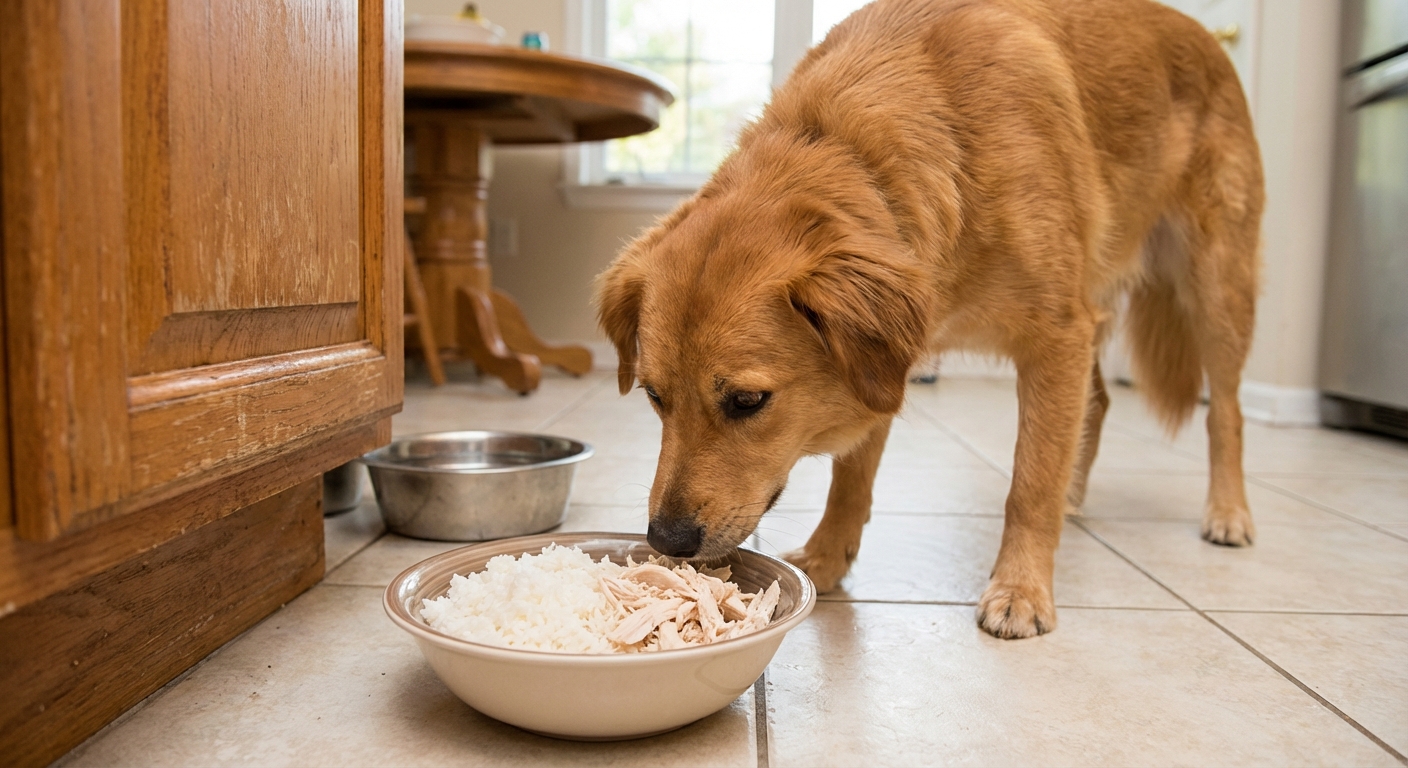
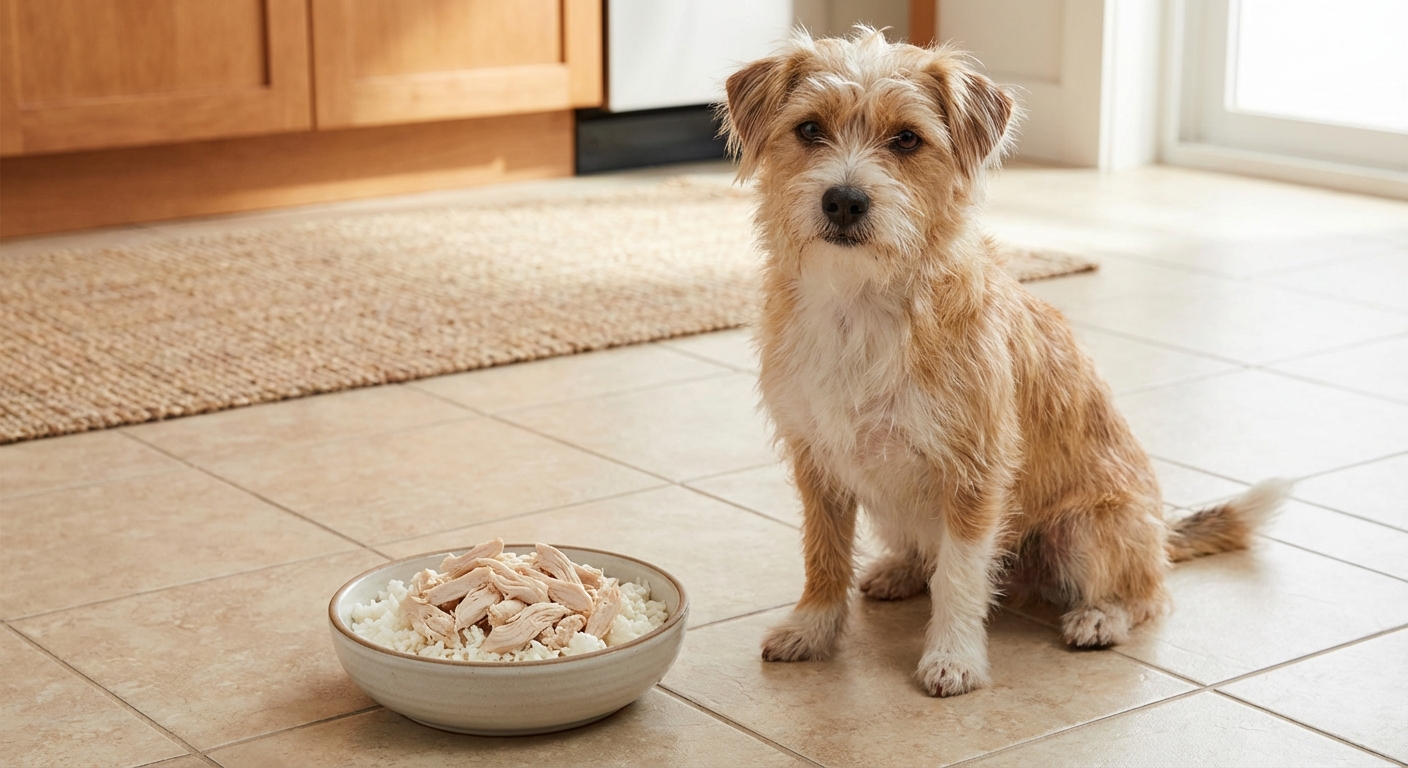
Once vomiting has stopped and your dog is interested in food, start with small portions of a bland diet. A common starting mix is about 2 parts carbohydrate to 1 part lean protein.
- Boiled skinless chicken breast and plain white rice
- Lean ground turkey (drained well) and rice
- Plain canned pumpkin (not pie filling) may help some dogs with diarrhea by adding soluble fiber, but too much can cause constipation or bulkier stools
Feed small meals throughout the day (think 3 to 6 small meals instead of 1 or 2 big ones). If things improve, transition back to the regular diet over 3 to 5 days. Sudden switching can restart the problem.
Important note: chicken and rice is not complete and balanced for long-term feeding. It is a short-term support plan, not a forever diet.
4) Ask about probiotics
Veterinarian-recommended probiotics can support the gut microbiome during diarrhea. Not all supplements are equal, so it is worth asking your clinic for a trusted option.
Common mistakes
- Giving human medications without veterinary guidance. Some are toxic to dogs.
- Trying to induce vomiting at home unless a veterinarian or pet poison hotline specifically tells you to. Inducing vomiting can be dangerous with certain toxins, sharp objects, or if your dog is weak or already vomiting.
- Offering rich foods like bacon, cheese, greasy meat, or heavy treats to tempt appetite.
- Switching foods repeatedly trying to find something that works. This can keep the gut inflamed.
- Ignoring dehydration. A dog can become dehydrated faster than many people realize, especially with vomiting plus diarrhea.
Poison help
If you suspect your dog ate something toxic, call your veterinarian or an emergency clinic right away. You can also contact a pet poison hotline such as ASPCA Animal Poison Control or Pet Poison Helpline. These services are very helpful and may charge a fee. If possible, have the product packaging, ingredients, and an estimated amount eaten ready.
How vets figure it out
If your dog needs to be seen, your veterinarian may recommend:
- Physical exam including abdominal palpation and hydration assessment
- Fecal testing for parasites and Giardia
- Bloodwork to check organ function, inflammation, electrolytes, and hydration status
- X-rays or ultrasound if a blockage, pancreatitis, or other internal issue is suspected
Treatment can range from diet support and probiotics to anti-nausea medication, fluids, deworming, prescription diets, or hospitalization depending on the cause and severity.
If it keeps coming back
Recurring vomiting or diarrhea deserves a deeper look. Patterns can offer clues. Keep a simple note on:
- What your dog ate (including treats, chews, and people food)
- Timing and frequency of vomiting or diarrhea
- Stool appearance (soft, watery, mucus, blood)
- Energy level, appetite, and any itching or ear issues
For frequent GI issues, your vet may discuss a diet trial, parasite prevention, gut-support supplements, or testing for chronic GI conditions.
Prevention tips
- Slow diet transitions over 7 to 10 days when changing foods.
- Trash control: use lidded cans and keep counters clear.
- Choose safer chews and supervise. Avoid brittle bones and items that splinter.
- Keep parasite prevention current and do fecal checks as recommended.
- Stick to a treat budget: treats should be a small portion of daily calories.
- Know your dog’s normal so you can spot changes early.
If you are interested in adding fresh foods, talk with your veterinarian so you do not unbalance the diet. For dogs with sensitive stomachs, slow and consistent changes matter more than any one ingredient.
Quick checklist
Usually mild: one vomit, mild diarrhea, normal energy, normal gum moisture, still interested in water, no belly pain.
More serious: repeated vomiting, diarrhea lasting more than 24 to 48 hours, weakness, dehydration, blood, painful belly, swollen abdomen, suspected toxin or foreign object, very young, very small, or senior dog.
If your gut says this is not right, listen to it. Calling your veterinary clinic for guidance is never an overreaction.