Vet-informed guide to a short-term bland diet for dogs: chicken and rice 1:2 ratio, daily cup ranges by weight, how many meals to split into, and red flags t...
Article
•
Designer Mixes
Dog Stomach Noises Care Tips

Shari Shidate
Designer Mixes contributor
That gurgling, rumbling sound coming from your dog’s belly can be surprising, and sometimes a little worrying. In veterinary medicine we call these noises borborygmi. They are audible GI sounds that can come from the stomach or intestines, and most of the time they are simply the normal movement of gas and fluid through the digestive tract.
That said, stomach sounds can also be your dog’s way of telling you something is off, like they ate too fast, tried a new treat, got into the trash, or are dealing with mild stomach upset. The goal is to know what is normal for your dog and when it’s time to take action. And when in doubt, your veterinarian is the best source of guidance for your specific dog.

Why your dog’s stomach makes noises
Most belly noises come from the stomach and intestines doing their job. Common, pet-friendly reasons include:
- Hunger: An empty stomach and intestines can sound louder, especially before meals.
- Eating too fast: Fast eating pulls in air, which can increase gas and gurgling.
- Diet changes: Switching foods or adding rich treats can temporarily upset the gut.
- Mild gas: Some dogs are naturally a bit gassier, especially after certain foods.
- Normal digestion: After a meal, you may hear more activity as the GI tract moves things along.
- Stress: Anxiety can affect gut motility. Some dogs get “nervous stomachs.”
If your dog is acting normal, eating, drinking, and has typical stools, belly sounds alone are often not an emergency.
Normal noises vs. a problem
Usually normal
- Gurgling with a normal appetite
- Normal energy and comfort
- No vomiting
- Normal stool and frequency
- Noise that comes and goes and often resolves within a day
More concerning
Call your veterinarian if stomach noises come with any of these:
- Repeated vomiting or inability to keep water down
- Diarrhea that lasts more than 24 hours, worsens, or comes with blood or black, tarry stool (call sooner for puppies, seniors, small dogs, or dogs with other medical problems)
- Abdominal pain (tense belly, whining when touched, “prayer position” repeatedly)
- Lethargy, weakness, or collapse
- Refusing food for more than one meal, especially in puppies or seniors
- Swollen or hard abdomen
- No stool, straining, or constipation along with vomiting or obvious discomfort
- Repeated unproductive retching (trying to vomit but nothing comes up)
- Known toxin exposure (xylitol, grapes/raisins, chocolate, medications, etc.)
- Possible foreign body (your dog may have swallowed a toy, sock, bones, corn cob, or similar)
If your dog is a deep-chested breed and has a tight, distended belly, unproductive retching, or sudden restlessness, seek emergency care right away. Those can be warning signs of bloat (GDV), which is life-threatening.
At-home care you can try (if your dog is otherwise acting fine)
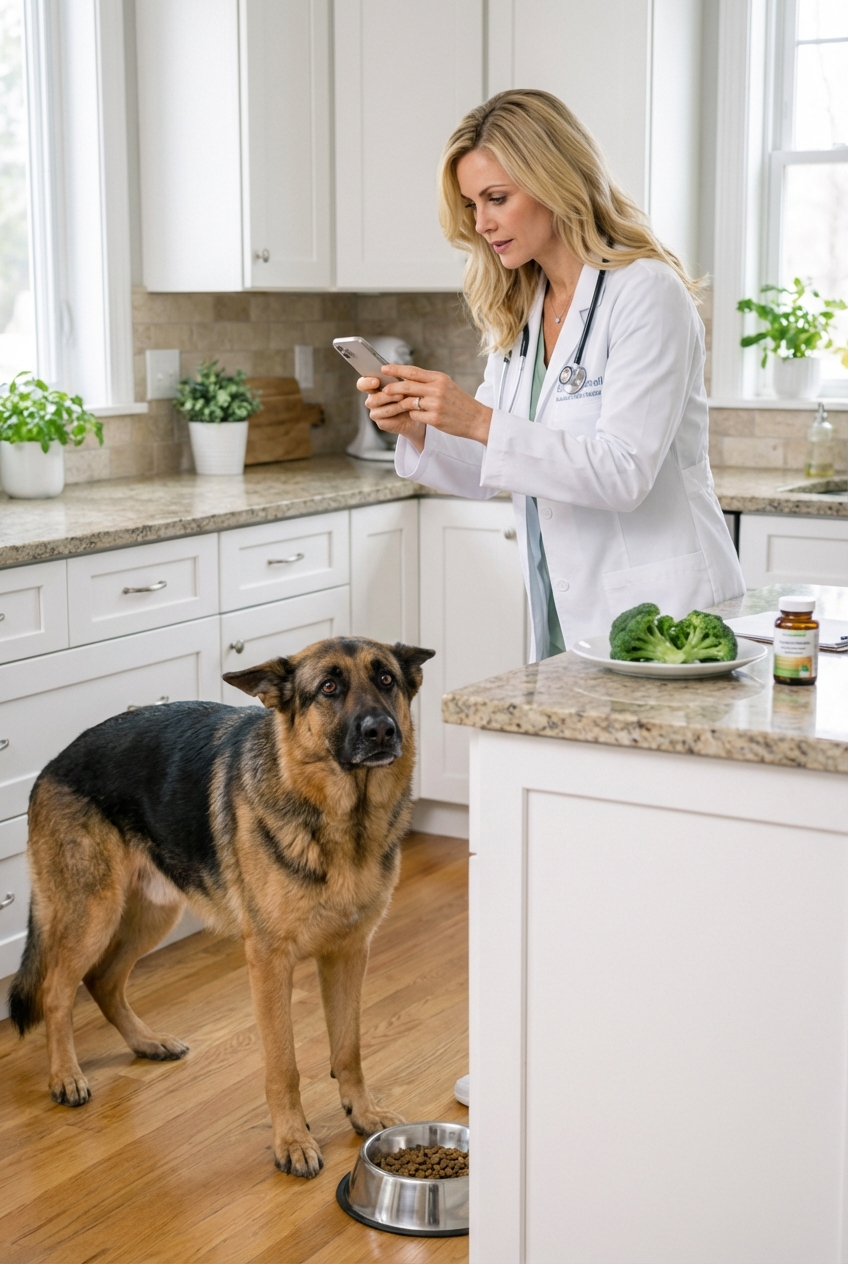
For mild, short-term tummy noise without red flags, these gentle steps often help.
1) Pause the extras
For the next 24 to 48 hours, skip rich treats, table scraps, and new chews. Keep things simple so the gut can settle.
2) Offer small, frequent meals
Instead of one large meal, try splitting the daily amount into 3 to 4 smaller meals. This can help reduce big swings between “empty stomach” and “overfull stomach.”
3) Slow down fast eaters
- Use a slow feeder bowl
- Try a snuffle mat for kibble
- Spread food on a large plate so your dog cannot vacuum it
4) Support hydration
Make sure fresh water is available. If stools are slightly soft, hydration matters even more. If your dog refuses water or vomits after drinking, stop home care and call your vet.
5) Gentle movement
A calm leash walk can help gas move along. Avoid intense exercise right after meals.
6) Consider a bland diet short term
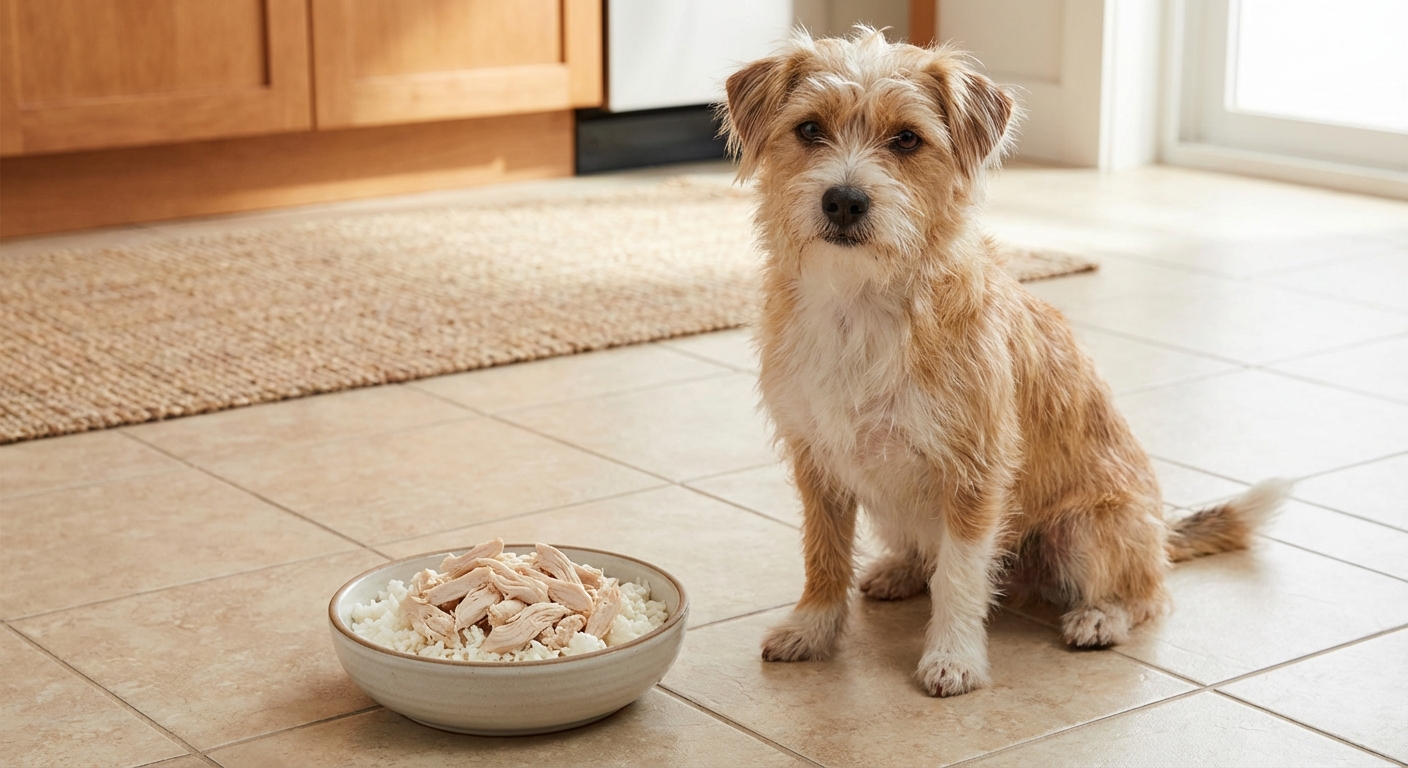
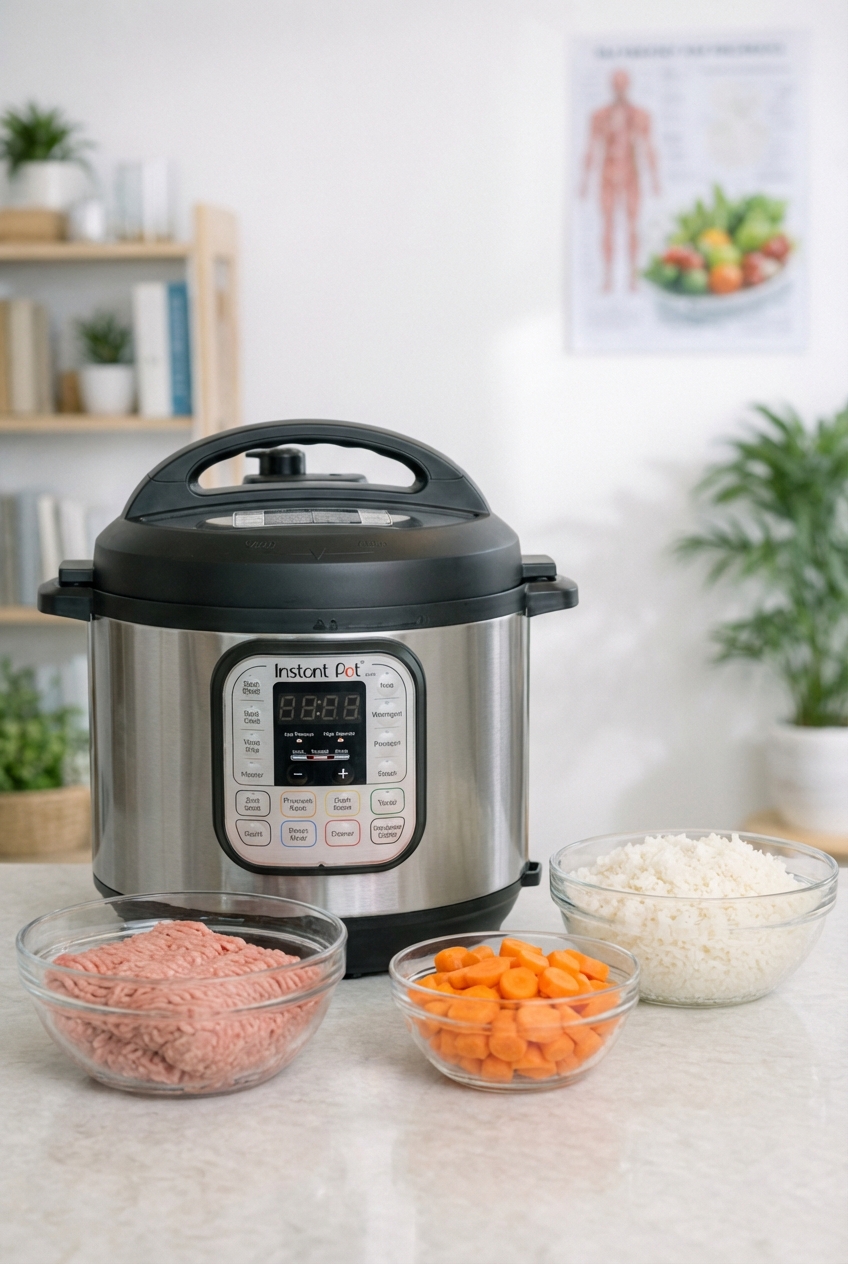
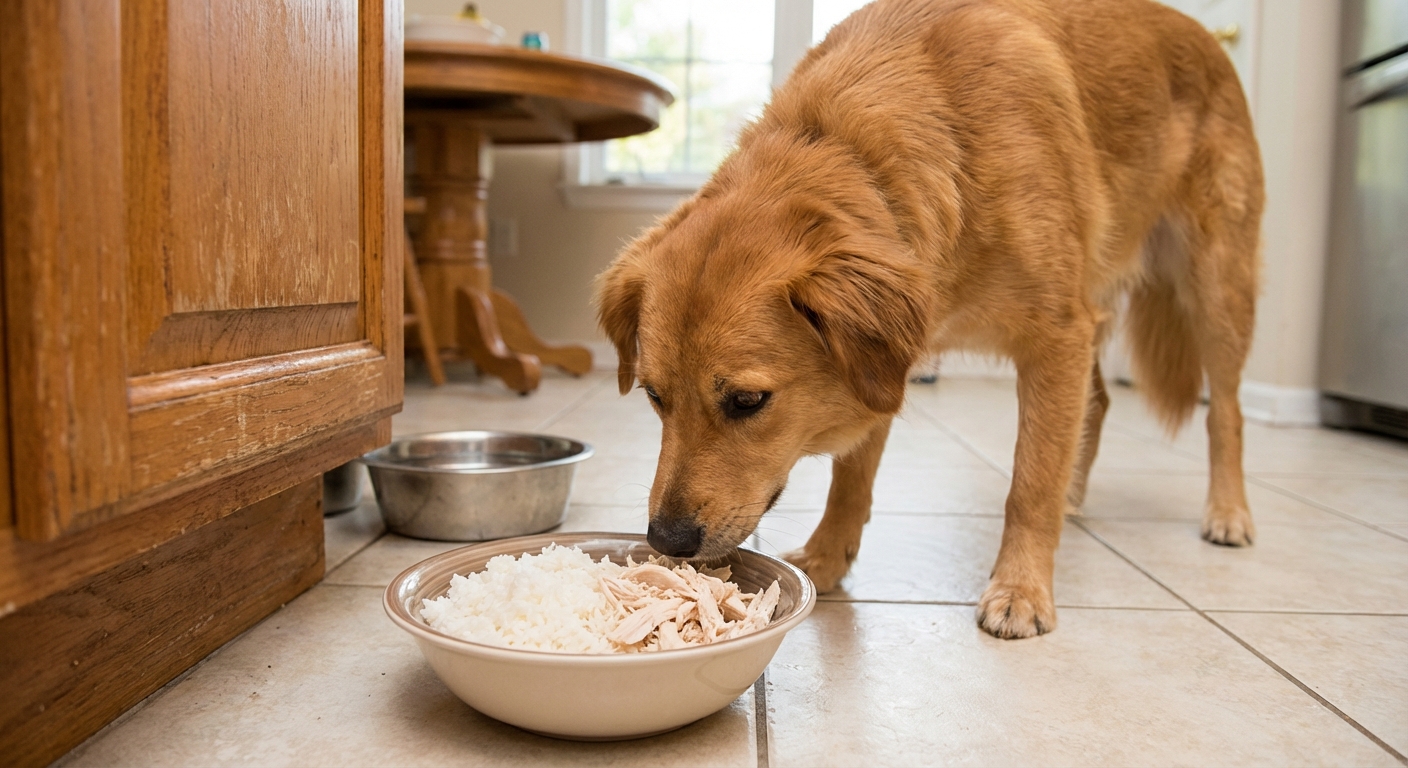
If your vet has said your dog can safely eat a bland diet when mild GI upset happens, a short course can be helpful. A common approach is plain, unseasoned cooked chicken breast plus plain white rice in small meals. Some dogs do better with cooked turkey or scrambled egg instead, but the best option depends on your dog’s health history (for example, pancreatitis risk or food sensitivities). If you are unsure, ask your veterinarian for specific amounts and the best protein choice for your dog.
Important: bland diets are not complete and balanced long term. If symptoms last beyond 24 to 48 hours, or if you have a puppy, senior, or medically complex dog, check in with your veterinarian before continuing.
Foods that commonly trigger noisy stomachs
Every dog is different, but in my experience the most common culprits are:
- High-fat foods (bacon, greasy leftovers, rich treats)
- Dairy (many adult dogs have limited lactose tolerance)
- Sudden diet switches without a slow transition
- New chews that are hard to digest
- High-fiber add-ons introduced too quickly
If you are adding healthier whole foods, go slow. Start with a small portion and watch stool quality, appetite, and comfort.
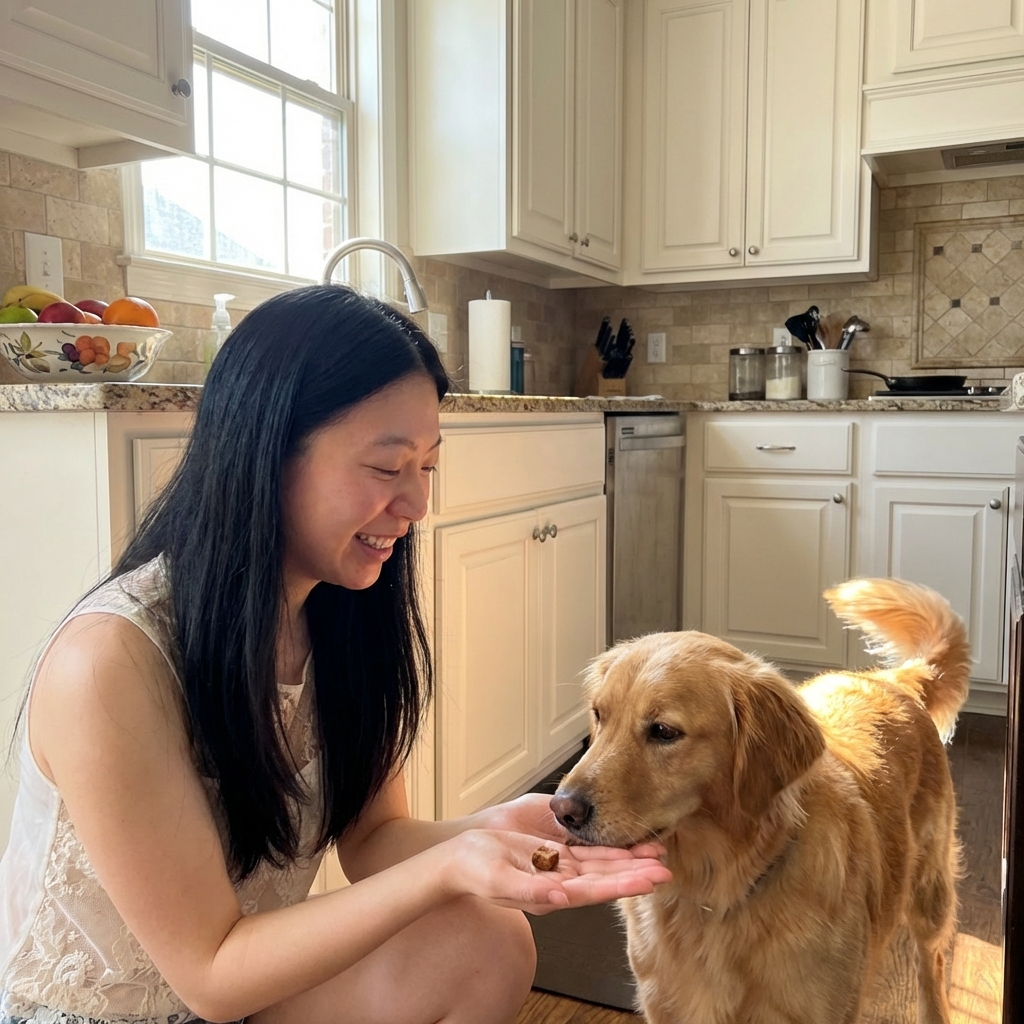
If it keeps happening
If noisy stomach episodes are frequent, persistent, or start coming with vomiting, diarrhea, weight loss, or appetite changes, it is time to loop in your veterinarian. Ongoing GI sounds can be linked to things like:
- Intestinal parasites (especially in puppies or dogs with unknown deworming status)
- Food intolerance or food allergy
- Pancreatitis (often tied to high-fat foods)
- GI infection or inflammation
- Foreign body or partial obstruction
Puppies can dehydrate quickly, so call earlier rather than later if a puppy has vomiting, diarrhea, poor appetite, or seems “off.”
Prevention
- Transition foods gradually: Mix the new food in over 7 to 10 days for most dogs.
- Keep a consistent routine: Predictable meals and potty breaks support regular digestion.
- Choose chews wisely: Avoid extremely rich, overly hard, or easily swallowed chews.
- Trash-proof your home: Many GI emergencies start with “my dog got into something.”
- Know your dog’s baseline: If your dog is normally quiet-bellied and suddenly sounds like a washing machine, that is useful information for your vet.
When to call the vet
If you are unsure, it is always okay to call. When you do, having these details ready helps your clinic triage quickly:
- How long the noises have been happening
- Any vomiting or diarrhea, including frequency and appearance
- Appetite and water intake changes
- Energy level and behavior
- Any diet changes, new treats, chews, or known trash exposure
- Whether your dog could have swallowed a toy, sock, or bones
- Your dog’s age and any medical conditions (especially if they are a puppy, senior, or have had pancreatitis before)
You know your dog best. If their belly sounds are paired with discomfort, repeated symptoms, or that “something is not right” feeling, trust your instincts and get help.
This article is for general education and is not a substitute for veterinary diagnosis or treatment.