Learn veterinarian-approved ways to calm an upset stomach in dogs: small sips of water, a brief food break, bland meals, pumpkin, probiotics, and when to see...
Article
•
Designer Mixes
Dog Stomach Making Loud Noises: Trusted Tips and Advice

Shari Shidate
Designer Mixes contributor
If your dog’s stomach is making loud noises, you’re not alone. As a veterinary assistant in Frisco, Texas, I hear this concern all the time. Those gurgles, rumbles, and “whale sounds” often come from normal movement of gas and fluid through the gut, but sometimes they are your dog’s way of saying, “Something is off.”
The goal is simple: figure out when belly sounds are normal, when they are a red flag, and what you can do at home to help your dog feel better safely.
What loud stomach noises usually mean
The medical term for these rumbling gut noises is borborygmi. It sounds intimidating, but it often describes a very ordinary process: the intestines are mixing food, gas, and fluid as they move everything forward.
Common, usually harmless reasons include:
- Hunger: a totally empty stomach can get noisy, especially in the morning or before dinner.
- Eating too fast: gulping air along with food leads to extra gas.
- Diet change: switching foods too quickly can disrupt the gut.
- Mild indigestion: a new treat, a richer chew, or scavenged “yard snacks.”
- Stress: travel, boarding, storms, or schedule changes can affect the gut.
When belly sounds are a problem
Noise alone is rarely an emergency. What matters most is the whole picture: your dog’s behavior, appetite, stool, and comfort level.
If your dog seems otherwise normal, it is often reasonable to monitor at home for 12 to 24 hours. If anything worsens, or you are unsure, call your vet.
Call your vet promptly if you notice
- Vomiting more than once, or vomiting with lethargy
- Diarrhea lasting more than 24 hours, or any diarrhea with weakness
- Blood in vomit or stool (red or black, tarry stool)
- Pain signs: trembling, tense belly, whining, “prayer position” (front end down, rear up)
- Not eating or refusing water
- Swollen or tight belly, repeated retching with little or no vomit, pacing, or distress (this can be bloat)
- Straining with little or no stool, no poop plus vomiting, or a sudden inability to keep food down (can suggest constipation, obstruction, or other urgent GI issues)
- Puppies, seniors, or dogs with chronic illness: get help sooner since they can dehydrate faster
If your large or deep-chested dog is unproductively retching, has a swollen belly, and cannot settle, treat it as an emergency. Don’t wait to “see if it passes.”
Quick at-home checklist
If your dog is bright, alert, and acting mostly normal, you can do a calm check at home while you monitor.
1) Look at appetite and energy
Is your dog interested in food, responding to you, and moving normally? A dog who is playful and still eating is usually less concerning than a dog who is withdrawn.
2) Check hydration
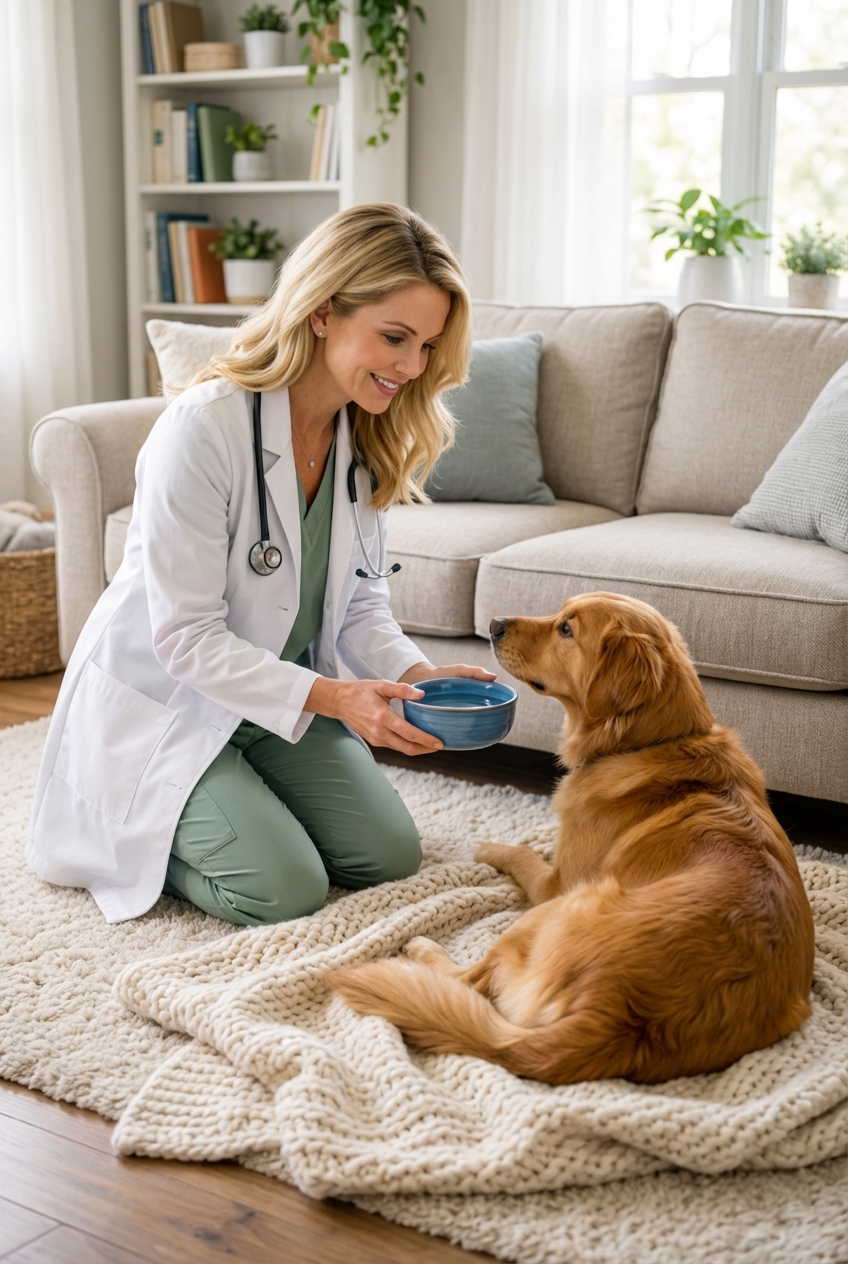
- Offer fresh water.
- Look for sticky gums or sunken eyes.
- If you know how, do a gentle skin tent test at the shoulder blades.
Important note: hydration checks are not perfect. Age, body condition, and coat can make signs harder to read. If you are not sure, or your dog seems “off,” call your vet.
3) Assess the belly
Is the abdomen soft and comfortable when you gently touch it, or does your dog tense up, flinch, or move away?
4) Watch stool and frequency
Take note of stool consistency, color, and whether your dog is straining. If there is diarrhea, track how many times and whether mucus or blood appears.
Safe ways to settle a noisy stomach
These are practical steps that are commonly recommended in clinics for mild, short-lived stomach upset. If your dog has a medical condition, is on medication, is very small, or symptoms are more than mild, check with your vet before making changes.
Use a simple meal plan
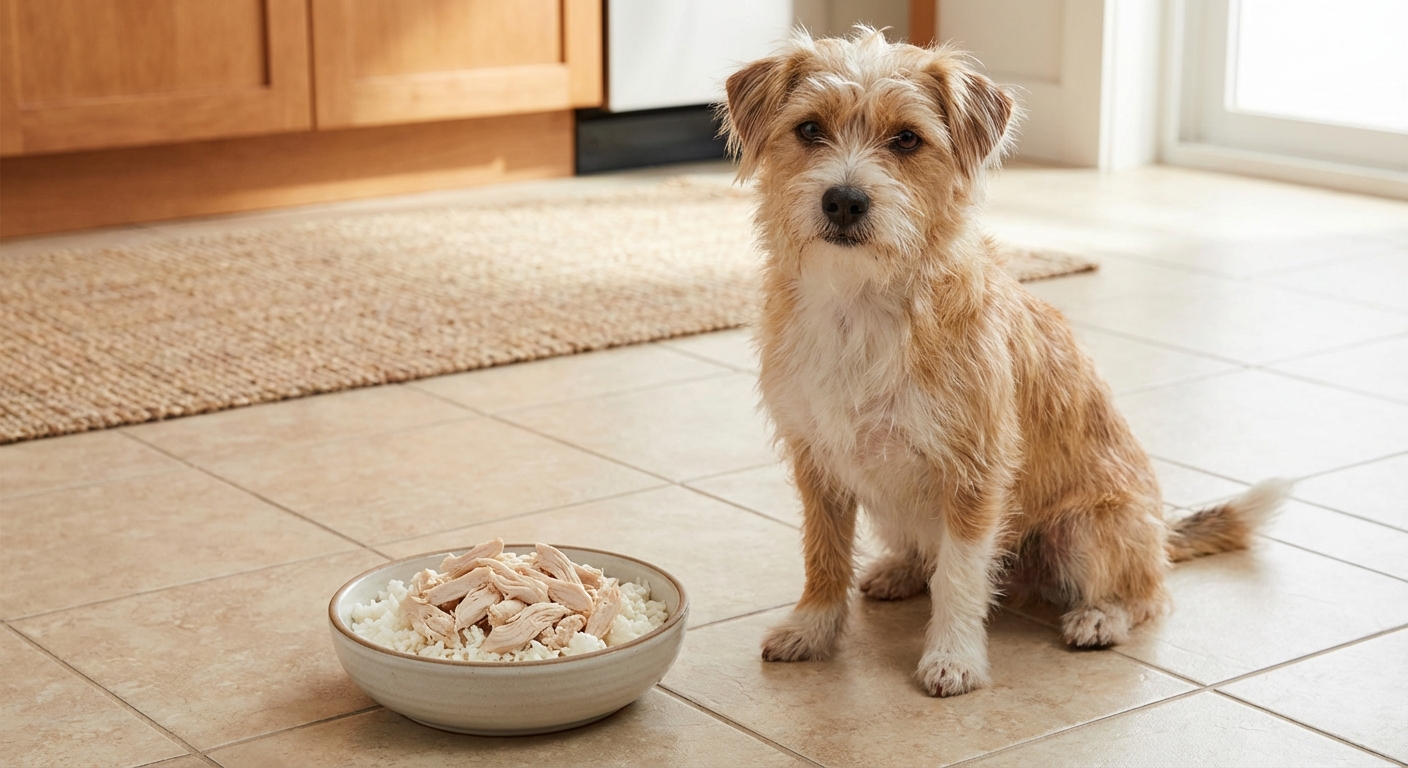
For mild stomach upset, smaller meals are often easier than one big serving.
- Try smaller, more frequent portions for 24 hours.
- Keep it simple and avoid rich foods, fatty scraps, and new treats.
- Change foods slowly if you are transitioning. Many dogs do best with a 7 to 10 day gradual transition.
Slow the speed eater
Air intake is a major cause of gas and rumbling. If your dog inhales meals:
- Use a slow feeder bowl or scatter feeding in a snuffle mat.
- Split meals into two to four smaller feedings.
- Avoid heavy exercise right after meals, especially for large breeds.
Consider a dog probiotic
Some dogs do better with a veterinary or dog-specific probiotic during stress, after a diet change, or during mild loose stool. Choose products made for dogs with clear strain labeling and quality control, and ask your clinic what they trust.
If your dog’s stomach noises line up with stress (storms, boarding, visitors), a probiotic plan discussed with your vet can be a very practical tool.
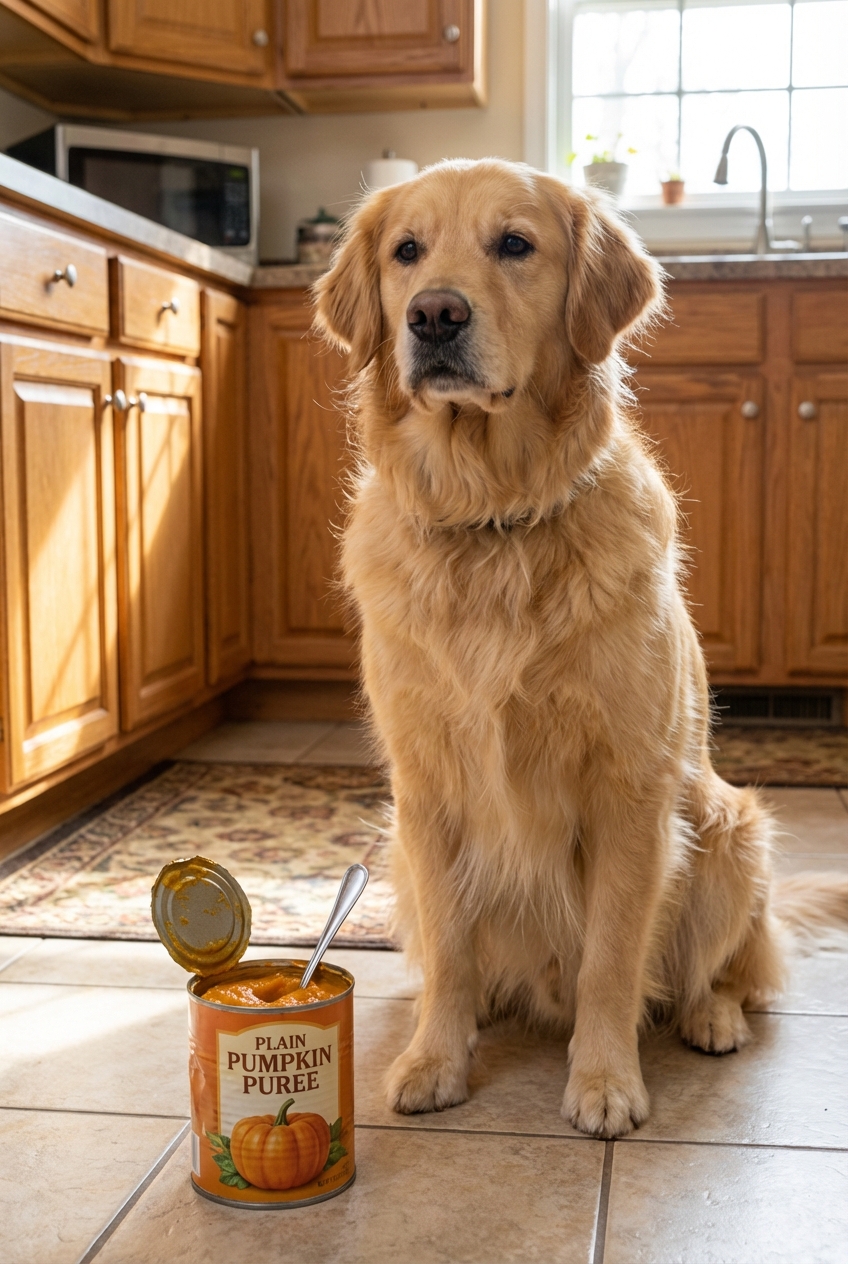
Try fiber carefully (pumpkin)
Some dogs benefit from gentle fiber to help normalize stool and reduce gut turbulence.
- Plain canned pumpkin (not pie filling) is commonly used.
- A typical starting amount many clinics suggest is about 1 teaspoon per 10 pounds of body weight, mixed into food once or twice daily.
- Start low, especially for small dogs. Too much fiber can worsen gas or cause loose stool.
If your dog has diabetes, is on a prescription diet, or has ongoing GI issues, check with your vet before adding pumpkin.
Take a short treat break
One of the simplest fixes is also the most overlooked: pause all extras for a day or two.
- Stop new chews, bully sticks, rawhides, and rich training treats temporarily.
- Skip table scraps.
- Reintroduce treats slowly and watch what triggers symptoms.
What not to give at home
When a dog’s stomach is noisy, it is tempting to reach for human remedies. Some can be risky or mask a bigger problem.
- Do not give human NSAIDs like ibuprofen or naproxen.
- Do not give Pepto-Bismol, Imodium, or human antacids unless your veterinarian tells you to. These can be unsafe for some dogs or unsafe with certain conditions, and they can complicate diagnosis.
- Avoid “leftover” prescriptions from a previous pet or old visit.
If your dog is uncomfortable, call your clinic and ask what is safe for your dog’s size, age, and medical history.
Common food triggers
Some ingredients and habits are repeat offenders for gas and gurgling.
- High-fat foods: bacon, greasy meats, buttery leftovers, rich cheese
- Dairy: some dogs are lactose intolerant
- New foods too fast: rapid switches can cause rumbling and loose stool
- Seasonings: spicy or heavily seasoned foods can irritate the gut
- Scavenging: garbage, compost, dead animals, cat litter, dropped foods
If your dog’s stomach noises happen after most meals, keep a simple food journal for one week. Write down the brand, protein source, treats, chews, and any people food. Patterns show up faster than you think.
Could it be something serious?
Sometimes loud stomach noises are an early sign of a bigger issue. Here are a few possibilities your veterinarian may consider based on symptoms and exam findings:
- Parasites (higher risk with puppy age, incomplete prevention, exposure to shared areas like dog parks, or contact with infected stool)
- Dietary intolerance or food allergy
- Gastroenteritis from infection or eating something irritating
- Pancreatitis (often after fatty foods, typically includes vomiting, pain, lethargy)
- Inflammatory bowel disease (chronic issues, weight loss, recurring diarrhea)
- Foreign body (chewed toys, socks, corn cobs, bones; may cause vomiting, poor appetite, abdominal pain)
Your vet may recommend a fecal test, bloodwork, X-rays, ultrasound, or a diet trial depending on your dog’s risk factors and signs.
How to prevent it long-term
Prevention is about building a steady routine and protecting the gut.
- Keep feeding consistent (same food, same schedule).
- Transition slowly with any new food or additions.
- Choose a balanced diet that is appropriate for your dog’s life stage.
- Measure meals to reduce overeating and swallowed air.
- Reduce stress when you can: predictable walk times, calm feeding area, enrichment.
- Fecal testing and parasite prevention as recommended by your vet.
If you are moving toward fresh or homemade food, go slowly and make sure the overall diet stays balanced. Some owners notice improvements like better stool consistency or appetite when they add small amounts of fresh food, but it is important to avoid unbalancing calories, vitamins, and minerals. Your vet can help you choose a safe approach.
What to tell your vet
If you call your clinic, these details help your veterinary team triage quickly:
- How long the noises have been happening
- Any vomiting or diarrhea, including frequency and appearance
- Appetite and water intake changes
- Energy level and behavior
- Any diet change, new treats, chews, or scavenging
- Whether your dog is straining to poop or not passing stool
- Breed, age, weight, and any medical history
Your dog’s stomach noises are information, not a verdict. Most of the time, the cause is simple and fixable. And when it is not, catching it early makes treatment easier and safer.