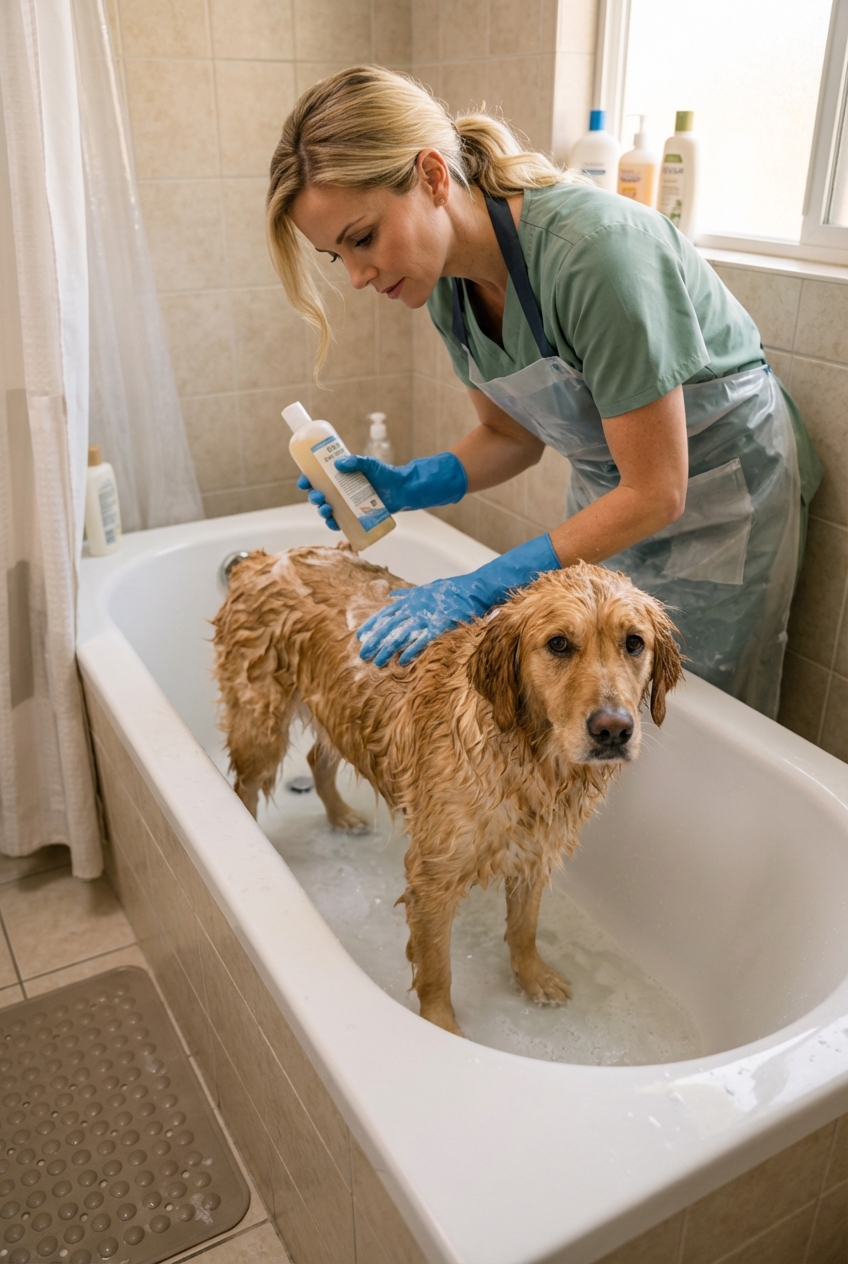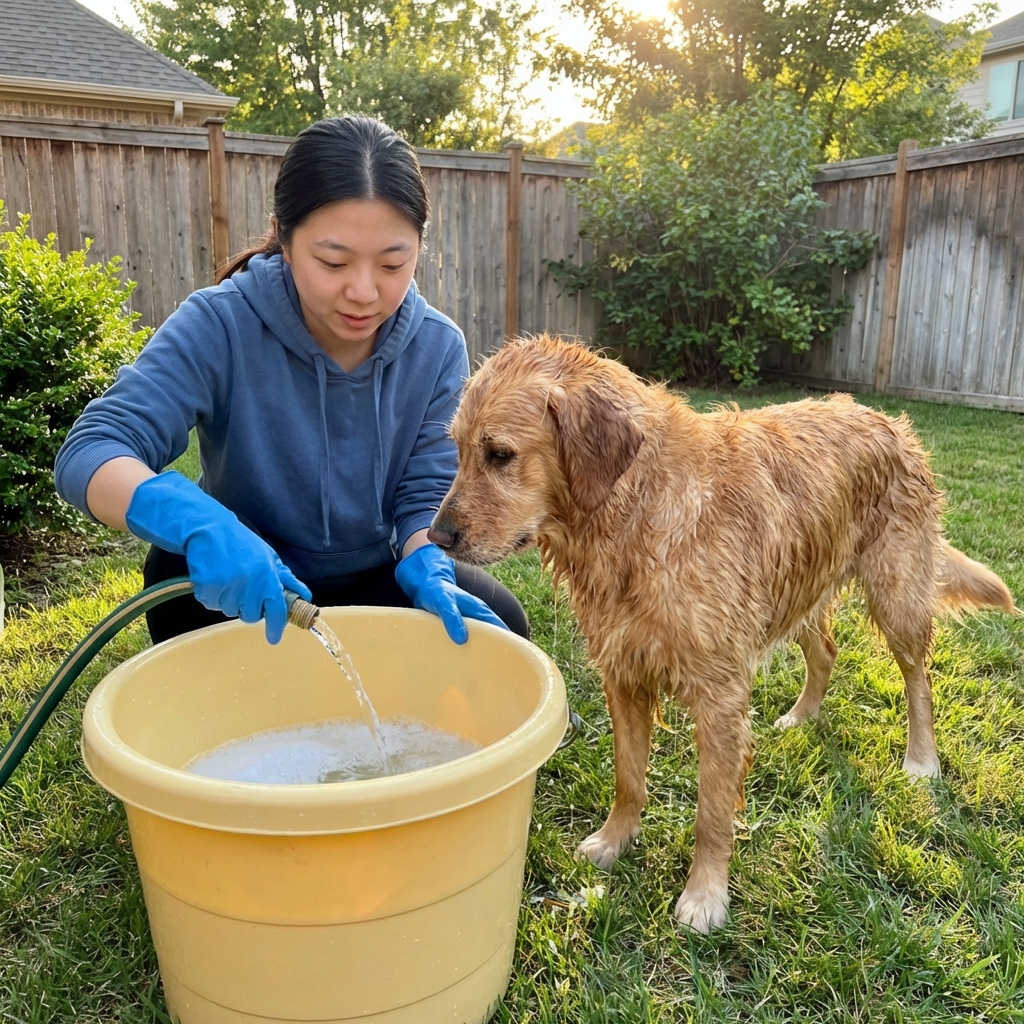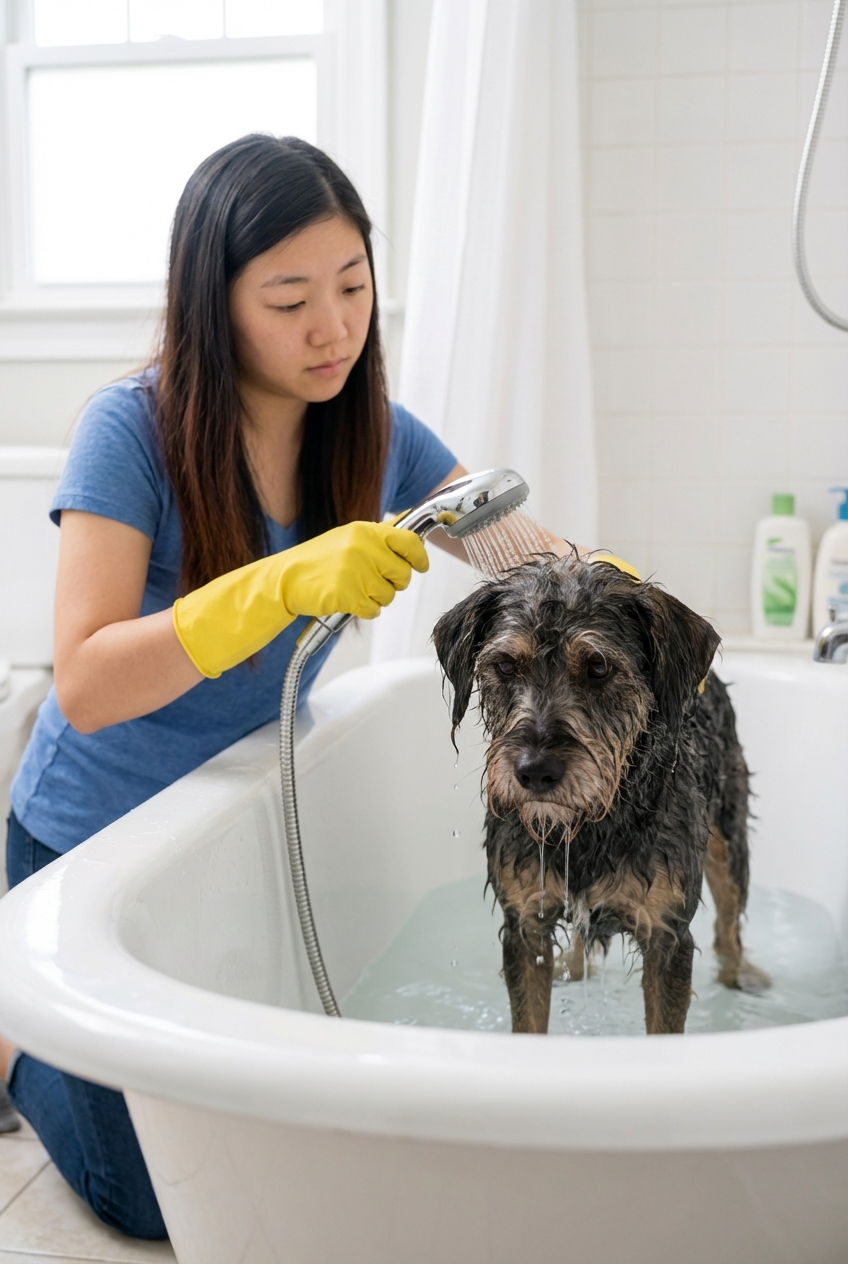
Your dog got skunked in the face? Learn what to do in the first 5 minutes, how to flush irritated eyes, the best peroxide-baking soda solution, and when to c...
Article
•
Designer Mixes
Dog Sprayed by Skunk in the Face

Shari Shidate
Designer Mixes contributor
If your dog just got sprayed by a skunk in the face, I know how panicky that moment feels. The smell is intense, your dog is blinking and pawing, and you are trying to figure out what to do first. The good news is that most dogs do fine with quick, calm first aid and the right de-skunking steps. The key is protecting the eyes, avoiding common cleanup mistakes, and knowing when it is time to call your veterinarian.
What skunk spray does
Skunk spray is an oily mix of sulfur-containing chemicals called thiols. They bond stubbornly to hair, skin oils, and porous surfaces. That is why the odor seems to come back after a bath, especially when the coat gets damp again.
When a dog is hit in the face, we worry about two things beyond smell:
- Eye irritation and corneal injury from direct contact and rubbing
- Nose and mouth irritation that can trigger drooling, sneezing, gagging, and stress
Most of the time, the irritation is temporary, but the eyes deserve special attention because damage can worsen quickly if your dog keeps pawing at them.
Quick supplies checklist
If you can grab a few things before you start, it makes the whole process smoother:
- Gloves and old towels
- E-collar (cone) if you have one
- Sterile saline eyewash (preferred) or clean room-temperature water
- Dish soap (grease-cutting), baking soda, 3% hydrogen peroxide
- Pet shampoo
Wear old clothes, ventilate the area, and try not to touch door handles and walls with skunk-contaminated gloves.
First 5 minutes
1) Stop rubbing
If you have an e-collar (cone), now is the time. If not, use a towel gently around the body and guide your dog away from carpet and furniture while you set up. Rubbing can turn mild irritation into a scratched cornea.
2) Get fresh air
If it is safe, keep your dog outside or in a garage while you prepare supplies. The odor clings to upholstery fast.
3) Flush the eyes
Skunk spray can sting and irritate the eyes. A slow, steady rinse helps remove the oily residue. Use sterile saline eyewash if possible. If you do not have it, use room-temperature tap water in a pinch.
Aim for a 5 to 10 minute flush, longer if your dog will tolerate it.
Do not put hydrogen peroxide, vinegar, soaps, or the de-skunk mixture directly in the eyes.
4) Call your vet if the eyes look painful
Seek veterinary help the same day if you see any of the following: squinting that does not improve after flushing, a cloudy or blue-looking eye, redness that is worsening, thick discharge, a visible scratch, or your dog cannot open the eye. If your dog has a history of eye problems (like dry eye or prior ulcers), it is smart to call sooner rather than later.
A common mistake
This surprises people, but it matters. Skunk spray is oily. If you soak your dog’s coat first, water can spread the oil and drive odor deeper into the fur.
Note: It is absolutely okay to flush the eyes with water right away. The goal here is to keep the coat as dry as possible until the de-skunk solution is applied.
Best practice: apply a de-skunk solution to a dry coat (or at least as dry as possible), work it in, let it sit briefly, then rinse.
What works at home
For most dogs, the most reliable DIY option is the well-known peroxide and baking soda method. It helps chemically change the odor molecules so they stop smelling, rather than just masking the odor.
Skip the tomato juice. It does not neutralize skunk odor well, and it often just adds a second smell to the problem.
DIY recipe (mix fresh, use immediately)
- 3% hydrogen peroxide: 1 quart (4 cups)
- Baking soda: 1/4 cup
- Liquid dish soap (grease-cutting, unscented if possible): 1 to 2 teaspoons
Important safety notes:
- Do not store this mixture in a closed container. It can build pressure.
- Peroxide can irritate skin and may slightly lighten dark fur.
- Avoid using it on broken or very inflamed skin.
- Do not use peroxide mixes on cats. Use a cat-safe de-skunk product and call your vet for guidance.
How to use it for a face spray
- Flush eyes first as described above. If you already have sterile ophthalmic lubricant on hand and your dog tolerates it, you can apply a small amount after flushing to help protect the eyes while you work near the face. Do not delay flushing to look for it.
- Apply with a cloth to the cheeks, muzzle, chin, and behind the ears. Avoid the eyes, inside the nostrils, and inside the mouth.
- Work it in gently for about 3 to 5 minutes. Do not overdo contact time on delicate facial skin.
- Rinse thoroughly, then follow with a normal pet shampoo bath and a very thorough rinse.
If your dog is very squirmy, it is better to do a careful, partial cleanup than to risk getting the mixture into the eyes.
Commercial de-skunk products
Commercial skunk shampoos and sprays can be very effective, especially for thick coats or repeated exposure. Look for products made specifically for skunk odor that are designed to neutralize thiols.
If your dog is a frequent skunk investigator, having a bottle on hand can save you time and stress, and it can be easier around the face because you can apply more precisely.
Cleaning the face safely
Eyes
Stick with saline flushes unless your veterinarian directs otherwise. If the eyes look painful, do not wait. A corneal ulcer can happen fast and is much easier to treat early.
Mouth
If your dog got spray in the mouth, you may see drooling, lip smacking, gagging, or vomiting. Offer small amounts of water and let your dog swallow naturally. Do not force water.
If vomiting continues, your dog seems weak, or you suspect your dog swallowed a lot of spray, call your vet. Skunk spray can cause significant stomach upset, and in larger ingestions it can be toxic.
Nose
Sneezing and nasal irritation are common. Keep your dog calm and in fresh air. If breathing seems labored or your dog is in distress, treat it as urgent.
How long will the smell last?
Even with good cleanup, a faint odor can linger for days to weeks, especially when your dog gets wet. That does not mean you failed. It is the nature of the oily compounds and how they cling to hair shafts and skin oils.
Helpful, realistic tips:
- Repeat the de-skunk treatment once if needed, but avoid over-bathing which can irritate skin.
- Wash bedding, collars, and harnesses separately.
- Replace or soak porous items that got heavily sprayed.
Skin and coat aftercare
De-skunking can dry the skin, especially with dish soap. Over the next few days, watch for dandruff, redness, or itchiness.
- Use a gentle pet shampoo after the de-skunk step, then rinse very well.
- Consider a pet-safe conditioner if your dog’s coat feels dry.
- Call your vet if you see hives, swelling, intense itching, or sores.
When to call the vet
Please contact your veterinarian promptly if:
- Your dog is squinting, pawing at the eye, or the eye looks cloudy or very red
- There is vomiting, persistent drooling, or your dog seems lethargic
- Your dog has breathing trouble, extreme stress, or collapse
- You suspect your dog swallowed a lot of spray or keeps licking it off the coat
- You tried multiple baths and now the skin looks inflamed or painful
- Your dog is very young, elderly, pregnant, or has chronic illness (extra caution is wise)
One reason vets take significant ingestion seriously is that skunk spray can be toxic when swallowed and, in some cases, has been associated with damage to red blood cells (anemia). That is another reason to prevent licking and to ask for advice if you think your dog got a lot in the mouth.
Your dog does not have to tough it out. Face exposure is one of those situations where a quick vet check can prevent a bigger problem later.
If your dog had a close encounter, also do a quick body check for bite wounds and make sure rabies vaccination is current. If you see punctures or are not sure, call your veterinarian.
Prevention
Skunk encounters are common in many neighborhoods, especially at dusk and dawn when dogs want to sniff every bush.
- Leash at night and use a strong flashlight to scan yards.
- Secure trash and pick up fallen fruit that can attract skunks.
- Block access under decks and sheds where skunks may den.
- Keep de-skunk supplies ready so you are not scrambling while your dog is uncomfortable.