Skunked dog? Learn the proven peroxide-baking soda-dish soap method, the correct bath order, face and eye safety tips, cleanup steps, and when to call your vet.
Article
•
Designer Mixes
Dog Sprayed by a Skunk: Family-Friendly Remedies, Fun Facts and Tips

Shari Shidate
Designer Mixes contributor
If your dog just got sprayed by a skunk, take a deep breath. It is gross, yes, but it is also fixable. As a veterinary assistant here in Frisco, Texas, I have seen plenty of “skunk incidents,” and the best outcomes come from doing a few simple things quickly, safely, and in the right order.
Timing tip: If you can, start within 1 to 2 hours. The longer skunk oil sits, the more it clings.
First steps
Keep everyone calm and contained
Skunk spray can cause burning eyes, drooling, and nausea. Dogs may panic and rub their face into carpet, grass, or your favorite sofa, which spreads the oils.
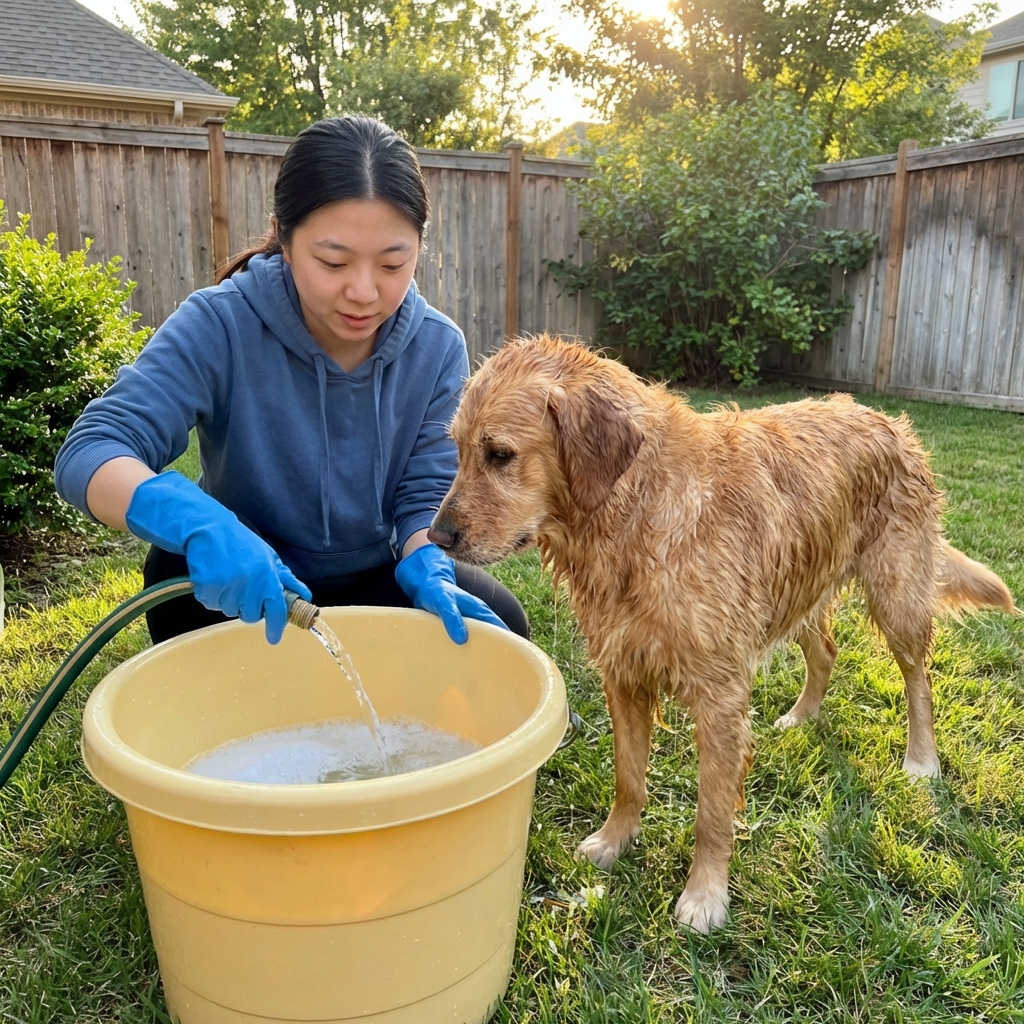
- Move your dog outside or into a garage, laundry room, or another easy-to-clean area if possible.
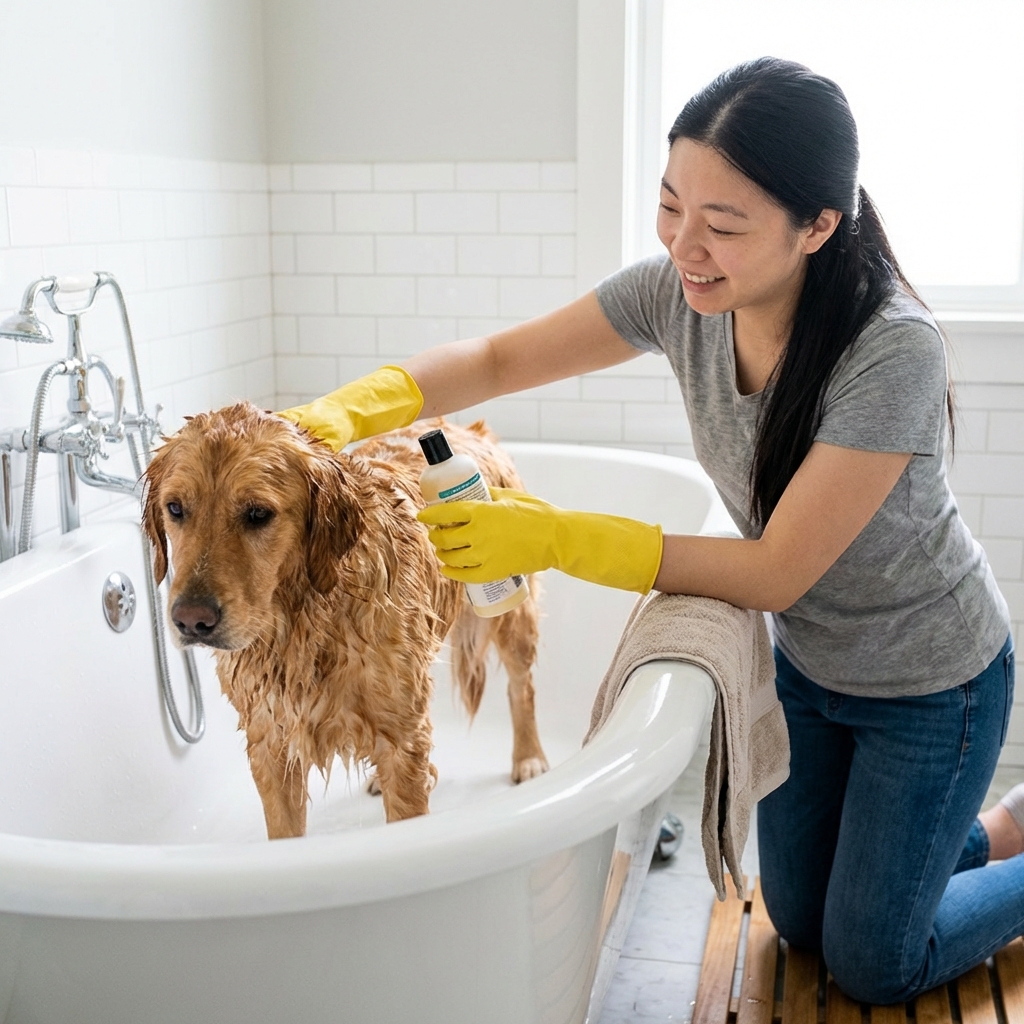
- Ventilate the space (open windows, run a fan) if you must bathe indoors.
- Put on old clothes and gloves. The smell clings to skin and fabric.
- Keep kids back. Skunk oil can irritate eyes and skin, and children are more likely to touch their face.
- Protect your floors. Put down old towels you do not mind sacrificing. Skunk oil and the deodorizing mix can stain or bleach fabrics.
Check the eyes and mouth
If your dog was sprayed in the face, you may see squinting, redness, pawing at the eyes, or heavy drooling.
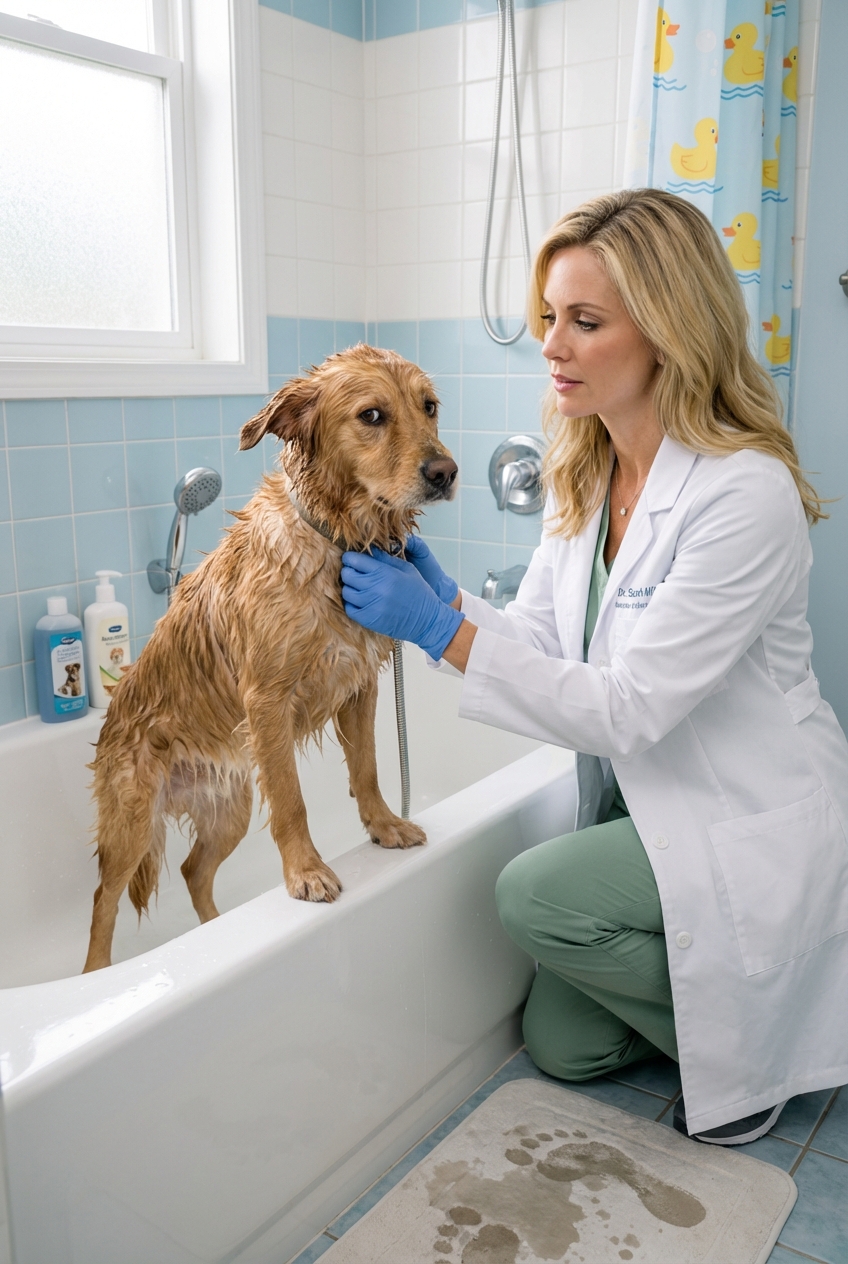
- If spray got in the eyes: Flush with sterile saline eyewash if you have it, or clean lukewarm water, and contact your veterinarian for guidance.
- If your dog is vomiting repeatedly, seems very weak, has trouble breathing, or cannot open their eyes comfortably: get veterinary help right away.
When to skip home care
- Cats: Do not use the peroxide mixture on cats. Call your veterinarian for cat-safe options.
- Very young puppies, dogs with known skin disease, or dogs with broken, raw, or very irritated skin: check with your vet before using any at-home mix.
- Possible bite, scratch, or direct contact with the skunk: call your vet promptly about rabies risk and next steps, even if your dog is vaccinated.
Best at-home remedy
The most commonly recommended at-home option (and the one many veterinary teams suggest) is a simple mixture that helps neutralize skunk odor. It works far better than tomato juice, perfume, or “wait it out.”
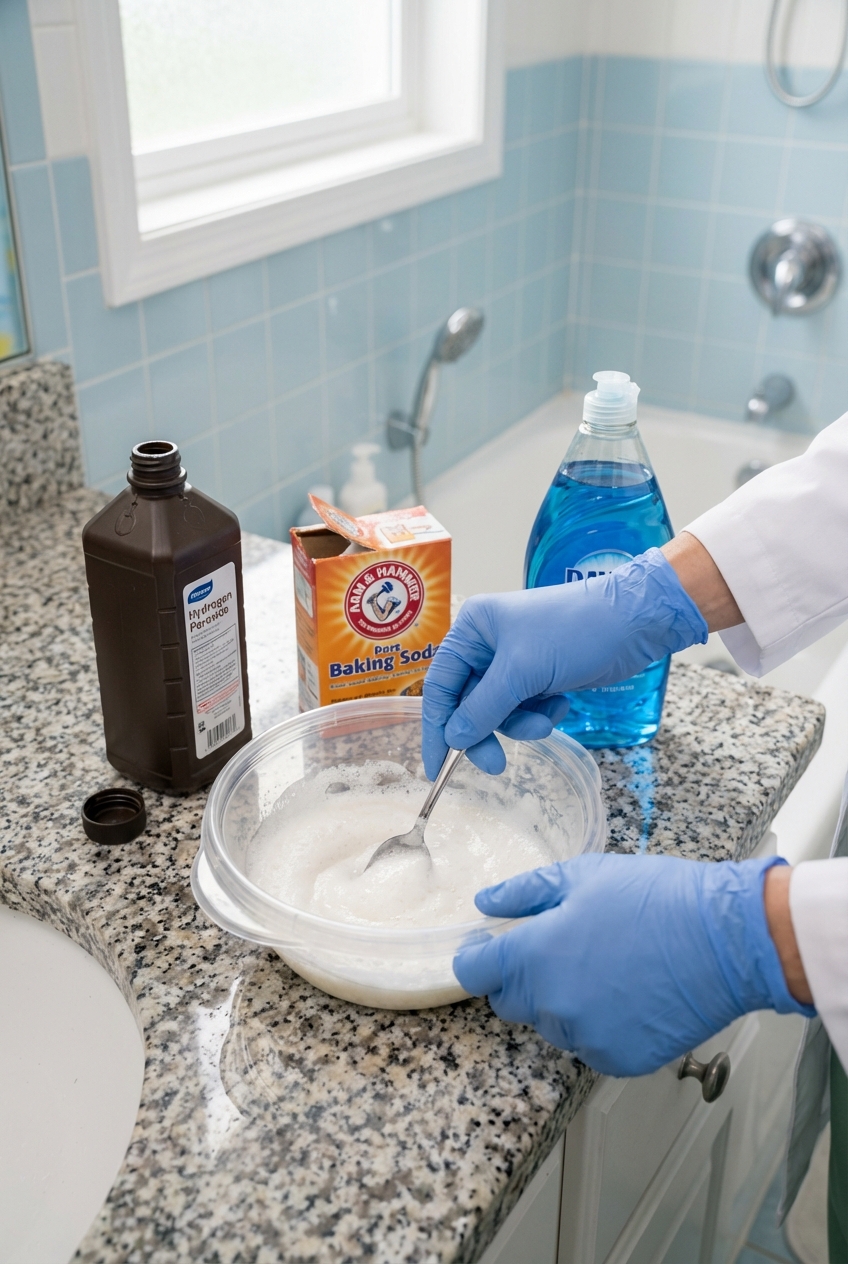
Odor-neutralizing mix
- 1 quart (4 cups) of 3% hydrogen peroxide
- 1/4 cup baking soda
- 1 to 2 teaspoons liquid dish soap (a grease-cutting kind)
Important safety notes:
- Mix fresh and use immediately. Do not store it in a closed container. The mixture can build pressure.
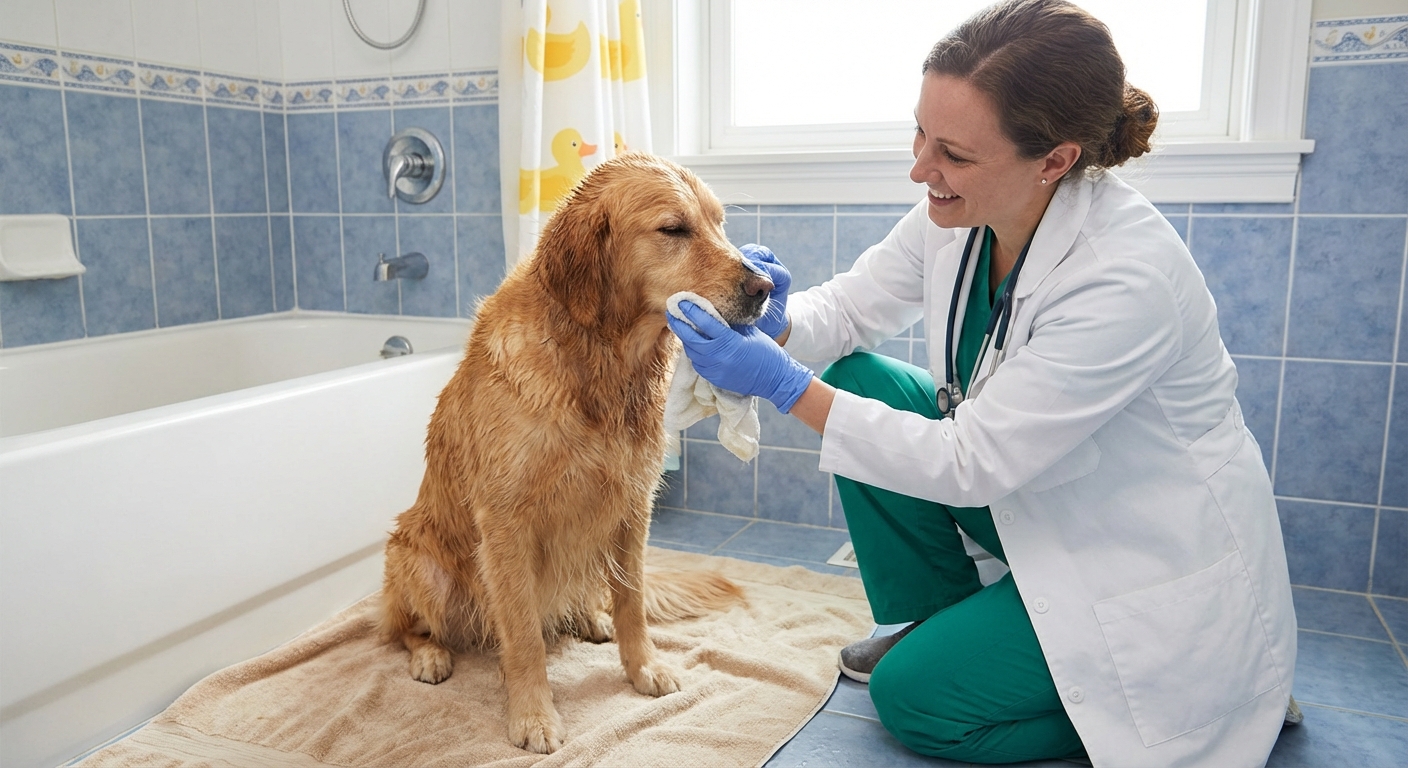
- Avoid eyes, nose, mouth, and genitals. Use a damp washcloth around the face instead of pouring.
- Do not use on broken or very inflamed skin. It can sting and worsen irritation.
- Use caution on dark coats. Peroxide can slightly lighten fur, especially with repeated use.
- Keep it off carpets and good towels. It can discolor fabric.
How to use it
- Do not pre-rinse first. Try not to soak the coat with plain water before you apply the mix. Water can spread the oils. (You will rinse thoroughly after treatment.)
- Apply to dry fur and work in sections. Focus on sprayed areas like the neck, chest, shoulders, and legs. For long coats or large dogs, use a “part the hair, apply, massage” approach so it reaches the skin and oily layer.
- Let it sit about 5 minutes. Keep your dog from shaking if you can.
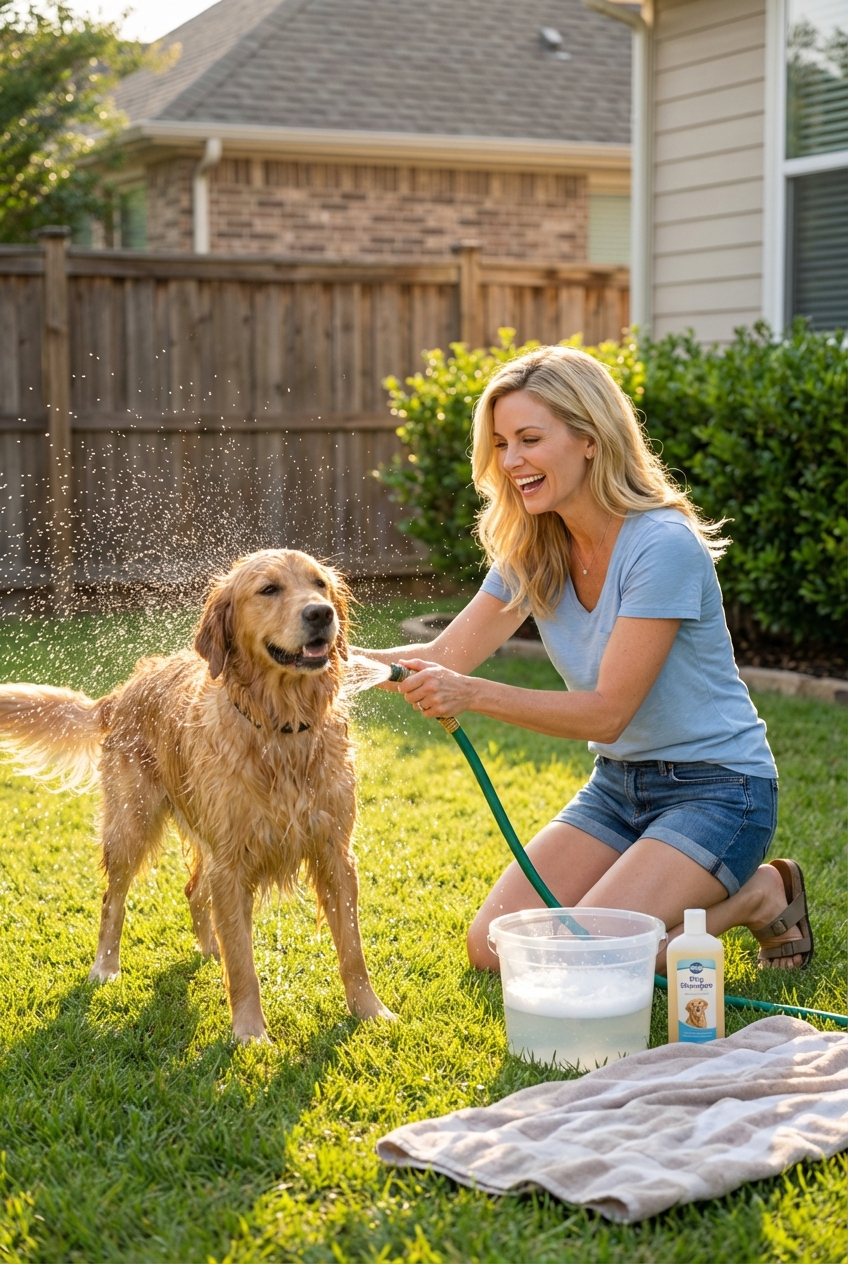
- Rinse thoroughly with lukewarm water.
- Shampoo once with a dog shampoo if needed, then rinse again.
- Towel-dry and keep your dog warm.
If the smell is still strong, you can repeat once. Many dogs need two rounds for the best result.
Face and ears
The face is where families accidentally cause the most irritation. Skunk spray can sting, and the peroxide mixture should not go into eyes or ear canals.
Face
- Use a damp washcloth with a tiny bit of dish soap to wipe the muzzle and cheeks.
- Rinse the cloth often and wipe again with clean water.
- If your dog keeps squinting or the eyes look red after flushing, contact your vet.
Ears
- Do not pour anything into the ear canal unless your veterinarian instructs you.
- Wipe only the outer ear flap with a damp cloth.
- If you notice head shaking, odor, or redness over the next few days, schedule an ear check. Skunk oil plus moisture can set the stage for an ear infection.
What not to do
- Tomato juice baths: They may mask odor briefly but do not neutralize skunk oils. Your dog often ends up smelling like skunk plus tomato.
- Vinegar alone: Some people find it helps a little, but it is often less effective than the peroxide mix and can be irritating on sensitive skin.
- Essential oils: Many are unsafe for pets, and strong scents can worsen nausea.
- Human shampoos: They can be harsh on a dog’s skin barrier and cause dryness or itching.
- Letting your dog run around the house: Skunk oil transfers to carpet, upholstery, and bedding quickly.
De-skunking your home
Once your dog is handled, the next battle is the house. Skunk odor is oily, so you want methods that lift oils and refresh the air.
Laundry and fabric
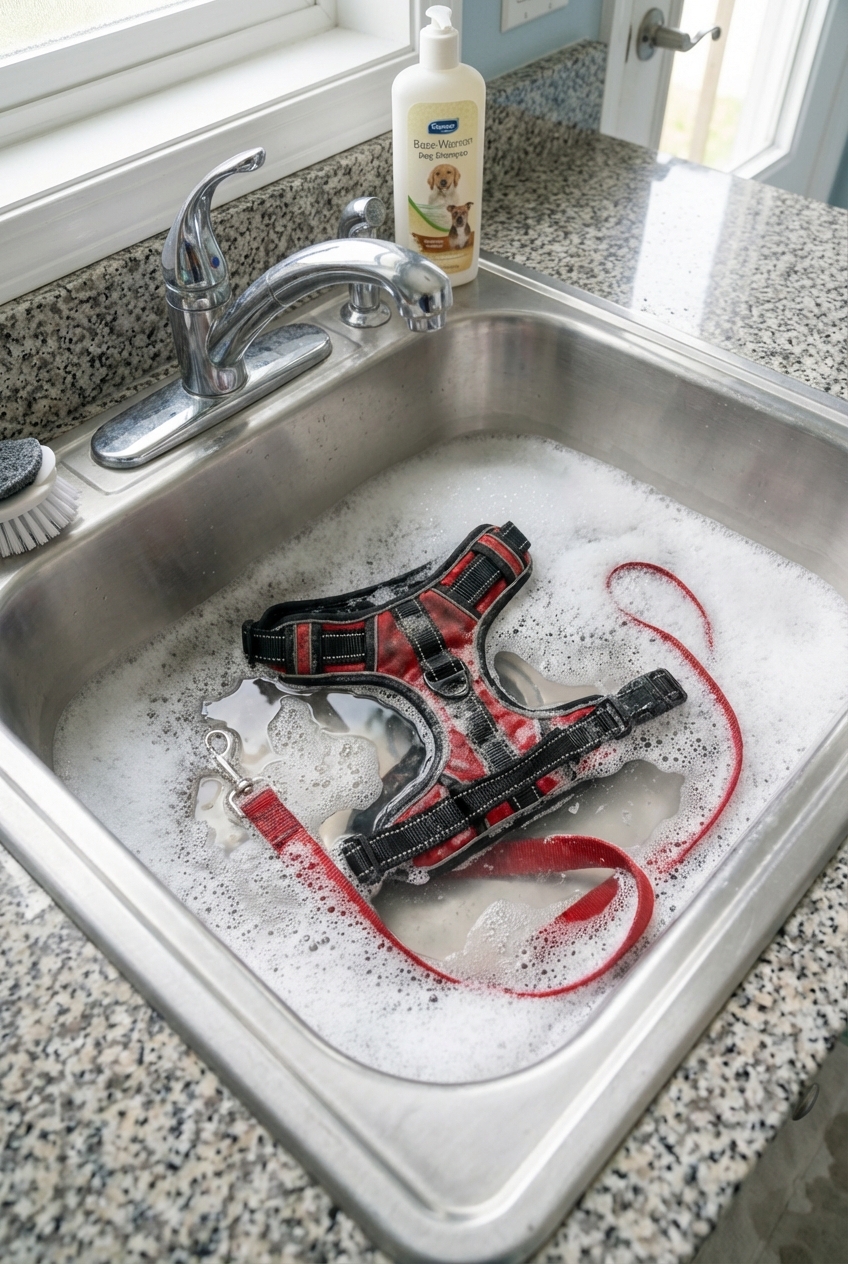
- Wash collars, harnesses, and washable bedding in hot water if the fabric allows.
- Add baking soda to the wash cycle to help deodorize.
- Air-dry when possible. If it still smells, rewash.
Hard surfaces
- Use a grease-cutting cleaner or diluted dish soap on crate trays, floors, and walls where your dog rubbed.
- Do not mix cleaners (for example, never combine bleach with other products). Rinse well between products if you switch.
- Rinse well. Residue can attract dirt and keep odors trapped.
Car rides
If your dog got sprayed on a walk or ride, the car often holds odor the longest.
- Remove and wash seat covers and blankets.
- Wipe hard surfaces with mild soap and water.
- Ventilate on a dry day.
When to call the vet
Most skunk encounters are more “awful” than “dangerous,” but there are times when a veterinarian should be involved.
- Eye exposure: persistent squinting, redness, discharge, or pawing at the eyes.
- Repeated vomiting or severe drooling: skunk spray can trigger stomach upset, especially if licked off.
- Weakness, pale gums, or fast breathing: rare, but can signal a more serious reaction.
- Signs of infection or irritation in the days after, like intense itching, skin redness, or ear discomfort.
- Rabies risk: if your dog had close contact with the skunk (bite, scratch, or you are not sure). Confirm rabies vaccination status and follow your veterinarian’s guidance and local public health recommendations.
Fun skunk facts
If you have children in the house, a little science can turn the chaos into a calmer moment.
- Skunks spray an oily sulfur-based liquid. The main odor compounds are called thiols, and they stick stubbornly to fur and fabric.
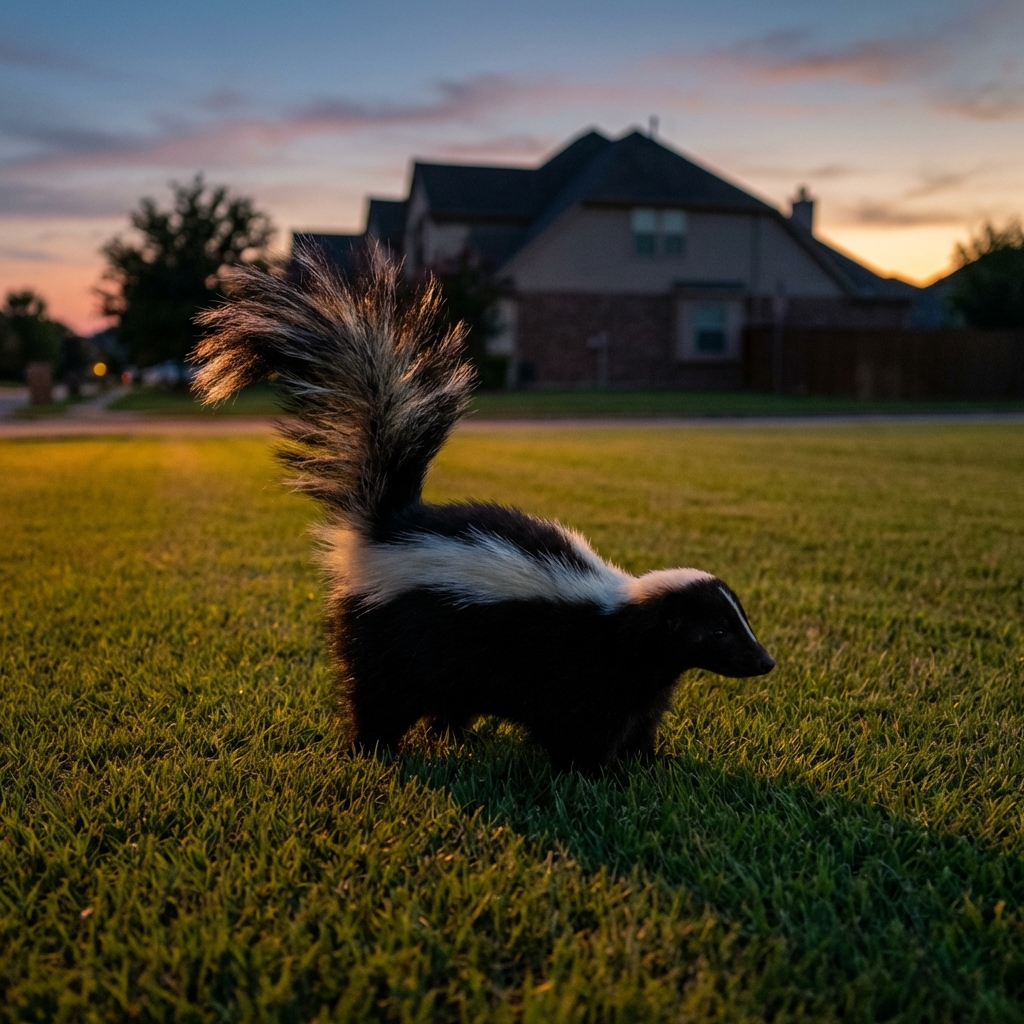
- Skunks usually warn before they spray. They may stomp, hiss, or raise their tail. Dogs often miss the message.
- The smell can seem stronger after a bath at first. Water and humidity can release more odor molecules, especially in the first day.
- Skunks prefer to avoid conflict. Their spray is limited and replenishes over time, so they would rather scare predators away and leave.
Preventing the next run-in
Skunk prevention is mostly about timing and boundaries.
- Leash at dawn and dusk: skunks are often active in low-light hours.
- Keep dogs close near bushes, wood piles, and under decks.
- Secure trash and pet food: outdoor bowls and open bins attract wildlife.
- Use motion lights in the backyard to reduce surprise encounters.
- Practice a reliable “leave it”: it is one of the best safety commands for curious dogs.
And one last gentle reminder from me to you: if your dog got sprayed, you did not fail as a pet parent. Dogs are curious, skunks are defensive, and life happens. With the right steps, your home will smell normal again, and your pup will be back to cuddles soon.